TEHRAN — Iran’s Supreme Leader Mojtaba Khamenei is not unconscious in a Qom hospital ward, unable to participate in the decisions that will determine whether the Islamabad ceasefire holds or collapses — he is mentally alert, severely disfigured, and directing Iran’s 71-member negotiating delegation by audio relay from what three Reuters sources described on April 11 as an active command position. The authorization ceiling that explained six weeks of apparent Iranian strategic drift — the argument that Khamenei’s incapacitation left the IRGC operating autonomously, that no one in Tehran could actually authorize a deal on Hormuz or Lebanon — has not merely weakened; it has been dismantled by the very people closest to the Supreme Leader himself.
This changes the entire architecture of what the Islamabad talks can and cannot produce. If Khamenei is “engaged in decision-making on major issues including the war and negotiations with Washington,” as two of the three Reuters sources confirmed, then every position Iran has taken at the table — the refusal to negotiate the missile program, the insistence on IRGC “coordination” over Hormuz shipping, the exclusion of Lebanon from ceasefire terms — is not the byproduct of a power vacuum. It is policy. Vahidi’s hard line is not obstruction; it is the revealed preference of a leader who has chosen to negotiate from behind a shield of institutional ambiguity, using his own wounds as strategic cover.
Table of Contents
- Two Intelligence Narratives, One Leader
- How Does a Supreme Leader Govern by Audio Relay?
- The Authorization Ceiling Collapses
- Is Vahidi’s Hard Line Actually Khamenei’s Preference?
- The Article 111 Trap
- Hormuz Was Khamenei’s Own Demand
- Who Benefits From the Incapacitation Narrative?
- Can the Islamabad Talks Survive This Revelation?
- The Ceasefire Clock and the Hajj Corridor
- Frequently Asked Questions
Two Intelligence Narratives, One Leader
The Reuters report and the Times of London memo, published four days apart, describe two mutually exclusive physical and cognitive states of the same person. The Times memo, drawn from a US and Israeli intelligence assessment shared with Gulf allies on April 7, stated that Khamenei was “unconscious” in Qom, “unable to participate in any decision-making process,” with construction underway on “a large mausoleum in Qom for more than one grave.” The Reuters report, sourced to three people “close to his inner circle,” states that Khamenei has “severe and disfiguring wounds” — facial disfigurement and significant injury to one or both legs, with US intelligence suggesting possible amputation — but “remains mentally sharp” and is “taking part in meetings with senior officials via audio conferencing.”
Both reports are sourced to interested parties, and neither is independently verifiable. The Times memo originates from US and Israeli intelligence services whose institutional interest lies in projecting Iranian weakness, fragmenting the IRGC command chain in the minds of Gulf allies who are absorbing the costs of the war, and creating the impression that Iran’s negotiating position at Islamabad lacks central authorization. The Reuters sources come from Khamenei’s own inner circle, whose institutional interest lies in projecting continued authority, deterring both internal challengers (the Assembly of Experts, rival IRGC factions) and external escalation (an American or Israeli strike premised on the idea that Iran has no functioning leadership to negotiate with).
What neither side has produced is proof. In the 42 days since Mojtaba Khamenei became Supreme Leader following the February 28 airstrike on his father’s compound in central Tehran, not a single photograph, video recording, or audio clip of the younger Khamenei has been released publicly. Every attributed statement — including his only formal public communication on March 12 — has been a written text read by an IRIB presenter over a still photograph. Iranian Foreign Minister Abbas Araghchi told Al-Araby Al-Jadeed that “the Leader of the Revolution is in perfect health and is fully managing the situation,” but he issued the denial on a Qatari-funded channel rather than through IRIB, Iran’s own state broadcaster, a choice that itself invites questions about who authorized the message and for which audience.
The CIA and Mossad were reportedly still searching for proof of life as late as March 21, nine days after Khamenei’s first written statement. One of the three Reuters sources said images of the Supreme Leader “could be expected within one or two months” — a timeline that places any potential visual confirmation well beyond the April 22 ceasefire expiration and well beyond the Islamabad negotiating window. The talks are proceeding, in other words, with a leader whose physical existence is attested only by unnamed sources on both sides of the war, each with strong incentives to describe a version of his condition that serves their strategic posture.
The Middle East briefing 3,000+ readers start their day with.
One email. Every weekday morning. Free.
How Does a Supreme Leader Govern by Audio Relay?
The Reuters report’s most operationally specific claim — that Khamenei is “taking part in meetings with senior officials via audio conferencing” — is less extraordinary than it sounds when placed against Mojtaba Khamenei’s political biography. Before inheriting the supreme leadership from his father, Mojtaba operated for decades as a behind-the-scenes figure in IRGC intelligence, a man whose influence was exercised through intermediaries, private channels, and deniable communication rather than public appearances or formal institutional roles. Operating by audio relay without a public face is, in a functional sense, how he operated before the airstrike made it a physical necessity.
The question is not whether audio-relay governance is technically feasible — it plainly is, and modern secure communications make it straightforward — but whether it provides the kind of authorization that matters for the Islamabad negotiations. A leader who can issue directives by voice but cannot appear in person, cannot hold press conferences, cannot travel to Islamabad, and cannot meet face-to-face with his own delegation occupies an unusual position in the command architecture. He can authorize, but he cannot embody. He can direct, but he cannot demonstrate. The IRGC authorization ceiling that this publication identified inside the Islamabad negotiation room was premised on the idea that no one at the table had the authority to commit Iran on its most contested positions — Hormuz sovereignty, the missile program, Lebanon’s inclusion. If Khamenei is on the other end of an audio link, that premise dissolves, and what remains is worse for the negotiating parties: not a delegation that cannot get authorization, but a delegation that has been authorized to refuse.
The operational implications extend to the internal Iranian power struggle that the Soufan Center’s April 10 IntelBrief described as a contest “between hardliners around Ghalibaf, including key IRGC members such as its commander Ahmad Vahidi, and more pragmatic leaders aligned with elected President Masoud Pezeshkian.” Pezeshkian has publicly named the IRGC generals he cannot fire — a disclosure that tells you everything about who holds structural authority. If Khamenei is directing via audio, the framing of this struggle changes. It is not a vacuum that factions are filling; it is a hierarchy in which the Supreme Leader is choosing which faction’s positions to endorse — and the positions he has endorsed, on the available evidence, are Vahidi’s.
The Authorization Ceiling Collapses
The authorization ceiling was the structural explanation for Iran’s negotiating behavior that made the most sense under the incapacitation thesis. This publication traced its architecture in detail: Khamenei’s written ceasefire halt order of March 12 was ambiguous by design, using language (“this is not the end of the war, but all units must ceasefire”) that simultaneously claimed credit for stopping the fighting and preserved the option to resume. The SNSC’s official framing of negotiations as “continuation of the battlefield” was read as either a hardliner hijacking of institutional language or evidence that no one in the system had the mandate to override the IRGC’s maximalist positions. Ghalibaf flew to Islamabad having publicly called the ceasefire “unreasonable,” which was interpreted as either performative hawkishness for a domestic audience or a genuine signal that the delegation lacked the authority to make concessions.
Under the Reuters framing, all of these signals acquire a different meaning. The ambiguous ceasefire language was not the product of a committee operating without leadership; it was drafted or approved by a leader whose “mental sharpness” was intact. The SNSC’s battlefield framing was not a factional power grab; it was policy set at the top of the system. Ghalibaf’s public skepticism was not freelancing; it was messaging aligned with — and possibly directed by — the audio conferences that Reuters describes. The first direct US-Iran face-to-face talks since 1979, the Vance-Ghalibaf meeting in Islamabad, took place across the table from a delegation whose 71 members included no one with the authority to override Khamenei’s stated positions, and whose principal, Ghalibaf, was simultaneously receiving instructions from a hospital bed and constrained by SNSC institutional doctrine that the Supreme Leader himself had shaped.
Vice President JD Vance’s warning to the Iranian delegation on April 10 — “Don’t play the US in peace talks” — reads differently in this context. If the incapacitation thesis were true, the Iranian delegation’s evasiveness could be attributed to a structural inability to commit. If the Reuters report is accurate, the evasiveness is strategic: a negotiating team that is being actively directed to defer, to condition, to link, and to refuse, all while maintaining the appearance of institutional dysfunction that provides diplomatic cover for what is, in fact, a coherent strategy of delay.
Is Vahidi’s Hard Line Actually Khamenei’s Preference?
The Jerusalem Post reported on April 11 that IRGC Commander Ahmad Vahidi had demanded two things of the Islamabad delegation before its departure: the inclusion of his loyalist, SNSC Secretary Ali Akbar Zolghadr, on the negotiating team, and an instruction that the delegation “refuse to negotiate on Iran’s missile program.” Araghchi and Ghalibaf reportedly resisted, calling Zolghadr “too inexperienced for strategic negotiations.” The surface reading of this clash is a power struggle between the pragmatists (Araghchi, Ghalibaf) and the hardliner (Vahidi) — and this is precisely the framing the Soufan Center adopted. But the Reuters report makes this reading untenable.
If Khamenei is mentally sharp and directing by audio, then Vahidi’s demands were either made with Khamenei’s knowledge and approval or made against his wishes. The former interpretation — that Vahidi’s positions reflect Khamenei’s preference, with Araghchi and Ghalibaf allowed to push back on the specifics (Zolghadr’s inexperience) while accepting the substance (no missile negotiations) — is consistent with Khamenei’s own March 12 statement, which called for “revenge” and insisted that “the lever of blocking the Strait of Hormuz must definitely continue to be used.” The latter interpretation — that Vahidi is acting against an alert Khamenei’s wishes — requires explaining why a Supreme Leader described as “engaged in decision-making on major issues” has not overruled his IRGC commander on the central questions of the negotiation. The unnamed former Iranian parliamentarian who told NBC that “Vahidi is in charge of the country, with the power in the hands of the Revolutionary Guard and the most radical faction” may have been describing Vahidi’s operational autonomy, but under the Reuters framework, that autonomy exists because Khamenei has granted it — or, at minimum, has not revoked it.
The 71-member delegation that traveled to Islamabad did not include Vahidi, a fact this publication noted at the time as evidence of the authorization ceiling. Without Vahidi in the room, the delegation could not credibly commit on military matters. But if Khamenei is on an audio link, the absence of Vahidi is not a structural gap — it is a deliberate configuration. You send a delegation large enough to project seriousness but exclude the one figure whose presence would signal willingness to negotiate on military fundamentals. You create the appearance of constraint while maintaining the reality of choice.
The Article 111 Trap
Iran’s constitution provides, under Article 111, a mechanism for removing or replacing an incapacitated Supreme Leader. If the leader is officially declared unable to fulfil his duties, the Assembly of Experts can act, and an interim leadership council — comprising the president, the chief justice, and a senior cleric — manages the transition. This is the mechanism that Khomeini-era hardliners most fear, because it introduces electoral and institutional actors into a succession process that the IRGC and the Guardian Council have spent decades insulating from democratic input. It is also why official Iran will never, under any circumstances, confirm the Times of London memo’s incapacitation claim, regardless of its accuracy.
The Article 111 trap creates a structural incentive for ambiguity that operates independently of Khamenei’s actual condition. Even if Khamenei were genuinely incapacitated — even if the Times memo were entirely accurate — the institutions surrounding him would have every reason to project continued authority, to attribute statements to him, to claim he is directing by audio, precisely because the alternative triggers a constitutional mechanism that threatens their power. This means the Reuters report, even if its sources are acting in good faith, is not necessarily evidence of Khamenei’s condition; it may be evidence of the institutional imperative to avoid Article 111 regardless of what is actually happening in that hospital room.
Conversely, if Khamenei is genuinely alert and directing — if the Reuters report is accurate — then the Article 111 trap explains why he has not appeared publicly. An appearance would confirm his survival but would also reveal the extent of his injuries (the “severe facial disfigurement” and possible leg amputation), potentially triggering domestic instability, factional challenges, or calls from the Assembly of Experts to assess his fitness. By governing through audio relay and attributed written statements, Khamenei maintains authority without subjecting himself to the visual scrutiny that could undermine it. The one Reuters source who suggested images “within one or two months” was describing a timeline that serves this logic: long enough for physical recovery to progress, short enough to prevent the absence from hardening into a constitutional crisis.
Hormuz Was Khamenei’s Own Demand
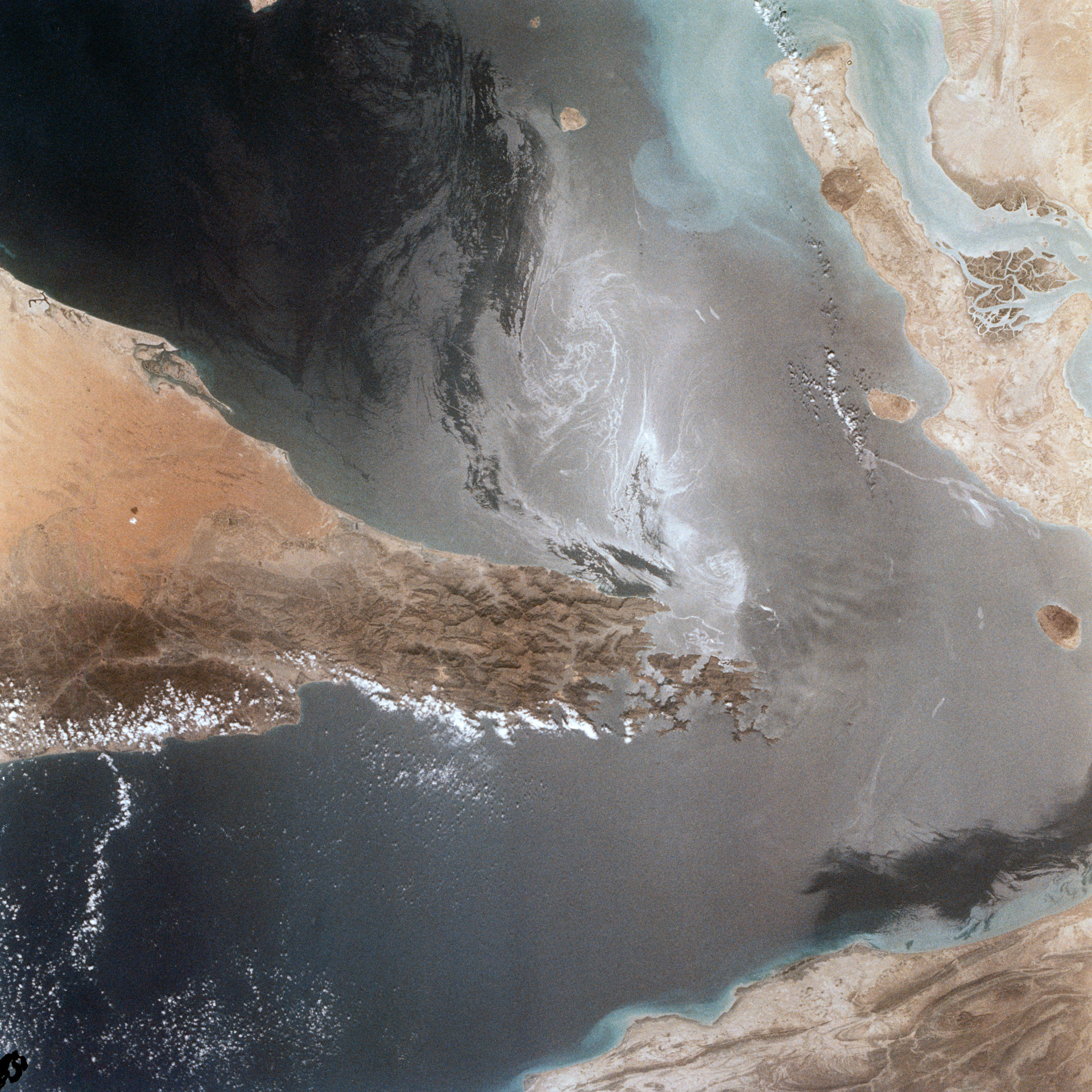
The most commonly misunderstood element of the Islamabad negotiations is the assumption that Iran’s position on Hormuz — the insistence on IRGC “coordination” over shipping, the de facto toll regime, the selective-exemption system that has reduced strait throughput from 138 ships per day to 15-20 — is Vahidi’s imposition on a reluctant political leadership. It is not. Khamenei’s March 12 statement, the only communication attributed to him since he assumed office, contained a single specific policy directive amid the broader rhetoric of revenge and resistance: “The lever of blocking the Strait of Hormuz must definitely continue to be used.”
This sentence is not Vahidi’s language ventriloquized through the Supreme Leader. It is the Supreme Leader’s own stated position, issued 12 days after the war began, before the ceasefire, before the Islamabad talks were conceived, and before the authorization ceiling became a subject of analytical debate. Iran’s 10-point plan for the negotiations, whose Point 7 demands “coordination with Armed Forces of Iran” over Hormuz as a treaty requirement, is the institutional translation of Khamenei’s March 12 directive into negotiating language. The Middle East Forum’s analysis that “Iran is deliberately projecting ambiguity as part of a coherent strategy — by appearing divided, Tehran gains flexibility; by keeping Hormuz partially open, it maintains leverage; and by linking maritime access to political conditions, it seeks to convert a temporary military advantage into a lasting geopolitical one” — reads, after the Reuters report, less like analytical inference and more like a description of policy directed from the top.
What the Reuters report does is collapse the distance between Khamenei’s stated position and Iran’s negotiating posture. Under the incapacitation thesis, analysts could argue that the March 12 statement was drafted by IRGC handlers, attributed to an unconscious leader, and used to legitimate positions he had never actually endorsed. Under the “mentally sharp, audio conferencing” thesis, that argument evaporates. The man who said “the lever of blocking the Strait of Hormuz must definitely continue to be used” is, according to Reuters, the same man who is currently directing the delegation that is refusing to negotiate on Hormuz. The Hormuz impasse is not a byproduct of institutional breakdown. It is the intentional output of a functioning command chain.
Who Benefits From the Incapacitation Narrative?
The incapacitation narrative served multiple parties simultaneously, which is precisely why it persisted for 42 days despite a total absence of independent verification. For the United States and Israel, an incapacitated Khamenei meant an Iran without a functioning decision-maker — a framing that justified continued military pressure on the grounds that there was no one capable of accepting a deal, while simultaneously reassuring Gulf allies that Iran’s negotiating intransigence was structural rather than chosen (and therefore potentially resolvable once leadership was clarified). For the IRGC, the narrative provided operational cover: actions taken during the leader’s absence could be attributed to autonomous field commanders rather than central policy, reducing the reputational cost of ceasefire violations and post-ceasefire provocations like the infrastructure strikes that Pakistan, as the ceasefire’s broker, has no mechanism to enforce against.
For Khamenei himself — or for the institutional apparatus operating in his name — the incapacitation narrative offered something more subtle: insulation from accountability. A leader who is unconscious cannot be held responsible for the positions his delegation takes or refuses to take. He cannot be accused of deliberately sabotaging a ceasefire. He cannot be pressed by Gulf allies, by the UN, by mediators, to exercise the authority that would make concessions possible. The narrative created a diplomatic free option: Iran could negotiate without being expected to concede, because the person whose authorization would be required for any concession was understood to be unable to provide it.
The Reuters report, by disrupting this narrative, removes the insulation. If Khamenei is alert and directing, then every position Iran takes at Islamabad is a position he has chosen or permitted. Every refusal to negotiate on Hormuz, every insistence on IRGC coordination over shipping lanes, every exclusion of Lebanon from ceasefire terms is attributable not to a power vacuum but to a deliberate strategic posture. This is, paradoxically, both more dangerous and more negotiable. More dangerous because it means Iran’s intransigence is not a solvable institutional problem but a policy choice backed by the highest authority in the system. More negotiable because a leader who is choosing can also choose differently — if the price is right, if the pressure is sufficient, if the alternative is worse than concession.
Can the Islamabad Talks Survive This Revelation?
The practical effect of the Reuters report on the Islamabad talks depends on which parties believe it, and what they do with that belief. For the American delegation, the report confirms what Vance’s “don’t play the US” warning already implied: that the Iranian side is not operating in good faith under constraints, but is operating strategically under direction. This could accelerate American impatience, compressing the timeline for a deal or triggering the kind of escalatory response that Trump has repeatedly threatened and occasionally delivered. For the Pakistani mediators, who moved overnight from venue-provider to the ceasefire’s sole enforcement mechanism, the report complicates an already impossible position: Pakistan cannot enforce compliance from a delegation that is receiving real-time instructions from a leader whose strategic interests are served by non-compliance.
For Saudi Arabia — excluded from the April 10 bilateral, denied the co-guarantor seat it held during the March 29-30 talks, absorbing the costs of a war whose ceasefire terms are being negotiated without its input — the Reuters report is clarifying in the worst possible way. The authorization ceiling provided a structural explanation for Saudi Arabia’s predicament: Iran was not deliberately excluding Riyadh; Iran simply lacked the internal coherence to include anyone, because the leader who would authorize broader terms was incapacitated. Under the Reuters framing, Saudi Arabia’s exclusion is not an accident of Iranian institutional dysfunction. It is a choice made by a leader who, according to three sources close to him, is fully engaged in decision-making on the war and the negotiations. Khamenei is not too incapacitated to authorize Saudi inclusion. He has chosen not to.
The structural death of Phase 2 — which this publication identified before the ceasefire started — becomes more acute under the Reuters framing. Phase 2 was supposed to address the hard questions: Hormuz sovereignty, the nuclear program, Lebanon. It was always structurally unachievable because Iran’s negotiating positions on these issues were maximalist and non-negotiable. But under the incapacitation thesis, there was at least a theoretical possibility that a recovered or replaced leader might recalibrate. Under the Reuters thesis, the maximalism is not a placeholder maintained by subordinates awaiting guidance. It is the guidance itself, issued by a leader who is mentally sharp and has chosen these positions.
The Ceasefire Clock and the Hajj Corridor
The ceasefire expires on April 22. Hajj arrival opens on April 18. There is no extension mechanism — the Soufan Center’s IntelBrief described the ceasefire as approximately two weeks from April 7-8, and no protocol for renewal has been established or even discussed. The four-day gap between April 18 and April 22 is the most dangerous window in the negotiating calendar: millions of pilgrims in transit to Mecca while a ceasefire with no enforcement mechanism and no extension clause approaches its expiration, overseen by a Pakistani mediator whose only hold over Iran is a $5 billion Saudi loan that matures in June 2026 and a military intelligence apparatus that cannot project force against the IRGC.
Khamenei’s condition matters to this timeline not because his health determines whether the ceasefire holds — post-ceasefire violations have already occurred, including 28 drones intercepted by Kuwait and 31 missiles plus 6 additional strikes absorbed by Bahrain — but because his cognitive status determines whether the ceasefire can be extended or replaced. If he is incapacitated, no one in the Iranian system has the authority to agree to an extension, and the ceasefire simply lapses into a resumption of hostilities that no one formally authorized. If he is alert and directing, as Reuters reports, then the absence of an extension mechanism is itself a choice: Khamenei has not instructed his delegation to propose one, has not authorized one, and has allowed the ceasefire to approach its expiration without any framework for what comes next.
The Hajj dimension compounds this. Iran has zero Hajj stake — its pilgrims have been barred — which means the threat of ceasefire expiration during the pilgrimage season imposes costs exclusively on Saudi Arabia and its allies (Indonesia’s 221,000 pilgrims, Pakistan’s 119,000, and dozens of other national contingents whose safety depends on the continuation of a ceasefire that Iran’s leadership has no structural incentive to extend). A leader who is “engaged in decision-making on major issues” and has not proposed an extension mechanism is a leader who understands this asymmetry and is exploiting it — using the Hajj calendar as a pressure instrument in a negotiation from which Saudi Arabia has been excluded, on terms that Saudi Arabia cannot influence, with a deadline that Saudi Arabia cannot afford to reach.
Frequently Asked Questions
What injuries did Mojtaba Khamenei sustain in the February 28 airstrike?
According to three Reuters sources close to his inner circle, Mojtaba Khamenei (age 56) sustained severe facial disfigurement and significant injury to one or both legs in the February 28, 2026 airstrike on his compound in central Tehran. US intelligence sources separately suggest possible leg amputation. Despite these injuries, the Reuters sources describe him as “mentally sharp.” No photographs, video, or audio of Khamenei have been released since the attack — all public statements have been written texts read by IRIB presenters over a still photograph.
Why hasn’t Iran released any audio or video of Khamenei if he is alert?
Iran faces what constitutional scholars call the Article 111 trap. Under the Iranian constitution, if the Supreme Leader is officially declared incapacitated, the Assembly of Experts can intervene, and an interim leadership council comprising the president, chief justice, and a senior cleric takes over. Visual evidence of severe disfigurement and possible amputation could trigger domestic instability, factional challenges, or formal fitness assessments by the Assembly — outcomes that the IRGC and Guardian Council have spent decades working to prevent. Audio-only governance allows Khamenei to maintain authority without subjecting himself to the visual scrutiny that could undermine his position among both political elites and the Iranian public.
Could both the Reuters report and the Times of London memo be partially true?
Yes, and this is the scenario that most analysts privately consider likeliest. Khamenei could have been unconscious or in critical condition in early-to-mid March (when the Times memo circulated) and subsequently regained cognitive function while remaining severely physically impaired. The February 28 airstrike was 42 days before the Reuters report — a period consistent with recovery from traumatic injuries involving facial reconstruction and possible amputation. Medical personnel treating blast injuries report that patients can oscillate between periods of lucidity and incapacity, particularly when sedated for surgical procedures. The two intelligence assessments may describe the same patient at different stages of a recovery arc.
What does Khamenei’s March 12 statement reveal about his Hormuz position?
Khamenei’s sole attributed statement since taking office contained one specific policy directive: “The lever of blocking the Strait of Hormuz must definitely continue to be used.” This sentence, issued before the ceasefire and before the Islamabad talks, establishes that Iran’s current Hormuz posture — the IRGC-administered permit regime, the $2 million per-ship transit fee, and the reduction of throughput from 138 ships per day to 15-20 — is not a rogue IRGC operation but a direct implementation of the Supreme Leader’s stated policy. Iran’s 10-point negotiating plan, whose Point 7 demands IRGC “coordination” over Hormuz shipping as a treaty requirement, translates this directive into diplomatic language.
How does the Reuters report affect Saudi Arabia’s position in the negotiations?
Saudi Arabia was already excluded from the April 10 Islamabad bilateral after holding a co-guarantor seat at the March 29-30 talks. Under the incapacitation thesis, this exclusion could be attributed to Iranian institutional dysfunction — an inability to manage a complex multilateral format without functioning central leadership. Under the Reuters framing, the exclusion becomes a deliberate choice by a leader described as “engaged in decision-making on major issues.” Saudi Arabia is absorbing war costs (PAC-3 stockpile down 86% to approximately 400 rounds, $3.49 billion in implied air defense expenditure, export capacity reduced by 50%) while a mentally alert adversary leader actively chooses to negotiate without Saudi participation, on a timeline (ceasefire expiring April 22) that coincides with the Hajj pilgrimage season in which Saudi Arabia bears all the security burden and Iran bears none.