
Saudi Arabia is rewriting the rules of sustainable travel. From solar-powered desert camps in Tabuk to overwater villas built entirely off-grid on the Red Sea coast, the Kingdom now hosts some of the most ambitious eco-lodge projects anywhere in the world. Whether you are drawn to the sandstone canyons of AlUla, the emerald terraces of the Asir highlands, or the pristine coral reefs of the Red Sea, there is a sustainable stay designed to immerse you in nature without leaving a heavy footprint. This guide — part of our complete Saudi Arabia hotels and accommodation guide — covers every eco-lodge and sustainable property worth booking in 2026, with real prices, practical booking details, and honest assessments of what each place delivers.
Best Time to Visit: November to March (desert and inland); March to May for Red Sea coast
Getting There: Fly to Riyadh (RUH), Jeddah (JED), or AlUla (ULH); domestic connections via Saudia and flynas
Visa Required: Yes — tourist e-visa available for 60+ nationalities
Budget: $120–$4,600+/night depending on property tier
Must-See: Our Habitas AlUla, Shebara Resort (Red Sea), ENVI Laguna Bay
Avoid: Booking desert properties June–September when temperatures exceed 45°C
Why Saudi Arabia for Eco-Tourism?
The Kingdom’s eco-tourism push is not greenwashing — it is structural. The Saudi Green Initiative, launched in 2021, commits to protecting 30% of the country’s terrestrial and marine areas by 2030 and cutting tourism-sector carbon emissions by half within the same timeframe. Red Sea Global, the developer behind the country’s flagship coastal resorts, has built the world’s largest off-grid battery storage system to power entire resort clusters with renewable energy. AlUla’s Royal Commission has made low-impact construction a condition for every new hospitality permit in the valley. The result is a landscape where sustainability is not an amenity but a planning requirement.
Saudi Arabia received 122 million tourist visits in 2025, surpassing its original 100-million target well ahead of schedule. Tourism now contributes over 12% of GDP. Within that growth, eco-tourism is the fastest-expanding segment, aligned with Vision 2030’s diversification agenda and a projected global ecotourism market valued at over $900 billion. For travellers who want to see the Kingdom at its most dramatic — empty deserts, volcanic plateaus, underwater coral gardens, mountain cloud forests — eco-lodges put you closer to that landscape than any city hotel ever could.
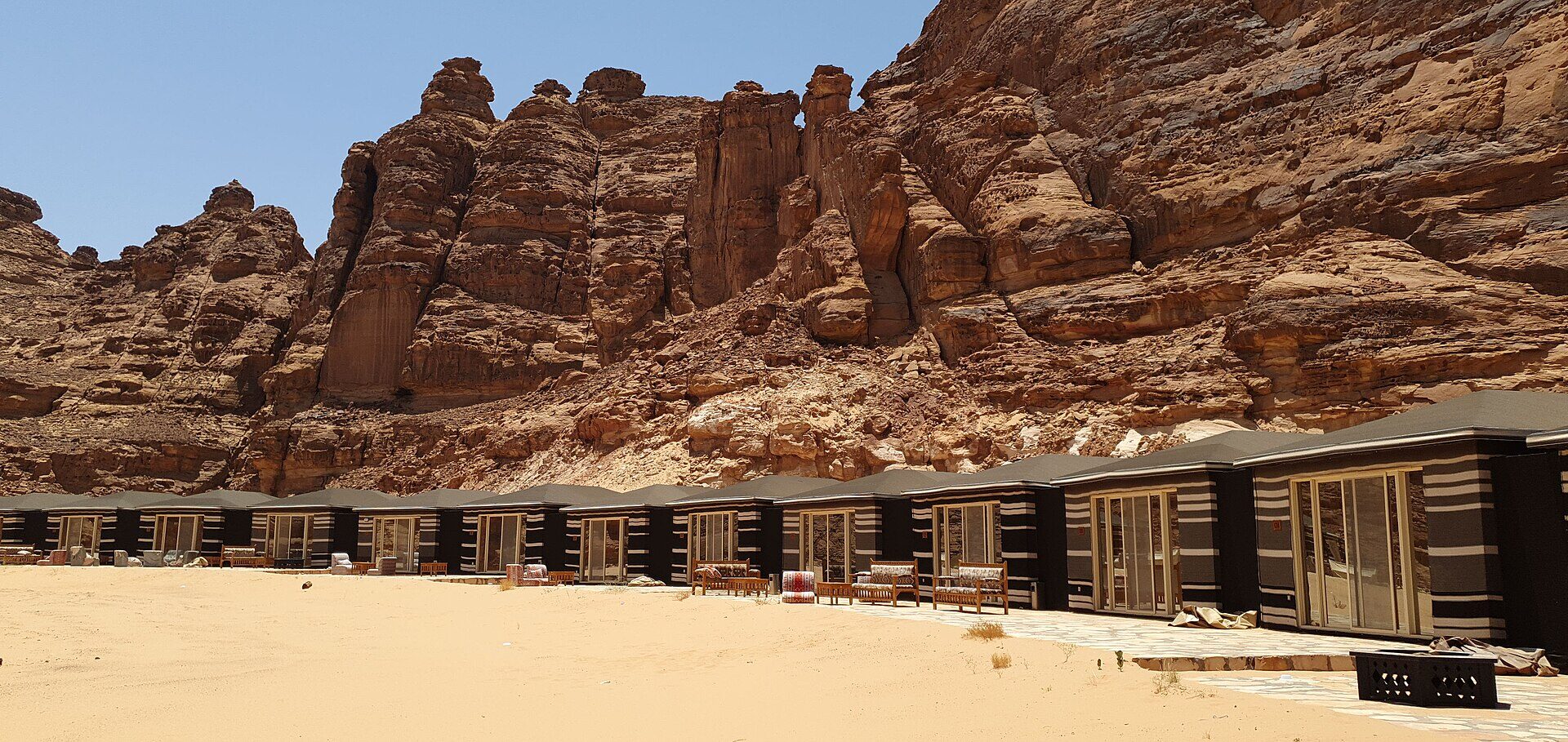
AlUla: The Heartland of Saudi Eco-Lodges
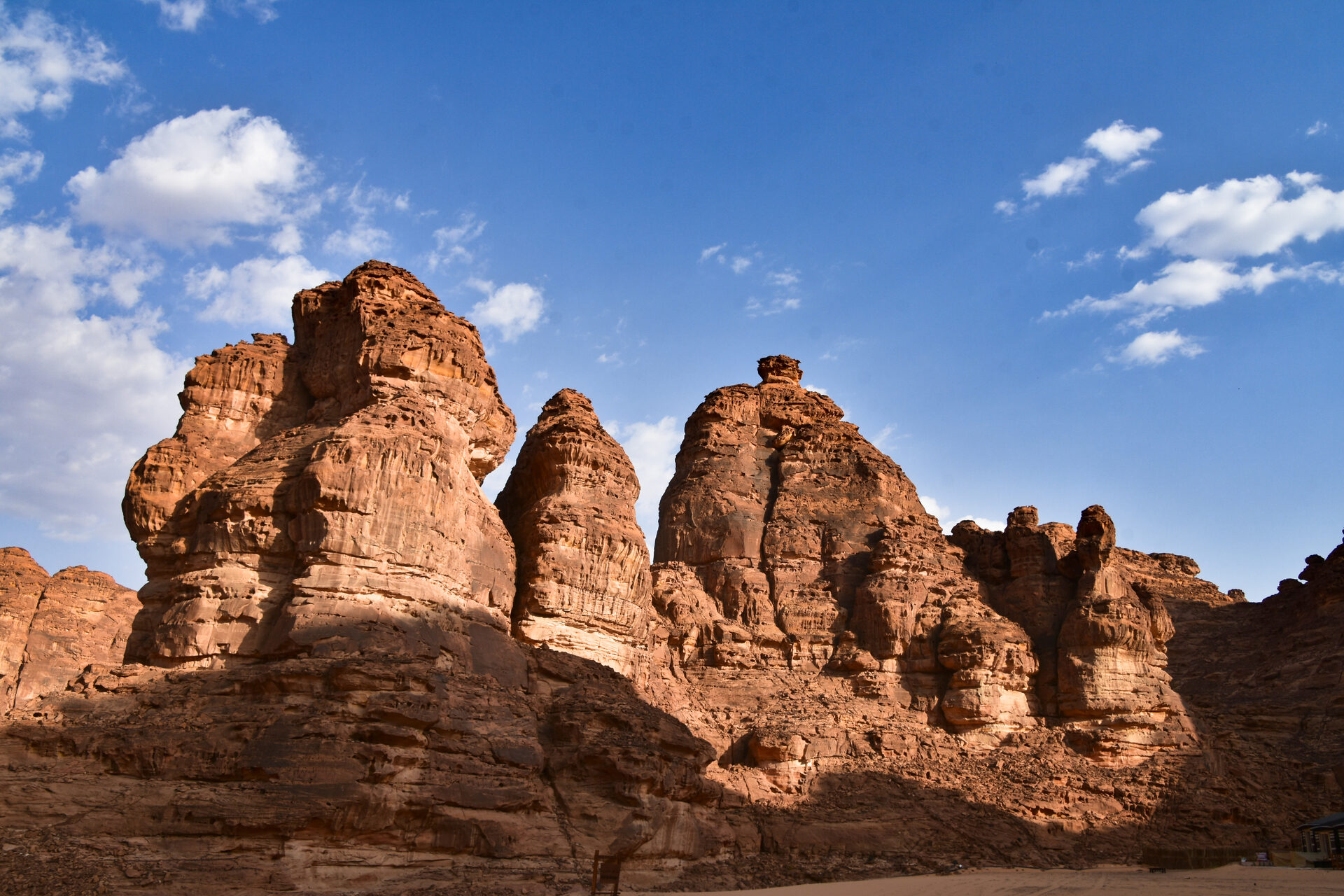
AlUla is where Saudi Arabia’s sustainable hospitality story began. The ancient Nabataean valley — home to the UNESCO World Heritage Site of Hegra — now hosts four distinct eco-conscious properties, each using the canyon landscape as both setting and design principle. If you are planning a stay in AlUla, our complete AlUla accommodation guide covers every option, but the eco-lodges below deserve special attention.
Our Habitas AlUla
The property that put Saudi eco-lodging on the map. Our Habitas occupies a palm oasis in the Ashar Valley, with 96 rooms built using low-impact construction methods that preserve the surrounding sandstone formations. The architecture is deliberately understated — earth-toned structures that recede into the landscape rather than dominating it.
Three villa categories are available: Canyon Villas with direct views of the rock walls, Alcove Villas tucked into sheltered niches, and Celestial Villas equipped with personal telescopes for the valley’s exceptional dark skies. The on-site restaurant Tama sources ingredients from local farms and the property’s own gardens.
Booking tip: Rates start around $294/night in the low season (April–September) and climb to $700–$1,500 during the Winter at Tantora season (December–March). Book directly through ourhabitas.com for the best cancellation terms. The property is adults-only.
Caravan by Our Habitas
A more playful take on desert glamping: 22 luxury Airstream caravans parked along the ancient incense route in the Ashar Valley. Each trailer is fully fitted with air conditioning, en-suite bathrooms, surround sound, and a private outdoor deck. An outdoor pool, nightly open-air film screenings, and a spa round out the communal facilities.
Rates begin at approximately SAR 1,090/night (around $290), making this one of the more accessible luxury options in AlUla. It sits within walking distance of Our Habitas and shares some of its dining and wellness programming. For travellers who want the desert experience without roughing it, this is the sweet spot. Check our glamping in Saudi Arabia guide for more options in this category.
Banyan Tree AlUla
The highest-end eco option in the valley. Banyan Tree brought 47 luxury tented villas to AlUla in 2024, ranging from one-bedroom dune villas to three-bedroom pool villas sprawling across 10,000 square metres. The property holds Green Globe certification, measuring its impact across environmental, community, cultural heritage, and economic dimensions.
Banyan Tree’s signature spa programme is present, alongside cultural excursions to Hegra, Dadan, and Jabal Ikmah. Expect rates from $500 to $1,500+ per night depending on season and villa category. Book through banyantree.com or through the Royal Commission for AlUla’s official platform.
Shaden Resort (MGallery by Accor)
A mid-range option that proves eco-conscious stays do not have to break the bank. Shaden Resort sits near Elephant Rock and within 22 kilometres of Hegra, offering rooms from approximately $150 to $400 per night. The property integrates into the natural sandstone landscape and runs guided ecotours, a ropes course, and stargazing sessions. As part of Accor’s MGallery collection, it follows the group’s sustainability commitments including waste reduction and local sourcing targets.
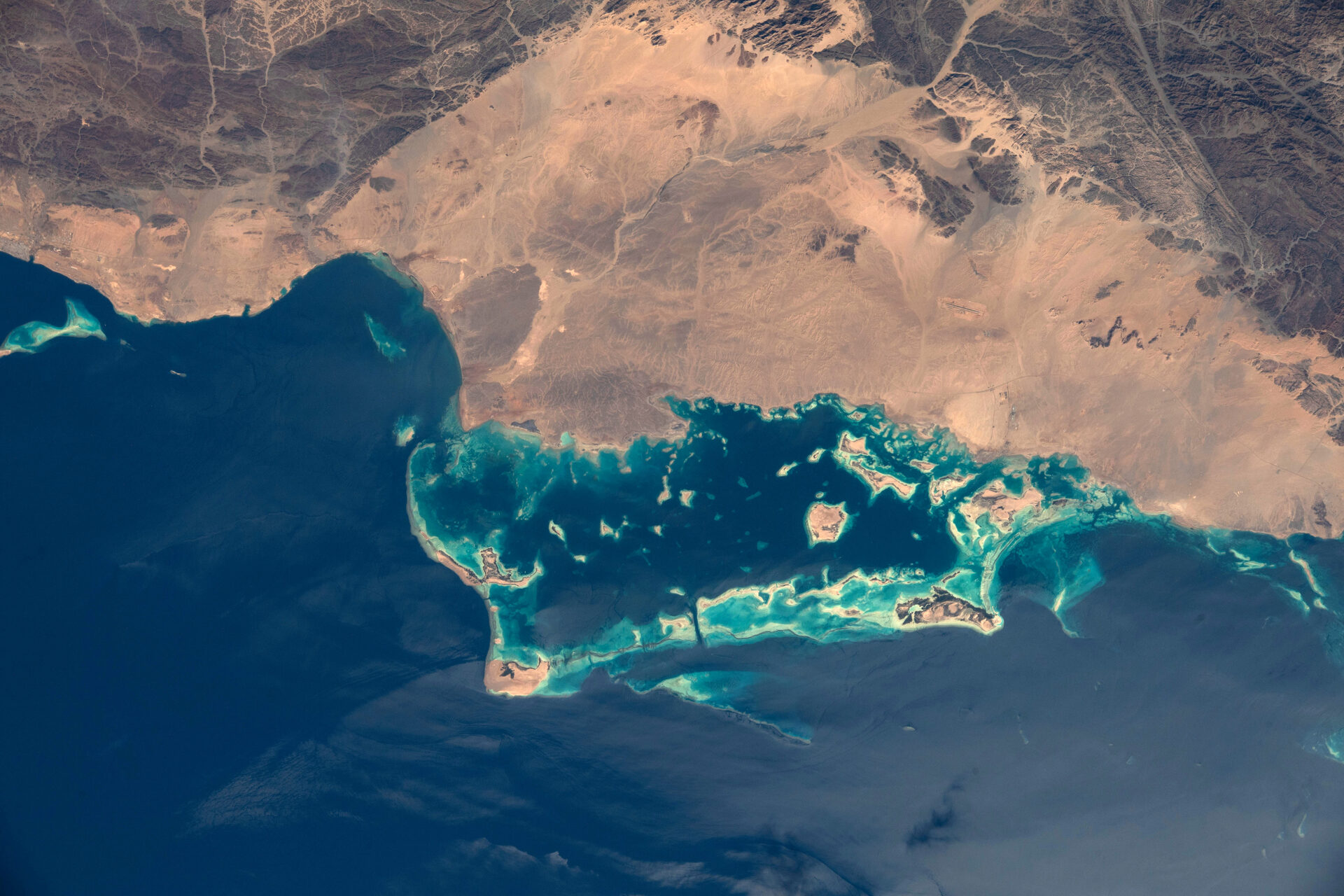
The Red Sea: Off-Grid Ultra-Luxury
Red Sea Global’s coastal development is the most technically ambitious sustainable tourism project on earth. Spanning 28,000 square kilometres of coastline, islands, and desert along Saudi Arabia’s northwestern Red Sea shore, the entire destination runs on 100% renewable energy — including one of the world’s largest off-grid battery storage systems. Only 1% of the total area is developed; 75% is designated specifically for conservation. The developer holds EarthCheck Sustainable Destinations certification, the first in Saudi Arabia. You can read more about the resort cluster in our Red Sea Project resorts guide and the ultra-luxury tier in our AMAALA resort guide.
Shebara Resort
Opened November 2024 on Sheybarah Island, Shebara is the most visually striking eco-resort in the country. Its 73 overwater villas are reflective stainless-steel orbs designed by Killa Design (the firm behind Dubai’s Museum of the Future). Each orb sits above the turquoise shallows, powered entirely by an on-site solar farm with solar-powered desalination providing freshwater.
The property operates a strict zero-waste policy: all waste is recycled, composted, or reused. Marine conservation is embedded into the guest experience — snorkelling excursions double as reef monitoring sessions. Rates are ultra-luxury tier, estimated at $2,000+ per night with 20% discounts available for stays of three nights or more via shebara.sa.
Desert Rock Resort
Opened in late 2024, Desert Rock takes a radically different approach: its 64 villas and hotel rooms are built directly into the granite mountains of the inland Red Sea destination, designed by Oppenheim Architecture to minimise visual disruption of the landscape. A feature lagoon oasis anchors the property. Like all Red Sea Global resorts, it runs on 100% renewable energy.
This is the resort for travellers who want the Red Sea experience without the beach — a mountain retreat in the desert interior, with hiking trails, geological excursions, and dark-sky astronomy programmes. Book via desertrock.sa; rates are comparable to Shebara.
Nujuma, a Ritz-Carlton Reserve
On Ummahat Island, Nujuma opened in May 2024 and promptly won Forbes Travel Guide’s Hotel of the Year. It is entirely solar-powered and equips each villa with personal carbon footprint trackers and environmental sensors. The on-site Nujuma Conservation Centre runs marine and ecosystem education programmes for guests, working toward a 30% net conservation benefit by 2040.
Rates start around $2,640/night for entry-level villas and rise to $4,600+ for premium categories, making it the most expensive hotel in the Gulf. Cristiano Ronaldo reportedly purchased two villas here in late 2025, which gives some indication of the clientele. The property is ideal for honeymoons, milestone celebrations, and anyone who wants the Maldives experience with a conservation conscience.
AMAALA: Where Wellness Meets Conservation
AMAALA, Red Sea Global’s ultra-luxury sister destination, opened its Triple Bay phase in November 2025 with six world-class brands: Four Seasons, Six Senses, Nammos, Rosewood, Equinox, and Ritz-Carlton. The entire complex runs on renewable energy, eliminating an estimated 350,000 tonnes of CO2 equivalent annually. A hard visitor cap of 500,000 per year protects the surrounding marine and desert ecosystems.
The Six Senses AMAALA property deserves particular mention for eco-travellers — the brand’s global reputation for sustainability programming (Earth Labs, grow-your-own gardens, zero-waste kitchens) is fully implemented here. A yacht club, marine life institute, and state-of-the-art marina round out the facilities. Rates across all AMAALA brands sit firmly in the ultra-luxury category.
Emerging Eco-Lodges: Opening 2025–2026
Saudi Arabia’s sustainable hospitality pipeline is filling rapidly. Three new properties from the ENVI Lodges brand alone are scheduled to open before the end of 2026, each targeting a different Saudi landscape.
ENVI Laguna Bay — King Abdullah Economic City
Opening in 2025, ENVI Laguna Bay brings 40 beach pod lodgings and a presidential villa to the Red Sea coast near King Abdullah Economic City (KAEC). Each pod features a private pool, surrounded by mangroves with an active mangrove regeneration programme. Designed by Gensler, the property includes a wellness centre, overwater deck, ENVI garden, and beach club. This will be one of the most accessible five-star eco-lodges geographically — KAEC is roughly 100 kilometres north of Jeddah, reachable by car in about 90 minutes. Learn more at envilodges.com.
ENVI Al Nakheel — Al Ahsa Oasis
Opening September 2026 within Saudi Arabia’s UNESCO-listed Al Ahsa Oasis — the world’s largest natural oasis, containing over 2.5 million date palms. The property will offer 25 private pool villas amid the palm groves, with farm-to-table dining celebrating Al Ahsa’s agricultural heritage and wellness programming inspired by local healing traditions. This is the eco-lodge for travellers interested in Saudi Arabia’s Eastern Province and its deep agricultural history. Our Dammam hotels guide covers the broader Eastern Province accommodation landscape.
ENVI Al Shafa — Taif Highlands
Saudi Arabia’s first high-altitude eco-lodge, opening December 2026 in the Al Shafa district above Taif at over 2,000 metres elevation. The 35 villas (one-, two-, and three-bedroom layouts) offer sweeping valley views with cool temperatures year-round — a genuine rarity in Saudi Arabia. Multi-generational wellness programming includes children’s mindfulness sessions, adult longevity therapies, and senior rejuvenation programmes. The Taif highlands are also famous for their Damask rose farms, best visited during the spring bloom season.
Collective Trojena — NEOM
Opening in 2026 within NEOM’s Trojena mountain district, roughly 50 kilometres from the Gulf of Aqaba. Collective Retreats, a US-based operator, is building approximately 60 open-air guest rooms in a glamping format powered by solar and wind energy. The property promises zero waste residual through advanced water desalination and brine processing. Activities include skiing, snowboarding, paragliding, mountain biking, and hiking — a completely different eco-lodge experience from anything else in Saudi Arabia.
Desert Camps and Budget Eco-Stays
Not every sustainable stay in Saudi Arabia costs four figures a night. The Kingdom’s desert camp sector is growing, and several operators combine genuine sustainability practices with much more accessible price points. Our glamping guide and budget travel guide cover this tier in more detail.
Hisma Nomad Desert Camp — Tabuk
Located in the Hisma Desert near Tabuk, this solar-powered camp operates 15 modern “Moon Tents” (SAR 450–550/night, approximately $120–145) and 5 traditional-style tents (SAR 700–850/night, approximately $185–225), breakfast included. The entire camp runs on solar energy with a minimal desert footprint. The surrounding Hisma landscape — vast red sand plains flanked by sandstone pillars — rivals Wadi Rum across the Jordanian border. Book through tabuktours.com.
Asir Highland Glamping
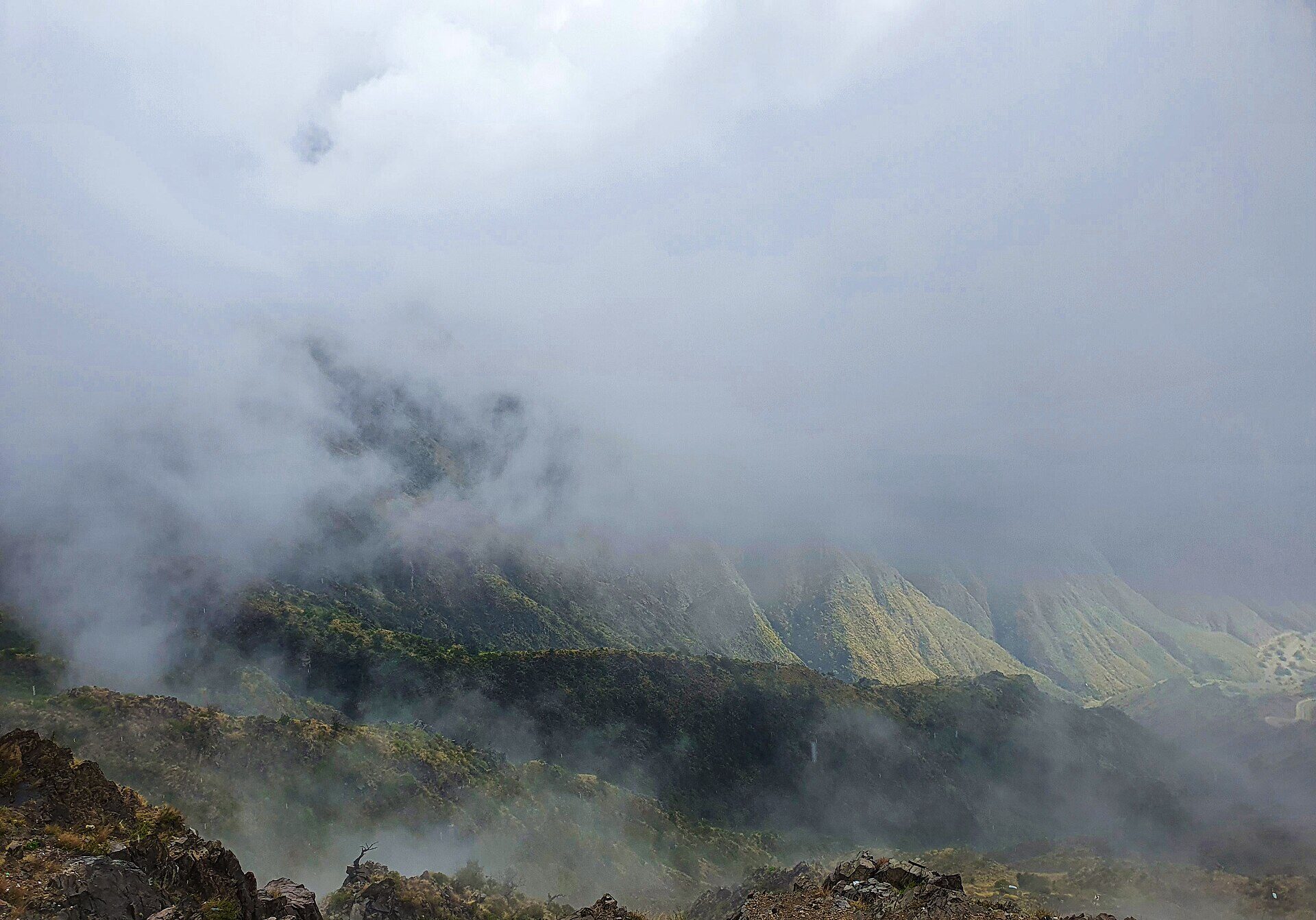
In the Asir mountains south of Abha, several operators run tented camps on wooden terraces overlooking the green valleys of the Sarawat range. Facilities are simpler than the luxury tier — expect comfortable beds, communal dining, and guided hikes or paragliding excursions — but the setting is extraordinary. The Asir highlands receive more rainfall than anywhere else in the Arabian Peninsula, creating a landscape of juniper forests, terraced farms, and cloud-wrapped peaks that most visitors never expect to find in Saudi Arabia.
How Saudi Eco-Lodges Compare
| Property | Location | Price Range/Night | Key Sustainability Feature | Status |
|---|---|---|---|---|
| Our Habitas AlUla | AlUla | $294–$1,500 | Low-impact construction, farm-to-table | Open |
| Caravan by Habitas | AlUla | $290–$400 | Low-footprint Airstream glamping | Open |
| Banyan Tree AlUla | AlUla | $500–$1,500+ | Green Globe certified | Open |
| Shaden Resort | AlUla | $150–$400 | Landscape integration, ecotours | Open |
| Shebara Resort | Red Sea | $2,000+ | 100% solar, zero waste, solar desalination | Open |
| Desert Rock | Red Sea | $2,000+ | Built into mountains, 100% renewable | Open |
| Nujuma Ritz-Carlton | Red Sea | $2,640–$4,600+ | Solar-powered, carbon trackers, conservation centre | Open |
| Hisma Nomad Camp | Tabuk | $120–$225 | Solar-powered camp | Open |
| ENVI Laguna Bay | KAEC | TBC (5-star) | Mangrove regeneration programme | Opening 2025 |
| ENVI Al Nakheel | Al Ahsa | TBC (5-star) | UNESCO oasis setting, farm-to-table | Opening Sep 2026 |
| ENVI Al Shafa | Taif | TBC (5-star) | High-altitude, cool climate year-round | Opening Dec 2026 |
| Collective Trojena | NEOM | TBC | Solar+wind, zero waste residual | Opening 2026 |
When to Visit
The best season depends entirely on which eco-lodge region you are targeting:
- AlUla (desert): November to March. Daytime highs of 20–28°C, cool nights ideal for stargazing. The Winter at Tantora season (December–March) adds cultural events, concerts, and art installations. Avoid June to September when temperatures regularly exceed 45°C.
- Red Sea coast: Year-round, but March to May and October to November are optimal — warm water for diving and snorkelling without the extreme summer humidity. Water temperatures hover around 26–30°C.
- Asir highlands: March to May and September to November. The monsoon-influenced summer (June–August) brings cloud cover and cooler temperatures but also occasional heavy rain. Spring wildflowers peak in March.
- Tabuk / Hisma Desert: October to April. The northwestern desert is the coldest region in Saudi Arabia, with winter nights dropping below 5°C — pack layers for desert camp stays.
- Taif highlands: Year-round thanks to altitude (2,000m+). Peak season is spring (March–May) when the famous Taif roses bloom.
- Book early for peak season: AlUla eco-lodges sell out months in advance during Winter at Tantora. Red Sea properties are less seasonal but holiday periods (Eid, Christmas, New Year) fill fast.
- Direct booking vs. aggregators: Red Sea Global properties (Shebara, Desert Rock, Nujuma) often offer better rates and packages through their own websites. AlUla properties are available on Booking.com and Expedia but direct booking through ourhabitas.com or banyantree.com typically offers more flexible cancellation.
- Package deals: The Royal Commission for AlUla and the Saudi Tourism Authority both run seasonal packages that bundle accommodation with experiences (Hegra tours, desert excursions, cultural events). Check experiencealula.com before booking separately.
- Transfer logistics: Most eco-lodges are remote by design. Confirm airport transfer arrangements at booking — some properties include them, others charge separately. Red Sea Global operates its own transfer fleet including seaplanes.
- Layers for desert nights — temperatures can drop 20°C between day and night in AlUla and Tabuk
- Reef-safe sunscreen for Red Sea properties (chemical sunscreens damage coral)
- Modest clothing for excursions to heritage sites and local communities
- Good walking shoes — most eco-lodges involve terrain that sandals cannot handle
- A reusable water bottle — most properties have filtered water stations rather than single-use plastic
- EarthCheck: The Red Sea destination holds EarthCheck’s Sustainable Destinations certification — the first in Saudi Arabia. This is the gold standard for destination-level sustainability.
- Green Globe: Banyan Tree AlUla holds Green Globe certification, which measures environmental impact, community engagement, cultural heritage preservation, and economic benefit.
- GSTC (Global Sustainable Tourism Council): Several upcoming properties are pursuing GSTC recognition, which aligns with UN Sustainable Development Goals.
- Saudi Arabia Hotels Guide — Complete accommodation guide across every region and budget
- Glamping in Saudi Arabia — Desert luxury under the stars, from budget camps to ultra-luxury tents
- Best Hotels in AlUla — Every accommodation option in Saudi Arabia’s most dramatic valley
- AlUla Camps and Desert Lodges — Complete guide to AlUla’s camp-style stays
- Red Sea Project Resorts — AMAALA, Sindalah, and Shura Island resort breakdown
- AMAALA Resort Guide — Ultra-luxury at Saudi Arabia’s Red Sea wellness destination
- Saudi Arabia Travel Guide — The complete guide to visiting the Kingdom
- Saudi Arabia Visa Guide — Every visa type explained
Practical Information
Getting There
Most eco-lodge regions now have direct air access. AlUla’s airport (ULH) receives domestic flights from Riyadh and Jeddah via Saudia and flynas. The Red Sea destination has its own airport (RSI — Red Sea International, opened 2023) with connections from Riyadh, Jeddah, and planned international routes. Tabuk’s airport (TUU) serves the Hisma Desert and NEOM region. For the Asir highlands, fly into Abha (AHB). ENVI Laguna Bay at KAEC is a 90-minute drive from Jeddah’s King Abdulaziz International Airport (JED).
International visitors will need a Saudi tourist e-visa, available online for citizens of 60+ countries. The application takes minutes and costs approximately SAR 535 (around $142) including insurance.
Booking Tips
What to Pack
Sustainability Certifications to Look For
Saudi Arabia does not yet have a national eco-tourism certification, but international frameworks are being adopted across the sector:
When a property describes itself as “eco” but holds no third-party certification, ask specifically about energy sources, waste management, water treatment, and local employment percentages. The best Saudi eco-lodges are transparent about these metrics; the rest are using the word as marketing.