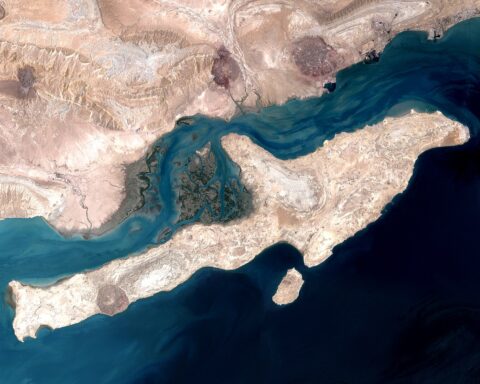
TEHRAN — Iran’s Persian Gulf Strait Authority on May 22 published a jurisdiction map anchoring its claimed maritime management zone to two points on UAE sovereign territory — south of Fujairah on the eastern boundary and Umm al-Quwain on the west — extending the zone beyond the boundaries of a map issued 18 days earlier. Five GCC states responded with a joint letter to the International Maritime Organization warning commercial vessels not to comply with PGSA routing directives. Oman, whose territorial waters are named in the encroachment zone and whose jurisdiction over the Strait’s inbound shipping lane is established by a 1974 bilateral treaty with Iran, did not sign.
The map converts what has been an operational toll regime — the PGSA has collected fees from transiting vessels since its May 5 launch — into a formal jurisdictional assertion drawn on another state’s territory. Euronews described the May 22 publication as “a deliberate step-by-step expansion of its territorial claims,” noting the zone exceeds the boundaries Iran outlined on May 4. Bloomberg reported on May 21 that Iran and Oman are actively negotiating a “permanent toll system” to formalize the arrangement — the same arrangement the GCC letter asks vessels to reject.
Table of Contents
The Map: Kuh-e Mubarak to Fujairah
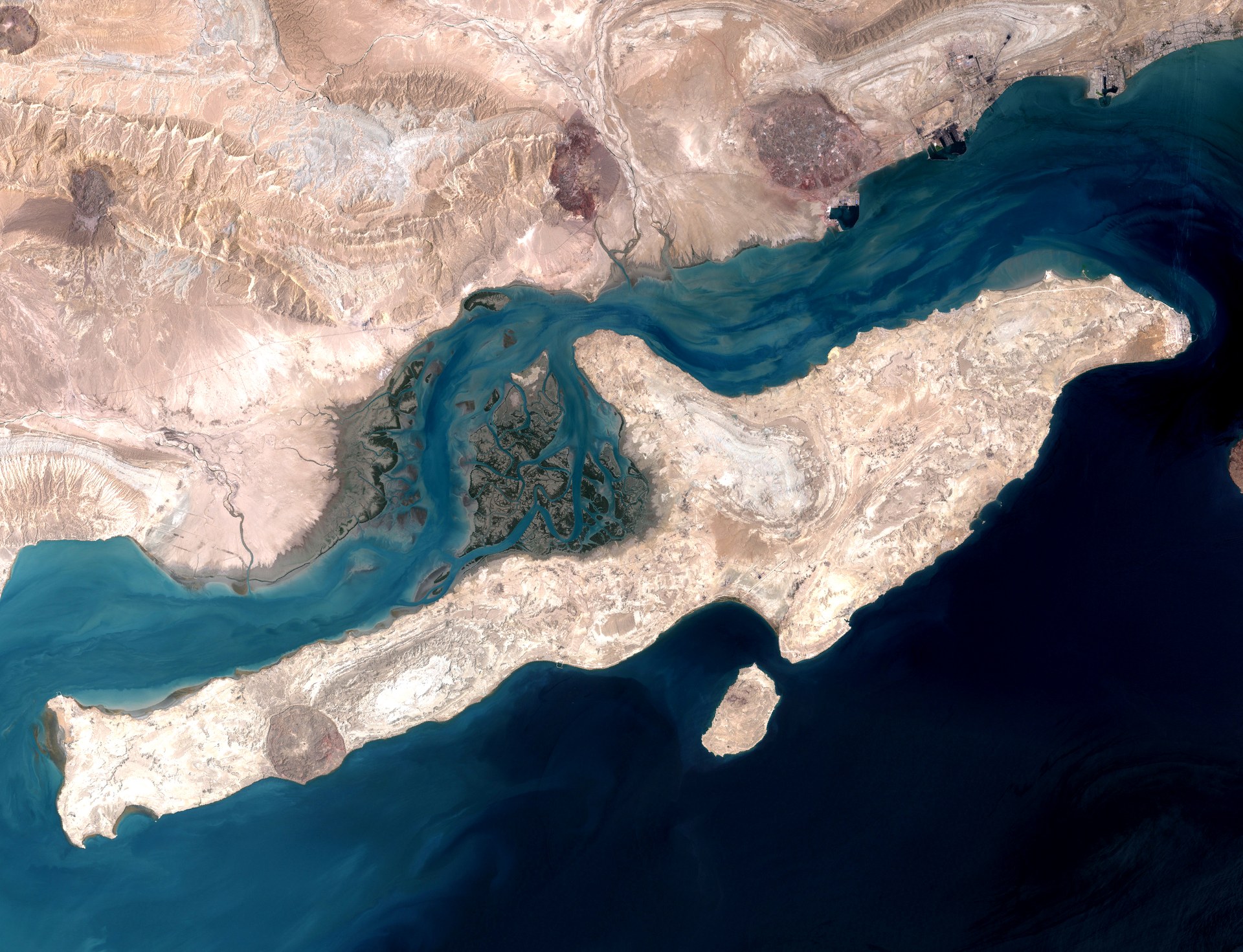
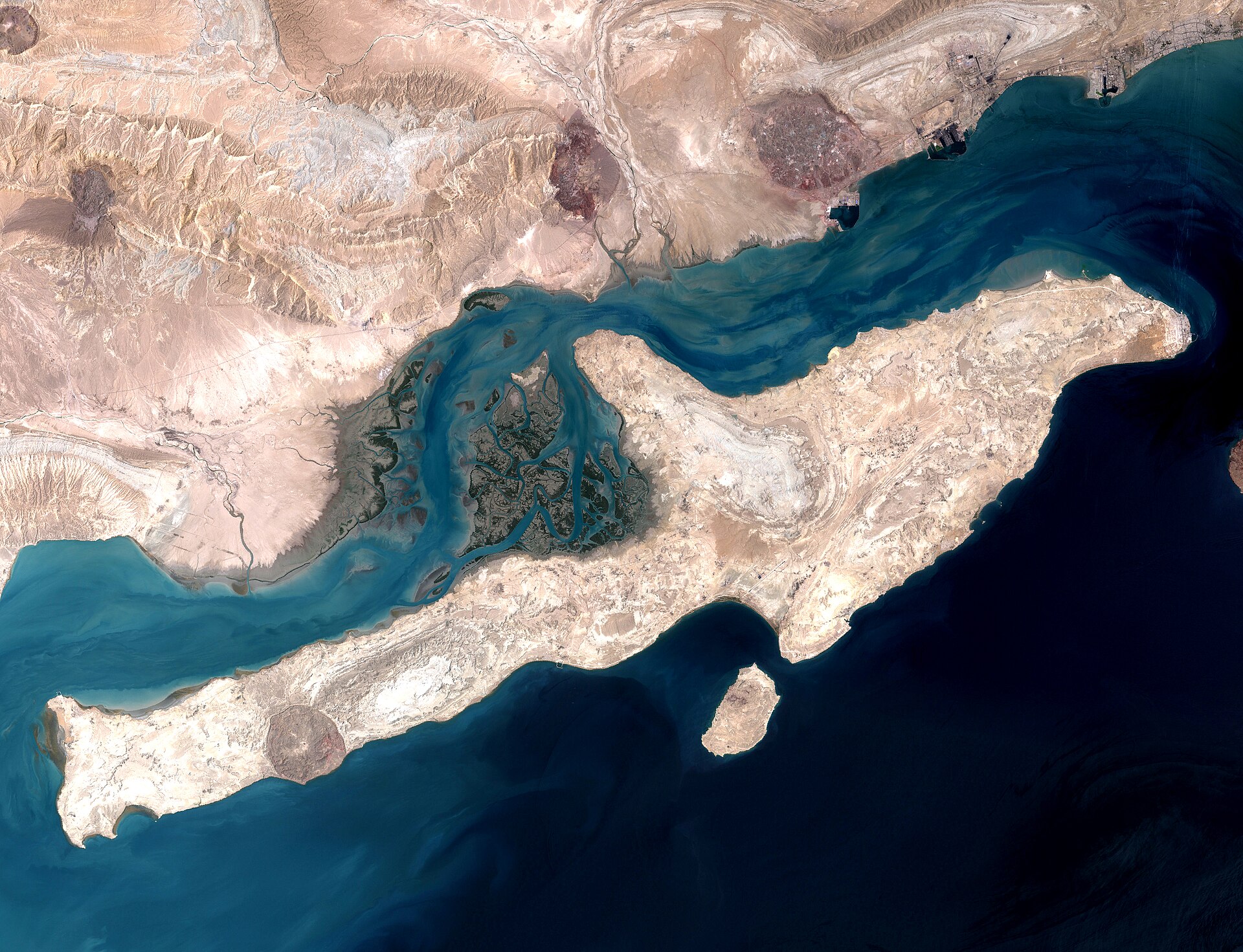
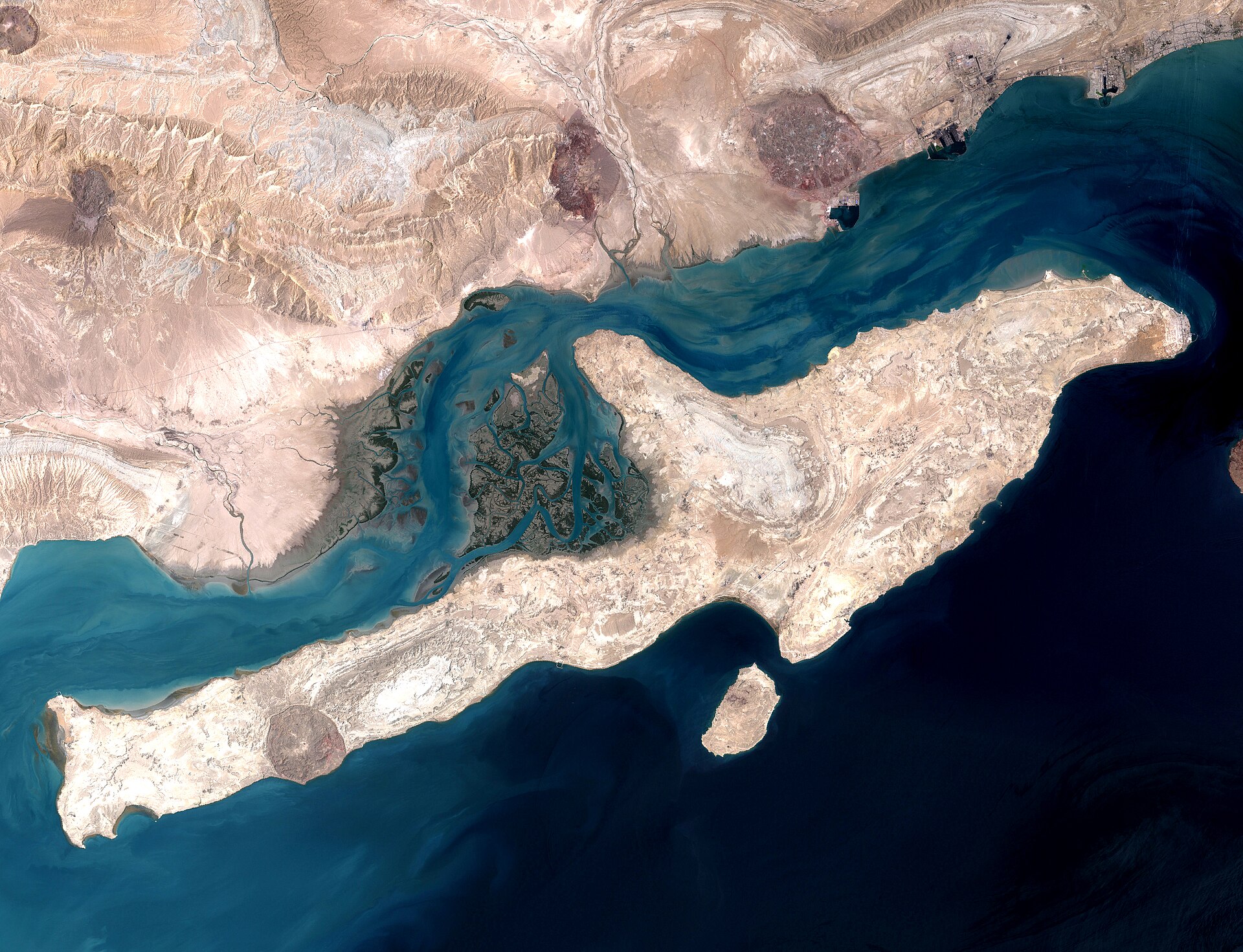
The PGSA-defined zone runs along two axes. The eastern boundary traces a line from Kuh-e Mubarak on the Iranian coast to a point south of Fujairah, the emirate that hosts the terminus of the Abu Dhabi Crude Oil Pipeline (ADCOP) — a 1.8-million-barrel-per-day facility constructed to bypass Hormuz. The western boundary runs from the tip of Qeshm Island to Umm al-Quwain, a UAE emirate approximately 200 kilometers northwest of Fujairah. Both anchor points fall on UAE sovereign territory.
All vessels transiting the zone must obtain prior authorization from the PGSA before entry, according to PressTV on May 20 and BusinessToday India on May 21. The authority operates a published fee schedule — up to $2 million per VLCC, or roughly $0.50 to $1.00 per barrel.
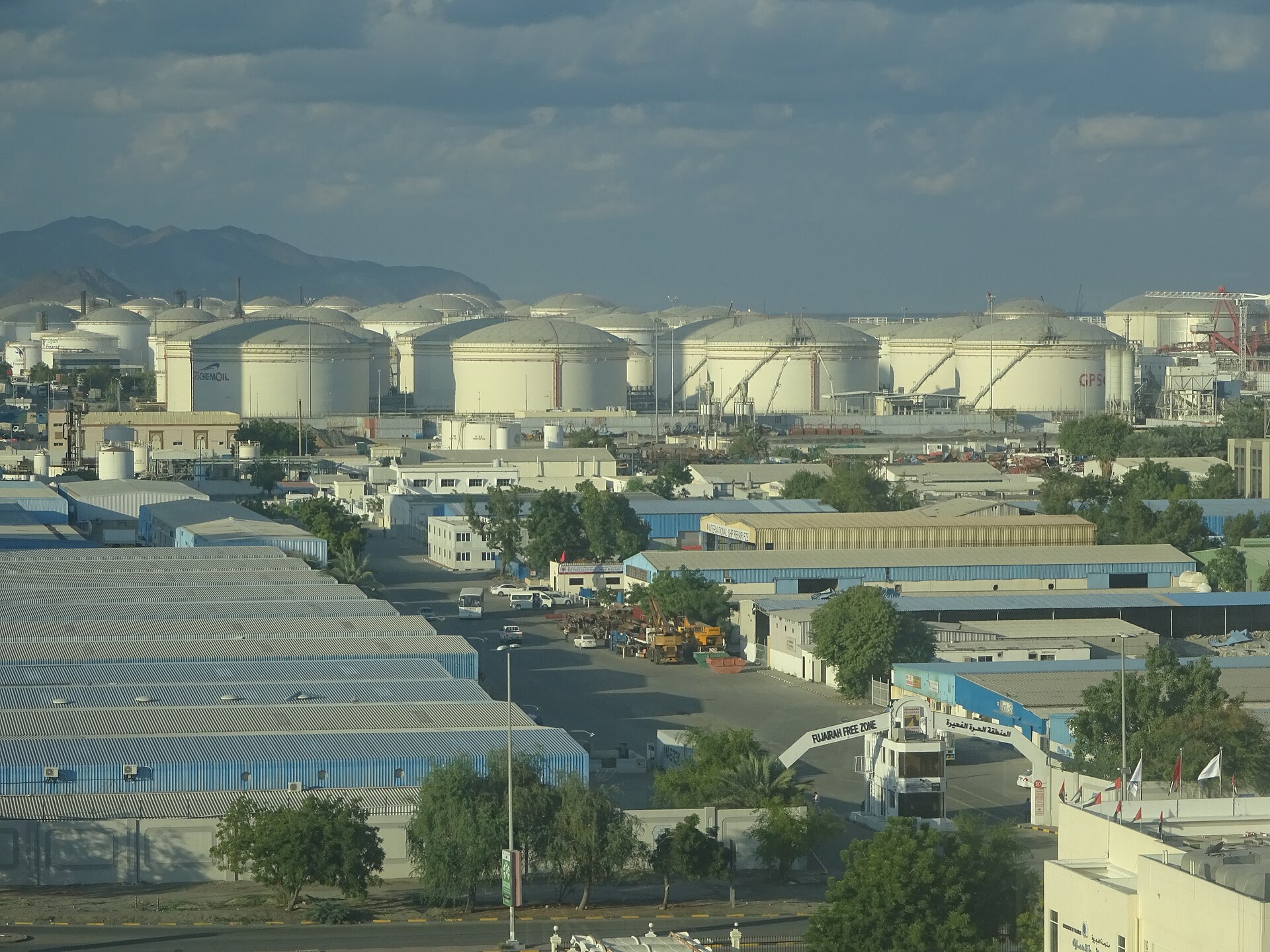
Fujairah’s inclusion matters because of what sits there. The ADCOP was the UAE’s infrastructure answer to Hormuz dependency — crude piped overland from the Habshan fields to Fujairah’s coast, exporting without entering the Strait. Iran’s map draws what DiscoveryAlert described as a “surveillance footprint” over the pipeline’s export terminus.
This is the second map in 18 days. The first, issued May 4 — one day before the PGSA’s formal launch — defined a smaller zone. The May 22 version expanded it. Euronews characterized the pattern as “a deliberate step-by-step expansion” rather than a single, fixed territorial claim.
The Middle East briefing 3,000+ readers start their day with.
One email. Every weekday morning. Free.
What Can the GCC Letter to the IMO Actually Do?
Bahrain, Kuwait, Qatar, Saudi Arabia, and the UAE signed the joint letter to the IMO, warning merchant and commercial vessels against engaging with the PGSA or following its routing directives. The letter is a formal diplomatic filing — a legal marker establishing on the record that five of the six GCC states do not recognize the PGSA’s jurisdiction.
It has no enforcement mechanism.
IMO Secretary General Arsenio Dominguez stated on April 9 that “there is no international agreement where tolls can be introduced for transiting international straits,” calling any such toll a “dangerous precedent.” The IMO Legal Committee adopted a resolution at its 113th session (LEG 113) condemning Iran’s closure of the Strait, attacks on vessels, threats of mining, and the fee system. IMO resolutions are political statements, not legally binding instruments. The IMO has no naval capacity.
The enforcement path runs through the UN Security Council — which Russia and China blocked on April 7, vetoing a draft resolution co-authored by the United States and Bahrain and co-sponsored by Saudi Arabia, the UAE, Kuwait, and Qatar. The vote was 11-2-2. A second draft, accumulating 137 co-sponsors, met the same result.
The GCC letter establishes non-recognition of the PGSA’s jurisdiction. It does not compel non-compliance from ship operators, who face the practical reality of a PGSA checkpoint backed by IRGC naval assets in the Strait. The solidarity projected by the five-state filing fractured hours after it was submitted: Qatar co-signed the IMO protest and simultaneously dispatched a negotiating team to Tehran on the same day — an alignment of diplomatic positions that cannot be reconciled within any single strategic logic. The practical consequence is visible in the two-tier LNG clearance that followed: the selective PGSA permit architecture for Qatari LNG tankers allowed Al Kharaitiyat through on May 10 via a Pakistan G2G arrangement while Rasheeda has remained anchored for seven weeks. The split between those two vessels documents Iran’s permission regime in its operational form — independent of any IMO letter or UNSC draft. UAE presidential adviser Anwar Gargash’s characterisation of this divergence as “the weakest historically” GCC response is the institutional verdict on what the five-state letter actually achieved. His full assessment of GCC structural underperformance is examined here.
Why Didn’t Oman Sign?
Oman’s absence from the five-state letter is the document’s most informative feature. Bloomberg reported on May 21 that Iran and Oman are actively negotiating the terms of a permanent toll system — a formalized version of the traffic-management arrangement the PGSA has operated since May 5.
Iran’s ambassador to France, Mohammad Amin-Nejad, framed the arrangement in explicitly bilateral terms on May 21.
“Iran and Oman must mobilize all their resources both to provide security services and to manage navigation in the most appropriate manner… this will entail costs, and it goes without saying that those who wish to benefit from this traffic must also pay their share.”
— Mohammad Amin-Nejad, Iranian Ambassador to France, Bloomberg, May 21, 2026
“Iran and Oman” — not Iran alone, not the GCC, not the international community. Iran has positioned Oman as co-author of the Hormuz governance mechanism since the Muscat talks, converting what international law treats as a unilateral encroachment into a bilateral arrangement between the two states whose territorial seas overlap in the Strait’s navigable channel.
Oman’s position contains a structural contradiction. The 1974 Iran-Oman maritime boundary treaty establishes Omani jurisdiction over the Strait’s inbound shipping lane. Iran’s May 22 map claims a zone that crosses this boundary without reference to the treaty. Oman is simultaneously a treaty-holder whose maritime boundaries are being overridden and a co-negotiator in the system doing the overriding.
Iranian state media has treated Oman’s participation as evidence that the governance mechanism carries regional acceptance. PressTV ran a companion piece to the map publication titled “Iran’s new blueprint for management of Strait of Hormuz in post-American regional order” — framing the PGSA not as a wartime expedient but as permanent post-conflict architecture.
The 12-Article Statute Behind the Map
The PGSA is the executive arm of a domestic law — “The Law on Establishing Iran’s Sovereignty over the Strait of Hormuz” — a 12-article statute that passed Iran’s National Security and Foreign Policy Committee on April 21 and awaits a full parliamentary chamber vote.
The statute authorizes the PGSA to collect tolls for “environmental and security services,” prohibit transit for entities deemed “hostile to Iran,” and ban Israeli-flagged or Israeli-owned vessels under any circumstances. The PGSA launched on May 5 with a registered domain (PGSA.ir), a contact email address, and published fee schedules, according to PressTV.
Legal scholars of international maritime law have characterized the statute as an attempt to domesticate waterway governance — claiming legislative jurisdiction over what UNCLOS treats as a transit-passage corridor, converting what had been factual coercion into a formal legal entitlement.
Iran signed UNCLOS in 1982 but never ratified it. Upon signing, Iran entered a declaration stating that only UNCLOS state parties would be entitled to benefit from transit-passage rights — a position international law scholar Marc Weller described as “legal incoherence as a matter of treaty law.” Weller noted that as long as a vessel does not linger in an international strait, it has an “absolutely unsuspendable right of passage.”
The 1987-88 Tanker War offers limited precedent. During the Iran-Iraq war, Iran threatened to close Hormuz as a military act. The United States responded with Operation Earnest Will — a convoy escort operation beginning July 1987. In 2026, Iran has not merely threatened closure. It has passed a statute, created an institution, published successive maps, and begun collecting fees — a step from the operational to the juridical that Iran did not take during the Tanker War.
The Enforcement Gap
The only actors with the naval capacity to contest PGSA operations in the Strait are the United States and NATO allies. On May 21, NATO foreign ministers met in Helsingborg, Sweden, where the United States proposed a “Maritime Freedom Construct” — a coalition naval framework for Hormuz operations. Bahrain and the UAE offered to join. The GCC as a body is not a party to the MFC’s design.
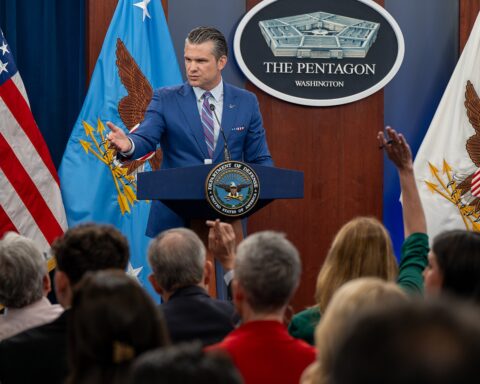
US Secretary of State Marco Rubio stated on May 21 that a Hormuz toll system would make any US-Iran deal “unfeasible.” At the Helsingborg meeting the following day, Rubio named Hormuz tolls as a co-equal sticking point alongside enriched uranium, telling reporters “we’re not there yet” — the clearest public linkage a senior US official has made between the PGSA toll architecture and the ongoing nuclear negotiations.
Saudi Arabia signed the IMO letter and co-sponsored the vetoed UNSC resolution. It does not have a bilateral legal instrument with Iran governing Hormuz navigation — unlike Oman, which has the 1974 maritime boundary treaty. It does not have a seat in the NATO MFC framework being assembled at Helsingborg. And it does not have UNSC recourse after the April 7 veto.
The enrichment asymmetry at the heart of Saudi Arabia’s position — Riyadh has no prohibition on enrichment under its own 123 agreement while urging Washington to impose a moratorium on Iran — is the structural exposure that the IMO letter cannot paper over.
The institutional architecture of response is fragmented across bodies with no shared enforcement capacity. The GCC has filed a protest with the IMO. The IMO has adopted a non-binding condemnation. The Security Council is blocked. NATO is designing a response mechanism without formal GCC representation. Iran has published a second map.
Background
The Strait of Hormuz is 21 nautical miles at its narrowest point. Oman extended its territorial sea to 12 nautical miles in 1972; Iran did so in 1959. The entire navigable channel falls within the overlapping territorial seas of the two states.
Since Iran’s formal blockade of the Strait beginning in April, 45 vessels have completed Hormuz transits — approximately 3.6% of the pre-war baseline. Aramco CEO Amin Nasser told CNBC on May 11 that oil markets would normalize “only in 2027” if the Strait does not reopen within “a few weeks from today” — placing a mid-June threshold on the crisis timeline.
The UK-GCC free trade agreement signed May 20 — valued at $5 billion per year — was negotiated during the same weeks in which Iran was publishing jurisdiction maps over UAE territorial waters. The trade deal’s volume projections assume resumed Hormuz traffic.
Saudi Arabia’s Q1 2026 budget deficit reached $33.5 billion — 194% of its full-year target — driven in part by suppressed oil export capacity. PIF’s $7 billion bond sale on May 20 drew a $23.8 billion orderbook but priced at spreads reflecting wartime sovereign risk. The EIA’s May 2026 Short-Term Energy Outlook projects Brent crude at $79 per barrel by 2027, contingent on Middle East production normalization.
Frequently Asked Questions
What is the legal difference between “transit passage” and “innocent passage”?
Transit passage applies to straits connecting areas of high seas or exclusive economic zones — including Hormuz — and cannot be suspended by the coastal state for any reason under UNCLOS Articles 37-44. Innocent passage, which governs territorial seas generally, can be temporarily suspended for security purposes. Iran’s toll regime attempts to condition transit passage on payment and prior authorization, which is impermissible under either category. Iran’s non-ratification of UNCLOS does not eliminate transit-passage rights, which customary international law recognizes independently of the convention.
How much oil normally transits the Strait of Hormuz?
Before the current conflict, approximately 15 to 17 laden tankers passed through the Strait daily, carrying roughly 20% of the world’s petroleum supply — approximately 17 to 20 million barrels per day. Current traffic of 45 transits since April 8 represents approximately one transit per day, a reduction of more than 90% from the pre-conflict baseline.
Has any state previously attempted to toll an international strait?
No state has imposed a transit toll on a strait recognized under UNCLOS as an international waterway. The closest historical parallel is Turkey’s Montreux Convention regime governing the Bosphorus and Dardanelles, which permits fees for specific navigation services — pilotage, lighterage, and sanitation — but not sovereignty-based tolls. Iran’s PGSA exceeds even the Montreux model by conditioning transit on political authorization and exempting allied states (Russia, China, India, Iraq, Pakistan) while banning others (Israel), a discriminatory structure no existing strait regime employs.
Could Oman face consequences within the GCC for not signing the joint letter?
The GCC Charter contains no enforcement mechanism for member-state dissent on joint diplomatic positions. Oman has historically maintained an independent foreign policy within the bloc — it was the only GCC state to maintain full diplomatic relations with Iran during periods of regional tension and hosted the back-channel talks that produced the 2015 JCPOA. Its absence from the IMO letter follows an established pattern, though the Bloomberg-reported toll negotiations represent a qualitative escalation from neutrality to active partnership in the system the letter opposes.
What happens to marine insurance if Iran’s map is treated as a formal jurisdiction claim?
War-risk insurance premiums for Hormuz transit have risen sharply since April. If underwriters and Protection and Indemnity clubs begin treating Iran’s published map as a formal jurisdictional claim rather than a temporary wartime measure, vessels that comply with PGSA authorization procedures could face coverage complications — payment to an unrecognized authority may create sanctions exposure depending on flag-state regulations. Vessels that refuse authorization face the operational risk of IRGC interdiction. The map publication forces ship operators into a compliance binary that did not exist when the PGSA was operating without formal territorial claims.