RIYADH — Saudi Arabia’s Public Investment Fund raised $7 billion in May in its largest-ever single bond sale, drawing an orderbook of $23.8 billion from international investors who were, in the most consequential sense, not buying what PIF was selling. They were buying the Saudi sovereign guarantee that Fitch classifies as “virtually certain” — a guarantee that has never been formally named, never been tested, and now anchors a debt trajectory that has seen PIF raise more than $19 billion in international bonds since January 2024 alone.
The oversubscription — 3.4 times the issuance size — will be cited as a vote of confidence in Saudi Arabia’s economic transformation, and it is nothing of the sort. What explains $23.8 billion chasing $7 billion of paper is the recognition that a fund rated Aa3 by Moody’s and A+ by Fitch, with both ratings explicitly mirroring the Saudi sovereign’s, offers quasi-government yields at a moment when PIF’s own liquidity position tells a different story: cash reserves at approximately $15 billion (a six-year low), a cash-to-asset ratio of 1.6 percent, and a domestic portfolio that is consuming more capital than it generates while the EIA projects oil revenues will not cover Saudi Arabia’s fiscal commitments past this year.

Table of Contents
- The Three Tranches and What They Cost
- Why Is a $912 Billion Fund Borrowing?
- How Does the Sovereign Guarantee Work If It Doesn’t Officially Exist?
- The 79-Basis-Point Gulf Between Riyadh and Abu Dhabi
- Can Saudi Arabia’s Fiscal Math Support This Borrowing Trajectory?
- Where PIF’s Spending Is Shrinking
- The Quiet Period Before the Sale
- What Happens When Creditors Replace Returns?
- The Creditor Relationship Vision 2030 Never Planned For
- Frequently Asked Questions
The Three Tranches and What They Cost
PIF structured the deal across three tranches that reveal, in their maturity profile, exactly what kind of borrower the fund has become. The three-year tranche — $2.75 billion at a coupon of 4.875 percent, pricing at 95 basis points over US Treasuries — is short-term cash, the kind of paper a fund issues when it needs liquidity now and expects to refinance before geopolitical conditions change. The seven-year, at $1.75 billion and a 5.25 percent coupon with a spread of 105 basis points, bridges PIF into the middle of the decade when Vision 2030’s buildout was supposed to be self-financing from earlier investments. The thirty-year tranche, at $2.5 billion carrying a 6.25 percent coupon and a spread of 135 basis points over Treasuries, is a bet — made by PIF and accepted by investors — that the Saudi sovereign will still be backing this fund’s obligations in 2056.
| Tranche | Size | Coupon | Spread (UST) | IPT Spread | Tightening |
|---|---|---|---|---|---|
| 3-year | $2.75B | 4.875% | +95 bps | +130 bps | 35 bps |
| 7-year | $1.75B | 5.25% | +105 bps | — | — |
| 30-year | $2.50B | 6.25% | +135 bps | +170 bps | 35 bps |
Source: Zawya, AGBI, Yahoo Finance. Joint global coordinators: Citi, Goldman Sachs International, HSBC, J.P. Morgan.
Each tranche tightened from initial price talk by roughly 35 basis points — the three-year came in from 130 to 95, the thirty-year from 170 to 135 — which is what a 3.4-times oversubscribed orderbook does to price. The compression was real enough in basis-point terms, but the final spread on the thirty-year still landed 40 points wider than PIF’s pre-war ten-year benchmark from January 2025, which priced at 95 over Treasuries with a 5 percent coupon. Tenor difference makes a direct comparison imperfect, but the direction is not ambiguous: the war premium is embedded in PIF’s yield curve and it has not left.
The thirty-year tranche carried a yield of 6.333 percent and a re-offer price of 98.891 — numbers that will matter less to analysts than to PIF’s treasury team, which now has $2.5 billion in obligations that will outlast every person currently sitting on the fund’s board. That maturity profile is where the question of the sovereign guarantee stops being theoretical and starts acquiring compound interest.
The Middle East briefing 3,000+ readers start their day with.
One email. Every weekday morning. Free.
Why Is a $912 Billion Fund Borrowing?
The answer is liquidity compression that has been building for two years and that the Iran conflict accelerated into something closer to structural. PIF manages $912 billion in assets — a figure Riyadh repeats in every investor presentation — but the number that matters to bondholders is $15 billion, which is what PIF holds in accessible cash, a six-year low and the thinnest liquidity buffer since the fund was reorganized in 2020. That ratio — 1.6 percent of total assets held as cash — would raise alarms at a mid-tier pension fund, and PIF is not a pension fund; it is the vehicle that underwrites an entire country’s post-oil economic identity.
The cash squeeze has identifiable causes, each reinforcing the others. PIF cut its international asset allocation from 30 percent to 20 percent in April 2026, redirecting capital inward at the moment when domestic portfolio companies were consuming more than they were generating. Khurais, the 300,000-barrel-per-day Aramco field, remains offline with no restoration timeline, removing revenue that would otherwise flow through government coffers into PIF transfers. And the construction pipeline that PIF was funding — worth $71 billion in awarded contracts in 2024 — collapsed to below $30 billion in 2025, a 58 percent decline that reflects not completed work but suspended projects, each carrying standby costs that accumulate whether cranes move or not.
“A willingness to borrow signals the SWF is more of an active investment fund rather than a safe deposit of shared wealth… higher risk tolerance in SWF investments can indicate a state’s perception of threats to its domestic legitimacy — perform and deliver now, or risk unrest and an unsatisfied population at home.”
Karen Young, American Enterprise Institute
PIF is borrowing because the alternative — stopping construction, delaying wages at portfolio companies, halting the housing programme — carries political risks that MBS’s government has judged to be greater than the financial cost of wartime-spread debt. That judgment may be correct, but it is a judgment about politics, not about portfolio returns, and the bond market is pricing it accordingly.
How Does the Sovereign Guarantee Work If It Doesn’t Officially Exist?
PIF’s bonds carry no explicit sovereign guarantee — they are obligations of the Public Investment Fund as a separate legal entity, and the term sheet does not promise that the Kingdom of Saudi Arabia will cover a default. What the term sheet does carry is a Fitch credit rating of A+ with a stable outlook, which Fitch assigned by classifying PIF as a “Government-Related Entity” and concluding that the likelihood of state support is “virtually certain.” Moody’s reached the same conclusion from a different direction, assigning Aa3 — again, the sovereign’s own rating — on the logic that PIF and the state are functionally indistinguishable for credit purposes.
That phrase — “virtually certain” — is doing $23.8 billion worth of analytical work in this transaction. It is the formal codification of an informal promise: that the Saudi state, which owns PIF entirely, which appoints its governor, and which seats Crown Prince Mohammed bin Salman as board chairman, will not allow the fund to miss a bond payment. Investors are not reading PIF’s balance sheet when they bid on these bonds, at least not as a primary credit input; they are reading Saudi Arabia’s balance sheet, and Fitch has told them that this substitution is methodologically sound.
The gap between implicit and explicit is not academic — it is the difference between a legal obligation and a market expectation. An explicit guarantee creates a claim that bondholders can enforce in court; an implicit guarantee creates a price that bondholders can trade, right up until the moment it fails, at which point there is no enforcement mechanism, only contagion. Every Saudi issuer, from the National Debt Management Center to Aramco, borrows in a credit environment shaped by the assumption that the Kingdom’s implicit guarantees hold. A PIF restructuring — even a technical one, even a coupon deferral — would reprice every Saudi credit instrument simultaneously, which is precisely why the market treats the guarantee as real despite its absence from any legal document in Riyadh.
The 79-Basis-Point Gulf Between Riyadh and Abu Dhabi
In March 2026, the United Arab Emirates issued bonds at just 16 basis points over comparable US Treasuries. Two months later, PIF priced its three-year tranche at 95 basis points — a differential of 79 basis points that quantifies something the market recognizes but polite commentary rarely names: the Iran war is being priced into Saudi credit, and it is not being priced into Emirati credit at anything like the same scale.
The spread gap is not purely a function of PIF’s balance sheet versus Abu Dhabi’s, though Abu Dhabi’s ADIA — a sovereign wealth fund roughly comparable in scale — does not issue international bonds at all, which says something about relative liquidity positions that no investor presentation can answer. What the 79-basis-point differential captures is the market’s assessment that Saudi Arabia is the Gulf state most exposed to the conflict: the IRGC’s toll regime operating at its eastern maritime boundary, Khurais offline, a Q1 deficit that consumed 194 percent of the full-year target, and the political exposure that comes from being the largest economy in a war zone while simultaneously trying to borrow at investment-grade rates to build a post-oil future. Abu Dhabi, which framed its security posture in May as that of “partners” rather than a GCC member — diplomatic language designed to create distance from Saudi risk — is trading at levels that suggest the market has accepted that framing.
The fiscal picture that underpins that borrowing pressure is now fully documented: Saudi Q1 2026 GDP data revealed a 7.2% oil sector contraction alongside private non-oil growth of just 0.2% quarter-on-quarter, confirming that the deficit is funding the diversification headline rather than reflecting it.
The comparison matters because PIF’s oversubscription will be reported as evidence that international capital remains committed to Saudi Arabia’s economic transformation. What the 79-basis-point gap actually reveals is that investors remain confident in Saudi Arabia’s willingness to pay — the sovereign guarantee functioning as designed — while pricing a measurable premium for the possibility that Saudi Arabia’s ability to pay may be constrained by a war, a strait, and an oil price trajectory that Abu Dhabi does not face with the same severity. Abu Dhabi’s OPEC exit and Hormuz bypass infrastructure — with a second West-East pipeline at 50 percent completion — makes that divergence structural rather than cyclical.
Can Saudi Arabia’s Fiscal Math Support This Borrowing Trajectory?
The fiscal position answers the question before the analysis can begin. Saudi Arabia recorded a deficit of SAR 125.7 billion — approximately $33.5 billion — in the first quarter of 2026, the largest quarterly deficit since 2018 and a figure that had already consumed 194 percent of the government’s planned deficit for the entire year. Goldman Sachs, incorporating off-budget sovereign spending by PIF and other entities that the Ministry of Finance excludes from its headline figures, estimates the actual 2026 deficit at 6 to 6.6 percent of GDP — between $80 billion and $90 billion, a number that reframes PIF’s $7 billion bond sale from a financing event into a symptom.
The arithmetic turns on a single variable. The IMF estimates Saudi Arabia’s fiscal breakeven oil price at above $90 per barrel — the price at which revenue covers expenditure without additional borrowing. The EIA’s May 2026 Short-Term Energy Outlook projects Brent crude at $89 per barrel in Q4 2026, just below that breakeven line, and at $79 per barrel as a 2027 average — a level that is not below breakeven so much as beneath the floor of what Saudi Arabia needs to fund both its war posture and its development programme at the same time. The $11-per-barrel gap between breakeven and the EIA’s 2027 projection, multiplied across roughly 7.5 million barrels per day of Saudi production, produces an annual revenue shortfall of approximately $30 billion — close to the scale at which PIF has now demonstrated it can borrow in a single transaction.
The timing constraint compounds the arithmetic. Aramco CEO Nasser identified mid-June as the June cliff that could delay Saudi oil recovery to 2027 — the last point at which a Hormuz reopening avoids collision with the Q3 Asian crude restocking cycle. If mid-June passes without normalization, the EIA’s $79/bbl 2027 average becomes a ceiling, not a floor, for the revenue projections underpinning PIF’s bond repayment schedule.
Saudi Arabia’s OPEC+ production gap widening at June 7 JMMC — with actual output at 6.879 million barrels per day against a 10.291 million paper quota — quantifies exactly how much of that production recovery remains contingent on Hormuz.
The National Debt Management Center has already completed its 2026 annual borrowing plan, with roughly 90 percent of funding raised through private placements and domestic issuance, according to Enterprise AM. PIF’s $7 billion bond sale is supplementary to the sovereign programme — a parallel borrowing track that suggests the government’s total capital requirement has outgrown what any single issuer can absorb. The Arab Center DC captured the structural dynamic plainly: “The Iran war has revealed the limits of what sovereign wealth funds can do… the development model they underwrote is facing immense pressure.”
Where PIF’s Spending Is Shrinking
In December 2024, PIF’s board approved a minimum 20 percent spending cut across its hundred-plus portfolio companies, including more than fifty development entities tied to giga-projects whose names — NEOM, Red Sea Global, Qiddiya — have been synonymous with Vision 2030’s international brand. The 2026-2030 strategy, published months later, added a further 15 percent capex reduction on top of the December cut, compounding to roughly one-third less infrastructure spending than PIF had planned as recently as mid-2024. The result was a reordering that independent analysts at the Gulf International Forum and elsewhere described as the fund’s sharpest strategic retreat since its reorganization — architectural spectacle subordinated to fiscal survival.
The cuts are not distributed evenly, and the geography of retrenchment reveals what the Crown Prince’s government considers expendable. NEOM’s The Line — suspended since September 2025, with only 2.4 kilometres of foundation complete and its population target reduced from 1.5 million to below 300,000, and formally halted until after 2030 with Oxagon redesignated as priority node — absorbed the deepest reduction, though suspension creates its own cost structure that continues to draw on PIF’s cash: contractor standing charges, site security, equipment maintenance, and the reputational carrying cost of a project designed to prove Saudi Arabia could build the future but which now demonstrates it cannot schedule the present. PIF’s share of total Saudi construction awards fell from 38 percent in 2024 to 14 percent in 2025 — a decline so steep it describes not prioritisation but withdrawal.
ROSHN, the national housing programme, has been partially shielded because the political imperative of delivering 400,000 homes by 2030 remains intact — homeownership is the one Vision 2030 promise that touches ordinary Saudi citizens directly, and breaking it carries a different category of risk than delaying a linear city in the desert. But PIF’s recent exit from LIV Golf at a $5.3 billion write-down, paired with a simultaneous pivot to HUMAIN (the $23 billion AI subsidiary that signed McKinsey and Accenture contracts on the same day), signals a fund that is shedding liabilities it can no longer justify to make room for bets it hopes will generate returns before the bond payments arrive.
The specific mechanism of HUMAINâs own capital raise clarifies how these two debt instruments relate. PIFâs $7 billion bond is sovereign-guaranteed balance-sheet debt; HUMAINâs $5.3 billion Goldman Sachs project financing is asset-level debt secured against data centre infrastructure â a structure that keeps the obligation off the PIF balance sheet and tests whether the AI subsidiary can attract capital on its own credit rather than Riyadhâs.
The Quiet Period Before the Sale
PIF last tapped public international bond markets in January 2026, raising $2 billion in a ten-year sukuk, and then went silent for four months — a period during which the Iran conflict pushed GCC issuers into retreat. Abu Dhabi, Qatar, and Kuwait collectively sold $7 billion of bonds through private placements in April 2026 because the public market window was, in Enterprise AM’s assessment, too volatile to price competitively. That PIF came back to public markets in May with a $7 billion deal — matching in a single sale what three Gulf sovereigns managed to raise privately — suggests the fund’s liquidity requirement had grown too large for the private placement route to absorb, or that Riyadh calculated the political value of a public oversubscription outweighed the pricing risk.
The timing carries a second signal, one that Enterprise AM noted directly: “A heavily oversubscribed PIF book gives the sovereign and other Saudi issuers an easier runway if they need to come back to public USD markets in 2H.” PIF’s bond sale functions as a market-clearing mechanism for the Kingdom — proof that the public window is open, that Saudi quasi-sovereign paper can price at manageable spreads, and that the next issuer in the queue (whether Aramco, the National Debt Management Center, or PIF itself on a second pass) will face an investor base that has recently validated the credit. The $7 billion is not just capital for PIF; it is a signal for every Saudi entity that needs to borrow in the second half of a year that has already burned through nearly twice the planned deficit.
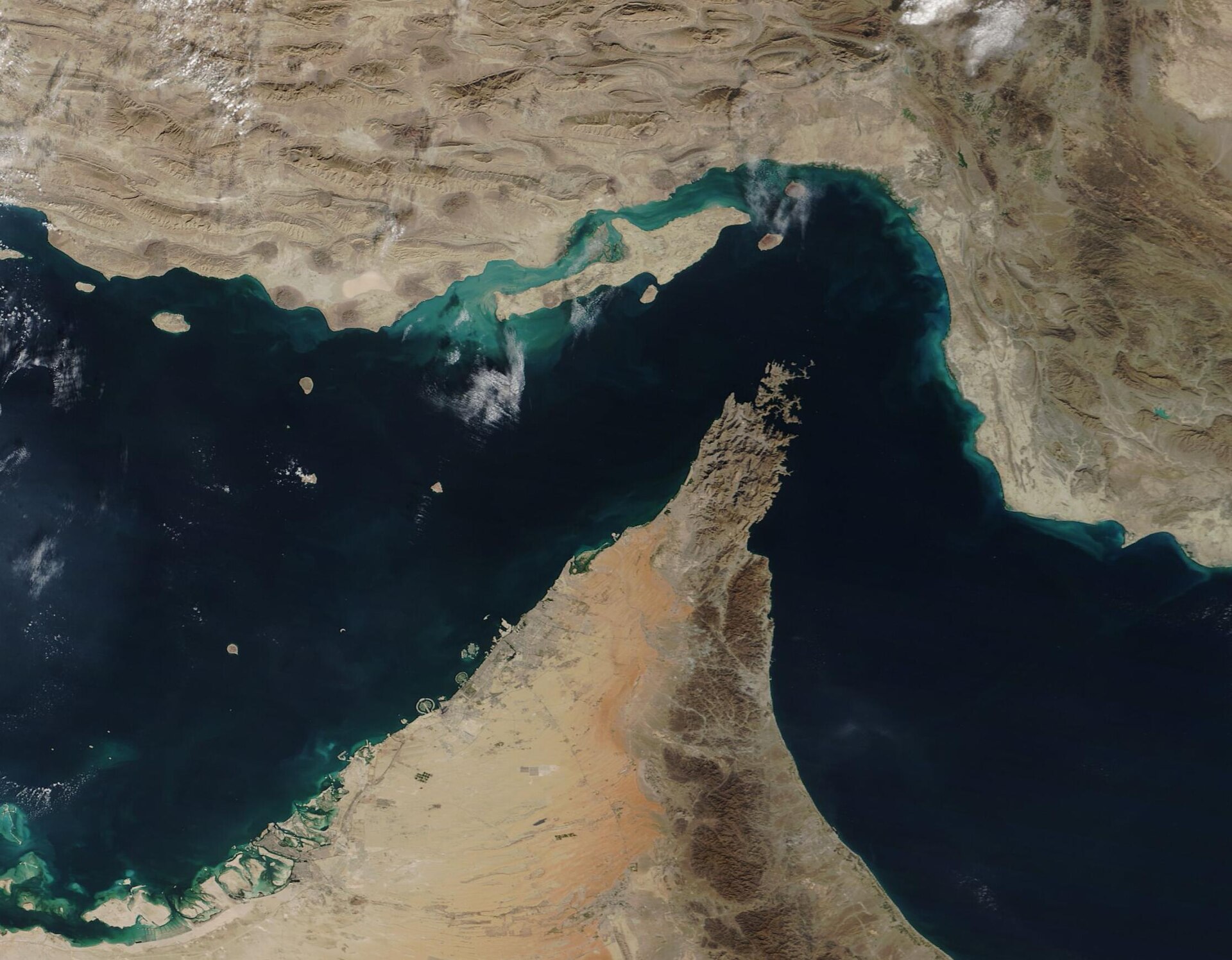
That PIF chose this moment — with Oman and Iran drafting Hormuz governance rules that exclude Saudi Arabia, with the IRGC’s toll regime hardening into permanent infrastructure, and with US-Iran talks frozen for 39 days — to lock in thirty-year paper at 6.25 percent tells you everything about Riyadh’s assessment of how long this environment will last. PIF is not borrowing against the expectation of a diplomatic breakthrough; it is borrowing on the assumption that the war premium is now a structural feature of Saudi credit pricing, and that waiting for cheaper spreads means waiting for conditions that may not return.
What Happens When Creditors Replace Returns?
Bond markets impose discipline that internal capital does not — fixed coupon obligations that must be met regardless of oil prices, war trajectories, or whether any of PIF’s projects generate a return. Until 2022, the fund met its domestic commitments primarily from three sources: government capital injections (including the transfer of state-owned assets like Aramco shares), portfolio investment returns, and surplus oil revenue cycled through the Ministry of Finance. Each gave Riyadh a particular kind of freedom — the freedom to slow down, delay a project, or reprioritise without answering to anyone outside the Royal Court, because the money was internal and the board chairman was also the man running the country.
International bond issuance changes that equation in ways that compound over time. A 6.25 percent coupon on $2.5 billion of thirty-year paper means PIF owes approximately $156 million annually on that tranche alone, and total annual coupon obligations across PIF’s outstanding international bonds — accumulated from $19 billion in issuances since January 2024 plus pre-2024 paper that has not yet matured — now run well above $800 million, a fixed cost that competes directly with the development spending the borrowing was supposed to enable. Every dollar of coupon payment is a dollar that does not go to ROSHN, does not go to HUMAIN, and does not go to the giga-projects whose suspension was meant to free up exactly this kind of cash.
The Council on Foreign Relations identified the broader capital flow reversal in its analysis of Gulf investment patterns: Saudi Arabia’s strategy of recycling petrodollar surpluses into US capital markets is being redirected inward, reducing Gulf influence over Washington while simultaneously creating a domestic financing gap that bond markets are being asked to bridge. The Arab Center DC, citing UN estimates, put potential war-related losses for Gulf sovereign wealth funds at “up to $200 billion” and asked whether these funds can act as “a financial shield” or have become “a structural vulnerability in times of conflict.” PIF’s answer, expressed through this bond sale, is that it intends to function as both — a shield whose own funding depends on the sovereign backstop it is supposed to be protecting.
The Creditor Relationship Vision 2030 Never Planned For
PIF Governor Yasir Al-Rumayyan told the Future Investment Initiative conference in Miami in March 2026 that the Saudi macroeconomic and fiscal position “remains strong, stable, and resilient.” The bond market agreed, to the extent that 3.4 times oversubscription constitutes agreement, but the agreement carries terms that Al-Rumayyan’s formulation did not acknowledge: PIF has crossed from a self-financing sovereign wealth fund into a structurally leveraged development vehicle that will need to return to international debt markets repeatedly, at spreads determined by variables — the Iran war, oil prices, the implicit guarantee’s credibility — that PIF does not control.
The 2026-2030 strategy explicitly embraces what it calls “precision finance” — commercial paper, sukuk, green bonds, multi-tranche conventional issues — as a permanent feature of PIF’s funding model. The language reads like financial sophistication but functions as an admission: PIF will borrow in every market that will lend to it because its internal cash generation no longer covers its obligations. That this $7 billion deal, the largest single issuance in PIF’s history, occurred in the same month the fund announced a strategy premised on smaller, more diversified fundraising is a contradiction that makes sense only if near-term liquidity pressure was acute enough to override the medium-term plan before the medium-term plan had even been published for a full quarter.
“What is unfolding is a forced recalibration: a shift away from architectural spectacle toward economic pragmatism, reinforced by tightening fiscal space and institutional reprioritization under the Public Investment Fund’s new strategy.”
Gulf International Forum, 2026
What Fitch calls “virtually certain” state support is the load-bearing structure of this entire financing architecture. If the Saudi sovereign’s credit rating were downgraded — by a war escalation, by a sustained oil price collapse toward the EIA’s projected $79 average, by a deficit trajectory that validates Goldman Sachs’s $80-90 billion estimate — PIF’s rating would follow automatically, because the ratings are mechanically linked through the GRE classification. If PIF’s rating fell, the spreads on its next issuance would widen, the coupon cost would rise, and the debt-service burden would grow at precisely the moment when the fiscal pressure that triggered the downgrade was already consuming the revenue that debt service requires. The PMI contraction data from Phase 3 of Vision 2030 already shows the real economy registering the stress, and PIF’s bond sale does not resolve it — it converts a spending problem into a debt problem, which buys time but does not buy a solution.
The investors who bid $23.8 billion on this deal understand the distinction with precision, which is why they demanded 135 basis points over Treasuries for the right to lend to a fund whose chairman runs the country — and why they will be watching, for the next thirty years, whether the country can afford both the debt and everything the debt was supposed to replace. The guarantee they are pricing has never been written down, never been tested, and now backstops more sovereign wealth fund debt than at any point in PIF’s nine-year borrowing history.
Frequently Asked Questions
Has PIF ever defaulted on a bond payment?
PIF has maintained a clean payment record on all international obligations since its debut bond issuance in 2017, which makes it a reliable credit by every backward-looking measure available. The track record spans fewer than nine years, however, and has never been tested by a sustained period in which Brent crude traded below the IMF’s $90-per-barrel Saudi fiscal breakeven — a scenario the EIA now projects will begin in 2027 with an average of $79 per barrel. PIF also issued its first green bond in October 2022, including a 100-year tranche that was the first of its kind by any sovereign wealth fund, extending its obligation horizon well past any stress-test model currently published.
How does PIF’s borrowing compare to other sovereign wealth funds?
PIF is an outlier among the world’s ten largest sovereign wealth funds in its systematic reliance on international debt markets to fund domestic programmes. Norway’s Government Pension Fund Global, Abu Dhabi’s ADIA, Kuwait’s KIA, and Singapore’s GIC do not issue bonds — they invest surpluses generated elsewhere and return gains to their respective treasuries without the intermediary step of borrowing against their own balance sheets. PIF functions more like a nationally owned development bank that uses its sovereign wealth fund classification, and the implied sovereign credit rating it carries, to access cheaper capital than a standalone development institution or a sub-sovereign borrower could obtain on its own terms. The distinction matters because SWF branding signals savings and stability to markets, while PIF’s actual balance-of-payments role is closer to deficit financing.
What is PIF’s total international debt outstanding?
PIF has raised more than $19 billion in international bonds and sukuk since January 2024 alone — comprising $5 billion (January 2024, three-tranche, 5x oversubscribed), $4 billion (January 2025, two-tranche), $1.25 billion in sukuk (April 2025), $2 billion (September 2025), and the $7 billion May 2026 issuance. Total outstanding international obligations are higher when pre-2024 issuances that have not yet matured are included, but PIF does not publish a consolidated debt schedule. The acceleration is visible in the cadence: the fund has issued at least once every six months since the start of 2024, with each successive deal either matching or exceeding the prior one in size.
Could PIF’s borrowing costs rise even without a sovereign credit downgrade?
Spread widening does not require a formal rating action — secondary-market repricing can push PIF’s effective borrowing cost higher through pure market sentiment. If the Iran conflict escalates, if oil settles below $85 per barrel for a sustained period, or if PIF returns to market more frequently than investors expect (signalling deeper liquidity stress than disclosed), secondary spreads on existing PIF bonds would widen, establishing a higher floor for new issuance pricing regardless of the official credit rating. The 35-basis-point compression from initial price talk on this deal shows that oversubscription can push spreads tighter, but the same mechanism operates in reverse with less warning — and the IEA’s assessment that global oil inventories are draining at 8.5 million barrels per day adds a supply-shock variable to pricing that no orderbook size can fully hedge. PIF’s wartime bond logistics also intersects with Saudi Arabia’s wartime revenue paradox: the Red Sea corridor revenue and elevated crude prices that have eased PIF’s fiscal pressure require the continuation of a conflict Riyadh publicly demands be resolved.