VIENNA — Austria’s Directorate for State Protection and Intelligence published an annual threat assessment concluding that Iran’s nuclear weapons programme is “well advanced” and that “an arsenal of ballistic missiles is ready to carry nuclear warheads over long distances.” The finding — issued by the intelligence service of the country that hosts IAEA headquarters — frames Iran’s nuclear effort not as a bargaining position to be capped through moratoriums but as a weapons acquisition programme with ballistic delivery, a distinction that five rounds of US-Iran negotiations have not addressed and that Saudi Arabia, excluded from all of them, cannot raise without undermining the deal framework it publicly endorsed on May 20.
The editorial problem is precise. If the DSN assessment is correct, the moratorium durations, enrichment caps, and HEU disposition plans under negotiation regulate an input — enrichment — while the programme’s output is a warhead. Saudi Arabia endorsed the framework five days after Trump dropped the demand for HEU removal. Riyadh cannot cite a European intelligence finding that the programme’s purpose is to make Iran “immune to attack” without arguing that the deal it lobbies for negotiates around the wrong variable — while bleeding an estimated $80–90 billion this fiscal year waiting for that deal to reopen the Strait of Hormuz.
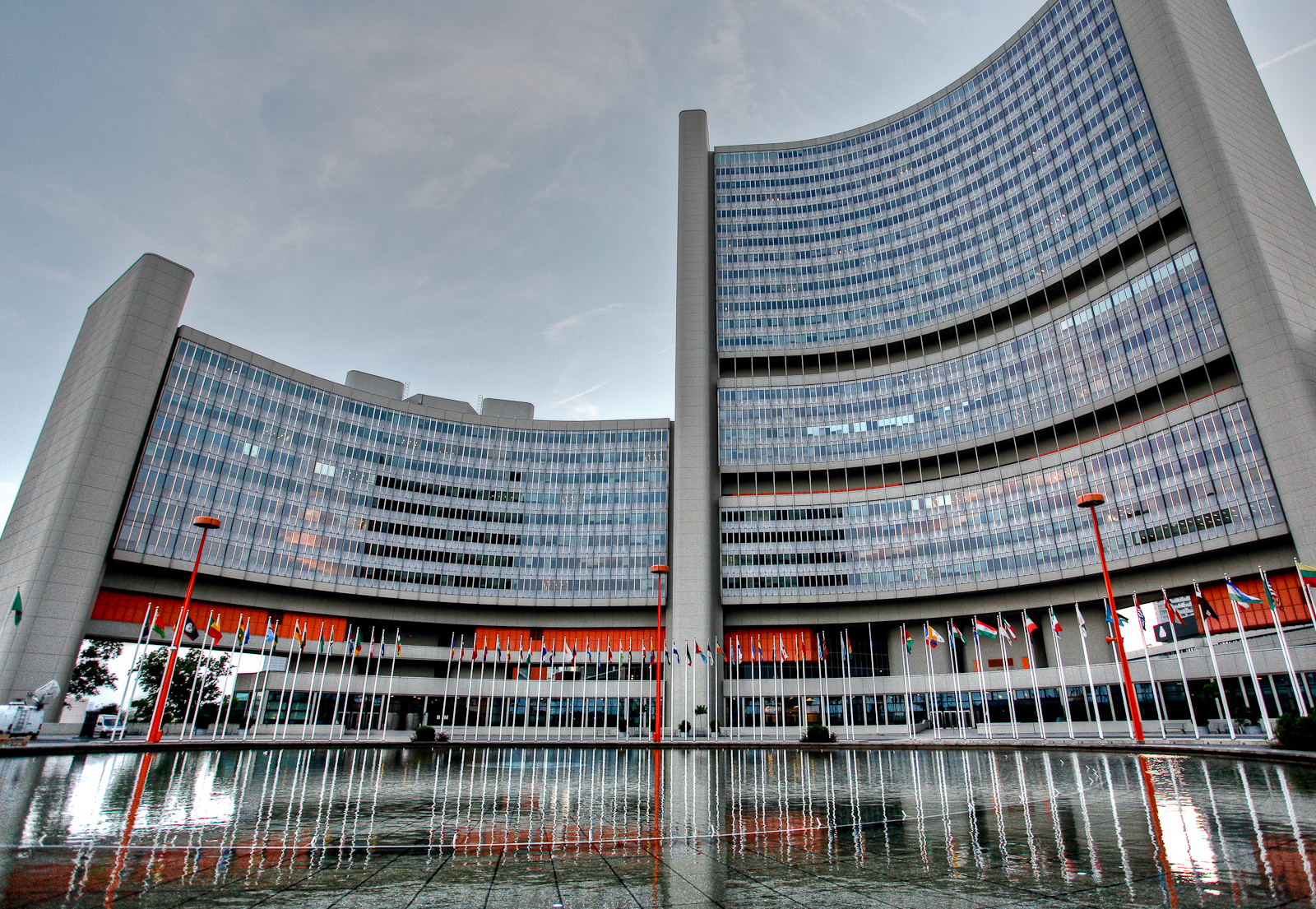
Table of Contents
- What Did Austria’s DSN Report Actually Say?
- Four European Agencies, One Pattern
- Why Does the DSN Finding Contradict Washington’s Own Assessment?
- The Deal Negotiates Scale. The Report Describes Intent.
- How Does Saudi Arabia Respond to Intelligence It Cannot Cite?
- What Does the IAEA Blackout Mean for Verification?
- The 123 Agreement Contradiction
- Congressional Opposition and the Weapons Framing
- The Variable the Deal Refuses to Negotiate
- Frequently Asked Questions
What Did Austria’s DSN Report Actually Say?
Austria’s DSN — formerly the BVT, the country’s domestic intelligence and security service — concluded in its 2024 annual threat assessment that Iran’s nuclear weapons development is “well advanced” and that Iran possesses ballistic missiles “ready to carry nuclear warheads over long distances.” The report characterised the programme as a strategic rearmament effort intended to make the regime “immune to attack and to expand and consolidate its dominance in the Middle East and beyond.”
The DSN published its assessment in late May 2025. Its language on Iran was categorical, not hedged. The report stated: “In order to assert and enforce its regional political power ambitions, the Islamic Republic of Iran is striving for comprehensive rearmament, with nuclear weapons to make the regime immune to attack and to expand and consolidate its dominance in the Middle East and beyond.”
Two elements separate this assessment from routine intelligence warnings. First, the DSN did not characterise Iran’s nuclear activity as a threshold capability or a hedging strategy — the standard diplomatic framing that permits negotiation around enrichment caps and moratorium durations. It characterised it as a weapons programme with an identified delivery system. Second, the phrase “immune to attack” defines the programme’s purpose as regime survival through deterrence, not as a diplomatic lever to be traded for sanctions relief or economic reopening.
Iran rejected the assessment immediately. Foreign Ministry spokesman Esmail Baqaei called the DSN’s finding “a false and baseless allegation manufactured solely for media propaganda against the Islamic Republic, thus devoid of any credibility.” Tehran summoned Austria’s Chargé d’Affaires on May 30, 2025. Alireza Mollaqadimi, Head of the First Department of Western Europe at Iran’s Foreign Ministry, conveyed Iran’s “strong protest” and demanded an official explanation from Vienna, stressing that Iran’s nuclear programme “fully complies with its legal international obligations under the NPT.”
The Middle East briefing 3,000+ readers start their day with.
One email. Every weekday morning. Free.
State-aligned Tehran Times characterised the report as evidence of “suspected Austrian-Israeli collusion” designed to disrupt US-Iran negotiations, linking it to alleged prior BVT-Mossad cooperation.
The diplomatic geography is relevant. Austria has hosted IAEA headquarters since 1957. The country whose intelligence service concluded Iran is building deliverable nuclear weapons is the same country that provides the institutional home for the United Nations body tasked with verifying that Iran is not. IAEA Director General Rafael Grossi stated on March 4, 2026 that the agency “never had information indicating that there was a structured systematic [Iranian] program to build or to construct a nuclear weapon.” The DSN, operating from the same city, reached the opposite conclusion.
Four European Agencies, One Pattern
Austria’s DSN is not an outlier. Intelligence services in at least four European countries — the Netherlands, Sweden, Germany, and Austria — have independently flagged Iranian weapons-related nuclear and missile procurement activities. Three of the four — the Netherlands, Sweden, and Germany — are NATO members. Austria is constitutionally neutral but is an EU member state and a participant in NATO’s Partnership for Peace programme.
Germany’s Federal Office for the Protection of the Constitution — the BfV — reported in its own 2024 annual assessment, published in June 2025, that “procurement activities in Germany in the area of Iranian missile technology/missile programs remain high — and are on the rise.” The BfV finding is narrower than Austria’s, addressing procurement rather than programme status. But it establishes that Iranian weapons-related acquisition efforts were active and intensifying on European soil during the same period the DSN assessed the weapons programme as “well advanced.”
The Dutch General Intelligence and Security Service (AIVD) and Sweden’s Security Service have separately documented Iranian procurement networks operating in their jurisdictions. The Middle East Forum synthesised these findings as a collective European refutation of the 2007 US National Intelligence Estimate’s conclusion that Iran’s military nuclear superstructure closed in 2003.
| Agency | Country | NATO Member | Key Finding | Year Published |
|---|---|---|---|---|
| DSN (formerly BVT) | Austria | No (EU / PfP) | Nuclear weapons programme “well advanced”; ballistic missiles “ready to carry nuclear warheads” | May 2025 |
| BfV | Germany | Yes | Missile technology procurement “high and rising” | June 2025 |
| AIVD | Netherlands | Yes | Iranian procurement networks for weapons-related materials active | Multiple years |
| SÄPO / FRA | Sweden | Yes | Iranian procurement activities documented in Swedish jurisdiction | Multiple years |
The pattern matters not because any single agency’s assessment is definitive, but because four separate European intelligence services — operating under different political pressures, with different collection capabilities, in different legal jurisdictions — reached compatible conclusions about what Iran’s programme is for. None of them characterised it as a bargaining position.
Why Does the DSN Finding Contradict Washington’s Own Assessment?
The US intelligence community’s formal position, as of March 2026, is that Iran is not building a nuclear weapon. Director of National Intelligence Tulsi Gabbard testified to the Senate Intelligence Committee on March 18, 2026 that the US “continues to assess that Iran is not building a nuclear weapon and Supreme Leader Khamenei has not authorized the nuclear weapons program he suspended in 2003.” Austria’s DSN concluded that Iran’s weapons programme is “well advanced” with delivery-ready ballistic missiles. The two assessments are structurally incompatible — not different in degree but different in kind.
President Trump’s response to his own intelligence community was to dismiss it. “I don’t care,” he told reporters when asked about the assessment that Iran was not close to a nuclear weapon. That dismissal is operationally consequential: the president is negotiating a deal whose architecture — moratoriums on enrichment, caps on stockpile levels, timelines for verification — implicitly accepts that Iran’s programme is a capability to be managed, not a weapons effort to be dismantled. If Trump does not believe the US assessment, the negotiating framework he has authorised does not reflect his stated position.
The internal contradiction compounds. Gabbard also testified that “as a result of Operation Midnight Hammer [June 2025 US strikes], Iran’s nuclear enrichment program was obliterated” and that “there have been no efforts since then to try to rebuild their enrichment capability.” Yet US Special Envoy Steve Witkoff reported that Iranian negotiators told him Iran controlled “roughly 460 kilograms of uranium at 60% enrichment” — a figure higher than the last IAEA-verified 440.9 kilograms, implying enrichment continued even before the February 28 blackout — and that this “could have been enriched to the weapons-grade level of 90% within a week to 10 days.” If the programme was obliterated, the stockpile Iran’s own negotiators cited as leverage should not exist.
The European assessment is not necessarily more authoritative than the American one. Intelligence agencies disagree routinely. What is unusual is the structural consequence of the disagreement: the US is negotiating a deal with Iran based on a threat assessment that four European intelligence services — three of them belonging to NATO allies — have contradicted. The deal’s architecture reflects the US assessment. If the European assessment is closer to reality, the architecture addresses the wrong problem.
The Deal Negotiates Scale. The Report Describes Intent.
The 2015 JCPOA negotiated around programme scale: centrifuge numbers, enrichment percentages, stockpile volumes, facility access. It explicitly did not address ballistic missile development, and the Possible Military Dimensions investigation into Iran’s weapons-related research was handled as a political commitment, never conclusively resolved.
The current US-Iran negotiating framework follows the same structural logic. The points of negotiation as described by Axios in its May 6 report on the 14-point memorandum of understanding include a moratorium on enrichment — with a duration gap between Iran’s reported 5-year offer, the Axios framework’s 12-15 years, and the 20-year demand from the US Congress — along with caps on enrichment levels at 3.67 percent and disposition of existing highly enriched uranium. As reported when Rubio declared a deal possible “as soon as today,” even those scale-based provisions remain deadlocked. Araghchi maintains that “zero enrichment = no deal.”
These are all measures of scale. They regulate how much, how fast, and how long. They do not address why.
The DSN’s significance is that it answers the why. If Iran’s nuclear programme exists to make the regime “immune to attack,” then a moratorium is not a diplomatic concession — it is a pause in a weapons acquisition programme that will resume when the moratorium expires. The variable that determines the deal’s effectiveness is not the duration of the cap but the purpose of the programme being capped.
Matthew Bunn of the Harvard Belfer Center, writing in Arms Control Today in May 2026, offered a compatible assessment without the weapons-intent framing: “As of late April, Iran still retained much of the material and equipment needed to build nuclear weapons, including enough weapons-usable highly enriched uranium for more than 10 nuclear bombs.” The Carnegie Endowment’s May 2026 analysis went further: Iran “still has an ability and perhaps greater desire to reconstitute these capabilities, including in smaller, clandestine facilities.” The war, Carnegie concluded, “may have hardened Iran’s view on the importance of avoiding irreversible concessions on the nuclear issue.”
The Arms Control Association’s April 2026 assessment was direct: “U.S. and Israeli military operations, although setting back Iran’s nuclear capabilities, may have ruined chances for an effective nuclear deal for years to come.”
A 12-year moratorium addresses none of this. A moratorium assumes the activity being paused is something the counterparty will not resume. The DSN’s assessment, if accurate, describes a programme that exists to be completed.
How Does Saudi Arabia Respond to Intelligence It Cannot Cite?
Saudi Arabia endorsed the US-led Iran negotiating framework on May 20 through Foreign Minister Prince Faisal bin Farhan’s public praise of President Trump’s approach. Riyadh has been excluded from all five rounds of US-Iran talks and from the separate Track 2 nuclear negotiations. It cannot publicly cite the DSN finding that Iran is building weapons without undermining the deal framework it endorsed — and it cannot endorse the framework without accepting that the deal negotiates enrichment levels, not weapons intent.
As previously reported here, Bin Farhan’s endorsement came five days after Trump had already dropped the demand for Iran to export its highly enriched uranium — the single provision most directly related to weapons breakout capability. Saudi Arabia praised firmness on a demand that no longer existed.
The DSN finding tightens this bind. If Riyadh were to cite the Austrian assessment — that Iran’s programme is “well advanced” toward deliverable nuclear weapons — it would be arguing that the framework it endorsed on May 20 negotiates around the wrong variable entirely. It would be contending, in effect, that enrichment caps and moratoriums are insufficient because the programme’s purpose is weapons acquisition, not diplomatic leverage.
Saudi Arabia cannot make this argument without three consequences. First, it would contradict its own public endorsement of the US approach. Second, it would align Riyadh with European intelligence assessments that also contradict the US intelligence community position — creating a diplomatic rupture with Washington at a moment when the $142 billion arms deal signed May 13 and the proposed Major Non-NATO Ally designation depend on alignment. Third, citing the DSN finding would implicitly advocate for dismantlement rather than moratorium — a maximalist position that Iran has rejected and that even most Congressional critics have not explicitly demanded.
The Carnegie Endowment assessed in April 2026 that the “GCC has no seat at the table.” The Stimson Center’s Nour Eid framed Saudi Arabia’s vulnerability from a different direction: “Saudi Arabia’s challenge lies less in an imminent Iranian bomb than in the gradual weakening of the external security framework it has long relied upon.”
As previously analysed on the patience asymmetry, Goldman Sachs projects an $80–90 billion full-year Saudi deficit. Riyadh cannot afford to oppose a deal that might reopen Hormuz — even if a European intelligence service operating from the same city as the IAEA says the deal is premised on the wrong assumption about what Iran’s nuclear programme is for.
What Does the IAEA Blackout Mean for Verification?
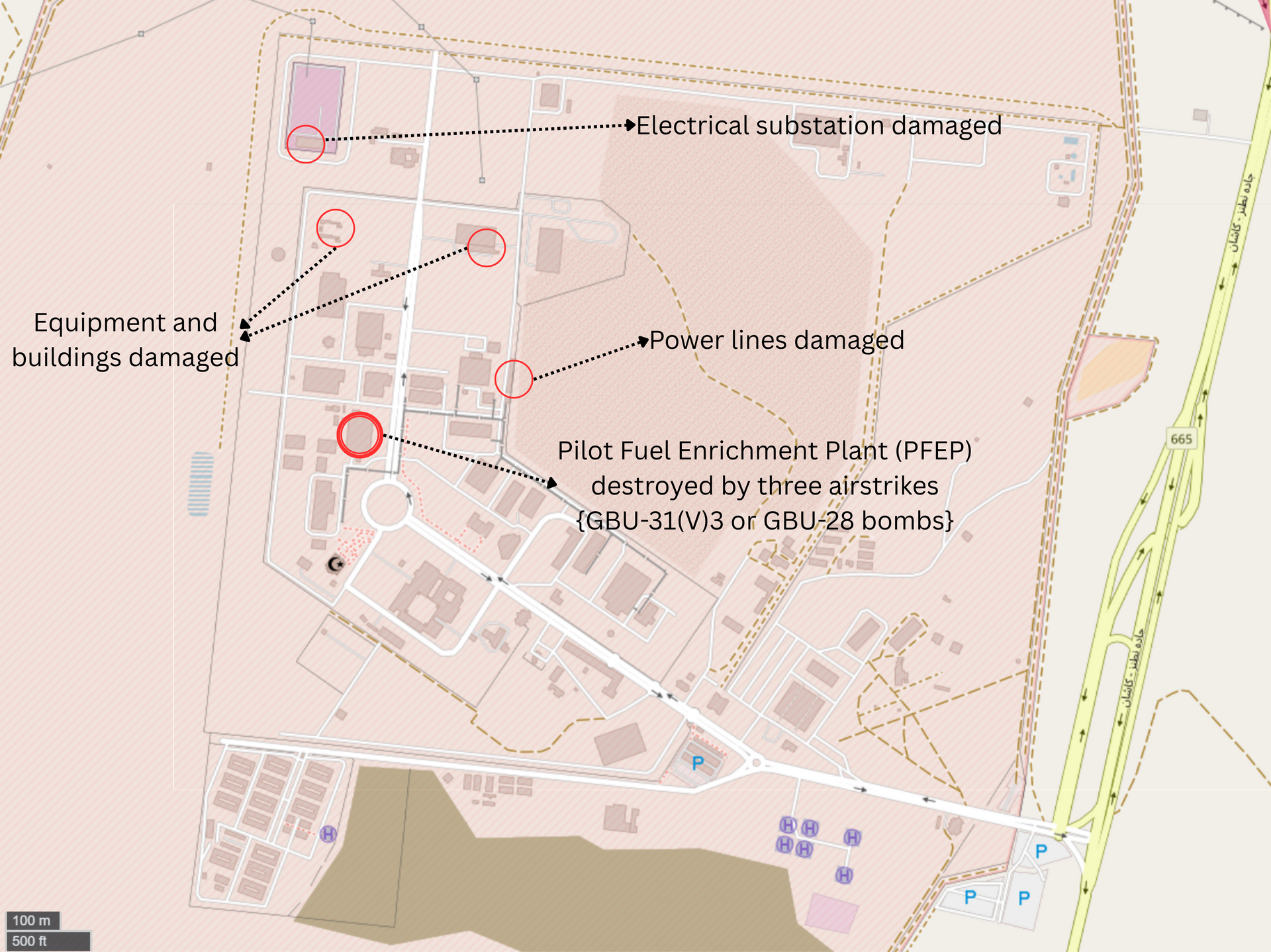
Iran terminated all IAEA access to its nuclear facilities on February 28, 2026. Surveillance cameras were disabled and seals were removed from all declared sites. As of May 25 — 86 days later — the IAEA “cannot provide any information on the current size, composition or whereabouts of the stockpile of enriched uranium in Iran,” according to the Board of Governors report GOV/2026/8. No independent body has verified Iran’s nuclear material status since. The DSN’s conclusion of a “well advanced” weapons programme can be neither confirmed nor denied by the institution responsible for monitoring it.
The last IAEA-verified data showed Iran held approximately 440.9 kilograms of 60%-enriched uranium — enough for more than 10 nuclear weapons at weapons-grade, per Bunn’s Arms Control Today assessment. Full weaponisation — warhead fabrication and missile integration — would add an estimated 6–18 months beyond the breakout timeline.
| Metric | Value | Source |
|---|---|---|
| 60%-enriched uranium stockpile | ~440.9 kg | IAEA data / Arms Control Association (May 2026) |
| Weapons equivalent if enriched to 90% | ~10 nuclear weapons | Bunn, Arms Control Today (May 2026) |
| Breakout time (60% → 90%) | 7–10 days | Witkoff citing Iranian negotiators; Arms Control Center |
| Additional weaponisation timeline | 6–18 months | Arms Control Center |
| IAEA access terminated | February 28, 2026 | IAEA GOV/2026/8 |
| Days without monitoring (as of May 25) | 86 | Calculated |
| Signed MOU documents | 0 | Multiple sources |
Everything in that table is a pre-blackout snapshot. The 440.9 kilograms may have been enriched further, moved, divided across facilities, or — consistent with the DSN’s assessment — integrated into warhead design. There is no mechanism to know, and no party to the negotiations has proposed one that Iran has accepted.
As previously documented, the written assurances the White House has cited regarding Iran’s HEU disposition are contradicted by Iran’s own Supreme National Security Council. The IAEA blackout means those assurances cannot be verified regardless of their content or provenance.
For the DSN assessment specifically, the blackout creates a closed loop. If the weapons programme is “well advanced,” the activities that would confirm or deny further progress — material movement, centrifuge cascade reconfiguration, warhead design work — are exactly what the IAEA can no longer observe. Eighty-six days of unmonitored activity during a period the DSN describes as advanced weapons development is not a gap in the diplomatic record. It is a gap in the ability to determine whether the deal being negotiated addresses anything that still corresponds to reality inside Iran’s nuclear facilities.
The 123 Agreement Contradiction
The US-Saudi 123 agreement, currently under negotiation, would permit Saudi Arabia “some form of uranium enrichment within the kingdom” — per the Arms Control Association’s March 2026 analysis. Washington demands that Iran accept a moratorium on enrichment while simultaneously offering Saudi Arabia the right to enrich — both negotiations running in the same fortnight.
Fifty-two senators and 177 House members wrote to President Trump on May 14, 2026 demanding rejection of any deal allowing Iran to continue uranium enrichment. Tehran and Washington have no common ground on this provision.
The 123 agreement intersects with the DSN finding in a specific way. If Iran’s nuclear programme is a weapons acquisition effort — as Austria’s intelligence service concluded — then offering Saudi Arabia enrichment rights is not merely an asymmetry in nonproliferation policy. It is an implicit acknowledgment that the regional security environment requires Saudi nuclear capability. That acknowledgment contradicts the deal framework, which treats Iran’s programme as manageable through moratoriums — i.e., as something less than an active weapons threat.
The Stimson Center’s formulation — that Saudi Arabia’s challenge “lies less in an imminent Iranian bomb than in the gradual weakening of the external security framework” — assumes a framework in which the Iranian bomb is not imminent. The DSN does not share that assumption. If the DSN is correct, the 123 agreement is not an asymmetry. It is the beginning of a regional nuclear competition that the deal was supposed to prevent.
As previously analysed, the three axes of damage Saudi Arabia faces from the deal — enrichment, oil, and Hormuz — converge on the 123 agreement. The enrichment provision gives Riyadh a capability hedge. Exercising it publicly would confirm the weapons-intent framing that undermines the deal Riyadh endorses.
Congressional Opposition and the Weapons Framing
Republican opposition to the emerging deal has intensified, and its language converges — without explicit citation — with the DSN’s weapons-intent framing rather than the administration’s capability-management framing.
Senator Roger Wicker, chair of the Senate Armed Services Committee, warned on May 23 that accepting the deal meant “everything accomplished by Operation Epic Fury would be for naught.” Senator Thom Tillis posed the question directly: “We’re talking about a posture where we may accept the nuclear material remaining in Iran? How does that make sense at all?” Former Secretary of State Mike Pompeo was most prescriptive: the framework is “not remotely America First.” His alternative — “Open the damned strait. Deny Iran access to money. Take out enough Iranian capability so it cannot threaten our allies in the region” — frames the issue as one of Iranian capability to threaten, not enrichment levels to manage.
None of these Republican critics explicitly cited the DSN report. But their arguments share its structural logic. Wicker treats the deal as allowing a weapons programme to persist. Tillis questions why weapons-usable material would remain in the country. Pompeo frames the problem as capability, not enrichment — a distinction that tracks the DSN’s characterisation of a programme designed to make Iran “immune to attack” rather than the State Department’s characterisation of a programme that can be constrained through negotiated limits.
The gap between the 52-senator, 177-member Congressional demand for zero enrichment and the administration’s acceptance of a moratorium is not simply a political contest over deal terms. It is a disagreement about what is being regulated. If the programme is leverage, a moratorium is a reasonable response. If it is a weapons effort, a moratorium is a scheduled delay.
The Variable the Deal Refuses to Negotiate
Five rounds of US-Iran talks across three cities — Muscat, Rome, and potentially Islamabad for a sixth — have produced three competing MOU frameworks, zero signed documents, and a negotiating agenda that includes enrichment moratorium duration, enrichment level caps, HEU disposition, Hormuz reopening, ceasefire terms, and sanctions sequencing. The agenda does not include weapons intent, ballistic missile integration, or warhead design capability.
This is a structural inheritance, not an oversight. The 2015 JCPOA excluded ballistic missiles from its binding provisions and closed the Possible Military Dimensions file politically, not analytically. When the current talks began, they adopted the same framework: regulate what Iran does with its nuclear infrastructure, not what it intends to do with the result.
The DSN finding does not add another data point to the intelligence debate. It challenges the category. If Iran’s programme is “well advanced” toward deliverable nuclear weapons, the negotiating structure addresses an input — enrichment capacity — while ignoring the output it enables. Capping enrichment at 3.67 percent and imposing a 12-year moratorium is meaningful if the programme’s purpose is to accumulate enrichment as diplomatic leverage. It is not meaningful if the programme’s purpose is to produce a nuclear warhead, because the knowledge, the designs, and the delivery vehicles are not subject to the moratorium.
A moratorium freezes the enrichment clock. It does not address the weaponisation clock — the 6-to-18-month timeline for warhead fabrication and missile integration that begins after breakout — which the deal does not regulate and the IAEA, without access since February 28, cannot monitor.
Saudi Arabia, which endorsed this framework, faces a specific version of this problem. Riyadh’s diplomatic investments in the UNSC process, its co-sponsorship of the vetoed Hormuz resolution, and its public alignment with the US approach all presuppose that the negotiated constraints will constrain what Iran is actually doing. The DSN says they will not — that the variable being negotiated is the wrong one.
The deal, if signed, will regulate centrifuge numbers, enrichment percentages, and stockpile volumes. Four European intelligence services concluded that Iran’s purpose is to build nuclear weapons with ballistic delivery. Those two propositions coexist comfortably in a diplomatic framework. They cannot coexist in the physics of uranium enrichment, warhead design, and missile integration. One of them is wrong. Saudi Arabia — excluded from the table, committed to the framework, haemorrhaging revenue with each day Hormuz stays closed — does not get to determine which.
Frequently Asked Questions
Is Austria a NATO member, and does that affect the DSN report’s diplomatic weight?
Austria is not a NATO member. It has maintained constitutional neutrality since 1955 under the Austrian State Treaty and is not party to the North Atlantic Treaty. Austria is, however, an EU member state, a participant in NATO’s Partnership for Peace programme since 1995, and the host country of several international organisations including the IAEA, OPEC, and the OSCE. The DSN report’s significance derives not from alliance membership but from institutional geography and political positioning: the country hosting the world’s nuclear watchdog produced a national intelligence assessment contradicting both the IAEA’s stated verification position and the US intelligence community’s assessment. Austria’s neutrality arguably makes the finding harder to dismiss as alliance-driven — unlike an assessment from a NATO member with forward-deployed military interests in the Gulf, Austria has no conventional strategic stake in the outcome of US-Iran negotiations. Iran’s decision to summon Austria’s Chargé d’Affaires within 24 hours of publication suggests Tehran took the source seriously regardless of alliance status.
Has any party to the negotiations publicly referenced the DSN finding?
No. There is no public evidence that the DSN’s 2024 annual report has been cited by any participant in the US-Iran talks, by Saudi Arabia, or by the Congressional critics opposing the deal. The five rounds of negotiations have focused exclusively on enrichment-scale provisions — moratorium duration, stockpile caps, HEU disposition, ceasefire terms, and Hormuz reopening — none of which address the weapons-intent or ballistic-delivery findings that constitute the DSN’s central conclusion. Congressional critics like Wicker, Tillis, and Pompeo use language structurally compatible with the DSN’s framing but have not invoked the report. The DSN assessment exists in a gap between European intelligence collection and US-led negotiation, with no formal mechanism bridging the two — and no incentive for any party to create one. The US would complicate its own talks. Saudi Arabia would undermine the framework it endorses. Iran has already rejected the finding as “baseless.” The report’s diplomatic orphan status is itself a data point about what the negotiating framework is designed to accommodate and what it is designed to exclude.
What is Iran’s legal basis for rejecting the DSN assessment?
Iran invoked compliance with the Nuclear Non-Proliferation Treaty as its primary defence. Mollaqadimi told the Austrian Chargé d’Affaires that Iran’s nuclear programme “fully complies with its legal international obligations under the NPT.” This is a jurisdictional argument: Iran holds that IAEA safeguards constitute the sole legitimate mechanism for evaluating its nuclear activities, and that national intelligence assessments from non-IAEA member states lack standing to characterise the programme’s intent. The structural limitation of this argument — which Austria did not make publicly but which its report implies — is that IAEA safeguards verify declared activities at declared sites, while weapons development can occur at undeclared facilities that safeguards do not cover. The Carnegie Endowment’s May 2026 assessment that Iran retains the ability and “perhaps greater desire to reconstitute these capabilities, including in smaller, clandestine facilities” addresses exactly this gap. Iran’s NPT compliance argument and the DSN’s weapons assessment are not technically contradictory: a state can comply with declared-site safeguards while conducting undeclared weapons work elsewhere. The JCPOA’s Additional Protocol provisions existed precisely to close this gap — and Iran has not been implementing the Additional Protocol since February 2021.
How does the DSN timeline compare to the deal’s proposed moratorium duration?
The DSN report does not specify a timeline for when Iran’s weapons programme would produce a deliverable warhead — it states only that the programme is “well advanced” and that ballistic delivery vehicles are “ready.” The publicly available breakout estimates — 7–10 days from existing 60%-enriched stockpile to weapons-grade, plus 6–18 months for warhead fabrication and missile integration — suggest a total timeline of roughly 7–19 months from a political decision to weaponise. The proposed moratorium durations under negotiation — 5 years (Iran’s position), 12–15 years (Axios MOU), or 20 years (US Congressional demand) — all assume the programme will not progress during the moratorium period. But a moratorium regulates enrichment. Warhead design, metallurgy, implosion engineering, and missile-warhead integration are not enrichment activities and would not be captured by an enrichment moratorium. If the DSN is correct that the programme’s purpose is weapons acquisition, these non-enrichment activities could continue during a moratorium without technically violating it — a gap the JCPOA also did not close and that the current framework has not addressed.