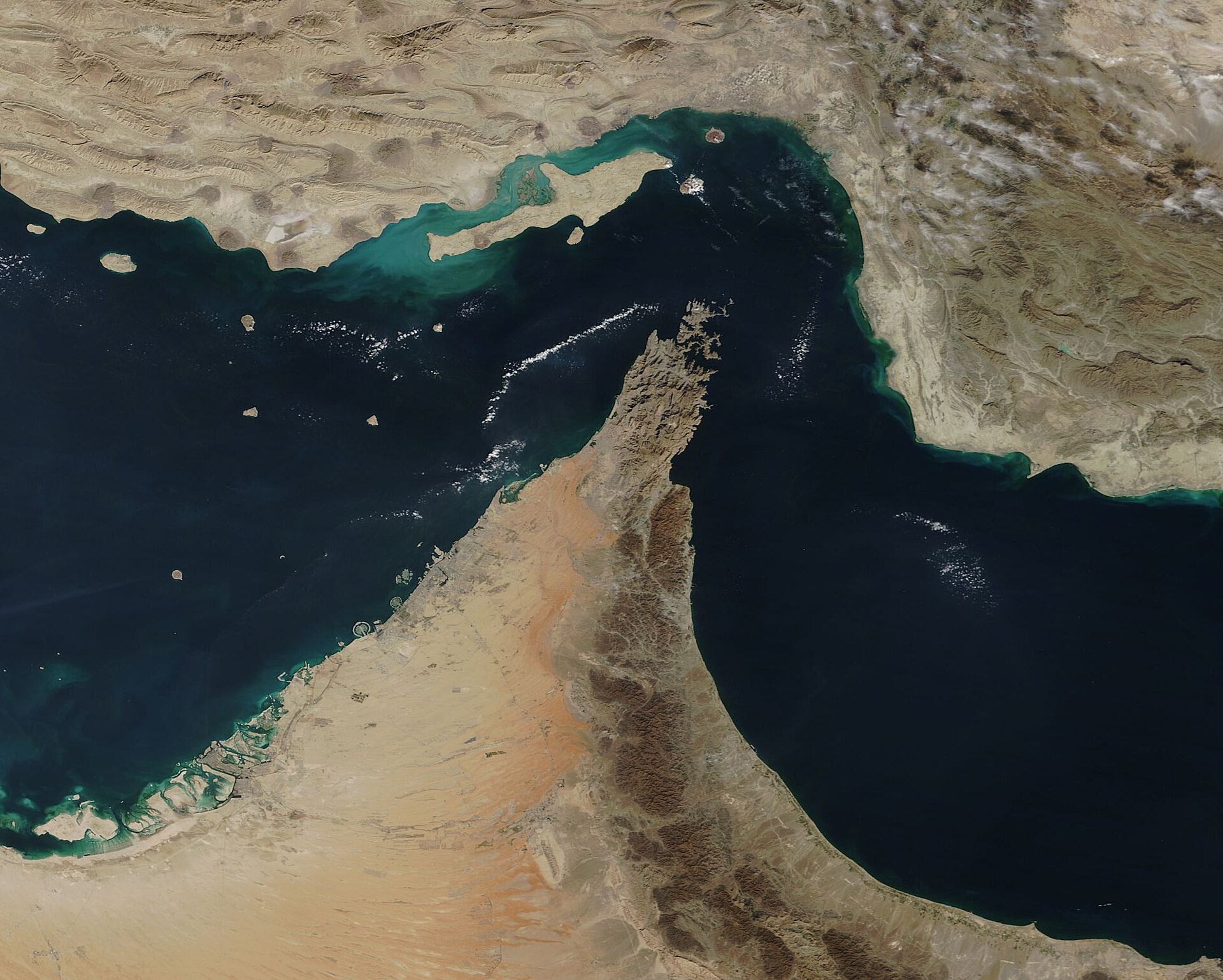

ABU DHABI — The UAE Ministry of Foreign Affairs condemned Iran on July 12 for “renewed hostile missile and drone attacks” targeting five named regional states — Bahrain, Kuwait, Qatar, Jordan, and Oman — while the UAE’s own air defense systems simultaneously engaged Iranian missiles and drones approaching Emirati airspace, according to the UAE Ministry of Defence. The statement, which arrived hours after the Islamic Revolutionary Guard Corps struck Duqm Port in Oman and one day after Iranian Foreign Minister Abbas Araghchi held bilateral talks with his Omani counterpart in Muscat, represents Abu Dhabi’s most comprehensive multi-country condemnation of Iranian military action since the Gulf war’s escalation.
The condemnation effectively collapses the bilateral channel that Sheikh Tahnoon bin Zayed Al Nahyan, the UAE’s national security adviser and Abu Dhabi’s deputy ruler, had maintained with IRGC officials through at least June 2026, when Abu Dhabi reportedly facilitated the release of more than $3 billion in frozen Iranian funds in exchange for a halt to attacks. Iran struck the UAE in May 2026 with missiles and drones, Abu Dhabi called it a “dangerous escalation” and a “terrorist attack,” and the bilateral channel survived that episode — Tahnoon’s team continued engagement with IRGC interlocutors. What the May strikes failed to accomplish, the July 12 combination of five-country condemnation and the Duqm attack appears to have finished.
Table of Contents
What Did the Statement Say?
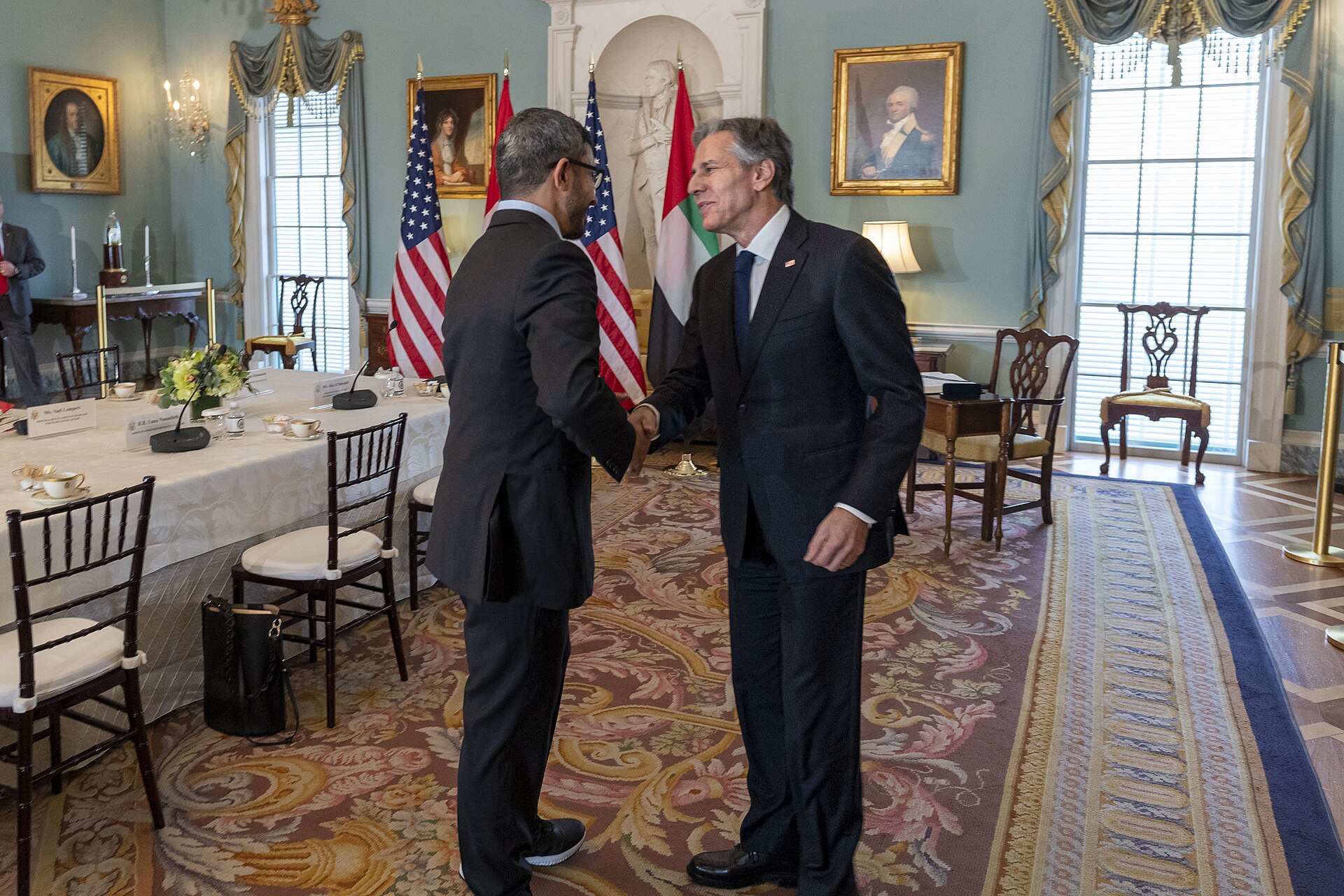
The UAE MoFA statement, published on mofa.gov.ae, used unambiguous language: “The UAE condemns in the strongest terms the renewed hostile missile and drone attacks by Iran targeting the Kingdom of Bahrain, the State of Kuwait, the State of Qatar, the Hashemite Kingdom of Jordan, and the Sultanate of Oman.” It affirmed that “these hostile attacks constitute a flagrant violation of the sovereignty of the brotherly nations, and a threat to their security and stability.”
The statement’s construction tells its own story. Abu Dhabi named five specific target states — not a general reference to “the region” or “neighbouring countries” but the formal, protocol-grade designation of each state — and the formulation “renewed hostile” presupposes a pattern of prior attacks rather than treating July 12 as an isolated incident. The UAE had previously condemned Iranian strikes in March and May 2026, but those statements addressed attacks on UAE soil specifically, this one extended solidarity across five distinct sovereignties simultaneously.
Saudi Arabia issued a parallel statement on July 12 through its own Ministry of Foreign Affairs, offering “strongest condemnation and denunciation of the continued criminal Iranian attacks on Gulf states, Jordan and commercial vessels,” according to QNA and Arab News. The Saudi formulation was co-extensive with Abu Dhabi’s in scope — the same target states, the same international law invocation — though Riyadh added a reference to the Organisation of Islamic Cooperation Charter, a forum where Saudi institutional weight exceeds the UAE’s. The convergence in language between two capitals whose strategic trajectories have visibly diverged since January 2026 was itself a development worth tracking. GCC Secretary-General Jasem Albudaiwi issued a separate condemnation, citing UN Security Council Resolution 2817 and describing Iran’s actions as evidence of “systematic insistence on perpetuating chaos,” according to Asharq Al-Awsat.
Did Duqm Break the Bilateral Cushion?
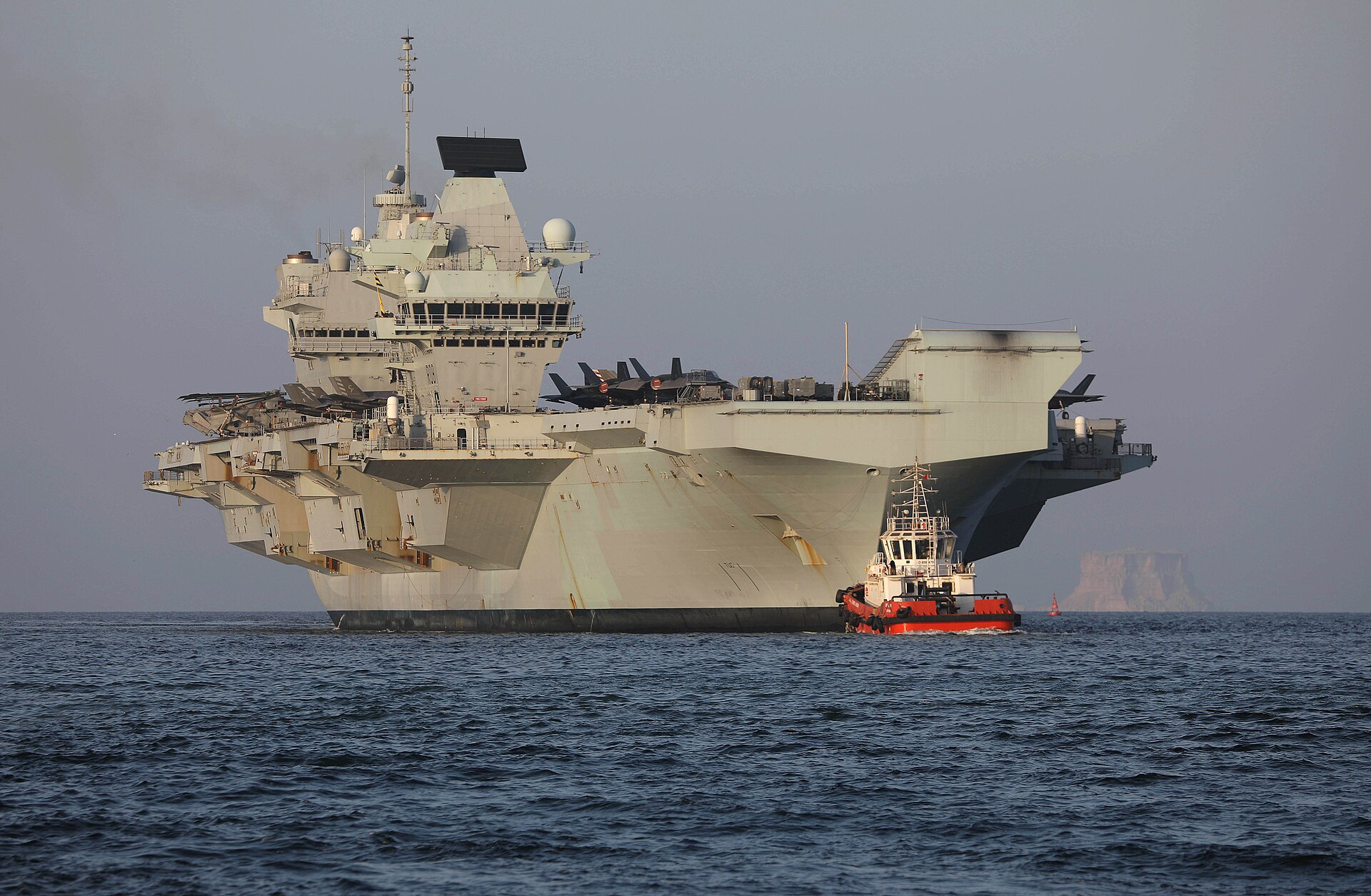
The IRGC announced on July 12 what it described as a “heavy and surprise” strike on “logistics support centres and refuelling platforms used by US aircraft carriers at the port of Duqm in Oman,” claiming the sites were “destroyed,” according to Khaama Press. Duqm is a deep-draft facility on the Indian Ocean side of the Strait of Hormuz, capable of accommodating nuclear submarines and aircraft carriers, that hosts roughly 80 US Navy port calls per year according to the Maritime Executive, and its Indian Ocean location has made it the primary staging alternative for US naval assets since Iran declared Hormuz closed.
The Middle East briefing 3,000+ readers start their day with.
One email. Every weekday morning. Free.
The strike’s timing carries more weight than its military content. Iranian Foreign Minister Araghchi had met Omani Foreign Minister Busaidi in Muscat on July 11 under the auspices of the Iran-Oman Joint Hormuz Committee, a framework established in June 2026 to co-administer passage through the strait. Oman’s entire diplomatic value to Iran in the current conflict rests on Muscat’s role as the one Hormuz interlocutor willing to sit at the table, and the IRGC struck Omani soil less than twenty-four hours after Araghchi left. Oman summoned Iranian Ambassador Mousa Farhang on July 12; FM Undersecretary Khalid bin Hashel Al Muslahi handed over a formal note of protest calling the strikes “irresponsible actions” that violated state sovereignty and the principle of good neighbourliness, according to TASS.
For Abu Dhabi, the Duqm strike answered a question that the Tahnoon channel had been designed to defer. Sheikh Tahnoon met IRGC officials in Abu Dhabi as recently as June 2026 as part of what Bloomberg described as a bilateral arrangement, one whose premise was that engagement could produce restraint, that a financial channel to Tehran could serve as an alternative to confrontation. Duqm demonstrated that the IRGC was willing to strike the territory of the Gulf state most actively mediating on Iran’s behalf — and if Iran would hit Oman after Araghchi’s own visit, Abu Dhabi’s bilateral cushion offered no guarantee either.
The GCC Closes Ranks
The regional response to the July 12 strikes was remarkable for its breadth and for a grim first: the first confirmed civilian casualties from Iranian strikes on GCC soil. Qatar’s Ministry of Interior confirmed three people injured, including one child, from falling interception debris — a marker that transformed what had been a series of military-on-military exchanges into something with visible civilian cost inside the Gulf’s own borders, according to Gulf Times and Marhaba.qa.
Bahrain moved to internationalize the crisis, urging the UN Security Council to take action on the Strait of Hormuz, a call that the UAE publicly joined, according to the Deccan Chronicle. The sequencing mattered: Bahrain’s UNSC appeal, backed by Abu Dhabi’s condemnation and Riyadh’s parallel statement, represented the closest approach to a unified GCC position since the war’s opening weeks. Albudaiwi’s invocation of Resolution 2817 gave the bloc’s response a specific legal anchor, describing Iran’s strikes as “a grave violation of the principles of international law, the United Nations Charter” and charging Tehran with “continued destabilizing behaviour.”
Oman’s response, though limited to the ambassadorial summons and formal protest, carried its own weight given Muscat’s sustained effort to remain Iran’s regional interlocutor. The formal note — delivered by FM Undersecretary Al Muslahi rather than the foreign minister himself — preserved diplomatic distance even while registering genuine anger, a calibration that reflected Oman’s continued interest in keeping the Hormuz Committee alive after the Duqm strike complicated it. Whether Muscat can hold that position with IRGC ordnance landing on its territory is the question the coming days will answer.
Iran’s Response
Iranian FM Araghchi offered no direct public response to the UAE’s statement, posting instead to social media that “there can only be mutual compliance… we told you: keep your word or pay the price,” according to the Gulf News live blog. The formulation followed Tehran’s consistent line throughout the conflict: frame every strike as proportional retaliation for American operations, decline to acknowledge that the GCC states absorbing the damage are not the ones conducting the attacks Iran claims to be answering.
The IRGC’s framing of the Duqm strike is instructive for what it omitted. The Corps described its target as “logistics support centres and refuelling platforms used by US aircraft carriers at the port of Duqm in Oman,” treating Omani sovereign territory as a legitimate extension of US military infrastructure without addressing Oman as a state whose consent is relevant to whether its ports may be struck. This is the same operational grammar the IRGC applied when it struck US bases across four countries in the July 8-9 cycle — Bahrain, Kuwait, Qatar, and Jordan were treated as hosting surfaces, not as sovereigns with independent claims on the question of whether their soil absorbs Iranian ordnance.
Iran announced on July 12 that the Strait of Hormuz would remain “closed until the end of US interference in this region,” a declaration carried without acknowledgment of the commercial, legal, or economic rights of the Gulf states whose economies depend on the waterway that recorded zero transits during the closure’s peak, according to Fox News and Gulf News. No Iranian state media specifically addressed the UAE’s July 12 statement; Tehran’s public messaging treated the GCC condemnations as a collective Western-aligned response rather than engaging with the substance of Abu Dhabi’s bilateral grievance.
How Much Trade Is at Stake?
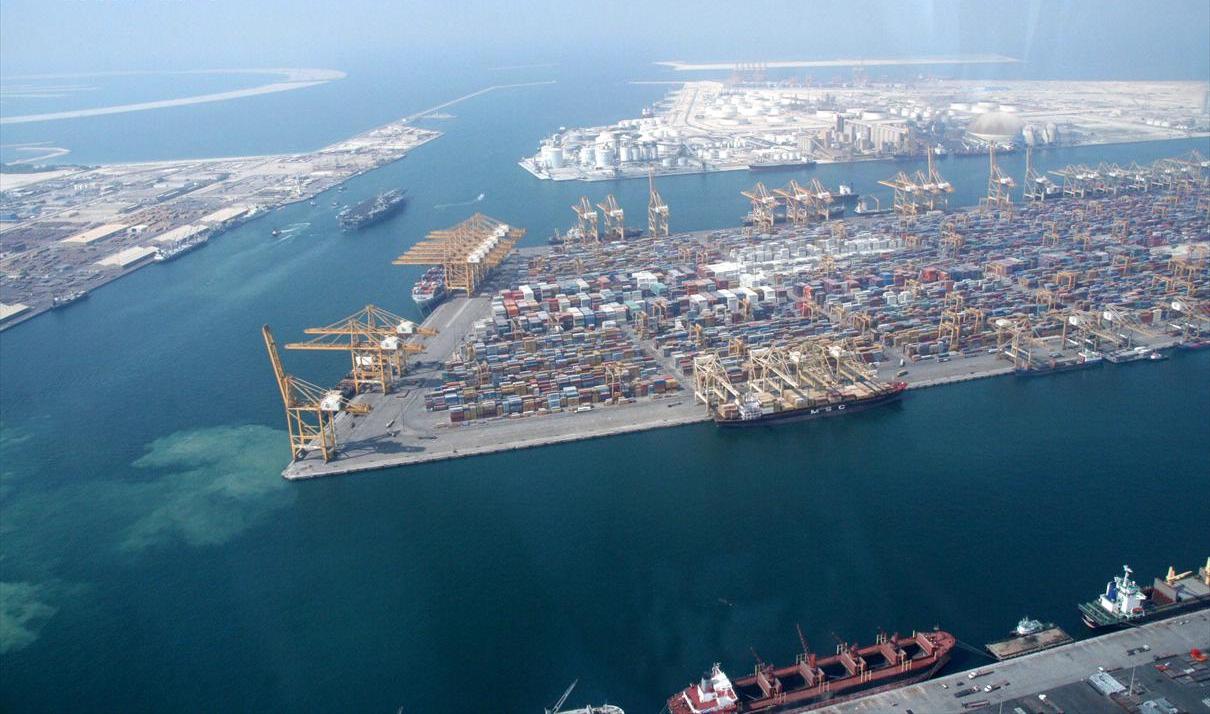
The UAE’s condemnation carries considerable commercial exposure behind it. Bilateral trade between the UAE and Iran ran at approximately $27 billion annually in 2024-2025, according to Iran International and OEC World, with roughly one-third of Iran’s total imports transiting Dubai’s re-export channels, per the Middle East Forum — a volume that makes the UAE, and specifically Dubai’s free zones, one of the most important commercial arteries keeping the Iranian economy supplied with goods Tehran cannot easily source elsewhere. UAE exports to Iran totalled $6.07 billion in 2024, according to TradingEconomics.
The financial dimension of the Tahnoon arrangement operated at a different scale. Reuters reported more than $3 billion in frozen Iranian funds had already been transferred as part of a broader arrangement estimated at $10 to $20 billion, which Abu Dhabi reportedly agreed to in June 2026 in exchange for a halt to attacks and bilateral normalisation — though the UAE MoFA categorically denied the reports on June 13, according to Al Jazeera. The collapse of the bilateral channel does not necessarily halt the financial flows entirely — the already-transferred funds are not recoverable, and Dubai’s re-export trade is commercially driven rather than state-directed — but it removes the political framework that legitimised the transactions and shielded them from Gulf-wide pressure.
Abu Dhabi’s exit from OPEC on April 28, 2026, had already reshaped the economic logic of engagement. UAE oil revenues fell by more than $1.5 billion while Saudi revenues rose by roughly $9 billion, according to Chatham House, a divergence driven by Saudi Arabia’s East-West pipeline capacity that bypasses Hormuz and the UAE’s lack of equivalent infrastructure. The commercial reasoning that had underpinned Abu Dhabi’s hedging — that engagement with Iran protected interests confrontation would destroy — now runs in the opposite direction: the interests are already degraded and the engagement failed to prevent the strikes that degraded them.
Background
The UAE’s posture toward Iran has moved through distinct phases since the conflict’s escalation in early 2026, each defined by the failure of the previous approach’s assumptions. Abu Dhabi initially emphasised restraint and urged de-escalation, a position the Jewish Institute for National Security of America (JINSA) described as the product of the war “forcing a strategic reckoning on every state in the Persian Gulf, but none more acutely than the UAE.” When Iran struck UAE targets in May 2026, Abu Dhabi condemned the attacks as a “dangerous escalation” and “terrorist attacks” but kept the Tahnoon channel open, a calculation that became harder to sustain as uncertainty about who held decision-making authority in Tehran deepened with each passing week.
The European Council on Foreign Relations assessed that Iran’s attacks on Fujairah — targeting the UAE’s only oil export terminal outside the Strait of Hormuz during a nominal ceasefire — “reinforced the view that Iranian hostility is deep, and that the other Gulf states’ strategy of accommodation was failing.” The UAE closed its embassy in Tehran and recalled its ambassador during the conflict’s escalation, steps that marked the formal diplomatic baseline against which the July 12 statement should be read. Saudi Arabia’s co-extensive condemnation added rhetorical convergence, but the two capitals’ strategic divergence on the war’s management persists — Riyadh secured a seat at the Islamabad track and maintains the East-West pipeline bypassing Hormuz, advantages Abu Dhabi does not share — while the coalition’s inability to translate threats into airstrikes has complicated the security picture for every GCC capital.
Frequently Asked Questions
Has the UAE imposed independent sanctions on Iran?
As of July 12, the UAE has not announced independent sanctions against Iran beyond compliance with reimposed US sanctions under General Licence X1, restored on July 7, 2026. Abu Dhabi’s commercial relationship with Tehran has historically operated under a permissive interpretation of sanctions frameworks, with Dubai’s free zones facilitating trade that technically complied with licensing requirements. The collapse of the bilateral channel may create pressure to tighten enforcement, but no additional unilateral sanctions have been publicly announced.
What air defense systems does the UAE operate?
The UAE operates THAAD (Terminal High Altitude Area Defence) batteries, making it one of only two Gulf states with that capability alongside Saudi Arabia, along with Patriot PAC-3 systems and the Russian-origin Pantsir-S1 point defense system. The UAE’s National Emergency Crisis and Disasters Management Authority (NCEMA) stated on July 12 that detected threats were “outside the country’s borders” and that “the situation was stable,” language suggesting successful interceptions at range rather than close-in engagement. The Ministry of Defence did not disclose specific intercept counts or which systems were engaged.
What happened to the Iran-Oman Joint Hormuz Committee after the Duqm strike?
The committee, established in June 2026 under an MOU-mandated co-administration framework, has not been formally dissolved, but Oman’s summoning of the Iranian ambassador introduces a complication that did not exist 24 hours earlier. Oman’s model for the committee — voluntary transit fees modelled on the Strait of Malacca framework — remains fundamentally incompatible with Iran’s insistence on mandatory payments, a gap the Duqm strike widened without resolving. No date for the committee’s next scheduled meeting has been publicly announced.
Could the UAE rejoin OPEC?
Abu Dhabi exited OPEC on April 28, 2026, citing production quota disagreements, and no formal discussions about rejoining have been reported. The war has complicated the exit’s economics — Abu Dhabi lacks the East-West pipeline capacity that insulates Saudi revenues from Hormuz’s closure — but OPEC membership would subject Abu Dhabi to quota decisions that currently favour Saudi Arabia’s preferences. The UAE’s production capacity of roughly 4 million barrels per day gives it weight outside the cartel, though Hormuz’s closure eliminates the export route for the overwhelming majority of that output.
Has the UAE requested additional US military assets since July 12?
No public request for additional US military deployments has been announced by Abu Dhabi. The UAE hosts Al Dhafra Air Base, one of the largest US military installations in the Gulf, and US forces there participated in regional air defense coordination during the July 8-12 strike cycle. The UAE’s independent procurement of French Rafale jets — an $18.7 billion contract signed in 2021, with deliveries underway — and its investment in indigenous drone capabilities give Abu Dhabi options that do not depend exclusively on Washington’s posture in the conflict.