
Table of Contents
JEDDAH — Houthi forces sank two commercial vessels in the southern Red Sea between July 6 and July 9, killing four crew members aboard the bulk carrier Eternity C and seizing eleven mariners as hostages, while a third vessel came under skiff-borne fire on July 5. The Saudi-led coalition has not executed a single airstrike in the six days since Major-General Turki al-Maliki pledged “unprecedented determination and force” on July 4.
Al-Maliki named four Houthi-exposed installations — Hodeidah port, Ras Isa oil terminal, As-Salif port, Sanaa International Airport — and conditioned the threat on any attempt to “target the Kingdom” or “violate the sovereignty of the brotherly Republic of Yemen,” according to Al Jazeera, Arab News, and Gulf Times. Two sinkings, four deaths, and eleven hostage-takings later, all four installations remain unstruck.
| Magic Seas | Eternity C | |
|---|---|---|
| Date attacked | July 6 | July 7 (sunk July 9) |
| Flag / Owner | Liberian / Greek | Liberian / Greek |
| Type | Bulk carrier | Bulk carrier |
| Location | ~51 nm SW of Al-Hudaydah | Near Al-Hudaydah |
| Crew aboard | 22 | ~25 |
| Killed | 0 | 4 |
| Hostages taken | 0 | 11 |
| Attack method | 8 skiffs (RPGs/small arms) + 4 USVs + boarding and demolition | UAVs + RPGs from 4 speedboats |
| Cargo / route | Iron and fertilizers, China to Turkey | Allegedly Israel-bound (Houthi claim) |
| Crew fate | All 22 rescued by UAE merchant vessel, transferred to Djibouti | 4 dead, 11 held, 10 rescued (EU Aspides coordination) |
The Magic Seas
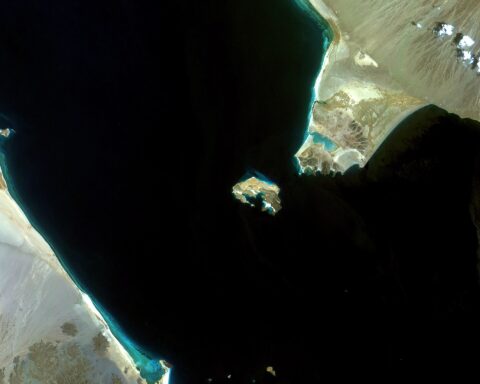
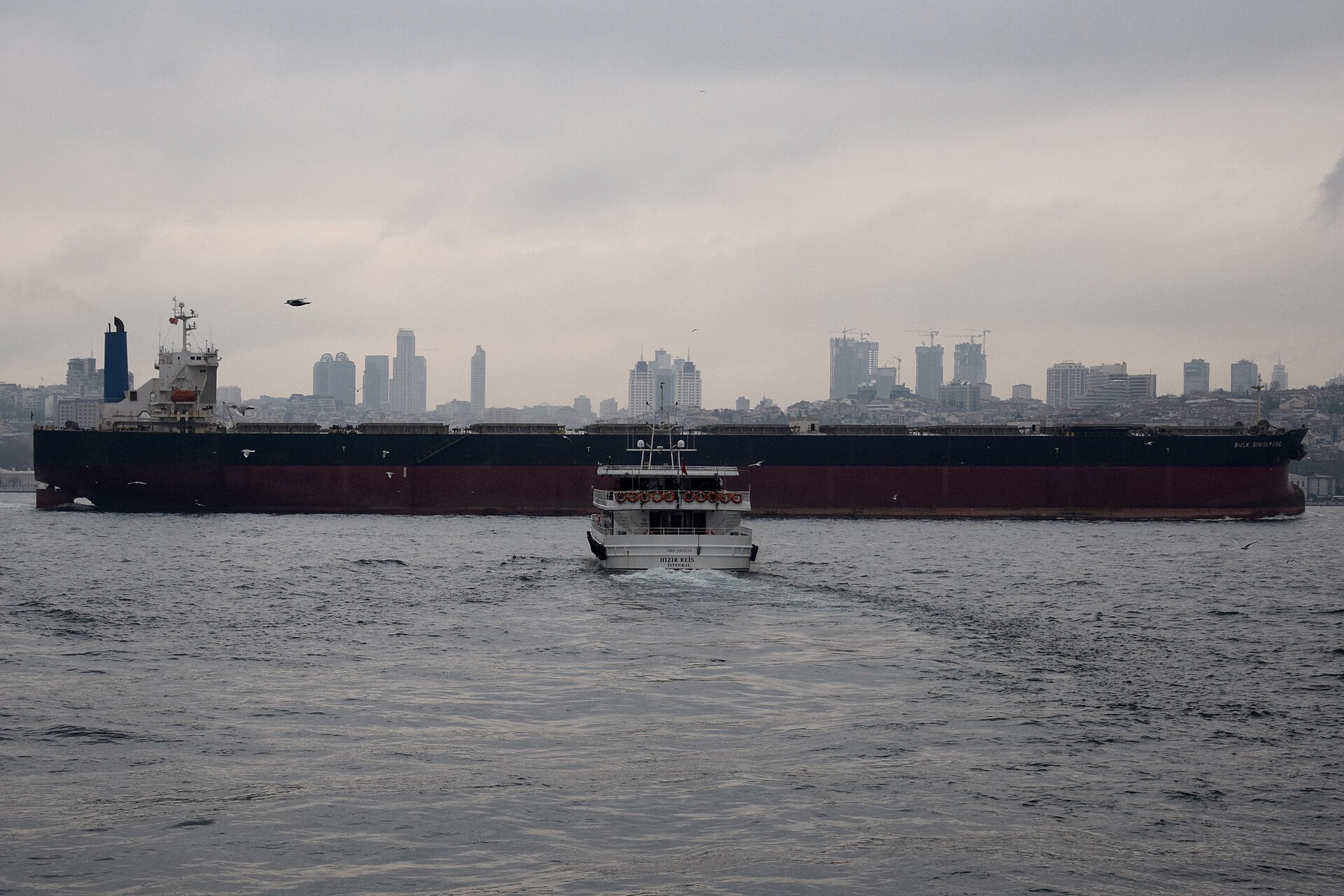
The Liberian-flagged, Greek-owned bulk carrier Magic Seas was attacked on July 6 approximately 51 nautical miles southwest of Al-Hudaydah by eight skiffs armed with small arms and rocket-propelled grenades, according to Seatrade Maritime and gCaptain. The vessel was carrying iron and fertilizers from China to Turkey — a routing with no Israeli port of call and no apparent connection to the Houthis’ stated targeting criteria.
Four unmanned surface vehicles struck the hull after the initial skiff assault. The crew of 22 — seventeen Filipinos, one Romanian, one Vietnamese, and three Sri Lankan security personnel — abandoned ship. All were rescued by a passing UAE merchant vessel and transferred to Djibouti, according to Crisis24.
Houthi fighters then boarded the vessel and detonated explosives, sinking it. Seatrade Maritime confirmed the sinking from Houthi-released video of the final detonation. The four-hour sequence — skiff approach, RPG and small-arms fire, USV strikes, crew evacuation, boarding, demolition — represented a multi-phase operation executed without interruption from any naval or air asset.
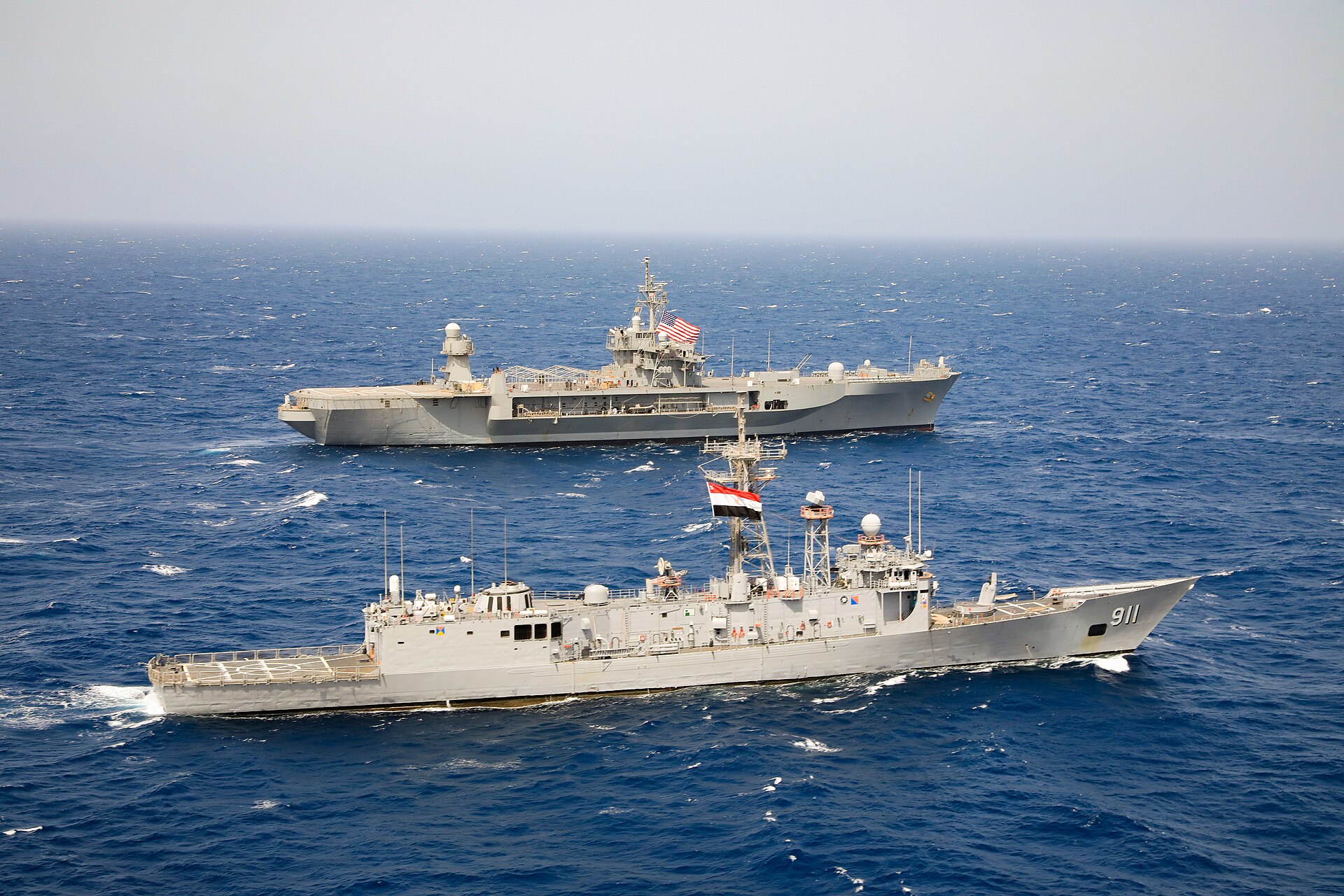
The Eternity C
The Liberian-flagged, Greek-owned bulk carrier Eternity C was attacked on July 7 by UAVs and RPGs fired from four speedboats near Al-Hudaydah, according to CNN and Safety4Sea. Twenty-one Filipino crew members, one Russian national, and three security personnel were aboard — approximately 25 total.
The Middle East briefing 3,000+ readers start their day with.
One email. Every weekday morning. Free.
Four crew members were killed. EU Operation Aspides coordinated rescue operations for survivors, but eleven mariners — Indian and Filipino nationals — were seized by Houthi forces and remain in custody as of July 10, according to gCaptain and the Times of Israel. The vessel sank on July 9.
The Houthis claimed they targeted the Eternity C because it was allegedly en route to Israel, according to the Times of Israel. They released video of surviving hostages delivering a scripted message: “Please stop trading with Israel,” according to Ynet News.
Philippine authorities reported the Houthis had agreed to release the hostages, but no timeline had been confirmed as of July 10 and the eleven remained in Houthi custody. The seizure adds to a pattern of prolonged Houthi detention of captured mariners that predates the 2026 escalation cycle.
A third incident preceded both sinkings. On July 5, an unnamed cargo vessel reported coming under attack approximately 30 nautical miles southwest of Al-Hudaydah, according to a UKMTO alert cited by CNBC, Bloomberg, and Euronews. A skiff opened fire on the vessel; security guards returned fire and the skiff retreated to a larger vessel operating with its AIS transponder disabled. No group claimed responsibility.
What Did Al-Maliki Threaten on July 4?
Al-Maliki’s July 4 statement was issued one day after Houthi military spokesman Yahya Saree threatened Saudi airports and vital interests on July 3. The Saree threat followed allegations — reported by Reuters and Al Jazeera — that Saudi warplanes had intercepted an Iranian civilian aircraft carrying more than 200 passengers, including a Houthi funeral delegation, at Sanaa airport at approximately 5:20 a.m.
“The coalition will respond with unprecedented determination and force to any and all attempts to target the Kingdom, its citizens and residents and national assets, or any attempt to violate the sovereignty of the brotherly Republic of Yemen,” al-Maliki said, according to Al Jazeera, Arab News, and Gulf Times.
He went further than prior coalition statements by naming all four installations by name — the most explicit targeting declaration since the ceasefire collapse.
The statement’s trigger language, however, was territorially conditioned. “The Kingdom” and “the brotherly Republic of Yemen” defined the threshold. Coalition sources have not clarified whether third-party vessel sinkings in international waters — or the deaths of Filipino, Indian, Romanian, Vietnamese, Sri Lankan, and Russian nationals aboard Greek-owned ships — constitute the conditions al-Maliki described. Each day without clarification widens the gap between threat and action.
Why Has No Airstrike Materialized?
Three structural constraints — one operational, one institutional, one diplomatic — explain the six-day gap between al-Maliki’s threat and the coalition’s inaction.
Saudi Arabia’s PAC-3 MSE interceptor stockpile stands at approximately 400 rounds, down from a pre-war inventory of roughly 2,800 — an 86 percent depletion rate, according to DSCA data and prior HoS reporting on the erosion of Saudi air defense capacity. Executing strikes on Hodeidah would trigger Houthi retaliatory missile and drone launches that the depleted inventory cannot sustainably absorb. Lockheed Martin’s $4.76 billion resupply contract, signed April 10, 2026, targets production of 2,000 units per year, with delivery scheduled through June 30, 2030. No meaningful restocking will arrive before mid-2027.
The UN Mission to Support the Hudaydah Agreement expired on March 31, 2026, removing the only neutral verification mechanism over Hodeidah port operations. Any coalition strike on Hodeidah infrastructure now operates without a UN body to certify or limit humanitarian impact — a political liability the already strained US-Saudi defense relationship has so far declined to absorb.
The Khamenei funeral pause, which ran from approximately July 4 through July 9, created a de facto non-escalation window during which the US agreed to suspend talks with Iran, according to Fox News and Al Jazeera. The US-Iran MOU signed June 17 is on Day 23 of its 60-day term as of July 10, layering a diplomatic overhang onto the operational constraints. The coalition’s non-response extended past the funeral’s end on July 9 without any airstrike materializing.
“Deterrence works best against actors with centralised assets and clear cost-benefit calculations, but the Houthis operate in a fragmented, resilient system: mobile weapons, dispersed fighters, and high tolerance for risk, with the symbolic value of striking global shipping often outweighing retaliatory costs.”
— Crisis24 assessment, July 2026
The pattern is not new. On July 5, one day after al-Maliki’s targeting declaration, Houthi ground forces killed fifteen government troops in Hodeidah governorate — in the same territory al-Maliki had named. The coalition did not strike then either.
What the Insurance Market Has Priced
War risk premiums for Red Sea transit have surged approximately 20-fold from the pre-crisis January 2024 baseline, according to S&P Global. Lloyd’s market underwriters have moved to 24-hour quote cycles — premiums valid for a single day rather than the standard policy term — reflecting an inability to price risk across even a 48-hour window, according to Business Insurance.
Premiums range from 0.2 percent to 1 percent of hull value per seven-day voyage, according to Howden Re. For a standard Panamax bulk carrier valued at $30–40 million, a single Red Sea transit now carries a war risk surcharge of $60,000 to $400,000 before operating costs.
MARAD Advisory 2026-006, issued March 26 and active through September 22, covers the Red Sea, Bab el-Mandeb Strait, Gulf of Aden, Arabian Sea, and Somali Basin. The advisory instructs US-flagged vessels to disable AIS transponders — the same countermeasure the skiff that attacked the unnamed vessel on July 5 was itself employing, according to the UKMTO alert.
166 Ships Since November 2023
Abdul-Malik al-Houthi claimed on July 11 that the group had attacked 166 ships associated with Israel, the United States, and the United Kingdom since November 2023, according to Houthi media. The figure — unverifiable independently — framed the campaign as a multi-year endurance operation rather than a reactive escalation.
The Houthis resumed commercial shipping attacks on February 28, 2026, following US and Israeli airstrikes on Iran, according to Crisis24 and NBC News. The July 6–9 sinkings ended any residual de-escalation trajectory.
Burcu Ozcelik, Senior Research Fellow at RUSI in London, assessed that Houthi hard-liners are “spoiling for a fight” while the group’s broader strategy is to “outlast the current war,” according to NBC News.
The Horn Review assessed on July 8 that “the defining characteristic of the current environment is not sustained maritime conflict, but the tactical use of maritime coercion, where limited kinetic actions and calculated threats are alternated to maintain strategic pressure and signalling effects.” The same analysis cautioned: “The apparent calm of 2026 should not be mistaken for stability, but understood as a deterrence-induced pause within a broader cycle of episodic escalation.”
Background
The Houthi maritime campaign against Red Sea shipping began in November 2023, initially targeting vessels the group identified as Israel-linked in response to the Gaza conflict. The campaign expanded to include US- and UK-flagged or -associated vessels after American and British airstrikes on Houthi positions in January 2024. At its peak in 2024, Houthi attacks forced major container lines — including Maersk, MSC, and Hapag-Lloyd — to reroute around the Cape of Good Hope.
An Oman-brokered ceasefire in approximately November 2024 produced an eight-month pause during which Houthi attacks on commercial shipping largely ceased. The pause was agreement-generated, not deterrence-generated: the preceding US-UK air campaign, designated Operation Prosperity Guardian and later supplemented by direct strikes, had, in Crisis24’s assessment, “achieved only limited deterrent effect, as the Houthis retained both the capability and intent to continue their attacks.”
Houthis attacked and sank two commercial vessels in the southern Red Sea in July 2025, killing four seafarers. That event produced no coalition military response sufficient to prevent the 2026 resumption. The February 28 return to attacks followed US and Israeli airstrikes on Iran — a trigger the Houthis explicitly cited.
The al-Maliki threat on July 4 was the most specific targeting declaration from the coalition in the 2026 cycle. He named four installations by name. Six days later, all four remain unstruck, two ships sit on the seabed, four crew are dead, and eleven are in Houthi custody.
FAQ
What happened to the Galaxy Leader and its crew?
The Houthis seized the car carrier Galaxy Leader on November 19, 2023, in one of the campaign’s earliest operations. The vessel’s 25 crew members — from Bulgaria, Romania, the Philippines, Mexico, and Ukraine — remained in Houthi custody for over 900 days as of July 2026. The Galaxy Leader itself was turned into a propaganda exhibit, anchored off Hudaydah and opened to public visits. The Eternity C hostages join a detention pipeline with no demonstrated release mechanism.
What is EU Operation Aspides?
EU Operation Aspides is a European Union naval mission launched in February 2024 to protect commercial shipping in the Red Sea and Gulf of Aden. The operation is defensively mandated — it can intercept inbound Houthi projectiles and escort vessels but does not have authorization to conduct offensive strikes against Houthi positions on land. Aspides coordinated rescue operations for Eternity C survivors but could not prevent the attack or the subsequent hostage-taking.
How many seafarers have Houthis killed since November 2023?
At least twelve commercial seafarers have been killed in Houthi attacks on Red Sea shipping since November 2023, according to compiled reporting from gCaptain, Safety4Sea, and Lloyd’s List. The figure includes three crew members killed aboard the Tutor in June 2024, four killed in the July 2025 sinkings, four killed aboard the Eternity C in July 2026, and at least one additional fatality across other incidents. Dozens more have been injured. The death toll does not include military casualties from US, UK, or coalition operations.
What does rerouting around the Cape of Good Hope cost?
A Cape of Good Hope rerouting adds 10 to 14 days to a standard Asia-to-Europe voyage compared with the Suez Canal route, according to S&P Global and Drewry Shipping Consultants. Additional fuel costs range from $800,000 to $1.2 million per voyage for a large container vessel. The compounding effect across thousands of annual transits has added an estimated $20–30 billion in annualized global shipping costs since the campaign began, according to UNCTAD estimates from 2024. Some carriers have returned to Red Sea transit on a selective basis, accepting the war risk premium as cheaper than the Cape route — a calculation the July sinkings may reverse.
Is the US-Houthi ceasefire still in effect?
The Oman-brokered US-Houthi understanding, reached in approximately November 2024, has effectively collapsed. The Houthis formally announced resumption of attacks on February 28, 2026. No party — the US, Oman, or the Houthis — has declared the understanding formally void, but the July 2026 sinkings represent a return to pre-ceasefire attack tempo. The US-Iran MOU signed June 17, 2026, has not produced a separate Houthi de-escalation track.