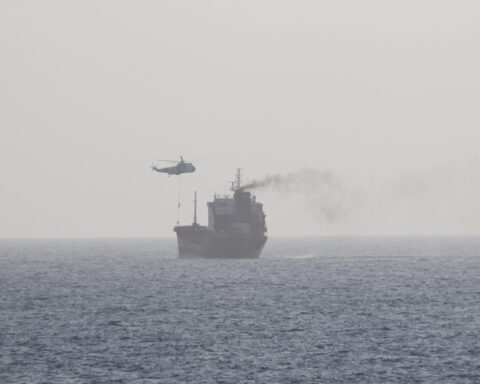
DHAHRAN — Saudi Aramco has notified at least two Asian term-contract buyers that April liftings will be restricted to Arab Light crude loaded exclusively from the Yanbu terminal on the Red Sea coast — the first explicit grade-and-port allocation restriction the company has imposed since the Iran war began on February 28. The notice, described internally as a “supply advisory” rather than a force majeure declaration, effectively eliminates Arab Heavy and Arab Medium from Aramco’s export slate, stranding approximately 2.2 million barrels per day of production that Asian refineries were configured to process.
The distinction between “supply advisory” and “force majeure” is not bureaucratic hair-splitting — it is a deliberate commercial strategy worth billions of dollars a month. If Aramco formally declared force majeure, buyers could argue the entire delivery obligation is suspended, including the May OSP pricing formula set at a record +$19.50 per barrel over Oman-Dubai when Brent was trading around $109. By keeping the language below the force majeure threshold, Aramco preserves the pricing architecture while functionally restricting what it can deliver.
Table of Contents
What the Notice Actually Says
Reuters reported on March 23 that Aramco had contacted at least two unnamed Asian term buyers with the restriction. The company’s public language has been carefully neutral: “Saudi Aramco continues to ensure reliable energy supply by leveraging alternative export routes through Yanbu in response to evolving regional conditions,” the company stated, according to Reuters via TradingView. No formal force majeure clause has been publicly invoked — a deliberate omission that separates Aramco from every other Gulf producer affected by the war.
Qatar’s QatarEnergy declared force majeure on March 2, the war’s third day. Kuwait Petroleum Corporation followed within the same week. Bahrain’s Bapco issued its own declaration shortly after. All three used the standard legal language: performance rendered impossible by circumstances beyond control. Aramco has not, and the reason is structural. Its position is that it can still deliver — just not the same grades from the same ports.
The practical effect is that every Asian term buyer with an April lifting nomination must now accept Arab Light loaded at Yanbu, or nothing. For refineries built to crack heavier, sourer crudes, that is not a neutral substitution — it is a forced reconfiguration that carries measurable economic penalties.
Where Did Arab Heavy and Arab Medium Go?
Arab Heavy crude — the dense, sulphur-rich barrel that runs below 29 degrees API gravity and above 2.9 percent sulphur — and Arab Medium have together disappeared from the export market, accounting for roughly 2.2 million barrels per day of the volumes that are no longer moving, according to Rystad Energy estimates reported by OilPrice.com. Saudi exports fell from 7.108 million bpd in February to 4.355 million bpd in March, a 38.6 percent month-on-month contraction that reflects the loss of the entire Eastern Province export infrastructure.
The Middle East briefing 3,000+ readers start their day with.
One email. Every weekday morning. Free.
“There are no viable replacements for Arab Heavy and Arab Medium in the near term, triggering a historic supply crisis if the conflict is not resolved in the coming weeks,” said Aditya Saraswat, MENA research director at Rystad Energy. The reason is mechanical, not just volumetric. Asian refineries — particularly the large complex facilities in South Korea, Japan, and China — configured their fluid catalytic cracking units and hydrocracking complexes for crude in the 27-to-32 degree API range with sulphur content above 2.5 percent. Arab Light, at approximately 33.3 degrees API and 1.96 percent sulphur, is too light and too sweet for these configurations. Running it through units designed for heavier feedstock reduces throughput, cuts yields of the high-margin middle distillates that Asian refiners depend on, and imposes what the industry calls “configuration penalties” — a polite term for lost money on every barrel processed.
The production losses are not only logistical. Confirmed field damage has taken 600,000 bpd of capacity permanently offline: 300,000 bpd at Manifa and 300,000 bpd at Khurais, according to figures disclosed by the Saudi Energy Ministry and reported by AGBI and CNBC on April 9. Both fields produce heavier grades, which compounds the grade-availability problem even if export routes were fully restored.
| Grade | API Gravity | Sulphur | Pre-War Export Volume | April Status |
|---|---|---|---|---|
| Arab Light | ~33.3° | 1.96% | ~3.5M bpd | Available (Yanbu only) |
| Arab Extra Light | ~38° | ~1.1% | ~0.8M bpd | Spot tenders only (Yanbu) |
| Arab Medium | ~31° | ~2.5% | ~1.2M bpd | Unavailable |
| Arab Heavy | <29° | >2.9% | ~1.0M bpd | Unavailable |
The Yanbu Bottleneck
Every barrel Aramco now exports to the international market must travel west through the East-West Pipeline — the 1,200-kilometre conduit from the Eastern Province oil fields to the Red Sea — and load at Yanbu. The pipeline hit its full 7-million-bpd capacity in March, confirmed by Aramco CEO Amin Nasser during the company’s Q4 earnings call on March 10. “Full capacity in the next couple of days,” Nasser told analysts, according to S&P Global. But the pipeline is no longer at full capacity: the IRGC strike on a pumping station on April 8 — the day the ceasefire nominally took effect — cut throughput by approximately 700,000 bpd, reducing effective flow to around 6.3 million bpd, according to AGBI.
The pipeline, however, is not the binding constraint. Yanbu is. The port’s nominal combined capacity across the North Terminal (~1.5 million bpd) and South Terminal (~3 million bpd, commissioned October 2018) is approximately 4.5 million bpd, but Vortexa estimates the wartime operational ceiling at roughly 3 million bpd, served by seven dedicated VLCC berths.
At peak loading during the week of March 16, Yanbu moved approximately 4 million bpd — a surge that likely pushed berth utilisation to the edge of safe scheduling — but the March average was 2.6 million bpd, according to Reuters and LSEG shipping data. That figure was up from 1.4 million bpd in February, reflecting the rapid ramp-up as Eastern Province ports went offline, but it remains far below pre-war total Saudi export volumes.
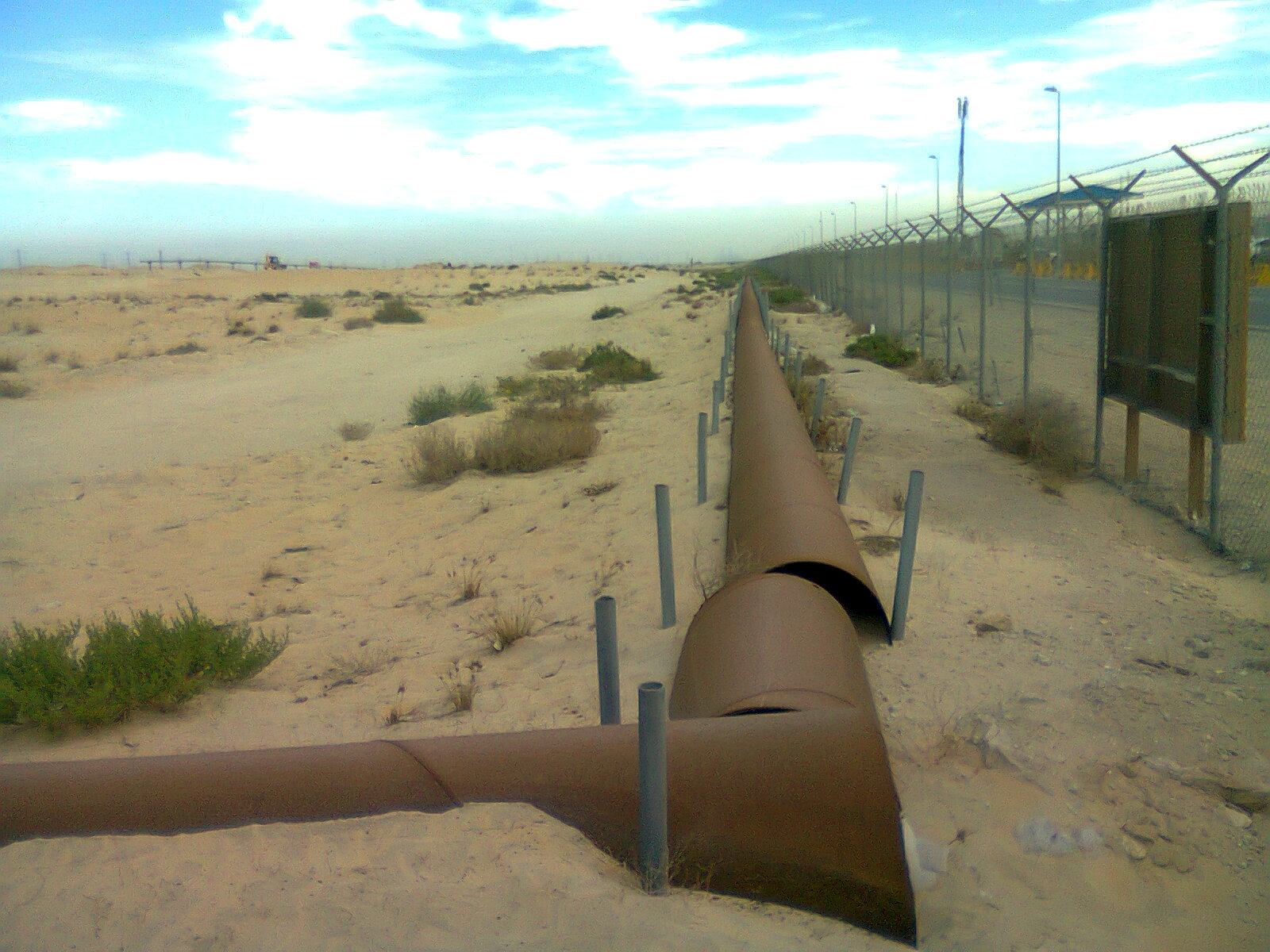
The SAMREF refinery at Yanbu — the 400,000-bpd Saudi Aramco-ExxonMobil joint venture — was struck on April 3, with thick black smoke visible in footage broadcast by Roya News English. The Saudi Energy Ministry acknowledged the damage on April 9. SAMREF processes crude that arrives via the same pipeline, meaning the strike adds refinery-side throughput risk on top of the existing export berth bottleneck. Sara Vakhshouri, founder of SVB Energy International, told AGBI in April that “even amid current tensions, shifting export routes has played a critical role in global energy security — yet this conflict is becoming increasingly difficult to contain.”
Why Is the Paper Market $40 Away from the Physical Market?
The Aramco allocation notice arrives at the worst possible moment for the crude pricing architecture. The May OSP for Arab Light to Asia — a $17 increase from April and the largest single-month jump in the history of the formula, according to Bloomberg on April 6 — was calibrated when Brent was near $109. Brent has since fallen to approximately $96.66 as of April 10, according to Trading Economics, a roughly $12-per-barrel retreat from the OSP reference price.
But the futures market is itself detaching from physical reality. Dubai physical crude — the benchmark that underpins Asian term contracts — has gained 76 percent since the conflict began, compared to a 36 percent rise in Brent futures, according to EBC Financial Group. In absolute terms, the paper-physical gap has blown out to $37-40 per barrel: Dubai physical crude is trading between $126 and $140 per barrel while Brent futures sit around $100-113, according to data from EBC Financial and BCA Research. Marko Papic of BCA Research projects an “oil cliff” by mid-April when strategic petroleum reserves in key Asian economies begin to deplete.
The Oman-Dubai benchmark that underpins Aramco’s OSP formula is itself being distorted by the physical squeeze. When only one grade (Arab Light) is deliverable from only one port (Yanbu), the benchmark ceases to reflect a functioning market and begins to reflect a monopoly loading queue. The +$19.50 premium, set under conditions that no longer exist, becomes a tax on every Asian refiner that signed a term contract expecting diversified grade and port access.
| Metric | Figure | Source |
|---|---|---|
| May OSP Arab Light (Asia) | +$19.50/bbl over Oman-Dubai | Bloomberg, April 6 |
| OSP set at Brent | ~$109/bbl | Bloomberg |
| Current Brent (April 10) | ~$96.66/bbl | Trading Economics |
| Dubai physical crude | $126–$140/bbl | EBC Financial / BCA Research |
| Paper-physical gap | $37–$40/bbl | EBC Financial / BCA Research |
| Indian crude import cost | ~$125.88/bbl (20-year high) | DSIJ Insights |
| Saudi Feb exports | 7.108M bpd | OilPrice.com / Reuters |
| Saudi March exports | 4.355M bpd (−38.6%) | OilPrice.com |
The Force Majeure That Isn’t
The legal architecture of Aramco’s position is more deliberate than it appears. Under Saudi Civil Transactions Law Article 125, force majeure requires three conditions: an unanticipated event, beyond the party’s control, rendering performance objectively impossible. Aramco can arguably meet the first two — the war was not anticipated in contract terms, and IRGC missile strikes are beyond Aramco’s control — but the third condition is where the company’s lawyers have evidently drawn the line. Performance is not impossible. Arab Light is still loading at Yanbu. What has become impossible is delivering Arab Heavy or Arab Medium from Ras Tanura, the Eastern Province terminal struck on March 2 and inoperative since.
Baker McKenzie’s Riyadh office — in a legal advisory published in March by partners Abdulrahman AlAjlan and Anton Mikel — noted that Saudi Civil Transactions Law provides for situations where “compelling performance would fundamentally upset the contractual balance,” a doctrine that could trigger court-ordered relief under what Saudi jurisprudence calls a “state of emergency” framework. But Aramco has not invoked this framework either. Elaine Wong of Orrick LLP in Singapore identified the critical contractual distinction: whether a buyer’s term agreement is “single-source” (naming Ras Tanura as the loading port) or “open-source” (allowing delivery from any Aramco terminal). Most Aramco term contracts are open-source, which means the company can argue that Yanbu constitutes alternative delivery — not non-delivery — and that the grade restriction is a supply adjustment within contractual discretion.
The commercial logic is blunt. A formal force majeure declaration would suspend the delivery obligation — and with it, the pricing formula. Buyers paying +$19.50 over a Dubai benchmark that has itself been inflated by the physical squeeze could argue that the entire OSP structure should be recalculated or suspended. By staying below the force majeure threshold, Aramco keeps the pricing architecture intact: buyers still owe the OSP premium, they simply receive a different grade from a different port. The roughly $12-per-barrel gap between the OSP reference price and current Brent ($96.66) remains the buyer’s problem, not the seller’s.
There are no viable replacements for Arab Heavy and Arab Medium in the near term, triggering a historic supply crisis if the conflict is not resolved in the coming weeks.
— Aditya Saraswat, MENA Research Director, Rystad Energy
Who Gets the Barrels?
The allocation question carries its own set of legal and diplomatic pressures. Sinopec loaded approximately 24 million barrels from Yanbu in March and is expected to receive roughly 40 million barrels in April, according to Reuters and LSEG shipping data — making China’s state refiner the largest single lifter from the terminal. Beijing appears willing to absorb Arab Light despite the configuration penalties at Chinese complex refineries, prioritising supply security over refinery optimisation in a calculation that reflects broader strategic alignment with Riyadh.
The pro-rata allocation question — whether Aramco is distributing available supply proportionally among all term customers — is murkier. Sinopec’s expected 40-million-barrel April allocation represents a significant share of Yanbu’s total export capacity. Other Asian buyers, whose allocations have not been disclosed, may have grounds to challenge whether the distribution is equitable. Pro-rata allocation clauses, standard in long-term crude supply agreements, require sellers to distribute available supply proportionally among all term customers when total supply is insufficient to meet all nominations. If Sinopec is receiving a disproportionate share, smaller buyers — particularly South Korean and Japanese refiners facing the most severe grade-mismatch penalties — could raise formal disputes.
South Korea is the most acutely exposed buyer. Its hydrocracker and coker complexes were built specifically for the 27-to-32 degree API, high-sulphur range that Arab Heavy and Arab Medium occupy. Seoul released 22.46 million barrels from its strategic petroleum reserve on March 12 — a national record — and has declared its first fuel price cap in thirty years. Aramco holds 5.3 million barrels stored at Ulsan under a KNOC lease arrangement, available for Korean emergency use, according to S&P Global — but 5.3 million barrels covers roughly five days of South Korean crude demand, not a structural solution. Japan has announced plans to release 80 million barrels from its own reserves, according to Al Jazeera.
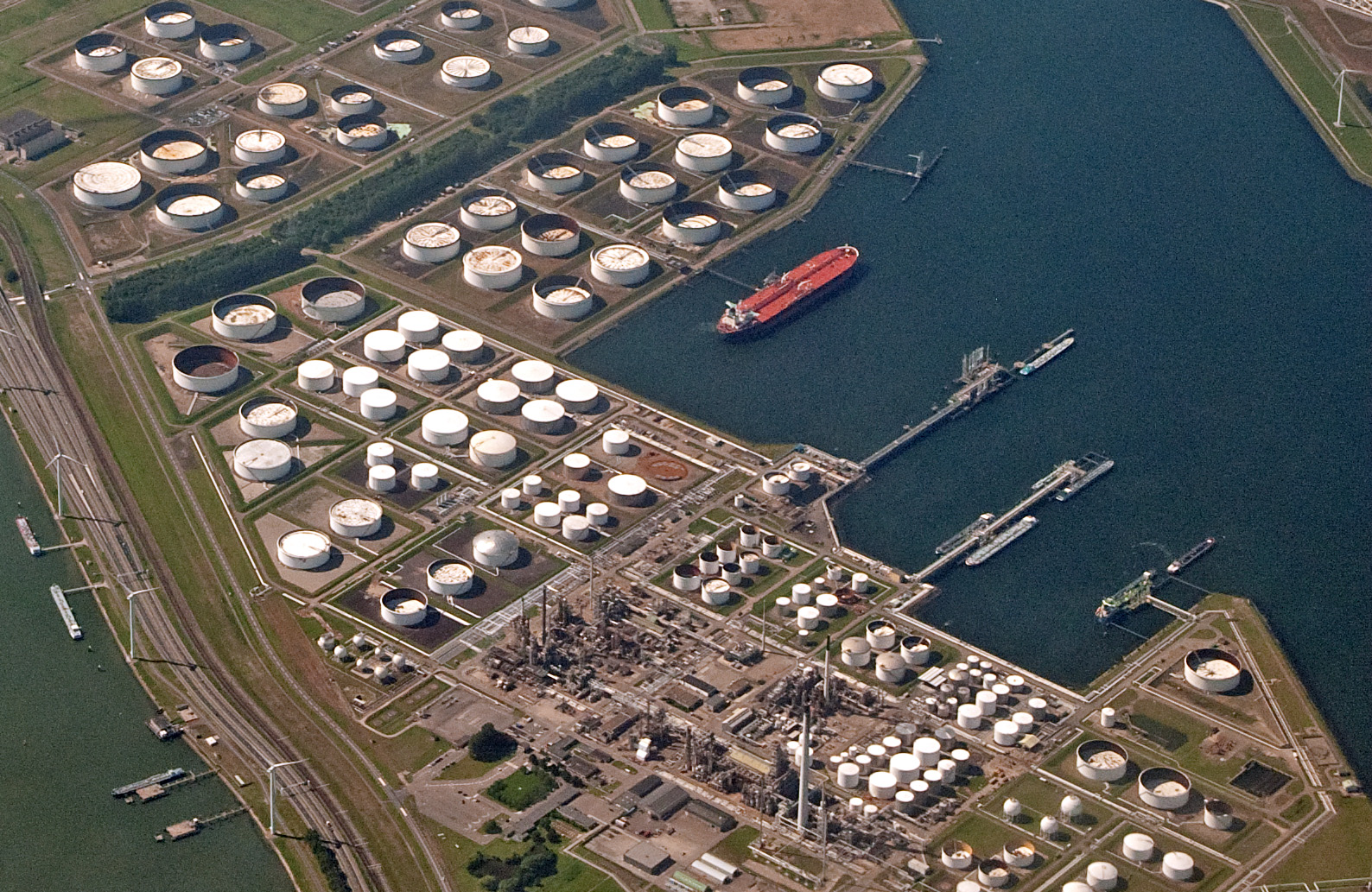
India faces a different version of the same problem. Indian crude import costs hit approximately $125.88 per barrel in April — a twenty-year high, according to DSIJ Insights. Shares in Indian Oil Corporation have fallen 24.47 percent since the war began; Bharat Petroleum is down 24.55 percent and Hindustan Petroleum 29.53 percent. Indian refiners are buying Arab Light from trading house Vitol at a $2-per-barrel premium above Dubai, choosing to avoid Russian crude despite the shortage — a decision that reflects both sanctions compliance pressure and a bet that the Aramco relationship matters more than short-term cost optimisation.
The 1990 Precedent in Reverse
The closest historical parallel to Aramco’s current position is the 1990 Gulf War — and it runs in exactly the opposite direction. When Iraq invaded Kuwait in August 1990, removing roughly 4.3 million bpd of Iraqi and Kuwaiti crude from global markets, Saudi Aramco surged production from 5.3 million bpd to between 8.35 and 8.7 million bpd within five months. No allocation restrictions were imposed. No grades were curtailed. The Eastern Province export terminals — Ras Tanura, Ju’aymah, the offshore facilities — all operated at full capacity because the war was in Kuwait, not on Saudi soil.
The 2026 situation inverts every element of the 1990 playbook. Saudi Arabia’s own export infrastructure is the target. The Eastern Province terminals that enabled the 1990 surge are offline. Production capacity has been permanently reduced by at least 600,000 bpd through confirmed field damage. And the sole remaining export artery — the East-West Pipeline feeding Yanbu — has itself been struck, with the April 8 pumping station attack reducing throughput by 700,000 bpd on the day the ceasefire was supposed to hold. In 1990, Aramco was the world’s swing producer, able to compensate for the loss of an entire country’s output. In 2026, Aramco cannot fully compensate for the loss of its own export routes.
The supply advisory is the instrument that manages this inversion. It tells buyers: we are still here, we are still selling, the contracts are still in force, the OSP still applies — but what we can deliver has been fundamentally narrowed by circumstances we did not choose. It is force majeure in function, priced as normal commercial operations, and described in language that avoids triggering either legal term. For Asian refineries that signed term contracts expecting diversified access to four Saudi crude grades from multiple Eastern Province and Red Sea terminals, the advisory converts a supply relationship into a rationing system — with Aramco, not the buyer, deciding who gets what, when, and at what price.
The next test comes when May lifting nominations are due. If the ceasefire holds and pipeline repairs restore throughput, Yanbu may be able to push toward 3.5-4 million bpd — enough to ease the worst of the squeeze, though nowhere near pre-war volumes. If the ceasefire fractures, the East-West Pipeline becomes the single most consequential piece of energy infrastructure on earth: a 1,200-kilometre line through open desert, feeding the only port through which Saudi crude can reach the world, carrying barrels priced at a formula that assumes a market which no longer exists.
Frequently Asked Questions
Can Asian refineries blend Arab Light with other crudes to replicate Arab Heavy specifications?
In theory, blending Arab Light with heavier crudes from other sources — such as Iraqi Basrah Heavy, Kuwaiti Export Crude, or Venezuelan Merey — could approximate the API and sulphur profile that Asian complex refineries require. In practice, Kuwait has declared force majeure on its own exports, Iraqi Basrah loadings through the Gulf are constrained by the same Hormuz disruptions, and Venezuelan heavy crude faces separate sanctions and logistical barriers. The blending option exists on paper but not in the current physical market.
What happens if a buyer refuses to accept Arab Light and demands force majeure relief?
A buyer that refuses to lift Arab Light from Yanbu under an open-source contract would likely face a contractual dispute rather than automatic relief. Aramco’s position — that delivery is available, merely from a different port and in a different grade — is designed to foreclose force majeure claims. Under English law, which governs many international crude sale and purchase agreements, force majeure is strictly construed: it must render performance physically or legally impossible, not merely more expensive or less profitable. A buyer’s strongest argument would be that a single-grade, single-port restriction constitutes a fundamental change in the nature of the contract — but that argument has not yet been tested in arbitration under these circumstances.
Why hasn’t Aramco adjusted the May OSP downward given the Brent decline?
Aramco’s OSP is set monthly, typically in the first week of the month, and applies to all liftings in the following month. The May OSP of +$19.50 over Oman-Dubai was set on approximately April 6 when Brent was near $109. It cannot be retroactively adjusted. The June OSP, expected in early May, will reflect market conditions at that time — but Aramco has historically been reluctant to cut OSPs sharply during supply disruptions, as doing so signals weakness to both buyers and competitors. The Dubai physical premium (76 percent above pre-war levels) also provides Aramco with an argument that the Oman-Dubai benchmark itself has risen enough to justify the differential.
How long can South Korea and Japan sustain current consumption from strategic reserves alone?
South Korea’s 22.46-million-barrel SPR release, combined with Aramco’s 5.3 million barrels stored at Ulsan, provides roughly 27.7 million barrels of emergency supply — approximately 10 days of South Korean crude demand at the country’s ~2.7 million bpd consumption rate. Japan’s announced 80-million-barrel release covers roughly 24 days at Japan’s ~3.3 million bpd consumption rate. Both nations are simultaneously sourcing alternative barrels from non-Gulf producers, but the strategic reserves provide a buffer measured in weeks, not months — consistent with BCA Research’s Marko Papic projection of an “oil cliff” by mid-April.