
RIYADH — Saudi Arabia helped build the ceasefire architecture that is now draining its treasury at a rate of roughly $78 million per day. Brent crude settled at $95.92 on April 9 — more than $13 below the PIF-inclusive fiscal break-even of $108–111 per barrel that Bloomberg Economics calculates as the kingdom’s true survival threshold. The official 2026 deficit projection of SAR 165 billion ($44 billion, 3.3% of GDP) was already fiction before the war began. Goldman Sachs models the real figure at 6.6% of GDP. At current prices and production levels, that gap is widening by the hour.
The diplomatic sequence tells the story. Crown Prince Mohammed bin Salman used British Prime Minister Keir Starmer’s Gulf tour to surface the Lebanon-inclusion demand without Saudi fingerprints. He encouraged Pakistan’s transformation from ceasefire venue to enforcement mechanism. On April 9, Saudi Foreign Minister Prince Faisal bin Farhan and Iranian counterpart Abbas Araghchi held their first direct call in 40 days. Each step moved the needle toward peace. Each step moved Brent further from the price Saudi Arabia needs to function. On April 17, when Araghchi declared Hormuz open “in line with the ceasefire in Lebanon,” the full architecture of Saudi exposure came into view: the ceasefire MBS built had coupled Riyadh’s export corridor to Israeli restraint in southern Lebanon — a variable the Kingdom cannot control.
Table of Contents
- The Two Break-Evens
- How Does the May OSP Trap Work?
- 1.3 Million Barrels Saudi Arabia Cannot Pump
- Why Can’t Saudi Arabia Use the OPEC+ Lever?
- The $57.8 Billion Financing Wall
- PIF’s Cash Crisis and the Vision 2030 Freeze
- Iran Pays Nothing for Peace
- What Happened the Last Two Times?
- The Unsayable Arithmetic
- FAQ
The Two Break-Evens
There are two numbers that define Saudi Arabia’s fiscal reality, and the gap between them is the gap between Riyadh’s public narrative and its private arithmetic. The IMF’s standard central-government fiscal break-even — the price at which oil revenue covers budgeted spending — sits at $86.60–87 per barrel. At $96 Brent, the kingdom clears that bar comfortably. This is the number Saudi officials cite.
Tim Callen, a visiting fellow at the Arab Gulf States Institute and former IMF mission chief to Saudi Arabia, has been explicit about why this figure misleads. “The breakeven oil price is a poor guide to Saudi Arabia’s fiscal and oil production policies,” he wrote in an AGSI analysis that noted the IMF metric excludes PIF’s off-budget spending entirely. PIF is not a sovereign wealth fund operating at arm’s length from the state. It is the execution vehicle for the entirety of Vision 2030 — NEOM, Qiddiya, Diriyah, the $23 billion Humain AI initiative, the Expo 2030 and FIFA 2034 host obligations. Its spending is government spending in everything but accounting treatment.
Bloomberg Economics’ consolidated break-even — the one that includes PIF — lands at $108–111 per barrel. On April 10, Brent trades at approximately $96. The gap is $12–15 per barrel. Multiply by pre-war export volumes of roughly 6 million barrels per day and the shortfall runs to $72–90 million daily, or $26–33 billion annualized. That is before accounting for the 1.3 million barrels per day the kingdom can no longer produce.
How Does the May OSP Trap Work?
Aramco’s May 2026 Official Selling Price for Arab Light to Asia was set at a record premium of +$19.50 per barrel over the Oman/Dubai average. The previous month’s premium had been +$2.50. The $17.00 single-month increase — the largest in Aramco’s pricing history — was calculated against a Brent baseline of approximately $109, when the war had pushed crude to levels not seen since 2022.
The Middle East briefing 3,000+ readers start their day with.
One email. Every weekday morning. Free.
The ceasefire collapsed that baseline. With Brent at $96, term-contract buyers across Asia are now receiving Arab Light at roughly $15 per barrel below spot. Aramco cannot adjust the OSP mid-month; the price holds until June loadings are set. Asian refiners — Indian Oil Corporation, SK Energy, Cosmo, Idemitsu — will take every barrel they are contractually entitled to at these prices, and some will attempt to lift additional volumes. Saudi Arabia is, for the month of May, subsidizing its largest customers at war-era pricing into a peace-era market.
The mechanical problem is straightforward. OSPs are set retrospectively based on market conditions at the time of announcement. They are forward commitments. When the market moves $13 in the wrong direction between announcement and delivery, the seller absorbs the entire loss. Aramco has no mechanism to claw back the difference.
Rachel Ziemba, founder of Ziemba Insights, framed the war-era arithmetic as a net positive: “The fact KSA can sell at higher levels the lower volumes through the east-west pipeline is a support.” That arithmetic has now inverted. Lower volumes at a locked-in price that is $15 above a falling market is the opposite of support.
1.3 Million Barrels Saudi Arabia Cannot Pump
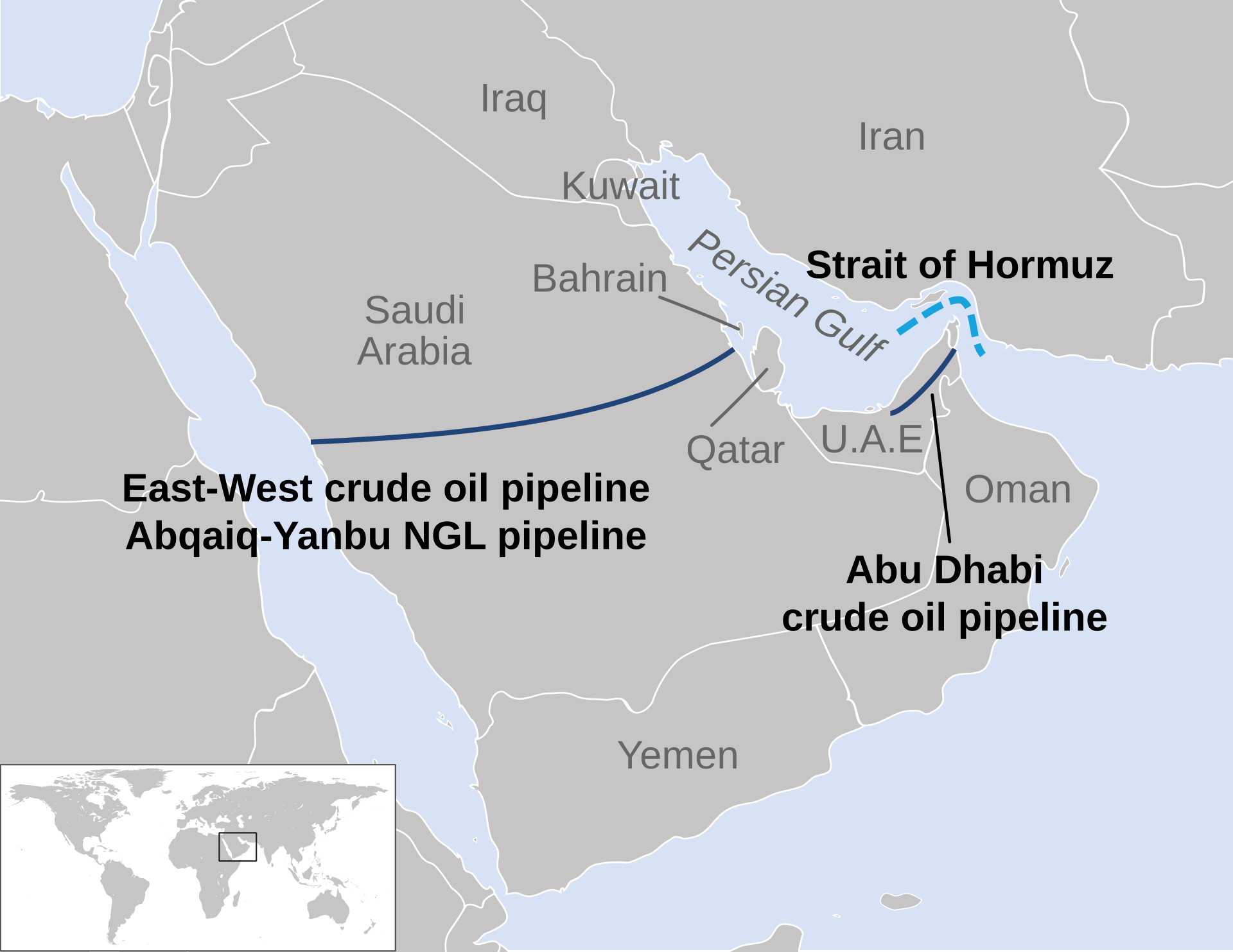
The ceasefire stopped the missiles. It did not repair the infrastructure. Saudi Arabia has disclosed 1.3 million barrels per day in confirmed production and pipeline capacity losses: 300,000 bpd at Manifa, 300,000 bpd at Khurais, and approximately 700,000 bpd in East-West Pipeline throughput following the IRGC strike on a pumping station on the day the ceasefire was supposed to begin.
Kate Dourian of the Arab Gulf States Institute assessed the Yanbu bypass capacity bluntly: “Yanbu can’t really do it at the moment. Maybe you can get two million barrels out a day. Maybe three.” The East-West Pipeline’s nameplate capacity is 7 million bpd. Effective throughput post-strike is 3–4 million bpd. Every barrel that cannot reach Yanbu must attempt the Red Sea route through Bab el-Mandeb — a chokepoint that Houthi forces have intermittently threatened since 2023.
Callen identified the core tension in March: “The budget depends on both oil prices and oil production. As exports are hit by shipping difficulties, this will impact production. Ultimately the price up versus production down will determine the impact.” That formulation assumed the two variables would move in opposite directions — higher prices partially offsetting lower volumes. The ceasefire has broken that assumption. Both price and volume are now moving against the kingdom simultaneously.
| Metric | Pre-War (Feb 2026) | Current (April 10) | Change |
|---|---|---|---|
| Brent crude ($/bbl) | ~$82 | ~$96 | +$14 (+17%) |
| Peak wartime Brent | — | ~$109 (April 7) | — |
| Saudi production capacity online | ~12.0M bpd | ~10.7M bpd | −1.3M bpd |
| East-West Pipeline effective throughput | ~5M bpd | ~3–4M bpd | −1–2M bpd |
| Aramco May OSP (Arab Light to Asia) | +$2.50/bbl | +$19.50/bbl | +$17.00 |
| OSP vs. spot (effective) | At market | ~$15 below spot | Discount to buyer |
| PIF-inclusive break-even | $108–111/bbl | $108–111/bbl | No change |
| Shortfall vs. break-even | −$26–29/bbl | −$12–15/bbl | Improved but still negative |
The Saudi Finance Ministry has not articulated the irony the table contains. The kingdom’s fiscal position was worse before the war at $82 Brent than it is now at $96. The war improved the price but degraded the infrastructure. The ceasefire improved the diplomacy but degraded the price. At no point in the sequence — pre-war, wartime, or post-ceasefire — has Saudi Arabia operated above its consolidated break-even.
Why Can’t Saudi Arabia Use the OPEC+ Lever?
The OPEC+ May 2026 production decision authorized a total increase of 206,000 barrels per day across the group. Saudi Arabia’s share: approximately 62,000 bpd, or roughly 1% of its pre-war export volume. Al Jazeera called the decision “largely symbolic,” noting that several Gulf members physically cannot reach their production targets because of war damage.
The December 2025 unwinding agreement contains a “flexible and conditional” clause permitting OPEC+ to “pause or reverse” scheduled increases. On paper, this gives Saudi Arabia the tool it needs: halt the unwinding, tighten supply, push prices back toward $108. In practice, invoking that clause in April 2026 would amount to a public declaration that the kingdom prefers higher oil prices — which, in the current environment, means it prefers the conditions created by war over those created by ceasefire.
Monica Malik, chief economist at Abu Dhabi Commercial Bank, noted that “OPEC+ could increase output more meaningfully once the conflict concludes.” The framing assumed the end of conflict would be fiscally liberating. Instead, the end of conflict has produced a price that three separate Wall Street banks model as structurally below Saudi Arabia’s consolidated spending requirements.
The deeper constraint is reputational. MBS positioned Saudi Arabia as the responsible actor throughout the crisis — absorbing Iranian missile strikes without retaliating, hosting US forces at Prince Sultan Air Base at a cost of more than $1 billion in Saudi-funded construction, and losing 86% of its PAC-3 interceptor stockpile defending civilian infrastructure. Calling for production cuts now would reframe the kingdom as a war profiteer retroactively.
The $57.8 Billion Financing Wall
Saudi Arabia’s total 2026 financing requirement is $57.8 billion (SAR 217 billion). This covers the projected budget deficit plus approximately SAR 52 billion in maturing debt principal that must be rolled over. The National Debt Management Center’s plan calls for $25 billion in international Eurobond issuance — a record for any sovereign issuer in the emerging-market category.
The kingdom began executing early. In January, NDMC raised $11.5 billion in a single dollar-denominated offering across four tranches ranging from 3 to 30 years. The deal was oversubscribed 2.7 times, with $31 billion in orders. At the time, war-driven oil prices and the perception that Saudi Arabia would emerge as a structural beneficiary of the conflict made the credit story compelling.
That story has changed. The remaining $13.5 billion in planned Eurobond issuance must now be marketed against a backdrop of Brent at $96, confirmed infrastructure damage, a PIF cash crisis, and a Goldman Sachs deficit estimate that is double the government’s own figure. Karen Young, senior research scholar at Columbia University’s Center on Global Energy Policy and formerly of AGSIW, identified the bind before the war began: “Saudi Arabia is likely to rely on debt financing, and it will have to delay or scale back some planned contracting awards given 2024 was already in a twin deficit.”
The twin deficit — fiscal and current account — was a pre-war condition. The war temporarily masked it by pushing oil prices above the break-even. The ceasefire has unmasked it at the worst possible moment: midway through the kingdom’s largest-ever borrowing program.
PIF’s Cash Crisis and the Vision 2030 Freeze
PIF’s cash reserves fell to approximately $15 billion by late 2024 — the lowest level since the fund’s reconstitution in 2016. The 2026–2030 strategy document, published in early April, confirmed what the balance sheet implied: The Line has been formally suspended at 2.4 kilometers of its planned 170, with the population target cut from 1.5 million to fewer than 300,000. Construction commitments across the PIF portfolio dropped from $71 billion to $30 billion. The fund took an estimated $8 billion write-down.
The Aramco dividend cut compounds the problem. Total dividends fell from $124.3 billion in 2024 to $85.5 billion in 2025 — a $38.8 billion reduction. The Saudi government, which holds 82% of Aramco, lost approximately $32 billion in direct income. PIF, with its 16% stake, lost roughly $6 billion. The fund’s primary mechanism for financing Vision 2030 — recycling Aramco dividends into megaproject spending — has been functionally disabled.
What remains is a fund that earned approximately 0% return in 2024, holds $15 billion in cash, has written down $8 billion in NEOM investments, and is now watching its primary revenue source (Aramco dividends funded by oil exports priced at war-era OSPs into a peace-era market) contract further. The $3.7 Billion Debt Clock Saudi Arabia Cannot Stop examines how SABIC’s force majeure, Sadara’s $3.7 billion debt grace period expiring June 15, and PIF’s compressed dividend income form a single interconnected balance-sheet crisis — none of which a ceasefire resolves on its own.
Non-Oil PMI hit 48.8 in Q1 2026 — contraction territory. The diversification engine that was supposed to reduce oil dependence is itself dependent on oil revenue to function. At $96 Brent, that circularity becomes visible.
Iran Pays Nothing for Peace
Iran earned approximately $139 million per day in oil revenue during March 2026, despite the war. Its exports flow through the Jask bypass terminal (operational at 300,000 bpd, with 1.0 million bpd capacity), settled in yuan through Kunlun Bank outside the SWIFT system. Hormuz closure imposed no meaningful fiscal cost on Tehran. The peace premium — the 13–15% crash in Brent — helps Iran’s diplomatic image without reducing its revenue, because Iranian crude already trades at a steep discount to Brent through opaque channels that do not reference the benchmark.
Khamenei’s attributed statement on IRIB described the ceasefire as “not the end of the war.” The Supreme National Security Council’s full text was more explicit: “Negotiations are continuation of battlefield.” Iran’s Parliament passed a Hormuz transit fee bill on March 31. The Gharibabadi-Oman protocol governing ship movements remains unfinalized. Iran retains both a political claim and a prospective revenue stream over the strait — 15–20 ships per day are transiting, versus 138 before the war.
Saudi Arabia bears the fiscal cost of lower prices because its economy is transparently benchmarked to Brent. Iran does not, because its economy operates in a parallel pricing universe of sanctioned discounts and bilateral barter. The ceasefire Saudi Arabia helped construct benefits Iran diplomatically at zero fiscal cost and hurts Saudi Arabia fiscally at maximum diplomatic benefit. MBS cannot say so without appearing to argue against the peace he facilitated. The fracture between Gulf states that can make demands and those that cannot is now structural: the UAE’s formal $6 billion reparations claim against Iran, issued through the UN, stands in direct contrast to Saudi Arabia’s studied public silence on the same Iranian strikes.
What Happened the Last Two Times?
During the 1990–91 Gulf War, the kingdom expected a $45–65 billion revenue windfall from elevated crude prices. It ended up spending $64–80 billion in total war-related costs. Cash reserves fell by $27.9 billion in 1990 alone. Saudi Arabia transferred $16.8 billion — 27% of total coalition costs — to coalition partners, fighting primarily to defend its own borders. The net fiscal effect was negative despite oil trading well above the break-even of that era.
The 2015 Yemen intervention produced a budget deficit of approximately $98 billion, or 15% of GDP. The kingdom drew down sovereign reserves by roughly $115 billion across 2015 and 2016. The break-even at that point was approximately $90 per barrel; Brent averaged $52 in 2015. The combination of war spending and a concurrent oil price collapse — driven partly by Saudi Arabia’s own market-share defense strategy — created the fiscal emergency that forced the first international bond issuance in 2016 ($17.5 billion) and accelerated the IPO of Aramco.
The 2026 crisis combines elements of both precedents. Like 1990, the kingdom absorbed direct military costs — the estimated PAC-3 expenditure alone is $3.49 billion at $3.9 million per interceptor round, with 86% of stockpiles depleted. Like 2015, the post-crisis price environment is structurally below the fiscal break-even. The difference is that in 2026, the kingdom engineered the peace that produced the price collapse, and it is attempting to finance a $1.3 trillion economic transformation program simultaneously.
The Unsayable Arithmetic
Finance Minister Mohammed Al-Jadaan committed in December 2025 to cutting the deficit to 3.3% of GDP. Goldman Sachs, publishing the same month, modeled it at 6.6%. Bank of America projected approximately 5%. All three estimates were set before the war began — before the $38.8 billion Aramco dividend cut, before the 1.3 million bpd in confirmed infrastructure losses, before the ceasefire-driven price collapse from $109 to $96.
The spread between the official deficit (3.3% of GDP) and external estimates (5–6.6%) is not a rounding error. It is the fiscal footprint of PIF — the spending the government does not count as government spending because it flows through a sovereign wealth fund rather than a ministry. At $109 Brent, the accounting treatment was a technicality. At $96, it is the difference between a manageable deficit and a structural crisis.
Jim Krane, an energy fellow at Rice University’s Baker Institute, framed the post-war reassessment in security terms: “When calm returns, Gulf countries will face a difficult reassessment of the growing risks of relying on US security provision.” Saudi Arabia spent more than $1 billion building Prince Sultan Air Base for US forces. It absorbed 894 intercepts — 799 drones and 95 ballistic missiles — between March 3 and April 7 without offensive retaliation. It facilitated the diplomatic track that produced the ceasefire. The reward is Brent at $12–15 below the level at which its development model remains solvent.
Neil Quilliam, associate fellow at Chatham House, identified the legacy risk that outlasts the current price: “Now that Hormuz has been closed, it can be closed again and again, and that poses a major threat to the global economy.” For Saudi Arabia, the cycle is specific: every future Hormuz closure will produce a war premium; every resolution will collapse it. The kingdom cannot hedge against that pattern — hedging against peace would require instruments no sovereign can publicly hold.
The kingdom’s 2025 deficit was 5.3–5.8% of GDP before the first Iranian missile crossed the Gulf. The war temporarily improved it by pushing prices above the consolidated break-even. The ceasefire has exposed the underlying condition: the $108–111 break-even is not a number the kingdom can sustain through diplomacy, production policy, or borrowing alone. It requires either a permanently elevated oil price or a permanent reduction in the ambition of Vision 2030.
On April 9, Prince Faisal bin Farhan called Abbas Araghchi — their first direct conversation in 40 days. If the call succeeds in producing a durable peace, it will keep Brent below $100 for the foreseeable future. The Saudi Finance Ministry has not published a revised deficit estimate since the ceasefire began. Goldman Sachs has not updated its 6.6% projection to reflect the post-ceasefire price. When both numbers arrive, the gap between them will be wider than it was in December.
FAQ
How much has Saudi Arabia spent on air defense during the Iran war?
Estimated PAC-3 MSE expenditure alone is approximately $3.49 billion, based on 894 confirmed intercepts and a unit cost of $3.9 million per round. This figure excludes THAAD and shorter-range systems, Patriot launcher wear, and the logistical costs of the largest sustained air defense operation since the 1991 Gulf War. Raytheon’s Camden, Arkansas plant produces approximately 620 PAC-3 rounds per year — replenishment of the depleted stockpile would take more than four years at full production capacity, assuming no other buyer receives priority allocation.
Could Saudi Arabia cut its own production to raise prices?
Technically, yes. Saudi Arabia retains approximately 10.7 million bpd in production capacity and was producing well below that under voluntary OPEC+ cuts. A unilateral reduction would tighten the market. But the political cost would be catastrophic. Any Saudi production cut in April 2026 would be read internationally as the kingdom choosing war-era pricing over peace — an inversion of the diplomatic role MBS has cultivated since February 28. It would also violate the OPEC+ December 2025 agreement, which commits to unwinding rather than deepening voluntary cuts. Saudi Arabia’s leverage within OPEC+ depends on its reputation as the swing producer that sacrifices volume for group discipline; using that role to profit from a war it absorbed would destroy the credibility that underwrites the role.
What is the Aramco OSP and why can’t it be changed mid-month?
The Official Selling Price is a formula-based premium or discount set monthly by Aramco for each crude grade and destination. It is announced in the first week of the month for loadings in the following month (May OSPs cover June loadings). Once set, the OSP is a contractual commitment to every term-contract buyer — typically 12-month agreements with national oil companies and major refiners across Asia, Europe, and the US. Changing it mid-month would breach hundreds of simultaneous contracts, trigger force majeure disputes, and undermine the term-contract system that provides Aramco with demand visibility. No major national oil company has ever adjusted an OSP retroactively.
How does Saudi Arabia’s 2026 deficit compare to other Gulf states?
Oxford Economics projects Qatar’s GDP contracting by 14% due to the war’s impact on LNG exports — far worse than Saudi Arabia’s fiscal deterioration in percentage terms. The UAE’s ADNOC has shut down the Ruwais refinery complex. Kuwait’s KPC headquarters was struck by Iranian missiles. Bahrain, which lost its sole international access corridor when airspace closed on February 28, is running a deficit estimated above 10% of GDP. Among GCC members, only Oman — which has positioned itself as a mediator and sustained no direct infrastructure damage — faces a fiscal outlook that has improved since February.
When will Saudi Arabia publish updated deficit figures?
The Saudi Ministry of Finance typically publishes quarterly fiscal data with a 6–8 week lag. Q1 2026 figures (covering January–March, which includes the first month of the war) are expected in mid-to-late May. However, these will not capture the ceasefire-driven price collapse, which began April 7. The first fiscal data reflecting the full impact of sub-$100 Brent will not be available until the Q2 report, expected in August or September 2026. In the interim, Bloomberg, Goldman Sachs, and Bank of America will likely publish updated estimates based on observable market prices and tanker-tracking data — creating a 4–5 month window in which external analysts define the fiscal narrative before the government’s own numbers arrive.
The export constraint compressing that fiscal picture became concrete on April 11, when Aramco’s first explicit supply allocation of the war restricted Asian buyers to Arab Light from Yanbu only — a force majeure in all but name that further narrows Saudi Arabia’s revenue options below its $108–111 break-even.
The resulting price dislocation has no parallel in the modern era: by April 10, dated Brent was trading $35 above ICE Brent futures, a super-contango that prices Saudi Arabia into a no-exit position — needing physical scarcity to persist for revenue, but needing futures to recover for its term-contract architecture to function.
Against that fiscal backdrop, Saudi Arabia activates four special economic zones on April 16 offering 5% corporate income tax and zero withholding — a bet on long-term investment climate examined in Saudi Arabia’s Four Special Economic Zones Activate Wednesday — Into a War.