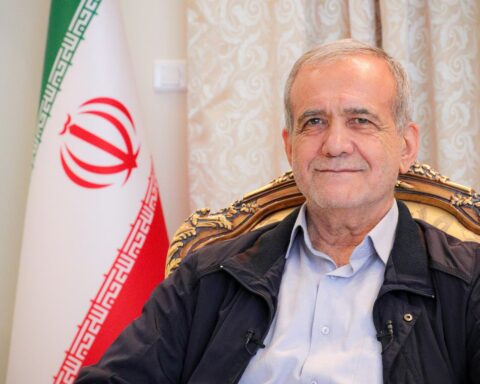
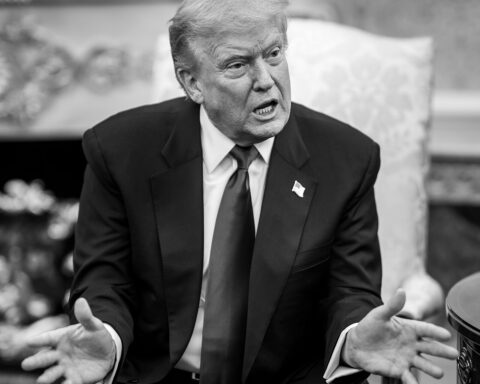
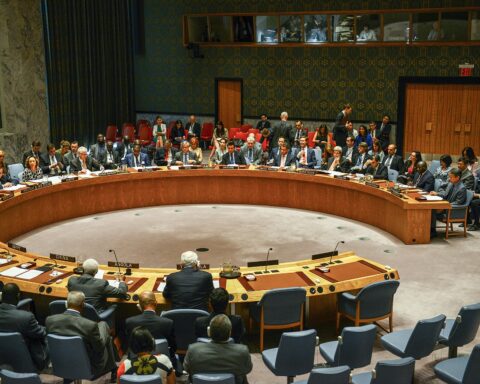
ISLAMABAD — Mohammad Bagher Ghalibaf, the man Iran has designated to lead its delegation at the Islamabad peace talks on April 10, declared the US-Iran ceasefire “unreasonable” on three enumerated grounds on April 8 — less than 24 hours after it was agreed and two days before he is supposed to sit across from JD Vance and negotiate its implementation. He cited Israel’s strikes on Lebanon, the IRGC’s intercept of an Israeli drone over southern Iran, and Washington’s insistence that Iran has no right to uranium enrichment, then offered no indication he would withdraw from the talks or that his status as lead negotiator had changed.
The effect is a negotiating position that annihilates its own premise. Each of the three violations Ghalibaf cited sits beyond the reach of anyone at the Islamabad table: Lebanon is an Israeli sovereign decision that Trump has explicitly carved out of the ceasefire; the Lar drone intercept is an IRGC enforcement action over which Ghalibaf’s civilian parliament has no command authority; and zero enrichment is a Trump domestic red line that Vance, Witkoff, and Jared Kushner — all confirmed for the US delegation — have no mandate to soften. Saudi Arabia, which sits within the four-nation mediation bloc alongside Pakistan, Turkey, and Egypt, has no seat at the bilateral table where these terms are being contested and no channel to Ghalibaf through which to exert influence on any of the three vectors.
Table of Contents
The Three Violations — and Why None Can Be Fixed in Islamabad
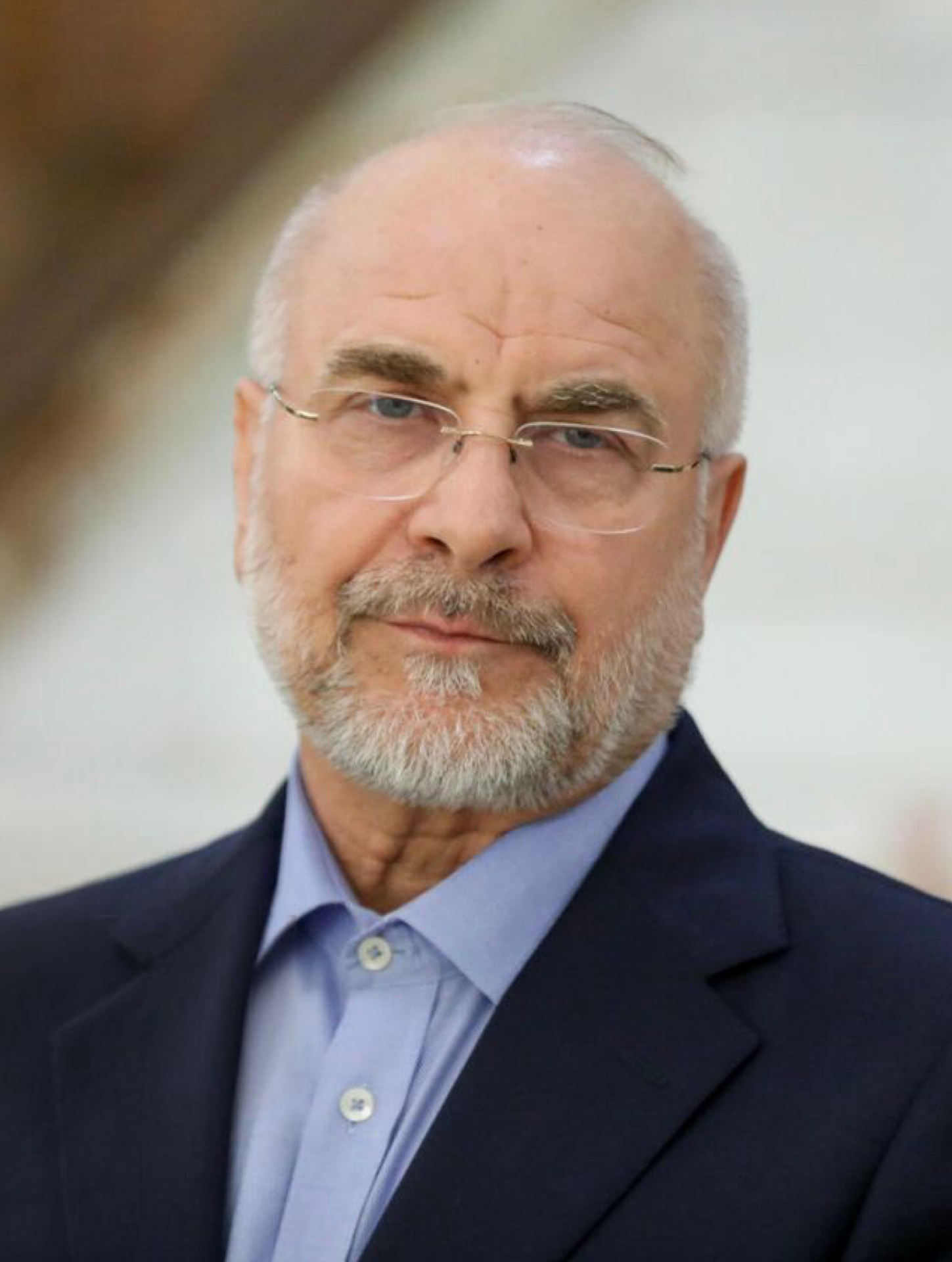
Ghalibaf’s statement, posted in English on X on April 8, was precise in its enumeration and sweeping in its conclusion. “Now, the very ‘workable basis on which to negotiate’ has been openly and clearly violated, even before the negotiations began,” he wrote. “In such situation, a bilateral ceasefire or negotiations is unreasonable.”
The deep historical distrust we hold toward the United States stems from its repeated violations of all forms of commitments — a pattern that has regrettably been repeated once again.
Mohammad Bagher Ghalibaf, Speaker of Iran’s Parliament, X post, April 8, 2026
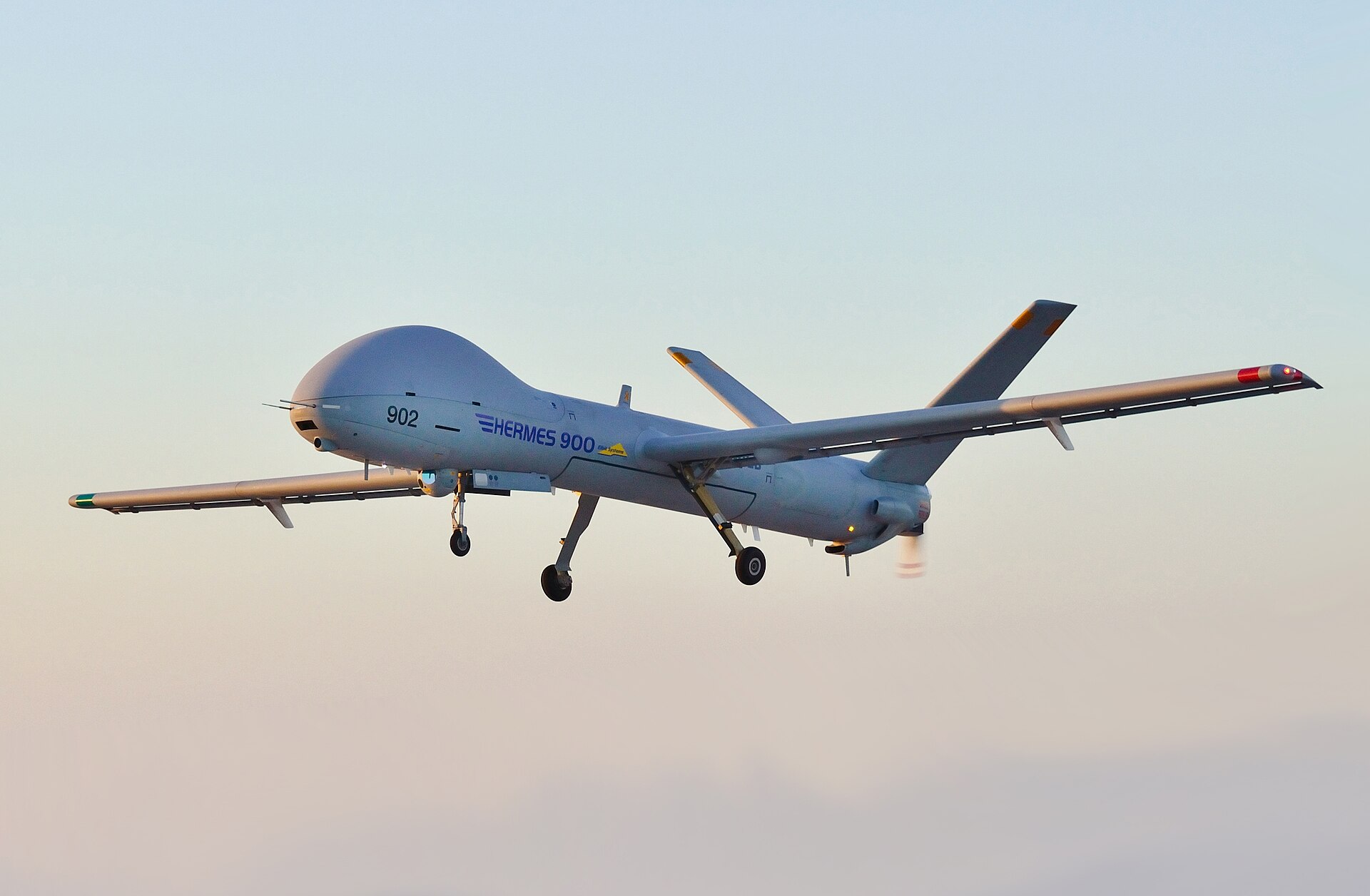
The three violations he listed were specific. First: Israel’s continued attacks on Lebanon, which Ghalibaf frames as a US obligation under the ceasefire because Iran considers the United States a co-belligerent responsible for restraining its allies. The IDF struck more than 100 Hezbollah targets in Lebanon on April 8, killing at least 254 people and wounding 1,165, according to Lebanon’s Civil Defence. Second: the entry of an Israeli Hermes-900 drone into Iranian airspace over Lar in Fars Province, which the IRGC Aerospace Force says it intercepted and captured intact — including its sensors, propulsion system, encrypted datalink architecture, and weapons payload, per Middle East Eye and Kurdistan24. Third: statements from the White House that Iran has no right to uranium enrichment, which Ghalibaf characterized as a denial of Iranian sovereignty incompatible with negotiations.
The Middle East briefing 3,000+ readers start their day with.
One email. Every weekday morning. Free.
What binds the three together is not their severity but their structural immovability. Netanyahu stated explicitly on April 8 that the US-Iran ceasefire “does not include Lebanon,” and Trump told US media that Lebanon was a “separate skirmish” — directly contradicting Pakistan’s Prime Minister Sharif, who had said it did include Lebanon, according to Al Jazeera and Euronews. The IRGC’s drone intercept was carried out under a standing doctrinal statement — issued via TASS and Kurdistan24 — that “the entry of any type of enemy American or Zionist aircraft into the country’s skies, even without conducting military operations, is considered a violation of the ceasefire and a decisive response will be given.” White House Press Secretary Karoline Leavitt confirmed on April 8 that Trump’s zero-enrichment position remained unchanged.
Who Is Ghalibaf, and Whose Authority Does He Carry?
Ghalibaf is not a diplomat. He is a career IRGC officer who joined the Revolutionary Guards at 19 during the Iran-Iraq War, commanded the IRGC Aerospace Force from 1997 to 2000 — the same unit that now claims to have captured the Hermes-900 drone he cites as his second violation — and co-signed the 1999 letter warning President Khatami that the IRGC would intervene if student protests were not crushed. He served as National Police Chief from 2000 to 2005, ran Tehran as mayor for twelve years, failed three presidential bids, and was elected Speaker of Parliament in 2020. Foreign Policy profiled him in March 2026 under the headline “Mohammad Ghalibaf Is Iran’s Peace Negotiator — and His Country’s Trump.” Iran International was less charitable: “Lipstick on the IRGC.”
The question of whose authority he carries to Islamabad has no clean answer. NBC News, citing an unnamed source familiar with Iran’s internal deliberations, reported that “Ghalibaf acts only with approval from Mojtaba Khamenei. Even if talks were to take place, Ghalibaf would not be able to commit Iran without broader approval.” The Stimson Center described him as “an opportunist who has shifted from technocrat to ultra-hardliner over the past few decades in an effort to remain politically relevant.” The Foundation for Defense of Democracies, in an April 6 briefing titled “5 Men Now Running Iran,” noted that Ghalibaf remains unsanctioned by Washington despite a career spanning “repression, corruption, IRGC service” — a gap that gives the US its only remaining interlocutor who can travel without triggering sanctions enforcement.
His appointment as lead negotiator was itself a signal. Vance confirmed as the US lead, with Steve Witkoff and Jared Kushner rounding out the delegation. Pakistan declared April 9 and 10 a two-day public holiday, per Daily Pakistan, clearing institutional ground for what Islamabad was framing as a principal-level encounter. Ghalibaf’s status as a former IRGC Aerospace Force commander — negotiating on behalf of a system where the IRGC commands alone — made the paradox visible before his April 8 statement made it explicit.
Why Does Lebanon Keep Destroying the Ceasefire?
The Lebanon problem is mechanical, not political. Iran’s ceasefire framework treats the US and Israel as a single belligerent entity — a position that requires Washington to restrain Israeli military operations across all theaters as a condition of the bilateral deal. Trump’s framework does the opposite: it carves Lebanon out entirely. Netanyahu confirmed this on April 8, and Trump reinforced it by calling Lebanon a “separate skirmish,” per Al Jazeera. The result is that any Israeli operation in Lebanon — regardless of scale — automatically constitutes a ceasefire violation under Iran’s interpretation while remaining entirely permissible under America’s.
This is the second time in 24 hours that Lebanon has functioned as a kill switch on the ceasefire’s viability. The IDF’s April 8 strikes — 50 jets, 100 targets, 160 munitions per the Israeli Defence Forces, 254 dead per Lebanon Civil Defence — triggered Hormuz’s re-closure on the same day, with only two tankers having crossed before Iran halted transits. Fars News confirmed the halt was “because of Israel’s fresh strikes on Lebanon.” Iran’s Foreign Minister Araghchi framed the binary on April 8: “U.S. must choose — ceasefire or continued war via Israel.”
Ghalibaf’s invocation of Lebanon as violation number one was therefore not an escalation but a restatement of an incompatibility that existed at the moment of signing. Pakistan’s PM Sharif had publicly stated that the ceasefire included Lebanon, according to Euronews — a claim that neither Washington nor Tel Aviv endorsed. The gap between what Pakistan sold and what the US signed is the structural fault line that Ghalibaf is now standing on, and it cannot be bridged at Islamabad because Israel is not at the table and Trump has no intention of putting it there.
The Hermes-900 Over Lar
The second violation Ghalibaf cited — the IRGC’s intercept of an Israeli Hermes-900 drone over Lar, in Fars Province — operates on a different logic from the Lebanon carve-out. This is not an interpretive dispute over what the ceasefire covers; it is an enforcement action by the IRGC under a doctrinal framework that defines any foreign military aircraft in Iranian airspace as a ceasefire breach regardless of its mission. The IRGC Aerospace Force announced the intercept and claimed the drone was captured intact, including what it described as sensors, propulsion, encrypted datalink architecture, and weapons payload, according to Middle East Eye, Kurdistan24, and Defence Security Asia.
The Hermes-900, manufactured by Israel’s Elbit Systems, has a wingspan of 15 meters, weighs 970 kilograms, carries up to 300 kilograms of payload, and can loiter for more than 30 hours at a ceiling of 30,000 feet — specifications that make it a surveillance and light-strike platform, not a penetration weapon. Its market value is approximately $30 million. If the IRGC’s claim of intact capture is accurate, Iran now possesses the encrypted communications architecture of an Israeli military drone, which carries intelligence value far exceeding the airframe itself.
The deeper problem for the ceasefire is doctrinal. The IRGC’s standing statement — that “the entry of any type of enemy American or Zionist aircraft into the country’s skies, even without conducting military operations, is considered a violation of the ceasefire and a decisive response will be given” — creates a unilateral trigger mechanism that neither Ghalibaf nor anyone at the Islamabad table can override. The IRGC Aerospace Force, which Ghalibaf himself commanded from 1997 to 2000, enforces this doctrine independently of civilian authority. The ceasefire halt order’s reversibility remains structurally uncertain precisely because the units enforcing airspace are the same units that have declared autonomous response authority.
Can Enrichment Be Negotiated at All?
Ghalibaf’s third violation — the US assertion that Iran has no right to enrich uranium — is the most durable of the three because it is anchored in domestic political commitments on both sides that predate the war. Trump posted on April 8: “There will be no enrichment of Uranium, and the United States will, working with Iran, dig up and remove all of the deeply buried (B-2 Bombers) Nuclear ‘Dust.'” Vance reinforced the position: “We want Iran to not be able to make a nuclear weapon. We want the nuclear fuel.” He added: “The United States has all the cards.”
Leavitt’s briefing made the position’s non-negotiability explicit: “The President’s red lines, namely the end of Iranian enrichment in Iran, have not changed.” For Iran, enrichment is a sovereignty claim that no government — reformist or hardline — has ever conceded in public negotiations. The Supreme National Security Council’s own framing of the ceasefire acceptance, per PBS NewsHour and WANA, described it in martial terms: “Almost all of its objectives in the war have been reached” and “negotiations are the continuation of battlefield.” The SNSC did not describe the ceasefire as a concession; it described it as a strategic repositioning that preserves Iran’s nuclear program as a non-negotiable asset.
The enrichment wall means that even if Lebanon and the Lar drone intercept were resolved — which they cannot be, for the structural reasons outlined above — the third violation would remain. Ghalibaf did not frame it as a negotiating position to be softened through talks; he framed it as a sovereignty denial that invalidated the premise of negotiation itself. This is consistent with Iran’s posture since the JCPOA collapse in 2018, but it now carries operational weight because the man making the argument is the man who is supposed to sit down in Islamabad on April 10 and negotiate a deal whose premise he has publicly destroyed.
Saudi Arabia’s Agency Vacuum
Saudi Arabia’s position in this structure is defined by absence. The Kingdom sits within the four-nation mediation bloc that has framed the Islamabad process, but it has no seat at the Vance-Ghalibaf bilateral where the ceasefire’s terms are actually being contested. Riyadh has no diplomatic channel to Ghalibaf, no standing over Israeli operations in Lebanon, and no influence over US enrichment red lines. Each of the three violations that Ghalibaf enumerated exists in a space where Saudi agency is zero.
The consequences of failure at Islamabad, however, fall disproportionately on Saudi infrastructure and revenue. The IRGC’s April 7 declaration that “all restraint removed” — issued via Tasnim before the ceasefire and never formally retracted — becomes operative again if talks collapse. Hormuz re-closure, already triggered once by the Lebanon strikes, has no timeline for resolution. Post-ceasefire intercepts across the Gulf have continued: the UAE intercepted 17 ballistic missiles and 35 drones since the ceasefire was announced, Kuwait intercepted 28 drones, and Qatar intercepted at least one missile, according to The National and Al Jazeera. The ceasefire has not stopped the shooting; it has reclassified it.
Saudi Arabia’s fiscal exposure compounds the military risk. Aramco’s May Official Selling Price was set at a $19.50-per-barrel premium above Oman/Dubai benchmarks when Brent was at $109 — a premium that is now $11-14 above spot after Brent’s collapse to $94, with June OSP repricing due around May 5. Sadara Chemical’s $3.7 billion debt grace period expires on June 15, a live default risk that runs independent of whatever happens at the Islamabad table. If Ghalibaf arrives on April 10 having already declared the ceasefire unreasonable, Saudi Arabia absorbs the downstream consequences of a negotiation it cannot influence conducted by a man who has already announced its invalidity.
What April 10 Looks Like Now
Tasnim, the semi-official IRGC-linked news agency, reported on April 8 that Iran was “assessing the possibility of exiting the deal,” per NBC’s live blog and CBS live updates. Araghchi called Pakistan’s Field Marshal Munir on the same day to discuss ceasefire violations in Lebanon, according to NBC News. Ghalibaf provided no clarification on whether his “unreasonable” declaration meant he would not attend the talks, and his status as Iran’s Islamabad lead was not retracted as of April 8, per Bloomberg and WCNC. Iran entered the talks framework, according to Turkiye Today, with “complete distrust.”
The structural problem is not whether Ghalibaf shows up in Islamabad — it is what mandate he carries when he does. NBC, citing a source familiar with Iran’s internal deliberations, reported that Ghalibaf cannot commit Iran to anything without approval from Mojtaba Khamenei — and that approval must itself flow through a chain that runs through figures who are either absent, sanctioned, or doctrinally opposed to the deal’s terms. The senior Khamenei has been absent from public life for 39 days. The SNSC, which holds constitutional authority over national security decisions, is led by Ali Akbar Ahmadian under de facto direction from Ali Shamkhani’s successor Rear Admiral Zolghadr, who is himself under US and EU sanctions.
Vance, Witkoff, and Kushner will sit across from a man who has publicly declared their ceasefire unreasonable, who commanded the military unit that intercepted the drone he cites as proof of American bad faith, and who cannot commit Iran to anything without approval from a Supreme Leader whose last confirmed public communication was over five weeks ago. Pakistan has cleared two days of public holidays for the occasion. Ghalibaf, as of the evening of April 8, had not retracted a single word.
Frequently Asked Questions
Has Ghalibaf formally withdrawn from the April 10 Islamabad talks?
No. As of April 8, neither Ghalibaf nor any Iranian government spokesperson had announced a withdrawal from the talks. His “unreasonable” declaration coexists with his confirmed status as Iran’s lead negotiator. The Foundation for Defense of Democracies noted in its April 6 briefing that Ghalibaf is the only senior Iranian figure who remains unsanctioned by the United States, which makes him functionally irreplaceable as an interlocutor — Washington has no alternative Iranian counterpart who can travel freely to Islamabad without triggering sanctions enforcement mechanisms.
What is the Hermes-900’s intelligence value if captured intact?
The Hermes-900 carries an encrypted datalink system that connects the drone to its ground control station and, in some configurations, to satellite relay networks. If the IRGC captured the drone intact as claimed, the intelligence yield extends beyond the airframe to include Israel’s tactical communication protocols, sensor calibration data, mission planning software, and potentially the encryption keys used for real-time command and control. Elbit Systems, the manufacturer, also supplies Hermes-series drones to militaries in Europe, Latin America, and Southeast Asia, meaning a compromised encryption architecture could affect allied operations beyond Israel. Iran shared captured US RQ-170 Sentinel drone technology with Russia and China after the 2011 incident, per multiple US intelligence assessments, establishing a precedent for dissemination.
Why is Pakistan hosting the talks rather than a neutral state like Oman or Switzerland?
Pakistan has a unique structural position: it shares a 959-kilometer border with Iran, hosts a large Shia population that gives Tehran cultural and political influence, maintains a working military relationship with Saudi Arabia through decades of officer exchanges, and is the only Muslim-majority nuclear weapons state — giving it standing on enrichment questions that Oman or Qatar cannot claim. Field Marshal Asim Munir, Pakistan’s army chief, has maintained direct communication with both Araghchi and the US side. The Islamabad Accord framework that Pakistan brokered in late March called for an immediate ceasefire MOU within 15-20 days — a faster timeline than Witkoff’s 45-day phased proposal — and Pakistan’s willingness to declare a two-day public holiday signals institutional commitment to the talks’ success at a level no other mediator has matched.
What happens to Hormuz shipping if the talks fail on April 10?
Hormuz throughput was already at 15-20 ships per day versus a pre-war average of 138 per day, according to Windward data reported on April 8. More than 800 vessels remained trapped in the Gulf, and over 70 empty VLCCs were idling off Singapore on a four-week voyage cycle. Iran’s parliament passed a fee bill on March 31 authorizing charges on Hormuz transits, and the IRGC’s unretracted “all restraint removed” declaration from April 7 would resume force if talks collapse. Kpler estimated the supply deficit at 6 million barrels per day; the East-West Pipeline runs to Yanbu at 7 million barrels per day capacity, but Yanbu terminal processing capacity limits effective bypass throughput to 3-4 million barrels per day — leaving 8.5-13.5 million barrels per day uncovered. Polymarket contracts on April 8 placed a 64 percent probability on normal Hormuz traffic resuming by May 31 — a number that was priced before Ghalibaf’s statement.
Does the SNSC’s “negotiations are continuation of battlefield” statement reflect official Iranian policy?
The SNSC — Supreme National Security Council — holds constitutional authority over Iran’s national security decisions under Article 176 of the Iranian constitution. Its ceasefire acceptance statement, reported by PBS NewsHour and WANA, explicitly framed negotiations as a continuation of warfare by other means rather than a concession. This language mirrors the IRGC’s own doctrinal framing and contradicts Western assumptions that a ceasefire represents a de-escalation. The SNSC’s current secretary, operating under the effective authority of Rear Admiral Zolghadr (who is under US and EU sanctions), has not issued any subsequent statement softening this position. The doctrinal implication is that Iran views Islamabad not as a peace negotiation but as a new theater of the same conflict — with Ghalibaf as its field commander.