
You have completed the rituals of a lifetime. The tawaf is done, the stones are thrown, and the spiritual weight of Hajj still settles in your chest. But Saudi Arabia does not end at the boundaries of Mina and Arafat. For pilgrims with a few extra days — or the foresight to plan a separate trip — the Kingdom offers ancient cities carved into cliff faces, a UNESCO-listed Red Sea port, mountain retreats where the temperature drops by ten degrees, and one of the fastest trains in the Middle East to connect it all. This guide, part of our complete Hajj 2026 Guide, maps out exactly how to extend your journey after pilgrimage — from quick day trips near Makkah to a full cross-country itinerary through Saudi Arabia’s most compelling destinations.
Best Time to Visit: Hajj 2026 falls late May; extend into June for Madinah, Taif, Jeddah, or plan a separate autumn trip for AlUla and Riyadh
Getting There: Haramain High-Speed Railway (Makkah–Jeddah–Madinah), domestic flights via Saudia and flynas
Visa Required: Yes — Hajj visa has limited extension; tourist e-visa (USD 279) recommended for longer exploration
Budget: USD 80–200/day depending on destination and comfort level
Must-See: Madinah’s Prophet’s Mosque, Jeddah’s Al-Balad, Taif’s mountain escape
Avoid: Assuming your Hajj visa allows unlimited travel — check expiry dates and restrictions before booking onward plans
Understanding Your Visa Options
Before planning anything beyond the Hajj rituals, you need to understand a hard constraint: Hajj visas cannot be converted to tourist visas. They are issued exclusively for pilgrimage and require departure from Saudi Arabia no later than the 10th of Muharram. Overstaying carries fines of up to SAR 10,000 (approximately USD 2,666), deportation, and potential multi-year entry bans.
That said, most Hajj packages include 6–14 days in the Kingdom, and many incorporate a Madinah visit either before or after the Hajj rites. Within that window, day trips to Taif and a transit stop in Jeddah are entirely feasible. For anything more ambitious — Riyadh, AlUla, the Red Sea coast — you have two options:
- Negotiate with your Hajj operator for an extended package that includes additional days and domestic transport within your visa validity period.
- Plan a separate trip on a Saudi tourist e-visa (USD 279, valid for one year with stays up to 90 days, available to citizens of 66 countries, approved in 5–30 minutes online). This is the recommended approach for serious exploration.
- Lightweight, loose-fitting clothing — breathable fabrics are essential in summer heat. Review our Saudi Arabia dress code guide for specifics on what is appropriate.
- Sunscreen and a hat — UV intensity is extreme, particularly in open desert areas like AlUla.
- A refillable water bottle — dehydration is the biggest health risk during summer travel.
- A local SIM card — essential for ride-hailing apps (Uber and Careem both operate nationwide) and navigation. See our SIM card guide for provider comparisons.
- Comfortable walking shoes — you will cover significant distances on foot in Madinah, Al-Balad, and at Hegra.
- Hajj 2026 Guide — The complete guide to performing Hajj this year
- Umrah Guide — The lesser pilgrimage explained step by step
- Madinah Travel Guide — Everything to see and do in the Prophet’s city
- Islamic Sites in Saudi Arabia — Historic mosques, battlefields, and sacred landmarks across the Kingdom
- Hajj Season Travel Guide — Navigating Saudi Arabia during the busiest time of year
- Saudi Arabia Travel Guide 2026 — The complete guide to visiting the Kingdom
- Saudi Arabia Visa Guide — Every visa type explained
Practical tip: If you hold a passport from an eligible country, consider doing Hajj on your Hajj visa, then returning two to four months later on a tourist e-visa when temperatures drop from the 40s to the mid-20s. October through March is Saudi Arabia’s peak tourism season, and destinations like AlUla only operate their full cultural programme during winter.
Madinah: The Natural First Extension
The overwhelming majority of Hajj pilgrims visit Madinah, and for good reason. The city of the Prophet sits 435 km north of Makkah — roughly four to five hours by road, or just over two hours on the Haramain High-Speed Railway. While visiting Madinah is not an obligation of Hajj, it holds profound spiritual significance, and most packages build in two to four days here.
Prophet’s Mosque (Masjid an-Nabawi)
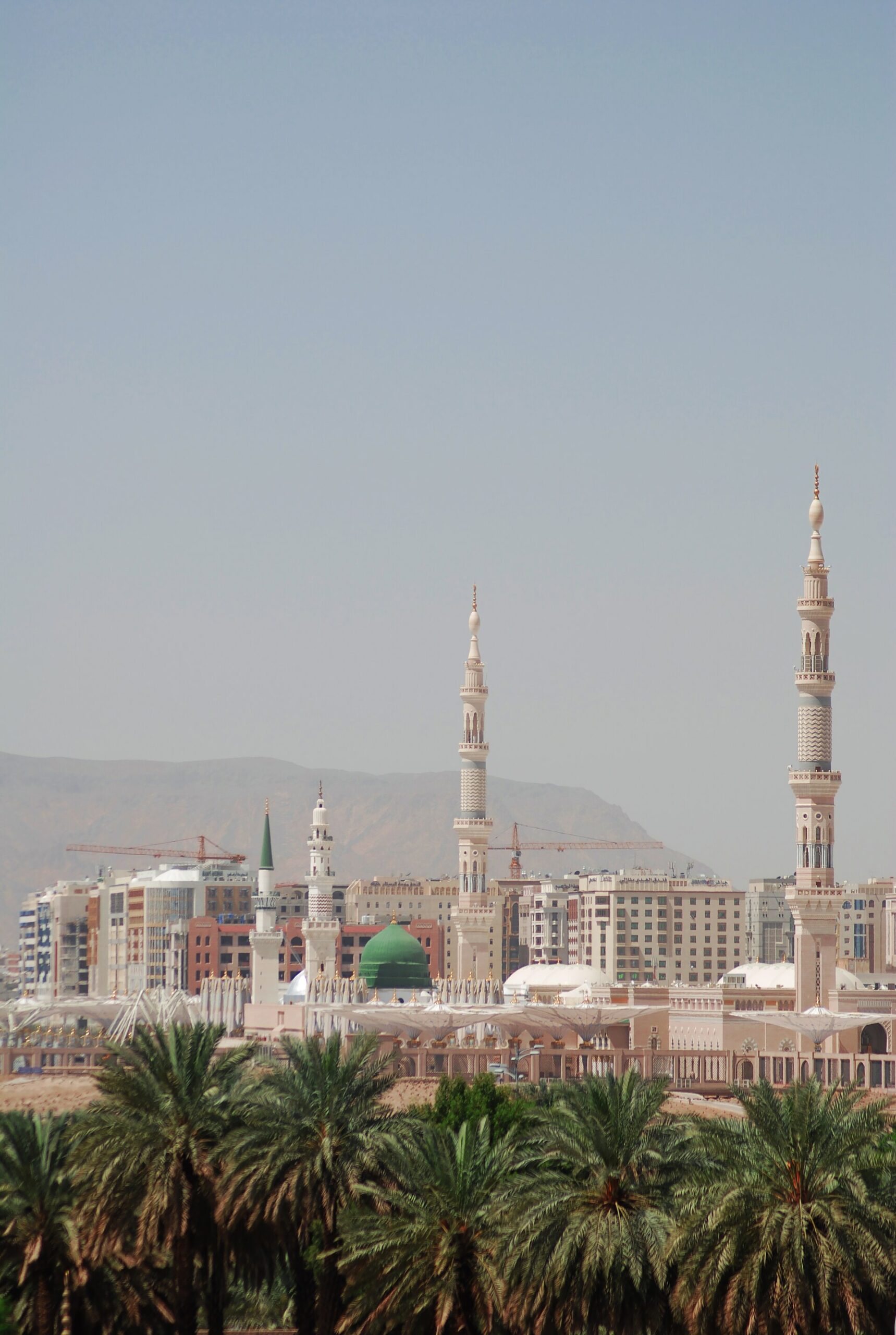
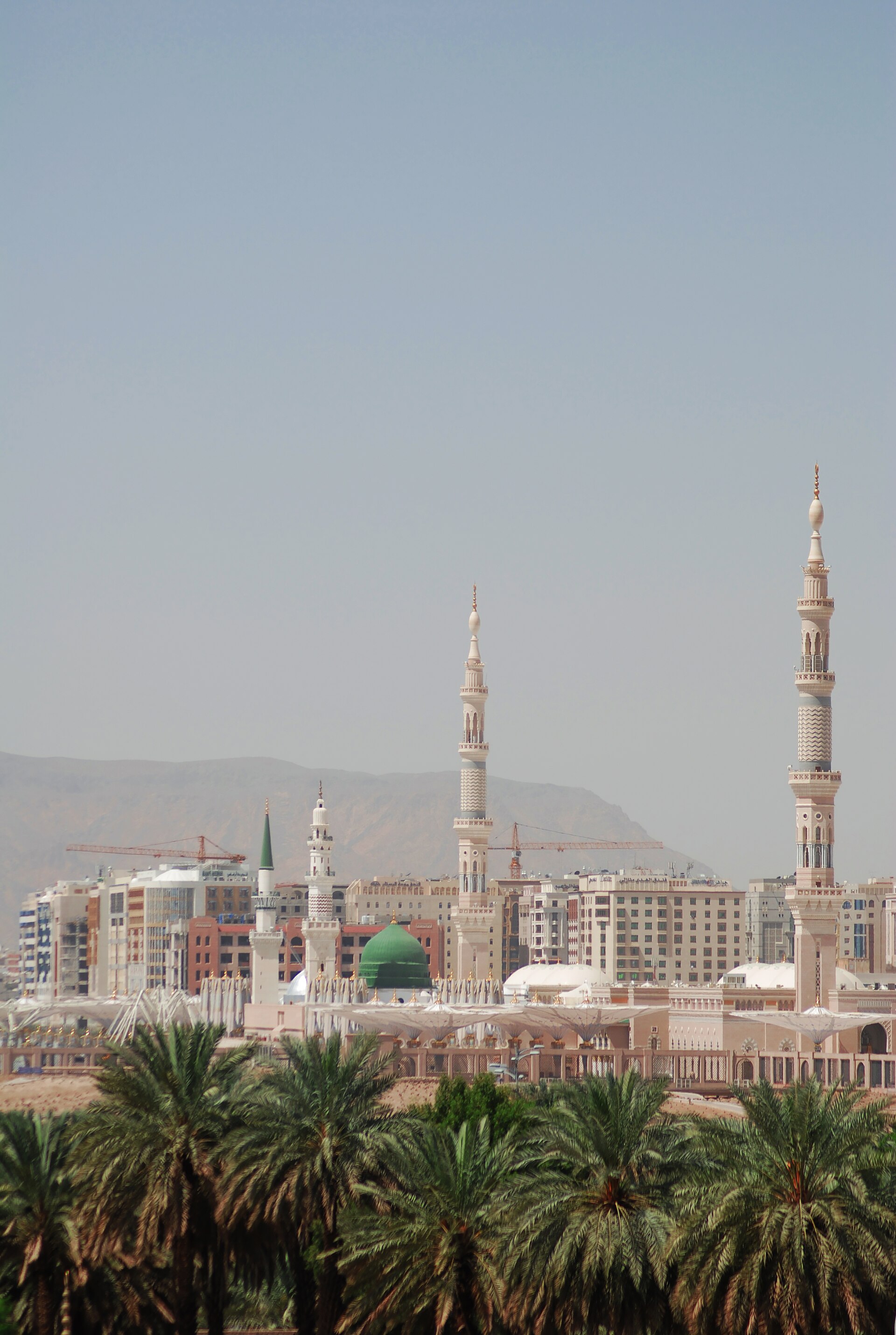
The second holiest mosque in Islam, Masjid an-Nabawi houses the tomb of the Prophet Muhammad and features one of the most recognisable silhouettes in the Islamic world — the green dome rising above white marble arcades. The mosque is open 24 hours and can accommodate over one million worshippers during peak seasons. Arrive for Fajr prayer to experience the mosque at its most serene, before the daytime crowds fill the courtyards. For a complete guide, see our dedicated Madinah Travel Guide.
Quba Mosque
Three kilometres south of the Prophet’s Mosque, Quba is the first mosque built in Islam, dating to 622 CE during the Prophet’s migration from Makkah. According to hadith, praying two rak’ahs here earns a reward equivalent to performing Umrah. The current structure is a modern reconstruction with white marble and elegant domes, but the spiritual lineage stretches back to the very foundation of the Muslim community.
Mount Uhud and the Martyrs’ Cemetery
The site of the second major battle in Islamic history (625 CE) lies about 5 km north of the city centre. You can walk the lower slopes overlooking the battlefield where the Muslim archers famously left their position. At the foot of the mountain, the Martyrs’ Cemetery marks the resting place of the companions who fell in the battle, including Hamza ibn Abdul-Muttalib, the Prophet’s uncle.
Qiblatain Mosque
This is where the direction of prayer was changed from Jerusalem to Makkah — a pivotal moment in Islamic history. The mosque features two mihrabs (prayer niches) commemorating both qibla directions. Recently renovated, it sits in the northwest of the city and is easily reachable by taxi.
Date Markets and Souqs
Madinah is synonymous with dates. The markets surrounding the Prophet’s Mosque — particularly the central souq area — sell dozens of varieties including Ajwa (the premium Madinah cultivar, often priced at SAR 150–300 per kilogram), Safawi, Sukkari, and Mabroom. These make excellent gifts and are best purchased from established vendors who let you taste before buying. The souqs also stock prayer beads, attars (perfume oils), and religious books.
Getting there: The Haramain High-Speed Railway departs from Makkah’s Al-Rashid Station, stops at Jeddah and King Abdulaziz International Airport, then arrives at Madinah’s Knowledge Economic City Station. Book through the HHR portal (sar.hhr.sa). Economy tickets start from SAR 49–80 (USD 13–21). Business class is available at higher fares with reclining seats, personal screens, and meal service.
The Haramain High-Speed Railway: Connecting the Holy Cities
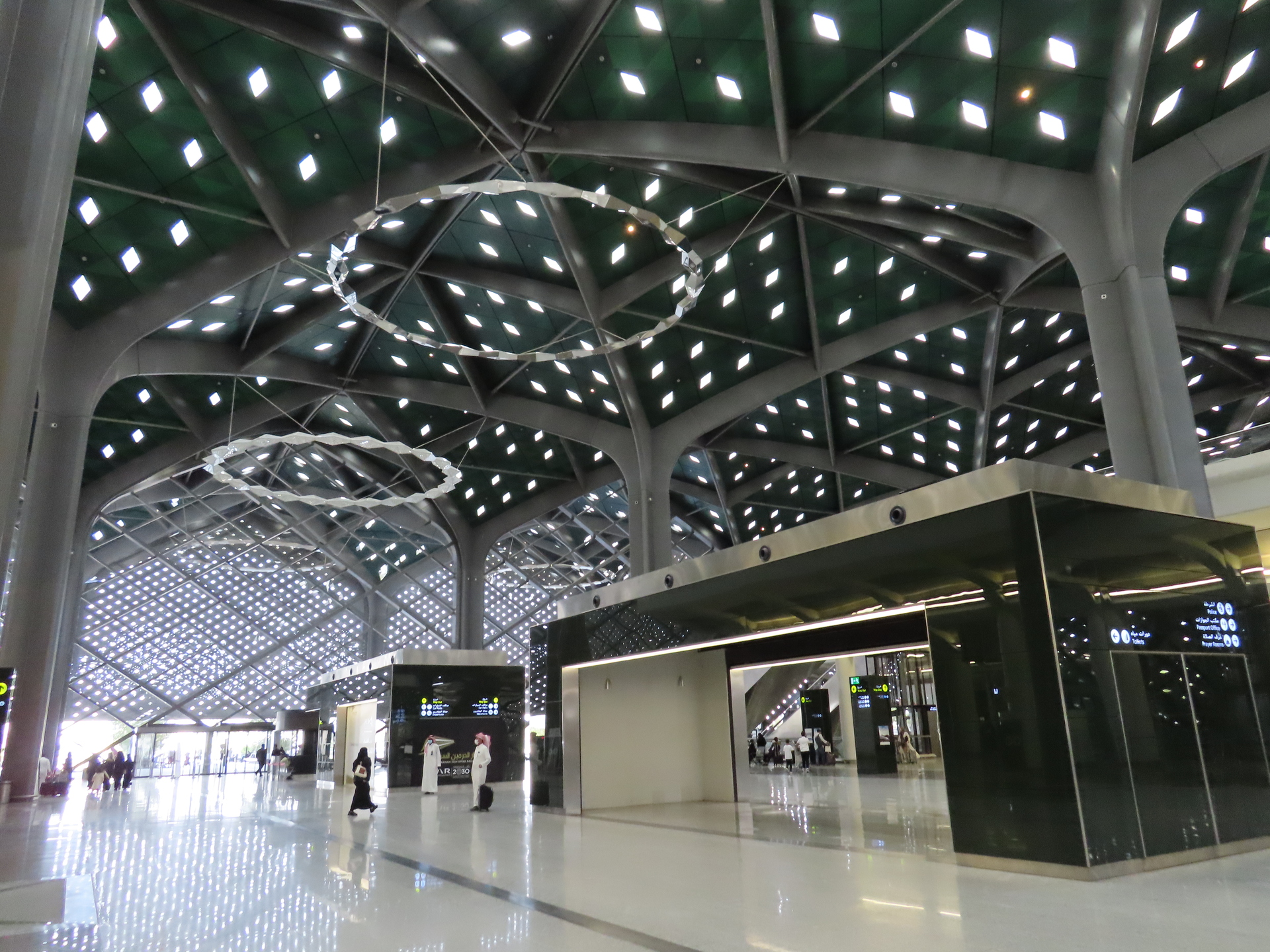
The 450 km Haramain line is one of the engineering showcases of modern Saudi Arabia, and for post-Hajj travellers it is the single most useful piece of infrastructure in the country. The route runs: Makkah → Jeddah → King Abdulaziz International Airport → King Abdullah Economic City (KAEC) → Madinah, with trains reaching speeds of up to 300 km/h.
For pilgrims, the railway eliminates the gruelling five-hour bus ride between the holy cities and turns Jeddah into a convenient stopover. You can pray Fajr in Makkah, be in Jeddah for a late breakfast, explore Al-Balad through the afternoon, and arrive in Madinah by evening — all on a single day’s rail ticket. Wi-Fi is available on board and in station lounges.
Jeddah: Gateway City With Depth
Most international pilgrims fly into King Abdulaziz International Airport in Jeddah, making the city a natural bookend for any Saudi trip. But Jeddah deserves more than a transit stop. Located just 85 km from Makkah by road (about one hour), it is the most cosmopolitan city in the Hejaz region and one of the most rewarding in the country. For a full breakdown, see our Jeddah Travel Guide.
Al-Balad Historic District (UNESCO World Heritage Site)
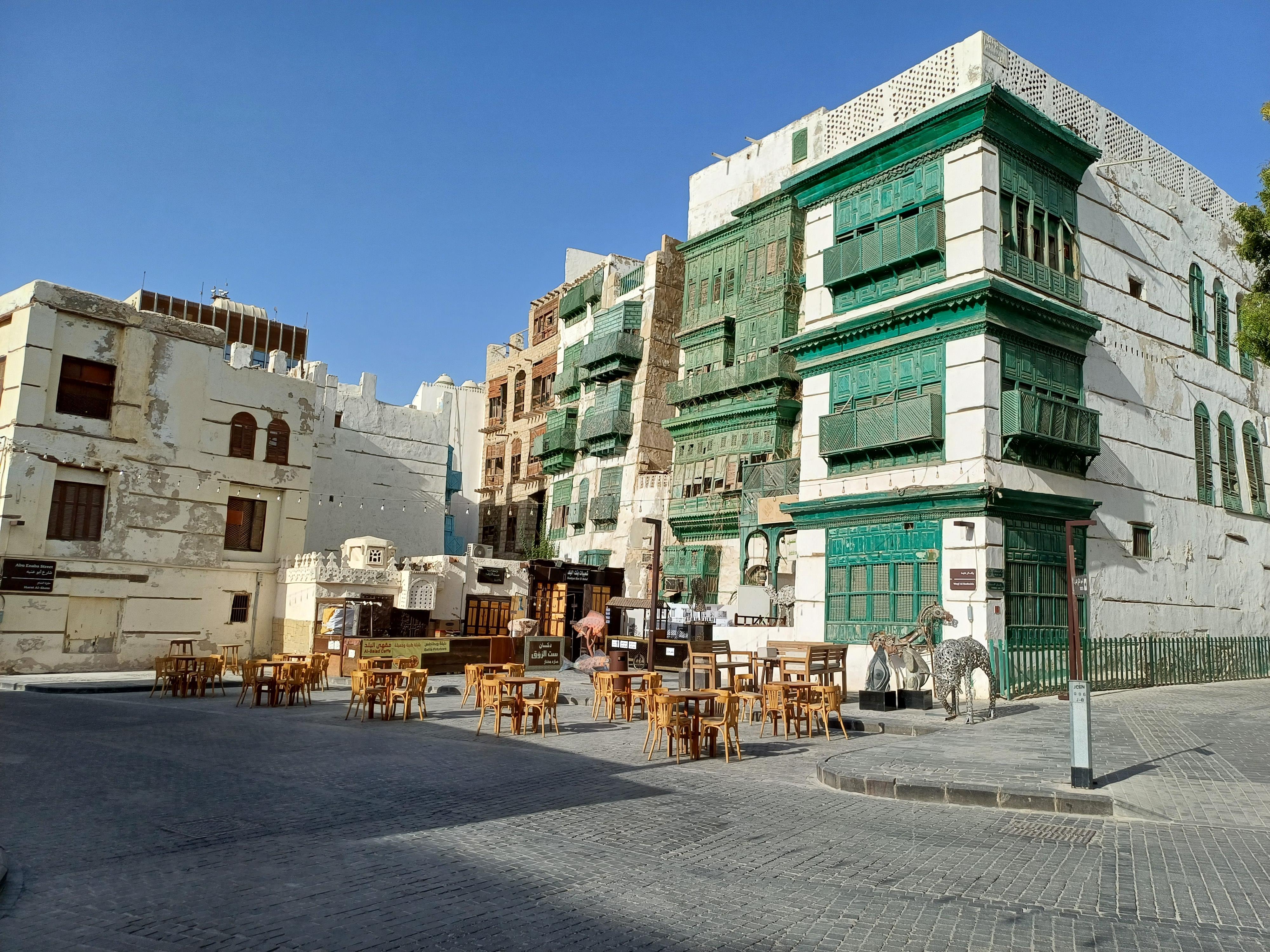
Inscribed as a UNESCO World Heritage Site in 2014, Al-Balad was established in the 7th century as a major port for Indian Ocean trade routes channelling goods to Makkah. The district’s distinctive tower houses — built in the late 19th century by mercantile elites — feature coral-stone walls and carved wooden balconies called rawasheen (also known as mashrabiya). The architecture blends Red Sea coastal building traditions with influences absorbed from centuries of international trade. Walk the narrow lanes in the late afternoon when the light catches the wooden screens, and stop at Baeshen House or Naseef House for a sense of how Hejazi merchant families lived.
Jeddah Corniche and King Fahd’s Fountain
The waterfront promenade stretches along the Red Sea and offers views of King Fahd’s Fountain — the world’s tallest, shooting water to 260 metres at speeds of 375 km/h. The fountain operates most evenings and is visible from much of the city’s coastline. The Corniche itself is a pleasant sunset walk, lined with sculptures from Jeddah’s open-air art programme, cafes, and family parks.
Red Sea Diving
For certified divers, Jeddah offers some of the Red Sea’s best sites without the need to travel to Sharm el-Sheikh or Hurghada. Over 300 coral species and more than 1,000 fish species inhabit these waters. Notable sites include the Ann Ann shipwreck (depths from 5 m at the bow to 32 m at the stern), the Chicken Wreck (M.V. Glaros, sunk in 1976), and the coral gardens at Abu Tair reef. Visibility ranges from 20 to 50 metres. Operators like 17Sixty and Al Haddad-Scuba run regular trips. See our dedicated Saudi Arabia Diving Guide for full details.
Taif: The Cool Escape Above Makkah
If the heat of Makkah in late May leaves you wrung out, Taif is the antidote. Perched at 1,879 metres above sea level, just 80–90 km from Makkah (roughly 75 minutes by car), this mountain city has served as Saudi Arabia’s traditional summer capital for generations. June highs average 35–36°C — still warm by European standards, but seven to eight degrees cooler than the lowlands and with humidity dropping to around 25 per cent. After the physical demands of Hajj, it is the nearest comfortable recovery destination. For more on the highlands region, see our Abha and Asir Travel Guide.
Shubra Palace
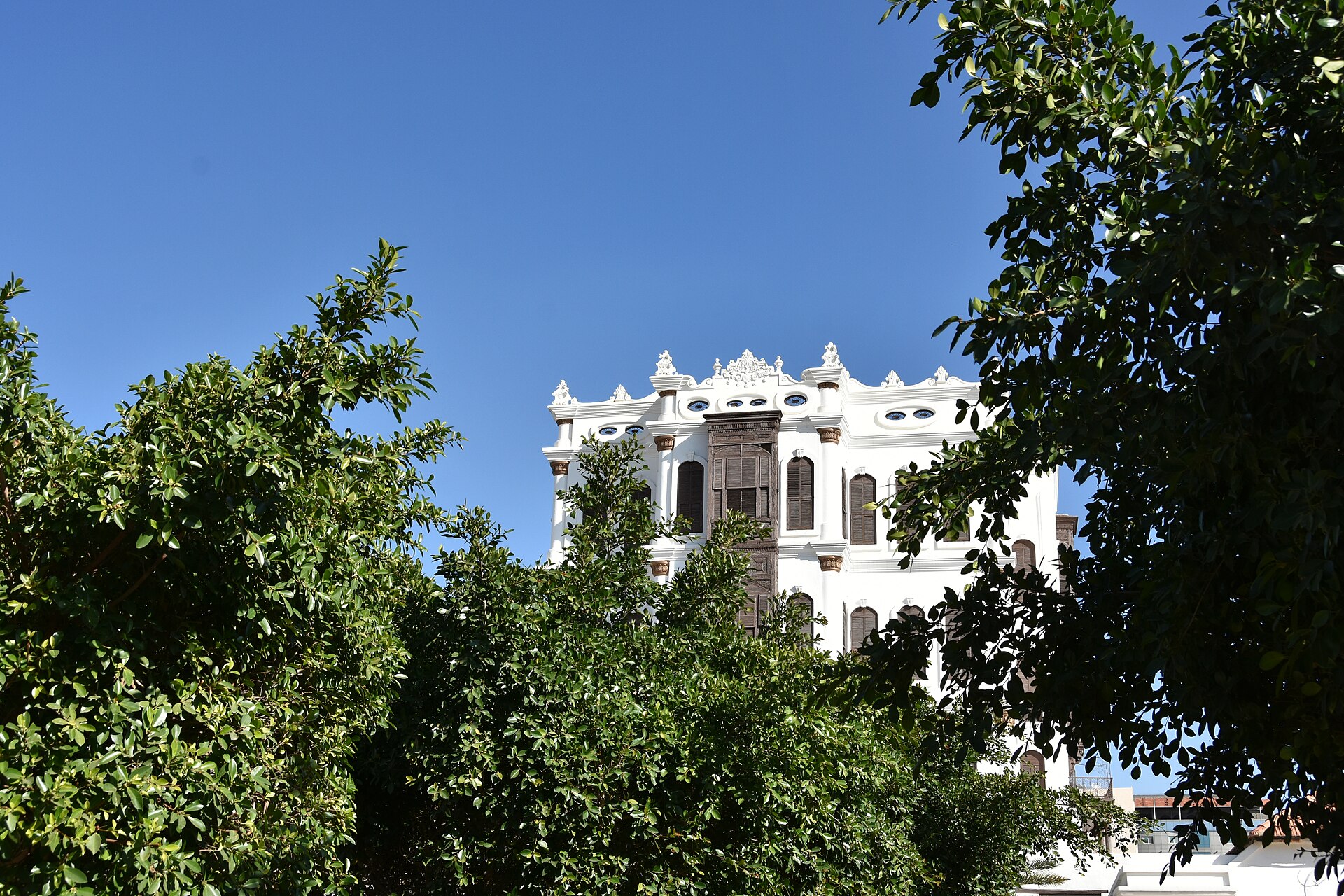
Originally built as a two-storey house in 1858, Shubra was expanded to four storeys during renovations in 1905 and served as a seat of government during the late Ottoman era. Now a museum, it sits 3 km from the city centre and showcases Hejazi-Ottoman architectural fusion — whitewashed walls, ornate facades, arched windows, and cool interior courtyards surrounded by lush gardens.
Al Hada Cable Car
Built in 1997, the Al Hada cable car spans 1,550 metres and takes approximately 15 minutes to complete. The ride offers panoramic views over the escarpment dropping toward the Tihama coastal plain. Combine it with a visit to the Al Hada mountain viewpoints for some of the most dramatic scenery within easy reach of Makkah.
Rose Farms and Souqs
Taif is known as the “City of Roses” — the Taif rose (a damask variety) has been cultivated here for centuries and is distilled into rose water and perfume oils prized across the Gulf. The rose harvest runs from late February through March, so Hajj-season visitors will miss the blooming fields. However, the souqs sell rose water, rose-infused honey, and attar year-round. The central souqs also trade in locally grown grapes, pomegranates, and mountain honey.
Day trip itinerary: Depart Makkah early morning. Visit Shubra Palace and the city souqs through the morning. Lunch in the old town (try the local honey and grilled lamb). Al Hada cable car in the late afternoon when the light softens. Return to Makkah by evening. Total driving time: roughly 2.5 hours round trip.
Riyadh: The Modern Capital
If your visa allows — or if you are planning a separate trip on a tourist e-visa — Riyadh rewards a two- to three-day visit. The capital has transformed from an often-overlooked administrative centre into a city with genuine cultural pull, anchored by the Diriyah restoration and the National Museum. Domestic flights from Jeddah take 1.5–2 hours, with one-way fares on flynas starting from around SAR 399 (USD 93). For full coverage, see our Riyadh Travel Guide.
Diriyah and At-Turaif (UNESCO World Heritage Site)
The birthplace of the Saudi state. At-Turaif, inscribed as a UNESCO World Heritage Site in 2010, is the mud-brick district where the First Saudi State was founded in 1727. The restored 18th-century palaces and mosques showcase the distinctive Najdi architectural style — geometric patterns carved into earth-coloured walls, narrow passages, and internal courtyards designed for the desert climate. Adjacent to At-Turaif, Bujairi Terrace (opened December 2022) hosts over 20 restaurants and cafes with direct views over the historic site. Together they have attracted over 3.6 million visits since opening.
National Museum of Saudi Arabia
Eight halls and over 3,700 artefacts trace the history of the Arabian Peninsula from geological prehistory through the pre-Islamic era, the rise of Islam, and the formation of the modern Kingdom. Allow at least two to three hours. The museum sits within the Murabba historical complex, which also includes the Murabba Palace — the former royal residence of King Abdulaziz, founder of modern Saudi Arabia.
Kingdom Tower
Riyadh’s most recognisable landmark, the Kingdom Centre features a sky bridge observation deck at 300 metres offering panoramic views across the capital’s sprawling grid. The tower also houses a major shopping mall at its base. Visit at sunset for the best light.
AlUla: Saudi Arabia’s Archaeological Crown Jewel
AlUla is the destination that has done most to shift perceptions of Saudi Arabia as a tourism country. Set in a dramatic sandstone valley in the northwest of the Kingdom, it contains Hegra (Mada’in Saleh) — Saudi Arabia’s first UNESCO World Heritage Site (inscribed 2008) — along with Elephant Rock, the ancient Dadan civilisation remains, and a 900-year-old Old Town. For the complete guide, see our AlUla Travel Guide.
Hegra (Mada’in Saleh)
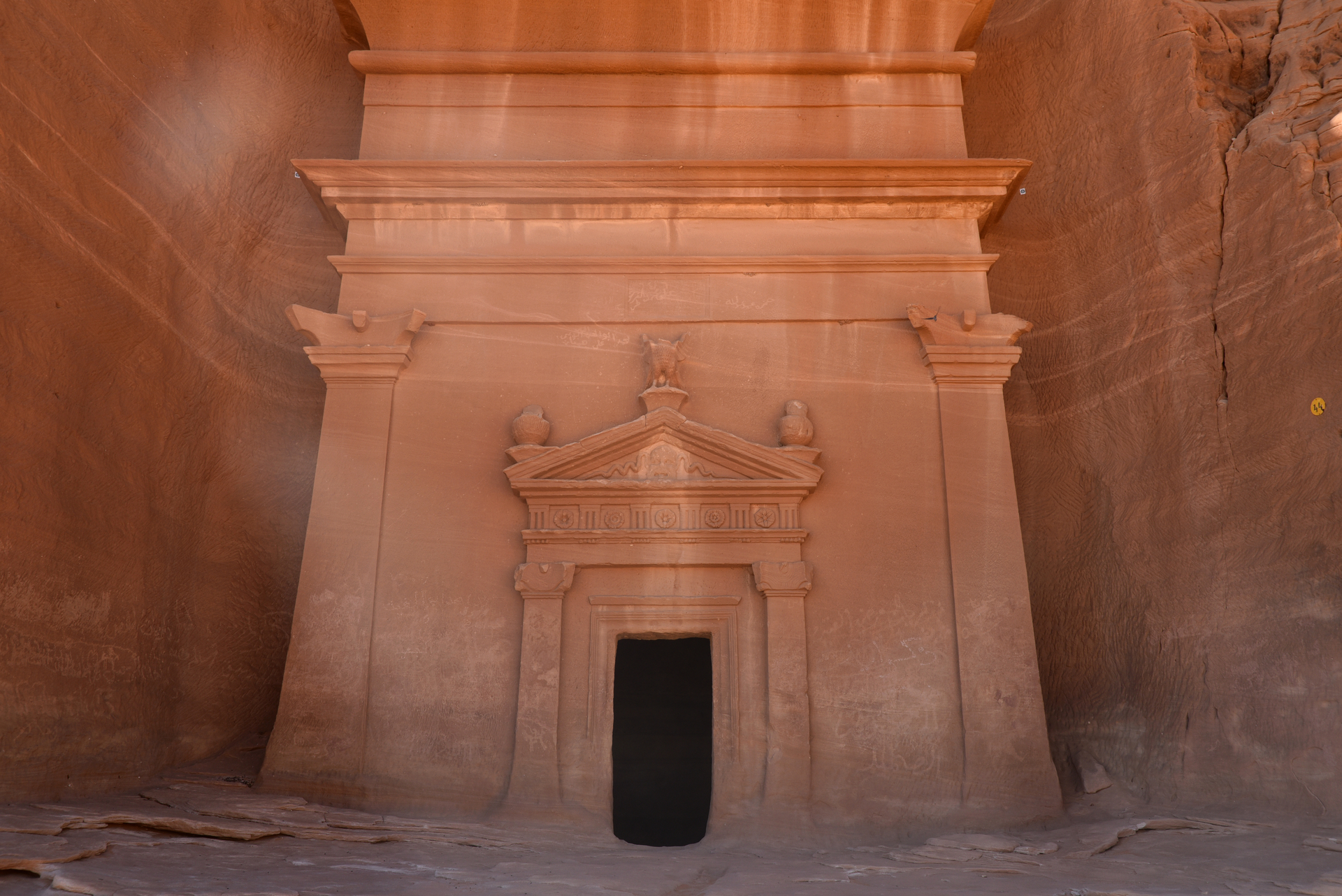
Often called the “sister city” of Petra in Jordan, Hegra features over 110 monumental Nabataean tombs carved into sandstone cliffs during the 1st century CE. The craftsmanship is extraordinary — Corinthian columns, eagles, urns, and inscriptions in the Nabataean script. Visits are by guided tour only (no self-driving within the site). Heritage tour prices start from just SAR 35 (USD 9), making it one of the best-value UNESCO experiences anywhere in the world.
Elephant Rock (Jabal Al-Fil)
A natural sandstone formation rising 52 metres from the desert floor, shaped unmistakably like an elephant with an arching trunk. Open daily from 16:00 to midnight (extended hours Thursday–Friday), with free parking and a wooden boardwalk from the car park. The SALT food truck operates on site, and fire pits and ambient music make it a popular evening destination. It sits a 20-minute drive northeast of AlUla Old Town.
Getting to AlUla
AlUla Airport receives direct flights from Jeddah, Riyadh, Dammam, and Dubai. From Jeddah, the flight takes roughly 1.5 hours. Allow a minimum of three nights — one day each for Hegra, the Old Town and Oasis Trail, and Elephant Rock with the mirrored Maraya concert hall.
Temperature warning: AlUla reaches 42–44°C in June. If your trip coincides with Hajj season, confine outdoor activities to early morning (before 9 AM) and evening. The ideal season for AlUla is October through March, when the Winter at Tantora festival brings concerts, hot air balloon rides, and cultural events under mild skies. If you can schedule a separate tourist-visa trip for winter, AlUla is incomparably better in cooler weather.
Suggested Itineraries
Itinerary 1: Within Your Hajj Visa (3–5 Extra Days)
This itinerary stays within the constraints of a standard Hajj package extension, using destinations close to Makkah and connected by the Haramain Railway.
| Day | Destination | Highlights | Transport |
|---|---|---|---|
| 1 | Taif (day trip) | Shubra Palace, souqs, Al Hada cable car | Car/bus from Makkah (75 min) |
| 2 | Jeddah | Al-Balad historic district, Corniche sunset | Haramain Railway from Makkah (30 min) |
| 3 | Madinah | Prophet’s Mosque, Quba Mosque | Haramain Railway from Jeddah (1.5 hr) |
| 4 | Madinah | Mount Uhud, Qiblatain, date markets | Local taxi/ride-hail |
| 5 | Departure | Final prayers at Prophet’s Mosque, fly home | Madinah Prince Mohammad Airport |
Itinerary 2: Full Kingdom Tour on Tourist E-Visa (10–14 Days)
For pilgrims returning on a separate tourist e-visa — ideally October to March — this itinerary covers the Kingdom’s major highlights.
| Days | Destination | Highlights | Transport |
|---|---|---|---|
| 1–2 | Jeddah | Al-Balad, Corniche, Red Sea diving, local cuisine | Fly in to KAIA |
| 3 | Taif (day trip) | Shubra Palace, rose water shopping, cable car | Car from Jeddah (2 hr) |
| 4–5 | Makkah (Umrah) | Umrah, Masjid al-Haram, historical sites | Car/train from Jeddah |
| 6–7 | Madinah | Prophet’s Mosque, Uhud, Quba, souqs | Haramain Railway (2 hr 20 min) |
| 8–10 | AlUla | Hegra, Elephant Rock, Old Town, Maraya, stargazing | Fly from Madinah or Jeddah |
| 11–13 | Riyadh | Diriyah/At-Turaif, National Museum, Kingdom Tower, Bujairi Terrace | Fly from AlUla |
| 14 | Departure | Last shopping at Riyadh’s souqs | Fly home from KKIA |
Weather Considerations During Hajj Season
Hajj 2026 falls in late May, placing post-Hajj travel squarely in one of the hottest periods of the Saudi year. This is a serious practical consideration — not a footnote.
| City | June High | June Low | Notes |
|---|---|---|---|
| Makkah | 43°C (109°F) | 28°C (82°F) | Can reach 48–50°C on peak days |
| Madinah | 42°C (108°F) | 27°C (81°F) | Similar extreme heat |
| Jeddah | 39°C (102°F) | 28°C (82°F) | High humidity from Red Sea |
| Taif | 35°C (95°F) | 22°C (72°F) | Coolest option; 25% humidity at 1,879 m |
| Riyadh | 42°C (108°F) | 27°C (81°F) | Dry desert heat |
| AlUla | 43°C (109°F) | 25°C (77°F) | Best avoided in summer |
Taif is the only nearby destination offering meaningful heat relief. For Riyadh, AlUla, and even Madinah, schedule outdoor activities before 9 AM or after sunset. Carry water at all times. Air-conditioned malls, museums, and mosques become your daytime refuges. If you have the flexibility to plan a separate trip for October–March, every destination on this list becomes dramatically more comfortable.
Practical Tips for Post-Hajj Travel
Domestic Flights
Saudi Arabia’s domestic air network is extensive and affordable. Saudia (the flag carrier) and flynas (the largest low-cost airline, operating 1,500+ weekly flights) connect all major cities. One-way Jeddah–Riyadh fares start from around SAR 399 (USD 93), with flight times of 1.5–2 hours. Book early during Hajj season, as demand surges. For airport guides and tips on navigating Saudi terminals, see our dedicated page.
Accommodation
Post-Hajj accommodation ranges from budget-friendly apart-hotels (SAR 200–400/night) to luxury chains. In Madinah, hotels cluster around the Prophet’s Mosque — closer properties command premium rates but eliminate transport hassles. In Jeddah, the Corniche area and Al-Balad offer the best positioning. For Riyadh, the Olaya district puts you near Kingdom Tower and major dining. See our Saudi Arabia Hotels Guide for detailed recommendations across all price ranges.
What to Pack for Extended Travel
Money and Costs
The Saudi riyal (SAR) is pegged to the US dollar at 3.75. ATMs are widely available and credit cards are accepted almost everywhere in cities. Budget travellers can manage on USD 80–120 per day (mid-range hotels, local restaurants, public transport). Mid-range travellers should budget USD 150–200 per day. For a breakdown of costs, see our currency guide.
Travel Insurance
Extended travel beyond your Hajj package may not be covered by the insurance bundled with your visa. Check your policy carefully and consider purchasing separate travel insurance that covers the Kingdom specifically, including medical evacuation from remote areas like AlUla.