
RIYADH — Iran does not need to hit Saudi Arabia to hurt it. Thirty-five days into the war, Tehran has discovered that Saudi air defenses will do the damage for free — every intercepted missile and drone scatters debris across the residential neighborhoods of Al-Kharj, a city of 373,000 people that has the misfortune of sitting 27 kilometers from the largest US forward operating base in the kingdom.
On March 31, Saudi forces intercepted all 17 projectiles in a single mixed-composition salvo — seven ballistic missiles and ten drones aimed at the Riyadh region and Eastern Province — and the wreckage of those successful intercepts fell on nine homes, damaged vehicles, and sent two residents to hospital. On April 4, with Trump’s deadline for striking Iran’s power grid and desalination plants now just 36 hours away, Maj. Gen. Turki al-Malki confirmed that Saudi forces had intercepted another 14 drones in the early hours, the latest in what has become a near-daily ritual of defensive success stories that leave civilian rooftops punctured with shrapnel.
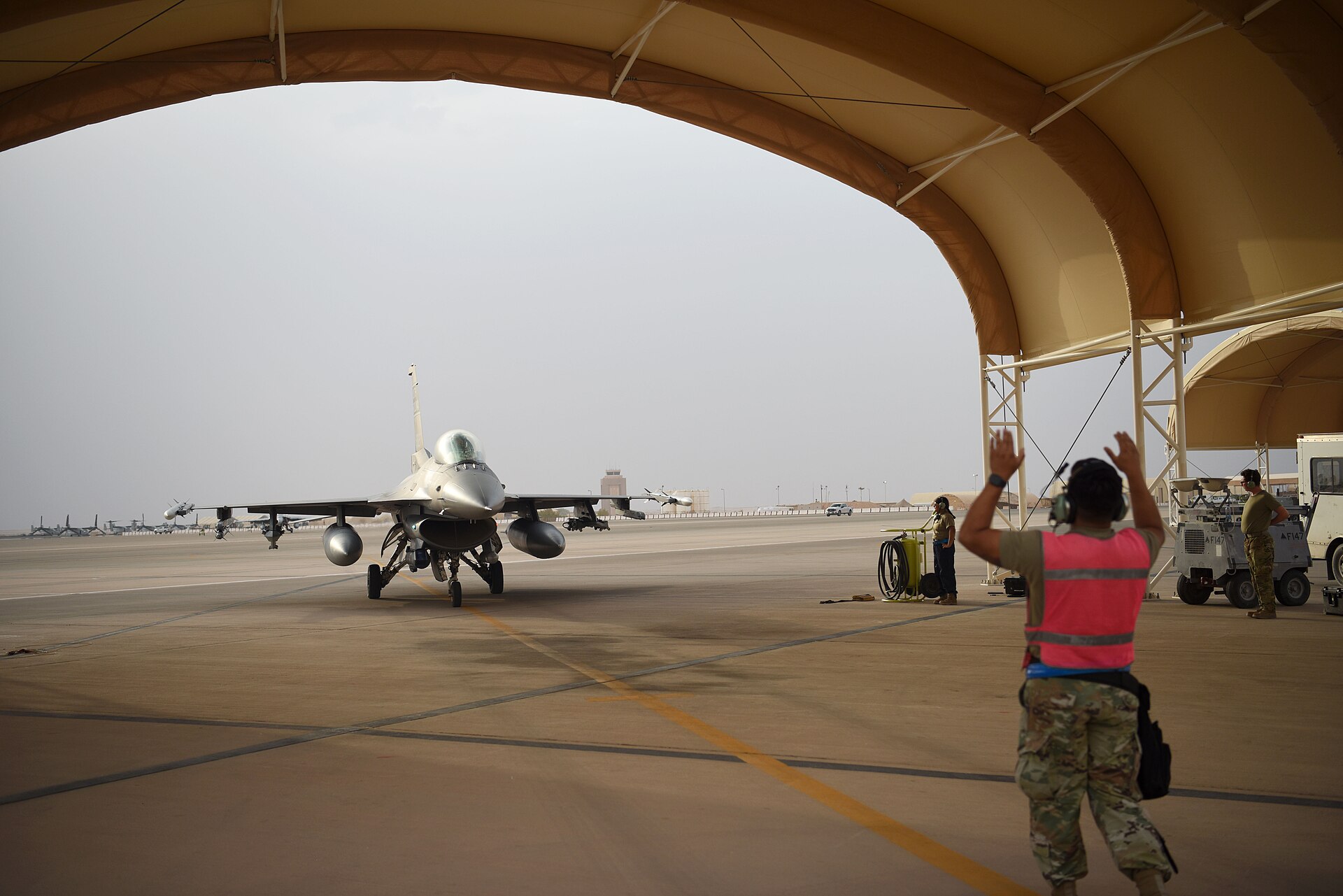
Table of Contents
- The March 31 Salvo: 17 for 17, and Nine Homes Damaged
- What Is Iran’s Debris Doctrine?
- The Prince Sultan Problem: Why Al-Kharj Cannot Escape the Intercept Zone
- What Is the IRGC Actually Claiming to Hit?
- How Long Can Saudi Arabia Afford to Keep Intercepting?
- Saudi Arabia’s Defensive Posture and the Retaliation It Has Not Launched
- 36 Hours to April 6: The Deadline Hanging Over Every Intercept
- Background and Context
- Frequently Asked Questions
The March 31 Salvo: 17 for 17, and Nine Homes Damaged
Saudi Arabia’s Ministry of Defense confirmed through its spokesman, Maj. Gen. Turki al-Malki, that “four ballistic missiles launched towards the Riyadh region and the Eastern Province were intercepted and destroyed,” with an additional three ballistic missiles and ten drones confirmed intercepted in the same engagement window, according to reports in Asharq Al-Awsat and the Saudi Gazette published on March 31. The intercept rate was perfect — 17 projectiles launched, 17 projectiles destroyed before reaching their targets — and the ministry framed the operation as a comprehensive defensive success.
The civilians of Al-Kharj experienced it differently. Saudi Civil Defense confirmed that interceptor debris from the engagement struck six homes in one residential neighborhood and three additional homes plus multiple vehicles in a second, according to the Saudi Gazette and Gulf Insider. Two people sustained injuries — one was treated and discharged, the other retained for observation — and the Civil Defense statement was explicit that the damage resulted from debris generated by intercepting a drone, not from an unintercepted warhead reaching a target. The distinction matters enormously to policymakers in Riyadh; it matters rather less to the family whose roof caved in.
The March 31 salvo was the largest confirmed single mixed-composition attack against Saudi Arabia in the war so far, though it pales in comparison to the volumes hitting other Gulf states. On April 3, the UAE intercepted 69 projectiles in a single day — 18 ballistic missiles, four cruise missiles, and 47 drones — while the UAE Ministry of Defence reports cumulative totals since February 28 of 438 ballistic missiles, 2,012 drones, and 19 cruise missiles intercepted over its territory. Saudi Arabia has published no comparable cumulative figure, a silence that analysts interpret as deliberate.
What Is Iran’s Debris Doctrine?
Elizabeth Dent, an air defense analyst and senior fellow at the Washington Institute for Near East Policy, identified the dynamic in her assessment of the campaign’s first weeks: “Much of the damage seen so far — particularly in Gulf countries — appears to be from debris created by interceptions,” she wrote, noting that defensive systems, while effective at destroying incoming threats, generate secondary hazards to civilian populations living beneath the intercept trajectories. The observation reframes the entire calculus of what “successful defense” means for a country absorbing daily salvos over populated areas.
The pattern is not accidental, according to analysts who study Iran’s military doctrine. Michael Eisenstadt, who directs the Military and Security Studies Program at the Washington Institute, has characterized Iran’s broader campaign as one of “applying graduated pressure, husbanding resources for a long conflict, roiling oil markets, and catalyzing opposition to the war in the United States and other countries.” The regime, he argues, employs “small operations” with “outsize effects while remaining limited enough to decrease the potential for escalation” — a description that fits the Al-Kharj debris pattern precisely. Iran fires enough projectiles to guarantee that intercept debris will fall on populated areas, but not so many that Saudi Arabia would characterize any single salvo as a threshold-crossing escalation demanding military retaliation.
CSIS analysts who examined Iran’s broader air campaign reached a complementary conclusion, finding that Tehran’s saturation doctrine “reinforces a cost-imposition logic, saturating regional defenses with mass one-way attack salvos while accepting high attrition to force interceptor expenditure and impose episodic disruption.” The debris falling on Al-Kharj is that “episodic disruption” made concrete. It is not the primary objective of any given salvo, but it is far from an unwelcome byproduct, because it generates exactly the kind of civilian anger and media coverage that pressures Riyadh without requiring a single warhead to land intact.
The Prince Sultan Problem: Why Al-Kharj Cannot Escape the Intercept Zone
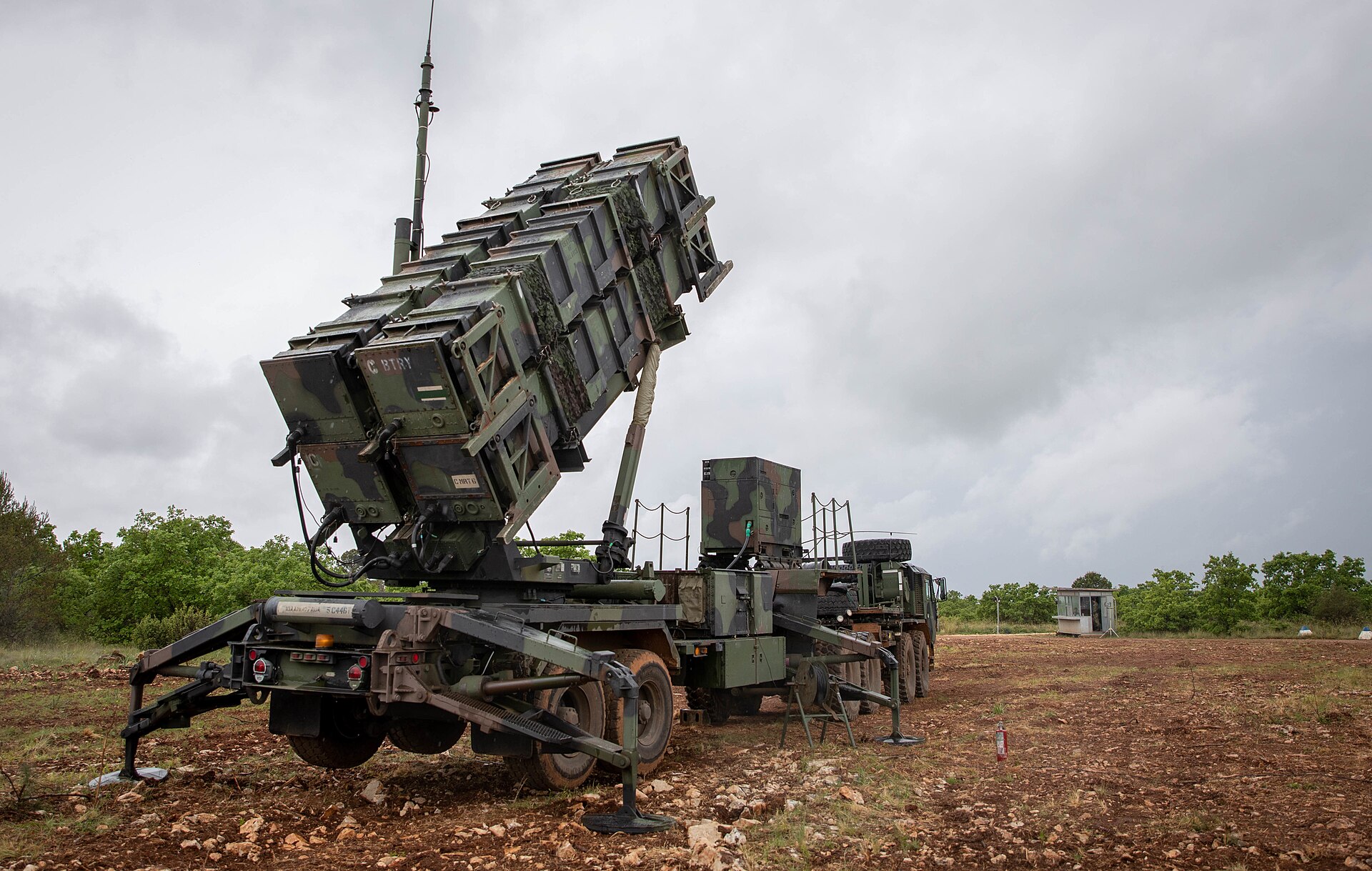
Al-Kharj Governorate, home to 373,177 people according to population data, sits 70 kilometers southeast of Riyadh, and its residential neighborhoods occupy the approaches to Prince Sultan Air Base — the primary US forward operating base in Saudi Arabia, located just 27 kilometers from the city center. The geometry is unforgiving: any intercept of an inbound projectile aimed at the base will scatter debris across a cone that includes civilian housing, because the engagement altitude and trajectory required to destroy a ballistic missile or drone on approach to Prince Sultan necessarily places the intercept point above or near the populated corridor between Riyadh and the base.
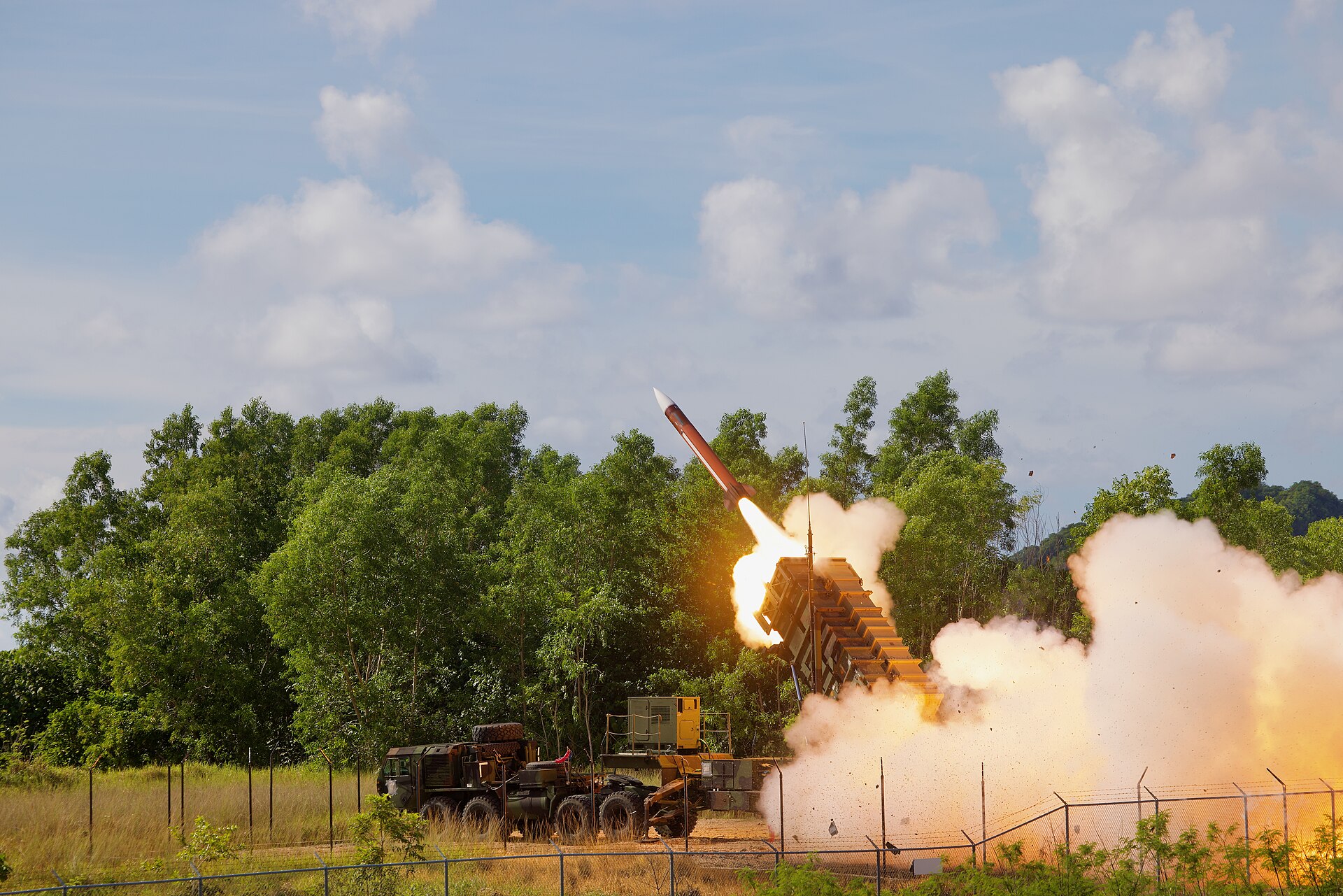
The US military presence at Prince Sultan has expanded significantly since 2019, when approximately 2,700 personnel were stationed there alongside F-22 Raptors, B-1B bombers, and Patriot missile batteries, according to Department of Defense disclosures. The base serves as the Combined Air Operations Center for the region, making it one of Iran’s highest-value targets in any conflict with the United States — and ensuring that Al-Kharj will remain in the debris zone for as long as salvos continue to arrive. Ali Bakir, a defense analyst at Qatar University, has noted the fundamental constraint: “Air defense systems can intercept, but not at scale or at low cost,” he told Breaking Defense in March. The residents of Al-Kharj are living with the physical consequence of that limitation.
What Is the IRGC Actually Claiming to Hit?
Iran’s Islamic Revolutionary Guard Corps has been remarkably specific in its public claims about Al-Kharj — and remarkably selective about what it acknowledges hitting. In Wave 51 of its “Operation True Promise 4” campaign on March 14, the IRGC claimed through PressTV to have struck “Al-Kharj air base” directly. In Wave 84 on March 27, it claimed the destruction of US refueling aircraft at Prince Sultan. In Wave 89 on March 29, the IRGC asserted via Al Mayadeen that it had destroyed a US E-3 AWACS surveillance aircraft. And in Wave 90 on April 2, GlobalSecurity documented IRGC claims of “precise heavy ballistic missile strikes” on Al-Kharj. None of these claims have been confirmed by US Central Command, and several are directly contradicted by CENTCOM statements.
The framing is the point. By publicly targeting “US military installations” rather than Saudi civilian infrastructure, the IRGC maintains a rhetorical architecture in which every salvo is an act of self-defense against American forces occupying Arab land, not an attack on Saudi sovereignty. When debris falls on Saudi homes, Iran can point to its own statements and say: we were aiming at the Americans, your air defenses generated the wreckage, and the proximity of your population to a US base is your government’s problem, not ours. The IRGC reinforced this posture on April 4 when it explicitly disavowed the March 3 drone attack on the US Embassy in Riyadh, stating through PressTV that the “IRGC and Iranian Armed Forces had nothing to do with the US Embassy attack” — a denial that simultaneously advertises Iran’s willingness to distinguish between targets it claims and targets it does not, while leaving the debris question conspicuously unaddressed.
As of April 4, the IRGC campaign has reached at least 92 waves under Operation True Promise 4, according to PressTV and GlobalSecurity tracking. The volume is staggering: between February 28 and March 18 alone, Saudi Arabia absorbed 38 missiles and 435 drones. Iran’s opening salvo on March 1 consisted of 1,206 projectiles across the entire theater — 867 drones and 339 missiles — and daily averages have ranged between 190 and 392 projectiles since then, a pace that US intelligence assesses Iran can sustain because roughly 50 percent of its ballistic missile launchers remain intact and thousands of one-way attack drones remain in its arsenal, according to CNN and NBC News reports citing intelligence assessments from early April.
How Long Can Saudi Arabia Afford to Keep Intercepting?
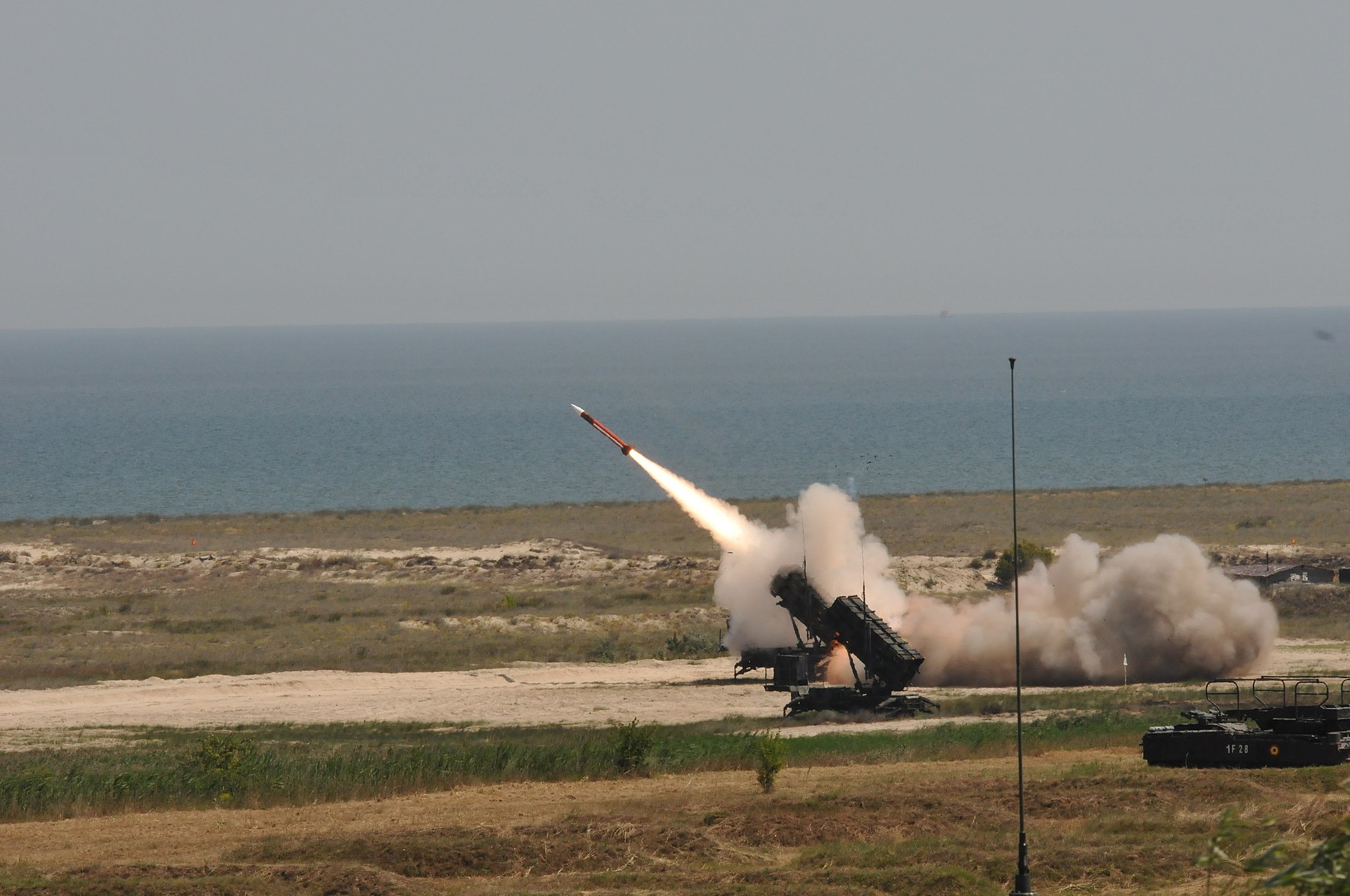
The economics of the debris problem are inseparable from the economics of the interceptions themselves. Iran’s Shahed-series one-way attack drones cost between $20,000 and $50,000 per unit to manufacture, according to CSIS and CNBC reporting, while the Patriot PAC-3 interceptors used to destroy them cost approximately $4 million each. Every successful intercept that scatters debris across Al-Kharj also depletes a finite and expensive stockpile — a double cost, where mass salvos force defenders to choose between intercepting cheap drones with expensive missiles or accepting the political consequences of letting them through.
Ryan Bohl, a senior analyst at the RANE Network, warned in Breaking Defense that the current tempo is unsustainable for Gulf defenders: “If Iranian attacks continue throughout this week, I would expect the Gulf Arab states to eventually participate in counter-attacks,” he said in March, articulating the pressure that debris and depletion together place on Saudi Arabia’s formally defensive posture. GCC interceptor inventories have been described by CSIS as running low by early April, with resupply requiring draws from US stocks — a dependency that has triggered what CSIS calls “a major policy debate” in Washington over whether replenishing Gulf air defense systems takes priority over US military readiness elsewhere.
“Much of the damage seen so far — particularly in Gulf countries — appears to be from debris created by interceptions.”
— Elizabeth Dent, Senior Fellow, Washington Institute for Near East Policy
Saudi Arabia has not publicly attributed any specific intercept to a particular weapons system — all ministry statements refer only to “Saudi Air Defense Forces” without distinguishing between THAAD, Patriot PAC-3, or other platforms, according to Asharq Al-Awsat and Saudi Gazette reporting. This opacity extends to the Greek-operated ELDYSA Patriot PAC-3 battery that achieved its first confirmed live-fire intercept on March 19 when it destroyed two Iranian ballistic missiles over Yanbu targeting the SAMREF oil refinery, as documented by Greek Reporter and Janes. The bilateral arrangement under which Greek personnel operate Patriot systems on Saudi soil — deployed since September 2021 — adds another layer of complexity to the debris question, because a Greek-operated intercept generating civilian casualties on Saudi territory would raise legal and diplomatic questions that neither Athens nor Riyadh appears eager to address publicly.
Saudi Arabia’s Defensive Posture and the Retaliation It Has Not Launched
Thirty-five days into a war in which its airspace has been penetrated by hundreds of missiles and thousands of drones, Saudi Arabia has not launched a single retaliatory strike on Iranian territory. The kingdom’s official posture, articulated by Al Arabiya on February 28, is that it “reserves the right of response” — a formulation that preserves the option of military action while declining to exercise it, even as debris continues to fall on residential neighborhoods and interceptor stocks diminish by the day. The restraint is historically unusual for a kingdom that launched a devastating air campaign in Yemen in 2015 with far less provocation.
The logic behind the restraint appears to be both strategic and structural. Saudi Arabia’s ongoing investment in air defense independence — diversifying beyond US-supplied systems toward a layered architecture that does not require Washington’s approval for every engagement — reflects Crown Prince Mohammed bin Salman’s long-term bet that defense, not offense, will define the kingdom’s security posture in a region where retaliation invites escalation. The debris problem complicates that bet, because a purely defensive posture works only as long as the public accepts that the damage to their homes is an acceptable price for not provoking a wider war.
Iran appears to understand this dynamic and is testing its limits. The pattern of targeting — publicly aimed at US military assets, physically falling on Saudi civilians — creates a political wedge between the Saudi government’s relationship with Washington and its obligation to protect its own population. Every salvo that generates debris in Al-Kharj forces Riyadh to choose between maintaining its defensive posture and responding to domestic pressure to act, while Tehran bears none of the reputational cost because it can claim, with technical accuracy, that it never targeted Saudi civilians at all.
36 Hours to April 6: The Deadline Hanging Over Every Intercept
The debris falling on Al-Kharj carries additional weight because of what expires on April 6 at 8 PM Eastern Time. President Trump announced on March 26, via Truth Social, a pause on US strikes against Iran’s electrical grid and desalination infrastructure — a deadline that now sits approximately 36 hours away and that Iran has given no public indication of meeting, with Tehran telling mediators it will not meet US officials directly, according to Al Jazeera and the Washington Times. If the deadline passes without a deal, the United States has explicitly threatened to target the infrastructure that provides electricity and drinking water to 88 million Iranians, a threat that international humanitarian law experts have described as collective punishment.
For Saudi Arabia, the timing transforms each new interception into a data point in a larger argument. If Trump follows through on the April 6 deadline, the war escalates dramatically and Saudi air defenses face the prospect of an intensified Iranian retaliatory campaign that would make the current 14-drone and 17-projectile salvos look modest. If Trump backs down, Riyadh faces the possibility of absorbing this level of drone and missile traffic indefinitely, with debris accumulating on civilian rooftops and interceptor stocks draining, while Washington debates whether to resupply the kingdom or conserve its own reserves. The war has already cost the US two warplanes in 24 hours — the political appetite in Washington for deepening its commitment to Gulf air defense is not unlimited.
Iran, meanwhile, is calibrating its campaign to the deadline. Eisenstadt’s framework of graduated pressure and resource husbandry suggests that the current salvo tempo is deliberately sustainable — Tehran is not expending its remaining missile and drone inventory in a pre-deadline surge but rather maintaining the daily rhythm of attacks that generates debris, depletes interceptors, and dominates regional news cycles without inviting the kind of massive retaliation that the April 6 deadline theoretically authorizes.
Background and Context
The US-Israeli military operation against Iran, designated Operation Epic Fury, began on February 28, 2026, with Iran retaliating under its “Operation True Promise 4” framework. The opening salvo on March 1 established the tempo for the most intense sustained air defense campaign in Gulf history, with Saudi Arabia, the UAE, Bahrain, and Kuwait all absorbing daily strikes across a theater that has generated more air engagements in five weeks than the entire 2003 Iraq invasion produced in its opening month.
The Al-Kharj debris incidents were not the first of the conflict. Earlier debris impacts on Al-Kharj homes were documented in this publication’s previous reporting, and the pattern has been replicated across the Gulf, with Dubai reporting interceptor debris striking several homes and injuring four Asian nationals in a separate incident, according to regional media reports. Saudi Arabia has neither launched strikes on Iranian territory nor joined the US-Israeli offensive coalition, maintaining a defensive posture that relies on a layered air defense architecture including US-supplied THAAD and Patriot systems, a Greek-operated Patriot PAC-3 battery, and undisclosed additional assets.
Frequently Asked Questions
How does interceptor debris cause damage to homes?
When an air defense missile destroys an incoming drone or ballistic missile, both the interceptor and the target fragment into high-velocity debris that falls to earth over a wide area beneath the engagement point. The debris field can extend several kilometers depending on the altitude of the intercept, the type of warhead involved, and wind conditions at the time. Patriot PAC-3 interceptors use hit-to-kill technology — they physically collide with the target at hypersonic speed — which generates a shower of metallic fragments heavy enough to penetrate roofing materials, damage vehicles, and cause injury to anyone in the open. The debris is not explosive in the conventional sense, but fragments traveling at terminal velocity carry enough kinetic energy to be lethal.
Has Iran used cluster munitions in its attacks on Saudi Arabia?
Iran has deployed ballistic missiles armed with cluster munition payloads in its strikes on Israel during the conflict, scattering submunitions across wide areas even when the carrier missile is intercepted, according to Washington Institute analysis. There has been no confirmed public reporting of cluster munitions being used in Iranian salvos specifically targeting Saudi territory as of April 4, though the opacity of Saudi damage assessments — which describe only “debris” without specifying the type of ordnance intercepted — makes definitive statements difficult. The distinction matters because cluster munitions generate a wider debris field than conventional warheads and leave unexploded submunitions that pose an ongoing hazard to civilians.
What would happen to Saudi air defense if the US does not resupply interceptor stocks?
CSIS analysts have assessed that GCC interceptor inventories were running low by early April 2026, with resupply dependent on drawing from US military stocks — a transfer that has triggered what CSIS describes as “a major policy debate” in Washington. Patriot PAC-3 MSE interceptors are manufactured by Lockheed Martin at a rate that cannot keep pace with combat expenditure under current salvo volumes. If resupply is delayed or denied, Gulf states would face a choice between rationing interceptors — allowing some drones through to strike their targets — or shifting to cheaper, less capable point-defense systems that would alter the debris equation but not eliminate it.
Why has Saudi Arabia not retaliated against Iran?
Saudi Arabia’s decision not to strike Iranian territory reflects a convergence of strategic calculations rather than a single policy choice. The kingdom lacks the offensive strike capability to meaningfully degrade Iran’s dispersed missile and drone infrastructure without US support, and joining the US-Israeli offensive would expose Saudi oil infrastructure — the backbone of its economy and global energy supply — to targeted Iranian retaliation rather than the current pattern of salvos aimed primarily at military installations. Crown Prince Mohammed bin Salman’s broader strategic vision prioritizes economic diversification under Vision 2030, and a direct Saudi-Iranian war would jeopardize the foreign investment and sovereign credit ratings that underpin that project. The strategic calculus also means Riyadh cannot easily respond to the dual chokepoint trap now facing Saudi Arabia’s oil exports, where the 40-year-old bypass built to escape Hormuz now exits through a Red Sea corridor Iran can threaten at no cost to itself.
Could Saudi Arabia relocate civilians away from Al-Kharj to reduce debris casualties?
Al-Kharj Governorate has a population of 373,177 and serves as a major agricultural and industrial center south of Riyadh, making mass evacuation logistically impractical and economically devastating. The city’s proximity to Prince Sultan Air Base — 27 kilometers — means that the debris zone encompasses established urban infrastructure, not a buffer area that could be cleared. Historical precedent offers little guidance: Israel evacuated northern communities near the Lebanese border during the 2023-24 Hezbollah rocket campaign, but those evacuations involved smaller populations and were politically contentious even at limited scale. Saudi authorities have not publicly discussed evacuation as an option, focusing instead on Civil Defense response protocols and damage assessment after each intercept event.