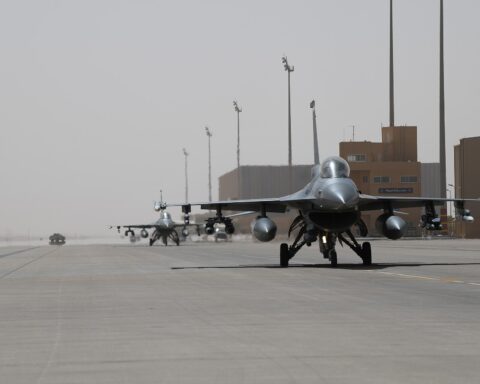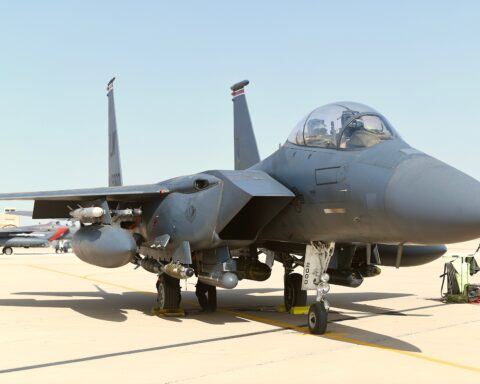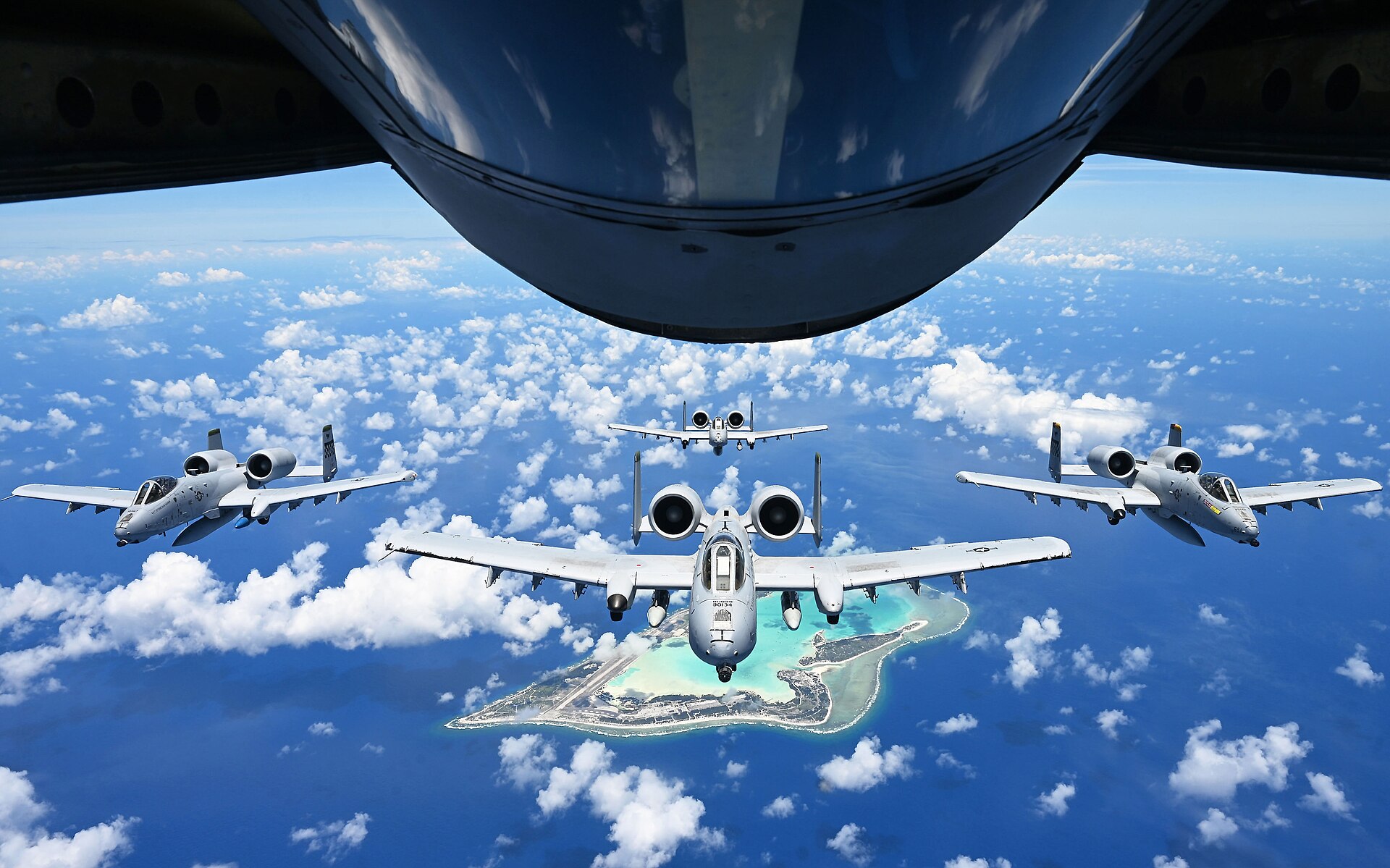

WASHINGTON — An American A-10 Thunderbolt II was struck by Iranian fire on April 3 while flying a combat search-and-rescue escort mission over the southern Persian Gulf, making it the second US warplane lost in fewer than twenty-four hours and capping the most damaging single day of aerial combat for the United States military since Operation Epic Fury began on February 28. The pilot — the A-10 is a single-seat aircraft — navigated the crippled jet out of Iranian-contested airspace and into Kuwaiti territory before ejecting, and was subsequently recovered alive by US forces, according to CBS News and Newsweek; a second American crew member, from the F-15E Strike Eagle shot down over Iran earlier the same day, remains missing as of April 4, with Iranian state television offering a $60,000 bounty for his capture alive.
The back-to-back losses — a supersonic deep-strike fighter and a Vietnam-era close air support platform, taken down within hours of each other — expose something the Pentagon has not publicly acknowledged: the US air campaign over Iran has been forced to shift from expensive standoff munitions toward cheaper, closer-range weapons and the slower aircraft that carry them, and that shift has put airframes into threat envelopes they were never designed to survive. The A-10 was not over Iran on a whim; it was there because Tomahawk cruise missiles cost $3.5 million per shot and the supply is finite, and because a downed F-15E crew needed someone to fly low and slow and absorb ground fire while the rescue helicopters came in — which is precisely what the Warthog was built to do, and precisely the mission profile that makes it fatally vulnerable to the kind of passive-sensor, short-range air defences Iran has been deploying with increasing lethality since the war’s first week.
Table of Contents
What Happened on April 3
The sequence began when an F-15E Strike Eagle — a two-seat, twin-engine fighter-bomber that had been conducting deep-strike sorties over Iranian territory — was hit by what Iran’s IRGC-linked Nour News agency described as “a new advanced air defense system of the IRGC Aerospace Force.” One of the two crew members was recovered; the other was not, and US forces were unable to reach the crash site in Kohgiluyeh and Boyer-Ahmad province, a mountainous region in Iran’s southwest where armed tribesmen joined a civilian search effort after Iranian television broadcast the location and the bounty offer, according to RNZ News and Turkiye Today.
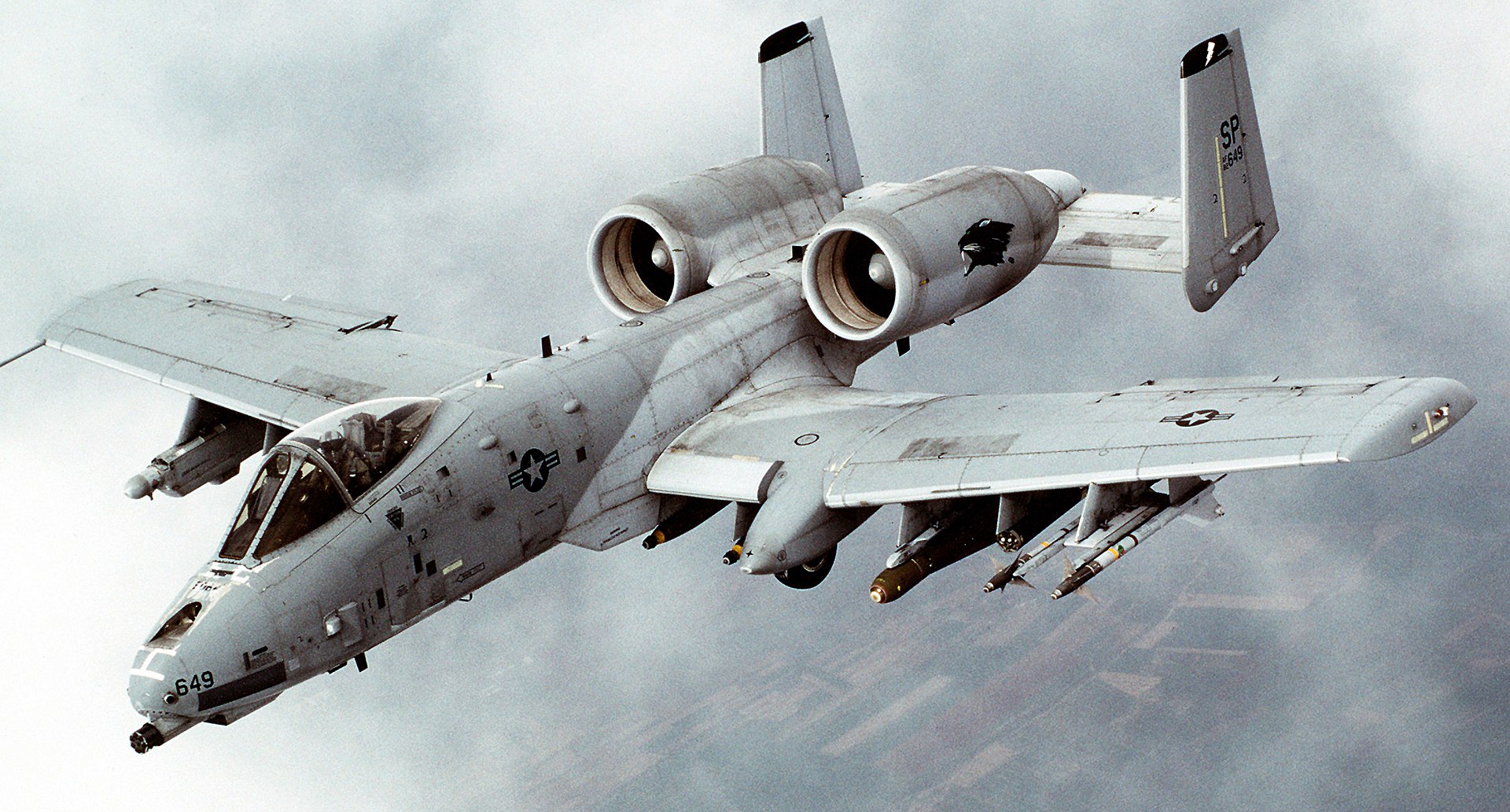
The CSAR package launched in response included at minimum one A-10, two MH-60G Pave Hawk helicopters, one HC-130J Combat King II tanker-transport, and one RQ-9 drone, according to SOFX and Aerospace Global News. The A-10’s role in the package was what the US Air Force calls the “Sandy” mission — a direct escort and suppression-of-fire platform that flies ahead of and around the rescue helicopters, absorbing enemy attention and engaging ground threats while the helicopters move in. It is, by design, the aircraft most exposed to ground fire in the entire formation.
Iranian Army Air Defense Force systems tracked and engaged the A-10, according to PressTV, which stated the aircraft “subsequently crashed into the waters of the Persian Gulf.” The Pentagon’s account, relayed through multiple US outlets, is that the pilot flew the damaged aircraft from the Hormuz area into Kuwaiti airspace — a distance that could be well over 200 kilometres depending on the engagement point — before ejecting. Two of the MH-60G Pave Hawk helicopters in the same rescue package were also hit by Iranian fire but returned to base, according to SOFX.
Retired Lieutenant General David A. Deptula, former deputy chief of staff for intelligence at the US Air Force, told Air and Space Forces Magazine: “High-end combat against a capable, integrated air defense system is never risk-free.” Mark Gunzinger of the Mitchell Institute for Security Studies was more specific, telling The Dupree Report: “Our low-density, high-demand combat aircraft, the battle management, ISR and air-refueling aircraft are increasingly critical — it’s not surprising that Iran has targeted them.”
The Middle East briefing 3,000+ readers start their day with.
One email. Every weekday morning. Free.
Why Was an A-10 Warthog Flying Over Iranian-Contested Airspace?
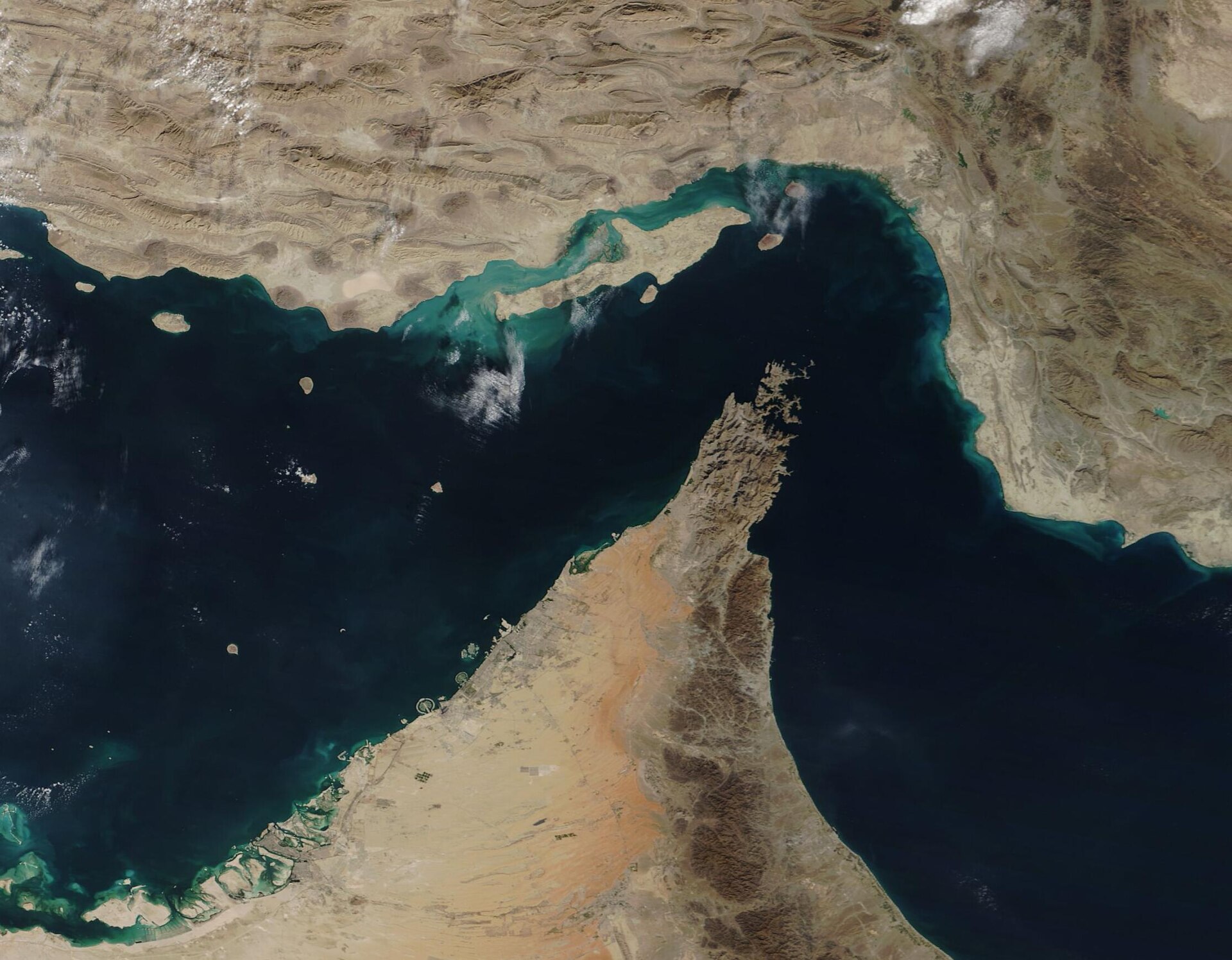
The A-10 Thunderbolt II was not in the Persian Gulf to hunt ballistic missile launchers or strike nuclear facilities — those are missions for the F-15E, F-35, and B-2 bombers that have dominated Operation Epic Fury’s deep-strike campaign from the beginning. Even as the air campaign continued, the Bushehr nuclear plant was struck for the fourth time on April 4, forcing Russia to evacuate its own technicians and exposing the limits of nuclear infrastructure protection in an active war zone. The Warthog was there because CENTCOM assigned it a different job weeks earlier: killing Iranian Revolutionary Guard Corps Navy fast-attack boats in the Strait of Hormuz, a mission for which its slow speed, heavy cannon, and ability to loiter at low altitude are genuine advantages. General Dan Caine, Chairman of the Joint Chiefs of Staff, stated as much publicly in March 2026: “The A-10 Warthog is now in the fight across the southern flank and is hunting and killing fast-attack watercraft in the Straits of Hormuz,” he told Defense One.
The maritime interdiction role made tactical sense when it was assigned — the A-10’s 30mm GAU-8 cannon is devastating against small, unarmoured vessels, and an aircraft that can fly at 300 metres and stay there for hours is far better suited to hunting speedboats than a supersonic fighter that covers the same stretch of water in seconds. The Pentagon confirmed through March that US forces had destroyed more than 120 Iranian naval vessels, many of them by A-10s operating from Gulf bases. On April 1 — just two days before the loss — the US Air Force deployed twelve additional A-10C aircraft to RAF Lakenheath in the United Kingdom, a move Stars and Stripes reported as an acceleration of Warthog deployment into the theatre.
What changed on April 3 was the F-15E shootdown, which triggered the CSAR Sandy protocol and pulled the A-10 from its maritime patrol into an entirely different threat environment: not the relatively open waters of the Strait, where Iranian fast boats carry machine guns and unguided rockets, but the airspace over or near Iranian territory, where road-mobile surface-to-air missile systems and MANPADS teams are dispersed across the terrain. Dan Grazier of the Stimson Center had described the Warthog to Defense One as “that old reliable Chevy pickup truck” — a contrast to the F-35, which he called “the national-security establishment going through a midlife crisis and purchasing a Ferrari.” On April 3, the Chevy pickup got sent into the same kill zone that had just claimed a purpose-built strike fighter.
The Sandy Mission That Drew the Warthog In
The “Sandy” callsign dates to the Vietnam War, when propeller-driven A-1 Skyraiders flew the same escort-and-suppress role for helicopters recovering downed pilots from North Vietnamese jungle, absorbing anti-aircraft fire at treetop altitude while the rescue birds moved in. The US Air Force has maintained the CSAR Sandy mission as a core A-10 tasking ever since, on the logic that any aircraft assigned to fly low and slow in front of enemy guns had better be the one most likely to survive the hits — and the Warthog, with its 540-kilogram titanium “bathtub” cockpit rated to withstand 23mm armour-piercing rounds, its redundant hydraulic systems, and its engines mounted high on the fuselage to reduce infrared exposure, was purpose-built for exactly that kind of punishment.
The Sandy mission is also, by definition, reactive: it only activates when another aircraft has already been lost, meaning the A-10 enters an engagement area where the enemy has just demonstrated the ability to shoot down a far more capable platform. On April 3, the Sandy mission sent the Warthog — with a maximum speed of roughly 706 kilometres per hour, well below supersonic — into airspace where Iran had, hours earlier, brought down an F-15E capable of exceeding Mach 2.5. The package represented a substantial commitment of low-and-slow assets to a single recovery attempt, and Iran hit at least three of them: the A-10 was downed, and two helicopters took fire and returned damaged.
That three aircraft in a single CSAR package were hit suggests the Iranians either anticipated the rescue attempt and pre-positioned air defence assets along the likely approach corridor, or — perhaps more troublingly — had enough dispersed short-range systems in the area that any low-altitude aircraft transiting the region would encounter them regardless of route. Tyler Rogoway of The War Zone had warned precisely about this earlier in the campaign: “Total air supremacy has not occurred and will not in the immediate future… Iran has road-mobile air defenses that can hide and pop up out of nowhere, and they have exotic stuff like loitering SAMs too.”
What Iran’s Kill Reveals About Its Air Defences
The specific weapon system that struck the A-10 has not been confirmed by the Pentagon, but the engagement profile — a low-altitude, subsonic aircraft hit over or near the Strait of Hormuz — points toward the category of passive-sensor, short-range air defence systems that Iran has deployed with increasing effectiveness throughout Operation Epic Fury. The most prominent of these is the Majid, designated AD-08, a short-range surface-to-air missile system that uses an imaging infrared seeker and electro-optical tracking rather than radar, meaning it emits no electromagnetic signature that an aircraft’s radar warning receiver can detect. The system’s missiles have a maximum engagement range of eight kilometres and can reach targets at altitudes up to six kilometres — well within the envelope an A-10 would occupy on a Sandy mission or maritime patrol.
The Majid was previously confirmed as responsible for damaging a US F-35A on March 19, an incident that sent the most expensive fighter in history limping back to base with battle damage inflicted by a system mounted on an Iranian-made Aras-2 4×4 tactical vehicle — small, road-mobile, easy to conceal, with a four-missile launcher and 360-degree electro-optical surveillance. It was designed to engage drones, cruise missiles, and helicopters, but its passive seeker works against any heat-emitting target, and an A-10’s twin turbofan engines are hardly invisible to a modern imaging infrared system at close range.
Beyond the Majid, Iran’s air defence threat to low-altitude aircraft includes a growing MANPADS inventory. A leaked document from February 2026, reported by the Jerusalem Post and Army Recognition, revealed Iran had signed a $500 million contract with Russia for 500 Verba (9K333) man-portable air defence systems and 2,500 missiles, with deliveries scheduled from 2027 to 2029 — too late for this war, but the contract signals the scale of Iran’s ambition in this domain. The Verba uses a three-channel infrared seeker specifically designed to defeat heat decoys, the kind of countermeasures that are among the A-10’s primary defences against shoulder-fired missiles. Iran’s existing MANPADS inventory, much of it older Chinese and Russian stock, has been supplemented by domestic production, and IRGC military spokesperson Ebrahim Zolfaghari warned on April 3, in comments carried by Al Jazeera and Clash Report: “Do not hope that you have destroyed production centers for ballistic missiles, long-range precision-guided and attack drones, advanced air defense systems, electronic warfare capabilities and our special equipment.”
The pattern is consistent: Iran’s most effective air defence successes in Operation Epic Fury have come not from its long-range strategic systems — most of which US intelligence assesses were degraded in the campaign’s first two weeks — but from short-range, passive-sensor, road-mobile systems that US pre-war planning appears to have treated as a secondary threat. CBS News correspondent David Martin captured the disconnect on April 3: “They said Iran had lost 90 percent of its missile launch capabilities — and yet the Iranians have continued to launch missiles, and now this.”
The Munitions Math Driving the Risk
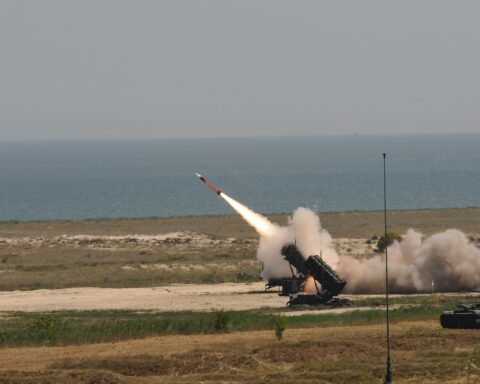
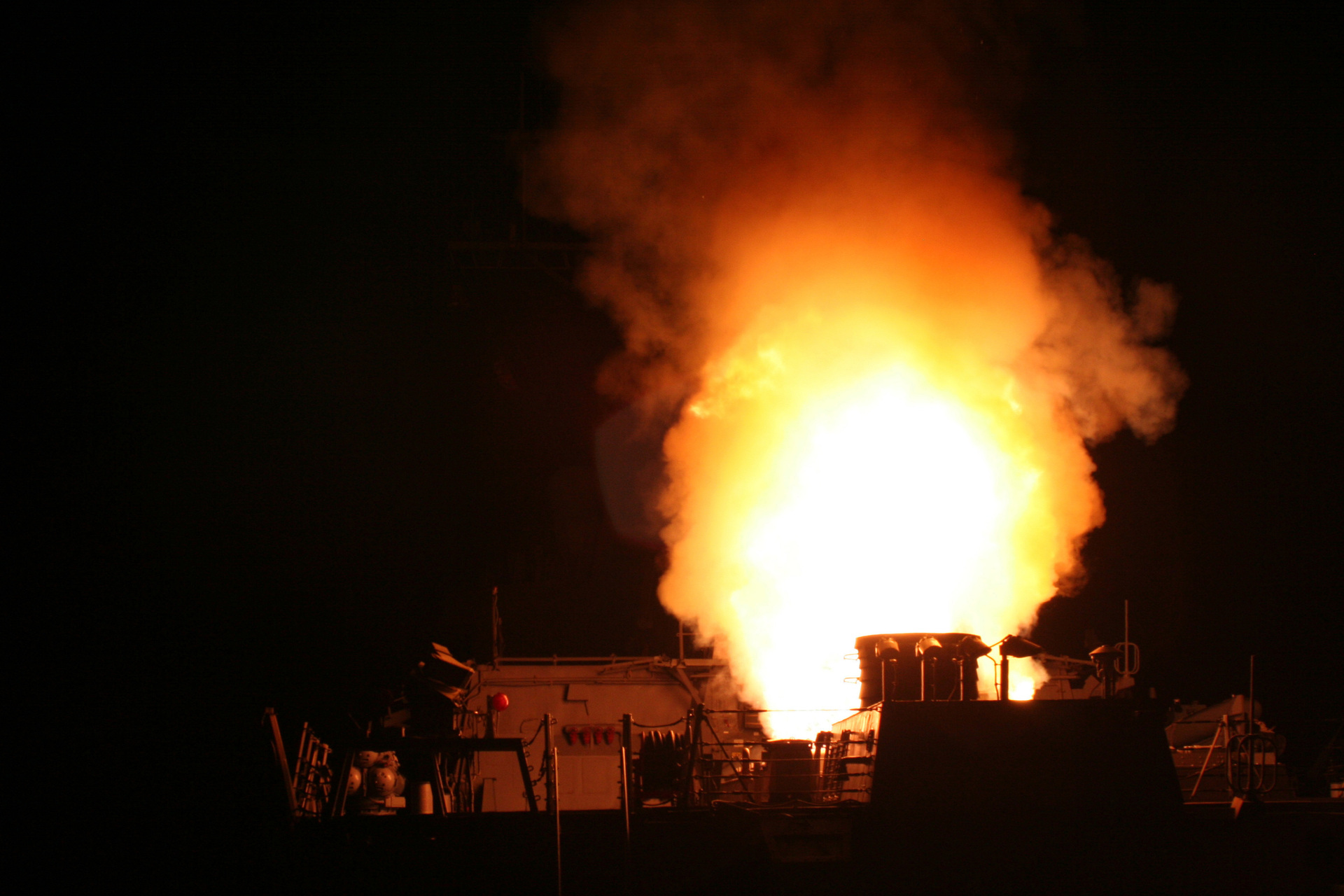
The deeper structural pressure behind the A-10’s presence in Iranian-contested airspace is ammunition — or more precisely, the accelerating depletion of the expensive standoff weapons that were supposed to keep American pilots out of harm’s way. Mark F. Cancian and Chris H. Park at the Center for Strategic and International Studies documented the shift: by roughly Day 10 of Operation Epic Fury, the campaign had begun transitioning from Tomahawk cruise missiles and Joint Air-to-Surface Standoff Missiles, each costing approximately $3.5 million per shot, toward JDAMs that cost under $100,000 apiece and the direct-attack platforms — including A-10s carrying AGM-65 Maverick missiles and 30mm cannon rounds — that deliver them at close range. The arithmetic is simple: at 15,000-plus targets struck by Day 14, according to CSIS, the campaign was consuming precision munitions at a rate that no peacetime production schedule was designed to sustain.
The Atlantic Council warned that Operation Epic Fury was “consuming military assets at rates that measurably reduce U.S. readiness to counter China in the Indo-Pacific,” a framing that understates the immediate operational problem: the shift from standoff to direct attack does not just consume different weapons — it puts different aircraft, flying at different altitudes and different speeds, in front of different threats. A Tomahawk launched from a destroyer 1,500 kilometres away exposes no pilot to anything. A JDAM dropped from an F-15E at 25,000 feet exposes a crew to long-range strategic SAMs, which can be suppressed. A Maverick fired from an A-10 at 3,000 feet exposes a pilot to every MANPADS team, every Majid battery, and every anti-aircraft gun within eight kilometres — threats that are individually cheap, collectively abundant, and functionally invisible to radar warning receivers.
The US drone fleet has absorbed much of this risk already — 16 MQ-9 Reapers have been lost over Iran since the campaign began, representing roughly $256 million in attrition — but drones cannot fly the Sandy mission, which requires a pilot making real-time judgements about threat suppression, helicopter routing, and survivor location in a contested environment. The loss of a US E-3G AWACS destroyed on the ground at Prince Sultan Air Base between March 27 and 29 further compressed the situational awareness available to aircrews over the Gulf, removing a battle management platform that cannot be rapidly replaced and that would normally have provided the radar picture a CSAR package relies on to avoid mobile air defence positions.
The Desert Storm Parallel
The last time the A-10 took combat losses at anything like this rate was February 1991, during Operation Desert Storm, when six of the seven historically confirmed A-10 shootdowns in any conflict occurred in four days over Kuwait and southern Iraq. The losses were so concentrated that US Air Force commanders pulled the Warthog from the most heavily defended sectors and reassigned it to less contested areas — a tacit admission that survivability has limits when the hit comes from a guided missile rather than a machine gun burst. Five A-10s were shot down in combat and one was destroyed attempting to land after sustaining battle damage; the combat loss rate across more than 8,000 sorties was 0.062 percent, which the Air Force counted as acceptable given those A-10s were credited with destroying 987 tanks, 926 artillery pieces, and 1,355 combat vehicles.
The Iran loss breaks a 35-year streak during which no A-10 had been confirmed destroyed by hostile fire, a period spanning the Balkans, Afghanistan, Iraq (again), and Syria — all environments where the adversary’s air defence capability was either negligible or had been systematically dismantled before A-10s were committed. Iran is a different proposition: a state adversary with an indigenous defence industry, a dispersed force posture designed around the assumption that the Americans would come with airpower, and five weeks of operational learning about which US aircraft fly where and when. The Air Force had been trying to retire the A-10 for over a decade; Congress blocked full divestment, and the 2026 NDAA prohibits dropping below 103 aircraft before fiscal year 2029 — a floor that the Iran campaign is now testing in a way no one anticipated when the provision was written.
The Missing Pilot and the April 6 Deadline
As of April 4, one American remains unaccounted for: the second crew member of the F-15E Strike Eagle, whose crash site in Iran’s Kohgiluyeh and Boyer-Ahmad province has become the subject of a parallel ground search by Iranian forces and armed civilians incentivised by the $60,000 reward Tehran is offering for a live capture. Mohammad Bagher Ghalibaf, Speaker of the Iranian Parliament, used the missing pilot as political ammunition, telling media: “After defeating Iran 37 times in a row, this brilliant no-strategy war they started has now been downgraded from ‘regime change’ to ‘Hey! Can anyone find our pilots? Please?’” — a quote carried by ANI News on April 4.
The missing crew member adds a human dimension to what is already a politically volatile period: President Trump has set an April 6 deadline threatening Iran’s energy sector if the Hormuz blockade persists, a timeline that leaves fewer than forty-eight hours as of this writing. The broader attrition picture — nearly twenty US aircraft damaged or destroyed in the first three weeks, two manned jets lost in a single day, an AWACS irreplaceable in the near term, PAC-3 interceptor stocks falling across the Gulf — sits alongside Iran’s own staggering losses: 2,076 killed and 26,500 wounded since February 28, according to Al Jazeera’s April 3 tally, with over 15,000 targets struck by US and Israeli forces combined. Iran’s parallel information campaign — claiming 12 US aircraft destroyed since April 3, against a verified figure closer to four enemy kills and six self-destroyed — is examined in detail in Iran’s aircraft-loss information warfare campaign.
The A-10 pilot is alive, back in American hands, and will fly again or won’t depending on injuries that have not been publicly disclosed. The F-15E crew member is somewhere in the mountains of southwestern Iran, the subject of a manhunt that Iranian television is broadcasting like a reality show. The Warthog that carried one of them to safety — absorbing the hit, staying airborne long enough to reach Kuwait, giving its pilot time to eject over friendly territory — did in its final flight exactly what the titanium bathtub and the redundant systems and the high-mounted engines were designed to do. It is the question of why it was there at all, flying the Sandy escort into airspace where Iran had just killed a far faster jet, that the Pentagon will have to answer — not to Congress, which mandated the aircraft’s survival, but to the next pilot who gets the callsign.
Frequently Asked Questions
What is the A-10’s “Sandy” callsign and why does it matter?
The Sandy callsign designates the lead fixed-wing escort in a combat search-and-rescue package — the aircraft that arrives first at the crash area, suppresses threats, and directs the rescue helicopters to the survivor. The name originates from the Vietnam War, when A-1 Skyraiders flew the role over North Vietnam. The mission is among the most dangerous in tactical aviation because it requires deliberate, prolonged exposure to the same ground-based threats that downed the original aircraft, at altitudes and speeds that maximise vulnerability to small-arms fire, MANPADS, and short-range SAMs.
Has Saudi Arabia been directly affected by the A-10 and F-15E losses?
Saudi Arabia opened King Fahd Air Base to US operations in late March after initially barring American use of its airspace and bases for offensive strikes, a reversal driven by repeated Iranian missile and drone attacks on Saudi territory. The E-3G AWACS destroyed on the ground at Prince Sultan Air Base between March 27 and 29 was a Saudi-based US asset whose loss directly degrades the battle management coverage available to CSAR packages and strike missions launching from the Kingdom. Saudi interceptor stocks have been depleting at rates that mirror the broader US munitions problem — a war of attrition the Gulf states did not budget for. The April 5 intercept — seven ballistic missiles intercepted over Riyadh as Iran struck the capital during a diplomatic back-channel session — is the latest data point in that depletion calculus.
Could the A-10 be replaced by another aircraft for the maritime interdiction mission?
The US Air Force has no direct replacement in either the close air support or maritime interdiction role. The F-35A, positioned as the Warthog’s successor, costs roughly $36,000 per flight hour compared to the A-10’s approximately $6,000 and carries a fraction of the loiter time — and, as the March 19 Majid hit demonstrated, is not immune to the same passive-sensor threats. Twelve additional A-10Cs were deployed to RAF Lakenheath on April 1, indicating CENTCOM’s response to the loss will be to send more Warthogs, not fewer.
What is Iran’s current capacity to shoot down low-altitude US aircraft?
Iran’s short-range air defence network combines indigenous systems like the Majid AD-08 — a passive infrared SAM with an eight-kilometre range and no radar emissions — with older but still lethal Soviet and Chinese-origin MANPADS, domestically produced anti-aircraft guns, and what Tyler Rogoway of The War Zone described as “exotic stuff like loitering SAMs.” The February 2026 Russian contract for 500 Verba MANPADS and 2,500 missiles, worth $500 million, will not deliver before 2027, but the contract’s existence signals that Iran considers shoulder-fired missiles a strategic capability worth half a billion dollars of investment while under active bombardment — a prioritisation that tells you where Tehran believes the war is heading.