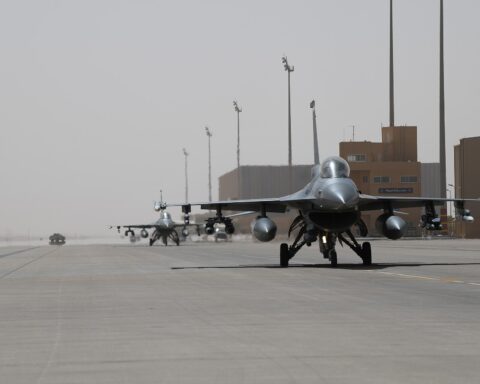
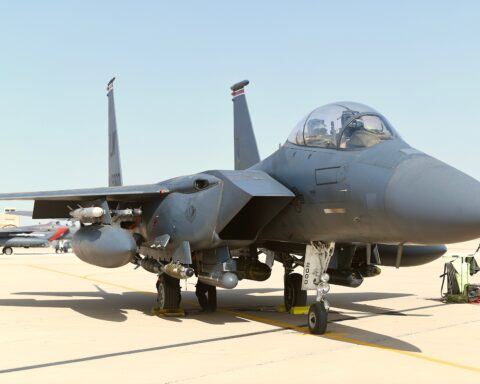
LONDON — Two NATO member states are now operating sovereign air defense batteries inside Saudi Arabia under live Iranian missile fire, without a NATO mandate, without an Article 5 invocation, and without NATO headquarters publicly acknowledging it. The United Kingdom’s deployment of a Sky Sabre battery — announced by Defence Secretary John Healey on March 31 during a visit to the Kingdom — joins a Greek PAC-3 Patriot unit that has been shooting down Iranian ballistic missiles since March 19, creating a situation where NATO hardware is defending a non-NATO partner through bilateral deals that Brussels has nothing to do with.
This is not how collective security architectures are supposed to work. NATO’s own Secretary General, Mark Rutte, said plainly on March 5 that “nobody’s talking about Article 5.” Germany’s government spokesman went further: “This war has nothing to do with NATO — it is not NATO’s war.” Yet British and Greek soldiers are operating air defense systems under combat conditions in the Saudi desert, burning through interceptor stocks that NATO’s eastern flank members refuse to release. The gap between what NATO says and what NATO members do has rarely been this wide.
The question is whether this ad hoc arrangement — bilateral deals, separate command chains, no shared doctrine — hardens into something permanent, or dissolves the moment Tehran stops launching. The answer will shape Gulf security for a generation.
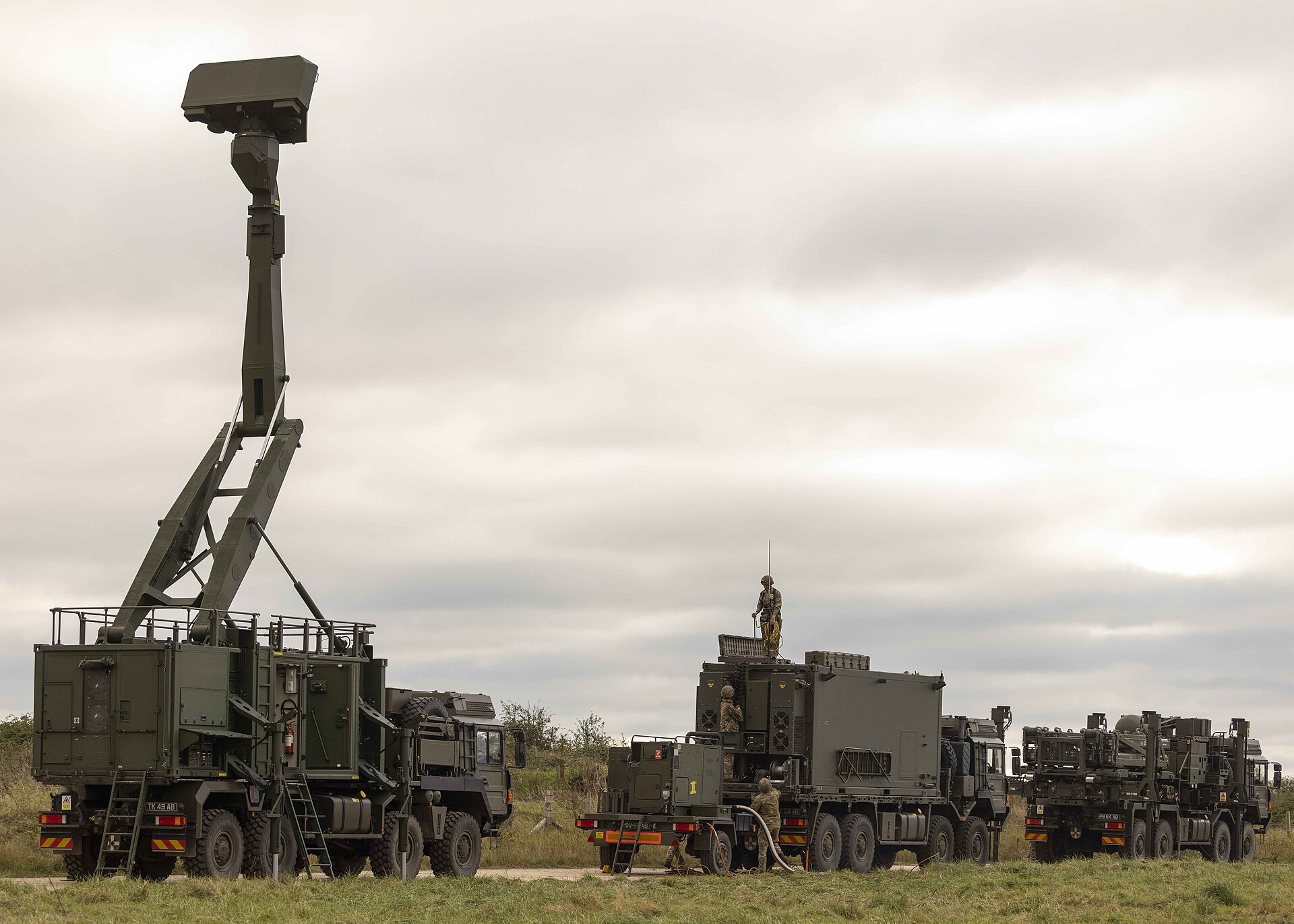
Table of Contents
- What the UK Actually Deployed — and What It Can Do
- Greece’s Combat Record: The Patriot Battery That Already Fired
- Why Won’t NATO Claim What Its Members Are Doing?
- The Poland Refusal and the NATO Fault Line
- How Fast Are Gulf Air Defense Stocks Depleting?
- Three Flags, Three Command Chains, One Airspace
- The Bilateral Architecture: Treaties, MOUs, and the Pakistan Comparator
- Tehran’s Warning: What Iran Sees
- Is This the Embryo of a Gulf-NATO Security Link?
- Frequently Asked Questions
What the UK Actually Deployed — and What It Can Do
Sky Sabre is a short-range air defense system built around the Common Anti-air Modular Missile, or CAMM — a radar-guided interceptor that travels at Mach 3 and can engage targets at ranges up to 25 kilometres. A single battery tracks 24 targets simultaneously, processing threat data fast enough to launch against saturation attacks where multiple projectiles arrive in overlapping windows. The system entered Royal Artillery service in January 2022, cost approximately £618 million to develop, and runs at roughly $100 million per battery — less than a third of the $360 million price tag for a Patriot PAC-3 unit.
That cost differential matters enormously in Saudi Arabia right now. The Kingdom and its Gulf neighbours have burned through approximately 2,400 Patriot-family interceptors in five weeks, dropping combined GCC stocks from around 2,800 to roughly 400. Each PAC-3 MSE round costs between $4 million and $5.5 million. Sky Sabre’s CAMM rounds are a fraction of that. Deploying a cheaper system to handle shorter-range threats — drones, cruise missiles, slower ballistic profiles — means every PAC-3 round saved can be reserved for the targets only Patriot can reach, specifically longer-range Iranian ballistic missiles flying at 70-kilometre engagement distances that Sky Sabre cannot touch.
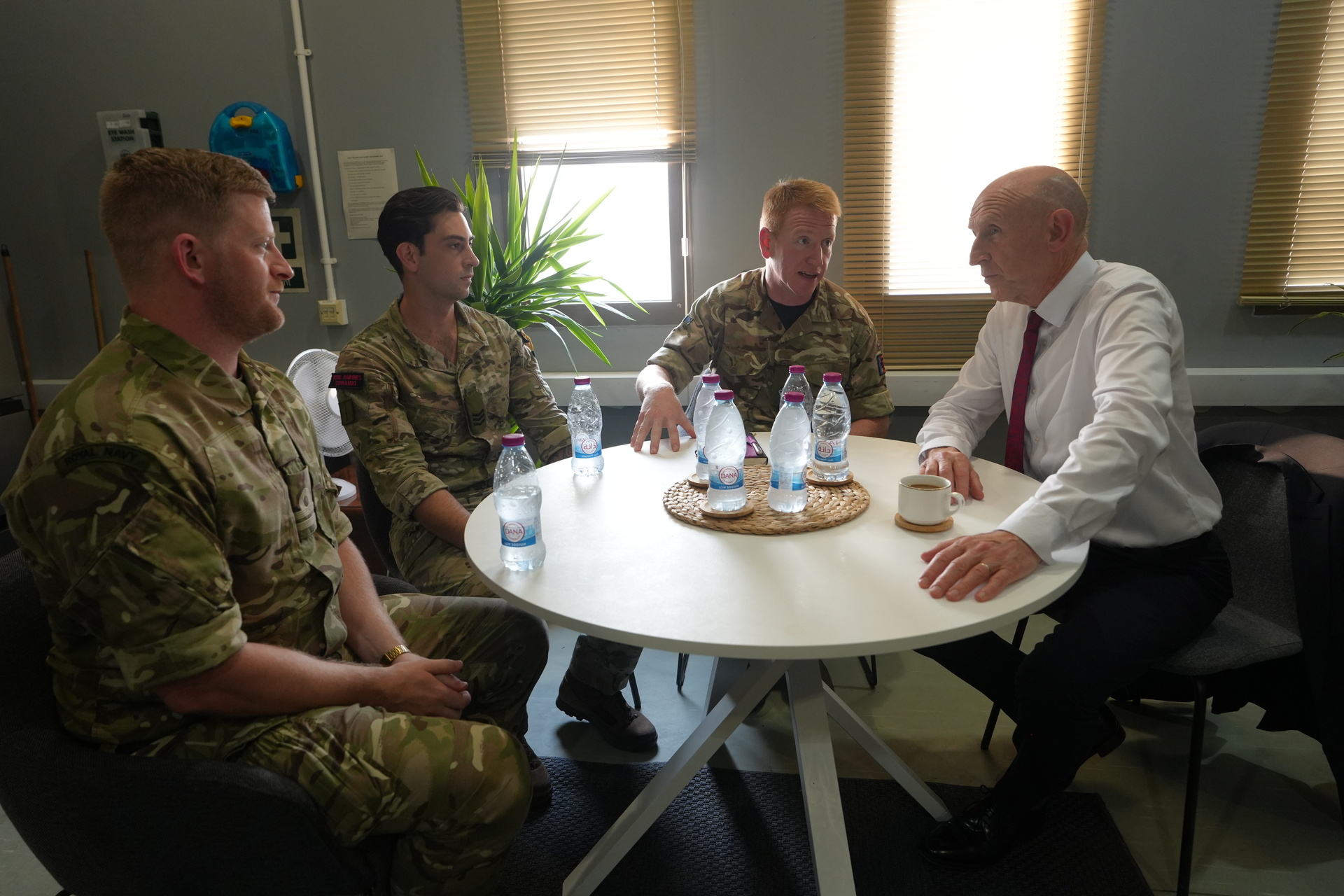
The British deployment is not a single launcher on a patch of sand. Healey confirmed a complete Royal Artillery battery plus battlespace managers, meaning radars, a command-and-control node, and CAMM launchers operating as an integrated unit. Sky Sabre’s most consequential technical feature for this theatre is its successful integration into the US Army’s Integrated Battle Command System, or IBCS, along with Link 16 tactical datalink compatibility. In plain terms, British operators can share real-time targeting data with American and Saudi systems — the kind of interoperability that normally takes years of joint exercises to establish, arriving here under the pressure of incoming Iranian ordnance.
The Middle East briefing 3,000+ readers start their day with.
One email. Every weekday morning. Free.
Beyond Sky Sabre, the UK’s Gulf posture now includes a Lightweight Multirole Launcher in Bahrain, a Rapid Sentry ground-based missile system and RAF ORCUS counter-drone systems in Kuwait, an extended Typhoon deployment in Qatar, plus F-35 Lightning jets, Wildcat and Merlin helicopters operating across the region. Approximately 1,000 British military personnel are deployed across the Gulf and Cyprus in a defensive configuration, and UK pilots have logged more than 1,280 hours of air operations since the Iran conflict began. This is not a token presence — it is a distributed air defense and strike architecture spread across four Gulf states.
Greece’s Combat Record: The Patriot Battery That Already Fired
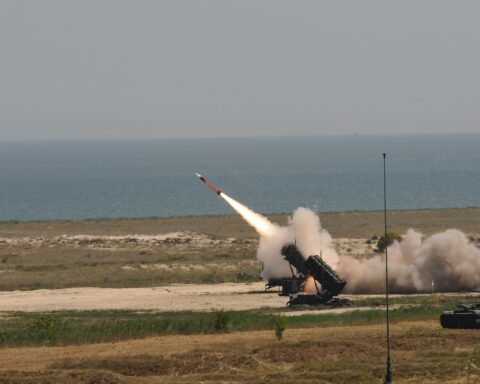
While the UK deployment grabbed headlines, Greece has been doing this quietly for nearly five years. The Hellenic Air Force’s 350 Guided Missile Wing, operating under the designation ELDYSA, deployed a PAC-3 Patriot battery to Saudi Arabia in September 2021 under a bilateral memorandum of understanding signed in April of that year. Between 120 and 130 Greek personnel have rotated through the mission continuously since then, with Saudi Arabia covering all operational costs and funding PAC-3 system upgrades — a financial arrangement that effectively means Riyadh is paying to keep a NATO ally’s missile crews trained on live equipment.
That arrangement became a combat engagement on March 19, 2026, when Greek operators intercepted two Iranian ballistic missiles heading toward Saudi oil refineries. This was not a drill, not a test, and not an exercise — it was a NATO member state’s military personnel destroying Iranian weapons under fire in defence of Saudi critical infrastructure. The ELDYSA mission has been extended through November 2026, and the March 19 intercept transformed it from an obscure training-and-readiness deployment into a live combat operation with strategic consequences that Athens may not have fully anticipated when it signed the original MOU.
The Greek deployment also demonstrates something about the economics of Gulf security. Athens operates one of the largest Patriot fleets in NATO — a legacy of procurement decisions driven by Turkey threat perceptions — and Saudi Arabia is essentially renting Greek expertise and hardware at a price that keeps Greek missile crews sharp without costing the Greek defence budget a euro. For a country that nearly collapsed financially a decade ago, the arrangement is elegant: combat-relevant training, operational experience, and Gulf diplomatic capital, all funded by Riyadh. The question is whether the March 19 engagement — and the Iranian attention it inevitably attracted — complicates the original terms on which Athens agreed to it. On April 3, the same Greek PAC-3 battery intercepted two ballistic missiles targeting the SAMREF refinery at Yanbu, escalating the ELDYSA mission into a sustained combat operation protecting Saudi Arabia’s most critical wartime export node.
Why Won’t NATO Claim What Its Members Are Doing?
The institutional silence from Brussels is deafening when measured against the operational reality. NATO convened a North Atlantic Council session with Gulf partners on March 19, 2026 — the same day Greek personnel were shooting down Iranian missiles in Saudi Arabia — through the Istanbul Cooperation Initiative, a two-decade-old partnership channel. Bahrain, Kuwait, Qatar, and the UAE attended. Saudi Arabia, the country where the fighting was actually happening, was not at the table. NATO Deputy Secretary General Radmila Shekerinska described the discussions as centering on “the current security situation in the Middle East and its impact on the region and Euro-Atlantic security.” No concrete deployments or mandates came out of it.
The legal reason for this distance is Article 6 of the North Atlantic Treaty, which limits the collective defence obligation to attacks on territories “in Europe or North America” and associated islands, vessels, and aircraft in specified zones. Saudi Arabia falls entirely outside that geography, which is why Rutte could say “nobody’s talking about Article 5” even after an Iranian ballistic missile entered Turkish airspace on March 4. Iran, for its part, denied responsibility for the Turkish incursion and framed Turkey as a “friendly” state — a distinction that implicitly separates NATO members who are actively defending Saudi Arabia from those who are merely watching.
But geography is only half the explanation. The political half is that NATO as an institution cannot afford to be seen adopting the Iran-Israel-Saudi war as its own. Germany’s position — “this war has nothing to do with NATO” — reflects a European consensus that formally linking the Alliance to Gulf defence would fracture an already strained organisation. Eastern European members, consumed by the Russian threat, would revolt. Yet the result is a bizarre arrangement where the Alliance’s hardware is in combat and its flag is nowhere to be found, with individual members acting on bilateral authority while the institution they belong to pretends not to notice.
This is not unprecedented — NATO members operated in Iraq and Libya under various coalitions of the willing rather than Alliance mandates — but those were offensive operations where political distance served domestic messaging. The Saudi deployments are defensive air protection, the core NATO competency, being performed by NATO personnel using NATO-standard equipment under NATO-interoperable command systems. The only thing missing is the NATO label, and the absence of that label may matter less than Brussels thinks.
The Poland Refusal and the NATO Fault Line
On April 1, Poland’s Defence Minister Władysław Kosiniak-Kamysz publicly rejected a US request to redeploy one of Poland’s two PAC-3 Patriot batteries to Saudi Arabia. His statement was unambiguous: “Our Patriot batteries and their missiles are used to protect the Polish sky and the eastern flank of NATO. In this regard, nothing is changing, and we do not plan to move them anywhere.” The refusal crystallised a fault line within NATO that the Gulf crisis has forced into the open.
Poland’s position is entirely rational. It sits on NATO’s eastern flank, shares a border with Russia’s Kaliningrad exclave, hosts a major US military presence, and received its Patriot batteries specifically to counter Russian cruise missile and ballistic missile threats that are not theoretical — Russia has been launching them into Ukraine, roughly 400 kilometres from Poland’s border, for over four years. Asking Warsaw to send half its strategic air defence capability to the Arabian Peninsula is, from a Polish perspective, asking it to bet that Russia will not exploit the gap. No Polish government could survive that gamble.
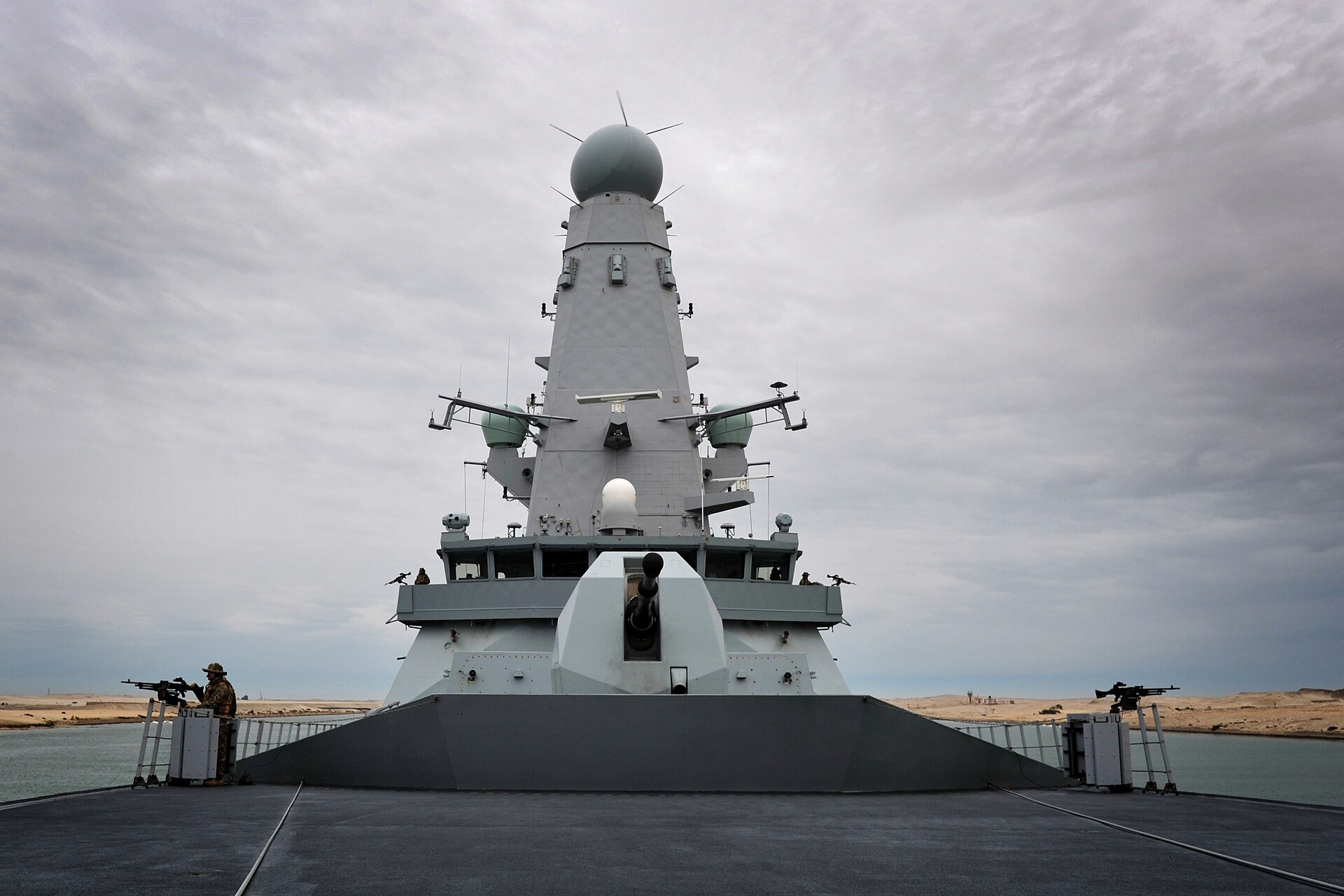
The contrast with the UK and Greece is instructive. Britain does not face a direct territorial missile threat from any neighbouring state, and its Sky Sabre deployment to Saudi Arabia leaves its homeland air defence posture essentially unchanged — the UK’s integrated air defence relies on RAF Quick Reaction Alert Typhoons, the Type 45 destroyer fleet, and ground-based systems that were never contingent on the specific battery now in the Gulf. Greece’s Patriot fleet is large enough that deploying one battery to Saudi Arabia does not materially weaken its coverage of the Aegean, and Saudi money keeps the deployed unit operational at no cost to Athens.
This is the structural divide: NATO members whose air defence inventory is existential — Poland, the Baltic states, Romania — treat every interceptor as an Article 5 asset that cannot be redeployed without inviting catastrophe. NATO members with surplus capacity or no direct territorial threat — the UK, Greece, and to some extent France — treat theirs as deployable political currency, tradeable for Gulf relationships, arms contracts, and strategic influence. The Gulf crisis did not create this divide, but it has made it visible in a way that will complicate NATO burden-sharing negotiations for years.
How Fast Are Gulf Air Defense Stocks Depleting?
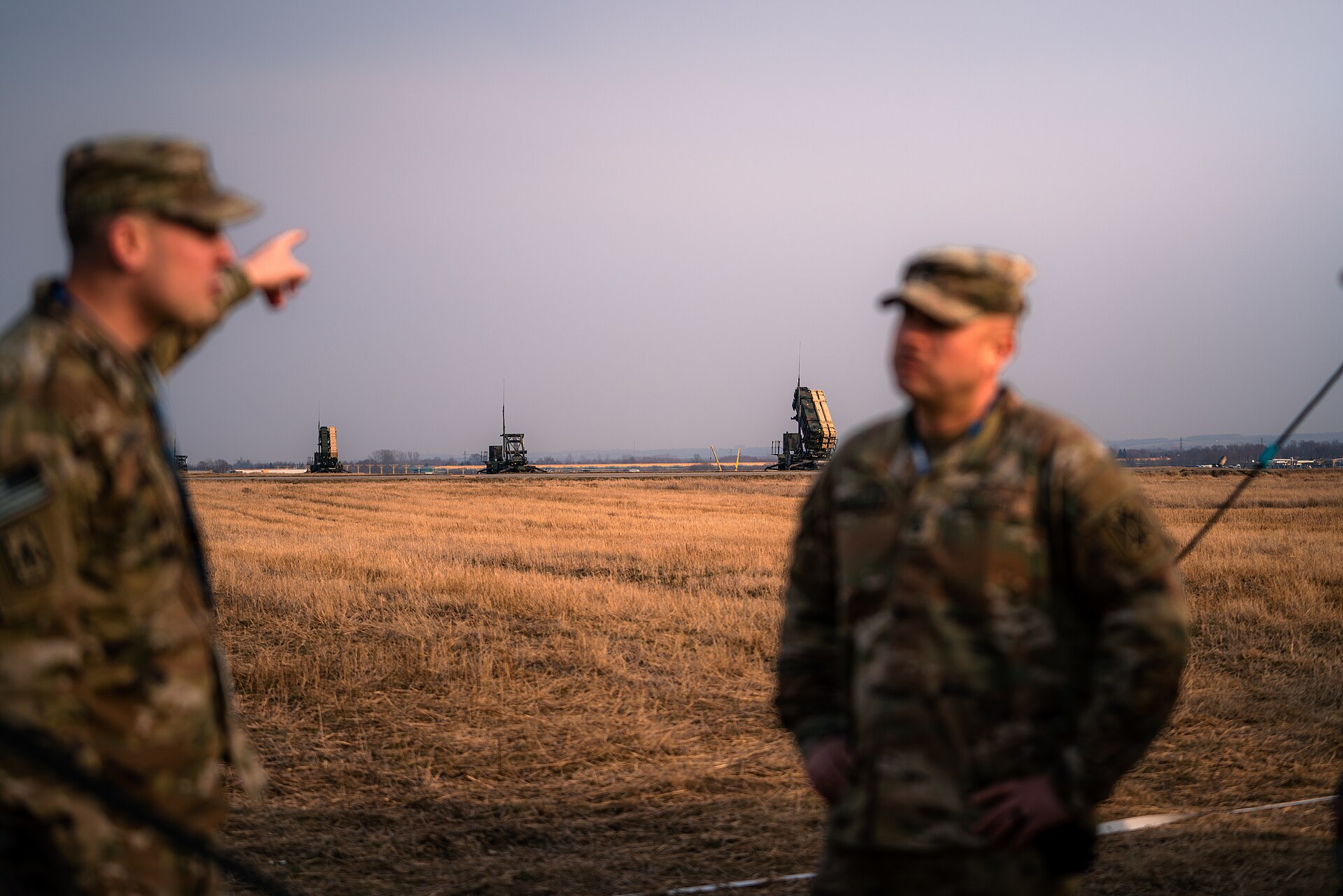
The numbers tell a story of industrial inadequacy that no deployment of British or Greek systems can solve on its own. Gulf states have expended approximately 2,400 Patriot-family interceptors in five weeks of sustained Iranian attack, reducing combined GCC stocks from roughly 2,800 rounds to approximately 400. Iran, meanwhile, has launched 438 ballistic missiles, 2,012 drones, and 19 cruise missiles across the region as of April 1 — and has deliberately targeted the air defence architecture itself, striking radar installations for US THAAD missile defence systems in Jordan, the UAE, and Saudi Arabia, destroying at least one.
The replenishment pipeline is years away from matching this burn rate. A framework agreement targeting 2,000 PAC-3 rounds per year will not reach that production rate until the end of 2030. A $9 billion US-Saudi sale of 730 PAC-3 MSE interceptors was approved on February 2, 2026, but approval is not delivery — Lockheed Martin’s production lines were already running at capacity before the war, and the new rounds will take years to manufacture and ship. At the peak Iranian launch tempo of roughly 40 missiles per day, the remaining GCC stock of 400 rounds could be exhausted in as few as ten days at peak tempo, a timeline that makes every alternative air defence system — including Saudi Arabia’s own developing capabilities and the newly arrived Sky Sabre — not an upgrade but a lifeline.
Sky Sabre cannot replace Patriot. Its 25-kilometre range versus Patriot’s 70-kilometre envelope means it handles a different threat category entirely — drones, low-flying cruise missiles, shorter-range rockets, and tactical ballistic missiles on terminal approach. But in a theatre where the defender is running out of expensive interceptors, the ability to kill cheaper threats with cheaper missiles is the difference between a functioning layered defence and a catastrophic gap. The CAMM-ER variant, with a 45-kilometre range, narrows the coverage gap further, though it has not been confirmed as part of the Saudi deployment.
The interceptor depletion crisis also explains why the UK deployment is not charity. Britain’s defence-industrial relationship with Saudi Arabia is worth billions — £2.9 billion in approved export licences in 2024 alone, a BAE Systems workforce of over 7,000 employees at eight Saudi locations, and an arms trade stretching back to the 1985 Al Yamamah deal that delivered 48 Tornado IDS and 24 Tornado ADV aircraft. If Saudi air defences collapse because interceptor stocks run dry, those contracts and relationships collapse with them. Keeping Saudi skies defended is, for London, an exercise in protecting a commercial and strategic ecosystem worth tens of billions of pounds.
| System | Deploying Nation | Personnel | Range | Legal Basis | Combat Engagement |
|---|---|---|---|---|---|
| Sky Sabre (CAMM) | United Kingdom | Part of ~1,000 across Gulf | 25 km | 2017 bilateral agreement | Not yet confirmed |
| PAC-3 Patriot | Greece | 120-130 | 70 km | 2021 bilateral MOU | 2 intercepts, March 19, 2026 |
| Patriot / THAAD | United States | Undisclosed | 70 km / 200 km | $142 bn cooperation agreement (2025) | Multiple confirmed engagements |
Three Flags, Three Command Chains, One Airspace
Saudi airspace is now defended by at least three separate national command authorities — American, British, and Greek — that have never previously coordinated under live fire in this configuration. Add Pakistan’s 1,500 to 2,000 troops deployed under a formal mutual defence pact signed in September 2025, and the Saudi defence perimeter involves four foreign militaries operating alongside the Royal Saudi Air Defense Force, each answering to a different capital, under different rules of engagement, with different political constraints on what they can shoot and when.
Sky Sabre’s Link 16 datalink capability and its proven integration with the US IBCS system provide a technical pathway for deconfliction — British operators can see what American and Saudi radars see, and vice versa. But technical interoperability is not command interoperability. When an Iranian ballistic missile is 90 seconds from impact, who decides which system engages? If a British operator’s radar classifies a target as within Sky Sabre’s engagement envelope but it is also being tracked by a Greek Patriot battery, which fires? These are questions that NATO spent decades answering for European airspace through SACEUR command authority and the NATO Integrated Air and Missile Defence System. No equivalent structure exists in Saudi Arabia.
The recent intercept operations over Saudi territory have forced improvised coordination, but improvisation under fire is not a doctrine — it is a gamble that works until it does not. The March 19 Greek engagement, where ELDYSA operators destroyed two inbound ballistic missiles, presumably required real-time coordination with US and Saudi operators to avoid multiple systems firing at the same targets, wasting interceptors that the coalition cannot afford to waste. Whether that coordination happened through formal channels or through the kind of radio-frequency ad-hockery that characterises every first week of a coalition air war is not publicly known.
The command-chain problem extends to politics. British forces operate under rules of engagement set by Whitehall, where Prime Minister Keir Starmer has been explicit that the UK “will not be drawn into the wider war.” Greek forces operate under rules set by Athens, which signed on for a training deployment and found itself in a shooting war. American forces answer to a US Central Command structure that reports to a White House with its own, separate set of political objectives. The potential for a friendly-fire incident, an interceptor wasted on a target another system was already engaging, or a political crisis triggered by one nation’s forces acting outside another nation’s comfort zone is not zero — and no one has published a framework for resolving it.
The Bilateral Architecture: Treaties, MOUs, and the Pakistan Comparator
None of the foreign forces defending Saudi Arabia are there under a multilateral mandate. Each deployment rests on a separate bilateral agreement, creating a legal patchwork that is as fragile as it is functional. The UK operates under a 2017 Military and Security Cooperation Agreement signed in Jeddah by then-Defence Secretary Sir Michael Fallon and Mohammed bin Salman, who was then deputy crown prince. That agreement covers intelligence sharing, counter-terrorism cooperation, and logistics — broad enough to justify the Sky Sabre deployment, but it is not a mutual defence commitment. If Iran struck British personnel in Saudi Arabia, there is no treaty obligation requiring either side to do anything specific in response.
Greece’s arrangement is even lighter — a bilateral MOU that originally framed the Patriot deployment as a training and readiness mission. The March 19 combat engagement may have stretched that MOU’s intended scope, though Athens has not publicly challenged the deployment’s legal basis. Saudi Arabia’s financial coverage of all operational costs and PAC-3 upgrades gives Greece a strong economic incentive to keep the mission going regardless of the original terms, and the extension through November 2026 suggests both sides are comfortable with the current framework even after live combat.
Pakistan offers the sharpest contrast. Islamabad’s 1,500 to 2,000 troops in Saudi Arabia operate under a Strategic Mutual Defence Agreement signed in September 2025 — the only formal mutual defence pact Saudi Arabia maintains with any state. That agreement, unlike the UK and Greek arrangements, contains reciprocal defence obligations that go beyond cooperation into the territory of collective security. Pakistan’s deployment is not air defence — it is ground forces positioned for territorial defence — but the legal architecture is the sturdiest of any foreign military presence in the Kingdom, a fact that reflects the depth of the Saudi-Pakistani relationship and Riyadh’s willingness to sign binding commitments with Islamabad that it has not offered London or Athens.
The $142 billion US-Saudi defence cooperation agreement signed in May 2025 sits in its own category — a commercial and strategic framework of such scale that it functions as a de facto security guarantee without ever using those words. Combined with the broader Saudi defence hedging strategy, the bilateral architecture creates a situation where Saudi Arabia is defended by multiple partners who are each individually committed but collectively uncoordinated, bound by separate legal instruments that do not reference each other and do not create any obligation to act in concert.
Tehran’s Warning: What Iran Sees
Iran has been explicit about how it reads the British deployment. When UK Foreign Secretary Yvette Cooper engaged with Iranian Foreign Minister Abbas Araghchi in March, Araghchi’s response was blunt: “These actions will definitely be considered as participation in aggression and will be recorded in the history of relations between the two countries.” The phrasing — “participation in aggression” — is legal language, the kind that appears in UN General Assembly resolutions defining acts of war, and Tehran chose it deliberately.
Iran’s operational response has been to target the air defence architecture itself rather than merely the assets it protects. Iranian forces have struck THAAD radar bases across Jordan, the UAE, and Saudi Arabia — knocking out at least one installation. This is a coherent strategy: rather than trying to overwhelm air defences with volume alone, Iran is attempting to degrade the sensor network that makes those defences effective. If you can blind the radars, the interceptors become expensive paperweights — and the arrival of additional air defence systems, each adding new radar nodes, gives Iran additional targets to map and prioritise.
The distinction Iran drew when a ballistic missile entered Turkish airspace is telling. Tehran denied responsibility and called Turkey a “friendly” state, effectively creating a two-tier classification of NATO members: those who are actively defending Saudi Arabia and will be treated as combatants, and those who are merely part of NATO and will not. This classification puts the UK and Greece in a different category from Germany, Poland, or the Baltic states — an Iranian targeting distinction that NATO, as an institution, has no mechanism to address because it does not officially recognise the deployments that created it.
For Tehran, the distinction also serves a deterrent purpose. By warning London that its actions will be “recorded in the history of relations,” Araghchi is signalling that Iran considers the bilateral relationship with Britain permanently altered by the Sky Sabre deployment — not just for the duration of hostilities. Whether that warning carries weight depends on whether Iran emerges from this conflict with the capacity to act on it, but the message to other NATO members considering Gulf deployments is clear: this will cost you something with Tehran that outlasts the war.
“These actions will definitely be considered as participation in aggression and will be recorded in the history of relations between the two countries.”
— Abbas Araghchi, Iranian Foreign Minister, to UK Foreign Secretary Yvette Cooper, March 2026
Is This the Embryo of a Gulf-NATO Security Link?
Chatham House analysts Neil Quilliam and Kristian Alexander have argued that Tehran’s strikes demonstrate Gulf states “should no longer rely on America for security guarantees,” and that the experience “will speed up GCC states’ shift into hard power.” They also noted that NATO allies are “staying on the sidelines for now, but a serious degradation of the global security environment might push some, including the British and the French, into action.” The British and the Greeks are already past that threshold — the question is whether what they are doing survives contact with peacetime.
The case for permanence rests on three pillars. First, the interceptor crisis is structural, not temporary — even after fighting stops, GCC states will need years to rebuild Patriot stocks, and the framework agreement for 2,000 rounds per year will not reach capacity until 2030. During that window, foreign air defence assets provide insurance that no amount of money can buy off the shelf. Second, the UK’s commercial interests in Saudi Arabia — BAE Systems’ 7,000-strong workforce, the £2.9 billion in export licences, the legacy of Al Yamamah and Al Salam — create institutional momentum that outlasts any single crisis. Third, Greece has already demonstrated that a quietly funded bilateral deployment can run for five years without domestic political consequence, a model that other NATO members with surplus air defence capacity might replicate.
The case against permanence is equally strong. The Sky Sabre precedent in Poland — deployed in February 2022 to support Ukraine-related deterrence, extended four times, then withdrawn in December 2024 after two years — shows that bilateral deployments have expiry dates even when the threat persists. Starmer’s insistence that Britain “will not be drawn into the wider war” sets a political ceiling that will constrain the deployment’s scope and duration. And NATO’s institutional refusal to acknowledge what its members are doing means there is no organisational structure to sustain the deployments once bilateral political will fades — no standing headquarters, no shared funding mechanism, no rotation schedule, no doctrine.
The Istanbul Cooperation Initiative, NATO’s existing Gulf partnership framework, proved hollow on March 19 when it convened with four Gulf states, produced nothing operational, and did not even include Saudi Arabia in the room. If the ICI cannot deliver during an active Iranian missile campaign against Gulf infrastructure, it is difficult to imagine it delivering during peacetime. Any durable Gulf-NATO security linkage would need something beyond the ICI — a new institutional mechanism that formalises what the UK and Greece are doing bilaterally into something multilateral. There is no evidence that anyone in Brussels, London, or Riyadh is building that mechanism, though the pressure to do so will intensify with every Iranian salvo that depletes interceptor stocks NATO members helped build.
The honest answer is that nobody knows whether this is an embryo or an improvisation — including the governments doing it. Defence Secretary Healey’s statement — “Britain’s best will help you defend your skies” — is a wartime commitment, not a treaty obligation. It can be extended, expanded, or quietly reversed with a phone call. That ambiguity is currently an asset, allowing London to calibrate its exposure without the rigidity of a formal alliance commitment, but ambiguity is a depreciating currency in a region where partners judge reliability by what you have signed, not what you have said. Pakistan signed a mutual defence treaty; Britain deployed a missile battery with no end date announced and a prime minister who says he will not be drawn into the wider war. Riyadh will draw its own conclusions about which commitment is more durable. That gap between legal status and wartime reality is examined in detail in Trump’s MNNA designation for Saudi Arabia and what it actually delivers under Iranian fire. The full economic and military anatomy of the Greek-Saudi bilateral defense architecture that MBS engineered outside NATO’s formal structures — including why Mitsotakis denied Greek involvement two days before the Yanbu intercept — is examined in a separate analysis.
Frequently Asked Questions
What is the difference between Sky Sabre and Patriot in the Saudi theatre?
Sky Sabre and Patriot are complementary rather than competing — they cover different tiers of the same air defence problem. Sky Sabre handles the high-volume, lower-cost end of Iran’s arsenal: drones, cruise missiles, and shorter-range ballistic threats within its 25-kilometre envelope. Patriot PAC-3 is reserved for the faster, longer-range ballistic missiles Sky Sabre cannot reach. In practical terms, Sky Sabre’s role is to absorb the attacks that would otherwise force defenders to burn through scarce PAC-3 rounds on targets below Patriot’s optimal engagement profile. Sky Sabre was the first foreign air defence platform integrated into the US Army’s IBCS, enabling real-time targeting data exchange with American and Saudi units — the kind of interoperability that matters most when three nations are defending overlapping airspace under fire and cannot afford to fire two interceptors at the same incoming round.
Has the UK deployed Sky Sabre outside NATO territory before?
No. The Saudi deployment is the first time Sky Sabre has operated outside NATO territory and outside any NATO mandate. Its only previous overseas deployment was to Poland from February 2022 to December 2024 under Operation Stifftail, a bilateral UK-Poland agreement involving approximately 100 Royal Artillery personnel. That mission was extended four times over two years but remained within NATO territory and was explicitly linked to Alliance deterrence against Russia following the Ukraine invasion. The Saudi deployment operates under the 2017 UK-Saudi Military and Security Cooperation Agreement — a bilateral instrument with no NATO connection — and unlike the Poland deployment, has no publicly stated end date. The shift from NATO-territory deployment to Gulf deployment represents a qualitative expansion of Sky Sabre’s operational role from Alliance deterrence to bilateral partner defence under active combat conditions.
Why was Saudi Arabia absent from the NATO-Gulf meeting on March 19?
NATO’s March 19 North Atlantic Council session with Gulf partners operated through the Istanbul Cooperation Initiative, a partnership framework established over twenty years ago. The ICI’s Gulf participants are Bahrain, Kuwait, Qatar, and the UAE — Saudi Arabia has never formally joined the Initiative, a long-standing position that reflects Riyadh’s preference for bilateral defence relationships over multilateral frameworks where it would be one voice among several. Saudi Arabia’s absence from the March 19 meeting is therefore structural rather than a snub or oversight, but the optics are remarkable: the country where Greek and soon British NATO personnel are actively defending against Iranian missiles was not present at the table where NATO discussed the Middle Eastern security situation. The meeting produced no operational commitments, reinforcing the pattern where actual Gulf defence happens through bilateral channels that the Istanbul Cooperation Initiative neither controls nor coordinates.
Could Iran target UK or Greek forces specifically?
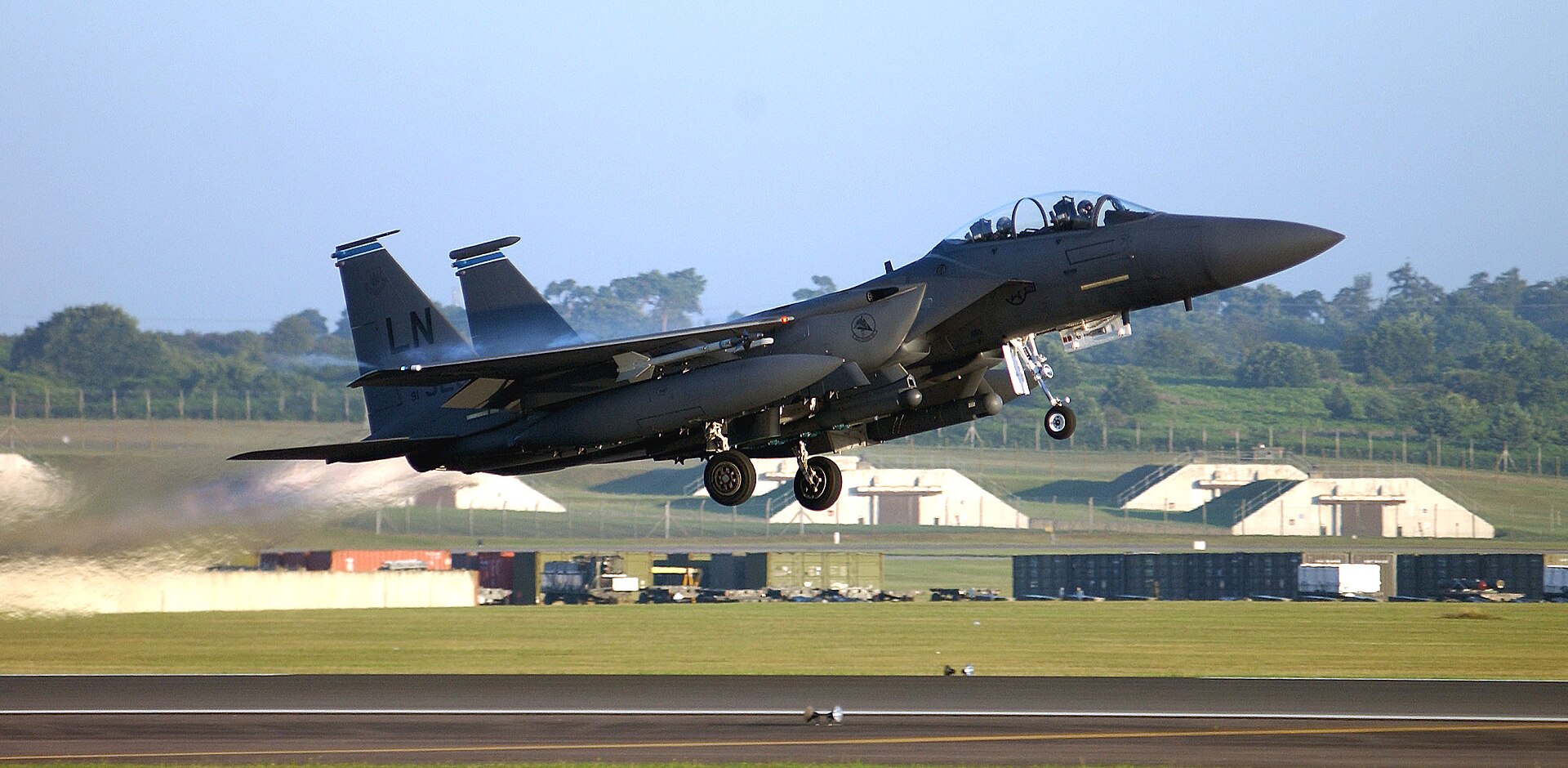
Iran has explicitly warned that it considers the UK deployment “participation in aggression,” and Iranian forces have already demonstrated willingness to strike air defence infrastructure directly — destroying at least one THAAD radar installation and targeting others across Jordan, the UAE, and Saudi Arabia. Iranian forces have demonstrated a consistent pattern of targeting sensor and interceptor networks rather than solely attacking the assets they protect, which means newly deployed British and Greek systems represent high-value targets — and Tehran has shown, through strikes on THAAD radar installations, both the motivation and precision to hit them. Whether Iran would deliberately target personnel from NATO member states — as opposed to radar installations or launchers — involves a different escalation calculus, given that killing British or Greek soldiers could trigger domestic political responses in London and Athens that the current bilateral frameworks might not survive. Tehran’s March distinction between “friendly” Turkey and combatant states suggests it is already categorising NATO members by threat level. That calculus was tested again on April 3, when Iran shot down the first US F-15E to be lost to enemy fire in Operation Epic Fury — confirming that Iran’s air defence network retains lethal capability against fast-moving strike aircraft five weeks into the campaign.
What would happen if Gulf air defence interceptor stocks run out entirely?
The most immediate consequence would fall on Saudi and Gulf oil infrastructure. Abqaiq, the world’s largest crude oil processing facility, handles roughly 7 percent of global supply; a successful strike on Abqaiq without interceptor coverage — the kind of strike Iran attempted in 2019 using cruise missiles and drones — would remove millions of barrels per day from global markets within hours. In 2019 the facility was back online within weeks; a repeat strike today, with air defences degraded, could hit a facility already under sustained pressure with no guarantee of rapid repair. The price shock from Abqaiq’s removal would cascade through Asian import markets — Japan, South Korea, India, and China collectively import the majority of Saudi crude — and into the Western economies that have not yet found alternative supply at scale. Within Saudi Arabia, the collapse of air defence coverage would almost certainly accelerate US pressure for a ceasefire or negotiated pause regardless of Israeli preferences, because Washington cannot absorb an oil supply crisis on top of an active Gulf war. The political consequence for bilateral partners — the UK and Greece — would be severe: both governments would face immediate pressure to explain why their systems failed to prevent the catastrophe they were deployed to stop.