DUBAI — Iran cannot reliably locate, map, or recover all of the naval mines it deployed in the Strait of Hormuz, U.S. officials told the New York Times this week — a disclosure that transforms the strait’s closure from a negotiating problem into a physical one, and one that no ceasefire text signed in Islamabad can solve on its own.
The admission, relayed through multiple U.S. intelligence assessments and confirmed by Iranian Deputy Foreign Minister Khatibzadeh’s acknowledgment that mines were laid, means the 21-mile-wide waterway that carried 138 ships per day before February 28 now contains ordnance that even its deployers cannot account for. As Vice President Vance and Iranian Parliament Speaker Mohammad Bagher Ghalibaf conduct proximity talks in Islamabad on April 11, the gap between political agreement and operational reopening has widened into something measurable: months, not days, and contingent on mine countermeasures capabilities the U.S. Navy retired from the Gulf six months before the war began.
Table of Contents
- ‘Haphazardous’ Deployment: What U.S. Intelligence Found
- The IRGC’s Danger Chart and What It Does Not Show
- Where Are the Minesweepers?
- Can the LCS Replacement Actually Clear Mines?
- The 1991 Kuwait Benchmark — and Why It No Longer Applies
- Saudi Export Arithmetic: The Yanbu Ceiling
- What the Islamabad Text Does Not Contain
- Background
- FAQ
‘Haphazardous’ Deployment: What U.S. Intelligence Found
The mines in question are Maham-3 and Maham-7 variants — Iranian-manufactured naval mines deployed by IRGC Navy units in the weeks following the outbreak of hostilities on February 28. U.S. intelligence, as of a March 23 assessment reported by CBS News, estimated “less than a dozen” to “about a dozen” devices in the water. Iran’s total mine stockpile, estimated by the Defense Intelligence Agency at more than 5,000 in 2019, makes the deployed number a fraction of capacity. But quantity is not the problem.
The problem is that Iran “did not systematically track every placement,” according to U.S. officials cited by the Times. In some cases, mines were deployed in ways that allowed them to drift from their original positions. The operation was described as “haphazardous” — a word that carries specific operational meaning. A mine whose position is known can be avoided or swept. A mine whose position is unknown to both the deploying force and the opposing force is a hazard to all navigation, including Iranian vessels.
Iran’s inability to account for its own ordnance has become, in the Times’ sourcing, “a key factor in Tehran’s failure to meet demands from the Trump administration” for a full and immediate reopening of the strait. The Trump administration’s position — repeated publicly and in diplomatic channels — has been “complete, immediate, and safe opening.” Iranian Foreign Minister Abbas Araghchi offered something different: safe passage “via coordination with Iran’s Armed Forces and with due consideration of technical limitations.”
That phrase — “technical limitations” — is the closest any Iranian official has come to publicly acknowledging a clearance problem. Araghchi framed it as an enduring management function rather than a deficiency. But the U.S. assessment suggests the limitation is not bureaucratic. It is that Iran does not know where all the mines are.
The Middle East briefing 3,000+ readers start their day with.
One email. Every weekday morning. Free.
The IRGC’s Danger Chart and What It Does Not Show
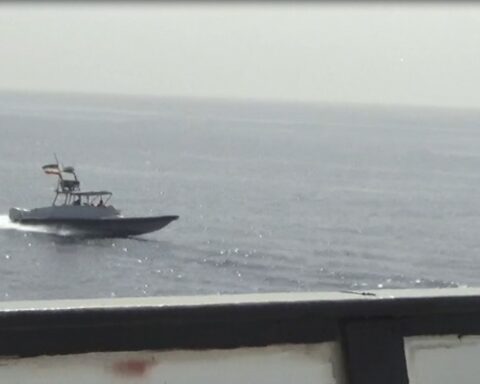
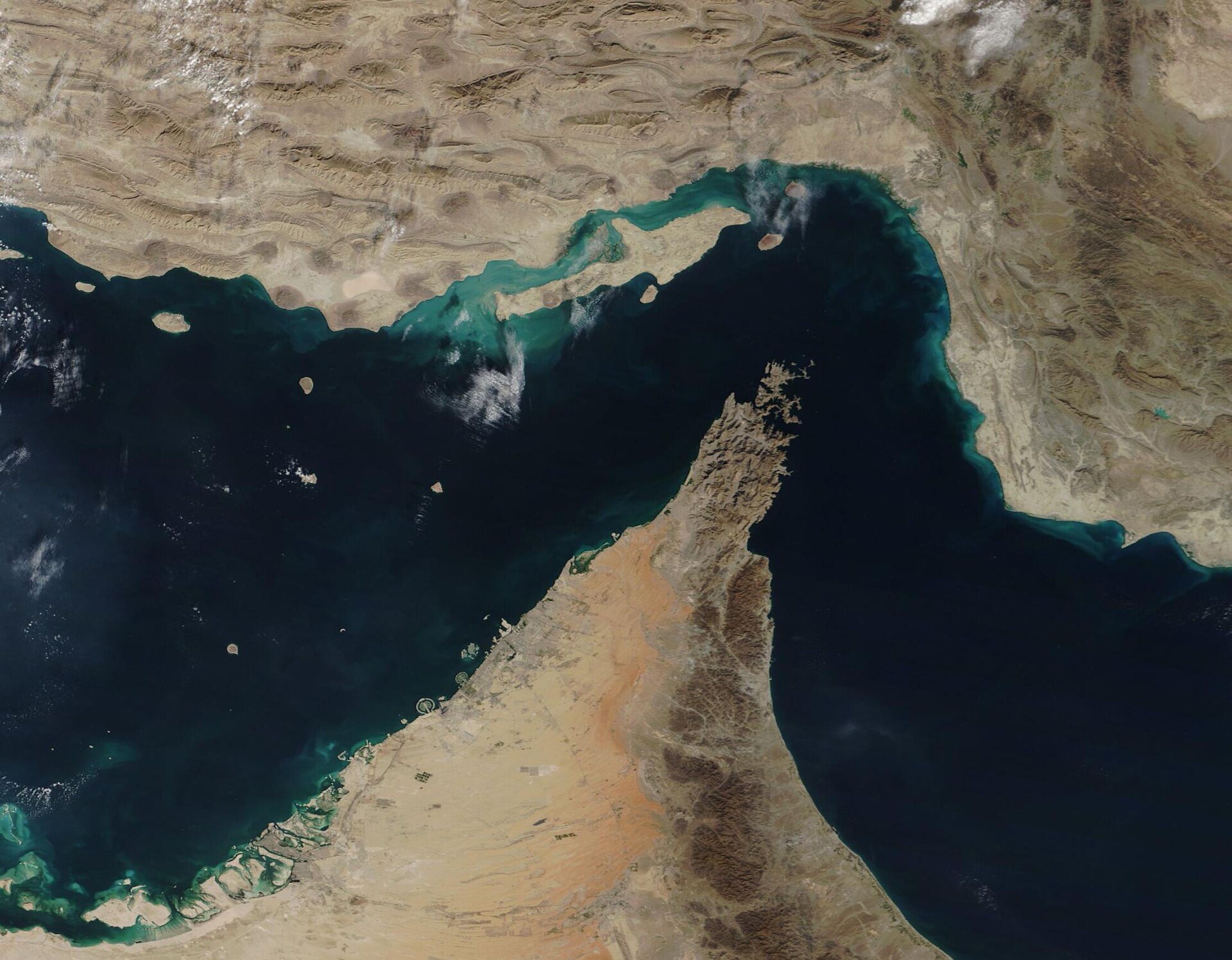
On April 9, the IRGC published a navigational chart — in Farsi — designating the standard Traffic Separation Scheme through Hormuz as a “danger zone.” The chart, first reported by HOS on the same day, redirected commercial vessels to a narrow 5-nautical-mile corridor between Qeshm and Larak islands, inside Iranian territorial waters. Al-Arabiya, the Times of Israel, and the Jerusalem Post all confirmed the chart’s distribution through Iranian maritime channels.
The chart shows where danger areas are. It does not show where individual mines sit. The distinction matters: a danger zone is a political declaration of exclusion; a minefield map is an operational document that enables clearance. Iraq provided the latter to coalition forces in March 1991. Iran has provided neither, and the U.S. assessment suggests it cannot.
The IRGC Navy made the political dimension explicit on April 5, declaring through PressTV that the Strait “will never return to its previous status, especially for the United States and Israel.” Read alongside the danger-zone chart and Araghchi’s “technical limitations” language, the picture is of a force that intended mines as a permanent alteration of the maritime environment — and succeeded beyond its own ability to reverse.
Where Are the Minesweepers?
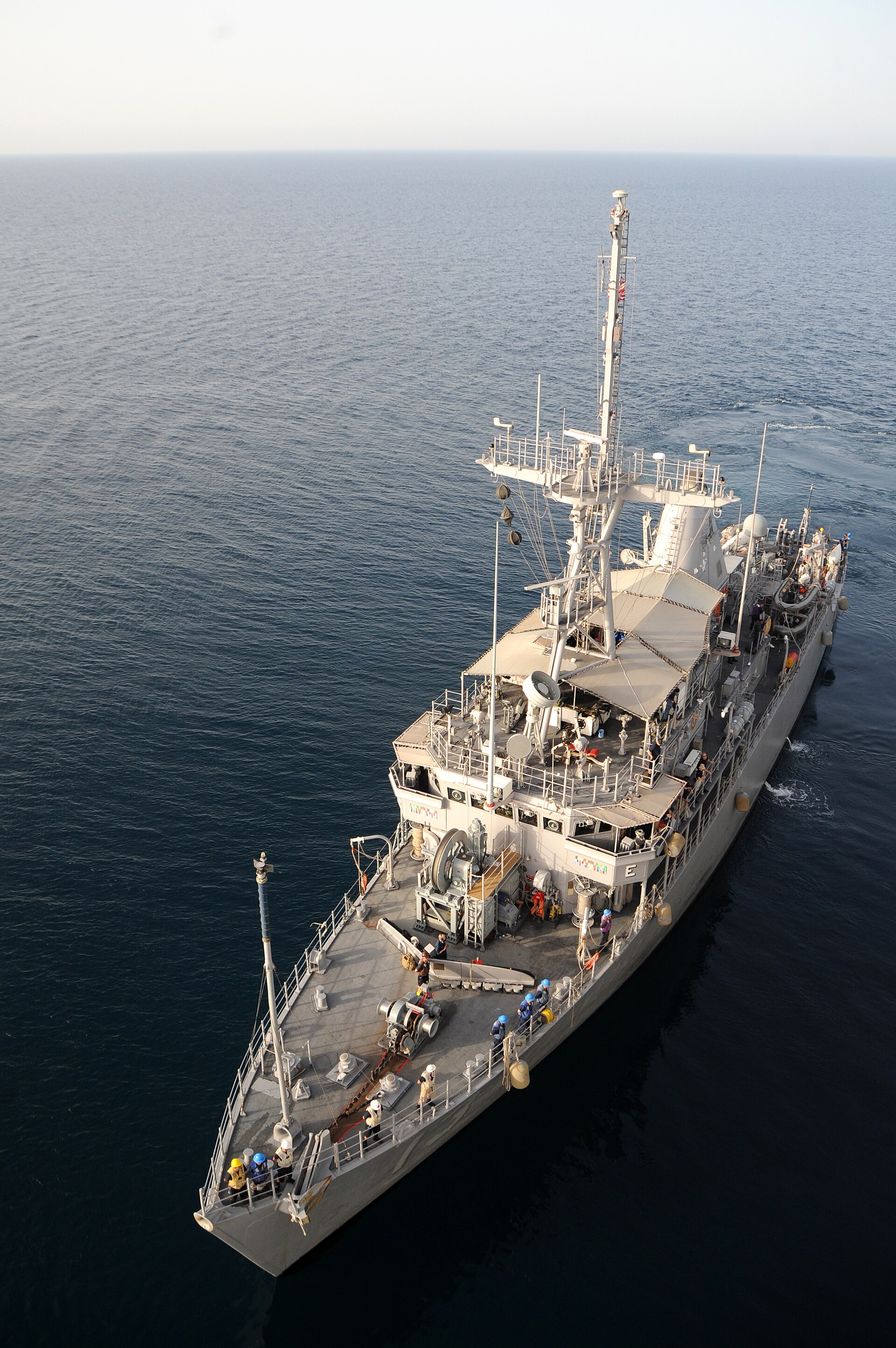
All four U.S. Navy Avenger-class mine countermeasures ships stationed in Bahrain — USS Devastator, USS Sentry, USS Dextrous, and USS Gladiator — were decommissioned on September 25, 2025. The last four hulls left theater aboard the heavy-lift vessel M/V Seaway Hawk in January 2026, five weeks before the conflict began. The Navy has stated it has “no plans to recommission any Avenger-class” vessels, according to Navy Times.
The timing is difficult to overstate. The U.S. Fifth Fleet, headquartered in Bahrain and responsible for the Hormuz operating area, entered a major naval conflict with zero dedicated mine countermeasures vessels in theater. The three Independence-class Littoral Combat Ships designated as replacements — USS Canberra, USS Santa Barbara, and USS Tulsa — were located in Singapore and Malaysia when they were needed in the Persian Gulf, as NPR reported on April 1.
Having a mine countermeasures capability that is not in theater is not particularly helpful.
Emma Salisbury, Non-Resident Senior Fellow, Foreign Policy Research Institute
Retired Admiral James Foggo, Dean of the Center for Maritime Strategy, told NPR that even if a clearance effort “began today, it would still take a month to get underway.” That assessment was made on April 1. Ten days later, no clearance mission has been authorized, no allied MCM task force has been assembled, and no party to the Islamabad talks has proposed one.
Scott C. Truver, a maritime security expert, told NPR that mine warfare receives “less than 1% of the Navy’s total budget.” The institutional neglect runs deeper: the Navy dismantled its Mine Warfare Command — MineWarCom — in 2006. Sea mines have caused 77% of U.S. ship casualties since 1950.
Can the LCS Replacement Actually Clear Mines?
The Pentagon’s own testing office is not confident. The Director of Operational Test and Evaluation’s FY2025 annual report, published March 13, 2026, found that “the Navy has not provided sufficient data from operational employment” of the Airborne Mine Neutralization System and Airborne Laser Mine Detection System to “determine operational effectiveness of the Independence variant with MCM MP” — the mine countermeasures mission package that is supposed to replace the Avengers.
The Unmanned Influence Sweep System, a key component of the LCS mine countermeasures suite, showed 29% operational availability in testing. Retired Captain Anthony Cowden, USN, framed the problem in Navy Times: “The question is, it can reach initial operating capability, but if it can only sweep 10% as effectively as the old capability, that doesn’t mean you’re not at IOC, it just means you’ve got a real problem.”
Retired Captain Sam Howard, a former commander of USS Raven — an Avenger-class ship — was more direct. The LCS platforms “don’t have the endurance, nor has the automation arrived at the level of effectiveness that having manned systems historically has had,” he told Navy Times.
Emma Salisbury of the Foreign Policy Research Institute raised the tempo question: “What worries me is not necessarily can it work once or twice, but can it work over and over at the tempo that would be needed.”
Ethan Connell of the Taiwan Security Monitor put a number on the per-unit problem: mine clearance “is a very, very slow, painstaking business — taking up to 4 hours per mine from detection through destruction.” For a dozen mines whose positions are known, that is 48 hours of active clearance work. For a dozen mines whose positions are unknown, carrying tidal currents across the strait’s full width, the search area is the entire waterway.
The 1991 Kuwait Benchmark — and Why It No Longer Applies
The most commonly cited precedent for Hormuz mine clearance is the 1991 Kuwait operation. Iraq laid 1,157 mines in Kuwaiti waters. Iraqi officers handed over minefield maps to coalition forces on March 3, 1991. Nine days later, the first merchant vessel entered Kuwait under British minehunter escort. Full clearance — by U.S. and Japanese forces — was not completed until September 10, 1991, six and a half months after hostilities ended.
HOS’s earlier reporting estimated a 51-day clearance timeline using the 1991 benchmark, assuming roughly 200 square miles of clearance area and the availability of Avenger-class assets in permissive conditions with Iranian cooperation. Both assumptions are now invalidated. The Avengers are gone. Iran has no maps to hand over and, per U.S. officials, could not produce them if it wanted to.
| Factor | 1991 Kuwait | 2026 Hormuz |
|---|---|---|
| Mines deployed | 1,157 | ~12 (estimated) |
| Deployer cooperation | Full (maps provided March 3) | None (Iran cannot map its own mines) |
| Dedicated MCM ships in theater | Multiple allied MCM squadrons | Zero (Avengers decommissioned Sept. 2025) |
| Time from maps to first escorted transit | 9 days | N/A — no maps exist |
| Time to full clearance | 6.5 months | Unknown — no mission authorized |
| Clearance begun after hostilities ended | Same week | Not begun (Day 4 of ceasefire) |
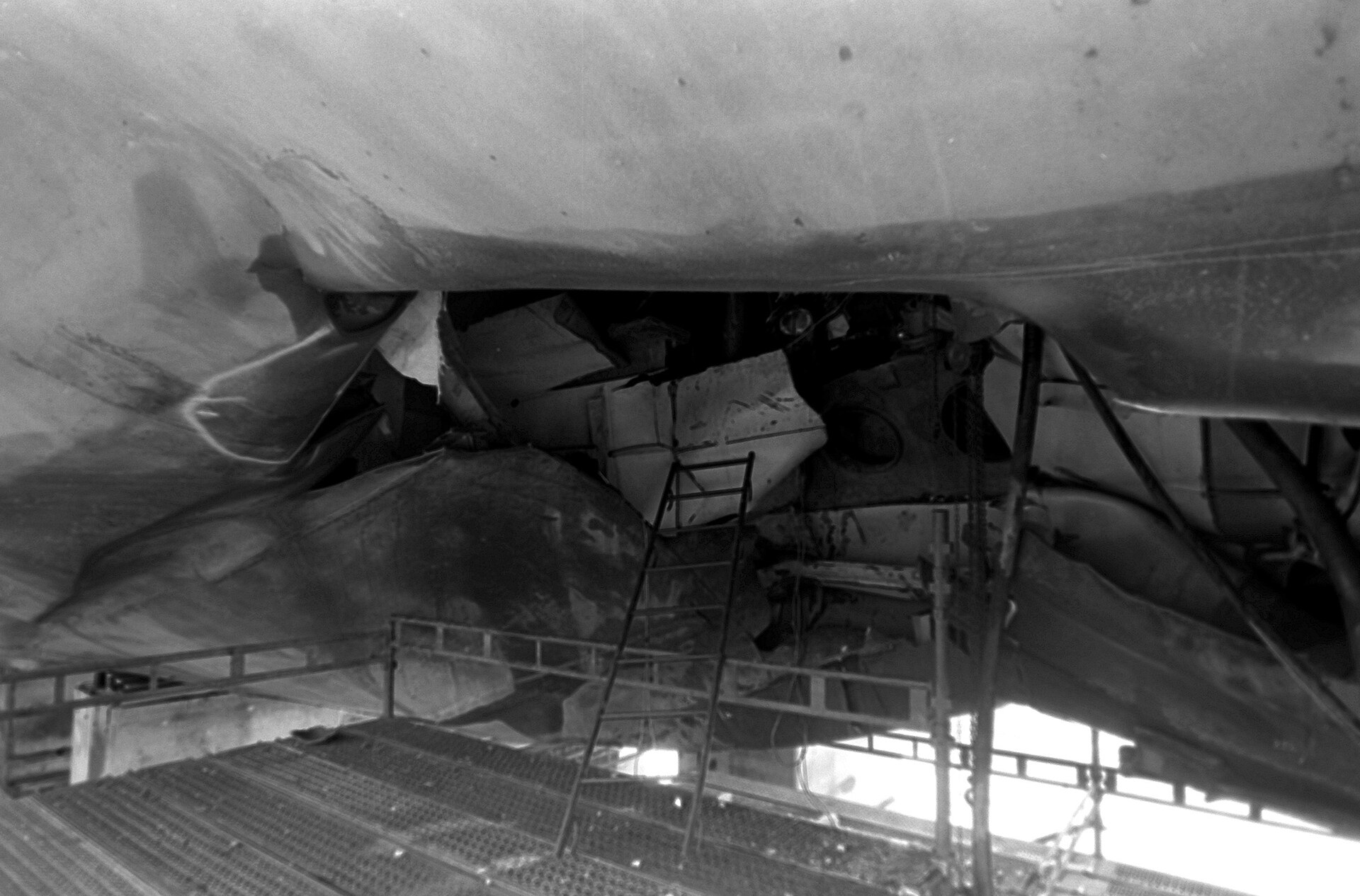
Vice Admiral Stan Arthur, who commanded naval forces in the 1991 Gulf War, said afterward: “We definitely need to put more emphasis on MCM and end the neglect.” That was 35 years ago. The Navy’s response, in the interim, was to dismantle MineWarCom and retire the Avengers.
Saudi Export Arithmetic: The Yanbu Ceiling
Saudi Arabia’s East-West Pipeline to Yanbu is operating at maximum capacity — 4 to 4.5 million barrels per day, according to Bloomberg reporting in March. Pre-war Saudi export volume was approximately 7 million bpd. The gap — 2.5 to 3 million bpd — requires Hormuz to reopen.
Aramco has already restricted April liftings to Yanbu-origin cargoes of Arab Light grade only, as HOS reported. Eastern Province terminals — Ras Tanura, Ju’aymah, the King Fahd Industrial Port at Jubail — remain offline not because of ceasefire violations but because the maritime approach through Hormuz is not certified safe for tanker traffic.
Kpler estimated the global supply deficit at 6 million barrels per day as of April 7. The U.S. Energy Information Administration, in an April 7 projection, estimated flows returning “close to pre-conflict levels in late 2026” — an assumption that requires no conflict extension and, implicitly, a successful mine clearance operation that has not yet been proposed, authorized, or staffed.
Post-ceasefire throughput tells the story in raw numbers: 10 ships have crossed the strait since the ceasefire took nominal effect on April 7-8. One oil product tanker and five dry cargo ships. The backlog stands at approximately 3,200 vessels. At pre-war throughput of 138 ships per day, clearing the backlog alone — assuming the strait were declared safe tomorrow — would take more than three weeks.
Under what analysts describe as a cooperative scenario — Iranian cooperation, allied MCM deployment, negotiated access — limited escorted transits could begin within three to four weeks and full commercial restoration within eight to twelve weeks. None of those conditions currently obtain.
What the Islamabad Text Does Not Contain
The Islamabad ceasefire framework, brokered by Pakistan and nominally in force since April 7-8, contains no mine countermeasures clause. No mine clearance authorization. No Iranian cooperation obligation for ordnance recovery. No third-party access provision for allied MCM forces to operate in the strait. No timeline for maritime safety certification.
Iran’s 10-point plan — the framework Tehran brought to Islamabad — makes the omission structural rather than accidental. Point 7 requires Hormuz transit to be conducted under “coordination with the Armed Forces of Iran,” effectively institutionalizing IRGC control over any clearance mission that might eventually be proposed. A U.S. or allied MCM task force operating in the strait without Iranian “coordination” would, under Iran’s framework, constitute a violation of the ceasefire it is trying to enforce.
The Vance-Ghalibaf proximity talks underway in Islamabad on April 11 are the highest-level direct U.S.-Iran engagement since 1979. But Ghalibaf — a former IRGC Aerospace Force commander — is not the authorization ceiling. As multiple sources have noted, SNSC Secretary Vahidi, himself under U.S. and EU sanctions, controls the operational mandate. The gap between what Ghalibaf may agree to in a conference room and what the IRGC Navy will permit in the strait is the same gap that the ceasefire has already failed to close.
The structural contradiction is plain. Iran is offering to manage access to Hormuz, not restore it. The Trump administration is demanding restoration. The mines — drifting, unmapped, beyond Iran’s own recovery capability — make restoration a function of third-party clearance capacity that does not exist in theater and has not been authorized by any party.
Background
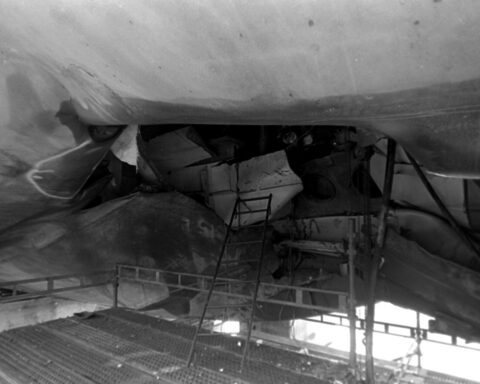
The Strait of Hormuz, connecting the Persian Gulf to the Gulf of Oman, carries roughly 20% of global oil supply in peacetime. Iran’s mine warfare doctrine dates to the 1980-88 Iran-Iraq War, during which IRGC forces laid mines across Gulf shipping lanes. On April 14, 1988, the frigate USS Samuel B. Roberts struck an Iranian Manta-type contact mine that blew a 15-foot hull breach, broke the ship’s keel, and flooded the engine room. Ten sailors were injured. U.S. Navy EOD divers later matched serial numbers to mines recovered from the Iranian minelayer Iran Ajr, captured in September 1987. The Roberts strike triggered Operation Praying Mantis — the largest U.S. naval surface engagement since World War II.
Iran’s mine inventory has expanded considerably since 1988. The Maham-3 and Maham-7 variants identified by U.S. intelligence in the current conflict are more sophisticated than the Manta-type contact mines of the Tanker War era. The DIA’s 2019 estimate of more than 5,000 mines in Iranian stockpiles makes Iran one of the world’s largest mine-warfare powers by inventory. The industrial base for mine countermeasures capability was allowed to atrophy over decades, and cannot be reconstituted on a wartime timeline.
FAQ
How many mines are in the Strait of Hormuz?
U.S. intelligence estimates “less than a dozen” to “about a dozen” Maham-3 and Maham-7 naval mines, based on a March 23, 2026 assessment reported by CBS News. The number is small relative to Iran’s total stockpile of more than 5,000 (Defense Intelligence Agency, 2019), but the operational impact is outsized because their exact positions are unknown — including to Iran itself.
Could allied nations other than the United States provide mine countermeasures ships?
The United Kingdom, France, Japan, and several Gulf states maintain MCM capabilities. The UK Royal Navy operates Hunt-class and Sandown-class mine countermeasures vessels, and the Royal Navy’s mine warfare squadron at HMS Atherstone has historically deployed to the Gulf. Japan provided MCM forces for the 1991 Kuwait clearance — the Maritime Self-Defense Force’s first post-WWII overseas deployment. No allied MCM deployment has been proposed or authorized for Hormuz as of April 11, 2026, and any operation inside the strait would require a legal framework that the Islamabad ceasefire does not provide.
What is the insurance situation for tankers transiting Hormuz?
Lloyd’s of London Joint War Committee has listed the Persian Gulf as a high-risk zone since March 2026. War-risk insurance premiums for Hormuz transit have risen to 5-10% of hull value, according to industry reporting — effectively prohibitive for most commercial operators. Even if a limited escorted transit corridor were established, the absence of a formal mine-clearance certification from a recognized authority (such as the International Maritime Organization or a coalition MCM command) would leave insurers without a basis to reduce premiums. Shipowners cannot order crews into waters where the deploying nation itself admits it cannot account for its own ordnance.
Has the International Maritime Organization responded?
The IMO’s Council held an extraordinary session (C/ES.36) addressing the Hormuz situation, but the body has no Chapter VII enforcement authority and cannot compel Iran to cooperate with clearance operations. The IMO can issue navigational warnings and recommend routing measures, but cannot authorize a military MCM mission. As HOS reported on April 7, the legal void around Hormuz — where Iran, the United States, and Israel are all non-ratifiers of UNCLOS — leaves no international legal mechanism capable of mandating mine clearance.
What would a mine strike on a laden VLCC look like?
A Very Large Crude Carrier fully laden carries approximately 2 million barrels of oil. The 1991 detonation of a single Iraqi mine beneath the helicopter carrier USS Tripoli — an 18,000-ton warship with compartmentalized hull construction — blew a 16-by-20-foot hole and flooded several compartments. A VLCC, built for cargo volume rather than survivability, has a single-hull or double-hull configuration designed to contain oil, not absorb blast. A mine detonation beneath a laden supertanker in the Strait of Hormuz would create a spill scenario in one of the world’s most ecologically sensitive waterways, potentially blocking the shipping channel itself with a disabled 330-meter vessel.