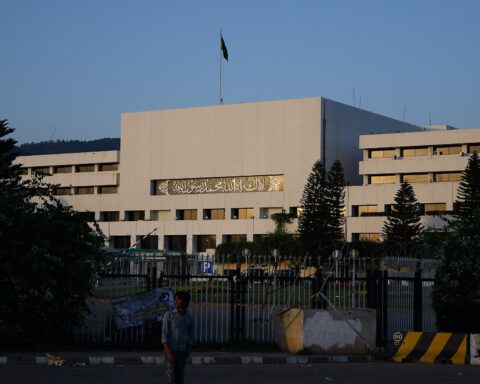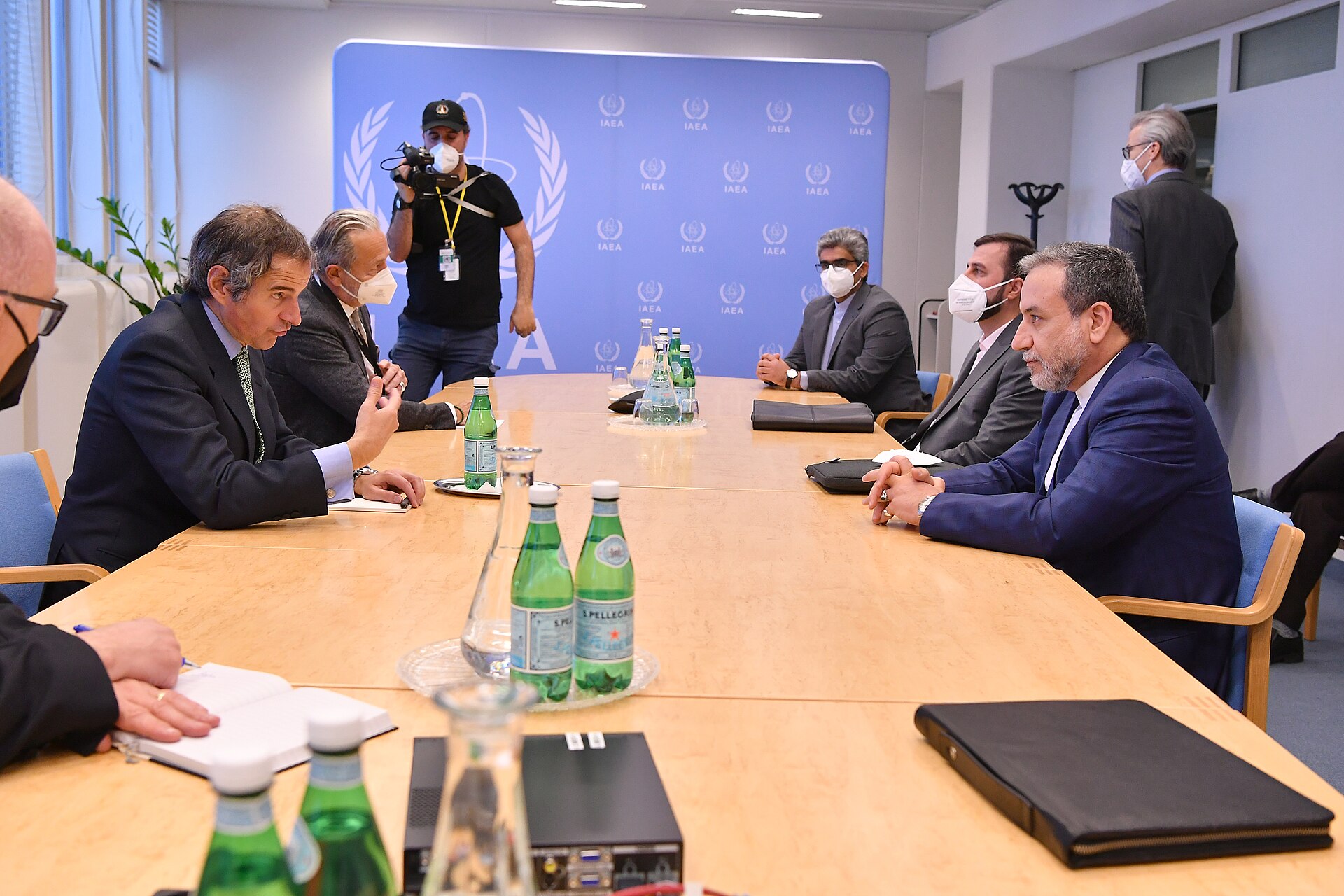

ISLAMABAD — Iran’s parliamentary speaker, Mohammad Bagher Ghalibaf, accused the United States of three violations of the April 7 ceasefire agreement within 24 hours of its announcement, filing what amounts to a documented exit brief before the highest-level direct US-Iran engagement since the 1979 Islamic Revolution begins in Islamabad on April 10.
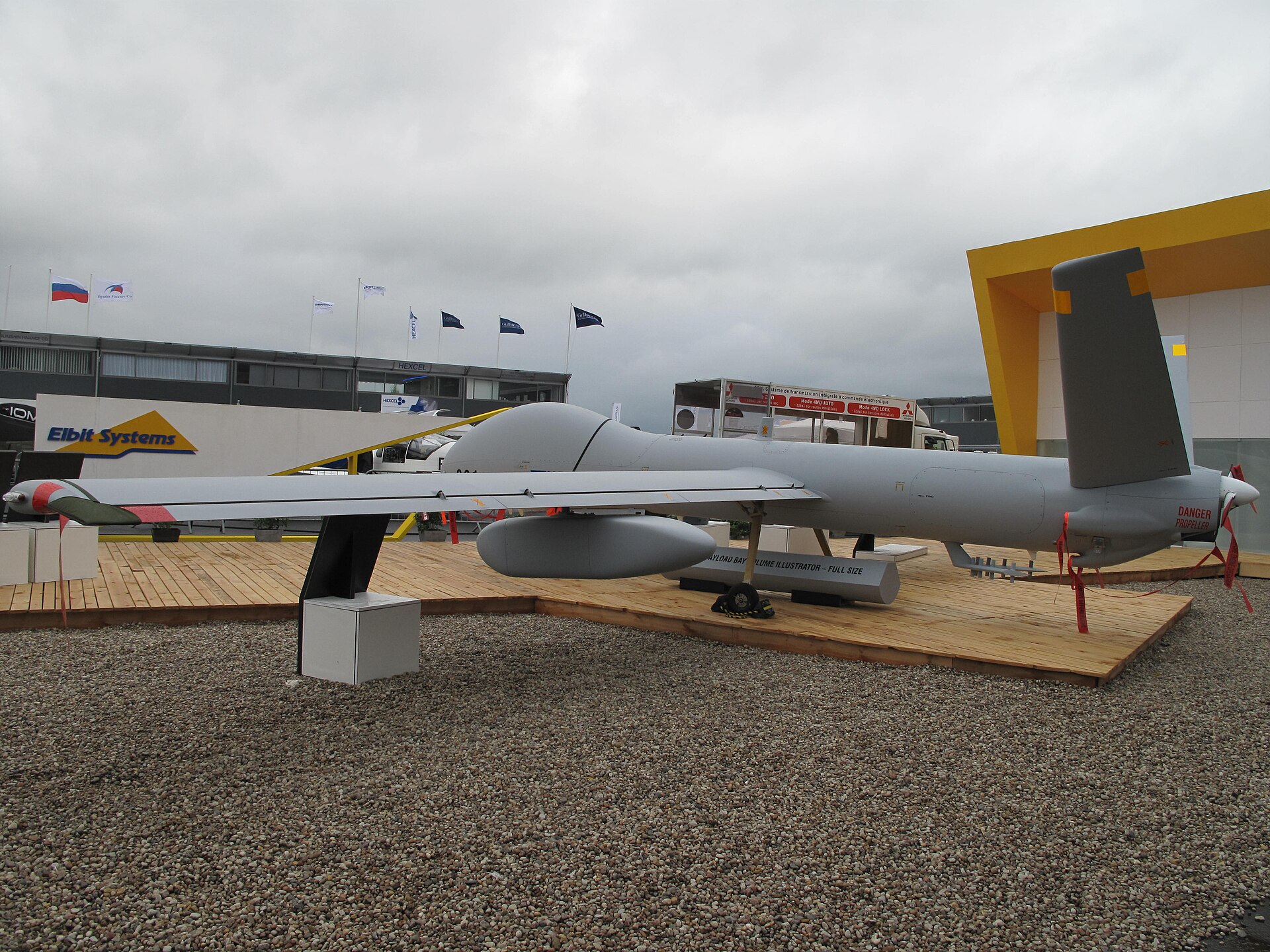
The three violations Ghalibaf cited — continued Israeli strikes on Lebanon, an Israeli-made Hermes 900 drone shot down over Lar in Fars Province, and the US demand that Iran eliminate all uranium enrichment — were delivered not as grievances but as a sequential legal record. “In such situation, a bilateral ceasefire or negotiations is unreasonable,” Ghalibaf told Iranian state media on April 8, according to CNBC and the Times of Israel. He had already declared the ceasefire “unreasonable” hours earlier.
Hours later, White House Press Secretary Karoline Leavitt described Iran’s 10-point negotiating plan as “fundamentally unserious, unacceptable and completely discarded,” adding that it had been “literally thrown in the garbage by President Trump and his negotiating team.” This was less than 24 hours after President Trump himself called the same plan “a workable basis on which to negotiate,” according to Fox News and NBC News.
Both delegations now arrive at Islamabad having already produced the documentary basis for the other side’s bad faith. Vice President JD Vance will lead the US delegation alongside Steve Witkoff and Jared Kushner. Ghalibaf will lead for Iran, accompanied by Foreign Minister Abbas Araghchi. Pakistani Prime Minister Shehbaz Sharif will host. Saudi Arabia, which held a co-guarantor seat at the March 29-30 talks, has been excluded from the April 10 bilateral.
Table of Contents
Ghalibaf’s Three-Count Violation Brief
Ghalibaf’s accusation was structured as three discrete counts, each mapped to a specific clause of the 10-point plan Iran published after the ceasefire announcement.
The first count cited Israel’s continued air operations in Lebanon. On April 8, the Israel Defense Forces struck targets across southern Lebanon and issued evacuation orders for parts of southern Beirut on April 9, according to the Times of Israel. Iran’s position, stated by Araghchi: “The Iran-U.S. ceasefire terms are clear and explicit: the U.S. must choose — ceasefire or continued war via Israel. It cannot have both,” as reported by the Jerusalem Post and NPR.
The Middle East briefing 3,000+ readers start their day with.
One email. Every weekday morning. Free.
The second count cited the Hermes 900 drone shoot-down over Lar, Fars Province. The IRGC’s Aerospace Command issued operational doctrine alongside the intercept: “The entry of any enemy aircraft, American or Israeli, into Iranian airspace — even without carrying out a military operation — constitutes a violation of the ceasefire and will be met with a decisive response,” according to Tasnim News Agency and Asharq Al-Awsat.
The third count cited the US position on uranium enrichment. The White House has maintained, through Leavitt, that “the president’s red lines, namely the end of Iranian enrichment in Iran, have not changed,” per Al Jazeera. Point 3 of Iran’s 10-point plan requires US acceptance of Iranian enrichment.
Iran holds over 400 kilograms of 60% enriched uranium, last inspected by the IAEA in June 2025, according to the Arms Control Association. A new underground enrichment facility at Isfahan has been declared but remains uninspected.
Ghalibaf’s biography shapes the weight of his brief. He commanded the IRGC Aerospace Force from 1997 to 2000 — the force responsible for Hormuz access control and the drone and missile programs that have struck GCC infrastructure over the past 38 days. His appointment as delegation lead means the IRGC views itself as a principal in whatever outcome emerges from Islamabad, not a subordinate implementing a Foreign Ministry agreement.
Brigadier General Seyyed Majid Mousavi, the IRGC Aerospace Commander, reinforced Ghalibaf’s framework: “Should the enemy commit the slightest error, it will be met with a response in full power,” according to PressTV.
What Changed in 24 Hours at the White House?
On April 7, Trump publicly called Iran’s 10-point plan “a workable basis on which to negotiate,” as reported by Fox News and covered by this publication.
By April 8, Leavitt said the plan had been “literally thrown in the garbage.” Trump then posted on social media calling it a “FAKE TEN POINT PLAN” and a “made-up HOAX,” attacking the New York Times and CNN for reporting on it. He added: “EVIL LOSERS!!!” according to Mediaite.
The administration’s explanation for the reversal: Iran submitted two separate versions of its 10-point plan. The first version was the one Trump called workable. The revised version — which Iran published and media reported on — was the one Leavitt described as discarded. Iran disputes this sequencing, according to NBC News.
Three of the 10 points are structurally incompatible with stated US red lines regardless of version. Point 3 demands US acceptance of Iranian enrichment; the US position is zero enrichment on Iranian soil. Point 7 requires Iranian control over Hormuz passage through “coordination with Iran’s Armed Forces.” Point 8 demands full withdrawal of US combat forces from all regional bases, according to CNN and the Jerusalem Post.
Seth G. Jones, senior vice president at the Center for Strategic and International Studies, described the Hormuz control provision as “totally unacceptable” to Gulf states. On reconstruction provisions, Jones told CSIS: “The Iranians can use that just as much for rebuilding critical infrastructure… as they could for missile programs.”
“The Iran-U.S. ceasefire terms are clear and explicit: the U.S. must choose — ceasefire or continued war via Israel. It cannot have both.”
— Abbas Araghchi, Iranian Foreign Minister, via Jerusalem Post and NPR
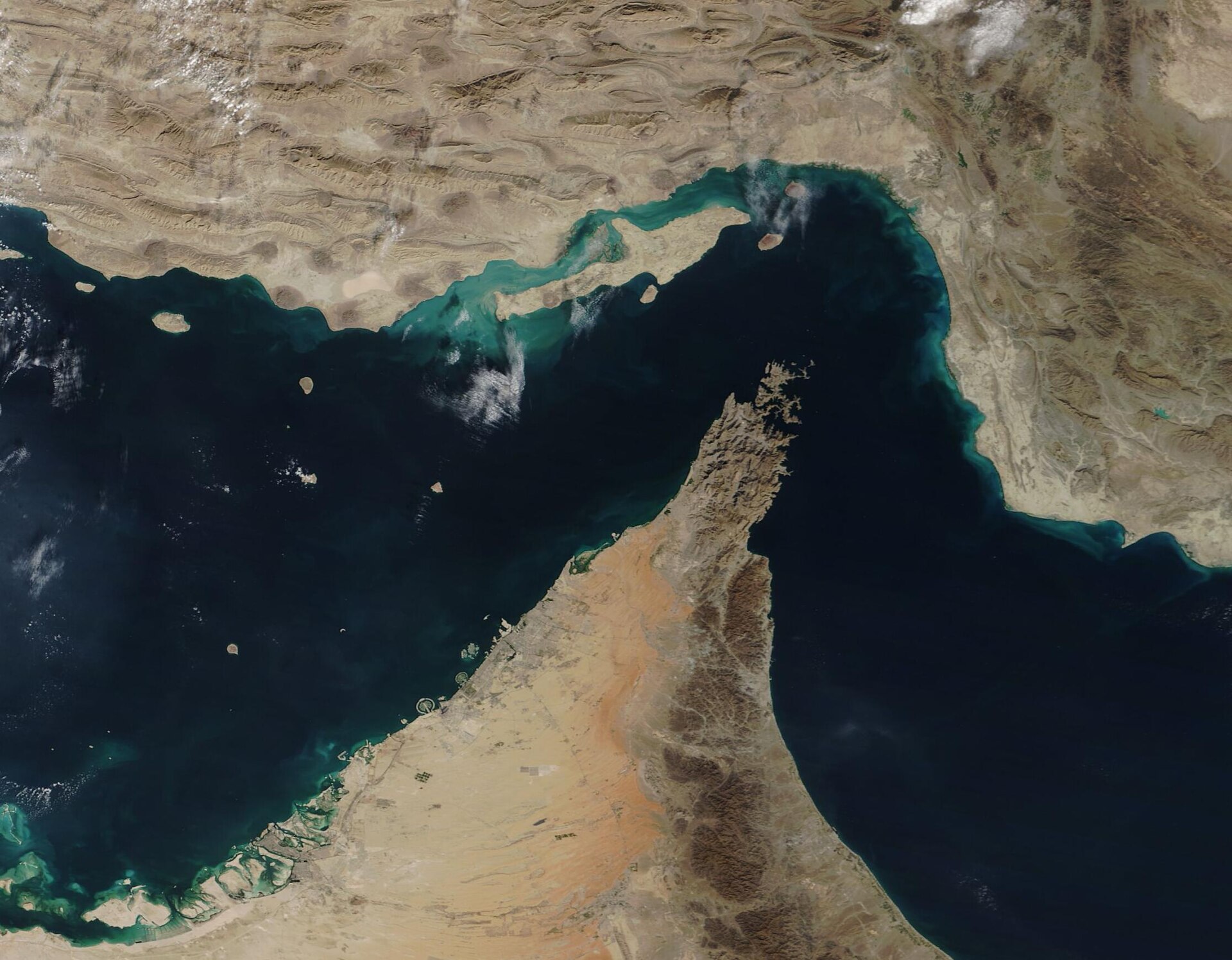
Hormuz at Standstill on Day Two
Approximately nine vessels transited the Strait of Hormuz across April 8 and 9 combined, according to S&P Global Market Intelligence. The pre-war daily average exceeded 100 vessels. ADNOC CEO Sultan Al Jaber confirmed publicly: “The Strait of Hormuz is not open,” as reported by NBC News and CNBC.
The standstill deepened after Iran re-closed Hormuz on April 8 following Israeli strikes on Lebanon that killed 254 people, according to Al Jazeera. Iran confirmed the closure via Fars News, stating Hormuz had been “halted because of Israel’s fresh strikes on Lebanon.” Only two tankers had crossed before the re-closure, as this publication reported.
The Lavan Island refinery — 55,000 barrels per day of capacity — was struck and caught fire on ceasefire day, according to Al Jazeera and Argus Media. Iran launched retaliatory strikes against Kuwait and the UAE within the hour. Israel denied involvement.
Post-ceasefire attacks on GCC states continued consuming from already depleted air defense magazines, with both Kuwait and UAE absorbing multiple ballistic missile and drone strikes on April 8, according to Khaleej Times and Al Jazeera.
The Soufan Center assessed that it remains “unclear whether the continued attacks are a result of the decentralized nature of the IRGC command and control or whether these strikes have been the result of cells within the IRGC that disagree with the ceasefire agreement.”
Can Israel Be Separated From the Ceasefire?
The Lebanon question has already produced a direct contradiction between the US delegation lead and the host country’s head of government.
Vance described Lebanon’s status in the ceasefire as “a reasonable misunderstanding between the parties,” according to CBS News. He stated that Israel “offered to check themselves a little bit in Lebanon” to facilitate talks, per the Times of Israel. Iran, Vance said, would be “dumb” to let talks collapse over Lebanon, as reported by Al Jazeera.
Pakistan’s PM Sharif stated the ceasefire “includes all fronts of the war, including Lebanon,” according to PBS and the AP wire — a direct contradiction of the US position from the country hosting the talks.
Iran has already demonstrated that Lebanon functions as a kill switch on Hormuz transit and Saudi oil recovery. On April 8, IDF strikes on Lebanon triggered the second post-ceasefire Hormuz closure within hours. The structural problem for Saudi Arabia is that it cannot object to IDF operations without implying alignment with Iran and Hezbollah, yet those operations directly determine whether Saudi crude can reach market through Hormuz.
Araghchi raised Israel’s “ceasefire violations in Iran and Lebanon” in a direct phone call to Pakistan’s Chief of Army Staff, General Asim Munir, according to Al Arabiya. The call bypassed diplomatic channels and went to the military officer who functions as Pakistan’s de facto ceasefire enforcement mechanism.
The Delegations and What They Carry
The US delegation — Vance, Witkoff, and Kushner — arrives having publicly discarded the 10-point plan that forms the only published framework for negotiations. Vance carries authority as vice president but no prior direct engagement with Iranian counterparts at this level. Kushner’s inclusion signals a broader regional architecture ambition that extends beyond the ceasefire itself, per Axios.
Iran’s delegation is led by Ghalibaf, not Araghchi. The distinction matters. Araghchi is a career diplomat who served as deputy foreign minister during the JCPOA negotiations. Ghalibaf is a former IRGC Aerospace Force commander whose institutional loyalty lies with the security establishment. His presence signals that whatever Araghchi might agree to, the IRGC will hold concurrent authority over whether it is implemented.
The Supreme National Security Council published its operational framework through Middle East Eye: “Negotiations are continuation of battlefield.” This is not rhetoric. Article 176 of Iran’s constitution places the SNSC — chaired by the president but dominated by military and intelligence chiefs — as the body with final authority over national security decisions.
Behind the delegations sits a command structure in flux. Supreme Leader Ayatollah Ali Khamenei has been absent from public view for over 39 days. The Times of London reported his son Mojtaba Khamenei is reportedly unconscious in Qom.
De facto command has devolved to a triumvirate: Ahmad Vahidi, the IRGC commander; Mohsen Rezaei; and Ghalibaf himself, according to Euronews and the Soufan Center. An unnamed Iranian parliamentarian told NBC News: “Vahidi is in charge.”
The IRGC’s 31 provincial corps hold decentralized autonomous strike authority — a structure that means even a signed ceasefire may not bind individual corps commanders, as the Soufan Center has assessed.
“Literally thrown in the garbage by President Trump and his negotiating team.”
— Karoline Leavitt, White House Press Secretary, on Iran’s 10-point plan, via Fox News
Saudi Arabia’s Absent Chair
Saudi Arabia’s Foreign Minister Prince Faisal bin Farhan held a co-guarantor seat at the March 29-30 multilateral talks. He is absent from the April 10 bilateral in Islamabad.
The exclusion leaves Riyadh facing the consequences of either outcome without a voice in determining it. If Vance produces a deal, Saudi Arabia must evaluate whether it trades away Gulf security infrastructure — particularly US military basing (Point 8) and Hormuz freedom of navigation (Point 7). If talks collapse, strikes resume against a Kingdom with approximately 400 PAC-3 MSE interceptor rounds remaining from a pre-war stockpile of roughly 2,800, an 86% drawdown across 38 days of combat, as previously reported.
Post-ceasefire attacks have continued consuming from this depleted magazine. The 17 ballistic missiles and 35 drones the UAE intercepted on April 8 alone, and the 28 drones Kuwait faced, represent rounds that cannot be replaced at current production rates. Boeing’s Camden, Arkansas facility produces approximately 620 PAC-3 MSE rounds per year. A $9 billion DSCA notification for 730 rounds carries no delivery date, per CSIS.
Araghchi called all six GCC foreign ministers on April 9, according to CGTN — a multilateral diplomatic broadcast that bypassed the Islamabad framework entirely. The call to Faisal bin Farhan represented the first confirmed FM-to-FM Saudi-Iran direct communication since the war began, as this publication reported.
The ceasefire expires April 22. Islamabad begins April 10. If the talks collapse, Saudi Arabia faces 12 days before the agreement lapses — with no seat at any table and fewer than 400 interceptors defending its eastern oil infrastructure.
Background: The Vienna Precedent
Iran’s pre-Islamabad maneuvering follows a pattern established during the 2022 Vienna JCPOA revival talks. In that negotiation, Iran accumulated preconditions — closure of the IAEA probe into undeclared nuclear material, guarantees against future US withdrawal, sanctions snapback protections — that made formal failure available at a moment of Tehran’s choosing, according to the Arms Control Association and the Atlantic Council.
The current sequence mirrors that architecture. Ghalibaf’s three-count violation brief was filed within 24 hours. The SNSC published “negotiations are continuation of battlefield” as doctrinal text. The IRGC issued standing shoot-down orders for any aircraft entering Iranian airspace. Each step creates a documented predicate for withdrawal that can be activated at any point during or after the Islamabad session.
The White House has constructed its own exit documentation. Trump’s progression from “workable basis” to “FAKE TEN POINT PLAN” to “EVIL LOSERS!!!” within 48 hours establishes a public record that can justify walking away at any point. The two-version explanation — that Iran submitted a workable draft and then a maximalist revision — provides administrative cover for a reversal that was, in its public expression, unconditional.
Iran celebrated the ceasefire domestically as a victory. State media framed it as having “forced America to accept its demands,” according to the Jerusalem Post citing Iranian state press. This framing makes concessions at Islamabad politically expensive for any Iranian negotiator, but especially for Ghalibaf, whose constituency is the IRGC itself.
The structural problem is not that one side wants the talks to fail. It is that both sides have already built the documentation to explain why failure was the other side’s fault.
FAQ
When was the last time a US vice president met directly with an Iranian official?
There has been no confirmed direct meeting between a sitting US vice president and a senior Iranian official since before the 1979 Islamic Revolution. The Islamabad session, if it proceeds as announced with Vance and Ghalibaf in the same room, would be the first such engagement in 47 years. The closest precedent was the indirect “proximity talks” during the JCPOA negotiations in 2013-2015, where US and Iranian delegations occupied separate rooms in the same hotel, per the Brookings Institution.
What enforcement mechanism does the ceasefire have?
None that is specified in any published text. The Islamabad Accord, as brokered by Pakistan, contains no enforcement clause, according to the Soufan Center. Pakistan — simultaneously Iran’s protecting power in the United States since 1992, Saudi Arabia’s treaty ally under the September 2025 Saudi-Pakistan Mutual Defense Agreement, and the host country — is the closest thing to an enforcement mechanism, but lacks the military or diplomatic capacity to compel compliance from either the IRGC’s decentralized provincial corps or from Israeli operations in Lebanon. CSIS assessed directly: “Islamabad is not in a position to enforce anything.”
What happens if the talks collapse and the ceasefire expires on April 22?
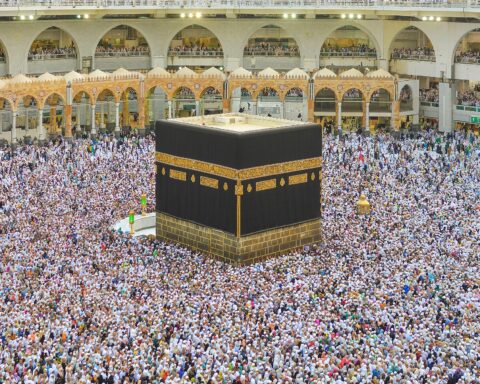
The ceasefire’s April 22 expiration coincides with the opening of the Hajj arrival window. April 18 marks both the start of Hajj pilgrim arrivals and the sealing of the Umrah security cordon, according to the Saudi Ministry of Hajj. Indonesia’s 221,000 pilgrims begin departure on April 22 itself. Pakistan’s 119,000 pilgrims arrive starting April 18.
A resumption of hostilities during Hajj preparation would put millions of pilgrims in transit through Gulf airspace that has been closed or restricted since February 28. Iran has zero stake in Hajj — Iranian pilgrims have been barred — removing a restraint that applies to every other party.
Why is Ghalibaf leading the Iranian delegation instead of Araghchi?
Araghchi remains on the delegation but in a subordinate role. Ghalibaf’s elevation reflects the IRGC’s assessment that the Islamabad talks are a security negotiation, not a diplomatic one. As former IRGC Aerospace Force commander, Ghalibaf led the branch responsible for the drone and missile programs used against GCC states throughout the conflict. His presence means that any agreement he signs carries IRGC institutional weight — but also that any agreement he declines to sign will not bind the corps. The SNSC’s “negotiations are continuation of battlefield” framework positions him not as a peace envoy but as a field commander operating in a different medium.
Has the US previously reversed its position on a negotiating framework this quickly?
The 24-hour reversal from “workable basis” to “thrown in the garbage” is unusually compressed even by the standards of the Trump administration’s Iran policy. During the 2019 Osaka G-20, Trump authorized and then cancelled a military strike on Iran within hours, but that was an operational decision, not a public negotiating position. The closest diplomatic parallel is the February 2019 Hanoi summit with North Korea, where Trump walked away from a framework that his own envoy, Stephen Biegun, had described as promising — but that reversal played out over days, not hours, per the Council on Foreign Relations.