
Table of Contents
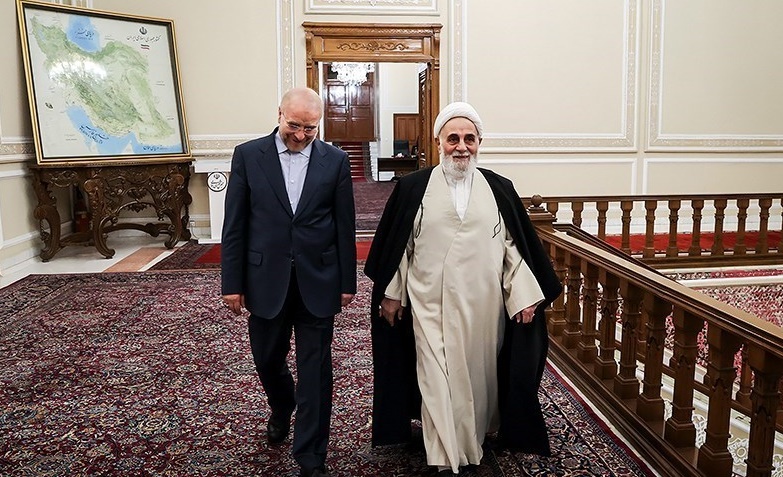
- Who Ghalibaf Is
- What Are the Three Violations Ghalibaf Claims?
- Why Did Vance Call Three Violations “Quite a Lot of Agreement”?
- The Hajj Calendar and the April 18-22 Convergence
- Can Saudi Arabia Defend Both Mecca and Ras Tanura Simultaneously?
- Why Is Saudi Arabia Silent About Ghalibaf’s Statements?
- The 1987 Precedent and What Is Different Now
- What Does a Successful Islamabad Outcome Look Like for Saudi Arabia?
- Frequently Asked Questions
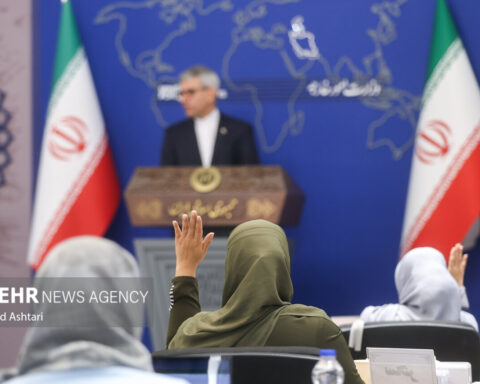
ISLAMABAD — Mohammad Baqer Ghalibaf arrived in Pakistan for the April 10 bilateral talks having already publicly declared that three conditions of the two-week ceasefire have been violated — before the negotiations began. The opening session — the first direct US-Iran principal-level contact since 1979 — is covered in Vance and Ghalibaf open the first US-Iran direct talks since 1979. The former IRGC Aerospace Force commander, now wearing the civilian title of parliamentary speaker, accused the United States of breaking commitments on Lebanon, Iranian airspace, and uranium enrichment. Each of these violations was structurally foreseeable the moment the ceasefire was signed on April 8. None required discovery. They were banked. The IRGC had further constrained the delegation before departure: IRGC commanders publicly declared Iran’s missile program non-negotiable in the days before Islamabad, with Shamkhani calling it “a red line that will never be placed on the negotiating table.” What that public framing obscured was the structural escalation already embedded in the delegation’s composition: the SNSC Secretary Ahmadian’s presence in the delegation meant the IRGC’s authorization ceiling had moved inside the negotiation room itself.
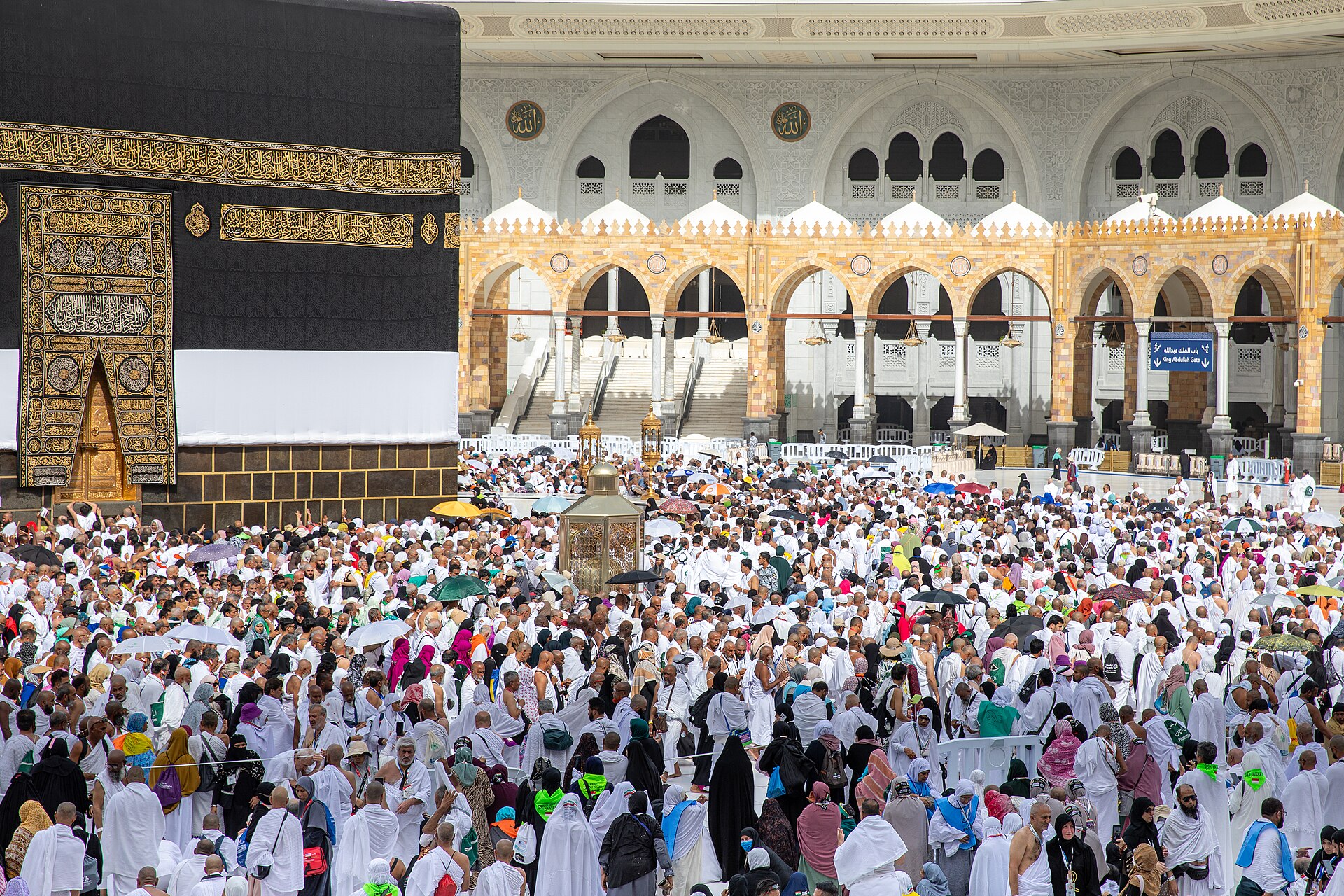
The timing is not incidental. Pakistan’s first Hajj charter flights arrive in Madinah on April 18. Indonesia’s first Hajj charter departs April 22 — the same calendar day the ceasefire nominally expires. Between those two dates and the pilgrim peak of May 25-26, when approximately 2 million people will be concentrated in and around Mecca, Saudi Arabia enters a 38-day window in which it cannot escalate, cannot publicly demand Iranian compliance without risking the custodianship that underwrites its legitimacy, and cannot redistribute its roughly 400 remaining PAC-3 interceptor rounds from Mecca and Medina to its oil infrastructure in the Eastern Province without making a political choice whose consequences would outlast the war itself.
Who Ghalibaf Is
The Foundation for Defense of Democracies published an assessment on April 6 that applied directly to the man Pakistan invited to Islamabad: “This is not a government with a military wing; it is a military establishment with a civilian ornament.” Ghalibaf is that ornament’s most polished surface.
He commanded the IRGC Aerospace Force from 1997 to 2000, appointed directly by Supreme Leader Khamenei. The aerospace command is not a staff position. It controls Iran’s ballistic missile development and launch authority — the same missiles that struck Ras Tanura on March 2 and the Eastern Province throughout the war. In 1999, Ghalibaf was one of 24 Revolutionary Guard commanders who signed a letter threatening reformist President Mohammad Khatami with what amounted to a coup warning. The letter remains the clearest documentary evidence that Ghalibaf views civilian political structures as subordinate to IRGC institutional prerogatives.
In 2013, leaked audio captured him admitting to personally beating protesters with sticks. He has run for president three times — in 2005, 2013, and 2017 — each campaign backed by the IRGC’s institutional network and each defeated not by voters’ rejection of his military background but by the supreme leader’s preference for other candidates. His current title, Speaker of the Majlis, places him inside the civilian government. His career places him outside it.
Ali Alfoneh, of the Arab Gulf States Institute, described Ghalibaf’s operating mode to NBC News in April: “Ghalibaf exhibits a dual posture — pragmatic when engaging pragmatic counterparts and hard-line when confronting hard-line adversaries.” The formulation is precise. Ghalibaf does not have a fixed position. He has a fixed patron. His public doctrine — “missiles, streets, strait” — names the three IRGC coercive instruments with no ambiguity about who controls them.
The Middle East briefing 3,000+ readers start their day with.
One email. Every weekday morning. Free.
Former Iranian parliamentarian Ali Akbar Mousavi Khoeini was blunter: “Vahidi is in charge of the country. Ghalibaf doesn’t have the strength to confront him. The power is in the hands of the Revolutionary Guard and the most radical faction of the Revolutionary Guard.” Ahmad Vahidi, the SNSC secretary, is himself under US and EU sanctions. The chain of command runs from Vahidi through the SNSC to an absent supreme leader — Khamenei has not been reliably seen in public for over 39 days.
The Supreme National Security Council’s own framing of the ceasefire was published without pretense: “Negotiations are continuation of battlefield.” This is the institution Ghalibaf answers to — not the Majlis he nominally leads, not the foreign ministry that conducted earlier rounds, but the SNSC under Vahidi’s direction. Ghalibaf is the man sent to continue that battlefield in a conference room. The question for everyone else at Islamabad is whether they understand what room they are in.
What Are the Three Violations Ghalibaf Claims?
Ghalibaf identified three ceasefire breaches before the Islamabad talks opened: continued Israeli strikes on Lebanon (254 killed April 8), an alleged US drone incursion over Lar in Fars province, and the US position that Iran cannot enrich uranium — contradicting Point 6 of Iran’s own 10-point framework. None required new intelligence to identify. They function as pre-built exit justifications. The document Ghalibaf arrived carrying exists in at least three versions — with the Farsi text telling a domestic audience that Washington has already conceded enrichment rights, while the English version shared with diplomats contains no such language, and a third draft Vance publicly called “something that was probably written by ChatGPT”; the three-document discrepancy and what it reveals about Iran’s internal negotiating chain is examined in detail.
The Lebanon violation is the most architecturally complete. Pakistan’s Prime Minister Shehbaz Sharif announced the ceasefire with explicit language: “The Islamic Republic of Iran and the United States of America, along with their allies, have agreed to an immediate ceasefire everywhere including Lebanon.” Within hours, Israel struck targets across Lebanon. Prime Minister Netanyahu told NBC News the ceasefire “does not apply to the Lebanon war.” The contradiction was not a failure of implementation. It was present in the agreement’s structure from the first sentence.
What Sharif did not announce — and what the public framing obscured — is that Pakistan’s role was relay, not guarantee. Field Marshal Asim Munir spent the night of April 8-9 transmitting messages between Vance, Witkoff, and Araghchi with no written protocol and no coercive mechanism behind the exchange. Why Pakistan brokered the ceasefire but cannot enforce it is the central structural problem the Islamabad talks have yet to resolve.
Ghalibaf’s verbatim statement to WANA on April 8 left no interpretive room: “Now, the very ‘workable basis on which to negotiate’ has been openly and clearly violated, even before the negotiations began.” And: “Under such circumstances, neither a bilateral ceasefire nor negotiations have any meaning.”
The enrichment claim follows a similar logic. Iran’s 10-point framework affirmed enrichment rights as Point 6. The Trump administration’s stated position is that Iran cannot enrich — full stop. These two positions are mutually exclusive by design, not by accident. Danny Citrinowicz, senior Iran researcher at Israel’s INSS, noted to Chatham House in April that Iran “still holds roughly 440kg of uranium enriched to 60%.” The enrichment gap existed before anyone sat down. It will exist after they leave. As a violation, it is permanent — available for citation at any point in any negotiation, indefinitely.
The drone incursion over Lar, Fars province, is the thinnest of the three — no named US official has acknowledged or attributed the alleged overflight. But thinness is a feature, not a defect: it is the violation that can be inflated or deflated depending on what the IRGC needs on a given day.
Why Did Vance Call Three Violations “Quite a Lot of Agreement”?
Vice President JD Vance told CBS News on April 8 that “ceasefires are always messy,” that the US “never indicated” Lebanon was included, and that “if Ghalibaf only has three points of disagreement, there must be quite a lot of agreement.” This reads the three violations as a negotiating position — items on a list to be traded away. It misidentifies their function. They are not demands. They are pre-staged off-ramps.
Vance’s framing assumes the Islamabad talks operate under diplomatic convention: parties arrive, state maximalist positions, negotiate toward a middle. Ghalibaf’s career — IRGC Aerospace Force, the 1999 letter to Khatami, the “missiles, streets, strait” doctrine — suggests a different grammar. The three violations are not what he wants resolved. They are what he can invoke when the IRGC decides the ceasefire has served its purpose.
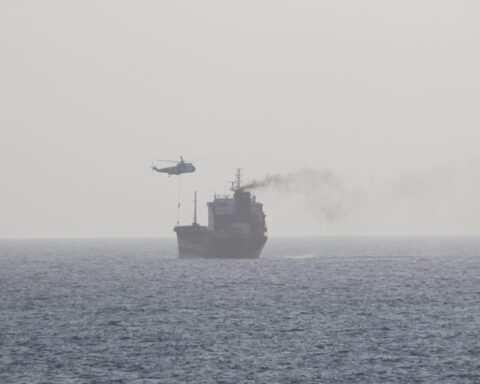
The ceasefire reversibility architecture was demonstrated on April 8 itself. Iran re-closed the Strait of Hormuz within hours of the ceasefire announcement, citing Israel’s strikes on Lebanon — the same violation Ghalibaf now names. The mechanism was activated, proven operational, then unwound. The re-closure lasted long enough for only 15-20 ships to transit, approximately 11% of the pre-war daily average of 138. Some 426 tankers, 34 LPG carriers, and 19 LNG vessels remained waiting.
The Lebanon trigger in particular has an indefinite shelf life. As long as Israeli operations in Lebanon continue — and Netanyahu has stated they will — Ghalibaf holds a violation he can activate at any moment without fabricating new facts. Lebanon functions as Iran’s kill switch on Saudi oil recovery, and Ghalibaf now carries the key to Islamabad.
The Hajj Calendar and the April 18-22 Convergence
The arithmetic is specific. Pakistan’s Ministry of Religious Affairs confirmed 468 Hajj charter flights carrying 119,000 pilgrims — 67,230 men, 51,846 women — with the first 186 flights landing in Madinah beginning April 18. India’s Haj Committee registered 175,025 pilgrims for 2026, with Madinah-bound flights also starting April 18. Indonesia’s Ministry of Religious Affairs scheduled 221,000 pilgrims across 548 flights from 16 embarkation points, with the first charter departing April 22.
April 22 is also the day the two-week ceasefire nominally expires.
| Country | Pilgrims (2026) | Flights | First Charter |
|---|---|---|---|
| Pakistan | 119,000 | 468 | April 18 (Madinah) |
| India | 175,025 | — | April 18 (Madinah) |
| Indonesia | 221,000 | 548 | April 22 |
| Three-country subtotal | 515,025 | — | — |
| All international pilgrims | ~1,800,000 | — | April 18 – May 26 |
Those three countries alone account for approximately 28.6% of the 1.8 million international Hajj quota. By May 25-26 — the Day of Arafah and Eid al-Adha — roughly 2 million pilgrims will be concentrated in and around Mecca simultaneously. The flows are not adjustable. Charter contracts are signed months in advance. Accommodation in Mecca and Madinah is pre-allocated. The logistics are industrial in scale and rigid in timing.
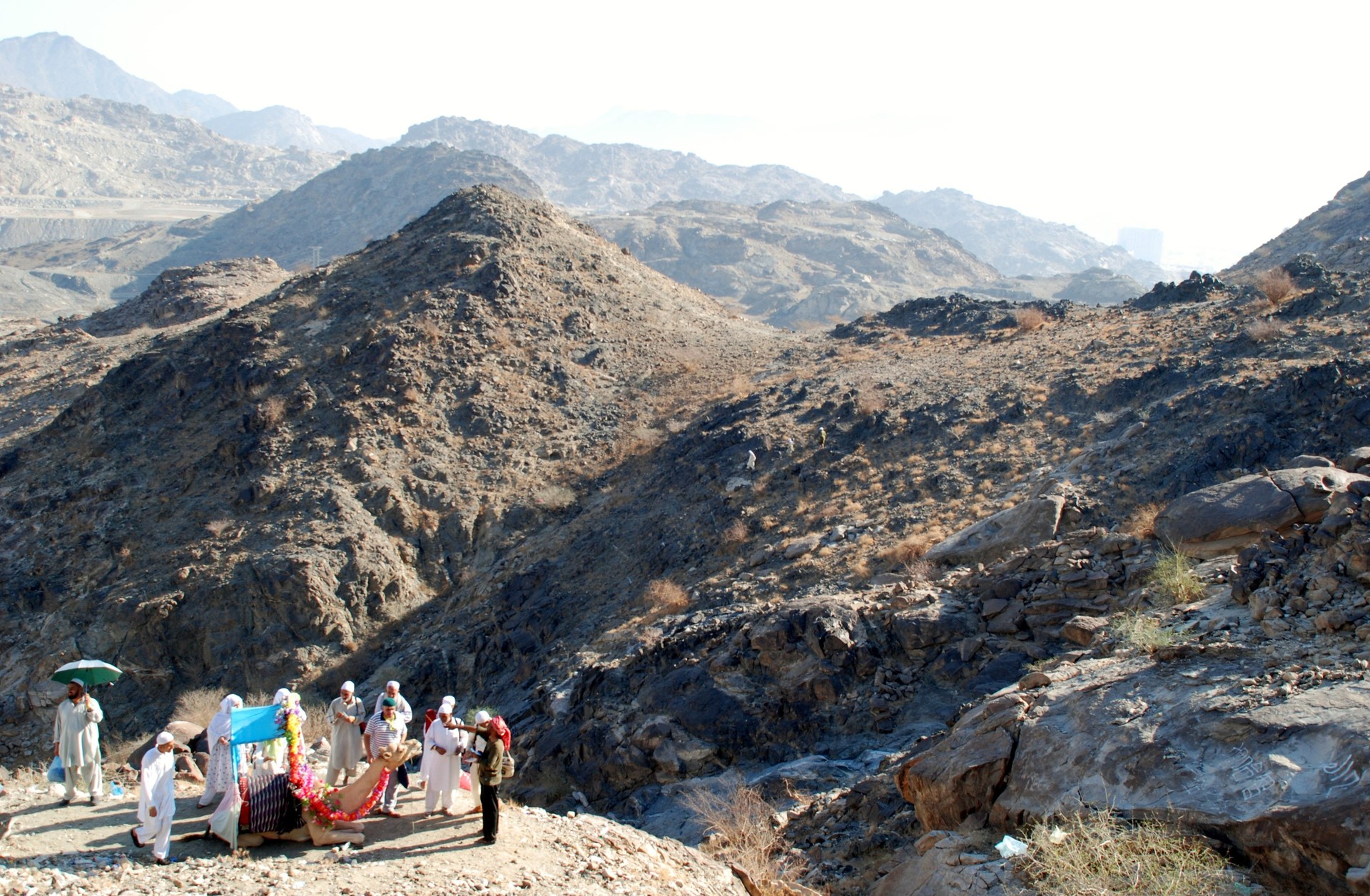
For Saudi Arabia, the Hajj is not a cultural event with security implications. It is the foundational act of the Saudi state’s religious legitimacy. The King’s formal title is Custodian of the Two Holy Mosques — a designation adopted in 1986 specifically to replace “His Majesty,” grounding royal authority in religious stewardship rather than temporal power. Every decision made between April 18 and May 26 — on air defense allocation, on diplomatic posture toward Iran, on whether to publicly challenge Ghalibaf’s stated violations — is filtered through the question of whether it protects or endangers that custodianship.
The constraint operates at three levels simultaneously. Militarily, pilgrim concentrations in Mecca and Madinah create fixed defensive obligations that cannot be deferred or relocated. Diplomatically, the 1.8 million international pilgrims represent citizens of virtually every Muslim-majority government on earth — each of which holds Saudi Arabia personally responsible for their safety. And politically, any Saudi escalation against Iran during active Hajj operations invites the accusation — from Tehran, from Doha, from Jakarta — that the custodian chose confrontation over the safety of the faithful. The IRGC does not need to strike Mecca to weaponize the Hajj. It needs only to create conditions under which Saudi Arabia’s response to Iranian provocations appears to endanger pilgrims.
Can Saudi Arabia Defend Both Mecca and Ras Tanura Simultaneously?
Saudi Arabia operates approximately 108 M902 Patriot launchers distributed across four corridors: the Eastern Province oil infrastructure, Yanbu on the Red Sea coast, Riyadh, and the Mecca-Medina holy sites. It has roughly 400 PAC-3 rounds remaining — an 86% drawdown from the approximately 2,800 rounds available before the war began on March 3. The Camden, Arkansas production line manufactures 620 PAC-3 rounds per year across all global customers. Saudi Arabia’s $9 billion Foreign Military Sales request for 730 replacement rounds was approved on January 30. Fulfillment could take up to 11 years.
Prior to Hajj, the air defense triage problem had two nodes: the Eastern Province (Ras Tanura, Jubail, Dhahran) and broader Saudi strategic depth (Riyadh, Yanbu). The 894-intercept count through April 7 — 799 drones and 95 ballistic missiles — consumed those rounds across both nodes. The arrival of pilgrims adds a third node with a cost structure that no fiscal model captures.
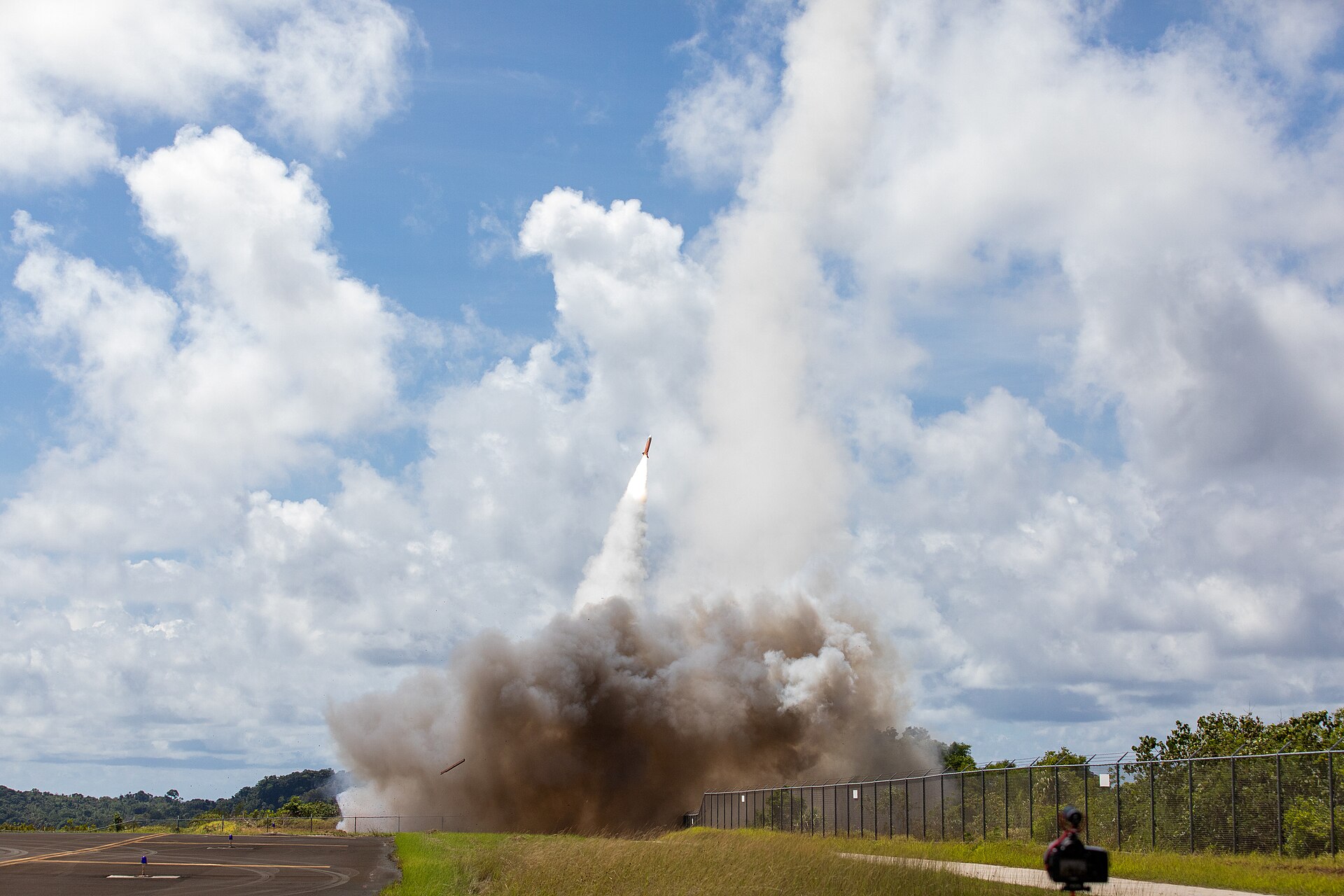
Ras Tanura and Jubail sit 65 to 73 kilometers apart in the Eastern Province. They cannot be covered by the same battery. Mecca is approximately 1,200 kilometers to the southwest. The interceptors that defend one do not defend the other. If the IRGC — or its proxies, operating under the decentralized autonomy that the authorization ceiling analysis has documented — launches a salvo during Hajj peak, Saudi commanders face a decision that is not a resource-allocation problem. It is a political one. Redirecting rounds from Mecca to protect Aramco infrastructure means accepting, explicitly, that oil terminals matter more than pilgrims. No Saudi official can survive making that trade-off publicly. No Saudi official can avoid it privately.
Post-ceasefire attacks have already demonstrated the gap. On April 8-9, after the ceasefire was announced, Saudi Arabia intercepted 5 ballistic missiles and 9 drones. Kuwait intercepted 28 drones. The UAE intercepted 35 drones. Qatar intercepted 7 missiles. The ceasefire’s operational meaning, at the point of contact, remained undefined.
Poland’s refusal on March 31 to transfer Patriot batteries to Saudi Arabia closed the most plausible short-term resupply route. The ramp to 2,000 PAC-3 rounds per year is targeted for 2030 — four years away. The 400 rounds Saudi Arabia has now are the 400 rounds it will have through Hajj.
Why Is Saudi Arabia Silent About Ghalibaf’s Statements?
Riyadh has issued no formal response to Ghalibaf’s three claimed violations, no public position on the Islamabad bilateral from which it has been excluded, and no statement addressing the ceasefire’s Lebanon ambiguity. The silence is structural, not tactical. Every possible Saudi response creates a problem worse than the one it solves.
Saudi Arabia has no diplomatic channel to Israel. It cannot object to IDF operations in Lebanon without implying alignment with Iran and Hezbollah — a position that would collapse the US security relationship on which the PAC-3 supply chain depends. It cannot demand that Washington pressure Netanyahu without threatening the security umbrella that provides those interceptors. And it cannot publicly challenge Ghalibaf’s reading of the ceasefire text without drawing attention to the fact that Saudi Arabia was excluded from the April 10 bilateral — the most exposed stakeholder absent from the room where its exposure is being negotiated. Within hours of the session opening, Hezbollah fired on Ashdod’s naval base, escalating the Lebanon front that Ghalibaf had flagged as Iran’s first ceasefire violation and tightening the framework’s Lebanon-inclusion precondition into a live battlefield demand.
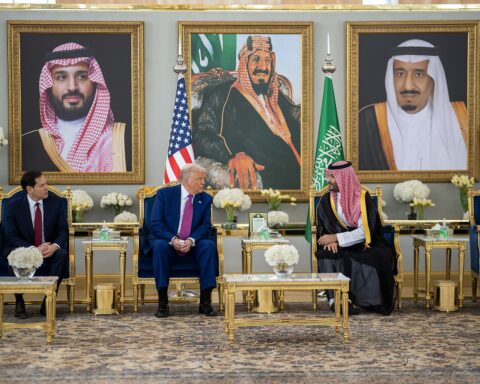
Foreign Minister Faisal bin Farhan had a co-guarantor seat at the March 29-30 Islamabad rounds. He does not have one on April 10. The format shifted to a Vance-Ghalibaf principal-level bilateral — and Ghalibaf, whatever his civilian title, represents the IRGC institutional position. Saudi Arabia’s compliance with the US security framework — hosting Prince Sultan Air Base ($1 billion-plus, Saudi-funded, 2,000-3,000 US troops, struck by 6 ballistic missiles and 29 drones on March 28) — has not purchased it a seat at the table where Hormuz’s future is being discussed.
The exclusion is compounded by a deployment that made Pakistan’s dual role visible. On April 10, Pakistani Air Force Il-78MP tankers landed at King Abdulaziz Air Base in Saudi Arabia — the physical activation of the Saudi-Pakistan SMDA pact that obligates Islamabad to treat Iranian aggression against Saudi Arabia as aggression against itself. Pakistan is simultaneously Iran’s host and Saudi Arabia’s activated military partner.
The custodian identity transforms this silence into something more corrosive than diplomatic marginalization. If Hajj is disrupted — by IRGC action, by a ceasefire collapse, by a Hormuz re-closure that grounds charter flights due to airspace closures — the failure attaches to the Saudi state at the level of identity, not policy. The 2015 Mina stampede, which killed 769 people by Saudi count and over 2,400 by Iran’s, gave Khamenei the platform to demand Saudi accountability and Nasrallah the platform to call for stripping Saudi Arabia of Hajj management. A wartime Hajj disruption in 2026 would supply the same ammunition to a wider audience.
The 1987 Precedent and What Is Different Now
IRGC weaponization of the Hajj is not improvised. It is doctrinal. The practice traces to a 1971 instruction from Khomeini — eight years before the revolution — directing political demonstrations during the pilgrimage. The 1987 Mecca incident was its most lethal expression: 402 killed, including 275 Iranian pilgrims, when an IRGC-organized demonstration escalated inside the Grand Mosque. Evidence of premeditated weapon concealment — knives and clubs — was recovered afterward. Saudi Arabia severed diplomatic ties with Iran for four years and cut the Iranian pilgrim quota from 150,000 to 45,000.
The 2015 Mina stampede, though not an IRGC operation, demonstrated how Iran instrumentalizes Hajj failures. Khamenei threatened a “tough response.” Nasrallah called for internationalizing custody of the holy sites. The incident became a recurring element in Iranian diplomatic pressure campaigns for years afterward.
“Under such circumstances, neither a bilateral ceasefire nor negotiations have any meaning.”Mohammad Baqer Ghalibaf, WANA, April 8, 2026
What has changed in 2026 is the constraint structure. Iran’s pre-war Hajj quota was approximately 87,500 pilgrims. No Iranian pilgrims are in Saudi Arabia for 2026 — no transport links exist, no bilateral arrangements are in place. In 1987, the presence of 150,000 Iranian citizens inside the Kingdom functioned as a mutual deterrent: Iran could weaponize them, but Saudi Arabia could also hold them as de facto hostages to Iranian behavior. That reciprocal constraint does not exist now.
Zero Iranian pilgrims means the IRGC faces no domestic political cost from a Hajj disruption. No Iranian families are at risk. No Iranian constituency will blame the Revolutionary Guard if missile debris falls on Mecca. The political cost falls entirely on Saudi Arabia — on the custodian — while the IRGC bears none.
This asymmetry extends to the information domain. In 1987, Iran could credibly claim its pilgrims were victims of Saudi security forces — and did, to devastating diplomatic effect. In 2026, any Hajj disruption will be framed by Tehran as evidence of Saudi incompetence or recklessness, without the complicating factor of Iranian casualties that might invite scrutiny of Iran’s own role. The IRGC’s April 3 counter-target list named infrastructure across four countries, including the King Fahd Causeway — 25 kilometers from Bahrain, the same Bahrain whose airspace has been closed since February 28. Proximity to civilian concentrations has not historically constrained IRGC targeting.
Foreign Minister Araghchi’s framing that Hormuz reopening requires “coordination with Iranian armed forces” institutionalizes IRGC operational control over the strait even under a ceasefire. Applied to the Hajj window, it means the IRGC holds the ability to re-close Hormuz, disrupt regional airspace, and trigger a security crisis in the Hejaz without risking a single Iranian citizen on Saudi soil. The Hormuz re-closure mechanism was tested and proven on April 8. The Hajj window opens in nine days.
What Does a Successful Islamabad Outcome Look Like for Saudi Arabia?
What Riyadh needs from the Islamabad bilateral is straightforward to state and structurally impossible to obtain from this format: Hormuz fully and irreversibly reopened, the ceasefire made enforceable against IRGC field units operating under decentralized authority, and the IRGC bound by any political agreement its civilian representatives sign. The gap between these requirements and what Islamabad can deliver is the gap between Saudi Arabia’s exposure and its influence.
The Islamabad Accords framework — an immediate ceasefire MOU with a 15-20 day timeline — and the Witkoff 45-day phased framework both defer Hormuz to later phases. Iran’s 10-point plan includes Point 7, requiring “coordination with Armed Forces of Iran” for Hormuz operations, and Point 8, demanding US base withdrawal from all regional bases. Point 10 calls for UNSC codification. Each of these points directly affects Saudi Arabia. None of them will be negotiated with Saudi Arabia in the room.
A Ghalibaf walkout — citing the three violations he has already identified — would collapse the bilateral without producing a replacement framework before the ceasefire expires on April 22. A Ghalibaf agreement would likely defer Hormuz and enrichment to a Phase 2 that structurally cannot begin before Hajj peak. A partial agreement — the most commonly predicted outcome — would leave the Lebanon trigger intact, the enrichment contradiction unresolved, and the drone incursion available for future inflation.
Each of these outcomes leaves Saudi Arabia inside the 38-day window with the same 400 interceptors, the same absent seat at the table, and 2 million pilgrims whose safety the Kingdom has pledged before God and the international community to guarantee. The Vance-Ghalibaf bilateral is, in this sense, being conducted over Saudi Arabia’s body without its consent — a negotiation about the strait through which Saudi oil flows, the airspace through which Saudi pilgrims fly, and the ceasefire whose collapse would land on Saudi soil.
Iran’s President Pezeshkian warned in the days before the talks opened that the economy would “collapse in 3-4 weeks.” The warning was ignored inside the IRGC’s decision structure. The SNSC’s formulation — “negotiations are continuation of battlefield” — is the framework under which Ghalibaf operates. He arrived in Islamabad already holding the exit. The three violations are his stated justification. The Hajj window is the calendar that gives that justification its maximum coercive force. Whether he walks out on April 10 or April 15 or April 21, the mechanism is the same. The timing is the weapon. The same exit architecture Iran built around its three pre-filed violations is now deployed against Lebanon’s inclusion, as Iran’s state media denial of its delegation’s presence in Pakistan confirmed on April 10.
Frequently Asked Questions
Could Iran actually target Mecca or Medina during Hajj?
Iran’s ballistic missile arsenal, though damaged, retains the range to reach the Hejaz. The IRGC’s Shahab-3 and Emad variants have demonstrated ranges exceeding 1,800 kilometers, sufficient to reach Mecca from western Iranian launch sites. However, a deliberate strike on the Grand Mosque would constitute an attack on the holiest site in Islam and would alienate every Muslim-majority country, including Iran’s own allies. The more plausible risk is not a deliberate strike on the holy sites but collateral damage from intercepted missiles — debris from PAC-3 engagements over Mecca airspace — or from attacks on military installations in the broader Hejaz region that produce secondary effects on pilgrim infrastructure. The IRGC’s April 3 counter-target list included infrastructure across four countries; proximity to holy sites has not functioned as an exclusion criterion.
What is Saudi Arabia’s standard Hajj security protocol during conflict?
Saudi Arabia deploys a dedicated Hajj security force that in normal years exceeds 100,000 personnel, including National Guard, Interior Ministry, Civil Defense, and dedicated traffic and crowd-management units. In 2026, this force must be augmented with air defense personnel and assets that would otherwise cover oil infrastructure or military installations. The General Presidency for the Affairs of the Grand Mosque has not published a 2026 Hajj security plan. Bahraini airspace has been closed since February 28, and multiple Gulf states have imposed flight restrictions that could affect charter routing from Southeast Asia and South Asia — the two largest pilgrim source regions.
How many pilgrims will already be inside Saudi Arabia when the ceasefire expires on April 22?
Based on published charter schedules, Pakistan’s first 186 flights begin arriving in Madinah on April 18, with India’s Madinah-phase flights starting the same day. At standard wide-body charter capacity (350-450 passengers per flight), between 80,000 and 120,000 pilgrims from Pakistan and India alone could be on Saudi soil by April 22. Indonesia’s first charters depart on April 22 itself. The total international pilgrim count inside the Kingdom on the ceasefire expiry date is likely between 100,000 and 150,000 — a population whose evacuation, in the event of a ceasefire collapse, would require the same airspace and transport corridors that a renewed conflict would degrade.
Has Iran previously tested Hormuz disruption during the Hajj season?
Iran has not previously closed or blockaded Hormuz during a Hajj season. The 1987 confrontation — the closest precedent — involved demonstrations inside Saudi Arabia, not maritime action. During the 1984-88 Tanker War, both Iran and Iraq attacked commercial shipping in the Gulf, but neither side linked maritime operations to the Hajj calendar explicitly. The 2026 innovation is the coupling: Iran’s demonstrated ability to close and reopen Hormuz on short notice (proven April 8), combined with a Hajj season during which Saudi Arabia’s response capacity is constrained by pilgrim protection obligations. This specific combination — maritime closure as a tool calibrated to Hajj timing — has no direct historical precedent.
What happens if the Islamabad talks collapse on April 10?
A collapse would leave the two-week ceasefire nominally in effect through April 22 but without a follow-on framework. The ceasefire’s enforcement mechanism is already questionable — post-ceasefire attacks on April 8-9 included 84 drone and missile intercepts across four Gulf states. Without a Phase 2 agreement, the ceasefire simply expires. Ghalibaf’s stated position — that violations have already rendered both ceasefire and negotiations meaningless — provides the IRGC with a publicly articulated justification for resuming Hormuz closure at a time of its choosing. The 12-day gap between a potential April 10 collapse and the ceasefire’s April 22 expiry would coincide precisely with the beginning of mass pilgrim arrivals.
The consequence for Saudi Arabia is that the ceasefire window coincides precisely with the Hajj security gap that MBS cannot defer — a collision of religious calendar and truce arithmetic that gives Iran passive veto power over pilgrim safety without requiring any affirmative action from Tehran.
The contradiction extends to Washington, where Trump’s “lethal prosecution” threat and Vance’s Islamabad mission ran simultaneously on April 9, a dual-track signalling failure with direct consequences for Saudi Arabia’s pending decisions. That same afternoon, Netanyahu’s decision to authorize direct Israel-Lebanon negotiations at the State Department added a third track — one that Iran has explicitly said changes nothing about its Hormuz posture.
Before the session opened, Iran filed a formal three-count ceasefire violation brief against the United States, turning the opening session into a documented grievance exchange rather than a framework negotiation.