
Table of Contents
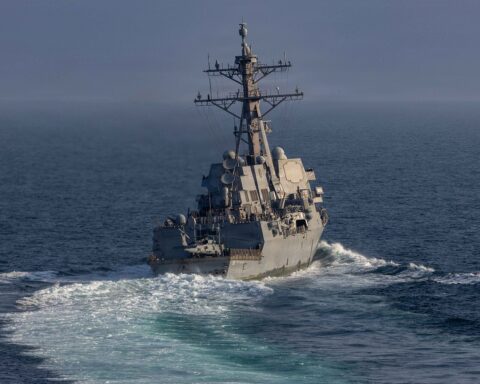
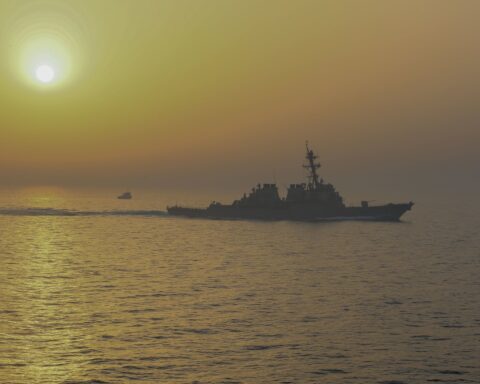
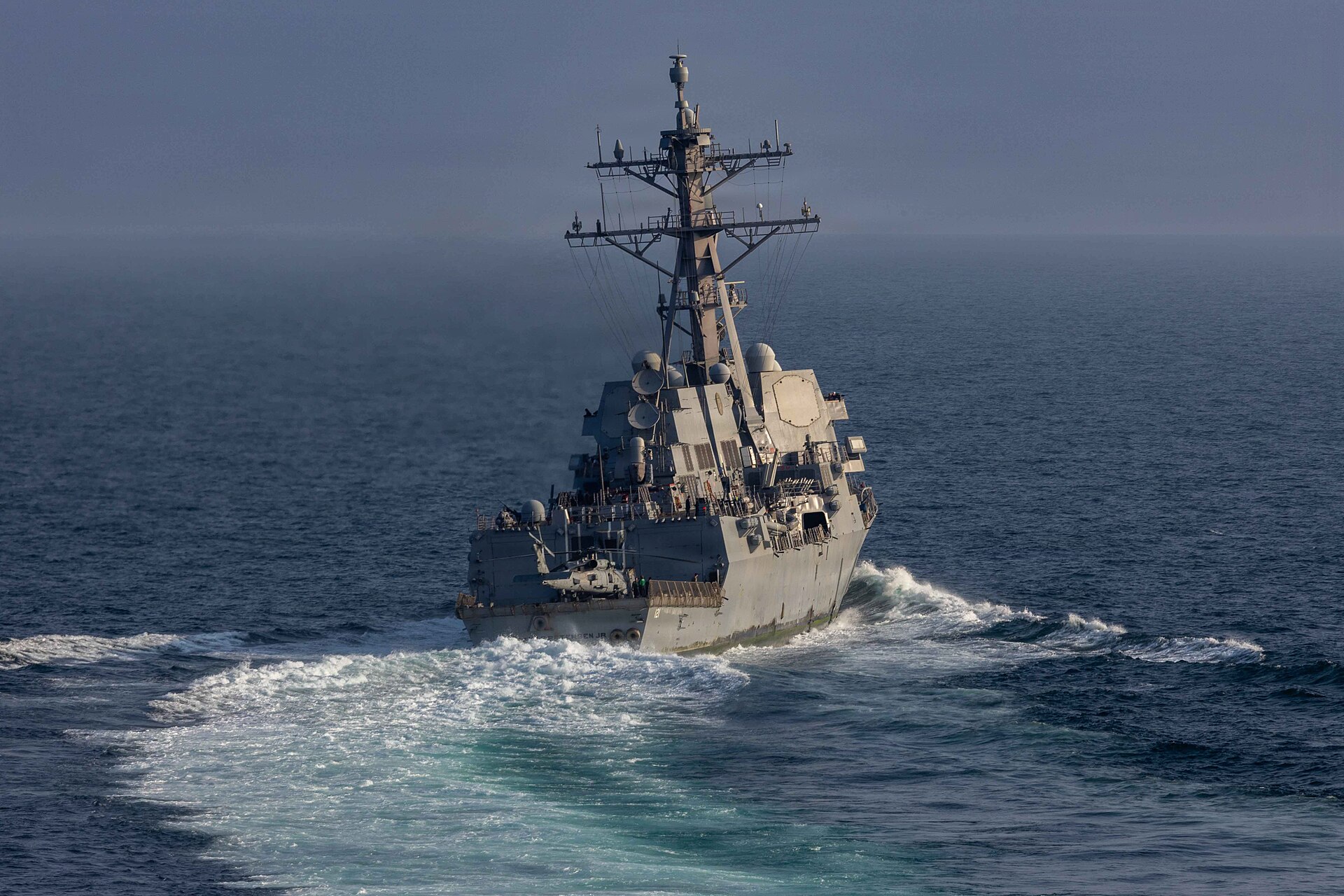
WASHINGTON — The United States began mine clearance operations in the Strait of Hormuz on April 11, sending two guided-missile destroyers — USS Frank E. Petersen Jr. and USS Michael Murphy — into waters that US military intelligence has known since March 10 are being actively seeded with Iranian naval mines, including during the ceasefire that was supposed to reopen the waterway. Admiral Brad Cooper, CENTCOM’s commander, said forces would “establish a new passage” and share a safe corridor with commercial shipping “soon” — but the math behind that promise does not work, because the US no longer owns the ships designed to do it.
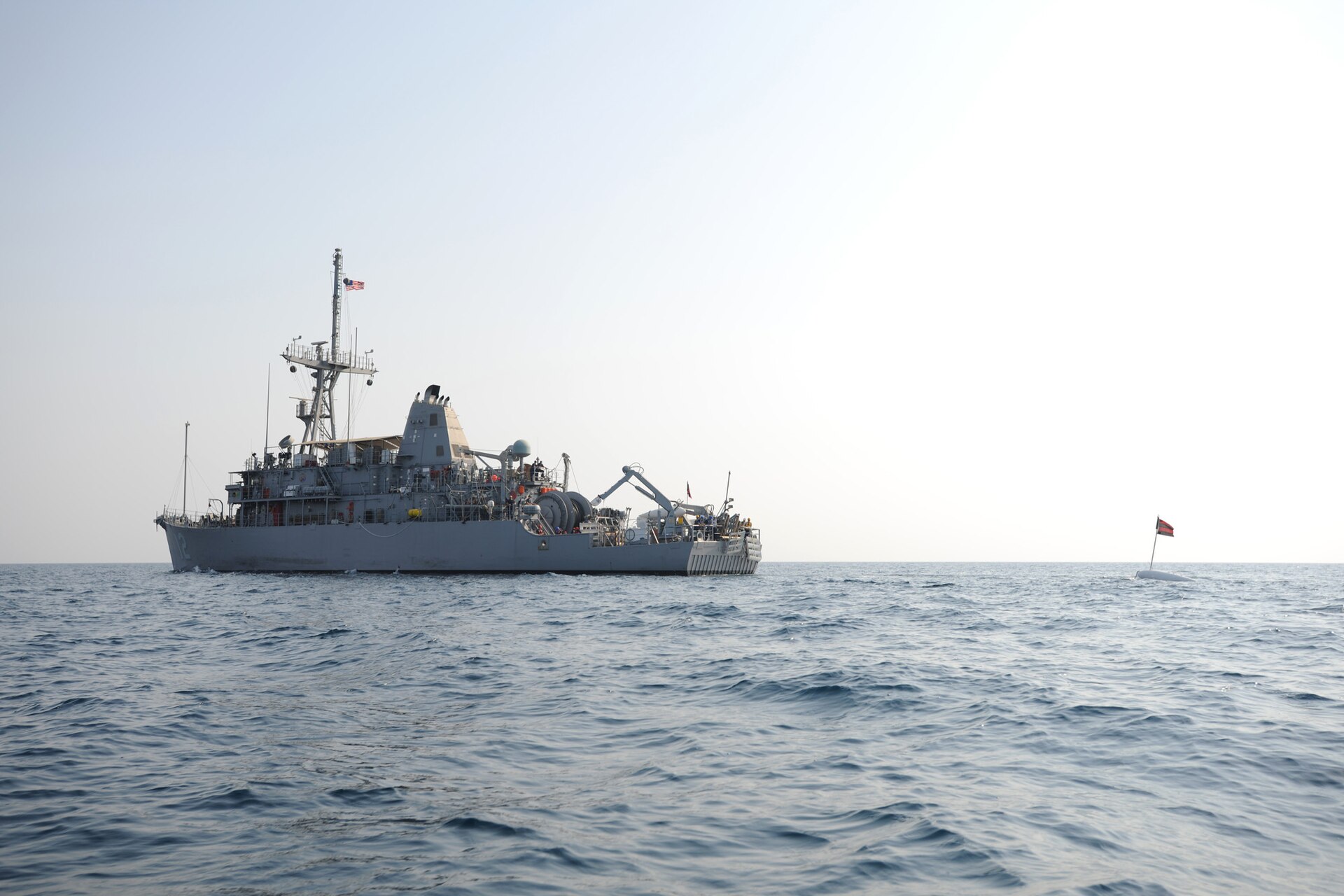
The four Avenger-class mine countermeasures vessels that were forward-deployed in Bahrain for exactly this scenario were decommissioned in September 2025, six months before the war began. Their replacements — modular packages bolted onto Littoral Combat Ships, plus Knifefish unmanned underwater vehicles built by General Dynamics — achieved initial operational capability only in 2023 and have never been tested in a contested environment where new mines are still being laid. The ceasefire expires April 22, eleven days from now. The benchmark for clearing a comparable minefield, derived from the 1991 Kuwait operation, is 51 days — with purpose-built ships the US no longer has.
What CENTCOM Found — and What It Cannot Find
Iran began laying mines in the main traffic zone of the Strait of Hormuz on or around March 10, according to US military intelligence first reported by CNN. By late March, CBS News confirmed “at least a dozen” mines had been detected. CENTCOM says it has destroyed 16 Iranian minelayer boats during the conflict — purpose-built vessels whose sole function is deploying naval mines. Trump went further on Truth Social on April 11, claiming “all 28 of their mine dropper boats are also lying at the bottom of the sea,” a figure that Iranian state television disputed and that no US military official has corroborated.
The number of boats destroyed matters less than what Iran still has. Euronews, citing US officials, reported on April 11 that Iran retains “hundreds of small boats” capable of deploying mines — fishing dhows, fast-attack craft, anything with a deck and a crew willing to push ordnance overboard at night. Sinking dedicated minelayers is like confiscating a burglar’s lockpicks while leaving him a crowbar; Bob McNally, founder of Rapidan Energy, told Fortune the challenge amounts to “a game of whack-a-mole,” because the laying capacity is dispersed across Iran’s entire small-craft fleet and coastline.
The IRGC Navy’s own navigational advisory, published in April, acknowledged the mines exist without quite admitting to planting them: “Due to the past war situation and possible anti-ship mines in the main traffic zone of the Strait of Hormuz, all vessels are advised to coordinate with the IRGC Navy and use alternative routes until further notice.” The Iranian Ports and Maritime Organization went a step further, publishing alternative shipping routes to “avoid possible collisions with sea mines” — a bureaucratic euphemism for an active minefield that Iran simultaneously claims is not its problem.
Why Can’t the US Just Clear the Mines?
Admiral Daryl Caudle, the Chief of Naval Operations, put it plainly in USNI Proceedings this month: “Mine search and destruction is slow, deliberate work,” he wrote, adding that “none of these options performs well in a non-permissive environment.” A non-permissive environment means one where the enemy is still shooting — or, in this case, still laying mines while you try to find the ones already there. The 1991 Kuwait clearance operation, which is the closest historical benchmark, took 51 days to sweep roughly 200 square miles of shallow water, and that was with a full squadron of Avenger-class MCM ships, uncontested airspace, and an enemy that had stopped mining weeks earlier.
The Middle East briefing 3,000+ readers start their day with.
One email. Every weekday morning. Free.
None of those conditions apply today. The four Avenger-class ships that spent years in Bahrain, whose wooden hulls were specifically designed to avoid triggering magnetic mines, were decommissioned as part of a fleet modernization that replaced proven hardware with systems that have never been tested under fire. The replacement doctrine relies on LCS-based modular mine countermeasures packages — equipment that can be swapped onto a Littoral Combat Ship the way you’d bolt a snowplow onto a truck — and the Knifefish unmanned underwater vehicle, an autonomous drone that hunts mines on the seabed. The Knifefish, built by General Dynamics, reached initial operational capability in 2023. It has never operated in a strait where Iranian fast boats are actively dumping new ordnance into the water.
The mine types compound the problem. Iran’s arsenal — estimated at more than 2,000 mines by the Strauss Center — includes the EM-52, a Chinese-supplied rocket-propelled rising mine that sits on the seabed at depths of up to 600 feet, activating on acoustic, magnetic, and pressure signatures when a ship passes overhead. It carries a 600-pound high-explosive warhead and rises to strike the hull from below. The EM-52 cannot be swept by conventional minesweeping equipment — it requires individual detection and neutralization, which is exactly the kind of slow, painstaking work Caudle described, and exactly the kind of work that becomes impossible when the minefield is being replenished faster than it can be cleared.
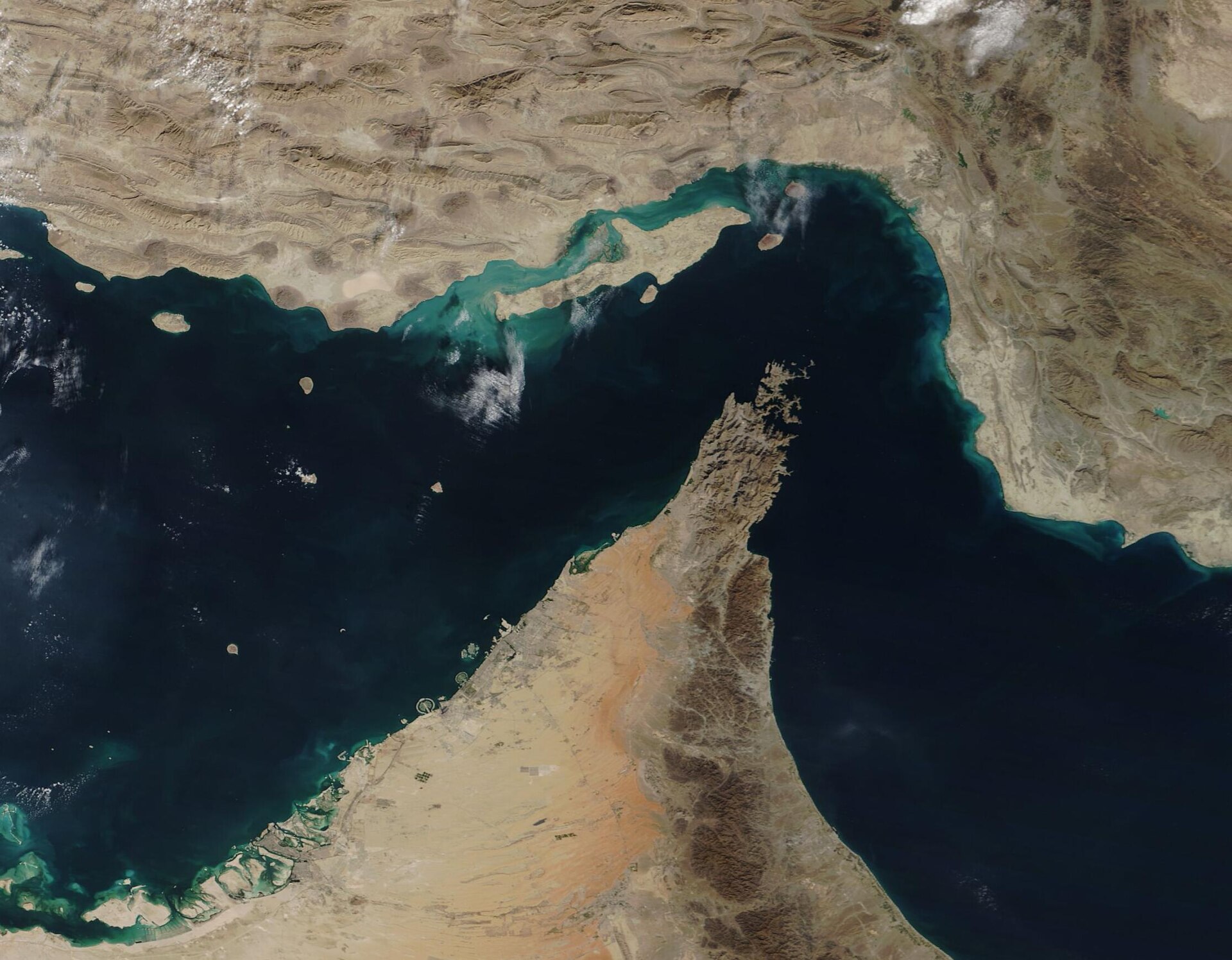
The ceasefire text, agreed on April 8, requires the strait to be “completely and immediately” reopened. Iranian Foreign Minister Abbas Araghchi responded that reopening would take place “taking into account technical constraints” — a phrase that does the diplomatic work of converting an IRGC military campaign into an engineering inconvenience. Even if mining stopped entirely on April 8 and the US had its full MCM fleet available, 51 days from the ceasefire start would be May 29 — five weeks after the April 22 expiration. With active mining continuing and the Avengers gone, the real timeline is longer, and no one in CENTCOM is willing to estimate it publicly.
“Mine search and destruction is slow, deliberate work. None of these options performs well in a non-permissive environment.”
Admiral Daryl Caudle, Chief of Naval Operations, USNI Proceedings, April 2026
The IRGC Is Mining While Araghchi Is Talking
The mine-laying pattern during the ceasefire is the most concrete evidence yet of the split between Iran’s diplomatic apparatus and the IRGC’s operational command — a fracture that has shaped every phase of this war and that defined the authorization ceiling inside the Islamabad negotiation room. Araghchi negotiated a ceasefire that included Hormuz reopening as a core requirement, then returned to a military establishment that continued mining the waterway his agreement was supposed to clear. The IRGC Navy declared in its April statement that the strait will “never return to its previous status” — a direct contradiction of the ceasefire text Araghchi’s team agreed to four days earlier.
This is not ambiguity or miscommunication; it is two Iranian power structures pursuing opposite objectives through the same waterway. Araghchi went to Islamabad to negotiate terms. The IRGC Navy declared “full authority to manage the Strait” on April 5 and again on April 10 — while Araghchi was still in Islamabad — and its 10-point plan requires all Hormuz transit to occur under “coordination with the Armed Forces of Iran,” which means any US-led mine clearance operation is, under Iran’s own framework, a ceasefire violation regardless of what Araghchi signed. VP JD Vance, after 21 hours of negotiations that ended without agreement on April 12, said Iran “has chosen not to accept our terms.”
The IRGC’s commander for the strait, Admiral Alireza Tangsiri, was killed on March 30, and no named successor has been announced — meaning the naval command that controls Hormuz is operationally active but institutionally headless. Orders are flowing from a command structure where Supreme Leader Khamenei has been absent for over 39 days, the SNSC secretary Zolghadr is under US and EU sanctions, and Phase 2 of the ceasefire — which was supposed to address Hormuz — was functionally dead before the ceasefire started. The mines being laid right now are not the product of a policy decision that Araghchi can reverse with a phone call; they are the product of a decentralized military apparatus that has decided the strait is its primary instrument of coercion and will not surrender it to a diplomatic process it did not authorize.
Iran Lost the Map
The most dangerous revelation in the April 11 reporting is not that Iran is still mining — it is that Iran cannot locate all the mines it has already planted. US officials told the New York Times that Iran “may not have accurate records of the locations of all the mines it has planted” and that “the planting was random and disorganised.” Some mines have been swept away by currents, settling into positions that neither Iran nor the United States can predict. Neither side, according to Euronews, has “a clear picture of how many mines remain or where they are deployed.”
This transforms the clearance problem from difficult to structurally unsolvable within any fixed timeline. When the US cleared Kuwait’s minefields in 1991, it was working against a static threat — Iraq had stopped mining, the locations were roughly known, and the task was methodical elimination. In the Strait of Hormuz in April 2026, the minefield is dynamic: mines are being added, mines are drifting, and the entity that planted them cannot produce a chart showing where they are, even if it wanted to. Admiral Cooper’s promise of a “safe pathway” requires either clearing the entire strait or identifying a narrow corridor that can be verified mine-free — and verification is impossible when the baseline number of mines is unknown and the IRGC retains the capacity to add more overnight.
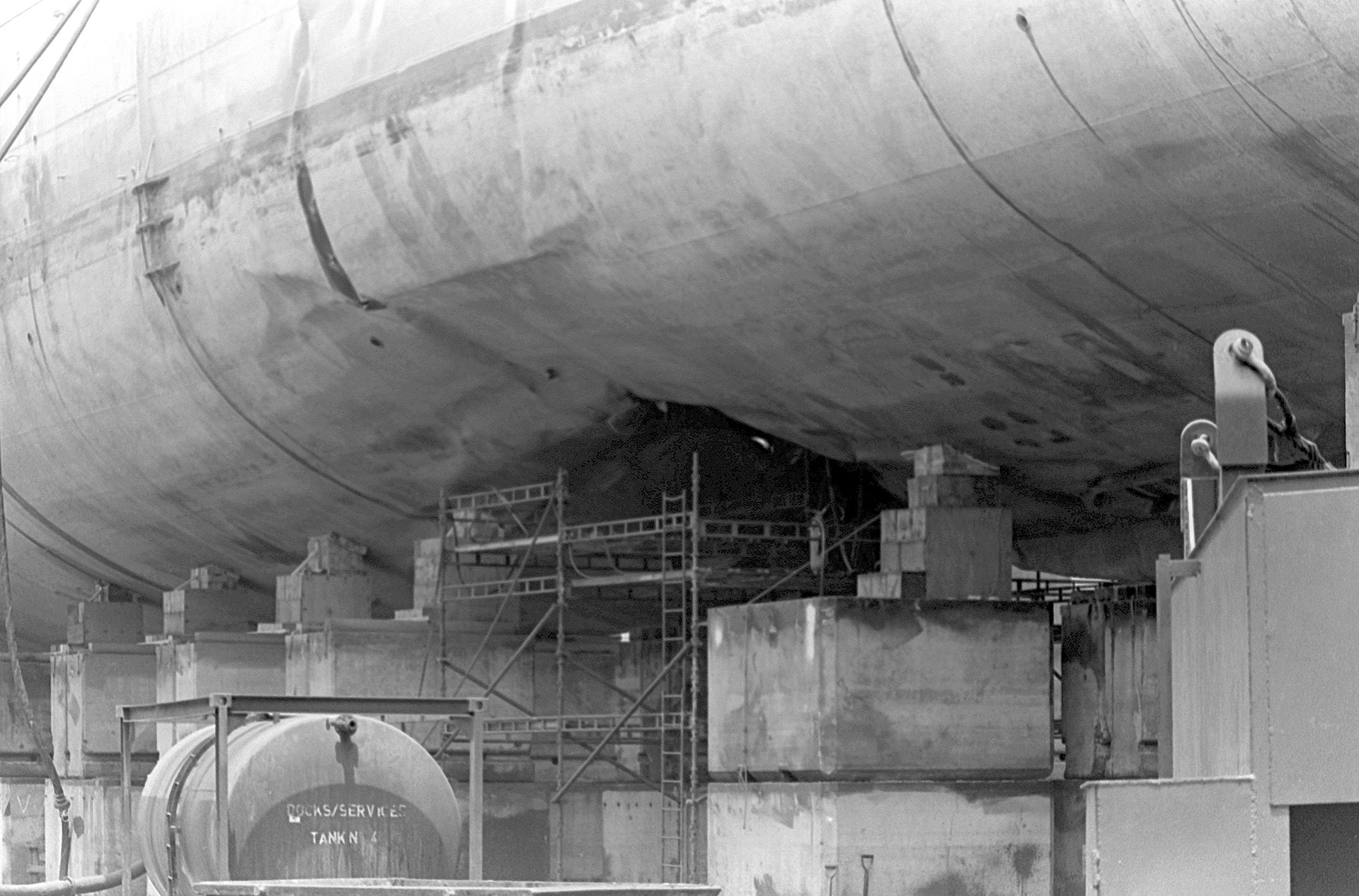
The precedent that haunts every naval planner in the Gulf is the USS Samuel B. Roberts, which struck a single Iranian moored contact mine on April 14, 1988, during Operation Earnest Will — tearing a 15-foot hole in the hull, breaking the keel, and flooding the engine room. The US retaliated four days later with Operation Praying Mantis, the largest American naval surface engagement since World War II. That was one mine from a conflict where Iran laid roughly 100, in a strait that the US was actively patrolling with dedicated MCM assets. The current minefield is larger, more sophisticated, and being maintained by an adversary that has not stopped.
What Does This Mean for Saudi Oil Exports?
The strait is currently passing roughly 15 to 20 ships per day, according to Windward Maritime data from April 10 — about 11 percent of the pre-war average of 138 daily transits. More than 800 vessels remain stranded inside the Gulf, unable to exit through a waterway that Iran’s own maritime authority has told them to avoid. Saudi Arabia’s East-West Pipeline to Yanbu, which was supposed to be the bypass that made Hormuz closure survivable, can move approximately 5 to 5.9 million barrels per day — but Saudi pre-war exports through Hormuz ran at 7 to 7.5 million barrels per day, leaving a structural gap of 1.1 to 2.5 million barrels per day that cannot be filled by any existing infrastructure.
That gap was supposed to be temporary — a wartime constraint that would resolve when the ceasefire reopened the strait. The mine-laying pattern makes it permanent for as long as clearance remains incomplete, which, given the 51-day benchmark with ships the US no longer has, means well past the April 22 ceasefire expiration and potentially into June or July. The total pre-war Hormuz throughput was approximately 20 million barrels per day; total global bypass capacity, including Yanbu, IPSA through Turkey, and the UAE’s Fujairah pipeline, is roughly 6.5 million barrels per day — leaving a theoretical shortfall of 13.5 million barrels per day if the strait were fully closed. It is not fully closed, but at 11 percent throughput, the effective shortfall is still catastrophic for every Gulf exporter and every Asian buyer dependent on Gulf crude.
Trump framed the clearance operation on Truth Social as a charitable act: “We’re now starting the process of clearing out the Strait of Hormuz as a favor to Countries all over the World, including China, Japan, South Korea, France, Germany, and many others.” The countries he listed are the ones whose economies depend on the oil that cannot get through the mines his administration lacks the equipment to clear on any timeline compatible with the ceasefire it brokered.
Background: The Strait That Feeds the World
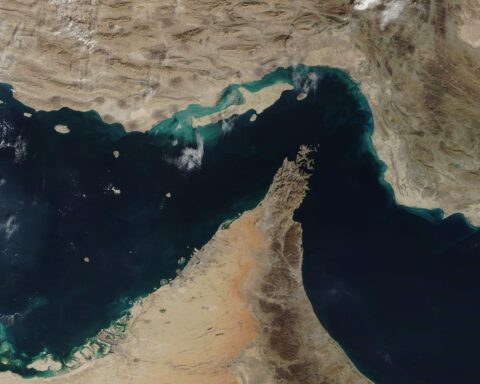
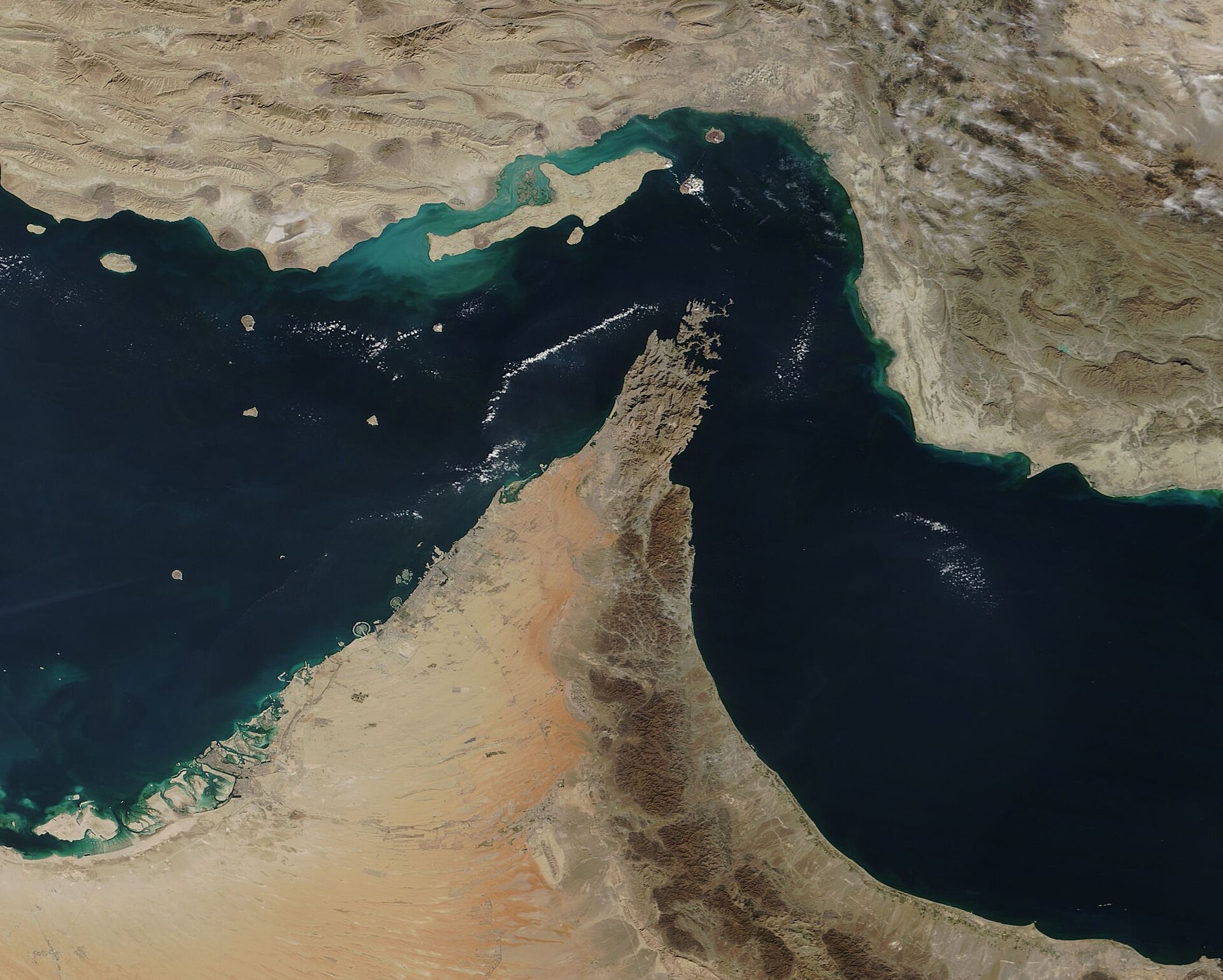
The Strait of Hormuz, 21 miles wide at its narrowest point between Iran and Oman, carried roughly one-fifth of the world’s daily oil consumption before the war began on February 28, 2026. Iran’s mining campaign, which US intelligence detected from March 10, represents the first large-scale naval mining of an international waterway since Iraq mined Kuwaiti waters during the 1990-91 Gulf War — and the first time a state has mined a strait through which its own adversaries’ energy supplies flow while simultaneously negotiating a ceasefire that requires that strait to reopen.
The IRGC’s mine arsenal predates this conflict by decades. Iran began stockpiling naval mines during the Iran-Iraq War, importing Chinese-designed EM-52 rocket-propelled rising mines and Soviet-era contact mines, and developing indigenous variants through its defense industry. Even after US strikes on minelayers and storage sites, the stockpile leaves a substantial reserve. The two destroyers that transited the strait on April 11 are guided-missile ships designed to fight surface and air threats, not to find objects sitting on the seabed in 200 feet of murky water; their transit was a statement of intent, not a mine clearance operation.
Iran declared the destroyer transit a ceasefire violation. Bloomberg reported the destroyers were forced to turn back after IRGC warnings; a senior US official cited by Axios disputed this, saying no threats were received. The IRGC launched a drone in response. The contradictory accounts — Bloomberg’s sources saying one thing, Axios’s saying another — illustrate a conflict where the information environment is as contested as the waterway itself, and where the ceasefire’s meaning depends on which institution in Tehran you ask.
FAQ
How long would mine clearance realistically take without the Avenger-class ships?
The 51-day benchmark comes from the 1991 Kuwait operation, which used purpose-built MCM ships operating in uncontested waters against a static, mapped minefield. Current US assets — LCS modular packages and Knifefish UUVs — are slower, less proven, and operating against a minefield that is still growing. Naval analysts have not published a revised public estimate, but McNally of Rapidan Energy told Fortune that conditions for real reopening will be “stronger later this month” — meaning even optimistic assessments do not see clearance before the April 22 ceasefire deadline. A reasonable inference from the available data is that meaningful clearance — enough to restore even 50 percent of pre-war throughput — could take 60 to 90 days from the point mining stops entirely, which it has not.
Could Iran remove its own mines if it wanted to?
US officials told the New York Times that Iran itself “cannot locate all the mines they placed and lack the capacity to remove them.” Currents have moved mines from their original positions, compounding the disorganisation the US described in the original laying. Even a fully cooperative Iranian government — which does not exist, given the IRGC-Araghchi split — could not produce a reliable chart of mine locations. Iran’s MCM capabilities are minimal compared to the scale of the problem its own forces created.
What is the insurance situation for commercial ships transiting Hormuz right now?
War risk insurance premiums for Gulf transits have risen to between 3 and 5 percent of hull value since the conflict began, according to Lloyd’s market sources — up from a fraction of a percent pre-war. At current rates, a VLCC valued at $120 million faces a single-transit premium of $3.6 to $6 million, making many voyages commercially unviable even if a captain were willing to risk the passage. Several major insurers have excluded the strait entirely from standard coverage, requiring bespoke war-risk policies that take days to arrange and price in the minefield as an ongoing threat rather than a historical one.
Has the US used underwater drones for mine clearance in combat before?
The Knifefish UUV, the primary autonomous mine-hunting system in the US inventory, achieved initial operational capability in 2023 and has been tested in exercises, but April 2026 marks its first deployment into a contested active-mining environment. DefenseScoop reported on April 11 that underwater drones would follow the destroyer transit “in the coming days.” The system is designed to detect and classify mines autonomously, but its performance in the Hormuz environment — strong currents, poor visibility, variable depths, and potential IRGC interference — is untested. CENTCOM has not disclosed how many Knifefish units are available in theater.
What happens to stranded vessels if the ceasefire expires without Hormuz reopening?
More than 800 commercial vessels remain inside the Gulf, unable to exit through the mined strait. If the ceasefire expires on April 22 without a clearance corridor, these ships face three options: wait indefinitely, attempt transit through an unverified corridor at extreme insurance cost and physical risk, or — for smaller vessels — reroute through the Khor al-Amaya channel toward Iraqi waters and then overland pipeline networks, which lack the capacity to substitute for Hormuz. Tanker owners with vessels trapped inside the Gulf are already incurring demurrage costs of $50,000 to $150,000 per day per VLCC according to shipbroker estimates, costs that will be passed to crude buyers in Asia.