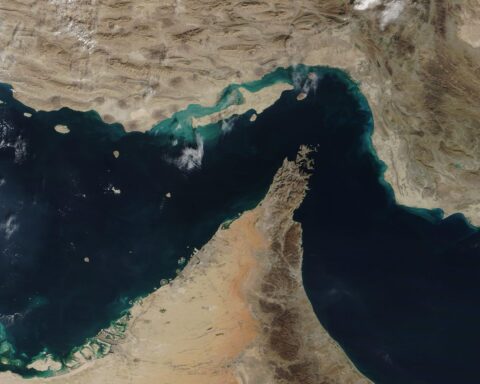
DHAHRAN — The Strait of Hormuz now has two operating systems running simultaneously, and they are designed to destroy each other. On April 11, the USS Frank E. Peterson and USS Michael Murphy became the first American warships to transit Hormuz since the war began, asserting transit passage rights under a legal doctrine none of the three countries that matter — the United States, Iran, and Israel — have ever ratified into treaty law; on the same day, at least three commercial vessels crossed in the opposite direction under a Chinese-brokered arrangement that requires captains to request IRGC permission and pay up to $2 million per ship in yuan through Kunlun Bank, outside SWIFT, outside the dollar system, and outside any framework Washington recognizes as legitimate. On April 12, tanker transit patterns after the Islamabad collapse revealed the limits of that architecture: two supertankers turned back when talks failed, while the Mombasa B — a Korean-managed VLCC — completed what appears to be the last low-jeopardy passage before Trump’s blockade declaration.
Saudi Arabia needs both lanes to function and cannot publicly endorse either. The military lane promises that Hormuz transit is a right, not a favor — but a guided-missile destroyer drawing 31 feet of water is not a supertanker drawing 72 feet, and the mine-clearing operation behind that assertion will take until late summer at the earliest. The commercial lane is moving crude today, but every barrel that transits under IRGC “coordination” cements the principle that Iran can charge admission to international waters. Riyadh is watching two incompatible futures unfold in real time, and it cannot choose.
Table of Contents
- The Two Lanes: What Happened on April 11
- Why Can a Destroyer Cross but a Supertanker Cannot?
- The UNCLOS Paradox: Three Non-Ratifiers Fighting Over a Treaty None of Them Signed
- Beijing’s Toll Road — and the Dollar System It Bypasses
- Can Iran Even Guarantee the Safety It Sells?
- The Mine-Clearing Gap America Built for Itself
- Saudi Arabia’s Impossible Position
- What Operation Earnest Will Actually Taught — and What Washington Forgot
- The June OSP Decision Nobody Wants to Make
- FAQ
The Two Lanes: What Happened on April 11
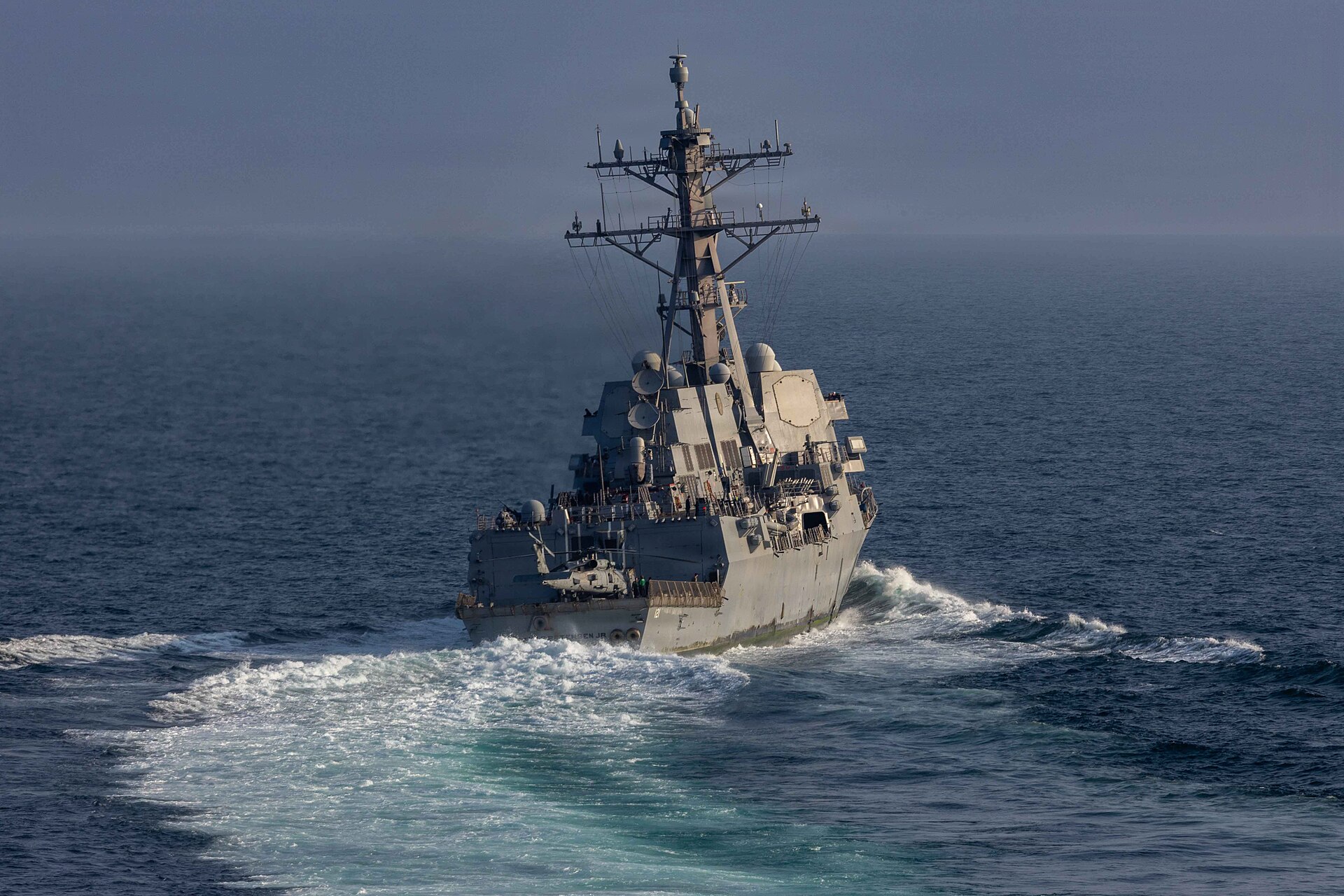
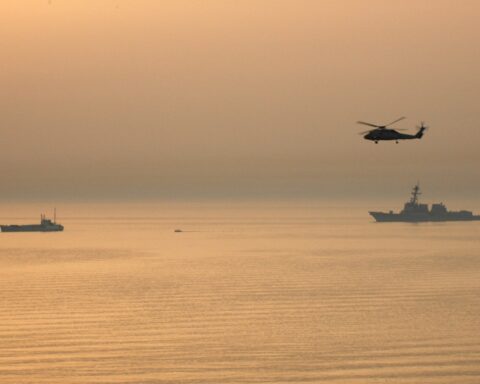
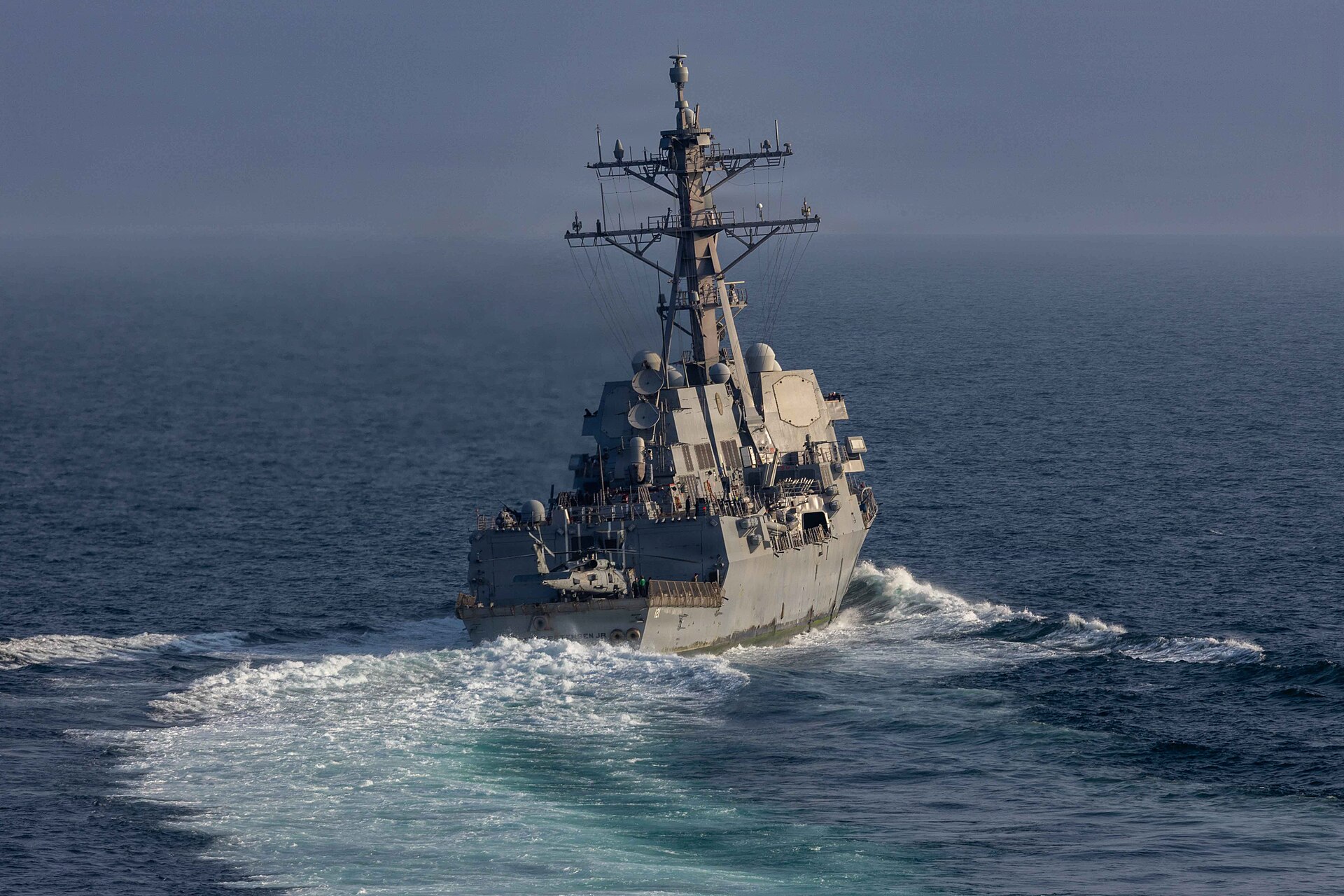
CENTCOM announced the mine-clearing mission the same morning two Arleigh Burke-class destroyers pushed through the strait at speed, the kind of transit designed to generate headlines and establish facts on the water. The Frank E. Peterson and Michael Murphy crossed without incident — or rather, without incident that CENTCOM reported. Iran’s Tasnim news agency, which operates close enough to the IRGC to function as its English-language press office, told a different story: the American destroyer “was not granted permission” and turned back after a Pakistani mediator relayed an Iranian warning. Both versions cannot be true, and the disagreement is itself the point, because the entire architecture of Hormuz now depends on whether transit is a right or a privilege.
Hours later, three commercial vessels — two Chinese-flagged and one Greek — completed what appears to be the largest single-day crude exit from the Persian Gulf since the war began on February 28. Whether those ships used the standard Traffic Separation Scheme lanes or the narrow IRGC-designated Qeshm-Larak corridor remains unverified in publicly available tracking data. What is verified is the payment mechanism: yuan, routed through China’s CIPS interbank system, settled via Kunlun Bank on Kish Island, at a reported cost of $2 million per vessel — a fee Iran’s Parliament formally codified in the Strait of Hormuz Management Plan on March 30-31, ten days before the ceasefire and twelve days before CENTCOM’s mine-clearing assertion.
The sequencing matters more than either side wants to admit. Iran legislated the toll before the shooting stopped; CENTCOM asserted transit rights after the commercial lane had already begun issuing receipts. This is not two responses to the same crisis — it is two incompatible regimes layered on top of each other, and the second arrived late.
Why Can a Destroyer Cross but a Supertanker Cannot?
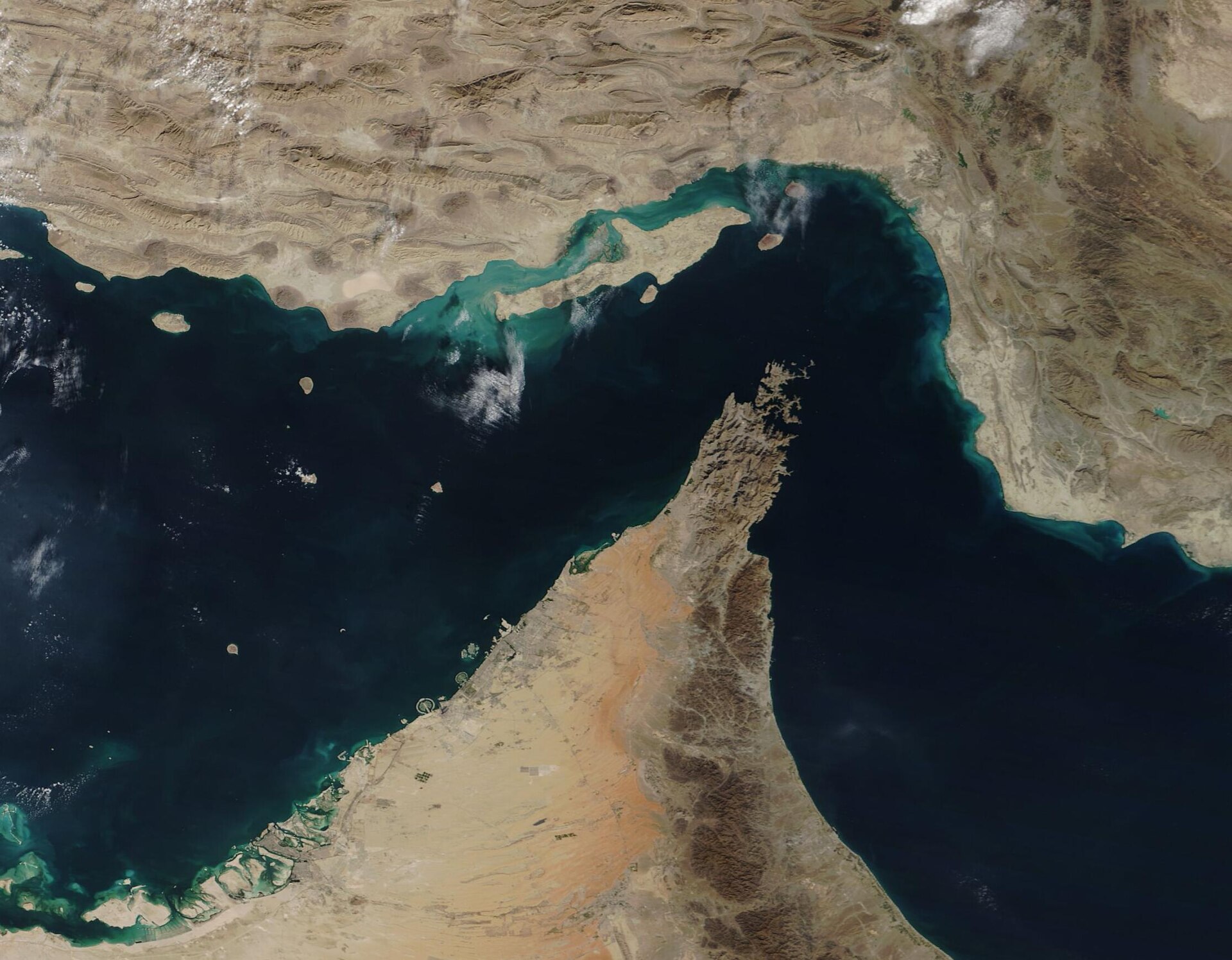
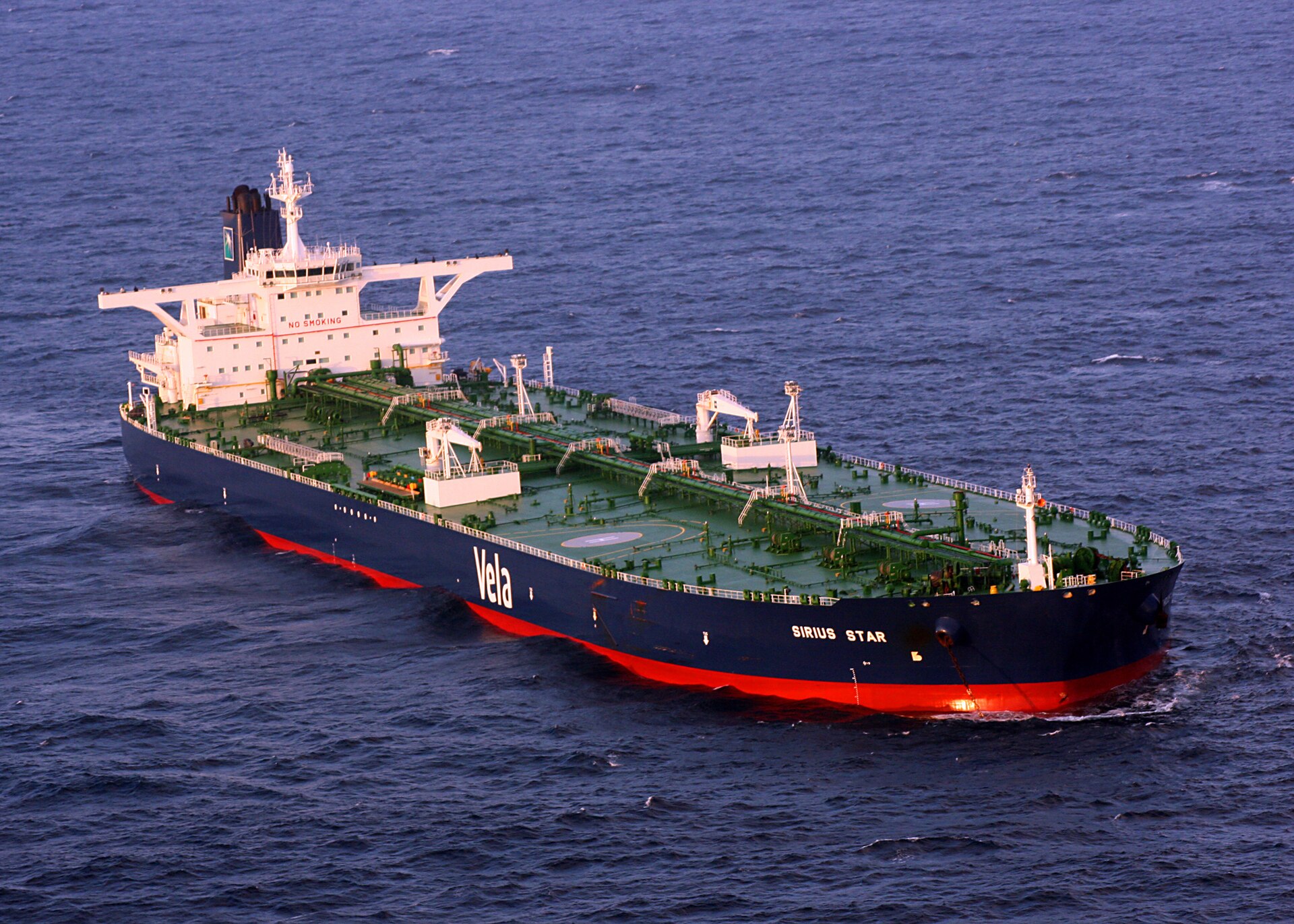
The operational distinction that matters most in the Strait of Hormuz right now is measured in feet of water beneath a hull. An Arleigh Burke-class destroyer draws approximately 31 feet; a fully laden Very Large Crude Carrier — the vessel class that moves the majority of Persian Gulf oil exports — draws approximately 72 feet. The strait’s navigable depth accommodates both, but a minefield does not: a moored contact mine floating at 50 feet passes harmlessly beneath a destroyer and tears open a supertanker. As gCaptain’s shipping analysis put it on April 11: “A guided-missile destroyer drawing 31 feet can transit a mined strait at speed with acceptable risk; a fully laden VLCC drawing 72 feet cannot. The distinction between what a warship can survive and what a supertanker can survive is the distinction between a symbolic transit and a reopened shipping lane.”
The Middle East briefing 3,000+ readers start their day with.
One email. Every weekday morning. Free.
“The distinction between what a warship can survive and what a supertanker can survive is the distinction between a symbolic transit and a reopened shipping lane.”— gCaptain, April 11, 2026
This is not a minor technical footnote — it is the entire gap between CENTCOM’s press release and Saudi Arabia’s export capacity. The destroyers proved that the U.S. Navy can move warships through Hormuz. They did not prove that Aramco can move crude. The 41-foot draft difference between a DDG and a VLCC is the distance between a freedom-of-navigation assertion and an actual commercial reopening, and no amount of Pentagon messaging can close it without first closing the minefield.
The IRGC’s estimated stockpile of 6,000 naval mines includes moored contact mines, bottom-influence mines triggered by a ship’s magnetic or acoustic signature, and drifting mines that are functionally uncontrollable once deployed. The deeper-draft mines are the ones that matter for supertankers, and they are the ones U.S. forces are least equipped to find — a problem that predates this war by years and that the Navy chose not to fix.
The UNCLOS Paradox: Three Non-Ratifiers Fighting Over a Treaty None of Them Signed
CENTCOM’s legal basis for the April 11 transit is transit passage under Part III of the United Nations Convention on the Law of the Sea, specifically Articles 37 through 44, which hold that ships and aircraft of all states enjoy the right of unimpeded transit through straits used for international navigation. The U.S. position, articulated through decades of Freedom of Navigation operations and affirmed in legal scholarship at the Naval War College, is that these provisions have crystallized into binding customary international law — meaning they apply to all states, including those that never ratified UNCLOS. This is a defensible legal argument. It is also spectacularly convenient for a country that rejected UNCLOS ratification in 1982 and has refused to reconsider in every subsequent Congress, precisely because ratification would bind the United States to UNCLOS provisions on deep seabed mining, continental shelf delimitation, and exclusive economic zone enforcement that Washington considers unacceptable.
Iran plays the same game from the other side. Tehran never ratified UNCLOS either, and its 10-point ceasefire framework — published during the Islamabad talks — demands in Point 7 that all Hormuz traffic “coordinate with the Armed Forces of Iran,” a requirement that directly contradicts transit passage doctrine. Iran’s legal cover is not sovereignty but safety: the IRGC Navy’s April 11 statement required vessels to coordinate “to observe maritime safety principles and avoid potential collisions with sea mines.” The framing is deliberate. By invoking mine avoidance rather than territorial sovereignty, Iran positions its toll system as Hague Convention VIII compliance — the 1907 treaty that prohibits mining international waterways without providing safe passage alternatives — rather than as a unilateral assertion of control.
James Kraska, professor of international maritime law at the U.S. Naval War College, has called the toll arrangement one with “no legal basis under international law,” noting that UNCLOS Article 26 explicitly prohibits charges on ships exercising the right of transit passage through international straits. But Kraska’s analysis presupposes the applicability of a convention that his own country’s Senate has declined to ratify for 44 years. The legal framework both sides are invoking is a treaty neither signed, enforced by navies that recognize its authority only where convenient.
Beijing’s Toll Road — and the Dollar System It Bypasses
China’s role in the Hormuz architecture is not accidental — it is structural, and it works because Beijing is the only major power willing to accept Iran’s terms without calling them illegitimate. The commercial lane that moved the Al Daayen LNG carrier in early April and the three VLCCs on April 11 operates through a specific mechanism: yuan-denominated payments processed through Kunlun Bank via China’s Cross-Border Interbank Payment System, settled on Kish Island with IRGC intermediaries, at a reported cost of $2 million per vessel. Bloomberg’s April 1 reporting described the arrangement with precision — “brokered by Beijing, paid for in Chinese yuan through Kunlun Bank, and arranged with IRGC intermediaries on Kish Island.”
Chinese Foreign Ministry spokesperson Mao Ning confirmed on March 31 that “after coordination with relevant parties, three Chinese ships recently transited the Strait of Hormuz” — language that simultaneously acknowledged IRGC involvement (“relevant parties”) and avoided endorsing Iran’s legal framework. By April 8, Mao had shifted to calling for all parties to “work together to facilitate the early resumption of normal passage through the Strait of Hormuz,” a statement that supports openness in principle while Beijing’s banks profit from closure in practice. This is not hypocrisy — it is positioning. Beijing wants Hormuz open on terms that route commercial traffic through Chinese financial infrastructure, which means the optimal outcome for China is not a fully open strait but a partially open strait where passage requires Chinese intermediation.
The dollar-system implications are the part of this architecture that Washington either hasn’t processed or won’t say publicly. Every VLCC that transits under Chinese brokerage is a vessel that moved $100-150 million worth of crude outside the dollar settlement system, and if the IRGC toll becomes permanent — Iran’s Parliament has already legislated it — Kunlun Bank becomes the de facto clearing house for Hormuz commercial traffic.
At pre-war throughput of 138 ships per day, the toll alone would generate approximately $276 million daily, all of it denominated in yuan or crypto, none of it touching a single U.S. correspondent bank. CENTCOM’s mine-clearing mission is, among other things, a race to make the Chinese lane unnecessary before the Chinese lane makes the dollar irrelevant to Hormuz.
Can Iran Even Guarantee the Safety It Sells?
The IRGC’s entire commercial proposition rests on a claim that is operationally false: that Iran can tell ships where the mines are and guide them safely through. Iran has admitted it cannot locate all the mines it planted. This is not an intelligence assessment or a Western estimate — it is an acknowledgment from within Iran’s own military establishment that the IRGC Navy’s mine-laying campaign, which deployed an estimated 6,000 devices across 200 square miles of the strait’s approaches, exceeded the IRGC’s own mapping capability. Mines drift, anchoring systems fail, and GPS-tagged placements shift with currents; bottom-influence mines, once placed, are difficult to relocate without the kind of dedicated survey equipment Iran does not possess.
This punctures both lanes simultaneously. The military lane’s premise is that CENTCOM can clear mines and restore transit passage — but if Iran doesn’t know where they all are, the IRGC cannot provide that information even under a cooperative framework. The commercial lane’s premise is that IRGC “coordination” provides safety — but IRGC coordination means routing ships through channels the IRGC believes are clear, a belief undermined by the IRGC’s own inability to account for its full mine inventory. The $2 million toll buys not safety but a gesture toward safety, a route designation that may or may not reflect where the mines actually are.
Sultan Al Jaber, ADNOC’s CEO, captured the state of the commercial lane on April 9 with unusual directness: the Strait of Hormuz “is still not open” despite the ceasefire because Iran is “restricting and conditioning traffic.” Al Jaber — who runs the UAE’s national oil company and has more operational visibility into Gulf shipping than any oil executive alive — was not describing a legal dispute. He was describing a physical one. Fifteen to twenty ships per day are crossing versus a pre-war average of 138. The strait is not open — it is rationed, and the rationing authority cannot guarantee the product it is selling.
The UAE’s position on Hormuz is also inseparable from its coalition alignment. Abu Dhabi is one of only two Middle East states — alongside Bahrain — to join the 22-nation US-led Hormuz naval coalition, a divergence from Saudi Arabia’s deliberate abstention that reflects fundamentally different strategic calculations about how the strait gets reopened. The GCC split that explains the war’s endgame maps directly onto who bears the diplomatic costs of confronting Iran, and who preserves the channel to Tehran that Phase 2 talks will require.
| Dimension | CENTCOM Military Lane | China-Brokered Commercial Lane |
|---|---|---|
| Legal basis claimed | UNCLOS Part III transit passage (customary law) | IRGC “coordination” + Hague VIII compliance framing |
| Payment required | None (right of transit) | Up to $2M/vessel (yuan via Kunlun Bank/CIPS) |
| Vessels transited (April 11) | 2 destroyers (DDG-121, DDG-112) | 3 commercial vessels (2 Chinese, 1 Greek) |
| Maximum draft accommodated | ~31 feet (destroyer) | ~72 feet (laden VLCC — unverified safe) |
| Mine clearance status | Mission announced; late summer at earliest (USNI est.) | IRGC-designated “safe” corridor (unverifiable) |
| Iran’s position | “Ceasefire violation” / denied transit occurred | “Maritime safety coordination” — toll is legal |
| Settlement currency | N/A | Chinese yuan / USDT (Tron) — outside SWIFT |
| Saudi endorsement | Cannot endorse without provoking Iran escalation | Cannot endorse without legitimizing IRGC veto |
The Mine-Clearing Gap America Built for Itself
The United States entered this war with its dedicated mine countermeasures capability in the Persian Gulf at zero — not degraded, not reduced, but eliminated by deliberate policy choices made months before the first Iranian missile struck Ras Tanura on March 2. The four Avenger-class mine countermeasures ships that had been based at Naval Support Activity Bahrain were retired in September 2025. The MH-53E Sea Dragon helicopter detachment — the heavy-lift platform specifically designed to tow mine-hunting sonar sleds through shallow Gulf waters — was shut down in August 2025. These were peacetime budget decisions made while Iran’s 6,000-mine stockpile sat in IRGC Naval warehouses across Bandar Abbas, Jask, and Qeshm Island.
What CENTCOM has available is a generation of MCM technology that has never been tested at scale in a contested environment: three Littoral Combat Ship mine countermeasures modules, the Knifefish unmanned underwater vehicle designed specifically to hunt Iranian influence mines, and MH-60S Seahawk helicopters equipped with the AN/AES-1 Airborne Laser Mine Detection System for floating and near-surface mines and the AN/ASQ-235 Airborne Mine Neutralization System with Archerfish expendable mine-killing UUVs. USNI Proceedings’ April 2026 assessment described the Knifefish as “experiencing significant growing pains” and the LCS MCM modules as requiring individual deployment that “consumes substantial time.”
The same assessment put the mine-clearing timeline at “late summer at the earliest” under optimistic assumptions, benchmarked against the 1991 Kuwait post-war mine clearance operation that took 51 days to cover a comparable area. The Hormuz search zone is estimated at 200 square miles, spread across deeper and more turbulent water than the Kuwait approaches, with a mine mix weighted toward bottom-influence devices that existing U.S. platforms cannot reliably detect.
The gap is not just temporal — it is categorical. The AN/AES-1 laser system detects floating and near-surface mines but cannot detect bottom-influence mines, the type most dangerous to deep-draft VLCCs and the type Iran has deployed in the deepest shipping channels. CENTCOM can clear the mines it can find, but the mines that matter most for commercial traffic are the ones the available systems are least capable of finding — a fact USNI Proceedings stated plainly in April 2026: “The current conflict has exposed a yawning gap in U.S. MCM capability.”
“The current conflict has exposed a yawning gap in U.S. MCM capability.”— USNI Proceedings, April 2026
Saudi Arabia’s Impossible Position
Riyadh’s export infrastructure tells the story of a country that prepared for partial Hormuz closure and got total closure instead. The East-West Pipeline to Yanbu — the 1,200-kilometer bypass that was supposed to be Saudi Arabia’s insurance policy — reached a peak throughput of approximately 5 million barrels per day against a rated capacity of 7 million bpd before an IRGC Zolfaqari strike hit a pumping station on April 8, cutting 700,000 bpd. Ras Tanura, Saudi Arabia’s primary Gulf export terminal, has been offline since March 2, and Bloomberg reported on April 9 that cumulative Iranian attacks had cut Saudi output capacity by a further 600,000 barrels per day. The kingdom is exporting through a bypass pipeline running at degraded capacity into a Red Sea corridor where Houthi threats remain unresolved.
The dual-lane Hormuz architecture forces Saudi Arabia into a diplomatic position with no clean exit. Endorsing CENTCOM’s military lane means endorsing a freedom-of-navigation assertion that Iran has called a ceasefire violation — and Saudi Arabia, which has absorbed over 890 intercepted Iranian drones and missiles since March 3, cannot afford to give the IRGC a pretext to resume strikes on an air defense system running on approximately 400 remaining PAC-3 rounds. Endorsing the Chinese commercial lane means accepting that Iranian permission is required for Saudi oil to reach market — legitimizing the exact IRGC veto that Trump’s “joint venture” Hormuz proposal was ostensibly designed to prevent. Silence is not neutral either: every day Riyadh stays quiet, the Chinese lane handles more traffic, the toll architecture accumulates more precedent, and the argument that Hormuz was always an international waterway gets harder to make.
The commercial pressure is acute. Aramco’s record May Official Selling Price — set when Brent was above $109 — is now an inversion that punishes term-contract buyers while Brent trades near $96. Every cargo that moves at the May premium represents a pricing decision made before the dual-lane architecture existed, and the June OSP must be finalized around May 5 against a strait that is neither open nor closed but operating under two mutually exclusive rule sets, neither of which Saudi Arabia controls.
What Operation Earnest Will Actually Taught — and What Washington Forgot
The last time the U.S. Navy ran escorted convoys through Hormuz during an Iran conflict was Operation Earnest Will, from July 1987 through September 1988 — 127 escort missions covering 270 vessels over fourteen months. The operation is remembered in Washington as a success, and eventually it was. What is remembered less clearly is the first convoy: on July 24, 1987, the reflagged Kuwaiti supertanker Bridgeton struck an Iranian moored contact mine under U.S. Navy escort in the central Persian Gulf, tearing a 30-by-40-foot hole in the hull. The Bridgeton survived because it was big enough to absorb the damage, but the escort warships — shallower draft, thinner hull — were forced to fall in behind it for the remainder of the transit, using the tanker as a makeshift minesweeper because the U.S. had no pre-cleared routes and inadequate MCM assets in theater.
The Pentagon suspended convoy operations and begged allies for minesweepers. The UK, France, Belgium, Italy, and the Netherlands eventually provided MCM vessels that took weeks to arrive and months to complete clearance operations. The lesson was supposed to be permanent: you cannot escort commercial shipping through a mined strait without first clearing the mines, and mine clearance requires dedicated assets positioned forward before the conflict begins. Thirty-nine years later, the U.S. entered the 2026 Iran war with zero dedicated MCM ships in the Gulf, zero MCM helicopters, and an untested replacement system that its own naval professionals describe as experiencing “growing pains.”
The parallel to 2026 is not approximate — it is precise. CENTCOM can push destroyers through Hormuz, just as the Navy pushed escorts through in 1987. But the escorts in 1987 could not protect commercial shipping from mines they hadn’t cleared, and CENTCOM in 2026 cannot either. The Frank E. Peterson’s transit is the beginning of a process, not the end of one, and the process — based on every available professional estimate — will take months, not days.
The June OSP Decision Nobody Wants to Make
Aramco’s May Official Selling Price was set at +$19.50 per barrel above Oman/Dubai for Asian customers — a record single-month adjustment calculated when benchmark prices reflected a fully closed Hormuz and a global supply deficit that Kpler estimated at 6 million barrels per day. Brent has since fallen from $109 to roughly $96, compressing the premium from a defensible war surcharge to an inversion that punishes Aramco’s own customers. Asian term-contract buyers who locked in May cargoes are paying approximately $15 per barrel more than they would on the spot market — a differential that makes every alternative crude supplier, from West Africa to the U.S. Gulf Coast, look like a bargain.
The June OSP, due for announcement around May 5, will be set against the most uncertain pricing environment Saudi crude has faced since the 2020 price war with Russia. If CENTCOM’s mine-clearing succeeds on the optimistic timeline, Hormuz could see meaningful commercial traffic by June, collapsing the supply deficit and making a high OSP unsustainable. If the mine-clearing stalls — and USNI’s “late summer” estimate suggests it will — the supply constraint persists, but at reduced severity as the Chinese commercial lane handles incremental volume. If China’s lane expands faster than CENTCOM’s lane clears, Saudi crude reaches market but only through an architecture that makes the IRGC a permanent toll collector and yuan the settlement currency of choice for Gulf exports.
Saudi Arabia’s fiscal math does not leave room for a wrong answer. Bloomberg’s PIF-inclusive fiscal break-even estimate sits at $108-111 per barrel, and Goldman Sachs has projected an $80-90 billion deficit against the official $44 billion forecast. The kingdom needs high prices to fund a budget that was written for peacetime, but it needs volume to fund an economy that depends on export revenue, and the two requirements pull in opposite directions when your primary shipping lane is contested. The Aramco pricing team will make the June decision knowing that the strait might be open, might be rationed, or might be operating under Iranian franchise — and the OSP must be set weeks before the answer becomes clear.
FAQ
What is the Knifefish UUV and why does it matter for Hormuz mine-clearing?
The Knifefish is a medium-class unmanned underwater vehicle built by General Dynamics specifically to detect and classify bottom-influence mines — the mine type most dangerous to deep-draft supertankers and the type Iran has seeded in Hormuz’s deepest shipping channels. Unlike towed sonar or airborne laser detection (which works only on floating and near-surface mines), Knifefish is designed to operate autonomously on the seafloor where influence mines sit waiting for a ship’s magnetic or acoustic signature. USNI Proceedings reported in April 2026 that the system is “experiencing significant growing pains,” meaning the one technology purpose-built for the specific mine threat Iran deployed is not yet operationally reliable. The LCS mine countermeasures modules that carry Knifefish must be deployed individually, further limiting the pace of clearance operations in a 200-square-mile search area.
Has any country other than China successfully brokered a commercial transit through Hormuz since the war began?
No. As of April 11, every confirmed commercial transit under the IRGC’s coordination framework was brokered through Chinese intermediation — either directly by Chinese state entities or through Kunlun Bank’s CIPS settlement architecture. Oman has been in parallel negotiations with Iran under a bilateral protocol referenced by deputy foreign minister Gharibabadi, but that protocol has not been finalized or publicly enacted. Iran’s own Hormuz treaty framework designates Oman as a potential co-manager, but the operational transits to date have all run through Beijing’s financial system, giving China a de facto monopoly on commercial Hormuz access that no other state has replicated or challenged.
Could Saudi Arabia route all its exports through Yanbu to avoid the Hormuz question entirely?
Not at current capacity. The East-West Pipeline’s rated capacity is 7 million barrels per day, but peak operational throughput reached approximately 5 million bpd before the April 8 IRGC strike on a pumping station cut 700,000 bpd. Even at full rated capacity, 7 million bpd falls short of Saudi Arabia’s pre-war export volume when combined Gulf and Red Sea terminals were shipping over 9 million bpd. Yanbu also exits into the Red Sea, where Houthi threats to commercial shipping have not been fully resolved despite the ceasefire, creating a secondary chokepoint risk. The pipeline was designed as an emergency bypass, not a permanent replacement for Ras Tanura and the Gulf terminals — and it is currently operating at degraded capacity under wartime conditions.
What happens to the IRGC toll system if CENTCOM successfully clears the mines?
Iran’s Parliament codified the Strait of Hormuz Management Plan into domestic law on March 30-31 — before the ceasefire and before CENTCOM’s mine-clearing announcement. The legislation does not expire when the mines are cleared; it establishes a permanent administrative framework for IRGC “coordination” over Hormuz traffic. Even if CENTCOM clears every mine by late summer, Iran will retain the legal scaffolding to reimpose tolls, re-mine the strait, or simply assert that the coordination requirement was never about mines in the first place but about sovereignty over waters Iran considers its own. The toll is the precedent that outlasts the minefield, and once established — with months of Chinese-brokered transactions as evidence of state practice — it becomes significantly harder to argue that Hormuz was always an unregulated international waterway.
Why did the U.S. retire its mine countermeasures ships months before the Iran war?
The four Avenger-class MCM ships at NSA Bahrain were retired in September 2025 as part of a long-planned transition to the Littoral Combat Ship mine countermeasures mission package, which the Navy positioned as a more capable and flexible replacement. The MH-53E Sea Dragon MCM helicopter detachment was decommissioned in August 2025 for the same reason — the aging airframes were being replaced, in theory, by MH-60S Seahawks equipped with next-generation detection and neutralization systems. The retirements were not controversial at the time; they followed years of Navy planning documents and Congressional testimony. The problem was timing: the replacement systems were not operationally mature when the platforms they replaced were pulled from the Gulf, creating a window of zero dedicated MCM capability that the IRGC exploited by mining the strait within days of the conflict’s outbreak.
The MCM capability gap operates within a broader structural constraint: the IRGC has declared full jurisdiction over the strait. Why Araghchi cannot rescind the IRGC’s waterline orders from Islamabad explains why the ceasefire agreement does not — and constitutionally cannot — override IRGC operational authority over any corridor Saudi Arabia would need to use. The upstream consequence of that structural impasse is not uniform across Saudi fields: Manifa’s 27 offshore islands sit inside that same contested water, making its repair timeline structurally longer than Khurais’s — a distinction the market has not yet priced, as the two-recovery-curve analysis details. New intelligence confirms Iran has continued laying mines even after the April 8 ceasefire was announced, compounding the clearance timeline the US Navy faces.