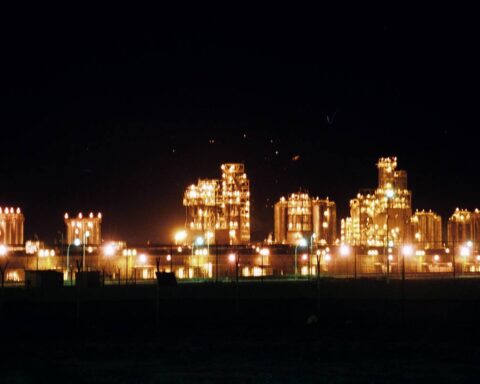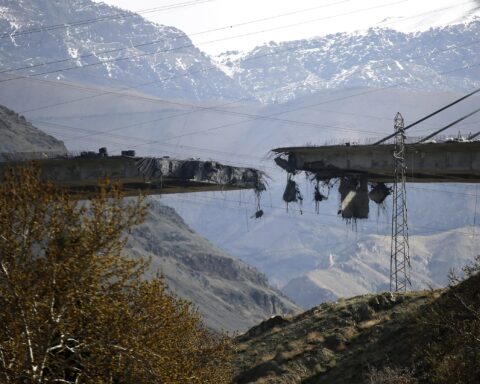
JEDDAH — An Iranian Shahed-type one-way attack drone struck the Saudi Aramco–ExxonMobil SAMREF refinery at Yanbu on April 3, 2026, penetrating air defenses around the facility that is now the single most important node in Saudi Arabia’s wartime oil export infrastructure, while a Greek-operated PAC-3 Patriot battery stationed nearby intercepted two ballistic missiles aimed at the same complex — the first confirmed combat engagement by a NATO member’s military in direct defense of Saudi territory since Operation Epic Fury began. Hours earlier on the same day, Saudi air defenses on the opposite coast intercepted five ballistic missiles and a cruise missile targeting the Eastern Province, according to Saudi Ministry of Defense spokesperson Maj. Gen. Turki Al-Malki, in what analysts are reading as a coordinated two-coast strategy designed to split Saudi Arabia’s thinning air defense coverage across 1,200 kilometers of pipeline corridor.
The strike matters because SAMREF is not just another refinery on a long Iranian target list — it is the anchor of the only currently operational export route for Saudi Arab Light crude, the bypass corridor that Aramco built during the Iran-Iraq War and has been running at maximum capacity since Iran’s selective blockade effectively closed the Strait of Hormuz in mid-March, according to shipping data compiled by Lloyd’s List and Argus Media. An industry source told Reuters that damage was “minimal impact on operations,” but Bloomberg confirmed that Aramco briefly halted crude loadings at Yanbu following the strike before resuming, and Brent crude surged above $109 per barrel on the day, touching an intraday high of $119.50, according to ICE Futures data, as markets processed the possibility that Iran had found a way to reach the one route Saudi oil still travels to reach the world.
Table of Contents
The SAMREF Strike: A Drone That Got Through
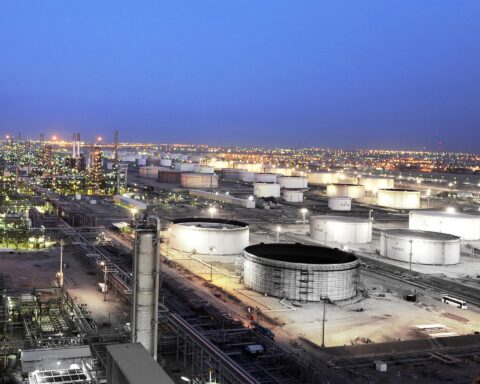
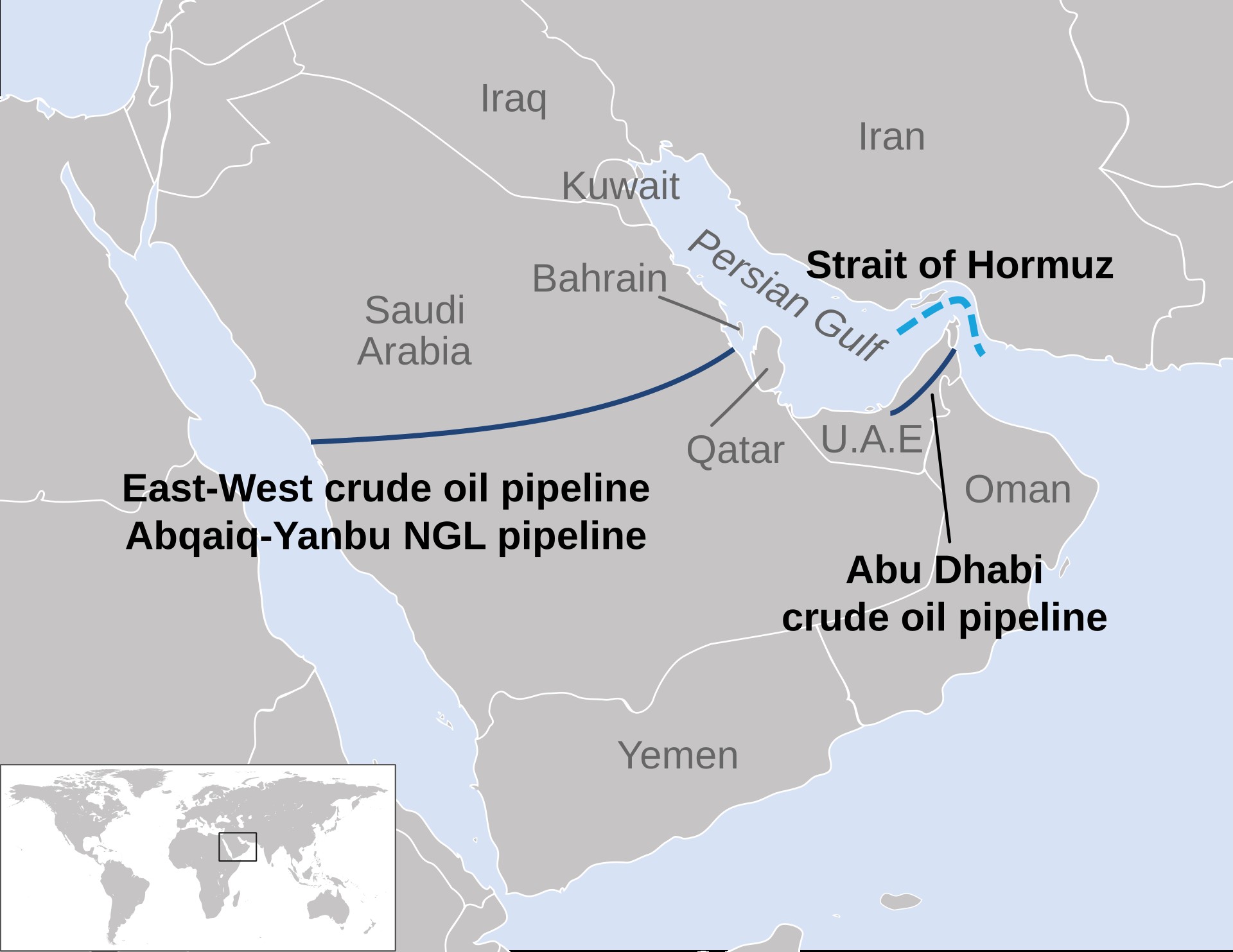
The SAMREF refinery — a 50/50 joint venture between Saudi Aramco and ExxonMobil that processes 400,000 barrels per day of Arabian Light crude — sits at the western terminus of the 1,201-kilometer East-West Pipeline, the Petroline that carries crude from the Abqaiq processing hub in the Eastern Province across the Arabian Peninsula to the Red Sea coast. Aramco CEO Amin Nasser confirmed on March 10 that the pipeline would hit its full 7 million barrels per day capacity “in the next couple of days,” and by March 11 it had reached that ceiling with zero additional headroom, according to S&P Global, making every barrel that flows through Yanbu irreplaceable in the current export architecture.
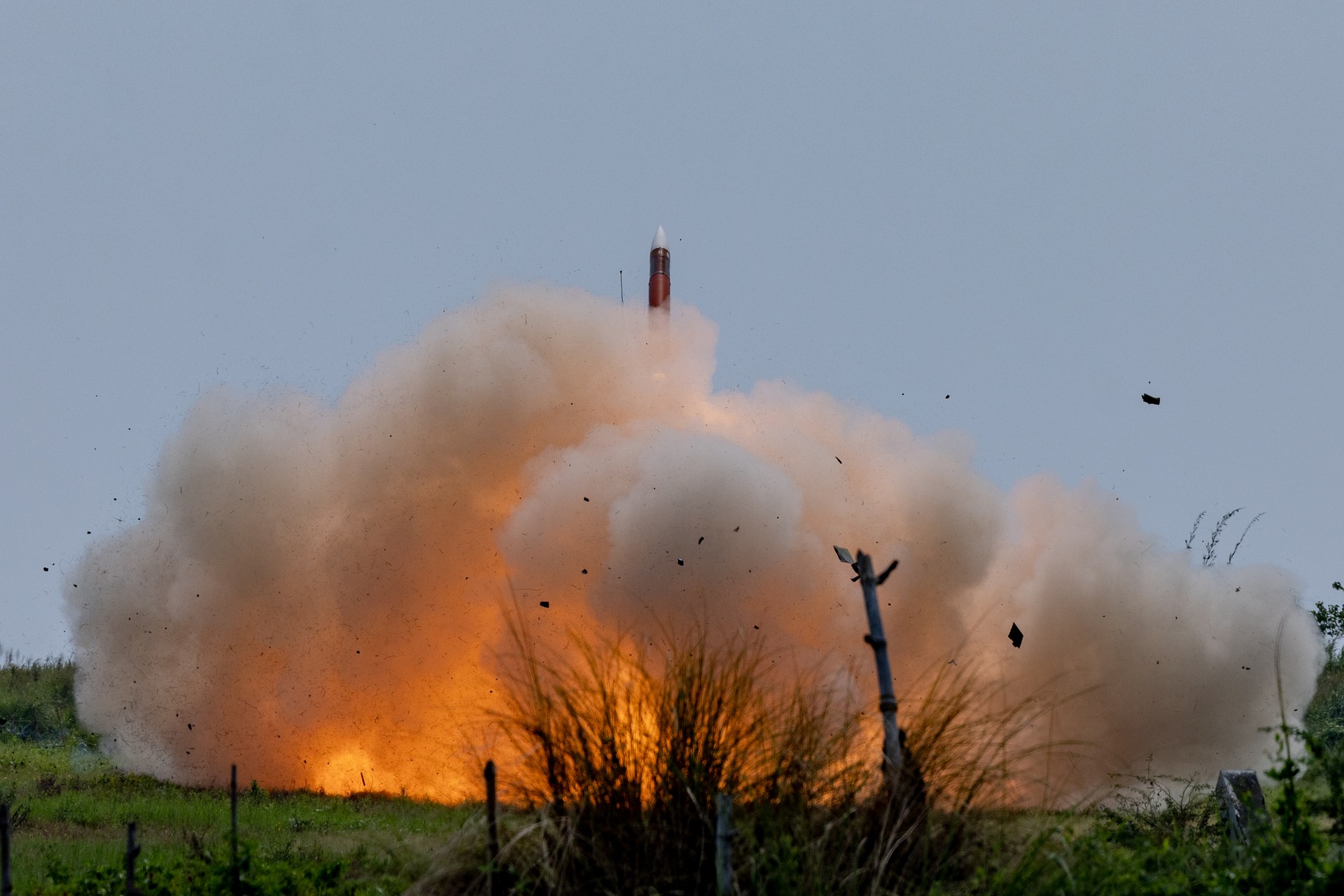
What makes the April 3 strike operationally notable is the coverage geometry it exposed: Saudi air defenses and the Greek-operated ELDYSA Patriot battery intercepted a ballistic missile headed for the Port of Yanbu and two additional ballistic missiles aimed at the refinery complex, according to Greek Defense Minister Nikos Dendias and Saudi MoD statements, but the slower, lower-flying Shahed drone penetrated the defensive envelope and reached SAMREF. The pattern — ballistic missiles stopped, drone gets through — is consistent with a known vulnerability in Patriot-centric air defense architectures, which are optimized for high-altitude ballistic threats rather than the low-altitude, low-radar-cross-section profile of a $35,000 Shahed-136, a cost asymmetry that the International Institute for Strategic Studies has documented at a ratio of roughly 120 to 1 in Iran’s favor when a $35,000 Shahed is answered by a $4.2 million PAC-3 MSE interceptor.
The IRGC had telegraphed the strike. Weeks before April 3, Iranian state media outlet Tasnim published an IRGC statement formally listing SAMREF, along with Jubail in Saudi Arabia, Al Hosn in the UAE, and Mesaieed and Ras Laffan in Qatar, as “direct and legitimate targets,” accompanied by official evacuation warnings for foreign workers — a pattern of pre-strike notification that serves both as psychological warfare and, in Tehran’s framing, as legal cover under its claimed rules of engagement. Just weeks before the war began, ExxonMobil and Aramco had signed a Venture Framework Agreement for a major SAMREF upgrade, committing to the facility’s long-term future at precisely the moment Iran was marking it for destruction.
Why Did Iran Hit Both Coasts on the Same Day?
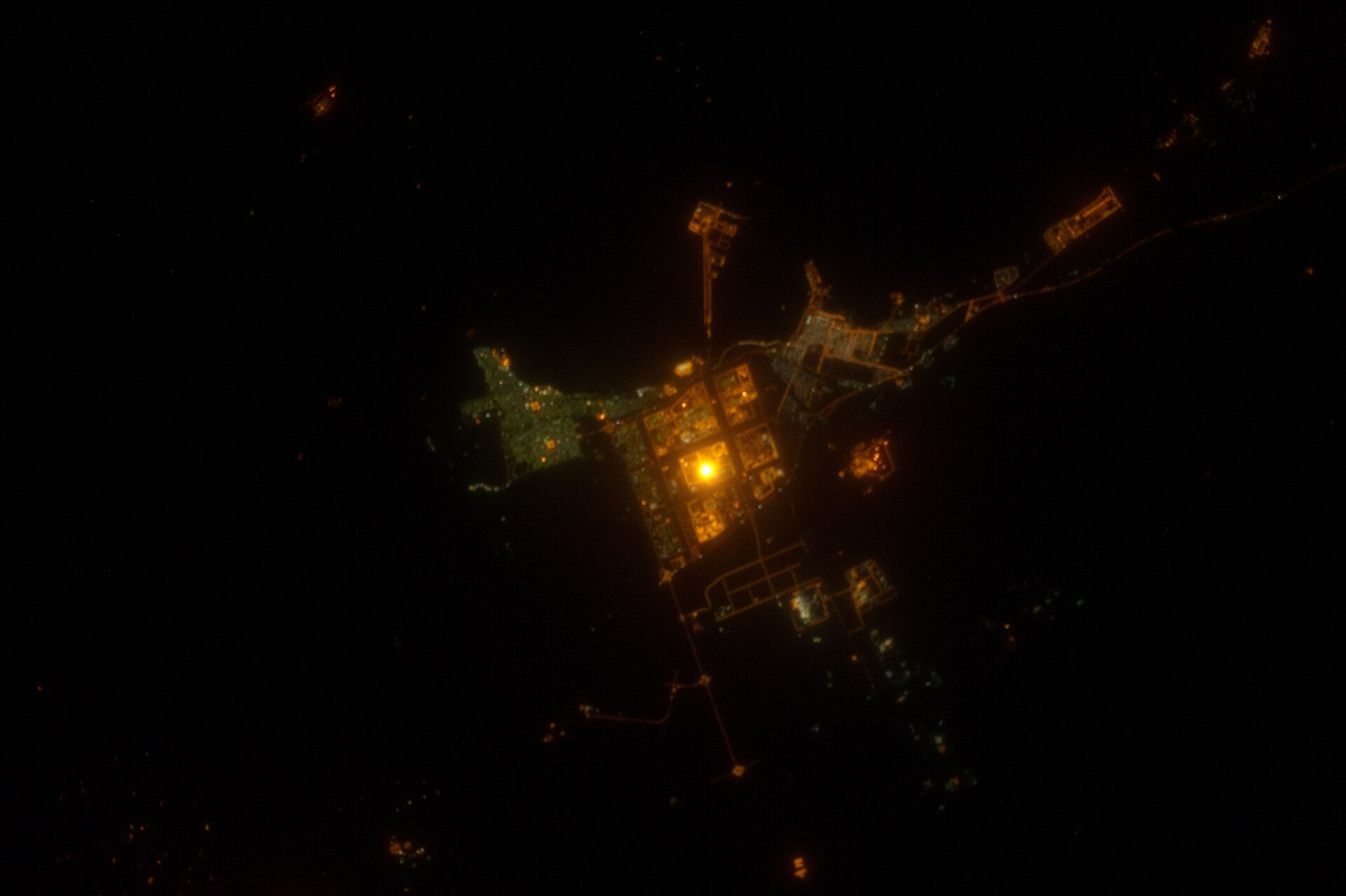
The simultaneous targeting of Yanbu on the Red Sea and the Eastern Province on the Gulf coast represents what CSIS Middle East Director Mona Yacoubian has described as Iran’s dual-axis escalation doctrine — expanding “both horizontally, expanding the war’s geography by drawing in an increasing number of countries, and vertically, hitting an expanding array of targets, escalating from military targets to civilian targets and critical infrastructure.” April 3 was not a Yanbu-only event; NPR and Bloomberg both confirmed it as a day of coordinated Iranian strikes on Gulf refineries across multiple countries, and the IRGC simultaneously struck or attempted strikes on facilities in Kuwait, even as it denied responsibility for some of those attacks and shifted blame to Israel, according to Al Jazeera.
The two-coast logic is not difficult to decode once you look at the interceptor inventory. Saudi Arabia and its coalition partners have fired 402 PAC-3 MSE rounds in the first 16 days of Operation Epic Fury, burning through interceptor stocks at a rate that outpaced a full year of Lockheed Martin’s production — the company manufactured a record 620 rounds in all of 2025 — in roughly three weeks. GCC PAC-3 MSE stocks now sit at approximately 400 rounds, roughly 14 percent of pre-war inventory. When you force a defender to split those 400 rounds across two coasts separated by 1,200 kilometers of desert, you are not just attacking oil infrastructure; you are attacking the mathematics of air defense allocation itself, creating a resource dilemma where every interceptor fired at a Yanbu-bound missile is one fewer available for the Ras Tanura or Abqaiq complexes in the Eastern Province, and vice versa.
The IRGC framed the April 3 strikes as “tit-for-tat” retaliation for Israeli strikes on Iran’s South Pars gas field, according to PBS News, positioning the refinery attacks as reciprocal infrastructure targeting rather than unprovoked escalation. Iran has also threatened to attack Yanbu specifically if the United States launches a ground invasion, according to Arab News — a conditional threat that the April 3 drone strike appears to have rendered moot, since Tehran hit SAMREF without any ground invasion triggering the stated threshold. Saudi Foreign Minister Prince Faisal bin Farhan’s assessment that trust with Iran had been “completely shattered,” delivered to Al Jazeera, reads less like diplomatic hyperbole in the context of a strike on a jointly-owned facility that Riyadh had believed sat outside Iran’s practical reach.
Greece’s War: ELDYSA Fires in Anger
The Greek Patriot battery at Yanbu — designated ELDYSA (Elliniki Dynamis Saudi Arabia) and staffed by 120 to 130 Greek Air Force personnel operating a single PAC-3 battery — has been deployed near the SAMREF complex since September 2021 under a bilateral defense agreement with Saudi Arabia, which covers all operational costs. The deployment was extended through November 2026, and until April 3 it had never fired in combat. Greek Defense Minister Nikos Dendias confirmed the intercept of two Iranian ballistic missiles, calling it “a strictly defensive action under our 2021 agreement with Saudi Arabia” and arguing that the deployment “protects every EU citizen from energy inflation” — framing that positions a Middle Eastern combat engagement as a European energy security operation.
“Had this critical refinery been hit, oil prices today would be significantly higher.”
— Kyriakos Mitsotakis, Greek Prime Minister, April 3, 2026
Greek Prime Minister Kyriakos Mitsotakis reinforced that framing, telling reporters that “had this critical refinery been hit, oil prices today would be significantly higher,” while US Ambassador to NATO Matthew Whitaker called the intercept “historic” and said it demonstrated “how successful Greece is with its own defense” and its role on NATO’s southern flank. The political cost surfaced immediately: PASOK, the main Greek opposition party, issued a statement arguing that “this incident constitutes a direct involvement of Greece in the military conflict, something the Prime Minister had previously ruled out” — a charge that Mitsotakis will have to address in a parliament where NATO members quietly defending Saudi skies has shifted from a theoretical policy question to an operational fact with Greek military personnel shooting down Iranian missiles over the Arabian Peninsula.
The ELDYSA engagement also confirms that the air defense architecture at Yanbu is thin by design, not by oversight. The April 3 attack consumed at least two interceptor rounds on ballistic missile defense alone, while the Shahed drone that struck SAMREF fell outside the system’s optimized engagement envelope. The question of whether Saudi Arabia can sustain air defense independence across two coasts with a patchwork of national systems, Greek Patriots, and coalition support is no longer academic; it is being answered in real time, one intercept at a time, with a stockpile that shrinks after every engagement.
Can Saudi Arabia’s Hormuz Bypass Survive Sustained Targeting?
The entire strategic premise of Saudi Arabia’s wartime oil export system rests on a single corridor: crude flows east to west through the Petroline from Abqaiq to Yanbu, bypassing the Strait of Hormuz that Iran’s IRGC has effectively closed through selective transit denial since approximately March 15. That pipeline is now running at its absolute maximum of 7 million barrels per day, according to Aramco’s own numbers, but the port infrastructure at Yanbu cannot keep pace — Yanbu North (1.5 million bpd capacity) and Yanbu South (3 million bpd) provide a combined nominal throughput of roughly 4.5 million barrels per day, according to S&P Global port capacity data, with effective wartime throughput closer to 4 million bpd, creating a bottleneck where Saudi oil export constraints mean 3 million barrels per day of pipeline flow have nowhere to go even before anyone shoots at anything.
Rystad Energy has been blunt about the stakes: “Any disruption to key infrastructure such as the port of Yanbu could remove 5 to 6 million barrels per day from the market and potentially push oil prices to $150 or higher,” the consultancy told Rigzone. The April 3 strike did not produce that outcome — Aramco resumed loadings after a brief halt, and the damage to SAMREF was characterized as operationally minimal — but it demonstrated that the bypass route Iran was supposed to be unable to reach is, in fact, reachable by the cheapest weapon in Tehran’s arsenal. The Shahed drone that hit SAMREF traveled from Iranian territory or proxy launch points to the Red Sea coast, a trajectory that crosses the full width of the peninsula or routes south through Yemen-adjacent airspace where Houthi logistics could provide staging support, though no specific routing has been confirmed by Saudi or coalition intelligence as of publication.
The export arithmetic on Day 35 of Operation Epic Fury is unforgiving. With Hormuz closed, Yanbu is not a backup — it is the primary, and the only, high-volume route. Export averages had been running at approximately 4.2 million barrels per day through Yanbu in mid-March before the strike, according to Argus Media, against a pre-war Saudi export baseline of roughly 7.5 million bpd — about 56 percent of normal volume before Iran put a drone into the refinery that anchors the whole system. Every hour of halted loadings at Yanbu now translates directly into barrels that do not reach the global market, a supply equation that Brent crude’s 8 percent single-day surge on April 3 suggests traders understand with precision.
The Interceptor Math: 400 Rounds, Two Coasts
| Metric | Figure | Source |
|---|---|---|
| PAC-3 MSE rounds remaining (GCC-wide) | ~400 | HouseOfSaud.com reporting |
| PAC-3 MSEs fired in first 16 days | 402 | HouseOfSaud.com reporting |
| Pre-war GCC PAC-3 inventory | ~2,860 (est.) | Calculated from 14% remaining |
| Lockheed Martin 2025 production (record) | 620 rounds | Lockheed Martin / Defense Post |
| DSCA-approved sale to Saudi Arabia | 730 rounds / $9B | DSCA / Defense Post |
| Target annual production (7-year goal) | ~2,000 rounds/year | Lockheed Martin |
| Shahed-136 unit cost | ~$35,000 | IISS / Fabian Hinz |
| PAC-3 MSE unit cost | $4.2 million | IISS / Fabian Hinz |
| Cost asymmetry ratio | 120:1 (Iran’s favor) | IISS |
“A defender that must maintain 24-hour readiness against unpredictable attacks suffers crew fatigue, equipment wear, and consumable depletion whether the attack rate is 480 missiles a day or 40, while the attacker chooses when to surge; the defender must be ready always.”
— Fabian Hinz, IISS Research Fellow
IISS Research Fellow Fabian Hinz has articulated the structural problem that the raw numbers alone do not convey: the defender suffers attrition whether the attack rate is high or low, while the attacker chooses when to surge. That asymmetry — temporal, financial, and logistical — is what Iran is exploiting with the two-coast strategy, and the $9 billion DSCA-approved sale of 730 PAC-3 MSE missiles to Saudi Arabia, announced in February 2026, offers no near-term relief because the production expansion required to fill that order aims to raise Lockheed Martin’s annual output from roughly 600 to approximately 2,000 rounds, a target the company describes as a seven-year timeline.
The April 3 engagement consumed at least seven interceptors across both coasts — two Greek-fired PAC-3s at Yanbu and at least five on the Eastern Province volleys — against an Iranian expenditure of perhaps eight to ten inbound weapons including the Shahed that was never engaged by a PAC-3 at all. At that exchange rate, with 400 rounds in the GCC stockpile and Iran maintaining the capacity to launch mixed salvos of ballistic missiles and cheap drones from multiple vectors, the interceptor runway is measured in weeks rather than months, a timeline that the accelerating depletion of PAC-3 stocks makes impossible to extend without either a dramatic increase in production deliveries or a cessation of Iranian strikes that Tehran has shown no interest in pursuing.
Background: From Abqaiq to ELDYSA
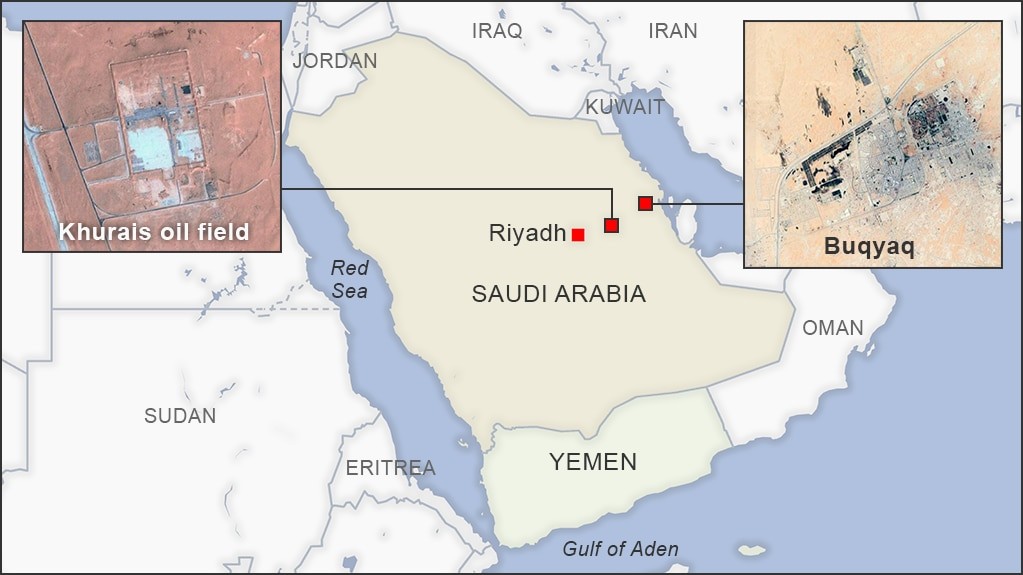
The Greek Patriot deployment at Yanbu exists because of September 14, 2019 — the day 18 drones and cruise missiles struck Saudi Aramco’s Abqaiq processing facility and Khurais oil field, knocking out more than half of Saudi crude output overnight with zero interceptions by any air defense system. That failure, which exposed the kingdom’s vulnerability to low-altitude drone and cruise missile attack in a way that no amount of prior analysis had managed to communicate to policymakers, triggered a scramble for layered air defense coverage that produced the 2021 bilateral agreement with Athens and the deployment of what was then a quietly defensive Patriot battery on the Red Sea coast, far from the Gulf-facing threat axis that had dominated Saudi defense planning for decades.
The East-West Pipeline itself is a product of the same strategic anxiety, built during the 1980–1988 Iran-Iraq War when the Tanker War made Gulf shipping routes perilous and Riyadh needed an overland bypass to the Red Sea. The 1,201-kilometer Petroline from Abqaiq to Yanbu was completed in the early 1980s, expanded over subsequent decades to its current 7 million bpd capacity, and spent most of its operational life running well below maximum throughput because Hormuz, despite perennial threats, never actually closed. The current war has inverted that calculus entirely: the pipeline is maxed, Yanbu is the kingdom’s primary export terminal, and the facility that was supposed to be safely beyond Iran’s reach — separated from the Gulf by the full width of the Arabian Peninsula — has now been struck by the same class of weapon that hit Abqaiq seven years ago, albeit this time with a Greek Patriot battery managing to stop the ballistic components of the attack even as the drone component slipped through.
SAMREF’s role in this architecture is not incidental. Established in 1984 during the same Iran-Iraq War that built the pipeline feeding it, the refinery’s joint-venture structure with ExxonMobil gives the facility a political dimension beyond its barrel count — an attack on SAMREF is an attack on American corporate assets, a fact that Tehran is certainly aware of and that adds a layer of deterrence calculus (or, depending on the IRGC’s strategic logic, a layer of escalatory signaling) to every drone and missile aimed at the Red Sea coast. The facility operated for four decades on the assumption that geography alone provided protection. April 3 retired that assumption, and the question facing Aramco, Saudi strategic planners, and their coalition partners is whether layered air defense can substitute for the geographic buffer that no longer holds.
FAQ
How bad was the damage to SAMREF?
An industry source told Reuters that the drone strike caused “minimal impact on operations,” and Saudi Aramco resumed crude loadings at Yanbu after a brief halt, according to Bloomberg. However, the operational significance extends beyond physical damage — the strike demonstrated that Iran can reach the facility with a weapon that costs roughly $35,000 to manufacture, while the ballistic missiles that were intercepted by the Greek Patriot battery each required a $4.2 million PAC-3 MSE round to stop, a cost asymmetry documented by the IISS that favors repeated Iranian attempts regardless of individual strike outcomes.
Why does Greece have a Patriot battery in Saudi Arabia?
The deployment originated in a September 2021 bilateral defense agreement between Athens and Riyadh, driven by the September 2019 Abqaiq attack that demonstrated Saudi Arabia’s vulnerability to drone and missile strikes on oil infrastructure. Greece deployed 120 to 130 Air Force personnel operating one PAC-3 Patriot battery near Yanbu, with Saudi Arabia covering all operational costs and the mission extended through November 2026. The arrangement gives Greece diplomatic leverage and revenue while providing Saudi Arabia with a NATO-standard air defense capability at a strategically exposed facility — though the April 3 engagement has now triggered domestic political opposition in Athens, with PASOK arguing that the intercept constitutes direct Greek involvement in the war.
How many PAC-3 interceptors does Saudi Arabia have left?
GCC-wide PAC-3 MSE stocks stand at approximately 400 rounds, down from an estimated pre-war inventory of roughly 2,860 — a 14 percent remaining stockpile after 402 rounds were fired in the first 16 days of Operation Epic Fury. The United States approved a $9 billion sale of 730 additional PAC-3 MSE missiles to Saudi Arabia in February 2026, but Lockheed Martin’s production capacity of roughly 620 rounds per year (its 2025 record) means those missiles cannot be delivered quickly, and the company’s target of 2,000 rounds per year is described as a seven-year expansion plan.
Could Iran shut down Yanbu entirely?
Rystad Energy has estimated that disruption to Yanbu could remove 5 to 6 million barrels per day from the global market and push oil prices above $150 per barrel. A sustained campaign of mixed ballistic missile and drone strikes would test the finite magazine of the Greek Patriot battery and Saudi national air defenses simultaneously, and the 120:1 cost asymmetry between Shahed drones and PAC-3 interceptors means Iran can afford to launch far more weapons than the defenders can afford to intercept. The constraint on Iran is not capability but calculation — shutting Yanbu entirely would trigger a global energy crisis severe enough to potentially provoke the kind of US military intervention that Tehran has been calibrating its escalation to avoid.
What happens to Saudi oil exports if both coasts are under sustained attack?
With the Strait of Hormuz effectively closed by IRGC selective transit denial and the East-West Pipeline already maxed at 7 million bpd against a Yanbu port throughput capacity of roughly 4 million bpd, Saudi Arabia was exporting approximately 4.2 million barrels per day before the April 3 strike — barely more than half its normal 7.5 million bpd export baseline. Sustained two-coast attacks would force Saudi air defense planners to allocate their dwindling interceptor stocks across both the Eastern Province (where Abqaiq, Ras Tanura, and Jubail remain high-value targets) and the Red Sea coast (where Yanbu is now the sole high-volume export outlet), a resource allocation problem that Iran’s two-coast strategy is specifically designed to create and that no amount of tactical excellence can solve without a larger interceptor supply than currently exists in theater.