DHAHRAN — Brent futures fell $44 a barrel on April 3 alone, collapsing from a prior-session close near $109 to a settlement of $65.35 — and physical spot cargoes, which had reached $141.36 just the day before, are now stranded above a paper market that has stopped caring about physical scarcity. Saudi Arabia is caught in what amounts to a double compression: the Strait of Hormuz blockade has physically capped its export capacity at roughly 5 million barrels per day through the Yanbu bypass, while Trump’s “Liberation Day” tariff package has obliterated the war premium that should have compensated for lost volume. That corridor’s vulnerability was confirmed on April 3 when an Iranian drone struck the SAMREF refinery at Yanbu while Greek PAC-3 interceptors fired on two ballistic missiles targeting the same facility — signaling that Iran is now actively contesting the Red Sea export route the Kingdom depends on to compensate for Hormuz closure.
The budget arithmetic, already stretched before either shock, is now breaking in real time. The IMF pegs Saudi Arabia’s fiscal breakeven at $86.60 per barrel for central government spending alone; Bloomberg Economics puts the consolidated figure — including Public Investment Fund outlays — at $94, and with full PIF capital expenditure factored in, the number climbs to $111. At $65 Brent and half the Kingdom’s normal export capacity offline, none of those thresholds is remotely achievable. Goldman Sachs estimated the 2026 deficit at 6–6.6% of GDP even before tariffs hit — roughly $80-90 billion against an official projection of $44 billion — and that estimate now looks optimistic.
Table of Contents
- Oil Fell $44 in a Day. Two Things Happened at Once.
- What Does Saudi Arabia’s Fiscal Breakeven Actually Mean?
- The Yanbu Ceiling: Why Producing More Cannot Help
- Why Did OPEC+ Accelerate Its Hike on the Worst Possible Day?
- What Happens to Saudi Arabia’s Budget Under Three Price Scenarios?
- Iran’s Oil Strategy Is Working Without Winning the War
- How Long Can Saudi Arabia Hold This Position?
- Which Vision 2030 Projects Survive Sub-$80 Oil?
- Frequently Asked Questions
Oil Fell $44 in a Day. Two Things Happened at Once.
The collision of two independent shocks on the same calendar day — April 3, 2026 — produced a price collapse that neither event alone could have caused. The Hormuz blockade, which the IEA has called “the largest supply disruption in the history of the global oil market,” should have sent crude spiralling upward; Gulf OPEC members collectively lost at least 10 million barrels per day of output as of March 12. But Trump’s tariff announcement — sweeping reciprocal duties on virtually every US trading partner — injected a recession probability so large that demand destruction swamped supply fear. Brent futures gapped from triple digits to $65.35 in hours, with WTI settling even lower at $61.80.
A supply shock normally lifts prices, and a demand shock normally depresses them, but when both arrive simultaneously, the demand shock wins — because traders discount future consumption immediately while supply disruptions take weeks or months to fully register in physical markets. The Hormuz premium, which had pushed physical spot cargoes above $140, evaporated as algorithmic selling overwhelmed the thin liquidity of a holiday-shortened session.
For Saudi Arabia, this is the worst of both worlds. The Kingdom cannot benefit from scarcity pricing because the tariff shock has killed the war premium, and it cannot benefit from volume because the Hormuz closure has physically capped how much oil it can move to market. Every traditional lever — production increases, OPEC+ coordination, Aramco’s pricing power — requires at least one of those two variables to be favourable, and on April 3, both turned hostile at once.
What Does Saudi Arabia’s Fiscal Breakeven Actually Mean?
Saudi Arabia’s fiscal breakeven oil price is the price per barrel at which the government’s oil revenue covers its total spending — and the number varies wildly depending on what you include in “total spending.” The IMF’s central government breakeven sits at approximately $86.60 per barrel, but this figure excludes the Public Investment Fund’s enormous capital programme, off-budget transfers, and the spending commitments that underpin Vision 2030’s megaproject pipeline. Bloomberg Economics calculates a consolidated breakeven of $94 per barrel, and when PIF’s full capital expenditure is included, the implied price rises to $111.
The Middle East briefing 3,000+ readers start their day with.
One email. Every weekday morning. Free.
These are not abstract accounting exercises — they determine whether the Kingdom borrows, draws down reserves, or cuts spending in any given year. The official 2026 budget already projected a deficit of SAR 165 billion, roughly $44 billion or 3.3% of GDP, which means Riyadh was planning to spend beyond its means even at pre-crisis prices. Goldman Sachs, before the tariff shock, estimated the realistic deficit at 6–6.6% of GDP — nearly double the official figure — implying a funding gap in the $80-90 billion range at what were then relatively benign price assumptions.
The pre-crisis borrowing plan reflected this reality: Saudi Arabia approved $57.87 billion in debt issuance for 2026, a figure sized for a world where Brent traded in the $75-85 range and Hormuz remained open. That borrowing ceiling is now almost certainly insufficient, which means either the debt plan expands or spending gets cut, or reserves get burned, or most likely all three at once. The $57.87 billion was supposed to be the whole year’s funding gap, and it may not cover the first half.
The Yanbu Ceiling: Why Producing More Cannot Help
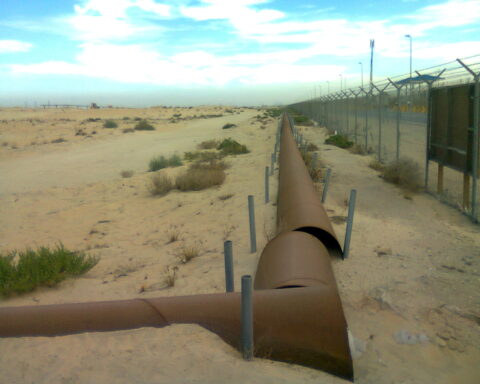
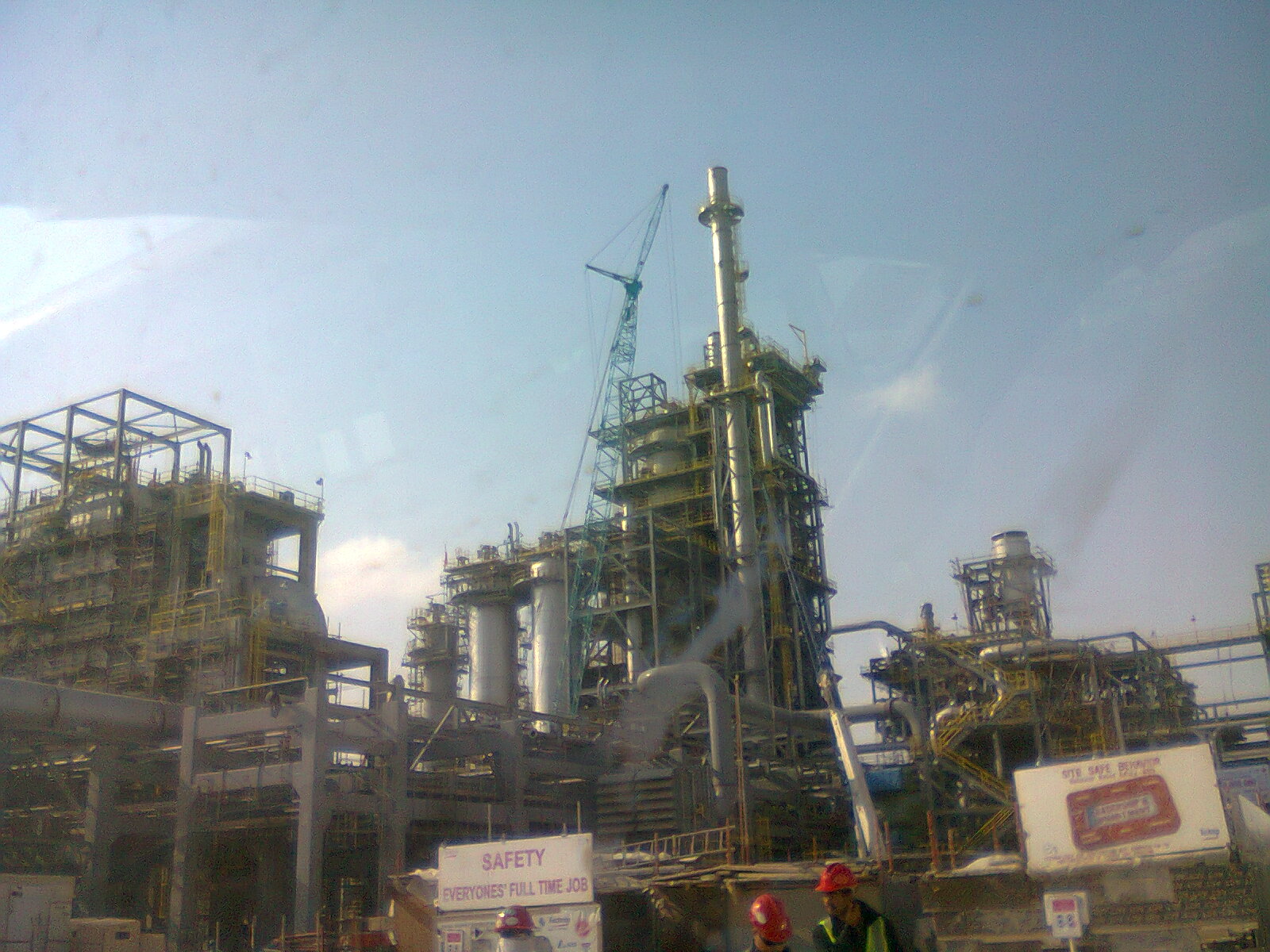
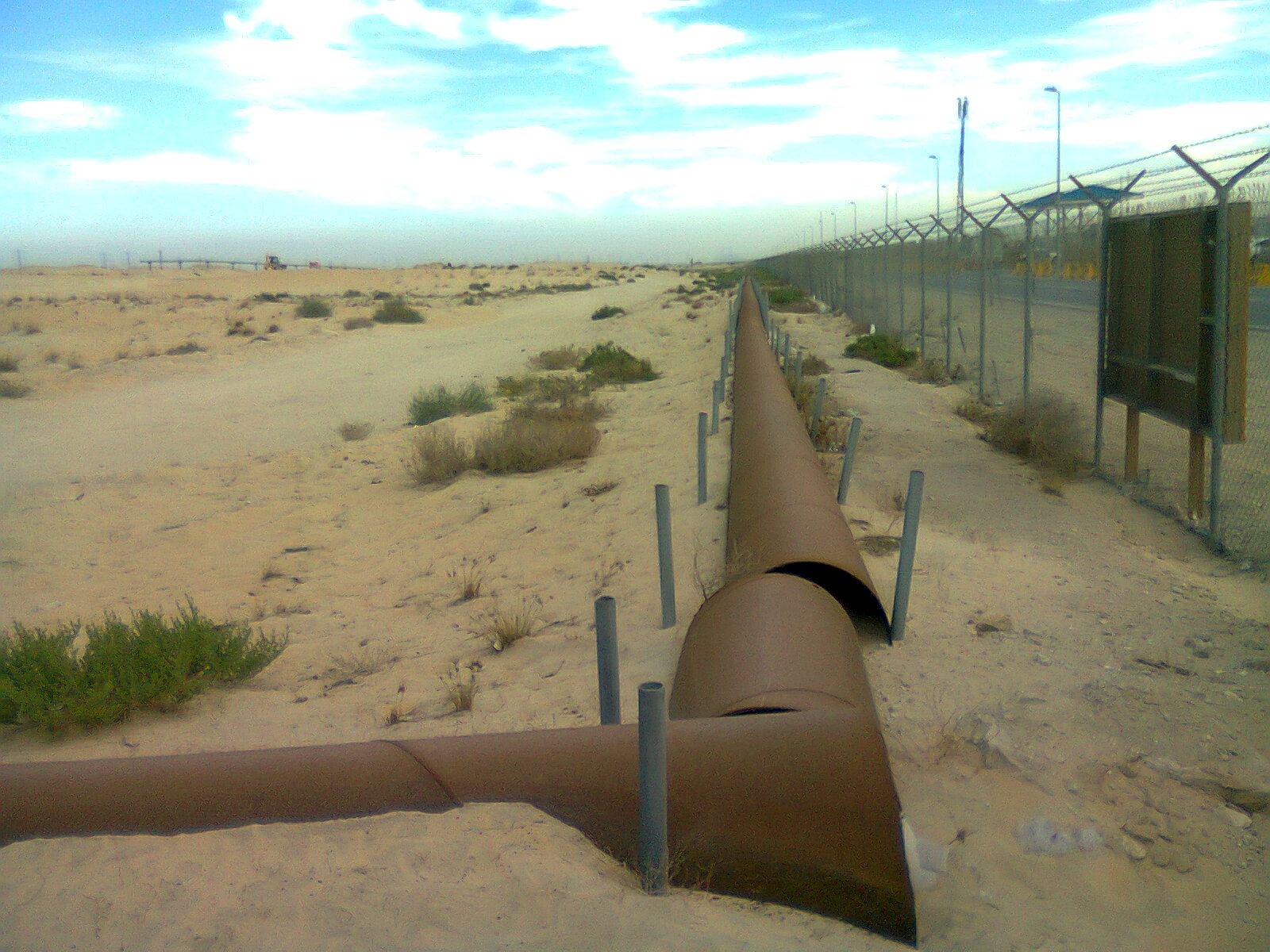
Saudi Arabia’s Hormuz bypass — the East-West pipeline running from Abqaiq in the Eastern Province to Yanbu on the Red Sea coast — was built during the 1980s Iran-Iraq “Tanker War” as an insurance policy against exactly this scenario. The pipeline has a total throughput capacity of approximately 7 million barrels per day, but roughly 2 million bpd must be diverted to domestic refineries along the route, leaving a net export capacity through Yanbu of about 5 million barrels per day. Saudi Arabia’s OPEC+ quota is 10.2 million bpd, which means the pipeline can handle less than half the Kingdom’s allocated production.
The practical impact is already visible in the shipping data. Saudi Aramco cut crude supply to Asian buyers by 38.6% month-over-month between February and March 2026 — from 7.108 million barrels per day down to 4.355 million — and cancelled all March LPG cargoes from the Jumah NGL facility, removing approximately 300,000 tons per month of supply to Asian petrochemical buyers. These are not voluntary restraints; they reflect the physical impossibility of moving more oil through the only functioning export route. As Sadara’s $20 billion chemical complex discovered when feedstock deliveries collapsed, the pipeline bottleneck ripples through the entire downstream value chain.
The 1980s planners who built the East-West pipeline sized it for a partial Hormuz disruption — Iranian attacks on individual tankers, not a complete closure enforced by naval control of the waterway. The current crisis has exceeded the contingency that Saudi strategic infrastructure was designed to handle, and there is no quick expansion available. Pipeline construction takes years, and in the meantime, every barrel Saudi Arabia produces above the Yanbu ceiling either stays in the ground or fills domestic storage that is already approaching capacity. OPEC+ allocated Saudi Arabia a 62,000 bpd quota increase for April, a number that is physically meaningless when the export bottleneck is millions of barrels wide.
Why Did OPEC+ Accelerate Its Hike on the Worst Possible Day?
On April 3 — the same day oil prices cratered — OPEC+ voted to accelerate May production increases to 411,000 barrels per day, triple the originally planned increment and double the April figure. The group’s official statement cited “continuing healthy market fundamentals and the positive market outlook,” language that was immediately and comprehensively contradicted by the worst single-day price collapse in years. The decision looked, on its surface, like a collective act of self-harm by an organization whose members depend on high oil prices to fund their national budgets.
The explanation lies in the internal politics of quota compliance and, specifically, in Russia’s chronic overproduction. Moscow owed 691,000 barrels per day in compensation cuts to OPEC+ by June 2026, part of a broader 4.57 million bpd compensation backlog across the group. Russia has shown no intention of actually cutting to these levels — and by accelerating the May hike, OPEC+ effectively reclassified a portion of Russian noncompliant production as quota-compliant. The hike did not put new barrels on the market; it retroactively legitimised barrels that were already flowing. Saudi Arabia’s acceptance of this mechanism — at the cost of further downward pressure on prices — suggests Riyadh concluded that holding OPEC+ together matters more than holding the price line, at least for now.
There is a harder reading available. Saudi Arabia, unable to physically export its own quota increase through Yanbu, had nothing to lose by voting for a headline number that primarily benefits Russia and Kazakhstan. The 62,000 bpd allocated to the Kingdom is stranded behind the pipeline bottleneck anyway, so the “cost” of the hike to Saudi Arabia is purely reputational — a lower Brent price that it would have absorbed regardless. The real cost falls on members who can actually export at higher volumes, and the real benefit accrues to Russia, whose cooperation Riyadh needs for broader geopolitical alignment as the war reshapes the region. The full calculus behind OPEC+’s April 5 supply decision — and why Saudi Arabia’s 3 million bpd spare capacity cannot reach the market regardless of what Riyadh votes — is detailed in a separate analysis.
The largest supply disruption in the history of the global oil market.
— IEA Oil Market Report, March 12, 2026
What Happens to Saudi Arabia’s Budget Under Three Price Scenarios?
Saudi Arabia’s 2026 budget requires approximately $329 billion in comprehensive spending — covering central government operations, defence, social transfers, and the PIF-funded megaproject pipeline that underpins Vision 2030. Oil revenue is the dominant variable, but non-oil revenue — VAT, fees, and related income — contributes approximately $100-110 billion in a functioning economy. With Hormuz closed and the Yanbu pipeline as the only functioning export route, three scenarios illustrate how badly the arithmetic has broken.
| Scenario | Brent Price | Export Volume | Est. Annual Oil Revenue | Est. Deficit | Key Assumption |
|---|---|---|---|---|---|
| A — Current crisis | $65/bbl | 5 mbpd (Yanbu max) | ~$119 billion | ~$110 billion | Hormuz closed, tariff recession compresses non-oil revenue |
| B — Partial reopening | $75/bbl | 8 mbpd | ~$219 billion | ~$35 billion | Hormuz partially reopened, tariffs persist at reduced severity |
| C — Price recovery, blockade holds | $85/bbl | 5 mbpd (Yanbu max) | ~$155 billion | ~$70 billion | Tariff fears recede, but Hormuz stays closed |
Scenario A is the current reality: $65 oil and 5 million barrels per day through Yanbu yields roughly $119 billion in annual oil revenue. Add compressed non-oil revenue of perhaps $100 billion — down from the pre-crisis projection as recession fears bite VAT and fee income — and total revenue reaches approximately $219 billion against $329 billion in spending needs, producing a deficit of roughly $110 billion. That is nearly double Goldman Sachs’s pre-tariff estimate and more than triple the official projection. The pre-approved borrowing plan of $57.87 billion covers barely half this gap, and the rest must come from reserve drawdowns, emergency debt issuance, or immediate spending cuts. The scale required is larger than anything attempted since the 2014-2016 collapse.
Scenario B — a partial Hormuz reopening that restores 8 million bpd of export capacity at a modestly recovered $75 price — cuts the deficit dramatically, to roughly $35 billion, as oil revenue alone climbs to $219 billion. Scenario C is perhaps the most instructive: even if prices recover to $85 but the blockade holds, the volume constraint produces a deficit of roughly $70 billion — still far above the official projection and above the Goldman Sachs pre-crisis estimate. The lesson across all three scenarios is the same: no achievable combination of price and volume closes the gap without either massive borrowing, deep spending cuts, or rapid reserve depletion.
Iran’s Oil Strategy Is Working Without Winning the War
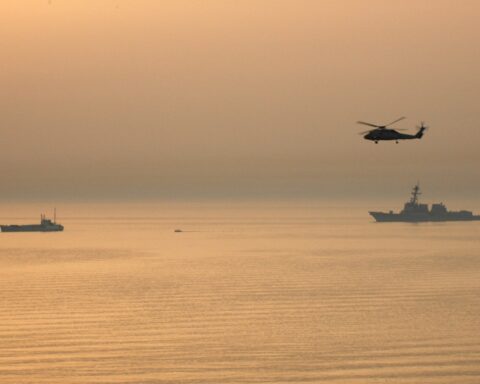
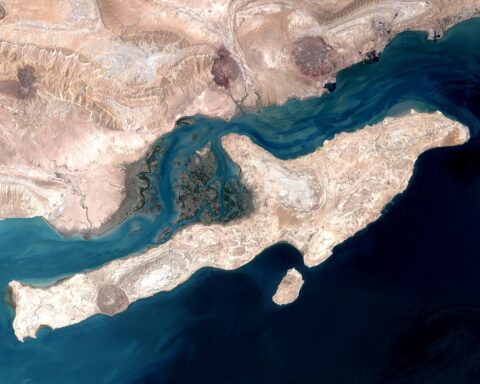
Tehran does not need to defeat the US Fifth Fleet or destroy Saudi oil infrastructure to inflict strategic damage on the Gulf economies — it just needs to keep Hormuz functionally closed, and the financial bleeding does the rest. The IRGC has converted Larak Island into an effective toll gate, vetting vessels, charging transit fees, and allowing only selected cargoes to pass on Iranian terms. Iran’s parliament is finalising a bill — reportedly expected to pass in early April — that would formalise Hormuz transit fees under Iranian domestic law, institutionalising what began as a wartime measure into a permanent revenue mechanism. Iran’s legal architecture for permanent Hormuz sovereignty — including the Oman co-drafting arrangement that would give both states joint administrative control — is analysed in detail here. On April 3, that mechanism processed its first Western clients: how Iran is converting the Hormuz blockade into a permanent revenue mechanism became concrete when CMA CGM and Mitsui OSK paid transit fees in yuan under IRGC escort.
That calculus intensified on April 3, when Trump threatened to extend strikes beyond oil infrastructure to Iranian power plants and desalination systems before the April 6 deadline — a threat that, if executed, would trigger reciprocal Iranian pressure on Gulf civilian water infrastructure already demonstrated to be within Tehran’s strike envelope.
The strategic logic is clear and, from Tehran’s perspective, rational. Iran cannot match American or Israeli military capability in a conventional fight, so it has chosen to internalise costs across the entire GCC by weaponising geography. The Dallas Fed estimated in March that each quarter Hormuz remains effectively closed depresses global real GDP by 2.9 percentage points annualised — a figure that falls disproportionately on Gulf exporters who depend on the strait for the majority of their crude shipments. Saudi Arabia, the UAE, Kuwait, and Iraq collectively sacrificed those 10 million barrels per day of output capacity, translating to hundreds of billions in foregone revenue that compounds with every month the blockade persists.
The irony — and this is the part that should concern Riyadh most — is that Iran’s strategy becomes more effective as oil prices fall, not less. At $140 Brent, the world has an overwhelming incentive to break the blockade by force; at $65, the urgency diminishes because the global economy is no longer screaming for relief. Trump’s tariffs, by crashing prices, have inadvertently reduced the political pressure to reopen Hormuz, which means the blockade can persist longer at lower cost to Iran while continuing to starve Saudi Arabia of export revenue. The war premium that was supposed to be Saudi Arabia’s silver lining has been erased by a trade war it had no part in starting.
The prospect of higher oil prices and therefore revenues could provide an opportunity to shrink a deficit that widened to record levels last year, assuming Saudi Arabia is able to withstand the near blockade of the Strait of Hormuz and continue selling oil.
— AGBI, March 2026
How Long Can Saudi Arabia Hold This Position?
Saudi Arabia entered 2026 with $438.5 billion in foreign exchange reserves, a figure that sounds formidable until you recall that the Kingdom burned through $109 billion of reserves in under 12 months during the 2015 oil price collapse — and that was a period when it could still export at full capacity through Hormuz. The current crisis is structurally worse on both the price and volume dimensions simultaneously, which means the reserve drawdown rate could exceed the 2015 precedent even if spending is cut aggressively. At the 2015 burn rate, the reserves provide roughly four years of runway; at the implied deficit under Scenario A, that shrinks to something closer to three years before reserves hit the $200 billion floor that most economists consider the minimum for currency defence.
The borrowing option is constrained but not exhausted. Saudi sovereign debt already exceeds $300 billion, with a trajectory toward $350 billion by end-2026 under the pre-crisis plan — a target that was set before either shock. International debt markets remain open to Saudi issuance — the Kingdom’s credit rating, while under review, has not been downgraded — but the cost of borrowing rises as the fiscal picture deteriorates, creating a feedback loop where higher deficits mean higher yields mean higher deficits. The $57.87 billion borrowing plan approved for 2026 was designed for a different world, and expanding it mid-year signals distress in a way that Riyadh has historically been unwilling to accept.
The 2014-2016 precedent offers a template for what comes next. During that crisis, Saudi Arabia cut spending by 14%, raised domestic energy prices by up to 133%, borrowed $26 billion internationally, and still saw the fiscal deficit hit 16% of GDP. The difference this time is that the Kingdom has less room on the spending side — Vision 2030 commitments are politically harder to cut than discretionary spending — and less room on the revenue side because the export bottleneck means that even a price recovery does not automatically restore income. The combination of a volume ceiling and a price floor that keeps dropping creates a trap with no obvious exit that Saudi Arabia controls.
Which Vision 2030 Projects Survive Sub-$80 Oil?
The megaproject pipeline that defines Vision 2030 was designed for a world where Saudi oil revenue reliably exceeded $250 billion per year, PIF had deep pockets, and international capital markets were eager to co-invest in Gulf development. None of those conditions holds under the double compression, which means the project portfolio must be triaged — and the triage has, in several cases, already begun. NEOM’s The Line, the signature 170-kilometre linear city, was suspended in September 2025 with only 2.4 kilometres completed; at sub-$80 oil, the project has no plausible funding path and no realistic timeline for resumption.
| Project | Status | Vulnerability | Reasoning |
|---|---|---|---|
| NEOM The Line | Suspended (Sept 2025) | Maximum — no funding path | Only 2.4km of 170km built; requires sustained $100+ oil |
| Red Sea Project | Active (slowing) | Very high | Construction reportedly set to halt end-2026 |
| New Murabba (Mukaab) | Deprioritised | High | Riyadh real estate project lacks urgency of export-facing assets |
| Diriyah Gate | Active (pace slowed) | Moderate | Politically protected as heritage project; pace slowed, not halted |
| NEOM Green Hydrogen | 80% complete | Low | $8.4 billion sunk cost; targeting 2027 production; likely completes |
The pattern in the triage is revealing: projects that are close to completion or that generate exportable commodities — green hydrogen, for instance — survive, while those that depend on sustained construction spending over many years get frozen. The Red Sea Project, a tourism development on the coast northwest of Jeddah, is reportedly set to halt construction by end-2026, which means the hotels and infrastructure already built will sit incomplete until the fiscal picture improves. New Murabba, the Riyadh mega-development centred on the Mukaab cube, has been described as “deprioritised” — a bureaucratic euphemism for indefinite delay. Diriyah Gate, the heritage quarter restoration that carries personal political weight for the Crown Prince, continues at a reduced pace, protected by its symbolic value rather than its economic logic.
PIF’s ability to fund any of these projects has deteriorated independently of the oil price. Liquid cash at the fund fell to approximately $15 billion by late 2024, the lowest level since 2020, and Aramco’s decision to cut its 2025 dividend by roughly one-third — to about $84.5 billion — reduced PIF’s income by at least $6 billion annually. At $65 oil, further Aramco dividend cuts are likely, which pushes PIF deeper into reliance on international borrowing and asset sales to meet existing commitments, let alone fund new construction. The vision that was supposed to diversify Saudi Arabia away from oil dependence turns out to require sustained high oil prices to build — a circularity that the double compression has exposed in the starkest possible terms.
Frequently Asked Questions
Why didn’t the Hormuz blockade keep oil prices high?
Under normal conditions, removing 10+ million barrels per day of Gulf crude from global markets would send prices well above $100 — and it did, briefly, with physical spot cargoes hitting $141.36 on April 2. But Trump’s “Liberation Day” tariff announcement on April 3 triggered a demand-destruction repricing that overwhelmed the supply shock. Financial markets price future demand expectations faster than physical supply adjustments, so the recession probability embedded in sweeping tariffs hit prices within hours while the physical scarcity signal takes weeks to fully transmit through inventory drawdowns and refinery shortfalls. The Strategic Petroleum Reserve releases by the US and other IEA members — totalling over 2 million barrels per day through mid-April — also provided enough near-term physical supply to prevent spot market panic, even though SPR inventories are approaching critically low levels that analysts warn cannot sustain drawdowns much beyond late April without threatening strategic reserve adequacy.
Can Saudi Arabia reopen Hormuz by force?
Saudi Arabia does not have the naval capability to unilaterally break the Iranian blockade, and the US Fifth Fleet — while present in the region — has prioritised protecting its own vessels and maintaining limited convoy access rather than attempting full reopening. The IRGC has deployed shore-based anti-ship missile batteries, naval mines, and fast-attack craft across the strait’s narrowest points, creating a layered denial zone that would require a sustained multi-week air and naval campaign to dismantle — an escalation that risks broadening the conflict into a direct US-Iran war. The US has indicated through backchannel communications that it prefers a negotiated partial reopening to a military one, which means Saudi Arabia’s timeline for Hormuz restoration depends on diplomatic progress that it does not control and that Iran has no incentive to accelerate while the blockade continues to weaken Gulf economies.
What happens if Saudi Arabia breaks the dollar peg?
The Saudi riyal has been pegged to the US dollar at 3.75 since 1986, and defending this peg requires maintaining foreign exchange reserves above a minimum threshold — generally estimated at $180-200 billion by central bank analysts. At the current reserve level of $438.5 billion, the peg is not under immediate threat, but a sustained Scenario A deficit of roughly $110 billion per year would erode reserves to the danger zone within three to four years. Breaking the peg would likely cause the riyal to depreciate by 30-40%, which would make imported goods — including food, of which Saudi Arabia imports roughly 80% — dramatically more expensive while simultaneously reducing the dollar-denominated value of Saudi assets and increasing the real burden of dollar-denominated sovereign debt. The inflationary shock of a devaluation in a country that imports most of its calories would be politically explosive in ways that spending cuts are not.
Is Russia benefiting from the OPEC+ May production hike?
Russia is the primary structural beneficiary, and the reason is geography as much as politics. Unlike Saudi Arabia, Iraq, Kuwait, and the UAE, Russia faces no Hormuz-related export constraints — its crude flows through Baltic, Black Sea, and Pacific pipelines, meaning Moscow can physically realise every barrel of its increased quota while Gulf producers remain bottlenecked behind Yanbu. On top of that, Moscow owed 691,000 barrels per day in overproduction compensation cuts by June 2026, part of a broader 4.57 million bpd compensation backlog that has accumulated across the group through months of quota non-compliance. The accelerated May hike effectively reclassified a portion of Russia’s noncompliant output as legitimate quota production, reducing Moscow’s compensation obligation without requiring actual production cuts — and doing so in a way that systematically rewards chronic overproducers at the expense of quota-compliant members.
How does the 2026 crisis compare to the 2014-2016 oil price collapse?
The critical structural difference is that Saudi Arabia could export at full capacity throughout 2014-2016, choosing to flood the market as a strategic weapon against US shale producers. That choice — volume over price — eventually helped force a market-share resolution that ended the downturn. In 2026, the Yanbu ceiling eliminates the volume lever entirely. Riyadh cannot pump its way out of the crisis even if it wanted to, which removes the one instrument that eventually worked last time. The fiscal starting point is also weaker on the liability side: the 2014-2016 crisis preceded the massive Vision 2030 spending commitments and a sovereign debt build-up that has grown substantially since, meaning there is less flexibility to absorb a repeat of the 16% of GDP deficit that crisis produced. That earlier collapse forced 14% spending cuts and domestic energy price rises of up to 133% — measures that were politically painful in a country with less accumulated financial stress than Saudi Arabia carries today. The double compression deepened on April 3, when Iran struck the Habshan gas complex for the second time in fifteen days and hit Kuwait’s Mina Al-Ahmadi refinery again — demonstrating that Iran is destroying upstream processing capacity that Gulf states would need to restore full export volumes even after Hormuz reopens.