RIYADH — Gulf Cooperation Council stocks of PAC-3 MSE interceptors — the only missile capable of reliably engaging Iranian ballistic threats — have fallen to approximately 400 rounds, or 14 percent of pre-war inventory, according to Bloomberg analysis of Pentagon procurement records, after Saudi Arabia and its partners fired 402 of the advanced interceptors in the first 16 days of Operation Epic Fury. The depletion rate, equivalent to nearly eight months of Lockheed Martin’s entire 2025 global production run, has outstripped every replenishment scenario modeled by the Pentagon and its defense-industrial base, according to figures compiled by the Cronkite News investigative unit and confirmed by CSIS analysts.
The arithmetic is blunt. Lockheed Martin’s sole production facility — expanded by 85,000 square feet at Highland Industrial Park in Camden, Arkansas — delivered a record 620 PAC-3 MSE rounds in 2025, a 60 percent increase over two years, and the war consumed more than that annual output in under a week. Saudi Arabia’s $9 billion Foreign Military Sale for up to 730 replacement rounds, approved by the Defense Security Cooperation Agency on January 30, does not come with a delivery timeline. Standard FMS fulfillment lag for systems of this complexity runs up to eleven years, according to DSCA procurement records.
Table of Contents
The Burn Rate: 943 Interceptors in Four Days
In the opening phase of Operation Epic Fury, US and GCC Patriot batteries combined to fire 943 interceptors in four days — a figure that Defence Security Asia, citing RUSI’s battlefield tracking data, described as equivalent to 18 months of combined Lockheed Martin and Boeing production. Iran’s average daily attack profile during that window included approximately 33 ballistic missiles and 94 drones, according to RUSI analysis published in March 2026. Standard doctrine requires two interceptors per incoming ballistic missile, meaning ballistic threats alone demanded 66 high-end rounds per day before a single drone entered the calculation.
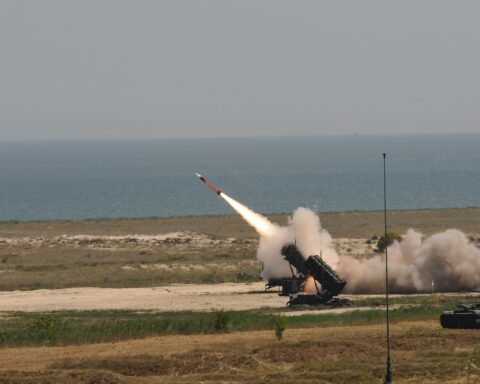
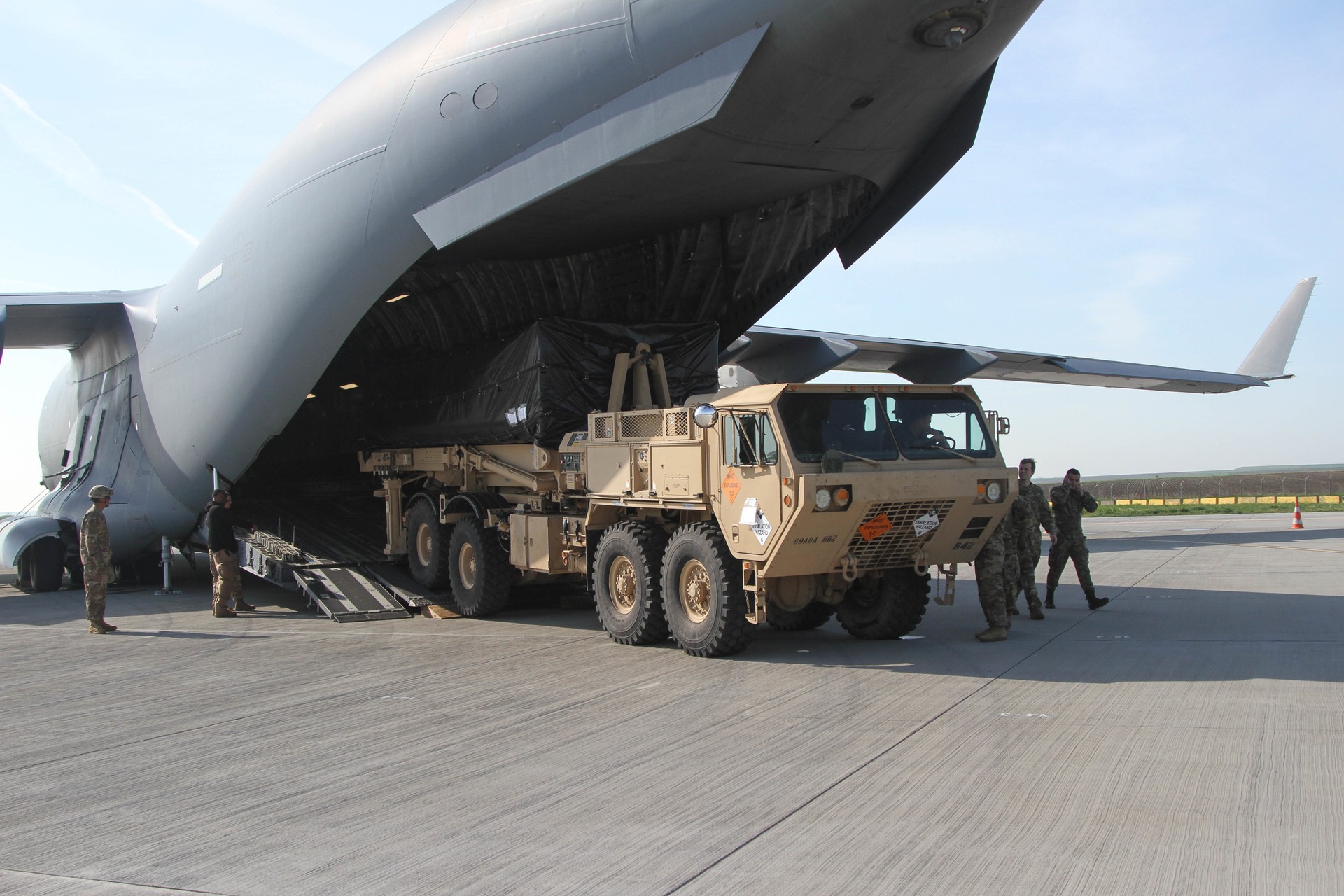
Saudi Arabia’s air defense architecture — 108 Patriot M902 launchers distributed across an estimated 16 batteries, supplemented by two of its seven procured THAAD fire units — absorbed the bulk of inbound fire. The Ras Tanura refinery, the Middle East’s largest, offered an early indicator of strain: on March 4, Saudi air defenses intercepted five of seven incoming drones, but two penetrated, causing a limited fire that forced a precautionary shutdown, according to BOE Report.
“Missile interceptors are a big concern, particularly anti-ballistic interceptors,” said Kelly Grieco, a senior fellow at the Stimson Center, in an assessment published by Military Times on March 6. “You can’t replace those kinds of missiles overnight. It would take years.”
| Metric | Figure | Source |
|---|---|---|
| PAC-3 MSE rounds fired (16 days) | 402 | Cronkite News, March 27, 2026 |
| Total Patriot interceptors fired (4 days, all types) | 943 | Defence Security Asia / RUSI, 2026 |
| Lockheed Martin annual MSE production (2025) | 620 | Lockheed Martin press release, 2025 |
| Unit cost per PAC-3 MSE | $3.9 million | Cronkite News, March 27, 2026 |
| Estimated remaining GCC MSE stock | ~400 | CSIS / Cronkite News analysis |
| Replenishment timeline at contract rate | 2+ years | Army budget document analysis |
Why Can’t Camden Produce Fast Enough?
The global PAC-3 MSE supply chain terminates at a single address. Lockheed Martin’s Camden, Arkansas facility — expanded by 85,000 square feet in 2022 — remains the world’s only production line for the interceptor. Seventeen national customers, including Saudi Arabia and Israel, draw from the same finite output. When the Pentagon and Lockheed Martin announced a seven-year framework agreement in January 2026 to triple production from approximately 600 to 2,000 rounds per year, the timeline for full capacity was set at end of 2030.
The Middle East briefing 3,000+ readers start their day with.
One email. Every weekday morning. Free.
“The ramp up to 2,000 will be accomplished by the end of 2030 which is literally three to four years away,” Lockheed Martin CEO Jim Taiclet told investors in January, as reported by The Aviationist. Tom Karako, who directs the CSIS Missile Defense Project, offered a different reading: “Moving from 600 to 2,000 per year is by no means high or excessive relative to demand — it’s more like a reflection of the limits of the possible,” he told Breaking Defense.
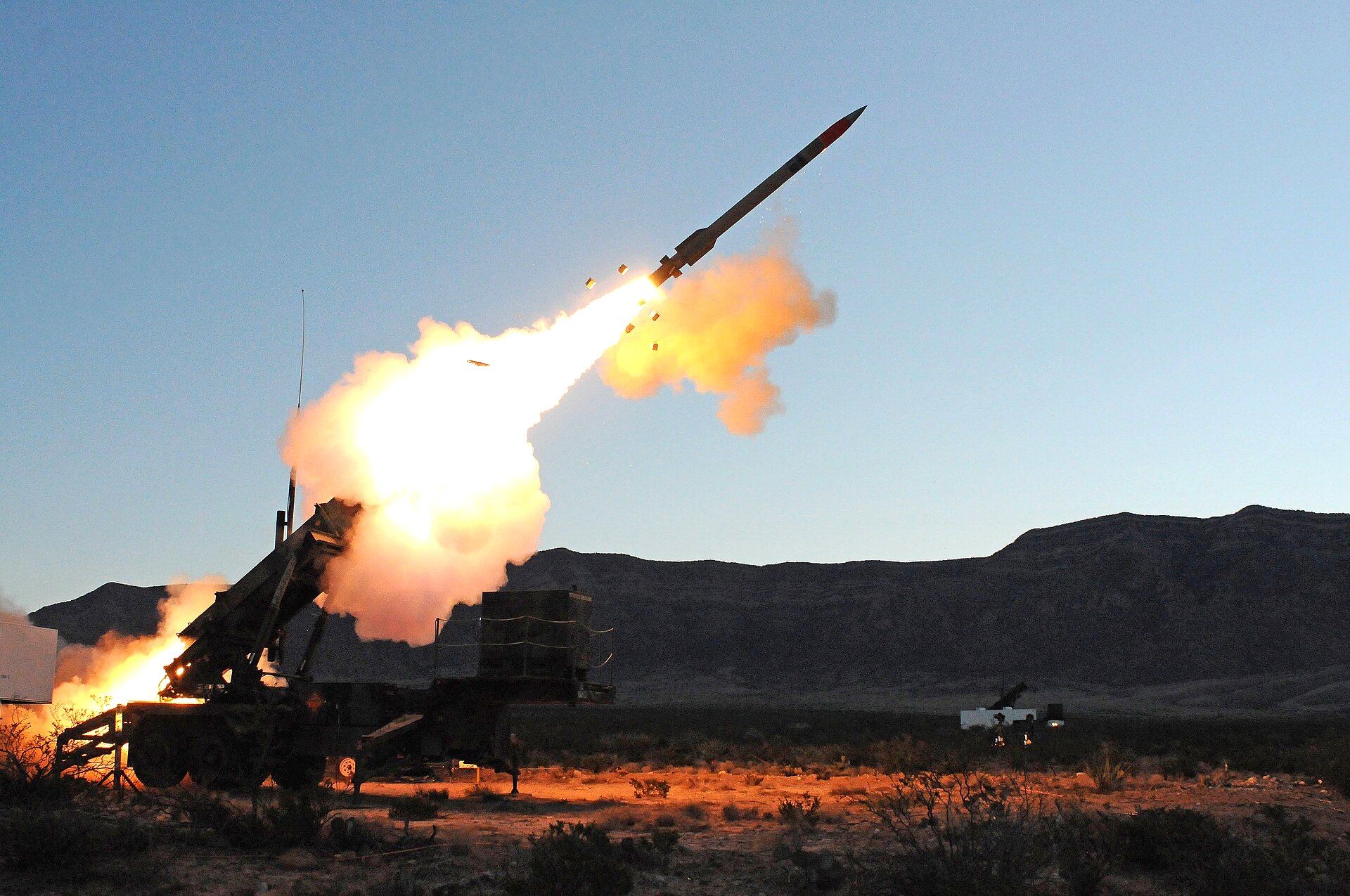
The constraints are not simply financial. Lt. Col. Jahara Matisek, a military analyst quoted by Cronkite News on March 27, identified structural choke points: “testing capacity, long qualification cycles and scarcity of critical minerals such as gallium and germanium that China largely controls.” The Department of Defense procured an average of only 270 PAC-3 MSE missiles per year between fiscal years 2015 and 2024, according to CSIS data — meaning demand routinely exceeded production before the first Iranian drone crossed Saudi airspace.
The September 2025 multi-year contract — $9.8 billion for nearly 2,000 rounds — was designed to provide supply-chain certainty. But staged deliveries over several years cannot address a theater that consumed 402 MSE rounds in 16 days. The replenishment timeline at existing contract rates is over two years, per Army budget document analysis cited by Cronkite News.
“While the demand coming from political and military leaders for deployments is strong, the demand signal sent to industry by budgets and appropriations is inconsistent.”
Wes Rumbaugh, CSIS Missile Defense Project, December 2025
The 114-to-1 Problem
Iran’s campaign is not designed to defeat Saudi air defenses. It is designed to empty them. Each Shahed-series drone costs between $20,000 and $50,000 to produce, according to Military Times reporting from March 6. Each PAC-3 MSE interceptor costs $3.9 to $4.2 million. The cost ratio — 114 to 1 in Iran’s favor — is a structural feature of the conflict.
Tehran’s operational logic exploits this asymmetry at scale. Drone swarms force Saudi batteries to choose between firing premium interceptors against cheap targets or accepting leakers into defended airspace. The 402 MSE rounds expended in 16 days carried a price tag exceeding $1.56 billion — consumed against an Iranian attack package whose total production cost was a fraction of that sum. Senator Mark Kelly of Arizona, a member of the Armed Services Committee, framed the risk in testimony reported by Military Times: “If our magazine depth goes to zero and they can then shoot these things freely around the region,” a gap opens that no coalition air patrol can fill.
The Ras Tanura incident on March 4 demonstrated what happens when the calculus tips. Two drones — likely costing less than $100,000 combined — penetrated a defense screen and forced the precautionary shutdown of a refinery that processes a measurable share of global crude. The shield has a timer.
THAAD and the Parallel Depletion
The PAC-3 shortage does not exist in isolation. US THAAD interceptor inventory stood at 534 rounds as of December 2025, according to CSIS tracking data. In the first 16 days of Epic Fury, 198 of those rounds — 40 percent of the total — were expended. No new US THAAD deliveries have arrived since July 2023. The next scheduled delivery is April 2027, more than a year away.
Saudi Arabia operates two of its seven procured THAAD fire units, according to Army Recognition reporting from 2026. The system provides the upper-tier intercept layer against ballistic missiles that Patriot cannot reach — and its depletion compounds the vulnerability created by PAC-3 losses. Mark Cancian, a senior adviser at CSIS, told Cronkite News on March 27 that the regional drain carries consequences beyond the Gulf: “The major risk is not that we’re going to run out for this war, but that the inventories are inadequate for a possible conflict with China.”
William Alberque of the Pacific Forum noted that the starting position was already compromised. “Magazine capacity was already low” after the June 2025 exchanges with Iran — the Twelve-Day War that preceded Epic Fury by eight months, he told Defence Security Asia. Daniel Shapiro of the Atlantic Council suggested that interceptor depletion may have naturally ended that earlier conflict: “it could have become critical” if fighting had continued longer, he told Military Times.
Can South Korean and European Systems Fill the Gap?
The search for alternatives has already begun, with mixed results. South Korea’s Cheongung-II — the KM-SAM Block 2, manufactured by LIG Nex1 — was rush-deployed to the UAE in March 2026 and achieved its first combat intercept of an Iranian missile, according to The Defense Post. Saudi Arabia signed a separate $3.2 billion deal with LIG Nex1 for the system in 2024, as reported by KED Global, though delivery and integration timelines remain unclear. The deal reflects a broader Saudi strategy of diversifying defense procurement beyond sole-source American platforms.
European alternatives face their own production wall. MBDA’s Aster 30, the interceptor used in the Franco-Italian SAMP/T system, is produced at only 220 to 250 missiles per year, according to Defense News reporting from March 26. European nations confronting their own stockpile shortfalls — driven by transfers to Ukraine and belated rearmament programs — cannot spare SAMP/T batteries or Aster rounds for Gulf deployment. Greece deployed a Patriot battery to Saudi Arabia in 2025, extending into 2026, according to Army Recognition and Janes — a contribution that underlines the ad hoc, coalition-dependent nature of the current defense posture.
None of these systems replaces the PAC-3 MSE’s role as the primary ballistic missile interceptor in the Gulf theater. The KM-SAM addresses a portion of the threat spectrum; the Aster 30 cannot be sourced in volume. The structural dependency on Camden remains.
Tehran’s Exhaustion Calculus
Iran’s operational framework for the conflict is explicitly premised on defense exhaustion — a strategy that treats Saudi interceptor stocks as a finite resource to be drained rather than a military capability to be overcome. The IRGC’s “Fourth Successor” long-war plan, as reported by Al Jazeera on March 10, is built on attrition through decentralized operations and the systematic exhaustion of defensive resources.
The Soufan Center’s March 9 analysis described Iran’s “Mosaic Defense” posture as the offensive mirror of this logic: dispersed launch infrastructure designed to outlast the US-GCC interceptor supply chain. Iranian state media has seized on the depletion narrative. PressTV and affiliated outlets amplified RUSI’s interceptor crisis findings, framing “critical depletion” as strategic validation of Tehran’s approach, according to monitoring by GlobalSecurity.org.
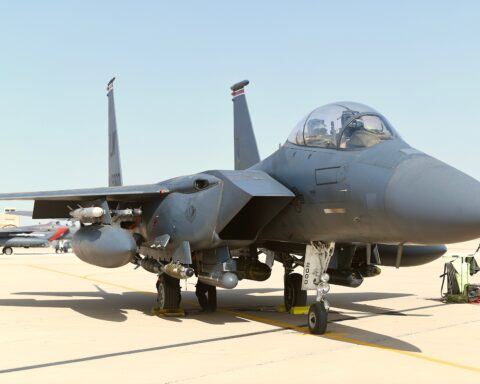
That calculus has now received an official US imprimatur: a classified intelligence assessment, first reported April 2, found that roughly half of Iran’s ballistic missile launchers survived five weeks of US and Israeli strikes — confirming that Tehran’s dispersed launch infrastructure has absorbed the coalition air campaign without suffering the decisive attrition Washington claimed. The following day, that assessment was given physical confirmation: Iran shot down a US F-15E Strike Eagle over southern Iran on April 3, the first American manned aircraft destroyed by enemy fire since Operation Epic Fury began.
The daily attack tempo — 33 ballistic missiles and approximately 94 drones — appears calibrated not to overwhelm Saudi defenses in a single salvo but to sustain a burn rate that no resupply chain can match. At the doctrinal two-interceptors-per-ballistic-missile rate, Iran’s ballistic component alone consumes 66 PAC-3 MSE or equivalent rounds per day. At 400 remaining rounds and current expenditure rates, the arithmetic is a matter of days, not weeks. For a fuller picture of Iran’s multi-node depletion strategy — bleeding Saudi Arabia, the UAE, and Kuwait simultaneously, see our analysis of how the three-front campaign is accelerating total GCC shield collapse.
As interceptor stocks thin, a second cost is emerging alongside the depletion math: on April 2, debris from successful PAC-3 intercepts damaged nine residential homes in Al-Kharj across two separate incidents — the first time Saudi state media formally acknowledged that the act of interception itself, not a failed defense, caused civilian property damage inside the Kingdom. The target scope widened further on April 3, when Iran struck Kuwait’s Mina al-Ahmadi refinery and a desalination plant in the same attack window; that simultaneous hit on energy and water infrastructure marked the second strike on Kuwaiti water systems in four days, demonstrating that interceptor attrition is enabling Iran to expand both the geography and the category of targets it can strike with impunity.
| System | Annual Global Production | Epic Fury Consumption (16 days) | Consumption as % of Annual Output |
|---|---|---|---|
| PAC-3 MSE (Lockheed Martin) | ~620/year | 402 | 65% |
| THAAD (Lockheed Martin) | Production paused since July 2023 | 198 | N/A — no active deliveries |
| Aster 30 (MBDA) | 220–250/year | Not deployed in theater | N/A |
| Cheongung-II (LIG Nex1) | Limited export production | First combat intercept March 2026 | N/A |
Background: A Shortage That Predates the War
The interceptor deficit did not begin on February 28. In August 2022, the Defense Security Cooperation Agency approved a $3.05 billion sale of 300 PATRIOT GEM-T interceptors to Saudi Arabia, specifically to replenish what the DSCA notification described as “dwindling” stocks. The CSIS report from December 2025, titled “The Depleting Missile Defense Interceptor Inventory,” documented a decade of procurement shortfalls in which annual purchases consistently fell short of demand.
RUSI’s “Command of the Reload” framework, published in March 2026, argued that modern high-intensity warfare has entered a phase where “industrial endurance rather than battlefield performance alone” determines strategic outcomes. The framework was developed in the context of Ukraine but applies with particular force to the Gulf, where a single production facility in Arkansas serves as the sole source for the interceptor on which 17 nations — and Saudi Arabia’s critical infrastructure — depend.
Saudi Arabia’s January 2026 order for 730 PAC-3 MSE rounds was the largest single FMS request for the interceptor in the program’s history. Those rounds do not yet exist. They are on order against production capacity currently rationed across every Patriot customer nation, from Saudi Arabia and Israel to Germany, Japan, and South Korea. The April 6 Hormuz deadline and the mid-April Strategic Petroleum Reserve cliff — two of the war’s next inflection points — will arrive before a single replacement round from that order reaches the field.
Frequently Asked Questions
How does the PAC-3 MSE differ from earlier Patriot interceptors like the GEM-T?
The PAC-3 MSE (Missile Segment Enhanced) is a hit-to-kill interceptor designed to destroy incoming ballistic missiles through direct kinetic impact, rather than the proximity-detonation approach used by the older GEM-T. The MSE variant features a larger, dual-pulse solid rocket motor that extends its range and engagement altitude, allowing it to address both ballistic missiles and advanced cruise missiles. GEM-T rounds, while cheaper and more available, lack the kinetic energy and guidance precision required against the faster ballistic threats in Iran’s arsenal — which is why MSE depletion, rather than total Patriot round counts, defines the crisis.
What happens to Saudi Arabia’s oil infrastructure if interceptor stocks reach zero?
Saudi Aramco’s critical nodes — Ras Tanura (the world’s largest offshore oil loading facility), Abqaiq (the world’s largest crude processing plant), and the Yanbu terminals on the Red Sea coast — would be exposed to uncontested drone and missile strikes. The September 2019 Abqaiq-Khurais attack, which temporarily knocked out 5.7 million barrels per day of production using 18 drones and 7 cruise missiles, occurred when Saudi interceptor stocks were at full strength and the attack still succeeded. With 400 rounds remaining and no near-term resupply path, the exposure is qualitatively different from any prior period in Saudi defense planning.
That exposure has since become acute: what Iran’s targeting doctrine change means for Saudi oil exports is no longer a hypothetical — precision strikes on the Yanbu Aramco-ExxonMobil refinery and near-misses on Ras Tanura in late March and April 2026 confirmed that high-value nodes are now being engaged with accuracy that the 2019 Abqaiq attack never achieved.
Could the US transfer interceptors from its own inventory to Saudi Arabia under emergency authorities?
The Presidential Drawdown Authority (PDA) allows the president to transfer up to $100 million in defense articles from US stocks without congressional approval in an emergency. The mechanism was used extensively for Ukraine. However, US PAC-3 MSE stocks are themselves depleted — the September 2025 multi-year contract was designed to rebuild American reserves — and any transfer would directly reduce the US military’s own missile defense capacity in the Indo-Pacific, where CSIS senior adviser Mark Cancian has warned inventories are “inadequate for a possible conflict with China.”
Are there any interceptors that could be manufactured faster than the PAC-3 MSE?
Lower-tier systems like the Raytheon-produced Coyote Block 3 and the directed-energy weapons under development by the US Army (including the 300-kilowatt IFPC-HEL program) are designed specifically to address the drone portion of the threat at far lower cost-per-shot. However, none of these systems are fielded in the Gulf theater at scale, and none can engage the ballistic missile component of Iran’s campaign. Israel’s Iron Beam laser system, which completed operational testing in 2025, addresses short-range rockets and drones but lacks the range and power for ballistic missile defense. The gap between what exists in production and what the battlefield demands remains unbridged.
How many PAC-3 MSE rounds would Saudi Arabia need to sustain current intercept rates through the end of 2026?
At the 16-day average consumption rate of approximately 25 MSE rounds per day — derived from the 402 rounds fired through mid-March — sustaining operations through December 2026 would require roughly 6,900 additional interceptors, more than eleven times Lockheed Martin’s 2025 annual production and more than three times the planned 2030 production capacity of 2,000 per year. Even a significant reduction in Iran’s daily attack tempo would leave Saudi requirements far beyond any achievable production scenario. The math, as Cronkite News reported, points to a replenishment timeline of over two years at existing contract rates — a timeline that assumes no further combat expenditure. The command architecture layered on top of these depleting stocks — three national systems under three separate chains of authority — creates additional friction that resupply alone cannot resolve; that coordination failure is the subject of Ninety Seconds Over Riyadh. That supply constraint is now the central driver behind Saudi Arabia’s 10-year defense cooperation agreement with Ukraine, which targets domestic co-production of interceptors precisely because Lockheed Martin cannot fill the gap. A separate layer of that architecture — the UK’s Sky Sabre deployment and Greece’s Patriot battery, both operating inside Saudi Arabia outside NATO command — adds CAMM interceptors that do not compete with PAC-3 stocks for ballistic threats, but introduces the sovereign command chain fragmentation that makes every interceptor decision more expensive than it needs to be.