
The drive from Jeddah to AlUla via Medina is one of the finest road trips in Saudi Arabia — roughly 750 kilometres of well-paved highway crossing the Hejaz heartland, ancient volcanic fields, and some of the most dramatic desert scenery on the Arabian Peninsula. Whether you are building a wider AlUla travel itinerary or looking for the best way to connect two of Saudi Arabia’s most compelling destinations, this route delivers far more than a transit corridor. It is a journey through layers of Arabian history, from the Red Sea cosmopolitanism of Jeddah through the spiritual gravity of Medina to the Nabataean tombs and sandstone canyons of AlUla.
This guide covers the complete itinerary over three to five days, with verified distances, driving times, fuel and rest stops, accommodation options, and practical tips for every segment. We cover what non-Muslim visitors can see in Medina, the detour-worthy ancient oasis of Khaybar, and how to book AlUla’s UNESCO sites in advance.
Best Time to Visit: October to March (daytime highs 22–32°C; summer exceeds 42°C)
Getting There: Rent a car from Jeddah’s King Abdulaziz International Airport; drive north via Highway 15 to Medina, then Route 375 to AlUla
Visa Required: Yes — tourist e-visa available online
Budget: $120–$350/day depending on accommodation (fuel ~$30–40 total for the full route)
Must-See: Hegra UNESCO World Heritage Site, Elephant Rock at sunset, Khaybar volcanic oasis
Avoid: Driving at night between Medina and AlUla — camels wander onto the highway and are nearly invisible after dark
Route Overview: Three Segments, 750 Kilometres
The Jeddah-to-AlUla road trip breaks naturally into three segments, each with its own character. All roads are paved, dual-carriageway highways maintained to a high standard — no off-road driving is required at any point.
| Segment | Distance | Driving Time | Road | Key Stops |
|---|---|---|---|---|
| Jeddah → Medina | ~420 km | 4–4.5 hours | Highway 15 (Route 60) | Badr, rest areas |
| Medina → Khaybar | ~170 km | 1.5–2 hours | Route 375 north | Khaybar oasis, lava fields |
| Khaybar → AlUla | ~160 km | 1.5–2 hours | Route 375 north | Desert scenery, Hegra approach |
Tip: Most travellers spread this over 3–5 days: one night in Medina, an optional night at Khaybar, and two nights in AlUla. Rushing the full 750 km in a single day is possible but wastes the best parts of the journey.
Day One: Jeddah — Prepare and Explore
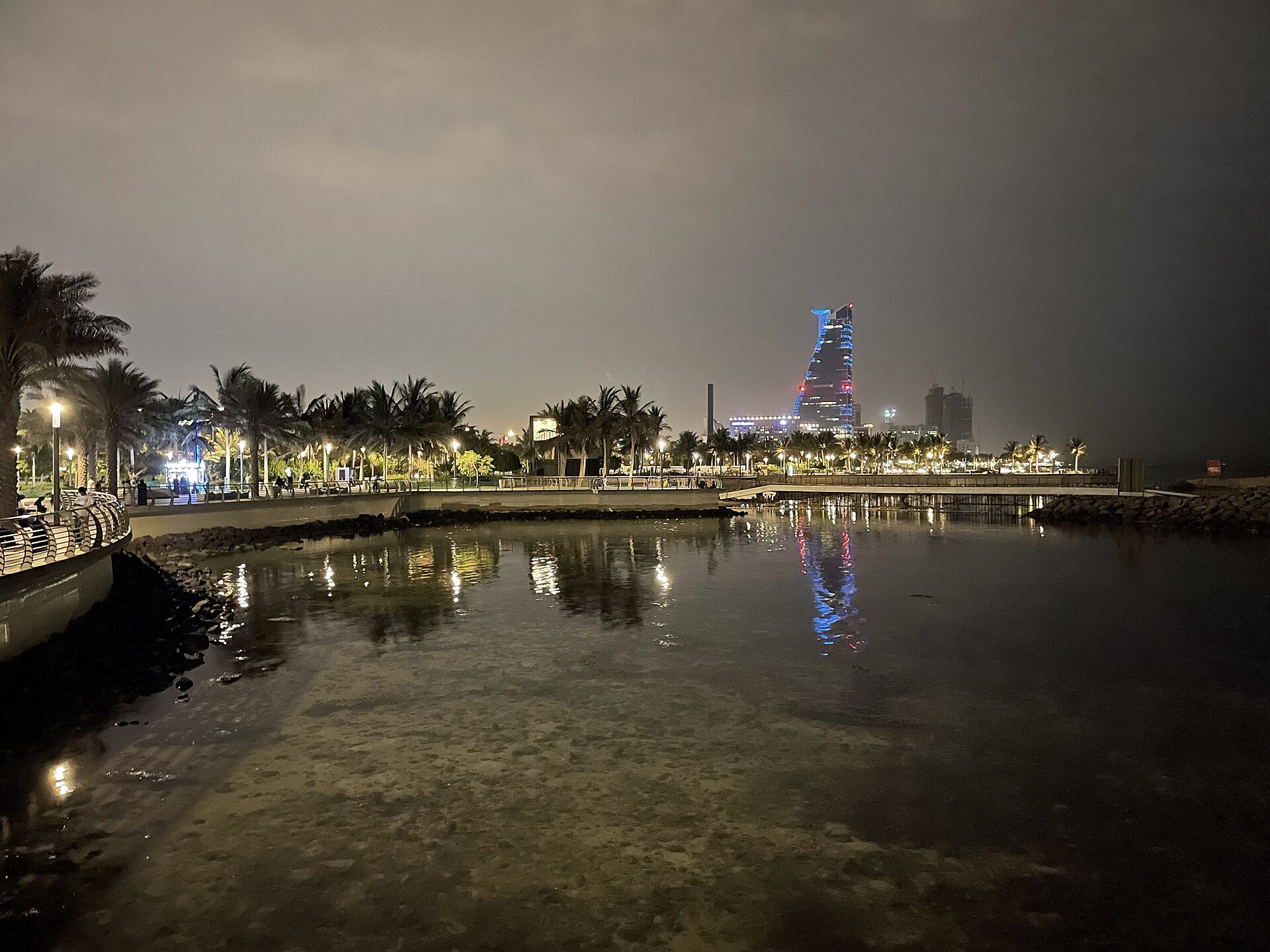
Start your trip with a day in Jeddah, Saudi Arabia’s Red Sea gateway. The city deserves at least a full day before you head north. Pick up your rental car from King Abdulaziz International Airport, where all major international brands operate desks. An SUV is comfortable but not necessary — a standard sedan handles every road on this route.
What to See Before You Leave
- Al-Balad (Historic Jeddah): The UNESCO-listed old town with coral-stone tower houses, carved wooden rawasheen balconies, and narrow souks. Allow 2–3 hours to wander.
- Jeddah Corniche: The 30-km waterfront promenade stretching along the Red Sea. Walk the southern section near the floating mosque (Al Rahma Mosque) for the best views.
- King Fahd Fountain: The world’s tallest fountain, visible from much of the city, jets water 312 metres into the air after sunset.
- Mount Uhud: The mountain north of the city where the Battle of Uhud took place in 625 CE. Drive up for panoramic views of Medina’s sprawl against the volcanic landscape. The Uhud Martyrs Cemetery at the base is accessible to all visitors.
- Quba Mosque (exterior): The first mosque built in Islamic history. Non-Muslims can admire the striking white domes and minarets from outside.
- Hejaz Railway Museum: A restored Ottoman-era station from the early 1900s Hejaz Railway that once connected Damascus to Medina. The rolling stock and station buildings are well preserved.
- Dar Al Madinah Museum: Covers Medina’s history from pre-Islamic times through the modern era. Well-curated exhibits with English signage.
- Date farms and souks: Medina is Saudi Arabia’s date capital. Visit the shops along Quba Road or the central markets for Ajwa dates — the city’s most prized variety, running SAR 200–400/kg.
- Madinah Hilton: Reliable international standard, walking distance from the mosque perimeter. From ~$120/night.
- Crowne Plaza Madinah: Mid-range with good facilities. From ~$96/night.
- Budget options: Numerous clean, no-frills hotels from ~$42/night cluster along the main roads south of the mosque district.
- Khaybar Old Town: A cluster of stone and mudbrick buildings inhabited until the 1980s, now abandoned and atmospheric. The fortified structures reflect centuries of strategic importance.
- Ain Al-Jammah: A natural spring-fed oasis surrounded by palm groves. The lush green against the black volcanic rock is extraordinary for photography.
- Umm Jirsan Lava Tube: At 1,481 metres, this is Saudi Arabia’s longest known lava tube. Archaeological excavations have found human remains and animal bones dating back 7,000 years. Access may require a guide — check locally.
- Standard Hegra Tour: From SAR 95 (~$25), approximately 2 hours. Includes a multimedia guide available in English, Arabic, French, Chinese, and Italian.
- Hop-On Hop-Off Tour: SAR 150 (~$40), approximately 1 hour. More flexible but covers fewer tombs.
- Premium and after-dark experiences: Available seasonally — check the website for current offerings.
- An International Driving Permit (IDP) alongside your original licence (valid up to one year)
- A credit card for the deposit
- Minimum age 21 (some companies require 25)
- Night driving: Avoid driving between Medina and AlUla after dark. Camels roam freely and are extremely difficult to see at night — collisions are serious and not uncommon on desert highways.
- Water: Carry at least 4–5 litres per person in the vehicle, even with air conditioning. Breakdowns in 40°C+ heat become dangerous quickly without water.
- Speed cameras: AI-powered cameras are everywhere. They detect speeding, phone use (hand near ear), and seatbelt violations. Fines arrive via the Absher app within 24 hours.
- Speed bumps: Small towns have aggressive speed bumps that appear with minimal warning. Slow to 40 km/h through any built-up area.
- Day 1: Jeddah → Medina (4 hours). Afternoon at Mount Uhud and the Hejaz Railway Museum. Overnight Medina.
- Day 2: Medina → AlUla via Khaybar (3.5 hours with a Khaybar stop). Afternoon at Elephant Rock for sunset. Overnight AlUla.
- Day 3: Hegra morning tour. Dadan and Jabal Ikmah afternoon. Return to Jeddah via AlUla airport (1-hour flight) or begin the return drive.
- Day 1: Explore Jeddah — Al-Balad old town, Corniche, King Fahd Fountain. Overnight Jeddah.
- Day 2: Jeddah → Medina. Afternoon exploring Medina — Mount Uhud, Hejaz Railway Museum, date souks. Overnight Medina.
- Day 3: Medina → Khaybar. Explore the old town, Ain Al-Jammah, and the lava tube. Overnight Khaybar Volcano Camp or continue to AlUla.
- Day 4: Full day in AlUla — Hegra morning tour, Dadan and Jabal Ikmah, AlUla Old Town. Sunset at Elephant Rock. Overnight AlUla.
- Day 5: Maraya visit, helicopter tour over the canyons (if budget allows), or revisit favourite sites. Depart via AlUla airport or begin the return drive south.
- Sun protection: High-SPF sunscreen, hat, sunglasses. The UV index in the Hejaz routinely exceeds 10.
- Layers: Desert nights from November to February can drop below 10°C, especially in AlUla’s valley. Bring a warm jacket.
- Comfortable walking shoes: Hegra, Dadan, and AlUla Old Town involve walking on sand and uneven stone surfaces.
- Chargers and power bank: Keep your phone charged for navigation. A car charger is essential.
- Cash: Most places accept cards, but small roadside shops and some fuel stations in remote areas prefer cash. Carry SAR 200–300 as backup.
- AlUla Travel Guide 2026 — Complete guide to AlUla’s sites, hotels, and experiences
- Jeddah Travel Guide 2026 — Everything to see and do in Saudi Arabia’s Red Sea gateway
- AlUla Archaeology Guide — Hegra, Dadan, and Jabal Ikmah explained in depth
- Saudi Arabia Family Road Trip — Routes, stops, and survival tips for families
- Saudi Arabia Travel Guide 2026 — The complete guide to visiting the Kingdom
- Saudi Arabia Visa Guide — Every visa type explained
Stock up on water, snacks, and a full tank of fuel before departing. Petrol in Saudi Arabia is among the cheapest in the world — roughly SAR 2.33/litre (~$0.62) for 91-octane as of 2026.
Day Two: Jeddah to Medina (420 km, ~4 Hours)
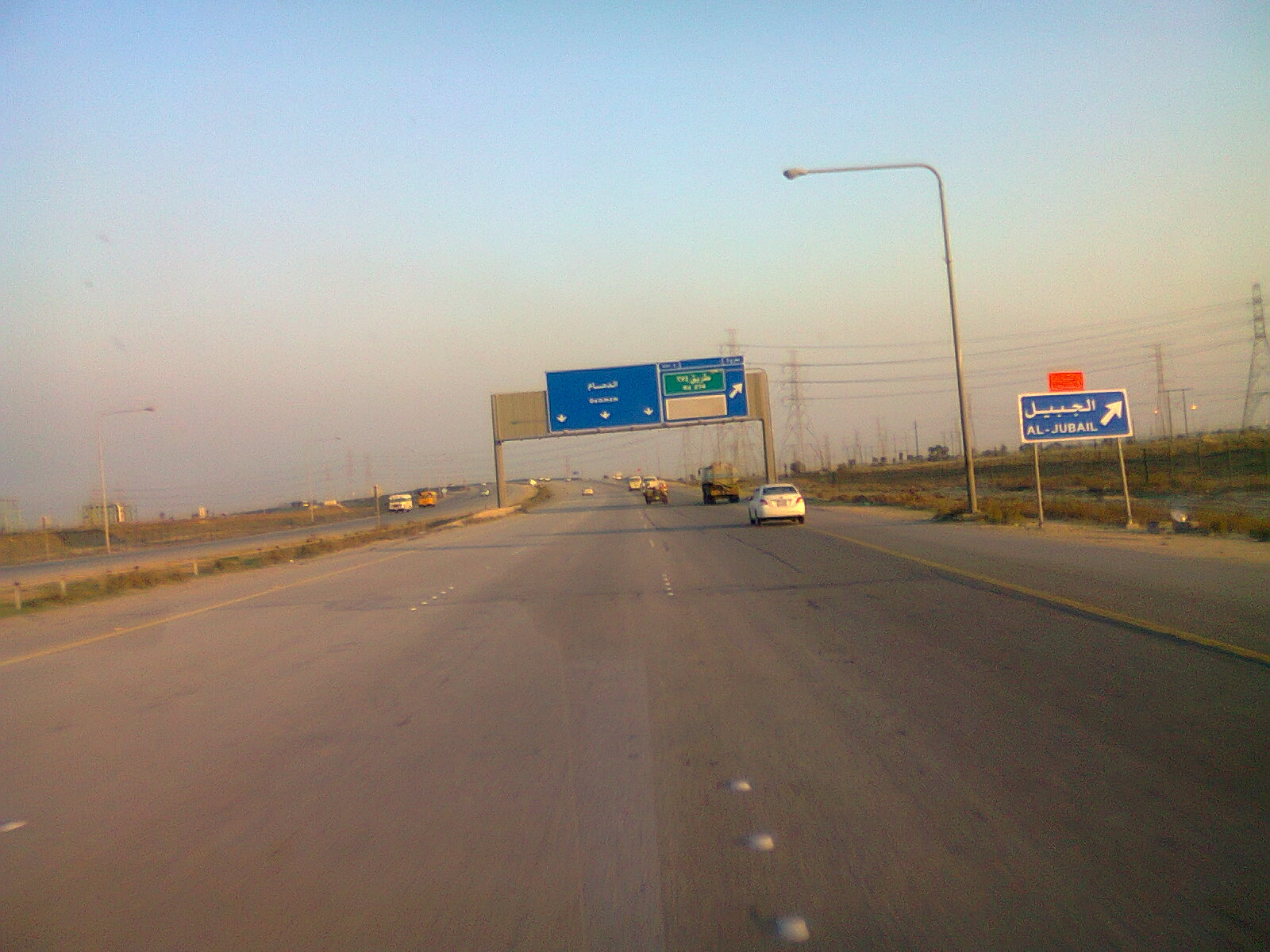
Leave Jeddah early to beat the midday heat. Highway 15 runs north through flat coastal terrain before climbing gradually into the Hejaz mountains. The road is excellent — a divided, multi-lane highway built to handle heavy pilgrim traffic year-round.
The Drive
Fuel stations and rest areas appear every 40–60 km along this corridor, each with a mosque, bathrooms, and a small shop. The town of Badr, roughly midway, makes a convenient coffee stop. The landscape shifts from Red Sea scrubland to rocky desert valleys as you approach Medina.
Speed limits range from 120 to 140 km/h on the highway. Saudi Arabia operates over 8,200 AI-powered speed cameras that auto-issue fines within 24 hours via the Absher app — they also detect phone use and seatbelt violations. Drive accordingly.
Medina: What Non-Muslim Visitors Can See
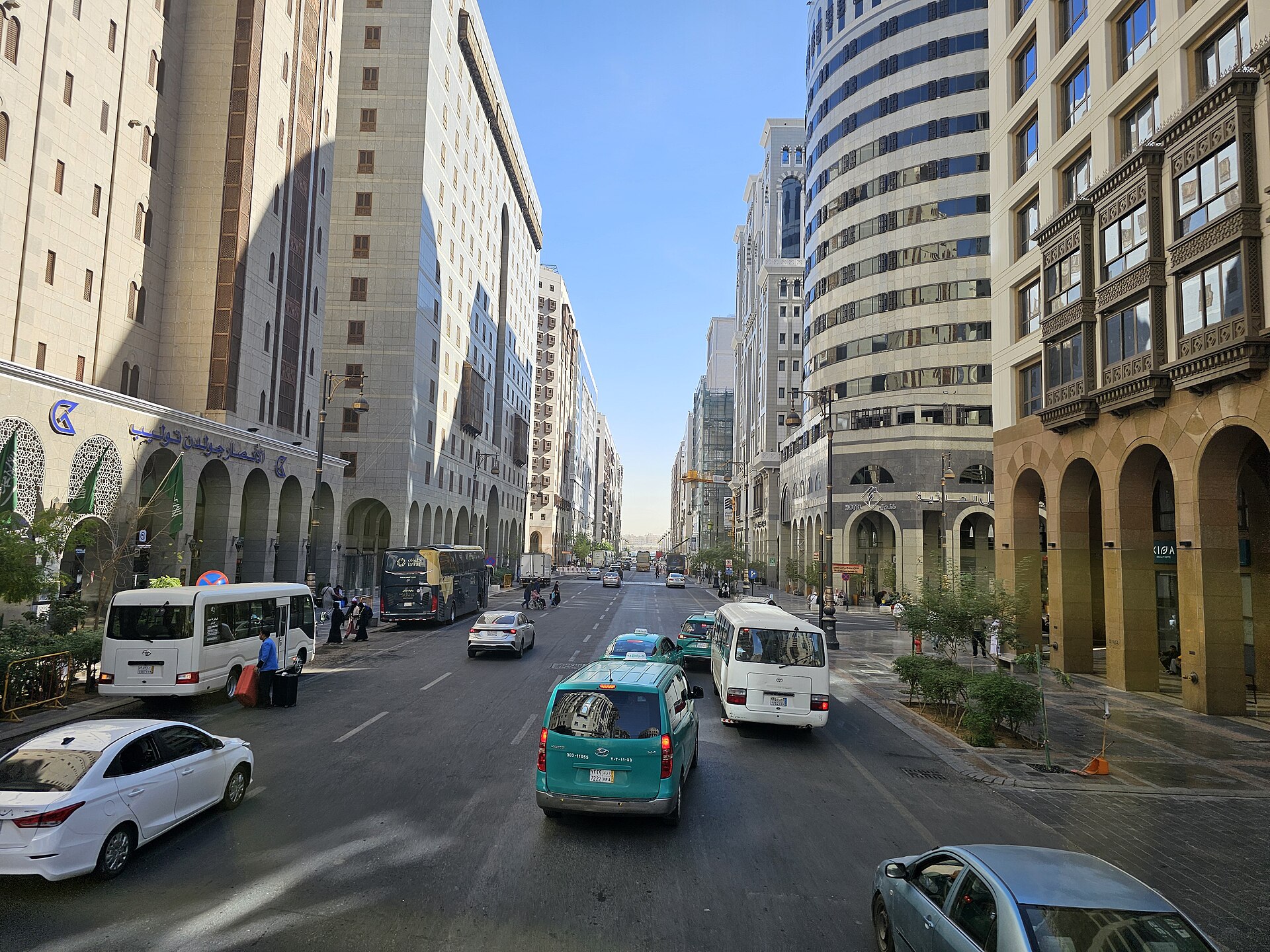
Since 2021, non-Muslim visitors have been welcome in Medina, though they cannot enter Al-Masjid an-Nabawi (the Prophet’s Mosque) or its immediate perimeter. There is still plenty to see and the city’s atmosphere — calm, clean, and deeply historic — rewards an overnight stay. If you are combining this trip with a pilgrimage, see our Hajj 2026 Guide for detailed Medina coverage.
Where to Stay in Medina
Accommodation ranges from budget to upscale, concentrated around the central mosque district:
Day Three: Medina to Khaybar (170 km, ~1.5 Hours)
Head north from Medina on Route 375, and within 90 minutes the landscape transforms. You are entering Harrat Khaybar — a 12,000-square-kilometre volcanic lava field that is one of Saudi Arabia’s most surreal geological features.
Khaybar: The Ancient Oasis
The town of Khaybar sits in a green valley surrounded by black basalt lava flows — a striking visual contrast. This was a major oasis on the Arabian trade routes for thousands of years, and it shows. Three sites stand out:
Khaybar also contains ancient “keyhole” and “kite” stone structures visible from aerial photography, dating back 2,000 to 9,000 years. These mysterious formations are still being studied by archaeologists. For more on Saudi Arabia’s geological wonders, see our lava fields guide.
Fuel note: Fill up in Medina before departing. There are stations in Khaybar, but the spacing thins out significantly compared to the Jeddah–Medina corridor. Always leave Khaybar with a full tank for the final push to AlUla.
Optional: Khaybar Overnight
The Khaybar Volcano Camp offers a luxury eco-lodge experience with tented accommodation, stargazing sessions, heritage tours, and helicopter rides over the lava fields. This is a genuine wilderness luxury experience — bookable through experiencealula.com as Khaybar falls under the Royal Commission for AlUla’s development umbrella.
Day Three/Four: Khaybar to AlUla (160 km, ~1.5 Hours)
The final 160 kilometres from Khaybar to AlUla pass through increasingly dramatic desert terrain. The flat lava plains give way to sandstone outcrops and mesas — the same geological formations that make AlUla’s landscape so spectacular. Watch for the first carved rock faces appearing as you approach from the south.
AlUla: The Destination
AlUla is where the road trip reaches its payoff. This valley in northwestern Saudi Arabia contains an extraordinary concentration of archaeological sites, natural rock formations, and new luxury infrastructure — all compressed into a manageable area. The AlUla Travel Guide covers the destination comprehensively; here we focus on what matters most for road-trippers arriving from the south.
Hegra (Mada’in Saleh) — UNESCO World Heritage Site
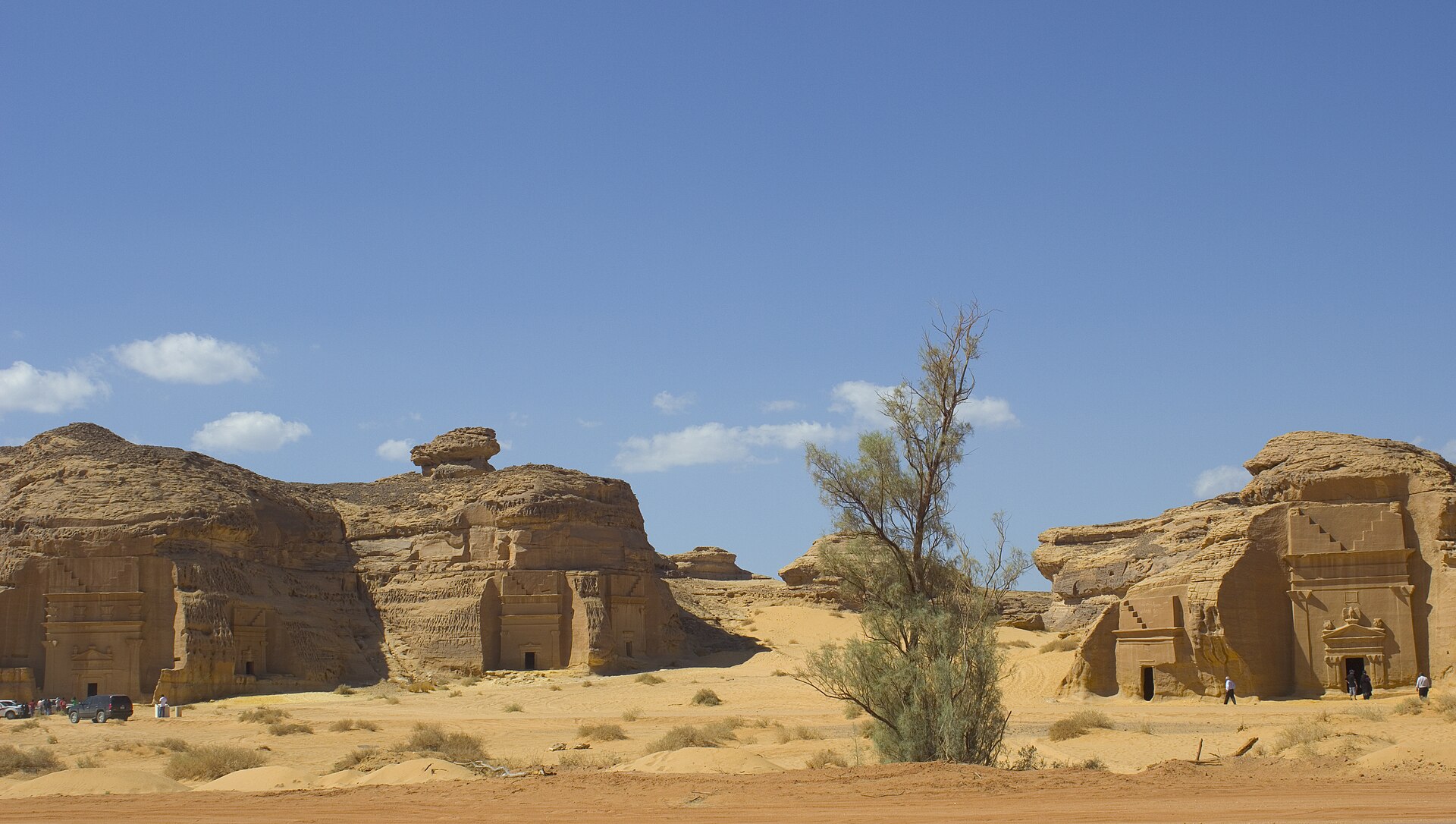
Saudi Arabia’s first UNESCO World Heritage Site (inscribed 2008), Hegra is a Nabataean city with 111 monumental tombs carved into sandstone outcrops. These are the southern counterpart to Petra in Jordan, built by the same civilisation in the 1st century CE — but Hegra is far less crowded and arguably better preserved.
Booking is mandatory. All visits require a guided tour booked through experiencealula.com. Self-driving within the site is not permitted.
Important: Arrive 15 minutes before your booked time slot. Cancellations are refunded up to 3 days in advance; date changes up to 1 day before. No same-day changes. Children aged 4 and under enter free.
Elephant Rock (Jabal AlFil)
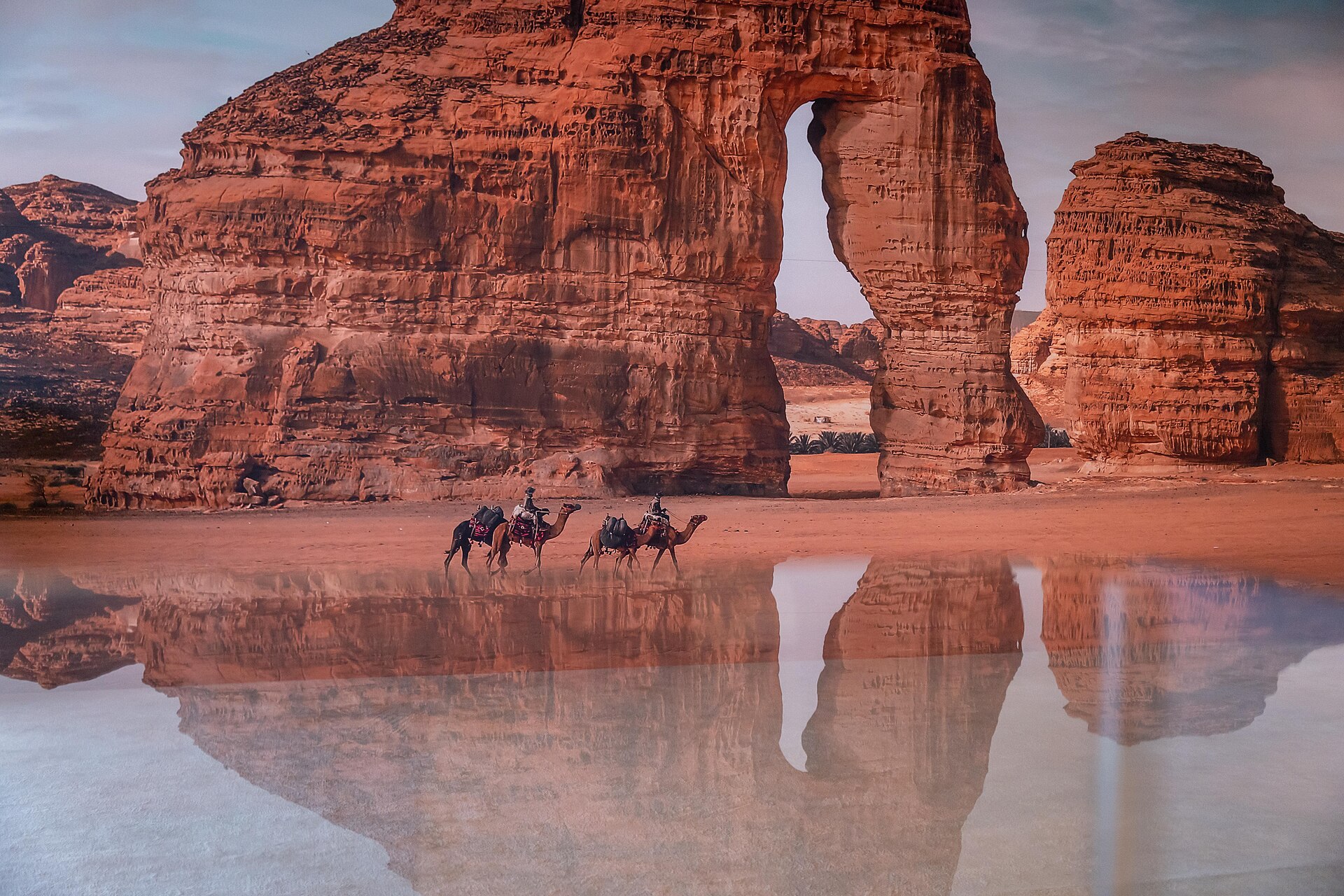
AlUla’s most photographed natural landmark is a sandstone formation shaped unmistakably like an elephant. The site is open daily from 16:00 to midnight, with entry at SAR 50 (~$13). Sunset is the best time — the rock glows orange-red against the darkening sky, and camel rides are available at the base. The rock art guide covers more of AlUla’s geological and archaeological formations.
Dadan and Jabal Ikmah
The ancient city of Dadan was the capital of the Dadanite and Lihyanite kingdoms, with rock-cut tombs and carved lion sculptures. Nearby Jabal Ikmah is known as the “open library” — a cliff face covered in thousands of pre-Arabic inscriptions spanning multiple civilisations. A combined tour runs from SAR 60 (~$16).
AlUla Old Town
A mudbrick labyrinth with over 900 years of continuous habitation along the ancient Incense Route. The narrow alleyways, crumbling towers, and restored sections give a vivid sense of life in a medieval Arabian trading settlement. The Incense Route guide puts this in broader historical context.
Maraya
The world’s largest mirrored building, with 9,740 glass panels reflecting the surrounding desert landscape. Originally built as a concert venue seating 500 (past performers include Alicia Keys, Andrea Bocelli, and John Legend), it also houses Maraya Social, a rooftop restaurant by Michelin-starred chef Jason Atherton. Tours cost SAR 95 for adults and SAR 45 for children.
Where to Stay in AlUla
AlUla’s accommodation scene has developed rapidly under the Royal Commission’s investment. Options range from ultra-luxury tented resorts to more accessible apartment-style stays. Book well in advance during peak season (November–February).
| Hotel | Style | From (per night) | Notes |
|---|---|---|---|
| Banyan Tree AlUla | 47 tented villas, Ashar Valley | ~$808 | Top-tier luxury, desert setting |
| Our Habitas AlUla | 96 rooms/villas | ~$1,153 | Wellness-focused, canyon location |
| Shaden Resort | Managed by Accor | ~$717 | Reliable international brand |
| Ashar Tented Resort | Tented camp | ~$533 | Good mid-range luxury option |
| Cloud7 Residence | Apartment-style | ~$203 | Budget-friendly, self-catering |
Promotional discounts of 30–45% are common in 2026, particularly for midweek stays. For a broader view of Saudi accommodation, see our hotels guide.
Practical Information
Car Rental and Driving
Rent from Jeddah airport where Hertz, Budget, Avis, and local operators compete on price. You will need:
Saudi Arabia drives on the right. Seatbelts are mandatory for all occupants. Child booster seats are enforced at checkpoints (SAR 300 fine per child since January 2026). DUI penalties are severe — SAR 10,000 fine plus a six-month licence suspension.
Fuel
Petrol is cheap (SAR 2.33/litre for 91-octane, ~$0.62). The full Jeddah-to-AlUla route costs roughly SAR 120–150 (~$32–40) in fuel for a mid-size car. Stations are frequent on the Jeddah–Medina highway (every 40–60 km) but sparser north of Medina. Always fill up in Medina and again in Khaybar.
Visa
All visitors need a Saudi tourist e-visa, available online for citizens of 49+ eligible countries. The single-entry visa costs SAR 535 (~$142) including insurance and is valid for one year with stays up to 90 days. Apply at least 48 hours before travel.
Mobile Coverage and Navigation
Major carriers (STC, Mobily, Zain) provide 4G/5G coverage along the entire Jeddah–Medina corridor. Coverage can drop on the Medina–AlUla stretch through remote desert sections. Download offline maps (Google Maps or Maps.me) before leaving Medina. A local SIM card from the airport costs SAR 50–100 for a tourist data package.
Safety
Suggested Itinerary
Three-Day Express
Five-Day Deep Dive
Return options: You can drive the 750 km back to Jeddah in a single long day, or fly out of AlUla’s Prince Abdul Majeed bin Abdulaziz Airport (direct flights to Riyadh and Jeddah on Saudia and flynas). Dropping the rental car at AlUla airport incurs a one-way fee — typically SAR 500–1,000 — but saves a full day of driving. For families, our family road trip guide has more tips on managing long drives with children.