Table of Contents
- Ambassador-Level Talks at Foggy Bottom
- What Did Israel Actually Agree To?
- Iran’s Lebanon Precondition and the Islamabad Bind
- Can Lebanon Talks Unlock the Strait of Hormuz?
- Saudi Arabia’s Proxy Diplomacy and Its Limits
- Background: Three Decades of Failed Israel-Lebanon Frameworks
- Frequently Asked Questions
WASHINGTON — Lebanon and Israel will hold direct talks at the State Department on Tuesday, April 15, mediated by US ambassador to Lebanon Michel Issa — the first face-to-face diplomatic engagement between the two countries since Israel launched Operation Eternal Darkness on April 8, which killed at least 303 people and wounded 1,150 in a single day. The announcement, confirmed by Lebanese President Joseph Aoun’s office on April 9, opens a new diplomatic track at the precise moment Iran has made Lebanon’s inclusion a hard precondition for progress in the separate US-Iran ceasefire negotiations running through Islamabad.
Iran’s Foreign Minister Abbas Araghchi wrote on X that “the Iran–U.S. Ceasefire terms are clear and explicit: the U.S. must choose — ceasefire or continued war via Israel. It cannot have both.” The State Department talks offer Washington a procedural answer to that demand — talks about Lebanon, if not yet a ceasefire in Lebanon — while the IRGC’s Hormuz blockade remains governed by a separate Iranian parliamentary fee bill passed March 31 that codifies toll authority as domestic law, independent of anything discussed in either Washington or Islamabad.

Ambassador-Level Talks at Foggy Bottom
Israeli ambassador to Washington Yechiel Leiter and Lebanese ambassador Nada Hamadeh Moawad will represent their governments, with Issa — a Lebanese-American diplomat appointed to Beirut in early 2026 — serving as the channel. The format is direct, an upgrade from the indirect proximity arrangement that produced the 2022 US-facilitated maritime boundary agreement, when Amos Hochstein shuttled between delegations that never shared a room.
Lebanon’s delegation arrives with three agenda items, according to Al-Monitor: release of Lebanese prisoners held by Israel, resolution of disputed points along the Blue Line, and withdrawal of Israeli forces from five positions they still occupy in southern Lebanon. Israeli Prime Minister Benjamin Netanyahu framed the talks differently. He told reporters April 9 that the objective was “disarming Hezbollah and securing a peace agreement between Israel and Lebanon” — a scope Lebanon has not accepted and Hezbollah has explicitly rejected.
Lebanese Prime Minister Nawaf Salam is separately set to travel to Washington in the coming days, CNN reported on April 10, raising the prospect that ambassadorial talks could escalate to principal level within the same week. Salam told Pakistani Prime Minister Shehbaz Sharif by phone that any ceasefire “must include Lebanon to prevent a recurrence of the Israeli aggressions.”
Hezbollah, banned from military activities by the Lebanese government since March 2026, will not participate. MP Ali Fayyad stated the group “rejects direct negotiations with Israel.” MP Hassan Fadlallah told Reuters that Israeli strikes since the ceasefire announcement constituted “a grave violation of the ceasefire,” adding there would be “repercussions for the entire agreement” if they continued. On the day the talks were confirmed, Hezbollah struck Israel’s Ashdod naval base, Al Jazeera reported — a reminder that the group retains operational capacity regardless of its exclusion from the diplomatic room.
The Middle East briefing 3,000+ readers start their day with.
One email. Every weekday morning. Free.
What Did Israel Actually Agree To?
Israel agreed to talks. It did not agree to a ceasefire. The distinction matters because Iran’s stated precondition — as articulated by Tasnim News Agency, which reflects IRGC positions — is that “negotiations will not begin until Washington fulfills its obligations to cease fire in Lebanon” and Israel stops attacks. The State Department format satisfies the word “negotiations” while leaving the word “cease fire” unaddressed.
Vice President JD Vance offered a partial explanation for the gap. He told Axios on April 8 that Israel was looking “to check themselves a little bit in Lebanon, because they want to make sure that our negotiation is successful.” President Donald Trump told NBC he had spoken with Netanyahu directly: “I spoke with Bibi and he’s going to low-key it. I just think we have to be sort of a little more low-key.” The verb is instructive — “low-key” is a register adjustment, not a halt.
The evidence from the ground on April 10 reflected the distinction. Israeli strikes killed at least 13 Lebanese State Security forces in southern Lebanon, according to Al Jazeera. Total Lebanese casualties since Operation Eternal Darkness began April 8 have reached at least 1,888 killed, per the Lebanese Health Ministry. Israel is conducting diplomacy and military operations on parallel tracks, a pattern consistent with its approach during the 2024 ceasefire — agreed in November of that year, collapsed before the current war began on February 28, 2026.
Iran’s Lebanon Precondition and the Islamabad Bind
Iran’s negotiating position in the Islamabad talks — indirect, with Pakistan shuttling messages between delegations in separate rooms — has treated Lebanon as a package component. Speaker of Parliament Mohammad Bagher Ghalibaf linked a Lebanon ceasefire to the unfreezing of Iranian assets, according to Haaretz. Araghchi’s public framing on X collapsed the US-Iran and Israel-Lebanon conflicts into a single binary: ceasefire or war.
The State Department talks fracture that package. If a Lebanon-specific diplomatic track now exists at Foggy Bottom, Washington can argue it has met Iran’s demand procedurally — talks are underway — without conceding what Tehran actually wanted, which was an Israeli military halt as a precondition to Islamabad progress. Ray Takeyh of the Council on Foreign Relations described the structural mismatch: “Both sides are interested in an off-ramp, but both have different expectations of what that looks like. It may hold, imperfectly.” On Iran’s ten-point plan for the Islamabad talks, Takeyh was less diplomatic: “The Iranian ten-point plan verges on the absurd. The negotiating platforms are designed to start talks, not serve as the basis of the final agreement.”
The IRGC’s response to the Lebanon track has been operational rather than diplomatic. When Israel struck Lebanon on April 8, Iran shut Hormuz traffic within minutes — an empirical demonstration, documented by the Washington Post and Euronews, that Tehran treats the two theaters as a single system. The IRGC does not sit in the Iranian delegation at Islamabad, and its field commanders operate under a decentralized command structure that survived the killing of second intelligence chief Khademi on April 6. The question of whether any agreement reached in Pakistan can bind IRGC naval operations in the Strait remains the central structural weakness of the entire Islamabad framework.
The Islamabad ceasefire expires April 22. No extension mechanism has been identified by any party, according to the Soufan Center.
Can Lebanon Talks Unlock the Strait of Hormuz?
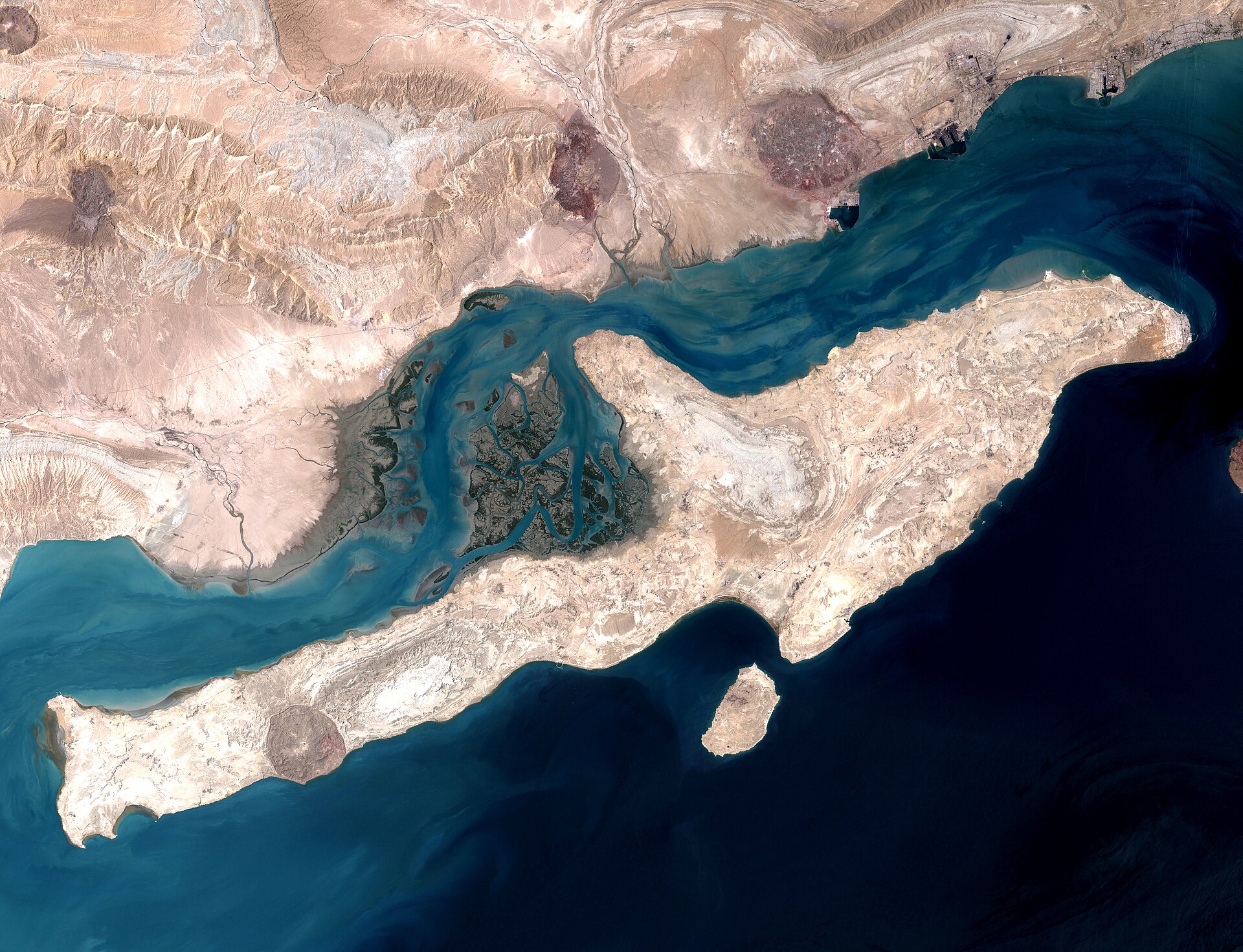
The short answer from the available evidence is no — not mechanically, and possibly not even politically. The Strait of Hormuz is currently permitting 5-7 vessels per day, down from 138 before the war, according to Windward maritime intelligence. More than 800 vessels are stranded in the Gulf, including hundreds of tankers. ADNOC CEO Sultan Al Jaber published a statement on LinkedIn on April 9 that dispensed with diplomatic hedging: “The Strait of Hormuz is not open. Access is being restricted, conditioned and controlled… Iran has made clear — through both its statements and actions — that passage is subject to permission, conditions and political leverage. That is not freedom of navigation. That is coercion.”
The Iranian Parliament’s fee bill, passed March 31, codifies the IRGC’s toll authority — $1-2 million per vessel, payable in yuan or cryptocurrency via Kunlun Bank or USDT on the Tron network — as domestic legislation. This is not a wartime measure subject to ceasefire terms. It is law. Even if Islamabad produces an agreement and the Lebanon track at the State Department yields a framework, the fee bill’s existence means Iran has a statutory basis for conditioning Hormuz transit that survives any diplomatic outcome.
Carnegie Endowment researchers described the structural problem in an assessment published this week: the ceasefire architecture treats Lebanon and Hormuz as “disaggregated issues… creating fragile, misaligned tracks unlikely to produce durable regional stability.” Andrew Leber at Carnegie noted the operational reality for Gulf states: rulers “prioritize whether shipping actually flows freely. Publicly rejecting Iranian tolls, privately they may facilitate payments to ensure unimpeded traffic.”
Goldman Sachs has projected Brent above $100 per barrel if Hormuz remains restricted for another month. JPMorgan’s estimate is $150-plus if disruption extends to mid-May. The 70-plus empty VLCCs sitting off Singapore — a four-week voyage from the Gulf — represent not just stranded capacity but a clock: every day the Strait stays at 5-7 transits, the deficit between global supply and demand widens by roughly 6 million barrels per day, per Kpler data.
Saudi Arabia’s Proxy Diplomacy and Its Limits
Saudi Arabia engineered Lebanon’s inclusion in the ceasefire framework without putting its name on the demand. The mechanism was British Prime Minister Keir Starmer’s visit to Jeddah on April 8, followed by a UK-France-led joint statement signed by more than 20 Western leaders calling for a Lebanon ceasefire. Saudi Arabia was not among the signatories. Starmer’s Mansion House address provided the language Riyadh wanted attributed to a Western ally: “Lebanon must be included… Hormuz must be fully reopened… no place for tolls.” The full architecture of that diplomatic operation is documented here.
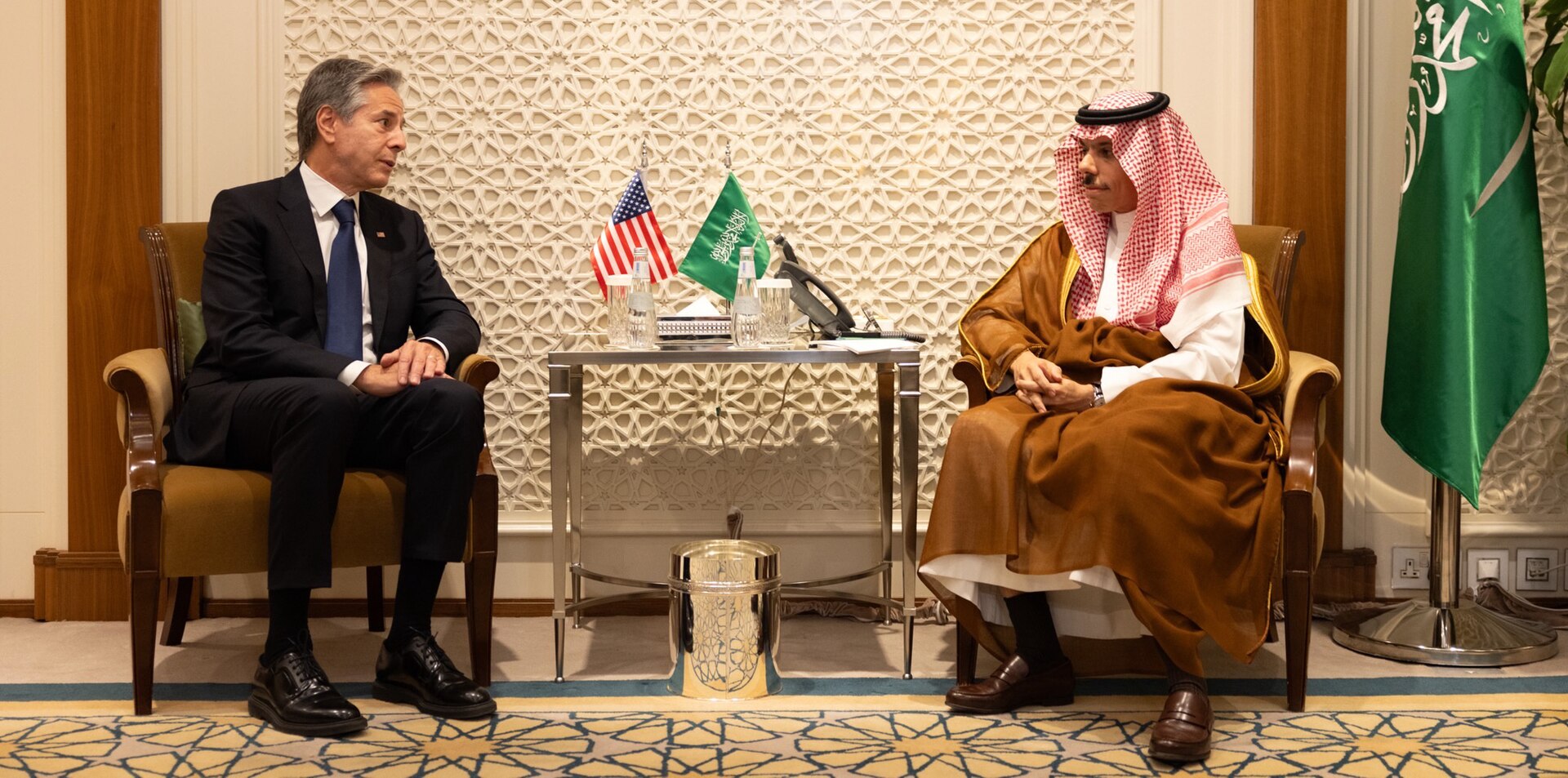
The State Department talks are, in one sense, a product of that campaign. Lebanon is now on the agenda. But the format — bilateral, Israel-Lebanon, at Foggy Bottom — excludes Saudi Arabia as completely as the Islamabad bilateral excluded Riyadh on April 10. Saudi Foreign Minister Prince Faisal bin Farhan, who held a co-guarantor seat during the March 29-30 Islamabad round, has no role in either the April 15 Washington talks or the April 10 Vance-Ghalibaf bilateral.
Prince Faisal called Araghchi on April 9 — their first contact since the war began approximately 40 days ago, according to Gulf Business. No detailed readout was released. The call’s timing, one day after the State Department talks were announced, suggests Riyadh is attempting to maintain a channel to Tehran even as the diplomatic architecture moves to venues where Saudi Arabia has no seat.
The GCC’s collective position, articulated in a summit statement reported by Arab News, calls for both an end to Israeli attacks on Lebanon and opposition to Iranian Hormuz tolls. That formulation links the two tracks. The problem is that the diplomacy now running in Washington and Islamabad has unlinked them — Lebanon at the State Department, Iran-US at Islamabad, Hormuz governed by Iranian domestic law and IRGC naval operations that answer to neither forum.
Marwan Muasher, vice president for studies at Carnegie Endowment, framed the broader pattern: “Those who suspected that a U.S.-Iran agreement would not be honored by Israel were correct.” The State Department talks test whether the inverse also holds — whether a US-Israel-Lebanon track will be honored by Iran.
Background: Three Decades of Failed Israel-Lebanon Frameworks
The last direct agreement between Israel and Lebanon was the May 17, 1983, accord brokered by the United States after months of negotiations. Lebanon abrogated it nine months later under Syrian pressure. The failure mode — a Lebanese government agreeing to terms it could not enforce because it did not control its own territory — is the structural risk the April 15 talks inherit. In 1983, Syria was the external power whose military presence made Lebanese commitments unreliable. In 2026, Hezbollah occupies an analogous position: excluded from talks, opposed to them, and capable of independent military action that no Lebanese government commitment can prevent.
UN Security Council Resolution 1701, passed after the 2006 war, called for Hezbollah’s withdrawal south of the Litani River, disarmament of all armed groups in Lebanon, and full Israeli withdrawal. Twenty years later, none of these provisions has been implemented. Israel still occupies five positions in southern Lebanon — one of the three items on Lebanon’s agenda for April 15. The State Department talks are nominally about completing 1701’s unfinished work, though Netanyahu’s stated objective of “disarming Hezbollah” goes well beyond the resolution’s terms.
Frequently Asked Questions
Who is Michel Issa, the US mediator for the April 15 talks?
Michel Issa is the US ambassador to Lebanon, a Lebanese-American diplomat whose appointment in early 2026 was partly designed to facilitate direct communication with Beirut during the war. His role as mediator rather than participant means the United States is formally a facilitator, not a party — a distinction that matters for Iran’s framing, which treats the US and Israel as a single actor. Issa’s dual cultural fluency gives Washington a mediator who can operate in both English and Arabic without translation delays, a practical advantage in talks where precise language will carry outsized weight.
What happens to Hormuz shipping if the Lebanon talks succeed?
There is no formal linkage between the State Department’s Lebanon track and Hormuz shipping. The IRGC’s operational control of the Strait is governed by its own command structure and, since March 31, by Iranian parliamentary legislation authorizing transit fees. Even a comprehensive Lebanon agreement — prisoner releases, Blue Line resolution, Israeli withdrawal from the five disputed positions — would not automatically produce a change in IRGC naval behavior. The precedent from April 8 runs in the opposite direction: Iran shut Hormuz traffic within minutes of Israeli strikes on Lebanon, demonstrating that the IRGC treats the Strait as a responsive instrument, not a static position. Any Hormuz opening would require a separate agreement, likely through the Islamabad track, with the additional complication that the IRGC is not represented in Iran’s delegation there.
Why is Hezbollah excluded from the talks if the agenda includes Hezbollah’s disarmament?
The Lebanese government banned Hezbollah from military activities in March 2026, giving Beirut formal authority to negotiate security arrangements on behalf of the state. In practice, the ban has not altered Hezbollah’s operational capacity — the Ashdod naval base strike on April 10 demonstrated that. Netanyahu’s framing of the talks as being about “disarming Hezbollah” creates a paradox: the party whose disarmament is ostensibly under discussion is neither present nor bound by any outcome. Lebanon’s government can agree to terms it lacks the coercive capacity to enforce, replicating the structural failure of the 1983 May 17 Agreement.
What is Iran’s ten-point plan and does it address Lebanon?
Iran submitted a ten-point plan to the Islamabad talks whose provisions include IRGC “coordination” authority over Hormuz passage (Point 7), withdrawal of all US forces from regional bases (Point 8), and UNSC codification of the agreement (Point 10). Lebanon features as a precondition — Iran demands a ceasefire there before the ten-point plan’s terms are negotiated — but the plan itself is focused on Iran-US bilateral issues and Gulf security architecture. Point 7’s Hormuz provision directly conflicts with UNCLOS Articles 37-44 on transit passage, though Iran, the United States, and Israel are all non-ratifiers of the convention. The CFR’s Ray Takeyh assessed the plan as verging “on the absurd,” noting that negotiating platforms “are designed to start talks, not serve as the basis of the final agreement.”
Has Saudi Arabia commented publicly on the State Department talks?
No official Saudi statement on the April 15 talks has been released as of April 10. Saudi Foreign Minister Prince Faisal bin Farhan’s call with Araghchi on April 9 — their first in approximately 40 days — is the only publicly confirmed Saudi diplomatic action in the 24 hours following the announcement. Riyadh’s preference, evident from the Starmer visit and the 20-nation Western leader statement it helped orchestrate without signing, is to influence the Lebanon track’s existence and framing without direct exposure to its outcomes. The risk is that a Lebanon framework negotiated at the State Department without Saudi input could produce terms that affect Gulf security — particularly if Israel extracts concessions on Hezbollah’s weapons that Iran treats as a loss requiring compensation elsewhere, including at Hormuz.