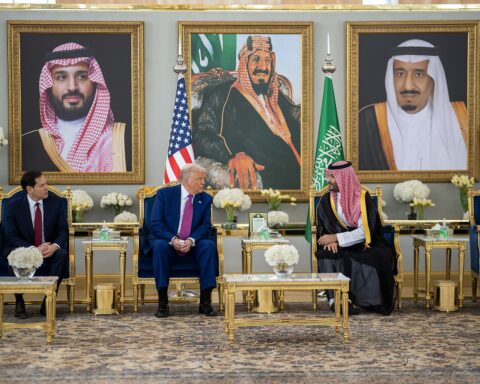
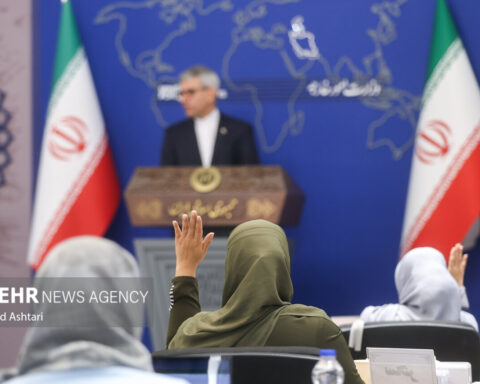
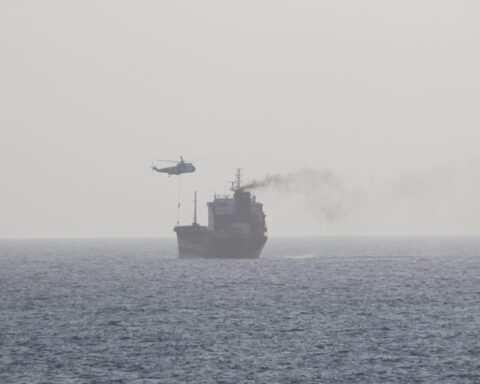
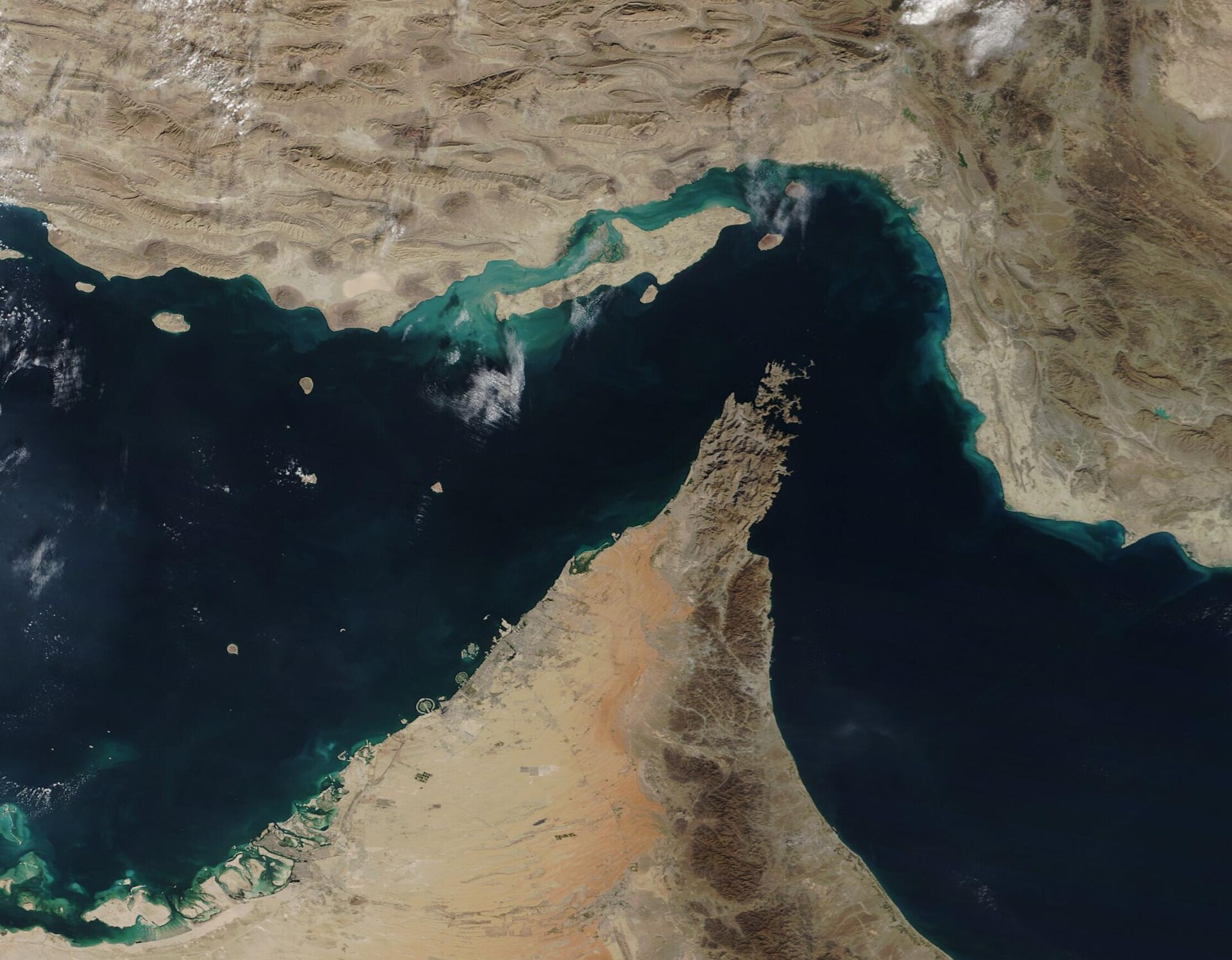
JEDDAH — Keir Starmer stood on Saudi soil on April 9 and said what Saudi Arabia cannot say: Israeli strikes in Lebanon “shouldn’t be happening” and must “stop.” Within 24 hours, Iran had re-closed the Strait of Hormuz in direct response to those strikes, confirming what Riyadh already knew — that Lebanon is the kill switch on Saudi oil revenue. The British prime minister had handed the Kingdom a Western-voiced demand for Lebanon’s inclusion in the ceasefire framework without Riyadh having to say a word that could be mistaken for alignment with Tehran, and he did it from Jeddah, where UK soldiers operate air defense batteries under live fire.
The Saudi Press Agency readout of the MBS-Starmer bilateral was one sentence of diplomatic emptiness: the two leaders “affirmed support for all efforts aimed at strengthening regional security and stability.” No Lebanon. No Israel. No direct quote from Mohammed bin Salman. That silence is the editorial. Saudi Arabia got the position it privately needs — Lebanon must be inside the ceasefire for Hormuz to function — attributed entirely to a Western ally whose soldiers are operating air defense batteries 50 kilometres from Riyadh. Whether Starmer understood what he was providing is secondary to the fact that he provided it, on the day the ceasefire was announced, while Donald Trump was telling reporters that Lebanon was excluded “because of Hezbollah” and that Benjamin Netanyahu had agreed to “low-key it.”
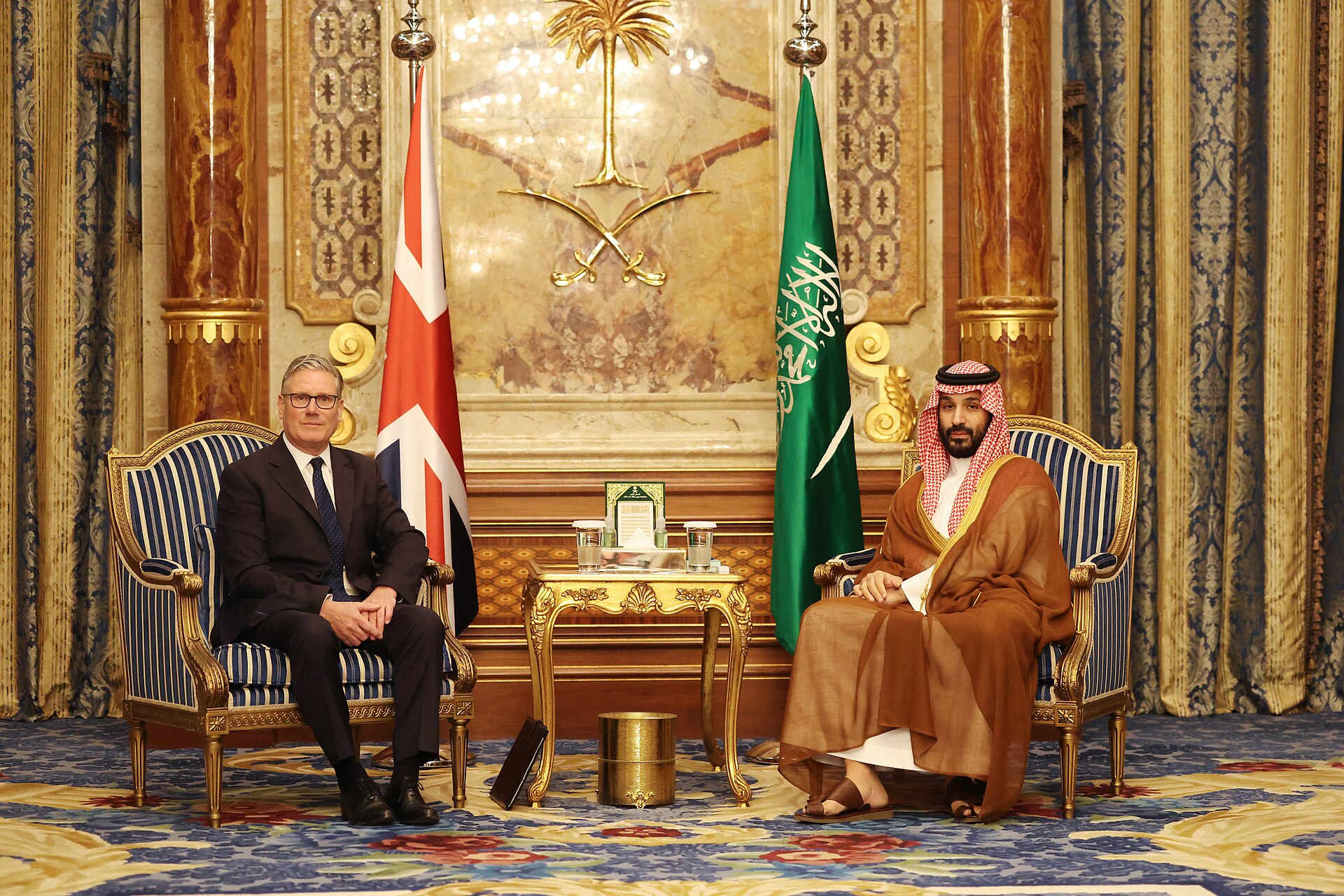
Table of Contents
- What Starmer Said — and What Saudi Arabia Didn’t
- Why Can’t Saudi Arabia Demand Lebanon’s Inclusion?
- The Hormuz-Lebanon Causal Chain Iran Already Proved
- The Western Chorus Starmer Joined
- How Did Trump and Netanyahu Contradict Each Other Within Hours?
- Sky Sabre and the Material Basis of British Influence
- Is Saudi Silence Strategy or Paralysis?
- The Islamabad Table Saudi Arabia Cannot Reach
- What Riyadh Does with the Cover It Now Has
- Frequently Asked Questions
What Starmer Said — and What Saudi Arabia Didn’t
Starmer arrived in Jeddah on April 8, 2026 — the same day the US-Iran two-week ceasefire was announced — and met MBS for a bilateral that the Downing Street readout described in careful, pre-cleared language: the prime minister “welcomed the ceasefire and set out how efforts must now be focused on upholding it and turning it into a lasting peace” and stressed the reopening of the Strait of Hormuz. Lebanon was absent from the official British readout of the bilateral itself.
The next day, asked directly about Israeli strikes in Lebanon that had killed at least 254 people and wounded 1,165 in a single day of operations Israel called “Eternal Darkness,” Starmer was unambiguous. “Yes, that shouldn’t be happening. That should stop — that’s my strong view,” he told LBC and GB News on April 9. He then framed the question in explicitly moral terms: “the question isn’t a technical one of whether it’s a breach of the agreement or not. The one is actually a matter of principles.” Asked about Trump’s rhetoric on the war, Starmer separated himself cleanly: “they are not words I would use, ever use, because I come at this with our British values and principles foremost and uppermost in my mind.”
The Saudi response was silence of the most deliberate kind. The SPA readout reported only that MBS and Starmer discussed “the latest regional and international developments” and “affirmed support for all efforts aimed at strengthening regional security and stability.” No MBS direct quote appeared. No Lebanon language. No Israel language. Saudi FM Prince Faisal bin Farhan’s ceasefire statement used the phrase “comprehensive sustainable pacification” — a formulation that demanded Hormuz’s reopening and an end to attacks on countries in the region without naming Lebanon, Israel, or any specific operational theatre. Riyadh let the UK carry the Lebanon-inclusion position without endorsing it, contradicting it, or visibly coordinating it.
Why Can’t Saudi Arabia Demand Lebanon’s Inclusion?
The constraint is structural, not diplomatic, and it predates the ceasefire by months. Ninety-nine percent of Saudi respondents opposed “normal relations and peace” with Israel in a Washington Institute poll conducted in August 2025 — down from 41 percent who viewed the Abraham Accords positively in 2020. Saudi FM Faisal has stated publicly that normalization is “not on the table” without a Palestinian state on 1967 borders, according to INSS analyst Yoel Guzansky, who wrote in 2026 that “Riyadh now identifies more risks than opportunities in normalizing relations with Israel.”
The Middle East briefing 3,000+ readers start their day with.
One email. Every weekday morning. Free.
The problem is geometric. If Saudi Arabia publicly demands that Israel stop striking Lebanon, it aligns itself with Iran and Hezbollah — the forces responsible for the Hormuz closure, the missile attacks on Saudi oil infrastructure, and the depletion of Saudi air defense stocks to approximately 400 PAC-3 MSE rounds. If Saudi Arabia stays silent on Lebanon, it accepts the framework that excludes it, which means accepting that Iran retains the Hormuz kill switch indefinitely. If Saudi Arabia criticizes Israel directly, it validates Iran’s stated linkage between Lebanon and the Gulf ceasefire — the same linkage that Tehran uses to justify re-closing the Strait every time an Israeli jet crosses Lebanese airspace. There is no phrasing in Arabic or English that threads this needle from a Saudi mouth.
This is why Starmer’s statements matter far beyond their context in British domestic politics. A NATO ally whose soldiers are physically embedded in Saudi air defenses can demand Lebanon’s inclusion in the ceasefire without triggering any of the three Saudi failure modes listed above. The demand is attributed to Western principles, not to Iranian pressure. It comes from the same country that deployed Sky Sabre batteries to defend Saudi cities, making it impossible to characterise as pro-Tehran posturing. And it was delivered from Jeddah itself, on the soil of the Kingdom that benefits most from its adoption.
The Hormuz-Lebanon Causal Chain Iran Already Proved
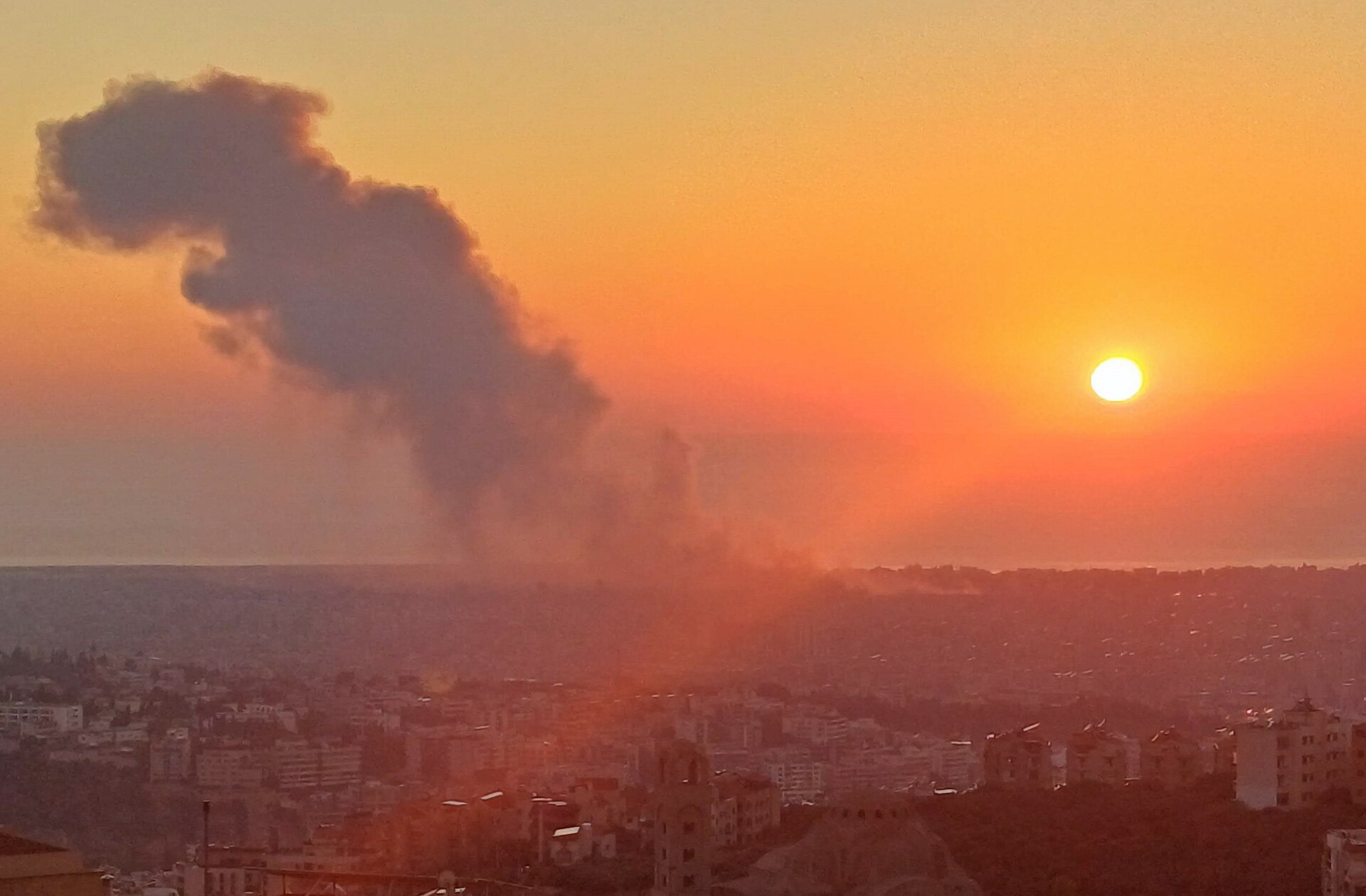
This is not a theory. On April 8, 2026 — ceasefire day one — Israel launched Operation Eternal Darkness: 50 fighter jets dropped approximately 160 munitions across Beirut and surrounding neighbourhoods without prior warning, producing what Lebanon declared a national mourning day. Iran responded the same day by re-closing the Strait of Hormuz. Only two tankers had crossed before the halt. Fars News confirmed the rationale explicitly: the Strait was “halted because of Israel’s fresh strikes on Lebanon.” Iranian FM Abbas Araghchi stated: “U.S. must choose — ceasefire or continued war via Israel.”
The causal chain is now empirically confirmed, not speculative: Israeli strikes in Lebanon produce Iranian closure of Hormuz, which blocks Saudi oil exports, which destroys Saudi revenue. Aramco’s May OSP is priced $11 to $14 per barrel above spot because it was set at $109 Brent on April 6, before the crash to $91-94 intraday on April 8. Every day Hormuz remains closed widens the gap between what Saudi Arabia charges its Asian term-contract buyers and what the spot market actually bears. The June OSP repricing window opens around May 5 — less than a month away — and Saudi Arabia’s ability to reprice depends entirely on whether Hormuz is open, which depends entirely on Lebanon.
Netanyahu’s office made the design of this trap explicit. On April 8, Netanyahu’s office told the Times of Israel: “Israel worked overnight with the US to ensure it wouldn’t accept the Iranian demand to have Lebanon part of the ceasefire agreement.” The exclusion of Lebanon was not an oversight or a negotiating concession. It was a deliberate Israeli objective, achieved through direct coordination with Washington, that preserves Iran’s ability to shut Hormuz whenever Israel decides to strike Beirut.
“Yes, that shouldn’t be happening. That should stop — that’s my strong view.”
— Keir Starmer, UK Prime Minister, on Israeli strikes in Lebanon, LBC/GB News, April 9, 2026
The Western Chorus Starmer Joined
Starmer was not speaking alone. On April 8, a joint statement signed by more than 20 Western leaders — Starmer, Macron, Meloni, Merz, Albanese, Carney, von der Leyen, and others — stated explicitly: “We call upon all sides to implement the ceasefire, including in Lebanon.” Saudi Arabia was not among the signatories, which is itself the point: the demand exists in the international record, attributed to a Western coalition, available for Saudi Arabia to reference without having authored it. That strategy produced a tangible outcome in the April 16 ceasefire text — but as a subsequent analysis examines, Saudi Arabia’s quiet win on Lebanon is now also its biggest structural liability: having engineered the demand through proxies, it owns the enforcement obligation if the clause breaks.
France went further than the joint text. Macron called both Trump and Iranian President Masoud Pezeshkian on April 8, demanding Lebanon’s inclusion and calling it “a necessary condition for the ceasefire to be credible and lasting.” Pezeshkian told Macron that a Lebanon ceasefire was one of Iran’s ten conditions — which means France’s public position now overlaps with an Iranian demand, a convergence that Paris can tolerate because France has no troops inside Saudi air defense perimeters and no bilateral trade target of £30 billion by 2030 hanging in the balance.
UK Foreign Secretary Yvette Cooper delivered the most detailed British position the following day at Mansion House. “Lebanon must be included in the ceasefire; there must be no further threat from Iran to its neighbours; and crucially, the Strait of Hormuz must be fully reopened,” she said, according to CNBC and Mirage News reporting. Then she added a sentence that went beyond Lebanon entirely: “Freedom of navigation means navigation must be free. Nor can there be any place for tolls on an international waterway.” That second clause was a direct rejection of Trump’s proposed Hormuz “joint venture” toll — a position Saudi Arabia itself cannot take publicly without confronting Washington, but one that Cooper delivered on the record from London while Starmer was still in the Gulf.
Cooper’s framing was also instructive in what it contained for Saudi consumption: “An Iran that is contained is an Iran that can no longer hurt our interests, allies or prosperity or people.” No other Western government offered all three positions — Lebanon inside the ceasefire, rejection of Hormuz tolls, and permanent Iranian containment — in a single 48-hour window. That pattern continued into April 12, when Britain formally declined to join the US naval blockade of Hormuz while its Sky Sabre battery remained active on Saudi soil, a split whose full implications for Saudi security are examined in The UK-US Split Over Hormuz Exposes Saudi Arabia’s Irreconcilable Security Dependencies. That material presence at Northwood — the UK’s Permanent Joint Headquarters — later underpinned a Northwood freedom-of-navigation planning conference on April 22–23 that drew over 30 nations, though French preconditions have so far blocked it from proceeding.
How Did Trump and Netanyahu Contradict Each Other Within Hours?
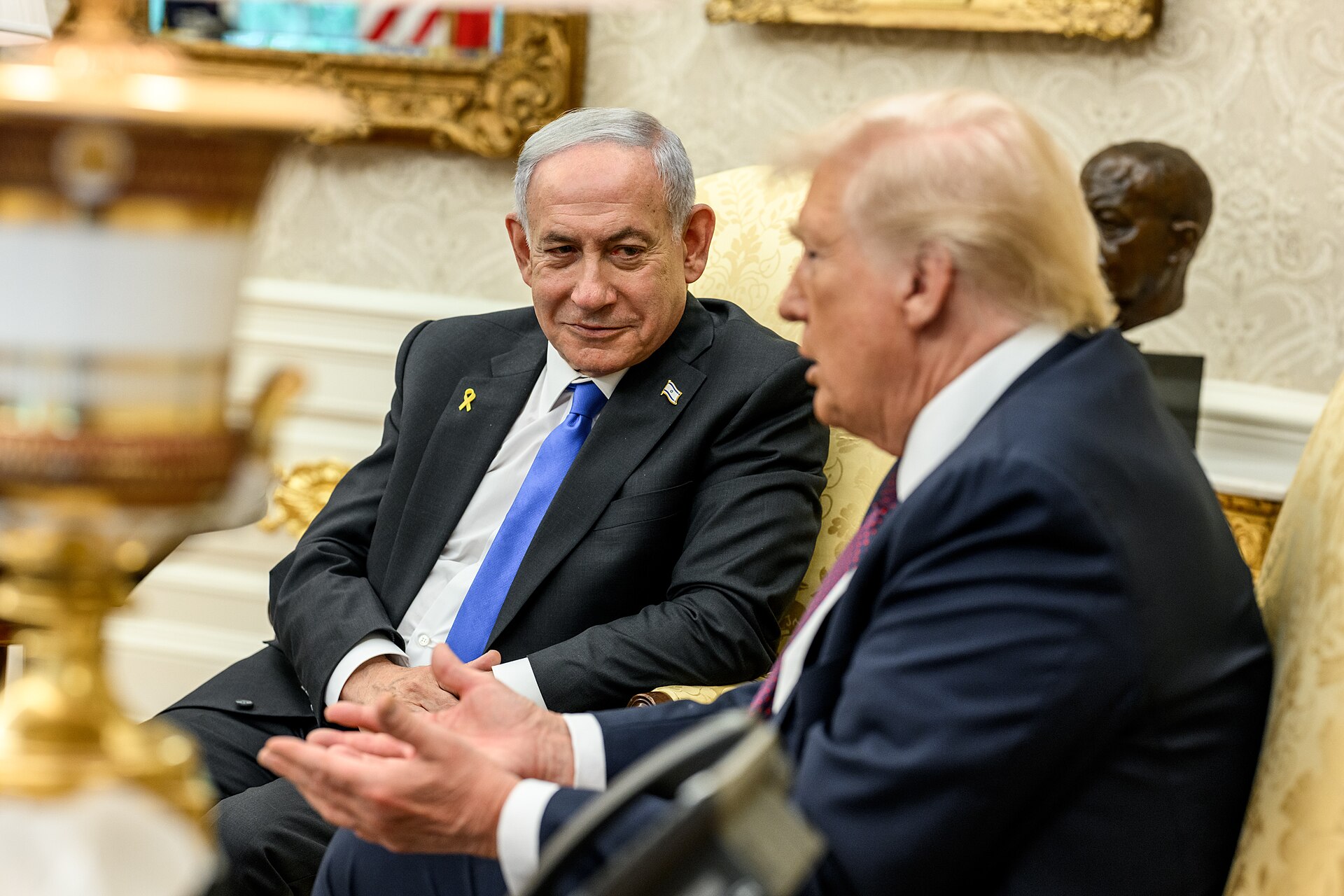
The American position on Lebanon collapsed into public incoherence within a single news cycle on April 9. Trump told NPR: “I spoke with Bibi and he’s going to low-key it. I just think we have to be sort of a little more low-key.” The phrase implied Netanyahu had agreed to scale back operations in Lebanon — a characterisation that lasted until Ophir Falk, Netanyahu’s chief foreign policy adviser, appeared on NBC News’ Meet the Press the same day and stated that Israel and the US “agree on Lebanon attacks despite Trump call to scale back.”
Pakistani PM Shehbaz Sharif’s ceasefire text made the gap wider still. His version stated that “the Islamic Republic of Iran and the United States of America, along with their allies, have agreed to an immediate ceasefire everywhere, including Lebanon and elsewhere, EFFECTIVE IMMEDIATELY.” Israel and the US both disavowed this language the same day, according to NBC News — meaning the country hosting the negotiations, the country fighting the war, and the country brokering the deal all published irreconcilable versions of what had been agreed within hours of the announcement. Starmer’s position — Lebanon must be included, as a matter of principle — is the only version that does not contradict another version issued by its own author.
Sky Sabre and the Material Basis of British Influence
Starmer’s words carry weight in Jeddah because British soldiers are absorbing risk there. The UK deployed a Sky Sabre battery — a CAMM surface-to-air missile system operated by the Royal Artillery with an 8-kilometre engagement ceiling — to Saudi Arabia in late March 2026. Starmer met UK personnel operating the system during his Jeddah visit, according to Forces News reporting from April 8. The deployment creates a material British stake in Saudi air defense outcomes that transforms the bilateral from a commercial relationship into a wartime partnership where British soldiers could be killed by Iranian ordnance.
The bilateral trade relationship — £16.6 billion over the four quarters to Q3 2025 — is itself only the existing baseline. The stated target is £30 billion by 2030, and PIF and UK Export Finance signed an MoU covering a $6.8 billion project pipeline. Both leaders also referenced the upcoming centenary of the Treaty of Jeddah in 1927 — the treaty that first recognised UK-Saudi relations as sovereign equals — with Starmer noting he was “pleased that the UK and Saudi Arabia would soon be marking 100 years of friendship.” That historical framing positions Britain as Saudi Arabia’s oldest Western partner, pre-dating the US-Saudi relationship by decades and creating a basis for influence not contingent on American preferences.
The Sky Sabre deployment also constrains Starmer in ways that serve Saudi interests. Starmer invoked Iraq war lessons to justify limiting UK base use to “collective self-defence only” — a domestic political frame that simultaneously prevents him from joining offensive operations against Iran and creates the political space to publicly diverge from Washington on Lebanon. The same Iraq precedent that limits what Britain will do militarily in the Gulf enables what Britain will say diplomatically about Lebanon, and Saudi Arabia benefits from both halves of that constraint.
Is Saudi Silence Strategy or Paralysis?
Gulf diplomatic sources quoted by Waryatv on April 8 described Saudi Arabia’s silence on ceasefire terms as “strategy under pressure rather than indecision,” adding that privately “the kingdom is reassessing its entire strategic posture before committing to a position.” That framing is consistent with how Riyadh has operated throughout the war — letting other capitals make statements that serve Saudi interests without Saudi fingerprints while building optionality by refusing to commit to positions that could be overtaken by events. The Starmer visit fits the pattern precisely: a useful statement, attributed elsewhere, deniable if necessary.
The pattern extends beyond the Starmer visit. Saudi Arabia was excluded from the April 10 Islamabad bilateral — the US-Iran session hosted by Pakistan — despite FM Faisal having held a co-guarantor seat at the March 29-30 round. Saudi Arabia made no public objection to its exclusion. The FM’s “comprehensive sustainable pacification” formulation demanded Hormuz’s reopening without naming the mechanism — Lebanon — that Iran has confirmed is the prerequisite. The SPA readout of the MBS-Starmer meeting omitted every specific that Starmer later made public, creating a record in which Saudi Arabia is associated with the visit but committed to none of the positions Starmer took.
This is not paralysis. Saudi Arabia cannot publicly align with any of the three active frameworks — the US-brokered ceasefire that excludes Lebanon, the Pakistani text that includes it, or the Iranian ten-point plan that conditions Hormuz on IRGC “coordination with armed forces” — without foreclosing the other two. By allowing Starmer to carry the Lebanon-inclusion demand, Riyadh achieves its preferred outcome (Hormuz reopening via Lebanon ceasefire) through a Western proxy without creating a Saudi position that Iran could characterise as accepting its linkage framework or that Israel could characterise as siding with Hezbollah. The 2006 Blair parallel runs in reverse: where Tony Blair used Gulf tours to manage Arab concerns while defending Israel’s operations in Lebanon, Starmer is publicly opposing Israel’s operations in Lebanon while using the Gulf tour as the platform — and Saudi Arabia is the beneficiary of the inversion.
The Islamabad Table Saudi Arabia Cannot Reach
The day after Starmer left Jeddah, Saudi Arabia’s exclusion from the Islamabad process became concrete. The April 10 session was structured as a US-Iran bilateral with Pakistan as host — no co-guarantor seats, no Gulf representation, no space for FM Faisal to sit where he sat eleven days earlier at the March 29-30 round. Iran’s Speaker Ghalibaf arrived in Islamabad having already filed a formal three-count violation brief — with Israeli strikes in Lebanon as count one — before the session began. The brief was Iran’s mechanism for establishing that the ceasefire was already void before negotiations to extend it could begin. On the same day, Hezbollah struck the Ashdod naval base 90 miles inside Israel, providing Tehran with a battlefield event that converted Lebanon-inclusion from a Western diplomatic demand into an active military argument at the Islamabad table.
Saudi Arabia’s absence from the table where Lebanon is being adjudicated makes the Starmer visit more consequential, not less. If Saudi Arabia cannot directly argue that Lebanon’s exclusion from the ceasefire is destroying Saudi revenue through the Hormuz mechanism, it needs Western voices making that argument in forums where they carry weight. The joint statement by 20-plus Western leaders — “including in Lebanon” — functions as a diplomatic brief that Saudi Arabia can cite without having authored. Cooper’s Mansion House speech — “Lebanon must be included in the ceasefire” — serves the same function from a higher institutional elevation. And Starmer’s personal statements from Jeddah carry the additional weight of having been delivered from Saudi territory, in the presence of Saudi leadership, with no Saudi contradiction.
The Hajj calendar adds a hard deadline. The ceasefire expires April 22, Hajj arrivals begin April 18, and Indonesia’s 221,000 pilgrims begin departing on April 22. Saudi Arabia needs Hormuz open not only for oil revenue but for the logistical infrastructure that supports 1.8 million incoming pilgrims through ports and airports that share capacity with energy exports.
What Riyadh Does with the Cover It Now Has
What Riyadh does next is use Starmer’s statements — and the broader Western chorus — as the attributed basis for a position it adopts indirectly rather than declaratively. Saudi diplomacy does not issue demands; it creates conditions under which demands are issued by others and then aligns with the outcome. The Western joint statement calling for Lebanon’s inclusion is now part of the diplomatic record. Cooper’s Mansion House speech is part of the diplomatic record. Both are available for Saudi Arabia to cite — to American interlocutors, to Pakistani mediators — without ever having said “Lebanon” in its own voice.
The commercial architecture reinforces the diplomatic one. The £30 billion trade target, the $6.8 billion PIF-UKEF project pipeline, and the Treaty of Jeddah centenary in 2027 all create reasons for London to sustain the position Starmer took — not as a one-day media line but as an ongoing British policy commitment. Saudi Arabia’s investment in the UK relationship is an investment in a Western voice that will keep saying what Riyadh needs said, from a platform Riyadh cannot occupy itself, for as long as the Lebanon-Hormuz linkage holds.
“Lebanon must be included in the ceasefire; there must be no further threat from Iran to its neighbours; and crucially, the Strait of Hormuz must be fully reopened.”
— Yvette Cooper, UK Foreign Secretary, Mansion House speech, April 9, 2026
Frequently Asked Questions
What is the Treaty of Jeddah and why did Starmer invoke it?
The Treaty of Jeddah, signed on May 20, 1927, was the instrument by which Britain recognised the Kingdom of Hejaz and Nejd — the precursor state to modern Saudi Arabia — as an independent sovereign entity under Abdulaziz ibn Saud. This predates the 1945 Roosevelt-Ibn Saud meeting aboard the USS Quincy by 18 years, making the UK-Saudi relationship the oldest continuous Western bilateral in the Gulf. Invoking the approaching centenary during a visit where Starmer publicly diverged from Washington signals that British-Saudi ties rest on a foundation independent of American mediation.
How does the Starmer visit compare to Meloni’s Jeddah visit on April 3?
Italian PM Giorgia Meloni was the first EU leader to visit Saudi Arabia during the war, arriving five days before Starmer with a EUR 10 billion pre-existing deal architecture, a lifted arms embargo, and GCAP fighter-programme access as deliverables. Meloni’s visit was transactional — energy access in exchange for defence-industrial integration — while Starmer’s visit produced a diplomatic output (the Lebanon-inclusion position) that Meloni did not offer. Italy’s visit deposited commercial capital; Britain’s visit deposited political capital of a different kind, one that Saudi Arabia can spend in ceasefire negotiations where commercial agreements carry no weight.
Could Iran use Starmer’s statements to claim Western support for its Hormuz linkage?
Iran’s information apparatus has not attacked Starmer’s visit, which is consistent with Tehran’s strategy of driving wedges between the US and European allies rather than alienating potential partners. Pezeshkian told Macron on April 8 that “acceptance of the ceasefire is a clear sign of Iran’s responsibility and serious will to resolve conflicts through diplomacy.” Iran’s ten-point plan includes a Lebanon ceasefire as one condition, meaning European demands for Lebanon’s inclusion technically overlap with an Iranian position. Iran has not publicly credited Starmer, likely because acknowledging Western support would undermine the narrative that Iran’s demands are being imposed against Western opposition.
What happens to the Starmer position if the ceasefire collapses at Islamabad on April 10?
If the April 10 bilateral fails and the ceasefire expires on April 22 without extension, Israel’s Lebanon operations become unconstrained and Iran’s Hormuz closure becomes indefinite under existing IRGC autonomous authority. In that scenario, Starmer’s demand for Lebanon’s inclusion becomes retrospectively prescient — the position that, had it been adopted, would have prevented the Hormuz crisis from resuming. Saudi Arabia could cite British and European warnings as evidence that the ceasefire architecture was structurally defective from inception, positioning itself as having been failed by a process that excluded both it and the issue its Western allies identified as essential. That scenario unfolded on April 12: Israeli airstrikes in southern Lebanon killed 11 civilians in Maaroub and Qana hours after the Islamabad talks collapsed without agreement, leaving Saudi Arabia’s Lebanon demand without leverage or cover. Two weeks later, Prince Yazid bin Farhan’s Beirut meetings would quietly co-engineer a 3-week Lebanon ceasefire extension as Saudi Arabia’s Hajj insurance — a durbar diplomacy play examined in Saudi Arabia’s Lebanon Ceasefire Is Hajj Insurance — Bought Through Durbar Diplomacy.
Why does Sky Sabre’s 8-kilometre ceiling matter for UK-Saudi relations?
Sky Sabre’s CAMM system fills lower-altitude coverage but leaves a gap between 8 kilometres and the 40-kilometre engagement band of PAC-3 MSE — the system now down to approximately 400 rounds after 894 intercepts since March 3. British soldiers operating under that band gap are exposed to the same Iranian ballistic missile threat that has depleted Saudi stockpiles by 86 percent. That physical exposure is what converts the UK-Saudi relationship from a commercial partnership into a wartime one, giving Starmer’s Lebanon statements a credibility that no other European leader’s statements carry: Britain has skin in the outcome.
Starmer’s co-chairmanship of the April 17 France-UK Hormuz conference — a 40-nation videoconference to plan a multinational escort framework — extends that wartime credibility into Strait governance, while simultaneously illustrating the asymmetry at the heart of the crisis: Britain co-leads the Hormuz track while Saudi Arabia, the most trade-exposed state, holds no organizing role in either the Western conference or the Antalya quadrilateral. The structural reasons Saudi Arabia leads neither track for its most vital strait are examined here.
That asymmetry sharpened on April 26 when Trump and Starmer agreed on a call that Hormuz must reopen unconditionally, consolidating Western diplomatic alignment — while Saudi Arabia, again, had no seat at the table where the consensus was made.