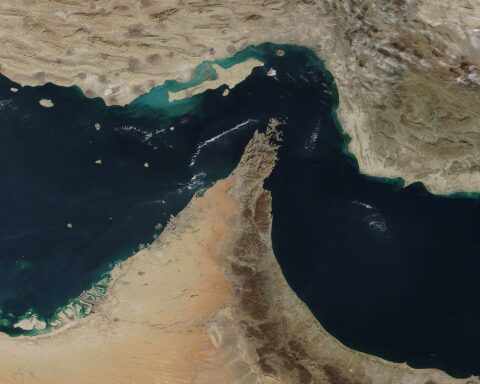
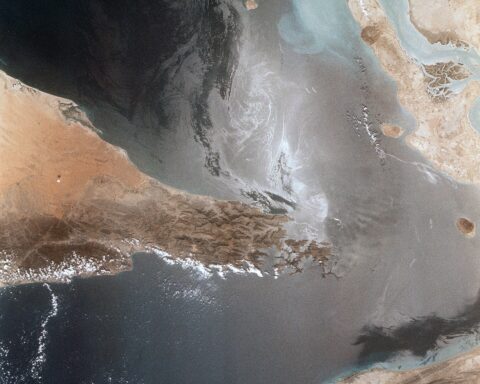
MUSCAT — The United States declared a naval blockade of the Strait of Hormuz on April 12, 2026. Within hours, Oman’s foreign minister publicly called for the ceasefire to be extended and talks to continue. This was not a coincidence. Both inbound and outbound shipping lanes through the strait’s narrowest point — a 21-nautical-mile gap between Iran’s Qeshm Island and Oman’s Musandam Peninsula — run entirely through Omani territorial waters. Washington has declared a blockade of a waterway it cannot enforce without the consent of a country it cannot compel. For Saudi Arabia, this fact matters more than the blockade itself: Riyadh has no independent diplomatic channel to Tehran, and the only surviving one runs through Muscat.
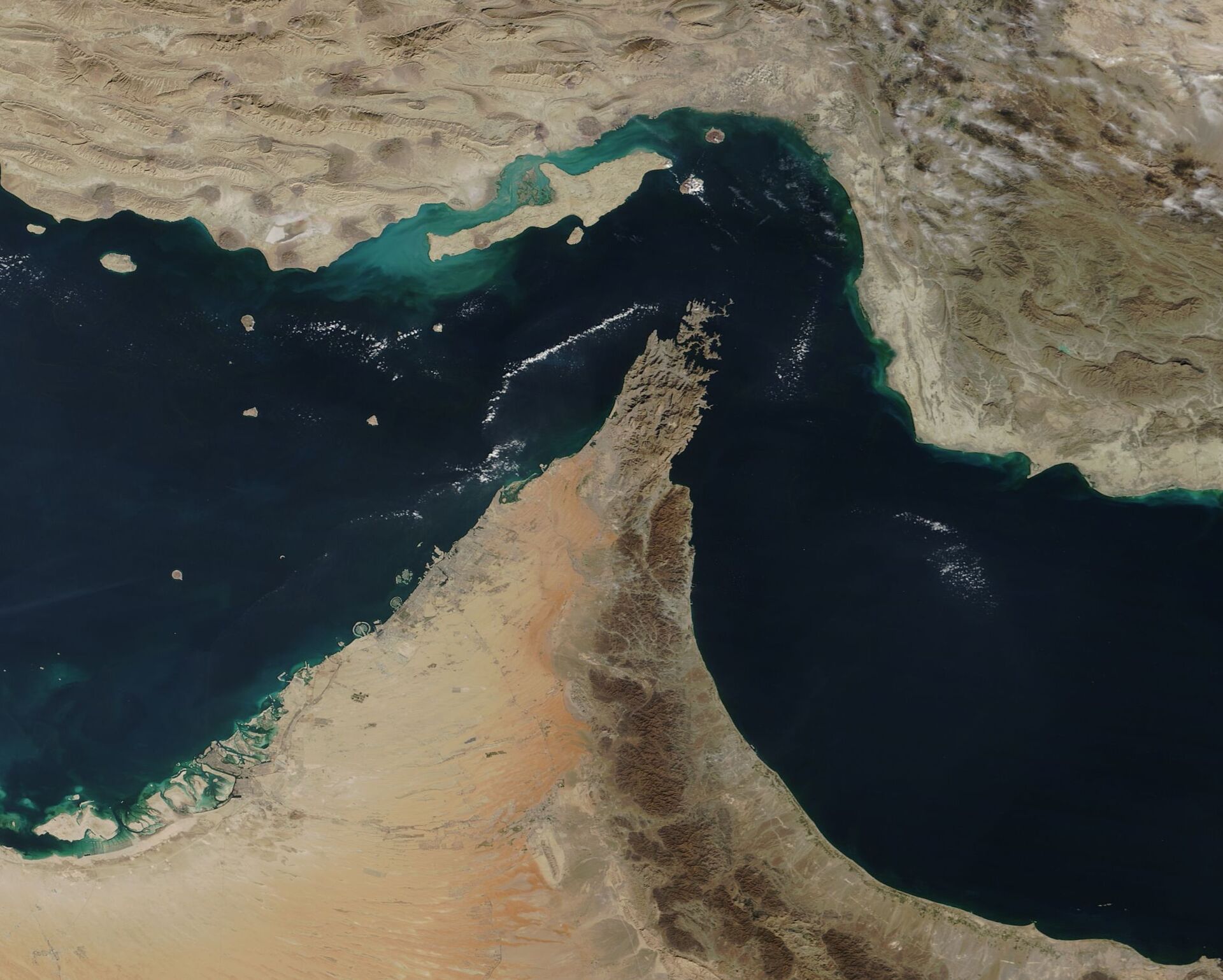
Table of Contents
- The Strait Runs Through Omani Waters
- Forty-Seven Years of Institutional Neutrality
- Why Has Oman Not Retaliated Against Iran?
- The April 12 Contradiction
- Can the US Enforce a Blockade Without Oman?
- Saudi Arabia’s Invisible Oman Dependency
- What Happens in the Next Ten Days?
- The Two-Corridor Strait
- Frequently Asked Questions
The Strait Runs Through Omani Waters
The Strait of Hormuz at its narrowest is 21 nautical miles wide. The Traffic Separation Scheme established by the International Maritime Organization designates two shipping lanes — one inbound, one outbound — each two nautical miles wide, separated by a two-nautical-mile median buffer. At the narrowest point, both lanes lie entirely within Omani territorial waters. This is not a legal interpretation. It is a measurement.
Since mid-2025, commercial shipping has shifted wholly into Omani waters to avoid Iranian territorial sea, a pattern that accelerated sharply after the war began on February 28, 2026. The Maritime Executive reported that vessels were “now keeping to Omani waters in Strait of Hormuz Traffic Separation Scheme,” treating the Omani side as the de facto sole navigable corridor.
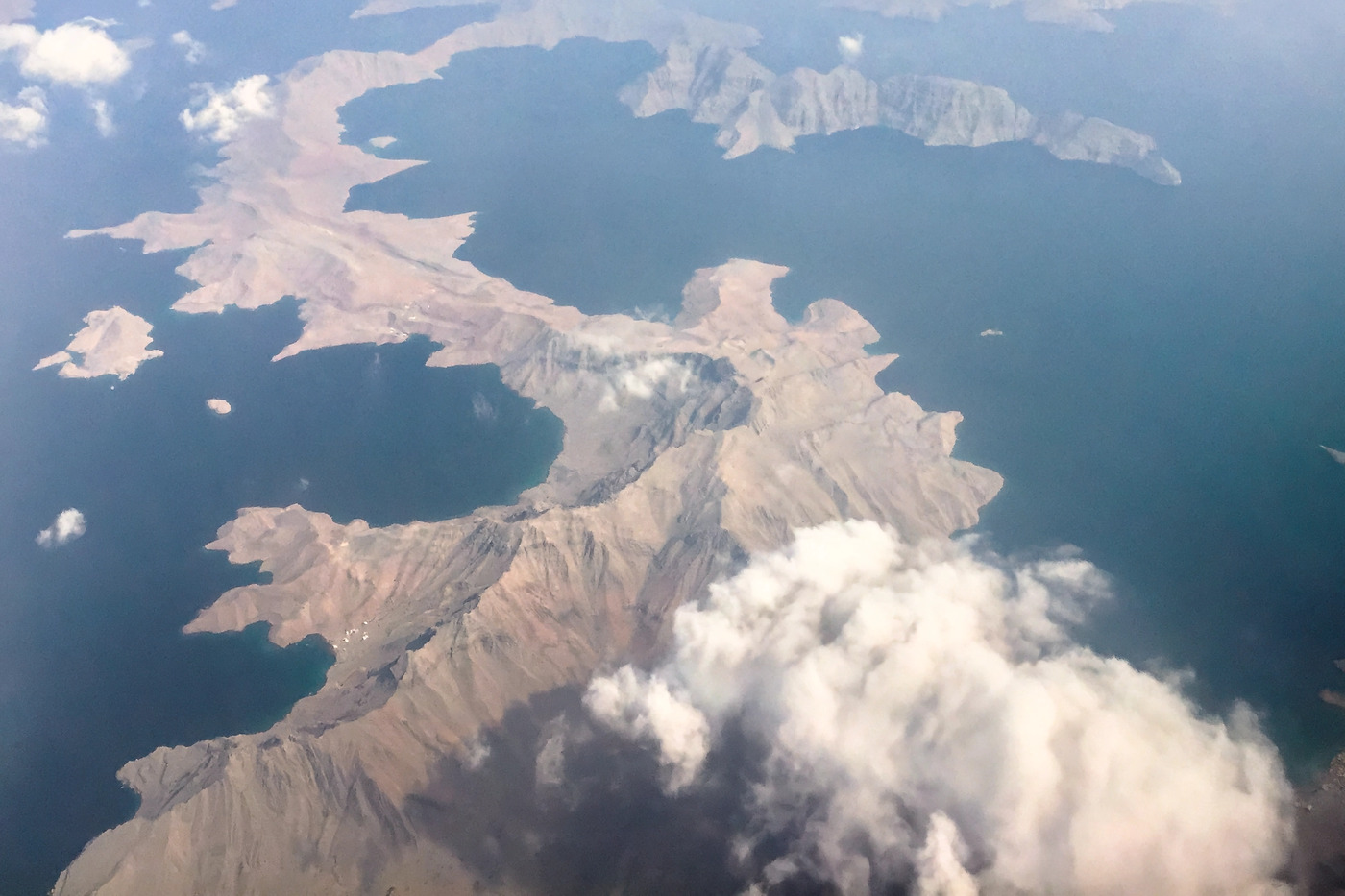
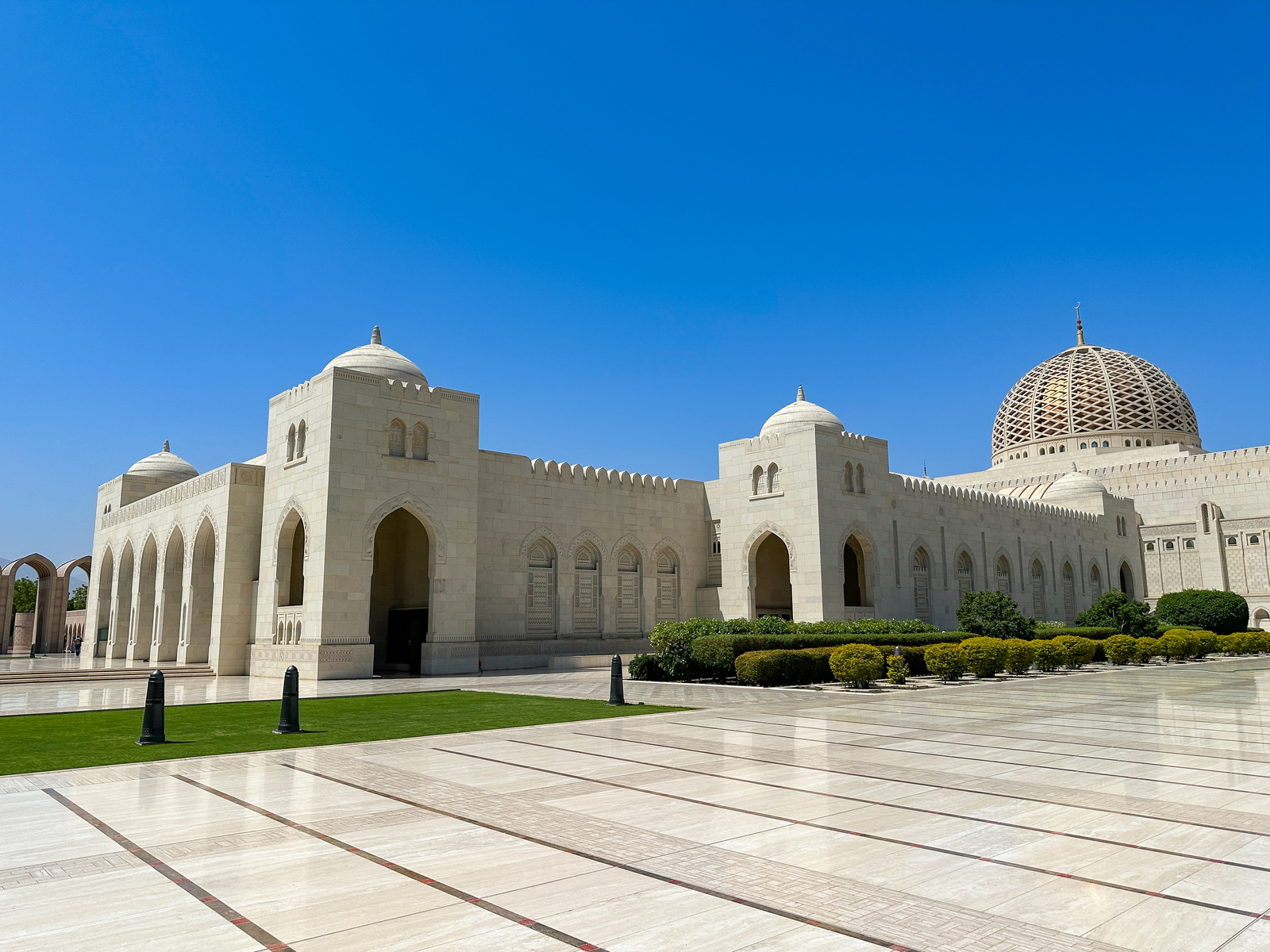
The Royal Navy of Oman maintains radar pickets on outlying outcrops of the Musandam Peninsula and operates a naval base on Ghanam Island (Goat Island) — the only sovereign naval installation with a direct physical watch over the strait’s eastern approach. The port of Khasab, tucked inside Musandam, has a 10-meter-deep harbor with berths of 60, 90, and 300 meters. Any sustained naval presence in the eastern Hormuz approach — American, Iranian, or otherwise — operates within line of sight of Omani military infrastructure.
Iran has attempted to assert administrative control over this geography. On April 2, 2026, Iranian Deputy Foreign Minister Kazem Gharibabadi announced that Tehran was in “final stages of drafting” a framework requiring advance permits from both Iran and Oman for all vessel transits. The Gharibabadi-Oman protocol remained unfinalized as of April 8, and Oman’s response to the proposal has been to reassert international law rather than negotiate bilateral transit governance.
Iranian Foreign Minister Abbas Araghchi stated on April 5 that “Iran and Oman should be the ones to decide matters related to the strait once the war is over.” Oman’s Transport Minister Saeed bin Hamoud Al Maawali responded three days later before the Shura Council: “Oman has signed all international maritime transport conventions and accordingly cannot impose any fees on strait passage. The Strait of Hormuz is a natural waterway, not an artificial canal created by human intervention.” The video of that statement was subsequently deleted.
The Middle East briefing 3,000+ readers start their day with.
One email. Every weekday morning. Free.
Forty-Seven Years of Institutional Neutrality
Oman is the only GCC state to have maintained a continuous embassy in Tehran since 1979. In January 2016, after militants stormed the Saudi embassy in Tehran and every other GCC state recalled its ambassador, Oman stayed. This was not an oversight. It was a policy choice with decades of institutional foundation.
The roots of Oman’s relationship with Iran predate the Islamic Republic. During the Dhofar Rebellion (1965-1976), Shah Mohammad Reza Pahlavi sent 1,200 Iranian troops in 1973 to help Sultan Qaboos defeat the Marxist insurgency in southern Oman, a deployment that expanded to 4,000 soldiers under the Imperial Iranian Task Force by 1974. Iranian gendarmes remained in Oman until the revolution in 1979. The personal debt survived the fall of the Pahlavi dynasty. Sultan Qaboos maintained the relationship across the revolutionary transition and through every subsequent crisis — the Iran-Iraq War, the Tanker War, the nuclear standoff — without interruption.
Oman is the world’s only predominantly Ibadi Muslim state, adhering to neither Sunni nor Shia Islam. This sectarian non-alignment has functioned as diplomatic insulation, allowing Muscat to maintain relationships with both Riyadh and Tehran without the identity-based pressures that constrain other Gulf states.
The most consequential product of this neutrality was the JCPOA back-channel. In July 2012, Jake Sullivan and Puneet Talwar of the Obama administration met Iranian officials secretly in Oman. In March 2013, Deputy Secretary of State William Burns and Sullivan flew to Muscat, stayed at Sultan Qaboos’s personal beach villa, and held direct talks with Iranian Deputy Foreign Minister Ali Asghar Khaji. These meetings — facilitated entirely by Omani intermediation — produced the framework that became the 2015 Iran nuclear deal. PBS NewsHour and the Washington Times confirmed the sequence on November 24, 2013.
In 2019, after Iran seized the British-flagged Stena Impero, Oman served as the diplomatic relay that eventually secured its release. That same year, Muscat signed a Strategic Framework Agreement giving the United States access to Salalah — where USNAVCENT operates a material processing center — and Duqm, a deep-water port capable of servicing nuclear submarines and aircraft carriers. Oman hosts approximately 80 US Navy port calls annually. Weeks after signing the US agreement, Oman signed a memorandum of understanding with Iran. The Arab Gulf States Institute described the result as “U.S. secures access to Oman’s crowded ports.”
This dual-access architecture has been maintained across two sultanates and 47 years without interruption.
Why Has Oman Not Retaliated Against Iran?
Iran has struck Omani territory repeatedly during this war. Salalah was hit at least four times — on March 11, 13, 18-19, and 28. After the March 11 strike set fuel storage tanks ablaze, port operations were suspended. Duqm was struck on March 1 and March 3. Across all Iranian strikes on Oman, 14 people were killed and 18 were injured.
Oman did not recall its ambassador from Tehran.
Iran’s official framing was revealing: the Iranian General Staff said it “did not order a military strike on Omani territory” and that Oman remained a “friend and neighbour.” The strikes continued after this statement. The Foundation for Defense of Democracies noted the contradiction; Oman absorbed it without public response.
The calculus is visible in Oman’s economic geography. Unlike every other GCC oil exporter, Oman’s crude and LNG exports bypass Hormuz entirely. Crude ships from Mina Al Fahal on the Gulf of Oman coast; liquefied natural gas loads at Qalhat near Sur, also on the Arabian Sea. Under sustained Hormuz disruption, Middle East Briefing projected Oman’s GDP would grow 0.8 percent while other GCC economies contracted between 0.6 and 1.9 percent. Oman exported 940,000 barrels per day in March 2026.
Non-retaliation preserves the one diplomatic instrument that the United States, the United Kingdom, and Saudi Arabia all need and none of them possess. The Iranian General Staff’s own denial — that Oman remained a “friend and neighbour” even as its territory burned — suggests Tehran understands this calculus as well as Muscat does.
| GCC State | Tehran Embassy | Hormuz Export Dependency | GDP Impact Under Closure | Bilateral Iran Channel |
|---|---|---|---|---|
| Oman | Continuous since 1979 | None (Arabian Sea exports) | +0.8% | Active, direct |
| Saudi Arabia | Restored 2023 (via Beijing) | Partial (Yanbu bypass ~5.9M bpd) | -1.2 to -1.9% | None direct |
| UAE | Restored 2023 | High (Fujairah partial bypass) | -0.9 to -1.5% | Limited |
| Qatar | Restored 2021 | Total (all LNG via Hormuz) | -14% (Oxford Economics) | Limited (North Field shared) |
| Kuwait | Maintained | Total | -1.1 to -1.6% | Minimal |
| Bahrain | Severed 2016 | Total | -0.6 to -1.0% | None |
The April 12 Contradiction
On April 12, 2026, the Trump administration declared a naval blockade of the Strait of Hormuz. On the same day, Omani Foreign Minister Badr al-Busaidi posted on X: “I urge that the ceasefire be extended and talks continue. Success may require everyone to make painful concessions, but this is nothing as compared to the pain of failure and war.”
Al-Busaidi had been issuing similar statements since the first day of the conflict. On March 3, hours after Iranian strikes began, he wrote: “Oman reaffirms its call for an immediate ceasefire and a return to responsible regional diplomacy. There are off ramps available. Let’s use them.” What changed on April 12 was not Oman’s position. What changed was that the United States declared a military operation in waters that Oman controls.
The timing of outside engagement underscored Oman’s centrality. UK Prime Minister Keir Starmer called Sultan Haitham bin Tariq on April 12, discussing maritime security in Hormuz and the ceasefire. Starmer specifically thanked Oman for “rescuing sailors from vessels in distress in the region,” according to a gov.uk readout. This was the language of a government recognizing a littoral sovereign, not a bystander.
Oman’s position amounts to a structural refusal. A blockade requires the enforcement state to control access to the waterway being blockaded. If both shipping lanes run through Omani territorial waters, and Oman is publicly calling for diplomacy over military escalation, then the US blockade operates at Omani sufferance — not Omani invitation. The IRGC Navy’s declaration of “full authority” over the strait on April 5 and April 10 was directed at the same geography from the opposite direction, and it confronted the same Omani constraint.
Can the US Enforce a Blockade Without Oman?
A naval blockade under international law must meet tests of notification, effectiveness, and impartiality. James Kraska of the Naval War College wrote in Just Security that a blockade of Iranian-loaded tankers “would fail the impartiality test almost immediately” — interdicting Chinese-flagged vessels constitutes an act against a third party. Mark Nevitt of Emory University School of Law, a retired Commander in the Navy Judge Advocate General’s Corps, argued that a “coordinated multinational effort” is necessary and described the Iran-US dispute over Hormuz as a “Legal Vortex.”
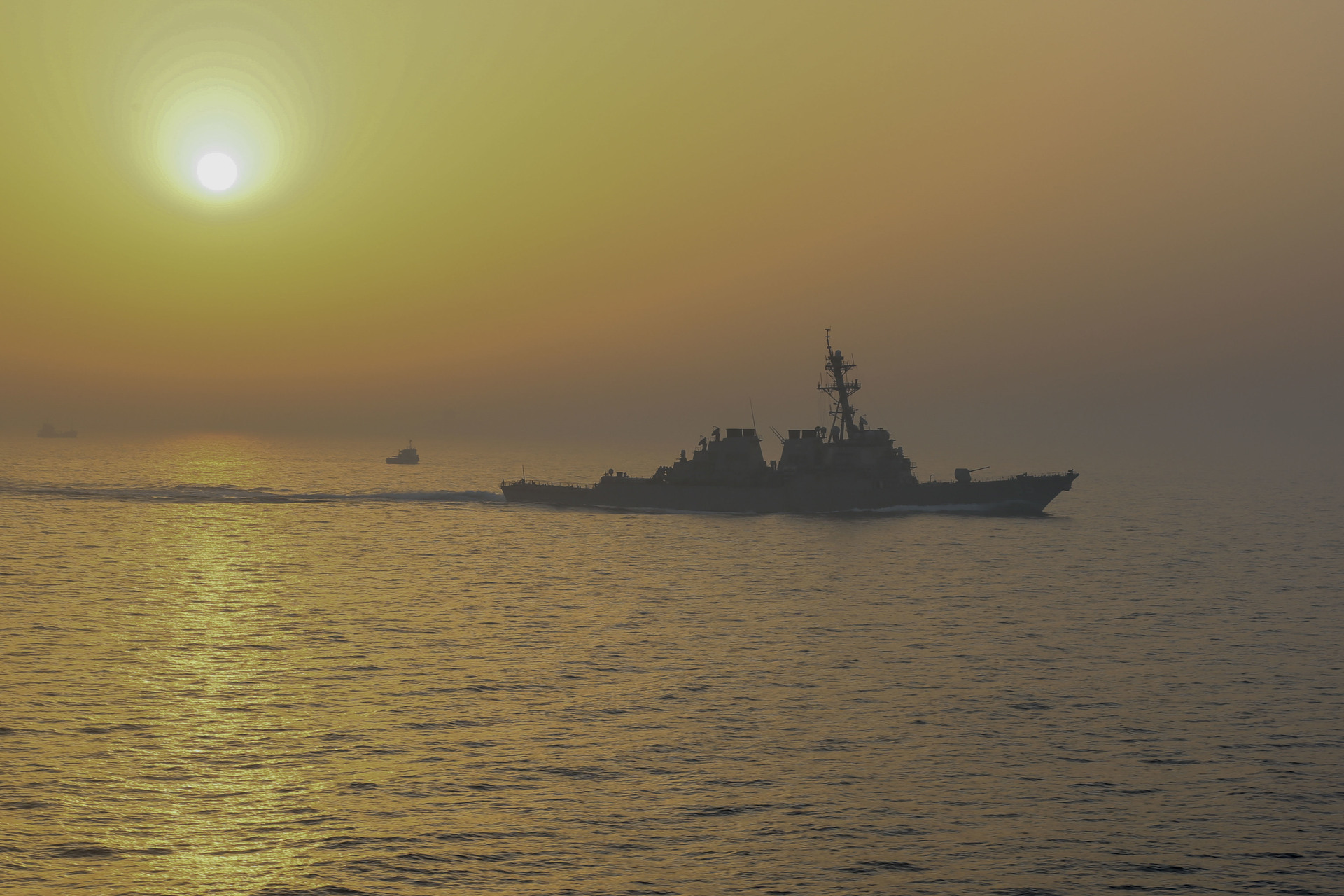
The operational question is more immediate than the legal one. US destroyers DDG-121 and DDG-112 transited the strait on April 11. The IRGC issued a “last warning” radio call; the US Navy responded that it was conducting “passage in accordance with international law.” That passage occurred in the Omani-waters corridor. The two-corridor reality that has emerged since the war began — an IRGC-controlled northern corridor in Iranian territorial waters and a southern corridor hugging the Omani coastline — means that US naval operations in the strait physically depend on Omani territorial sea.
Three Omani-flagged tankers used the southern corridor on April 2-3, establishing a sovereign precedent. If Oman were to restrict military operations in its territorial waters — or simply fail to facilitate them — the US blockade would be confined to international waters that do not exist at the strait’s narrowest point. The 2019 Strategic Framework Agreement provides the US access to Salalah and Duqm, both located far from Hormuz on the Arabian Sea coast. It does not, by any public accounting, grant the US operational authority in Omani territorial waters at Musandam.
SpecialEurasia.com reported that Sultan Haitham played a “pivotal role in persuading Washington to postpone military action” in January 2026, a diplomatic intervention that involved “a temporary reduction of US forces at Al-Udeid Air Base in Qatar.” Oman’s capacity to shape US military posture in the Gulf is not theoretical. It has been exercised within this crisis cycle.
Saudi Arabia’s Invisible Oman Dependency
Saudi Arabia has no bilateral defense treaty with Oman. When Riyadh activated the Peninsula Shield Force in 2011 to deploy troops to Bahrain, Oman declined to participate. When Saudi Arabia pushed the GCC to collectively sever ties with Iran in 2016, Oman refused. There is no institutional mechanism through which Riyadh can compel, incentivize, or even formally request Omani cooperation on Hormuz.
This absence matters because Saudi Arabia has no direct diplomatic channel to Tehran. The Saudi-Iranian rapprochement brokered by Beijing in March 2023 restored ambassadors, but it did not produce the kind of deep back-channel infrastructure that Oman has maintained for nearly five decades. When the ceasefire negotiations moved to Islamabad, Pakistan emerged as the sole enforcement mechanism — but Pakistan is compromised as both Iran’s interlocutor and Saudi Arabia’s treaty ally under the September 2025 Saudi-Pakistan Mutual Defense Agreement. The $5 billion Saudi loan to Pakistan matures in June 2026.
Oman is the only actor that can speak to Tehran without preconditions, without institutional conflicts of interest, and without the legacy of the Saudi-Iranian rivalry that infects every other channel. The JCPOA back-channel and the 2019 Stena Impero release both ran through Sultan Qaboos’s offices in Muscat. If the ceasefire expiring on April 22 is to be extended, no comparable infrastructure exists anywhere else in the region.
Saudi Arabia’s East-West Pipeline can push roughly 5.9 million barrels per day through Yanbu, bypassing Hormuz for the majority of its exports. But this bypass does not resolve the diplomatic gap. Aramco’s export infrastructure can route around the strait; Saudi diplomacy cannot route around Oman. The kingdom’s Iran channel, to the extent one exists, is a dependency chain that runs from Riyadh through Washington through Muscat — with Oman holding the final relay in every sequence.
What Happens in the Next Ten Days?
The ceasefire expires on April 22. Hajj first arrivals begin on April 18, the same day the Umrah cordon seals Mecca. The Islamabad Accord contains no extension mechanism. The ten-day void between now and the expiration is the window in which any extension must be brokered.
Pakistan cannot do it alone. The Soufan Center noted the absence of a formal extension clause. Pakistan’s 27th Constitutional Amendment means the ceasefire diplomacy is Munir’s operation — the national security apparatus, not the elected government — and Pakistan is structurally conflicted between its Iranian obligations and its Saudi treaty commitments. Iran’s authorization ceiling remains the core obstacle: Supreme Leader Khamenei has been absent for over 40 days, the SNSC is run by Zolghadr (under US and EU sanctions), and IRGC field commanders have demonstrated operational autonomy that exceeds any cease-fire order’s reach.
Oman is the only actor positioned to offer Iran a face-saving extension framework. Muscat’s continuous embassy, its Ibadi non-alignment, the Dhofar debt, the JCPOA precedent, and its physical control of the transit lanes combine to give Oman a form of credibility unavailable elsewhere: it can present an extension as Omani-facilitated rather than American-imposed. Khamenei’s attributed statement upon the ceasefire — “this is not the end of the war” — illustrates why this distinction is not semantic. For an Iranian political system in which accepting American terms is institutionally prohibited, the identity of the facilitator determines whether a proposal can survive the authorization ceiling at all.
The US blockade declaration on April 12 has, paradoxically, sharpened Oman’s position. Washington now needs the strait open on terms it controls; Iran needs the strait open on terms it can claim; and Oman sits physically between both operations. Al-Busaidi’s April 12 statement — “I urge that the ceasefire be extended and talks continue” — has drawn no public response from either Washington or Tehran as of this writing.
The Two-Corridor Strait
The war has physically split Hormuz into two corridors. The northern corridor, running through Iranian territorial waters, is controlled by the IRGC Navy — a force that declared “full authority to manage the Strait” on April 5 and again on April 10, even as Iranian diplomats negotiated in Islamabad. The IRGC Navy commander, Alireza Tangsiri, was killed on March 30. No named successor has been announced. The command is headless but operational.
The southern corridor runs through Omani waters. Pre-war, the strait handled 138 transits per day. By early April, throughput had dropped to 15-20 ships per 24 hours, according to Windward maritime intelligence. Eight hundred vessels remained trapped. More than 70 empty VLCCs sat idle off Singapore, each representing a four-week voyage from any Gulf loading point.
Iran’s Parliament passed a transit fee bill on March 31. The IRGC has imposed a de facto $2 million toll per VLCC, collected via Kunlun Bank or USDT on the Tron blockchain. Araghchi’s framing — that “Iran and Oman should be the ones to decide” — was an attempt to legitimize this fee structure by associating it with Omani co-governance. Al Maawali’s Shura Council statement dismantled that framing from the Omani side, invoking international maritime conventions to reject any toll architecture. The deleted video suggests the statement created diplomatic friction that Muscat preferred to manage quietly rather than amplify.
The blockade adds a third layer. If the US enforces interdiction of Iranian-bound or Iranian-origin cargo in the southern corridor — the only corridor currently carrying meaningful traffic — it does so in Omani waters, with Omani radar watching, and against the publicly stated preference of the Omani government for diplomatic resolution. The IRGC controls the north. The US claims to blockade from the south. Oman owns the water underneath both operations.
Frequently Asked Questions
Does Oman benefit economically from the Hormuz closure?
Oman’s crude exports from Mina Al Fahal and LNG from Qalhat both load on the Arabian Sea, entirely bypassing the Strait of Hormuz. Middle East Briefing projected Oman’s GDP growing 0.8 percent under sustained Hormuz disruption while Qatar’s economy was forecast to contract by 14 percent (Oxford Economics). The asymmetry goes beyond oil revenues: Duqm Special Economic Zone has attracted increased interest from shippers seeking alternatives to Gulf ports accessible only through Hormuz. Duqm’s 500-square-kilometer footprint and its capacity to service aircraft carriers and nuclear submarines give it a dual-use profile that gains commercial and military value simultaneously when the strait is contested — a function no other GCC port can replicate.
Has Oman ever facilitated direct US-Iran diplomacy before?
The most consequential precedent is the secret JCPOA back-channel, but it was not the only instance. Sultan Qaboos personally mediated the release of American hikers detained in Iran in 2011 — Shane Bauer, Josh Fattal, and Sarah Shourd were freed through Omani intermediation after Muscat reportedly paid $1.5 million in bail. In 2016, Oman facilitated the prisoner exchange that freed Washington Post journalist Jason Rezaian and three other Americans. During the 2019 Gulf tanker crisis, Oman relayed messages between Washington and Tehran that helped de-escalate after Iran downed a US RQ-4A Global Hawk drone, with Sultan Qaboos’s intervention credited by multiple diplomatic sources for preventing a US retaliatory strike that President Trump approved and then canceled.
Why did Oman’s Transport Minister’s video get deleted?
Al Maawali’s April 8 Shura Council statement — rejecting any toll on Hormuz transit and calling the strait “a natural waterway, not an artificial canal” — directly contradicted Iran’s position that Tehran and Muscat should jointly govern passage. Al Jazeera, al-Monitor, and TRT World all reported the statement and its deletion. The removal pattern is consistent with Omani diplomatic practice: make the position clear enough to be reported, then remove the primary source to reduce direct confrontation. Oman has used similar calibrated disclosure in previous disputes — stating a position through official channels, ensuring it reaches international media, then managing the diplomatic fallout by limiting the statement’s shelf life as a citable government document.
What is the Dhofar debt and why does it still matter?
The Dhofar Rebellion (1965-1976) was a Marxist insurgency in southern Oman backed by the People’s Democratic Republic of Yemen and supported by the Soviet Union, China, and Cuba. Sultan Qaboos, who took power in a 1970 palace coup against his father, lacked the military capacity to defeat it alone. Shah Pahlavi deployed the Imperial Iranian Task Force — growing from 1,200 to 4,000 troops — alongside British SAS and Jordanian engineers. The Iranian intervention was militarily decisive; without it, analysts believe the sultanate might have fallen. This debt survived the 1979 revolution because Qaboos immediately recognized the Islamic Republic and maintained relations, treating the obligation as owed to Iran-the-state rather than Iran-under-the-Shah. Sultan Haitham, who succeeded Qaboos in January 2020, has continued this framework, hosting Iranian officials at the same royal properties used for the JCPOA talks.
Could Saudi Arabia build its own back-channel to Iran?
The Beijing-brokered Saudi-Iranian normalization of March 2023 restored ambassadors but not trust infrastructure. The agreement’s guarantor is China, not a Gulf state, and its enforcement depends on Beijing’s willingness to intervene — a dependency that Beijing has not exercised during the current war. Saudi Arabia’s intelligence service, the Presidency of State Security, does not maintain the kind of sub-ministerial contact network that Oman’s foreign ministry has built over 47 years. The JCPOA back-channel required Sultan Qaboos’s personal beach villa and his direct relationship with both the US president and Iran’s supreme leader — assets that are personal, institutional, and geographic simultaneously, and that cannot be replicated by diplomatic agreement alone. Iraq has occasionally served as an intermediary, but Baghdad’s own relationship with Iranian-backed militias makes it a compromised channel for Saudi interests.