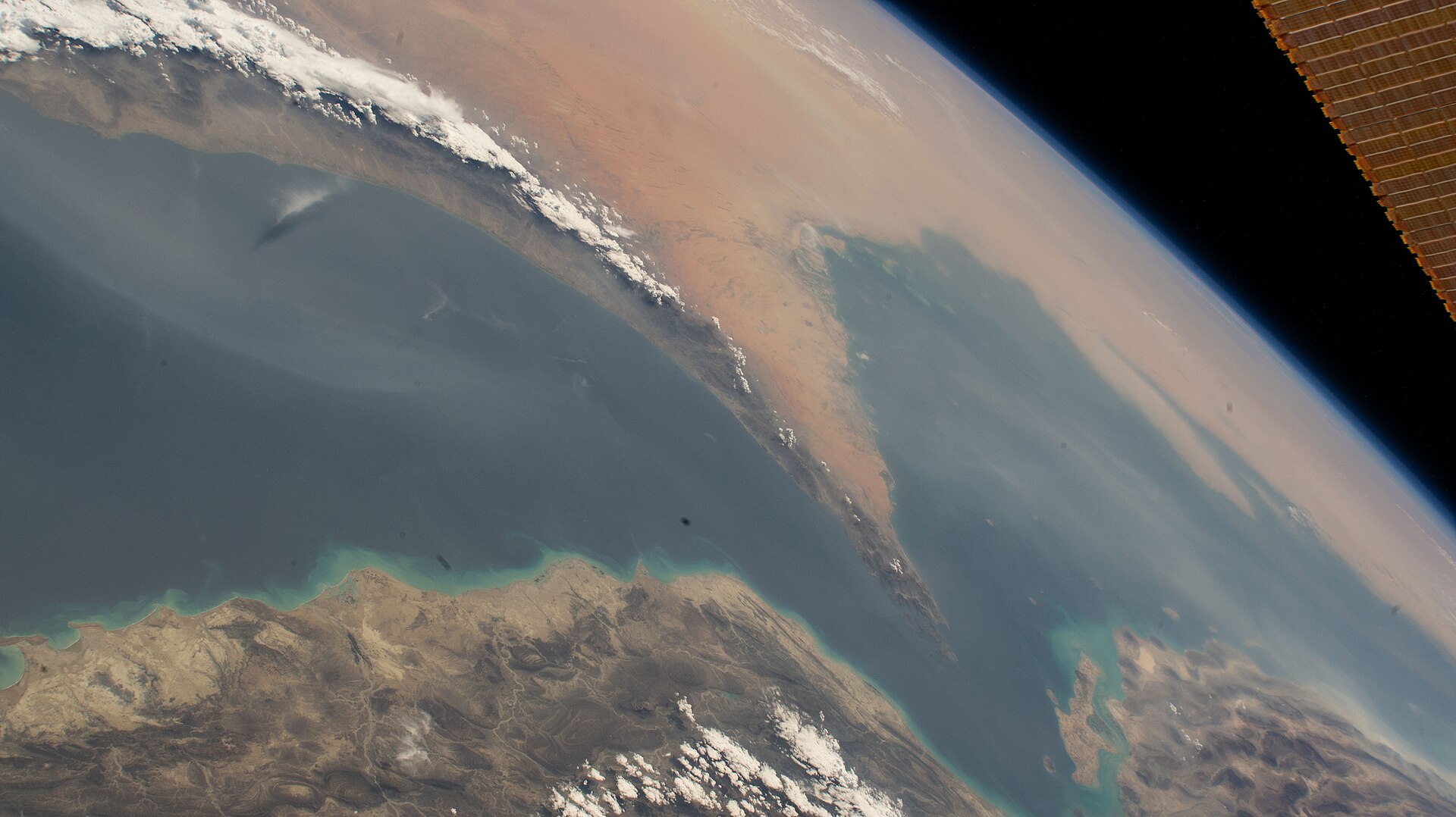

ABU DHABI — Iranian cruise missiles struck two UAE-flagged tankers — the LNG carrier al-Bahiya and the oil tanker Mombasa — in Omani territorial waters on July 13, killing one Indian crew member and wounding eight others in an attack on the internationally approved shipping corridor through the Strait of Hormuz.
Both vessels were transiting the NCAGS-approved southern corridor — the route co-designed by Oman and the International Maritime Organization to carry civilian shipping through Omani waters, away from Iranian-controlled lanes. The IRGC justified the strikes by claiming the tankers had turned off their navigation systems and entered a “mined route.” Six days earlier, on July 7, Iran struck two other tankers on the same corridor. Within hours of the July 13 attack, President Trump announced a full naval blockade of Iran’s coastline, effective July 14 at 20:00 GMT, with a declared 20 percent toll on all cargo transiting Hormuz.
Table of Contents
The Strike
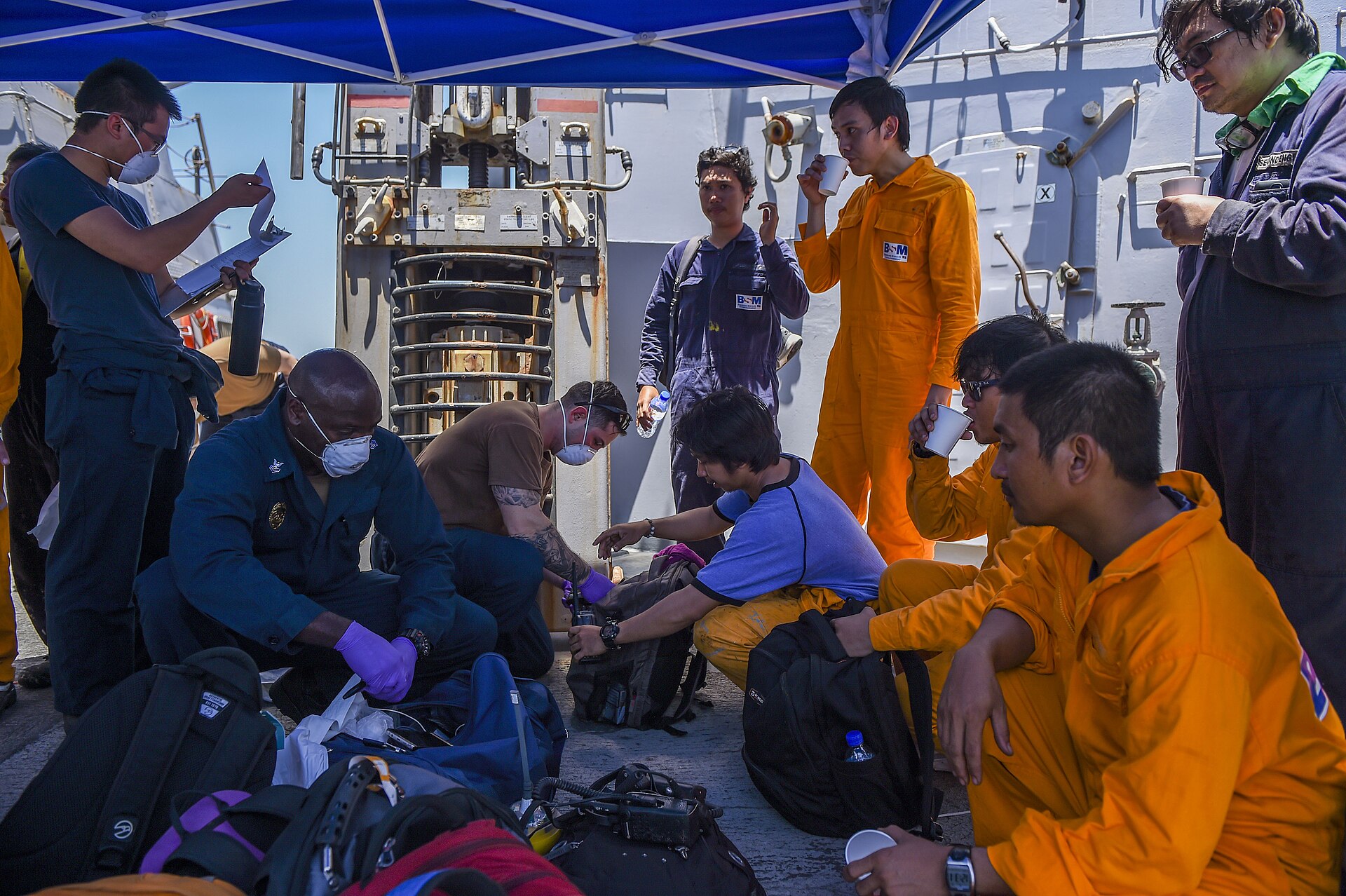
The Mombasa was en route from Abu Dhabi’s Zirku island oil terminal to Khor Fakkan in Sharjah when it was hit. One Indian national aboard was killed. Six Indian crew members and two Ukrainian nationals were wounded, four of them with injuries the UAE Ministry of Defence described as serious. Both the Mombasa and the al-Bahiya — an LNG carrier registered under IMO number 9431147 — caught fire after the missile impacts.
UAE emergency response crews brought the fires under control. The al-Bahiya sustained port-side damage that maritime assessors have not yet publicly graded. An LNG carrier burning in the confined waters of the Hormuz strait posed a secondary risk that the strike itself did not account for — or chose to disregard.
The UAE Ministry of Defence confirmed the strikes within hours and issued two statements. The first: “The UAE condemns this serious breach of international law” and the Emirates is “on high alert and fully prepared to deal with any threats.” The second: the UAE “reserves its full right to respond to this escalation and to take all necessary measures to protect its territory, its citizens and residents.”
The dead Indian crew member is the fourth Indian sailor killed in Gulf waters in four weeks. In June, three Indian nationals died when US forces struck a Palau-flagged vessel off Oman’s coast — an incident that prompted India to summon a US diplomat. New Delhi has not issued a public statement on the July 13 casualty as of press time.
The Middle East briefing 3,000+ readers start their day with.
One email. Every weekday morning. Free.
The UAE Ministry of Defence’s cumulative toll for the conflict stands at least 11 dead and 169 wounded from Iranian strikes.
The UAE reserves its full right to respond to this escalation and to take all necessary measures to protect its territory, its citizens and residents.
— UAE Ministry of Defence, July 13, 2026
What Did the IRGC Claim?
The Islamic Revolutionary Guard Corps issued its justification through Tasnim News Agency: the tankers “turned off their navigation systems and ignored warnings from Iranian authorities in the Strait of Hormuz and tried to pass through a ‘mined route.'”
Each element is contradicted by the operational record.
The vessels were on the NCAGS-approved southern corridor — the route designated by the IMO and Oman for civilian traffic. Windward maritime intelligence confirmed the tankers’ position on the approved route at the time of the strike. They were not on a rogue path. They were on the only path the international maritime system recognises as safe.
The “navigation systems” reference — AIS transponders — inverts the causal sequence. Iran has jammed AIS signals across the strait since the early weeks of the conflict. Maritime security analysts at HSToday described the resulting mechanism: “When Iran jams AIS signals and then uses the resulting AIS blackout as targeting justification, it closes a loop in which any vessel attempting to use the internationally recognized corridor can be framed as a violator.”
That framing, HSToday concluded, “has no basis in SOLAS, in UNCLOS, or in the law of naval warfare.”
The IRGC had declared in June that “the only authorised transit routes through the Strait of Hormuz are those designated by the Islamic Republic of Iran” — rejecting the NCAGS corridor and the IMO framework behind it. The IMO responded that transit passage “cannot be suspended or restricted through unilateral measures” and called Iran’s position a breach of international law. Iran submitted a separate document to the IMO asserting that “parts of the Strait of Hormuz fall within the territorial waters of the Islamic Republic of Iran” and invoked coastal-state sovereignty.
Iran has not ratified UNCLOS. Under Articles 37 through 44 of the convention, vessels hold a non-suspendable right to continuous transit passage through international straits — a principle that applies as customary international law regardless of the coastal state’s ratification status.
Why Did Iran Strike in Omani Waters?
The targeting geometry was precise. UAE-flagged vessels. Omani territorial waters. An IMO-approved corridor. An AIS-dark justification manufactured by Iran’s own jamming. The combination distributed consequences across three parties while avoiding direct contact with US naval assets — the one outcome that would have demanded immediate kinetic response.
The UAE absorbed the asset damage, the casualty, and the obligation to respond. Oman absorbed the sovereignty violation — cruise missiles detonating inside its territorial waters against vessels on a corridor Muscat helped design. The IMO absorbed the doctrinal challenge to the transit-passage regime.
Iran FM Abbas Araghchi framed the broader posture hours after the strikes: “Whoever provides secure and safe passage of commercial vessels through the Strait of Hormuz should be compensated for this service.”
Oman’s silence is the most conspicuous outcome. As of July 14, Muscat has issued no public statement acknowledging that Iranian cruise missiles struck two tankers inside Omani territorial waters. No condemnation. No call for investigation. No reference to the vessels’ position on the corridor Oman co-designed.
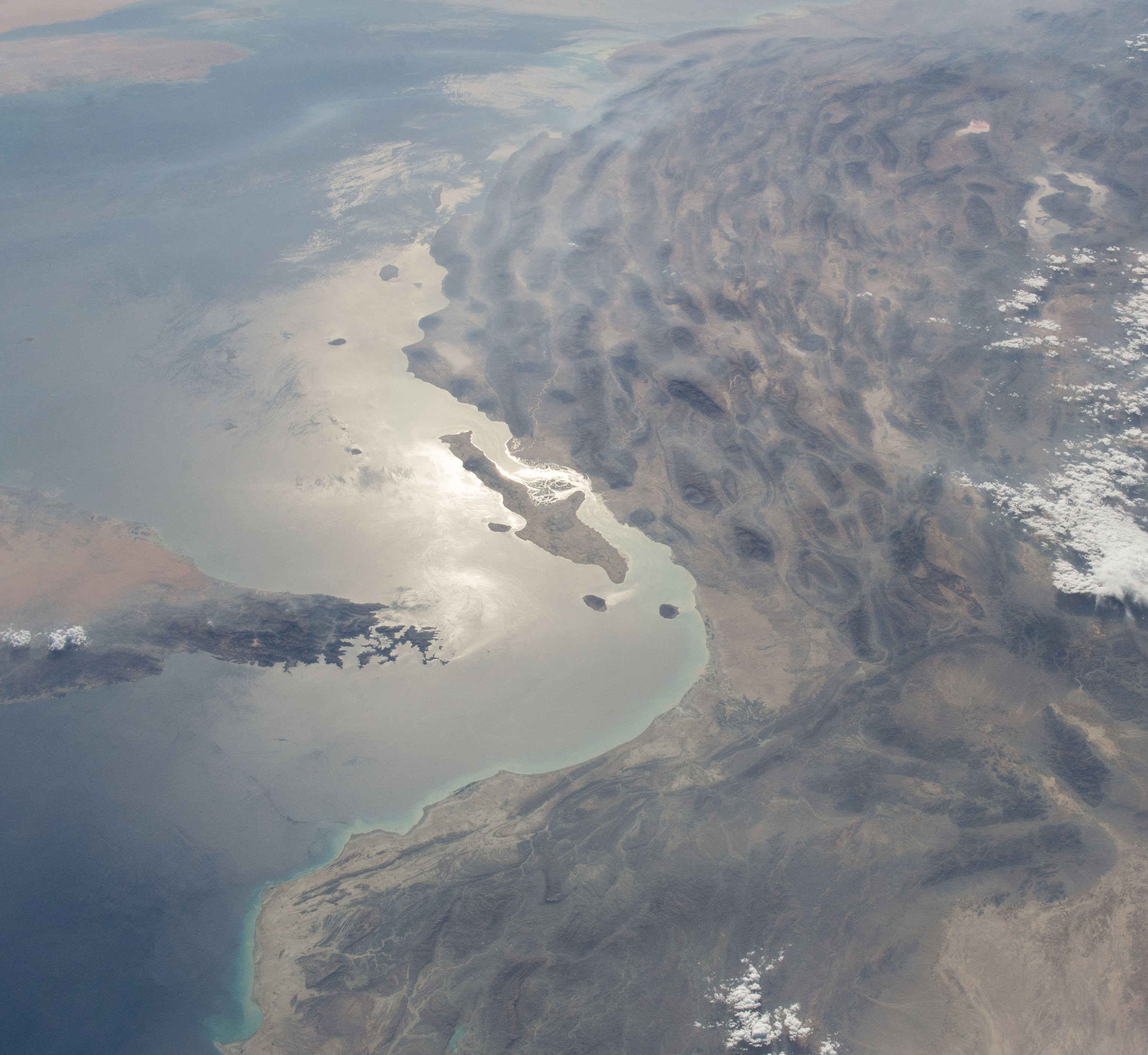
Iranian attacks on or near Omani territory throughout the conflict have killed 19 and injured 35 in Oman. The Arab Center Washington D.C. assessed the structural bind: Iran wants Oman “both as a target and a mediator — a position that may eventually force Muscat to choose.”
The June 23 joint statement between Iran and Oman — issued twenty days before the strikes — makes Muscat’s silence sharper. That statement asserted joint “sovereignty and sovereign rights over their territorial waters in the Strait of Hormuz” and established a working group on passage “services and costs.” The Omani FM stated publicly that both sides had committed to “toll-free safe passage.” Iran struck the corridor Oman helped build less than three weeks later.
From Al Rekayyat to Mombasa
The July 13 strikes are the second attack in six days on the same corridor.
On July 7, IRGC forces struck two laden tankers on the NCAGS-approved outbound route: the Qatari LNG carrier Al Rekayyat — a 315-metre Marshall Islands-flagged vessel with IMO number 9397339 — and a Saudi-owned ultra-large crude carrier. Both were AIS-dark at the time of impact, a condition the IRGC again cited as justification. Windward AI and HSToday confirmed both vessels were on the internationally approved route.
The interval is tightening. The target profile is escalating. July 7 struck a Qatari and a Saudi vessel. July 13 struck two UAE-flagged vessels. The constant is the corridor — each strike targeted vessels using the one route that international maritime authorities, and Oman itself, designated as safe passage.
Windward’s assessment: “The attacks demonstrate a strategic focus on denying use of approved maritime corridors and targeting vessels associated with U.S.-aligned Gulf states, particularly focusing on energy infrastructure assets.”
Pre-war, the Strait of Hormuz carried roughly 84 AIS-visible transits per day. By July 2026, that number had collapsed to approximately 27. The corridor strikes — July 7 and July 13 — targeted the vessels still attempting to use the system as designed.
The Blockade
Within hours of the July 13 tanker strikes, President Trump announced a full US naval blockade of Iran’s entire coastline, effective July 14 at 20:00 GMT. The announcement included a declared 20 percent toll on all cargo shipped through the Strait of Hormuz.
Brent crude rose 4.14 percent intraday on July 13 and surged above $83 per barrel after the blockade announcement. Goldman Sachs responded before the blockade was declared: “Recent attacks highlight how uncertain Gulf exports remain and a serious re-escalation could reintensify the short-run upside risk to oil prices.”
The Saudi fiscal breakeven — $86.60 per barrel according to IMF estimates — remains above the current price. Even at post-blockade levels, Riyadh runs a deficit on every barrel produced. The Kingdom recorded a SAR 125.7 billion deficit in the first quarter of 2026. Aramco’s free cash flow covers only 0.85 times its dividend obligations.
The blockade imposes a structure that parallels Iran’s own. The Persian Gulf Security Agreement — Iran’s unilateral fee regime — charges $5.5 million per day per vessel, with $253 million outstanding against an August 18 expiry. The US toll adds a second unilateral fee layer on top. Neither has UN Security Council authorisation.
A CNBC maritime intelligence analyst assessed Iran’s position before the blockade was announced: “The only leverage Iran has is control of Hormuz.”
Background
Saudi Arabia’s position remains structurally constrained. PAC-3 interceptor stocks stand at 400 of 2,800 — an 86 percent consumption rate — limiting air-defence capacity. Exclusion from the Islamabad negotiating track removes diplomatic influence. The active Houthi front in Yemen divides military attention. The Hormuz toll structure — now doubled by the US blockade’s 20 percent levy — compounds fiscal pressure on a kingdom already running a deficit at current prices.
Frequently Asked Questions
What is the NCAGS corridor?
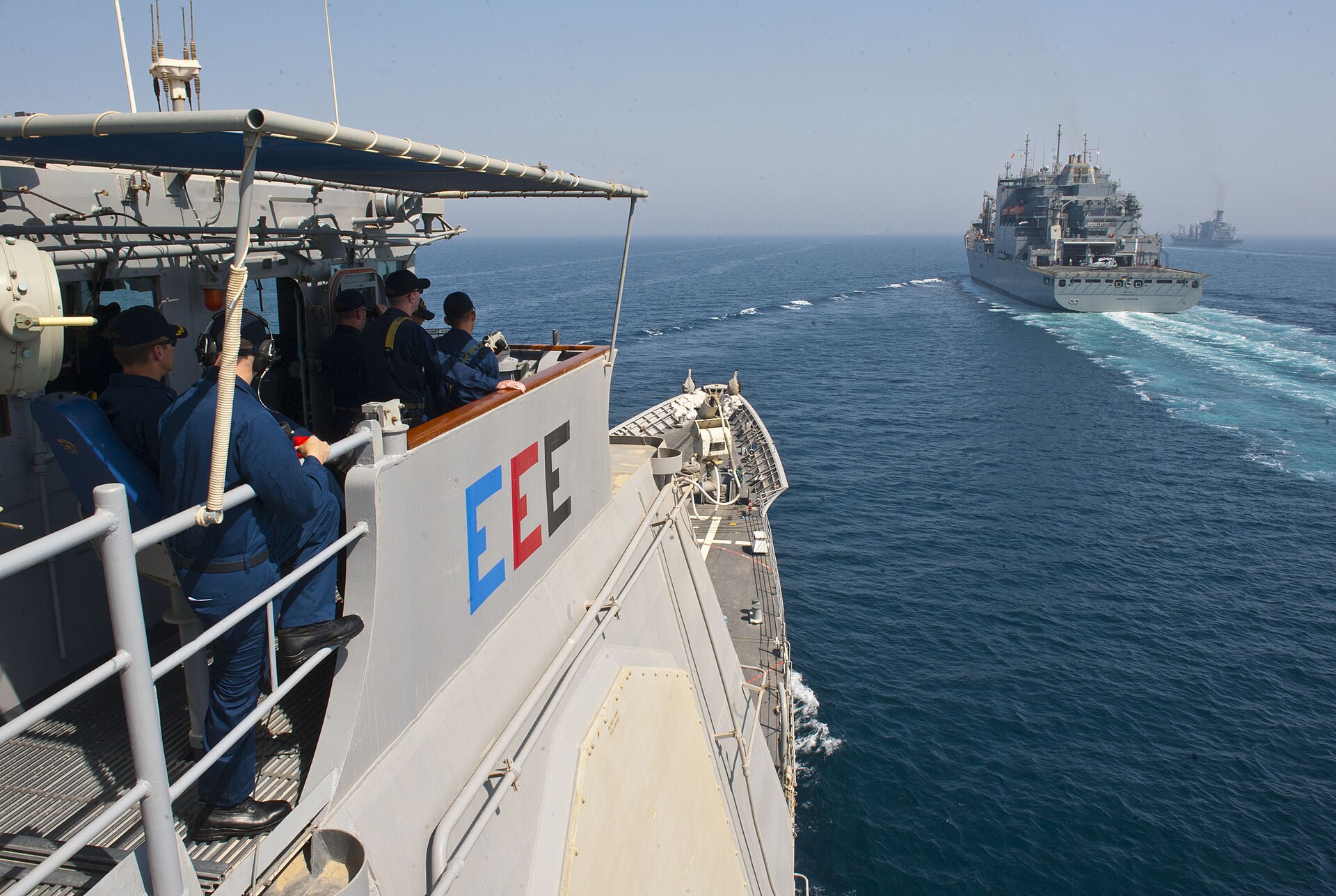
NCAGS — Naval Cooperation and Guidance for Shipping — is a NATO-origin framework adopted by the IMO to coordinate civilian vessel movement through contested or high-risk maritime zones. In the Strait of Hormuz, the NCAGS-approved southern corridor routes shipping through Omani territorial waters, south of the Iranian-claimed lanes. Oman co-designed the route with IMO technical support. The IRGC does not recognise it. The July 7 and July 13 strikes both hit vessels on this corridor, making it the primary target in Iran’s campaign to deny alternatives to its own designated — and fee-bearing — transit routes.
How many Indian nationals have been killed in Gulf maritime incidents in 2026?
At least four. Three Indian sailors died on June 12 when US forces struck a Palau-flagged vessel off Oman’s coast — an incident that prompted India to summon a US diplomat. A fourth Indian national was killed aboard the Mombasa on July 13 by an Iranian strike. India’s exposure is structural: Indian nationals crew a large share of Gulf-transiting commercial vessels, and India imports roughly 60 percent of its crude from Gulf producers whose exports transit Hormuz. The parallel casualties — three from US action, one from Iranian — create diplomatic pressure on both belligerents simultaneously.
What is the difference between the US blockade and Iran’s PGSA?
Iran’s Persian Gulf Security Agreement charges $5.5 million per day per vessel for Hormuz transit, with $253 million outstanding against an August 18 expiry date. It is enforced by the IRGC at the strait’s chokepoint. The US blockade, effective July 14, imposes a 20 percent toll on all Hormuz cargo and establishes a naval cordon around Iran’s entire coastline — the open-ocean approaches, not the strait itself. Both are unilateral. Neither has UN Security Council authorisation. Commercial vessels now face two separate fee regimes — one to enter the strait and one to exit — imposed by opposing belligerents.
Has Oman responded to the strikes in its territorial waters?
No. As of July 14, Muscat has issued no public statement. Iranian attacks on or near Omani territory have killed 19 and injured 35 during the conflict without triggering a formal Omani condemnation. The June 23 Iran-Oman joint statement — in which both sides endorsed “toll-free safe passage” through the strait — has not been rescinded, reaffirmed, or publicly referenced since Iran began striking vessels on the corridor Oman helped build. Oman’s diplomatic value to Iran as a back-channel mediator — Muscat hosted the Doha-track preliminary contacts — may partly explain the restraint, but each unanswered strike in Omani waters narrows the space in which that restraint holds.
What does the blockade mean for oil prices and Saudi Arabia?
Oil prices rose sharply after the blockade announcement, but the increase does not automatically benefit Gulf producers. Saudi Arabia’s IMF fiscal breakeven of $86.60 per barrel still exceeds the post-blockade price. OPEC+ approved its fifth consecutive 188,000 bpd monthly quota increase in early July, adding supply into a market the IEA estimates already carries a 3.84 million bpd surplus. The dual-toll system — Iran’s PGSA plus the US 20 percent levy — adds costs borne by shippers, insurers, and consuming nations rather than producers.