TEHRAN — The Islamic Revolutionary Guard Corps broadcast an audio warning to all commercial vessels near the Strait of Hormuz on June 14, ordering crews to “absolutely refrain from any movement in the Strait of Hormuz until further notice,” according to audio obtained by Xinhua from a crew member aboard a ship near the strait. The transmission went out over maritime radio — directed at tanker crews, not at journalists or diplomats — on the same day U.S. President Donald Trump said a peace deal was scheduled to be signed and that Hormuz would reopen “to all” immediately afterward.
The broadcast declared the strait “completely closed” and warned that any movement would be dealt with “decisively,” Xinhua reported. Iranian Foreign Ministry spokesperson Esmaeil Baghaei had already denied that any final agreement would be signed, telling reporters the MOU would serve only as “a framework for continuing talks,” and the proposed signing ceremony had already collapsed before the IRGC keyed its microphone. Fourteen merchant seafarers have been killed across 46 IMO-confirmed shipping incidents since the conflict began, and three Indian-crewed tankers were struck in the four days before the IRGC’s formal June 11 closure order — the corps chose to deliver its signing-day message not to the press but directly to the men navigating the waters where their colleagues had died.
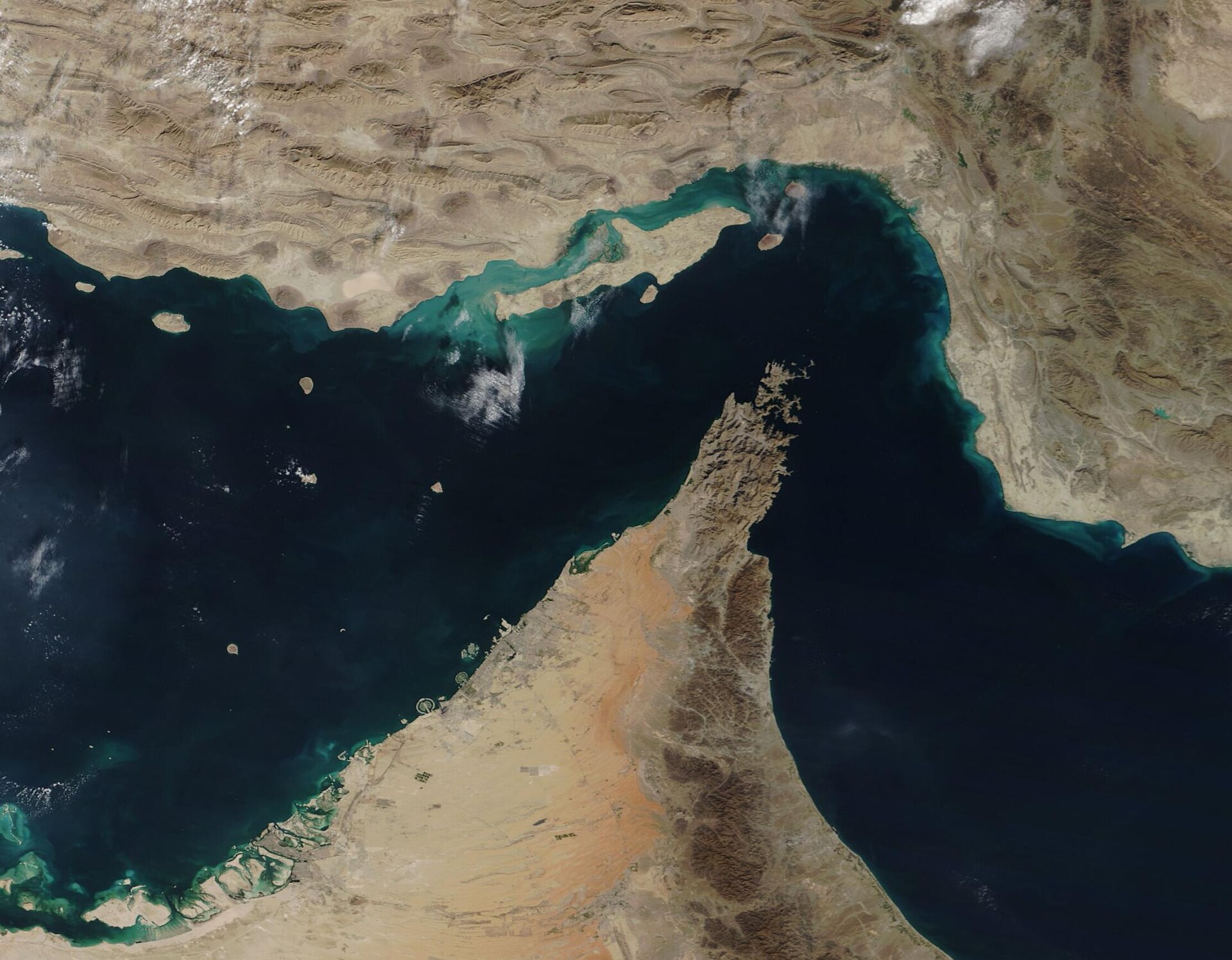
Table of Contents
What the IRGC Broadcast Said
The audio, obtained by Xinhua from a crew member aboard a commercial vessel operating near the strait, was addressed to “all vessels operating in the Persian Gulf and the Gulf of Oman.” Its language left no room for diplomatic interpretation: the Strait of Hormuz was “completely closed,” crews should “absolutely refrain from any movement” until further notice, and any attempt to transit would be met “decisively.” The warning contained no conditional language, no reference to negotiations, and no mention of the MOU that Trump said would be signed that same day.
The House of Saud Daily Briefing
Saudi Arabia's news in 3 minutes, every morning. Free. See today's issue
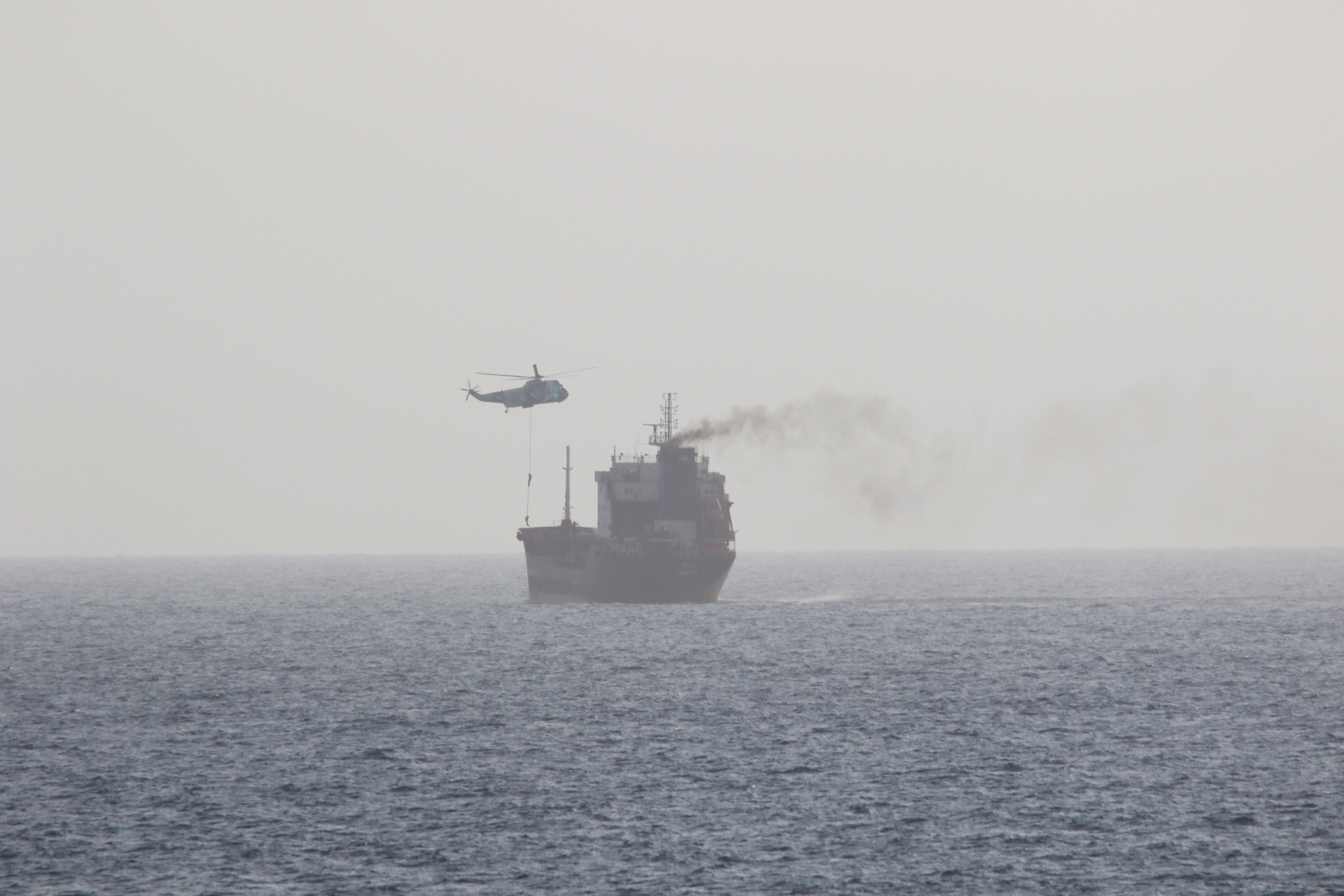
The broadcast reinforced a formal closure order issued June 11 by Khatam al-Anbiya Central Headquarters, Iran’s top military command structure, which cited “repeated violations of ceasefire conditions by the American enemy” as justification, according to PressTV. That order had already declared that any approach to the strait “will be considered cooperation with the enemy,” per GlobalSecurity.org. The June 14 audio transmission extended that written military directive into an active, real-time warning delivered to crew members who were, at that moment, navigating waters where the IRGC had struck three Indian-crewed tankers — MT Marivex on June 8 (24 crew rescued), MT Settebello on June 10 (three Indian nationals killed, 21 rescued by Oman), and MV Jalveer on June 11 (20 survived) — in the span of four days.
Why Did the Warning Go to Ship Captains Instead of Journalists?
The IRGC has press infrastructure, and it used that infrastructure three days earlier. PressTV carried the June 11 closure order within hours of its issuance; Tasnim and Fars routinely publish IRGC Navy statements before the ink dries. The corps chose, on the designated MOU signing day, not to issue a statement through any of those channels but to broadcast directly to mariners at sea — the people who would have to decide, in real time, whether to steer a vessel carrying two million barrels of crude into a strait where 14 of their colleagues had already died.
Under the International Convention for the Safety of Life at Sea (SOLAS), all commercial vessels equipped with the Global Maritime Distress and Safety System are required to monitor VHF Channel 16 continuously. A broadcast on maritime radio frequencies reaches every ship, coast guard station, and naval intelligence unit within range simultaneously, with no intermediary, no translation delay, and no opportunity for a Foreign Ministry spokesperson to soften the language before it arrives. When the IRGC told crews to “absolutely refrain from any movement,” it was speaking to men who had to act on that information within minutes, not to analysts who would parse it over days.
The distinction between a press release and a ship radio broadcast is operational, not cosmetic. A press release enters a news cycle; a maritime radio warning enters a bridge decision. Ship captains operating under the BIMCO CONWARTIME clause — which allows crews to refuse orders to enter conflict zones when risk is assessed as “too high,” according to the Maritime Executive — received the IRGC’s message as actionable intelligence, not as geopolitical commentary. The clause has already been triggered for Persian Gulf transits, giving captains the contractual authority to refuse to enter the strait regardless of what their charterers or owners demand, and the June 14 broadcast gave them a fresh, recorded reason to exercise it. On June 15, shipowners’ refusal to move through Hormuz left roughly six hundred vessels stationary at either end of the strait.
The Channel 16 Precedent
This was not the first time the IRGC used ship radio to contradict its own diplomatic track in real time. On April 18, less than 36 hours after Foreign Minister Abbas Araghchi declared on state television that the Strait of Hormuz was “completely open,” an IRGC patrol unit identifying itself as “Iranian Sepandavi” broadcast on VHF Channel 16 a message that has since become one of the most widely cited transmissions of the conflict, reported by Israel National News and carried across international media.
The Strait of Hormuz is still closed. We will open it by the order of our leader, Imam Khamenei, not by the tweets of some idiot.IRGC patrol unit “Iranian Sepandavi,” VHF Channel 16, April 18
The April 18 broadcast established a pattern that the June 14 transmission confirmed: the IRGC treats maritime radio as its primary channel for signaling operational reality when that reality diverges from whatever the Foreign Ministry is telling cameras in Tehran or mediators abroad. Araghchi said “open”; the IRGC told ships “closed.” Baghaei said “framework for talks”; the IRGC told ships “absolutely refrain from any movement.” In both cases, the ship captains who had to make navigation decisions received the IRGC’s version first, through a channel that carries the implicit authority of an armed force addressing you directly in contested waters. The pattern continued on June 15, when Iran sent two contradictory Hormuz signals on the same day — a UN notification that non-hostile ships may transit, and an IRGC radio warning to a US Navy destroyer conducting mine clearance.
The April 18 transmission also made explicit what the June 14 broadcast reinforced without stating directly: the authority to open or close Hormuz rests with Supreme Leader Ayatollah Ali Khamenei, not with the Foreign Ministry and not with any MOU the Foreign Ministry might negotiate. The IRGC’s “Iranian Sepandavi” said as much — the strait would open “by the order of our leader” — and Iran’s broader pattern of conditioning the MOU on demands the diplomatic track could not deliver only deepened the gap between what Baghaei told reporters and what ship captains heard over their radios.
What Does Thirteen Transits Per Day Mean for Saudi Crude?
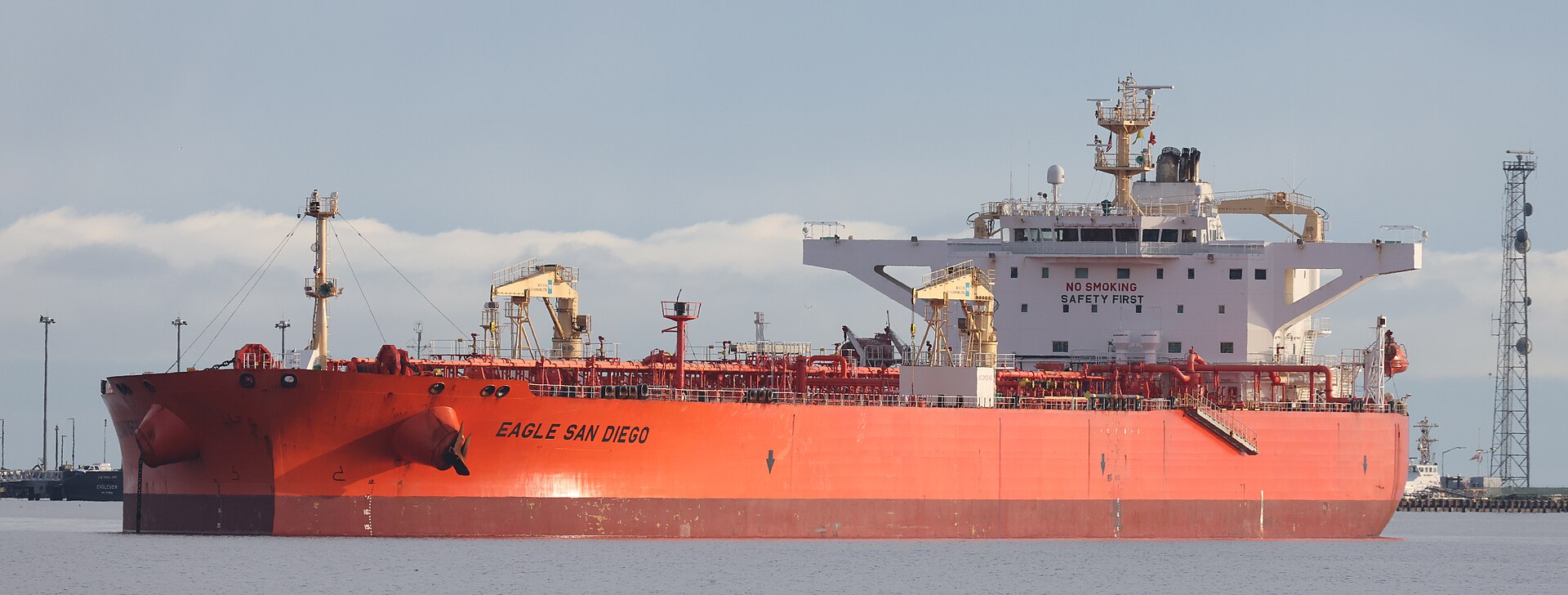
Before the conflict, the Strait of Hormuz averaged more than 153 vessel transits per day, according to CSIS tracking data. As of mid-June, that figure had collapsed to 13 detected daily transits — a reduction that World Trade Organization data quantifies as a 95 percent drop in crude oil carrier traffic and a 99 percent drop in LNG carrier traffic through Persian Gulf ports. Saudi Arabia, which routes the bulk of its crude exports through Hormuz, has absorbed the disruption through Yanbu Red Sea terminal capacity capped at 5.9 million barrels per day and through Aramco’s June decision to cut its Official Selling Price by six dollars per barrel for Asian deliveries — a discount that signals not generosity but the cost of rerouting supply chains under fire.
The financial arithmetic translates directly into fiscal damage. With Brent trading at roughly $86–87 per barrel against a Saudi fiscal breakeven estimated at $108–111, every barrel sold carries a $22–25 deficit that no volume increase can offset while Sadara Chemical Company’s $3.7 billion in guaranteed senior debt approaches its June 15 grace expiration, as Jubail’s last operational window narrows. War risk insurance premiums have surged 340 percent since February 28, according to Lloyd’s List and BEinsure. Non-flagged-risk vessels now pay 0.8 to 1.5 percent of hull value per voyage; US-, UK-, or Israeli-linked vessels pay 2.5 to 5 percent — double-digit millions per trip for the largest tankers.
The full fiscal cost of that deficit — compounded by $2 billion in annual PGSA fee exposure Saudi Arabia cannot escape without a seat at the enforcement table — is documented in the fiscal cost of a Hormuz deal Saudi Arabia cannot enforce. Saudi Arabia’s exclusion from the Doha sessions finalizing MOU implementation terms — the same terms the IRGC broadcast signaled it would enforce unilaterally — is documented in Saudi Arabia Approved a Deal Being Finalized Without Saudi Arabia.
Patrick Tiernan, CEO of Lloyd’s of London, told BEinsure that demand for tanker cover is “rare right now because operators are focused on safety and security,” though the Lloyd’s Market Association issued a separate statement clarifying that reports of cancelled coverage “are not accurate” and that coverage “remains available.” The distinction matters but does not change the outcome: insurance exists, but the price of using it has made Hormuz transit economically irrational for most commercial operators, which is why daily transits fell from 153 to 13 without the IRGC needing to physically blockade every vessel. The June 14 broadcast, delivered to the crews of whatever ships remain in those waters, served as confirmation that the economic deterrent now has an armed escort.
The Monetization Contradiction
The IRGC’s June 14 broadcast creates a structural tension with Iran’s own Hormuz monetization architecture. The Persian Gulf Shipping Authority, established May 5, charges approximately one dollar per barrel — roughly two million dollars per VLCC — for transit through the five-nautical-mile Qeshm-Larak corridor, with payments accepted in Chinese yuan through Kunlun Bank or in Bitcoin and USDT, as House of Saud previously reported. The PGSA exempts Russia, China, India, Iraq, and Pakistan from fees while explicitly excluding Saudi Arabia, but if the strait is “completely closed” under a shoot-on-sight posture, the PGSA has no ships to toll.
The contradiction suggests that the June 14 broadcast is maximum-pressure signaling timed to the MOU collapse rather than a permanent shift away from the monetization model. Iran’s MOU draft, as published by Al Arabiya on May 22, prohibits “tolls” but not “service fees” — a semantic gap that Foreign Minister Araghchi exploited when he told state television that Iran would charge ships “for services rendered” at Hormuz, a distinction the MOU’s own language cannot close. The PGSA fee structure is worth an estimated $5.5 million per day to Iran from Saudi-origin crude alone, assuming pre-conflict Saudi Hormuz volumes of 5.5 million barrels per day, and that revenue stream disappears entirely under genuine total closure.
Samir Puri, senior research fellow at Chatham House, described the broader situation as “the worst escalation of fighting and mutual attacks since the ceasefire began in April” and said it “will not de-escalate any time soon.” The IRGC’s operational logic appears to be layered: broadcast total closure on the day the deal collapses to maximize diplomatic pressure, maintain the PGSA infrastructure for the day the strait partially reopens under Iranian terms, and preserve the legal framework under UNCLOS Article 26(2) — which permits charges for “specific services rendered” — that transforms a military blockade into a revenue mechanism. Iran ran both tracks simultaneously in April, when the IRGC broadcast “still closed” on Channel 16 while the PGSA continued collecting fees from exempted vessels, and nothing in the June 14 broadcast suggests the PGSA has stopped operating for non-sanctioned traffic.
From 153 Transits to a Closed Strait
The Strait of Hormuz has cycled through four distinct phases since February 2026. The IRGC formally closed the strait on March 2, following the collapse of the U.S.-Iran ceasefire framework, and by March the traffic collapse was already severe enough that all 26 units at Jubail’s Sadara Chemical complex had gone offline. On April 7, a new ceasefire produced Araghchi’s declaration that the strait was “completely open” — a statement the IRGC contradicted within 36 hours via the April 18 Channel 16 broadcast. The June 11 formal closure order from Khatam al-Anbiya Central Headquarters formalized what had been the de facto reality for weeks, and the June 14 audio transmission extended that closure into the signing-day news cycle as Trump’s weekend deadline ran into Sadara’s Monday cliff.
The 1987–88 Tanker War offers an imperfect historical parallel. During that conflict, more than 540 vessels were attacked and Lloyd’s hull insurance rates reached 7.5 percent for Kharg Island voyages — yet Iran never formally closed Hormuz because it depended on the same sea lanes for its own oil exports, according to accounts compiled by Al Jazeera, Britannica, and the Strauss Center. The 2026 situation is structurally different: years of U.S.-led sanctions had already collapsed Iran’s conventional export revenues before the current crisis, removing the self-interest calculation that kept the strait open during the 1980s. Iran’s remaining trade partners — Russia, China, India — move cargo through channels that do not require Hormuz to function as an open international waterway, and the PGSA’s exemption structure ensures those partners can still transit while Saudi, Emirati, Kuwaiti, and Bahraini crude remains stranded or rerouted at punitive cost.
The GCC invoked its collective defense mechanism on June 11 for the first time in the organization’s 45-year history, a step that reflected the severity of the disruption but has not yet produced a military response capable of contesting IRGC control of the strait. Saudi Arabia’s Foreign Ministry has not issued a public statement on the Hormuz situation in more than 25 days — predating the June 11 closure order, predating the MOU collapse, and predating the June 14 broadcast that reached every remaining ship captain in the Persian Gulf before Riyadh said a word. Pakistan’s June 14 ceasefire declaration thanked Saudi Arabia for “immense contributions” to the deal while assigning the kingdom no signatory, mediator, or guarantor role — the distinction between credit and structural protection is examined in Saudi Arabia Was Thanked for a Deal It Cannot Enforce.
Frequently Asked Questions
What frequency did the IRGC use for the June 14 broadcast?
Xinhua reported the transmission was received over public maritime radio frequencies by a crew member aboard a commercial vessel near the strait but did not specify the exact VHF channel. The April 18 precedent used VHF Channel 16 (156.8 MHz), the international maritime distress and calling frequency, which all GMDSS-equipped commercial vessels are required to monitor continuously under SOLAS regulations. A Channel 16 broadcast reaches every ship bridge, coast guard station, and naval vessel within VHF range — typically 20 to 30 nautical miles depending on antenna height and atmospheric conditions.
What happens to a cargo if a ship captain refuses to enter the Persian Gulf?
When a captain invokes the BIMCO CONWARTIME clause to refuse entry, the cargo typically remains the charterer’s problem. Under standard charterparty terms, freight is still earned if the vessel completed delivery to the load port; demurrage — the daily penalty for holding a vessel beyond agreed laytime — continues to accrue on the owner’s behalf while the cargo sits. For a VLCC carrying two million barrels of crude, demurrage at standard rates of $60,000–$80,000 per day adds up faster than the cost of rerouting to Yanbu. The cargo itself, however, cannot be released to the charterer without an agreed deviation order, which means Saudi crude loaded for Hormuz transit can be legally stranded at Ras Tanura or offshore at anchor while both sides negotiate who absorbs the cost of war.
How does the June 14 broadcast affect vessels already inside the Persian Gulf?
The warning’s instruction to “absolutely refrain from any movement” applies to vessels already in the Gulf as well as those approaching from the Gulf of Oman. For ships currently loading at Saudi, Kuwaiti, Bahraini, or Emirati ports, the broadcast creates a practical trap: they cannot exit through Hormuz without defying an armed force that has already struck 46 IMO-confirmed shipping targets and killed 14 seafarers in the current conflict. The only alternative export route for Saudi crude is the East-West Pipeline to Yanbu on the Red Sea, which is capped at 5.9 million barrels per day and cannot handle the kingdom’s full export volume.
Has any country’s navy challenged the IRGC’s closure of Hormuz?
No navy has attempted to force open the strait as of June 14. The U.S. Fifth Fleet, headquartered in Bahrain, has conducted freedom-of-navigation operations and intercepted IRGC drones targeting commercial vessels — including two drones intercepted in the same news cycle as Trump’s deal announcement — but has not attempted a sustained convoy operation comparable to Operation Earnest Will during the 1987–88 Tanker War, when the U.S. Navy escorted reflagged Kuwaiti tankers through the strait. The 13,000 Pakistani troops stationed in Saudi Arabia’s Eastern Province under the Saudi Military Defense Agreement operate in a defensive posture and have not been deployed to maritime operations.
What happens to the PGSA fee structure if the strait remains closed?
A genuine total closure would zero out PGSA revenue from any vessel it cannot toll — but “genuine” is doing heavy lifting in that sentence. In April, the IRGC broadcast “still closed” on Channel 16 while exempted vessels from Russia, China, India, Iraq, and Pakistan continued to transit under the PGSA’s selective access structure. If the June 14 closure follows the same pattern, the PGSA loses Saudi, Emirati, Kuwaiti, and Bahraini traffic — already mostly gone — while continuing to collect from the five exempted nations whose cargoes are still moving. The net revenue impact is therefore smaller than “complete closure” implies, and the phrase itself may be doing more diplomatic work than operational work.
The House of Saud Daily Briefing
Saudi Arabia's news in 3 minutes, every morning. Free. See today's issue