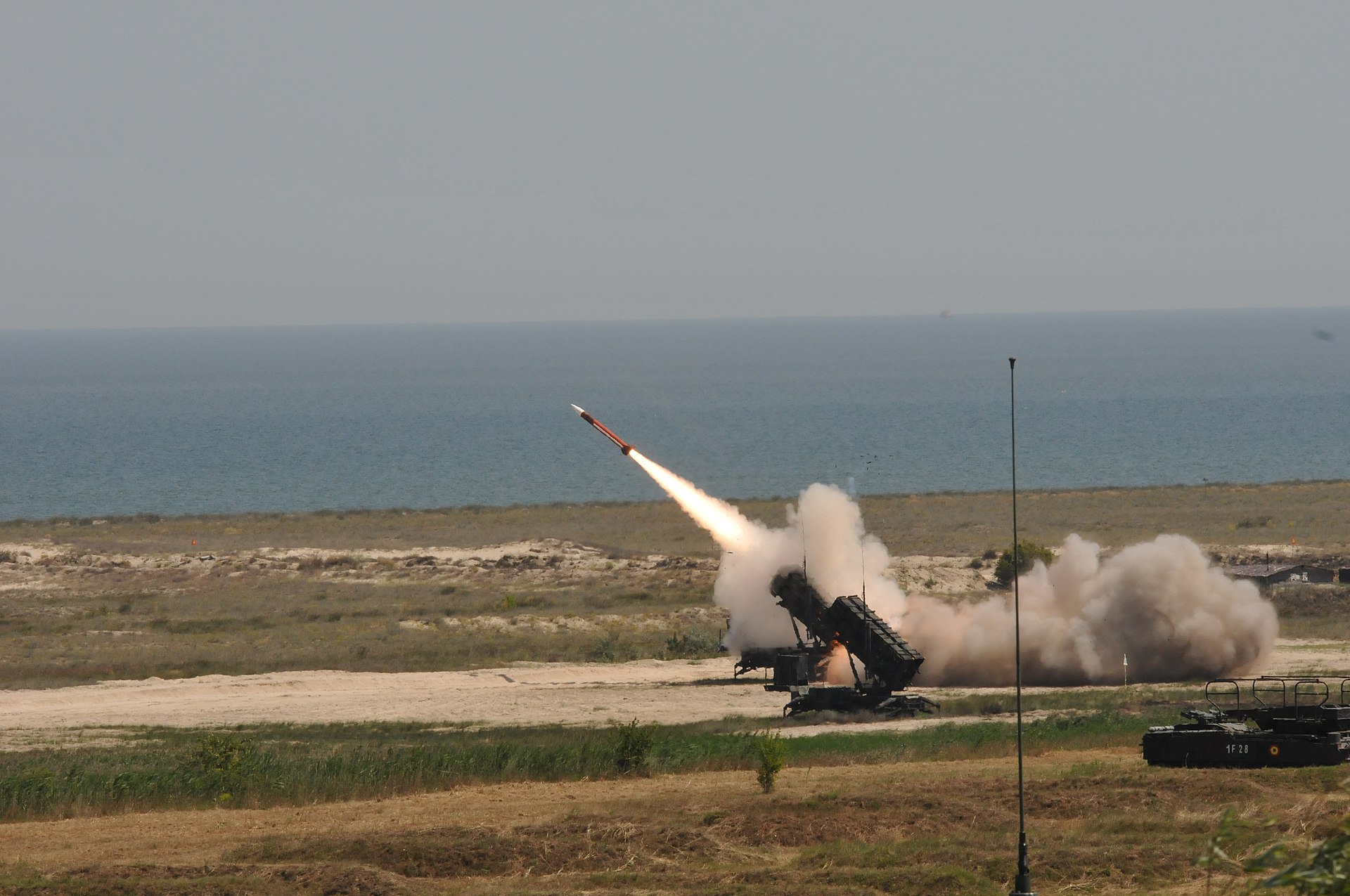

RIYADH — The $9 billion PAC-3 MSE sale approved by the State Department on January 30, 2026, will not deliver a single interceptor to Saudi Arabia for at least 18 months. The Kingdom has approximately 400 PAC-3 MSE rounds remaining — enough for roughly 17 days at current consumption rates — and the Camden, Arkansas, production line that builds every PAC-3 MSE on earth produces 620 rounds per year for all customers worldwide. Saudi Arabia’s 730-round order exceeds one full year of global output.
The sale is not a weapons delivery. It is a diplomatic gesture dressed in a defense contract number. Between the approval date and the first plausible delivery window in late 2027, Saudi Arabia must defend 1.8 million Hajj pilgrims, survive the expiration of a ceasefire with no enforcement mechanism, and absorb whatever the IRGC’s “all restraint removed” doctrine produces next — all on a stockpile that Iran’s cost-imposition strategy was explicitly designed to drain.
Table of Contents
- What Does the $9 Billion PAC-3 Sale Actually Deliver?
- The Camden Bottleneck: 620 Rounds for the Entire World
- Who Is Ahead of Saudi Arabia in the Production Queue?
- How Does the IRGC Exploit the Interceptor Gap?
- Can Saudi Arabia Defend Hajj with 400 Rounds?
- Why Was Saudi Arabia Excluded from the $16.5 Billion Emergency Package?
- The Defense Localization Mirage
- What $9 Billion Actually Bought
What Does the $9 Billion PAC-3 Sale Actually Deliver?
The January 30 Defense Security Cooperation Agency notification authorized the potential sale of 730 PAC-3 Missile Segment Enhancement interceptors to Saudi Arabia at a total estimated cost of $9.0 billion. The word “potential” carries the full weight of the sentence. An FMS notification is not a delivery schedule, not a production order, and not a commitment to prioritize one buyer over another. It is permission to negotiate.
The DSCA notice itself specifies that the 730-round package includes associated equipment, training, logistics support, and contractor services — the standard architecture of a Foreign Military Sale designed to sustain a capability over a decade or more. What it does not specify is when any interceptor will arrive in the Kingdom. The notification does not override existing production contracts, does not accelerate the Camden assembly line, and does not move Saudi Arabia ahead of the U.S. Army’s own $9.8 billion PAC-3 MSE contract signed five months earlier in September 2025.
Lockheed Martin delivered 620 PAC-3 MSE rounds across all global customers in 2025, according to the company’s own January 6, 2026, press release. Even under the most optimistic allocation scenario — in which Saudi Arabia receives a disproportionate share of output — the Kingdom cannot expect meaningful delivery volumes before late 2027 at the earliest, and full order completion likely extends past 2030.
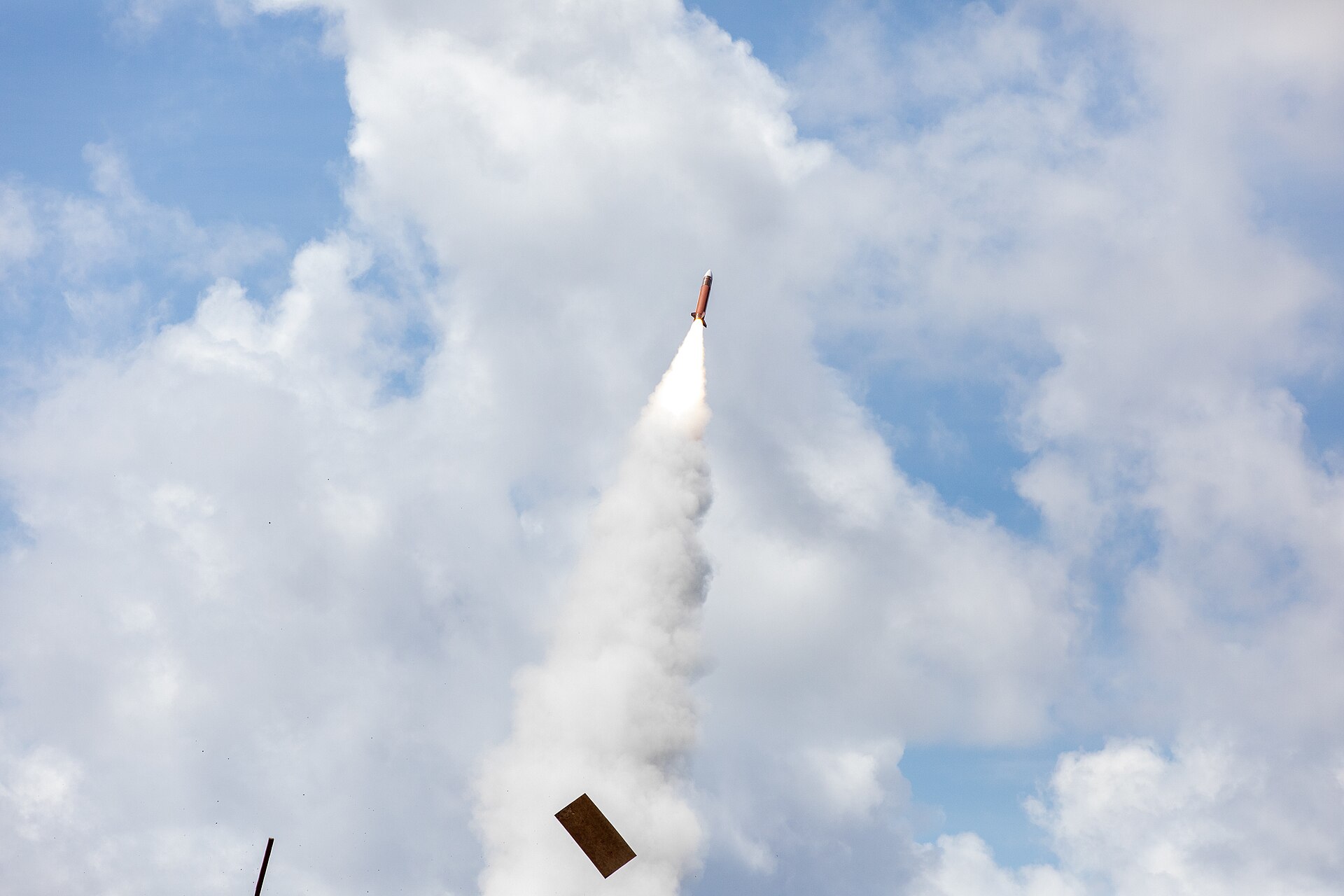
The political utility of the announcement is immediate and obvious. It signals continued American commitment to Saudi air defense at a moment when the Kingdom’s interceptor stockpile is critically depleted. It provides Riyadh with a talking point for domestic reassurance and gives Washington a deliverable that costs nothing in the near term. The industrial utility, however, is nil. No production capacity was added. No delivery was accelerated. No interceptor flew off the line on January 31 that would not have flown off anyway.
The Middle East briefing 3,000+ readers start their day with.
One email. Every weekday morning. Free.
The Camden Bottleneck: 620 Rounds for the Entire World
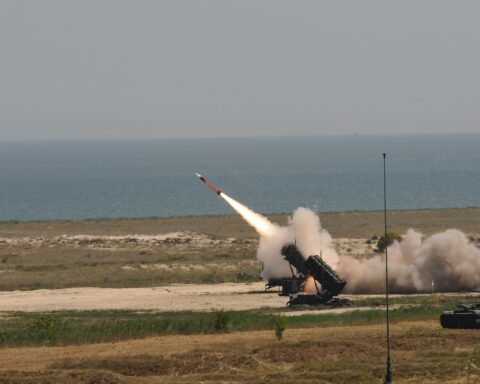
Every PAC-3 MSE interceptor on earth is assembled at Lockheed Martin’s facility in Camden, Arkansas, with a secondary line at Mitsubishi Heavy Industries in Okinawa, Japan, that serves Tokyo’s domestic requirements. Camden is the sole source for all Foreign Military Sales, all U.S. military orders, and all allied procurement outside Japan. The facility produced 620 rounds in 2025 — a record, and still catastrophically insufficient for wartime demand.
The production ceiling is not a function of Lockheed Martin’s ambition. The Department of Defense averaged only 270 PAC-3 MSE procurements per year over the decade spanning FY2015 to FY2024, according to Russell Rumbaugh at CSIS. The 620-round figure for 2025 represents years of incremental production expansion against peacetime demand signals. The industrial base was not built for a war in which a single Gulf state fires nearly 900 interceptors in 35 days and depletes its stockpile by 86 percent.
On January 6, 2026, Lockheed Martin and the Department of Defense signed a framework agreement targeting annual production capacity of 2,000 PAC-3 MSE rounds by the end of 2030. The word “framework” again bears scrutiny. The agreement establishes a production roadmap, not a funded production order. Actual expansion is contingent on FY2026 congressional appropriations that have not yet been secured. Projected output reaches only 650 to 750 rounds by 2027 — still shared globally across 14 or more allied nations including the United States itself.
The sub-component bottleneck is equally acute. Boeing manufactures the Ka-band active radar seeker head for the PAC-3 MSE at its Huntsville, Alabama, facility, where it has invested more than $200 million since 2024. On April 1, 2026, Boeing and the Department of Defense signed a separate seven-year framework to triple seeker production capacity. But a seeker without a missile body is not an interceptor. The Camden final assembly line, not the Huntsville seeker plant, determines the binding constraint on global output through at least 2028.
Senator Coons described himself as “pretty skeptical” about the production tripling initiative during a congressional briefing in January 2026, according to The National Interest. His skepticism reflects a structural reality: the U.S. defense industrial base has not achieved a production surge of this magnitude in any missile program since the Cold War. The Stinger missile production restart — a far simpler system — took 18 months to reach meaningful output after the Ukraine invasion demonstrated urgent demand in 2022.
Who Is Ahead of Saudi Arabia in the Production Queue?
The Saudi FMS notification of January 30, 2026, entered a production queue that was already oversubscribed by years. The U.S. Army’s September 2025 contract takes absolute priority under standard FMS allocation rules and will not be fully delivered before 2030. Saudi Arabia entered that queue last.
The queue extends far beyond the Pentagon. Taiwan’s contracted PAC-3 MSE battalion delivery — authorized under DSCA guidance dating to 2023 that explicitly designates Taipei as a priority recipient — creates a direct scheduling conflict with the Saudi notification. Taiwanese Armed Forces have publicly expressed concern that Washington may redirect their contracted interceptors to the Middle East, according to reporting by Zona Militar on March 5, 2026. The concern is well-founded: every round diverted to Riyadh is a round not delivered to Taipei, and vice versa.
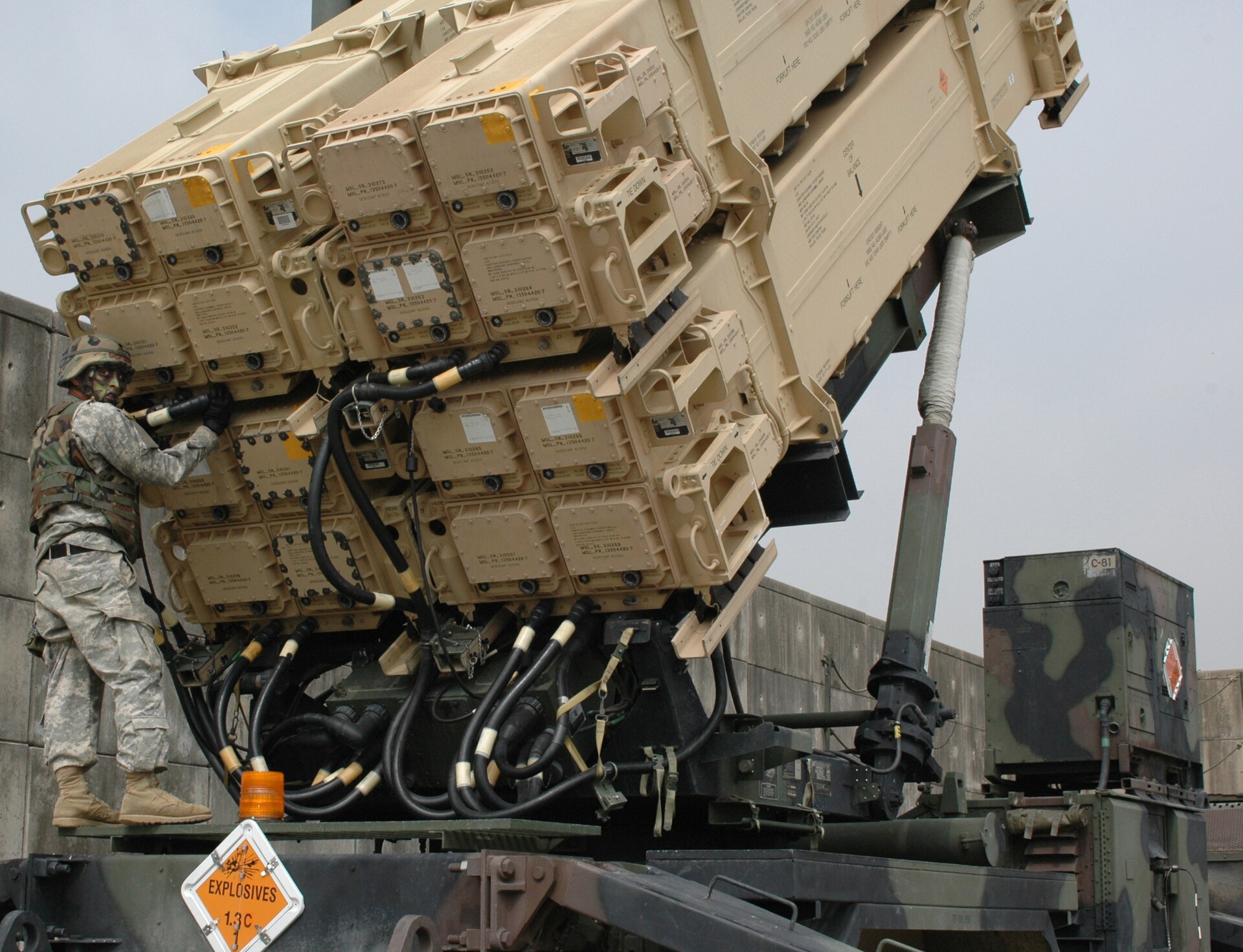
Ukraine’s demand compounds the pressure. Ukrainian forces require more than 60 Patriot interceptors per month to counter Russian Iskander-M ballistic missile salvos, according to EuroMaidan Press reporting from March 3, 2026. That demand — 720 rounds per year for Ukraine alone — exceeds the entire 2025 global production run. Every round Kyiv needs comes from the same Camden line, the same seeker production facility, and the same finite pool of solid rocket motors.
Germany, the Netherlands, Romania, Spain, South Korea, Poland, Japan, Kuwait, Bahrain, Qatar, and the UAE all hold existing PAC-3 MSE procurement contracts or pending FMS notifications. The 14-nation customer base shares a single production line that cannot yet build 700 rounds per year. Saudi Arabia’s 730-round order does not create new capacity. It claims a place in a line that already stretches half a decade into the future.
The only mechanism that has delivered near-term PAC-3 capability transfer between allies is bilateral pay-to-prioritize arrangements outside the standard FMS queue. Saudi Arabia funded Greece’s ELDYSA air defense upgrade — a PAC-3 MSE system enhancement — through a direct bilateral deal. Poland, by contrast, received no comparable offer and rejected outright Washington’s request to transfer one of its two operational Patriot batteries to the Middle East on March 31, 2026. “Our Patriot batteries and their missiles are being used to protect the Polish skies and NATO’s eastern flank,” Polish Defense Minister Wladyslaw Kosiniak-Kamysz stated. “Nothing is changing in this regard, and we have no plans to move them anywhere.”
How Does the IRGC Exploit the Interceptor Gap?
The IRGC exploits the interceptor gap through a cost-imposition doctrine that forces Saudi Arabia to fire $3.9 million interceptors against drones costing $20,000–$50,000 each. At a minimum exchange ratio of 78:1 in Iran’s favor, every successful interception is a net financial and strategic loss for the defender — regardless of whether the incoming round is destroyed.
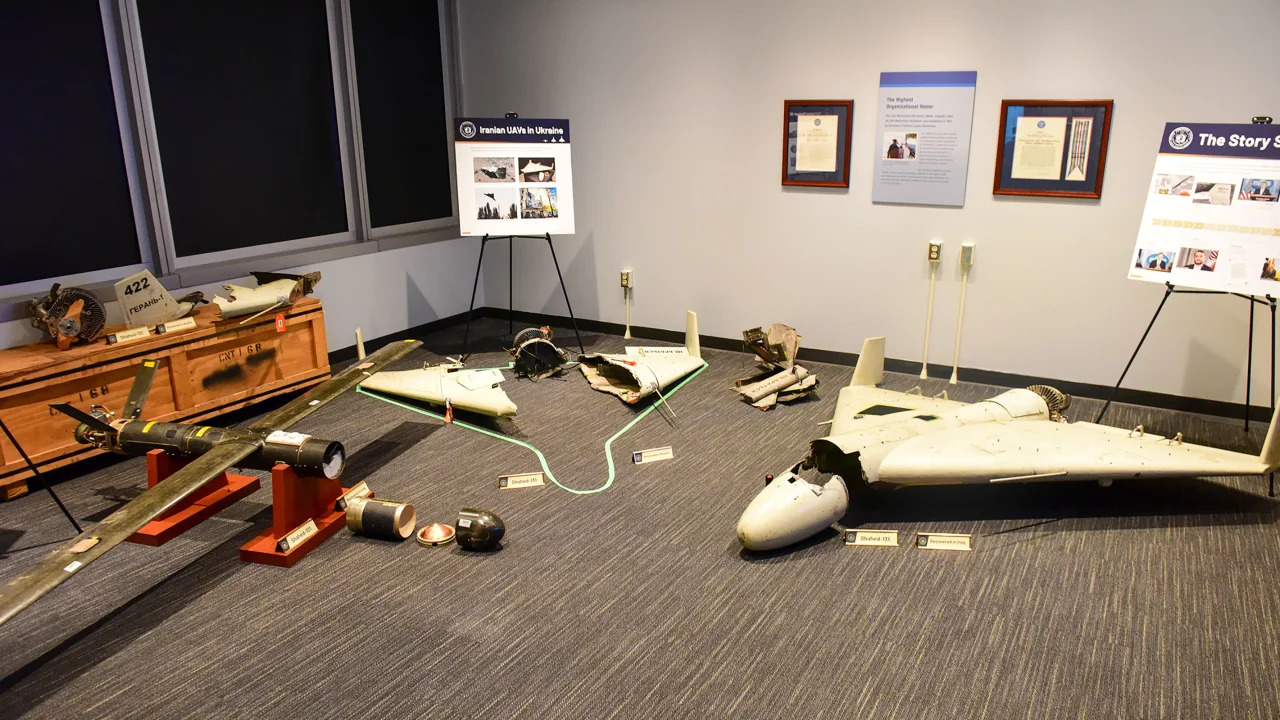
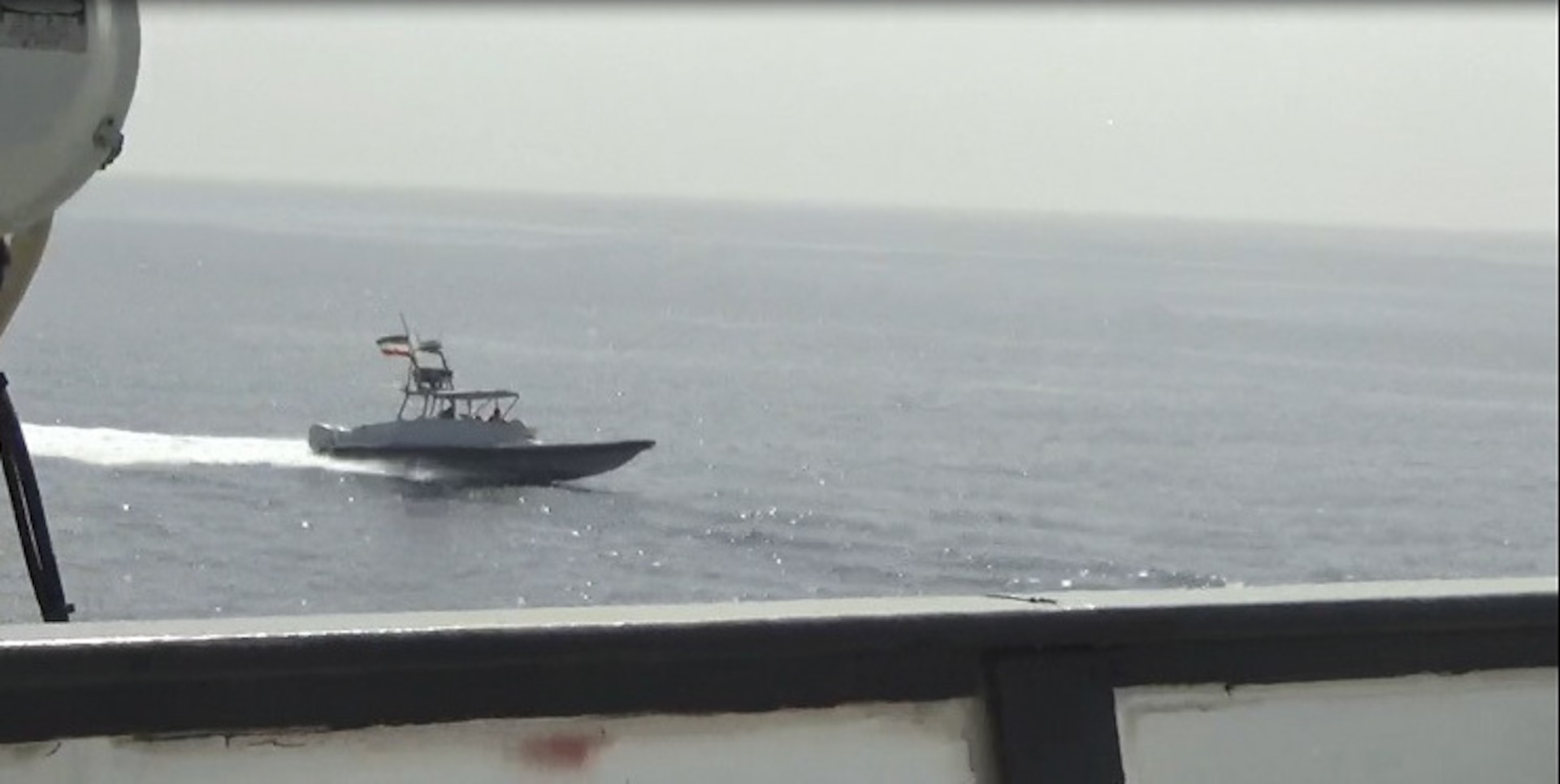
The IRGC does not need to penetrate Saudi air defenses. It needs only to force Saudi Arabia to fire interceptors faster than they can be replaced. This is not a hypothesis — it is the publicly articulated doctrine that Iranian military planners have executed over 38 days of sustained aerial assault.
“The IRGC is not trying to win the interception battle,” Kateryna Bondar, fellow at the Wadhwani AI Center at CSIS, has written. “It is trying to win the logistics battle behind it.” A Shahed-136 drone costs between $20,000 and $50,000 to produce, according to GlobalSecurity.org. A PAC-3 MSE round costs $3.9 million. The asymmetry is structural: Iran can sustain the expenditure rate indefinitely; Saudi Arabia cannot.
The IRGC’s saturation doctrine is tiered, as the Gulf International Forum has documented. Simultaneous arrival of low-altitude Shahed-136 swarms forces Patriot batteries to expend their most expensive interceptor class against the cheapest possible threat. Concurrent ballistic missile salvos — short-range and medium-range arriving in the same engagement window — prevent radar operators from triaging threats by value. The doctrine is explicitly designed to ensure that defenders cannot optimize their expenditure rate.
Fabian Hinz, research fellow at the International Institute for Strategic Studies, has described the campaign as “a sustained campaign designed to deplete interceptor stockpiles and exhaust radar operators. The logic is not complex: a defender that must maintain 24-hour readiness against unpredictable attacks suffers crew fatigue, equipment wear, and consumable depletion whether the attack rate is 480 missiles a day or 40.”
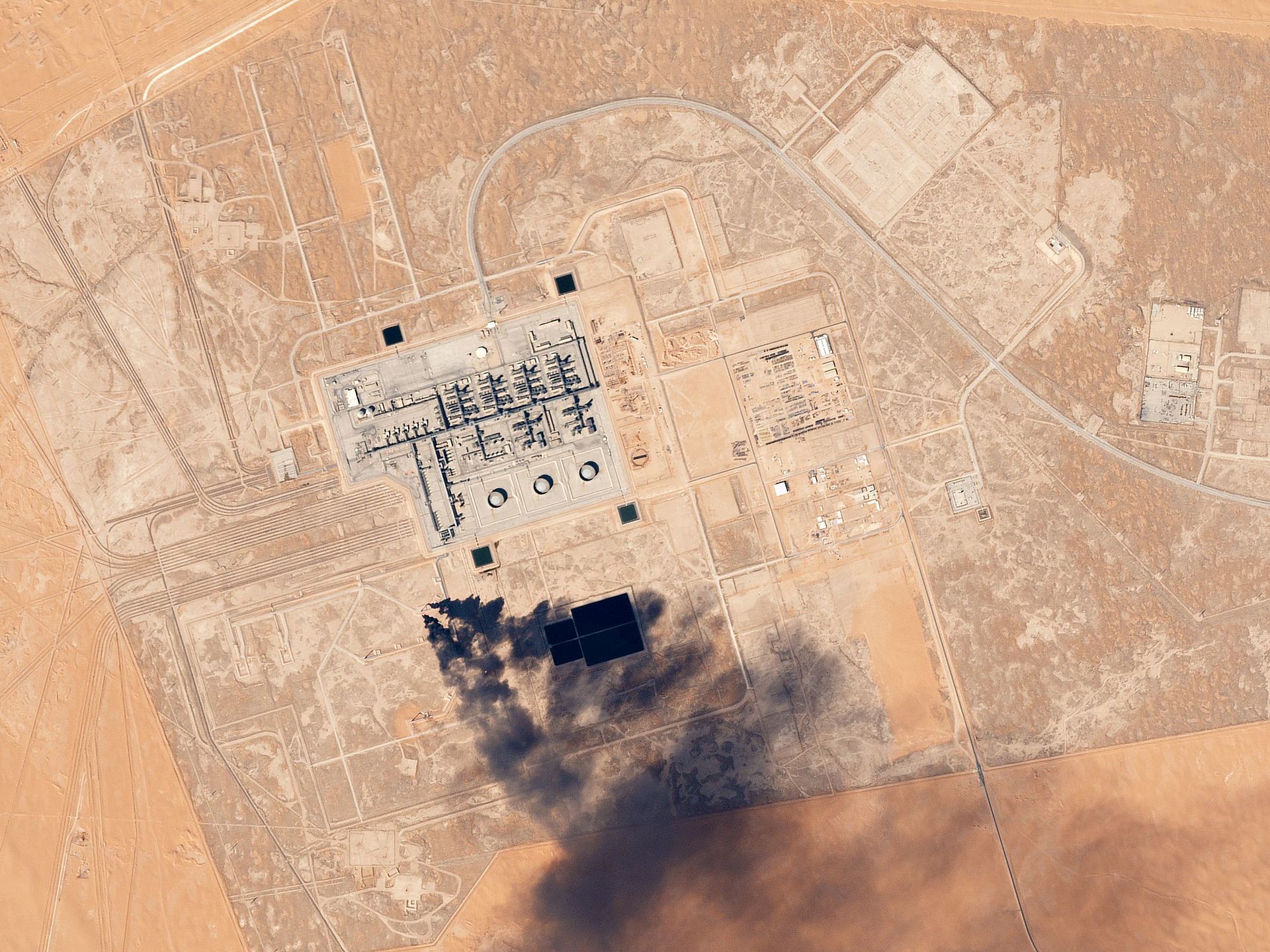
Saudi Arabia has intercepted 894 aerial threats — 799 drones and 95 ballistic missiles — between March 3 and April 7, an average of 23.5 intercepts per day. At $3.9 million per round, the implied expenditure exceeds $3.49 billion in 38 days. The IRGC’s “Zolfaqari declaration” of April 7 — “all restraint removed” — preceded the ceasefire by hours, signaling that the doctrine framework explicitly anticipated a post-ceasefire resumption phase. The cost-imposition campaign is designed to continue through and beyond any diplomatic pause.
IRGC strategic communications reviewed by Gulf security analysts consistently frame the air campaign as a war of attrition against Saudi air defense infrastructure — not territorial seizure, not regime change, not even sustained physical destruction of Saudi industrial capacity. The $9 billion PAC-3 sale, in this framework, is not a counter to the IRGC doctrine. It is confirmation that the doctrine is working. The sale announcement effectively broadcast to Tehran that the cupboard is approaching bare, and that Washington’s response is a promissory note redeemable in 2028.
Can Saudi Arabia Defend Hajj with 400 Rounds?
No. At the pre-ceasefire interception rate of 23.5 threats per day, 400 PAC-3 MSE rounds provide approximately 17 days of coverage. If hostilities resume when the ceasefire expires on April 22, the stockpile reaches zero around May 9 — seventeen days before the Hajj peak on May 26, when 1.8 million pilgrims gather on the plain of Arafat.
The Hajj timeline compresses that arithmetic into a crisis with no exit. The ceasefire expires April 22. Pilgrims from Pakistan, numbering 119,000, begin arriving April 18 — four days before the ceasefire lapses. Indonesia’s 221,000 pilgrims depart on April 22 itself. The Day of Arafah places all of them on an open plain 20 kilometers southeast of Mecca with no hardened shelter.
At the current Camden production rate of 620 rounds per year, the facility can produce approximately 100 PAC-3 MSE rounds between now and the Hajj peak. Even if every single round produced in that window were diverted exclusively to Saudi Arabia — an impossibility given competing U.S. military and allied commitments — the Kingdom would add only 100 rounds to its stockpile of 400. Five hundred PAC-3 MSE rounds against an adversary running combined drone-and-missile salvos at 23.5 intercepts per day.
The arithmetic is unforgiving. Even at half the pre-ceasefire attack tempo, the stockpile would be exhausted by approximately May 26 itself — the Hajj peak. There is no buffer.

The THAAD system provides a partial backstop against ballistic threats but faces its own depletion curve. The global THAAD interceptor stockpile stood at 534 rounds before the war, according to CSIS. The current conflict has consumed approximately 215 THAAD rounds over four weeks. Lockheed Martin signed a contract in January 2026 to quadruple THAAD production from 96 to 400 rounds per year, but that expansion — like the PAC-3 surge — is measured in years, not months.
The Custodian of the Two Holy Mosques title is not merely ceremonial. It is the foundational legitimacy claim of the Saudi monarchy, and it carries an implicit security guarantee to every Muslim-majority nation that sends pilgrims. The 1987 Mecca incident — in which 402 people died during confrontations between Iranian pilgrims and Saudi security forces — led to a three-year Iranian boycott and an 87% reduction in Iran’s Hajj quota. That crisis unfolded in a pre-missile era. The 2026 vulnerability is qualitatively different: the same gathering now falls within range of an adversary that has already demonstrated the ability to strike Saudi population centers with ballistic missiles, with no interceptor stockpile sufficient to last until the pilgrims depart.
Why Was Saudi Arabia Excluded from the $16.5 Billion Emergency Package?
In March 2026, Secretary of State Rubio invoked emergency waiver authority to fast-track $16.5 billion in arms transfers to Gulf states. The allocation: $8.4 billion to the UAE, approximately $8 billion to Kuwait, and $70.5 million to Jordan, according to Al-Monitor and Al Jazeera reporting. Saudi Arabia — the state absorbing the heaviest sustained aerial assault in the war — received nothing from the emergency tranche.
The exclusion reflects a structural political constraint, not a military judgment. Congressional opposition to Saudi arms sales, rooted in the Yemen war–era restrictions and reinforced by bipartisan skepticism of the Kingdom’s human rights record, has made Saudi Arabia the most politically expensive arms customer in the FMS system. The UAE and Kuwait face no comparable congressional friction. Jordan — a treaty ally with deep institutional ties to the Pentagon — faces none at all.
The $9 billion PAC-3 notification, announced one month before the war began, was the last major Saudi arms authorization to clear the political window. It was approved under peacetime conditions, before the interceptor crisis materialized. Once the war began, the political calculus shifted: emergency waivers to Saudi Arabia would have triggered immediate congressional challenges, oversight hearings, and potential legislative blocks. The path of least political resistance ran through Abu Dhabi and Kuwait City, not Riyadh.
The result is a paradox in which Saudi Arabia bears the heaviest defensive burden in the conflict — hosting the air bases, absorbing the retaliatory strikes, depleting its interceptor stockpile at unsustainable rates — while receiving the least emergency resupply among major Gulf partners. The compliance-without-protection trap is structural: Saudi Arabia’s decision to host U.S. forces and permit offensive operations from its territory made it the IRGC’s primary retaliation target, but Washington’s domestic political constraints prevent it from being the primary resupply recipient.
The Defense Localization Mirage
Saudi Arabia’s defense localization rate stood at 24.89% by the end of 2024, against the Vision 2030 target of 50%, according to Breaking Defense reporting on the Saudi Arabian Military Industries portfolio. The gap between aspiration and reality is nowhere more acute than in air defense. Lockheed Martin’s only manufacturing presence in Saudi Arabia as of February 2026 is a command-and-control software factory — no missile production, no interceptor assembly, no seeker head fabrication, no solid rocket motor capability.
The absence of in-Kingdom production capacity means that every PAC-3 MSE round Saudi Arabia fires must traverse the same supply chain: Camden assembly, U.S. government export licensing, military airlift or sealift, and in-country integration. Each step introduces delay. Each step is subject to political, logistical, and industrial constraints outside Riyadh’s control.
The $202.8 million contract Lockheed Martin received from the U.S. Army on January 22, 2026, illustrates a parallel constraint. That contract covers inspection, recertification, and repair of existing PAC-3 interceptors — not new production. The work runs through June 30, 2028. The existence of a dedicated recertification program signals that the U.S. military is extending the service life of aging interceptors rather than replacing them with new builds — a maintenance triage posture, not a surge production posture.
The broader Gulf defense industrial picture offers no near-term alternative. No GCC state produces a Patriot-class interceptor. No regional facility can manufacture the Ka-band seeker, the solid rocket motor, or the hit-to-kill guidance system that defines the PAC-3 MSE. The SAMI localization program has delivered indigenous production of armored vehicles, small arms, and some naval systems — capabilities that are irrelevant to the specific crisis of interceptor depletion.
What $9 Billion Actually Bought
The $9 billion PAC-3 MSE sale bought time — but not the kind measured in interceptor deliveries. It bought political time for an American administration that needed to demonstrate commitment to Saudi security without delivering hardware that would trigger a congressional fight. It bought diplomatic time for Riyadh, which can point to the sale as evidence that the American security partnership remains functional even as the interceptor stockpile approaches exhaustion. And it bought strategic time for Iran, which can read the sale notification as confirmation that the Kingdom’s air defense crisis will persist for at least 18 months regardless of what Washington announces.
The structural mismatch is not fixable by any single sale, however large. The U.S. Army raised its total PAC-3 MSE procurement objective from 3,376 to 13,773 interceptors, according to CSIS — a fourfold increase that reflects wartime demand assessment but not wartime production capacity. The defense industrial base that took a decade to ramp from 270 to 620 rounds per year cannot reach 2,000 per year by 2030 without sustained, funded congressional commitment that has not yet materialized.
The IRGC’s doctrine does not require patience. It requires only that the cost of interception exceeds the cost of attack, that the rate of expenditure exceeds the rate of replenishment, and that the political constraints on resupply remain intact. All three conditions are currently met. The ceasefire provides a pause, not a solution. If hostilities resume after April 22, Saudi Arabia will face them with a stockpile that has not meaningfully grown since the ceasefire began — because the production line that would replenish it is physically incapable of doing so at the required rate.
The broader strategic architecture compounds the vulnerability. Lebanon remains Iran’s leverage instrument against any Saudi oil recovery scenario. The Hormuz Strait operates under an IRGC-administered fee regime that the ceasefire did not dismantle. Phase 2 negotiations — which would address both Hormuz sovereignty and Iran’s enrichment program — have no start date, no framework, and no enforcement mechanism. Saudi Arabia enters this phase with 400 interceptors, a queue position that places it behind the U.S. Army and a dozen allied nations, and a $9 billion purchase order that confirms the scale of the problem without providing the means to solve it.
Nine billion dollars is a large number. It is large enough to dominate a headline, large enough to reassure a domestic audience, and large enough to sustain the appearance of an active defense partnership. It is not large enough to build a second Camden. It is not large enough to move Saudi Arabia to the front of a queue that the U.S. Army itself occupies. And it is not large enough to produce a single interceptor one day faster than the laws of industrial physics allow.
Frequently Asked Questions
When will Saudi Arabia receive the first PAC-3 MSE interceptors from the $9 billion sale?
The DSCA notification triggers a negotiation phase, not a production order. Saudi Arabia must first sign a Letter of Offer and Acceptance — a formal bilateral contract — before a single interceptor enters the manufacturing queue. That LOA process typically takes six to eighteen months for a sale of this complexity. Only after LOA signing does Lockheed Martin slot the order into Camden’s schedule, subject to queue position behind existing U.S. Army and allied contracts already in production.
Could the United States redirect interceptors from other allies to Saudi Arabia on an emergency basis?
The only public attempt — Washington’s March 31 request for Poland to transfer a Patriot battery — was rejected outright. NATO’s eastern flank states view their PAC-3 inventories as existential given Russian ballistic missile threats to their own territory. Taiwan’s delivery contract carries explicit DSCA priority designation dating to 2023. Emergency diversion would require presidential drawdown authority and would generate immediate backlash from the affected ally’s government and Congress.
Is Saudi Arabia pursuing alternative air defense systems outside the U.S. supply chain?
The UK deployed a Sky Sabre short-range air defense battery to Saudi Arabia in late March 2026 with an effective ceiling of approximately 8 kilometers — useful against low-altitude drones but incapable of engaging ballistic missiles at 40+ kilometer altitudes. South Korea’s KM-SAM and Turkey’s HISAR-O+ are mid-tier systems that do not replicate PAC-3 MSE’s hit-to-kill capability against ballistic targets. No non-American system currently in production matches the PAC-3 MSE’s terminal ballistic missile defense capability.
How does the PAC-3 MSE production bottleneck affect the U.S. military’s own readiness?
The U.S. Army’s September 2025 contract for 1,970 PAC-3 MSEs acknowledged a readiness gap that predated the Gulf war. With global production at 620 rounds per year and the Army’s own order consuming roughly three years of output, every allied sale directly competes with American military requirements. The CSIS “Depleting Missile Defense Interceptor Inventory” assessment found the U.S. military’s own PAC-3 stocks were already below operational planning targets before the first Shahed-136 crossed the Gulf. That readiness deficit now intersects with a statutory deadline: the War Powers clock expires April 29 — seven days after the ceasefire — leaving Congress as the actor that could terminate US crew authorisation to operate the batteries before the Hajj peak. Saudi Arabia’s inability to manufacture its own interceptors is inseparable from its defense localization rate of 24.89% — half the Vision 2030 target — a gap the PAC-3 crisis has made tactically consequential.