RIYADH — Iran has blown up the only diplomatic exit that Saudi Arabia actually controlled. Islamabad’s mediation channel — assembled by Riyadh across six weeks of shuttle diplomacy with Pakistan, Turkey, and Egypt — collapsed on April 3 when Tehran formally told intermediaries it would not send officials to talks, leaving the Kingdom stranded between a war it cannot stop and a Trump ultimatum that expires in hours.
The loss is not abstract. On March 29, Saudi Arabia publicly endorsed Pakistan as the venue and facilitator for what was supposed to be the ceasefire framework — the architecture through which Riyadh would convert wartime exposure into postwar authorship. Pakistani Foreign Minister Ishaq Dar announced talks were imminent, and eight foreign ministers issued a joint statement on April 2 demanding GCC participation in any Iran settlement. Three days later, every element of that framework is dead, and the Kingdom faces the April 6 deadline with no functional channel to Tehran, no seat at the negotiating table that doesn’t exist, and no way to shape whatever comes next.
On Day 36 of a war that has sent over 500 ballistic missiles and 2,000 drones into GCC territory, Saudi Arabia’s diplomatic strategy has been reduced to back-channel phone calls and hoping Donald Trump doesn’t follow through on his threat to destroy Iran’s desalination plants. The country that engineered the mediation coalition now has no mediation to show for it.
Table of Contents
- What Was the Pakistan Channel — and Why Did Saudi Arabia Need It?
- How Iran Killed the Talks Without Saying No
- Iran’s Five Conditions and the Structural Impossibility of a Deal
- The Saudi Credibility Gap: Mediator or Belligerent?
- Why Are There No Alternative Channels Left?
- The Trump Deadline and What Happens After April 6
- The Eight-Minister Statement That Died in 72 Hours
- What Does Saudi Arabia Lose If It Has No Role in the Endgame?
- Frequently Asked Questions
What Was the Pakistan Channel — and Why Did Saudi Arabia Need It?
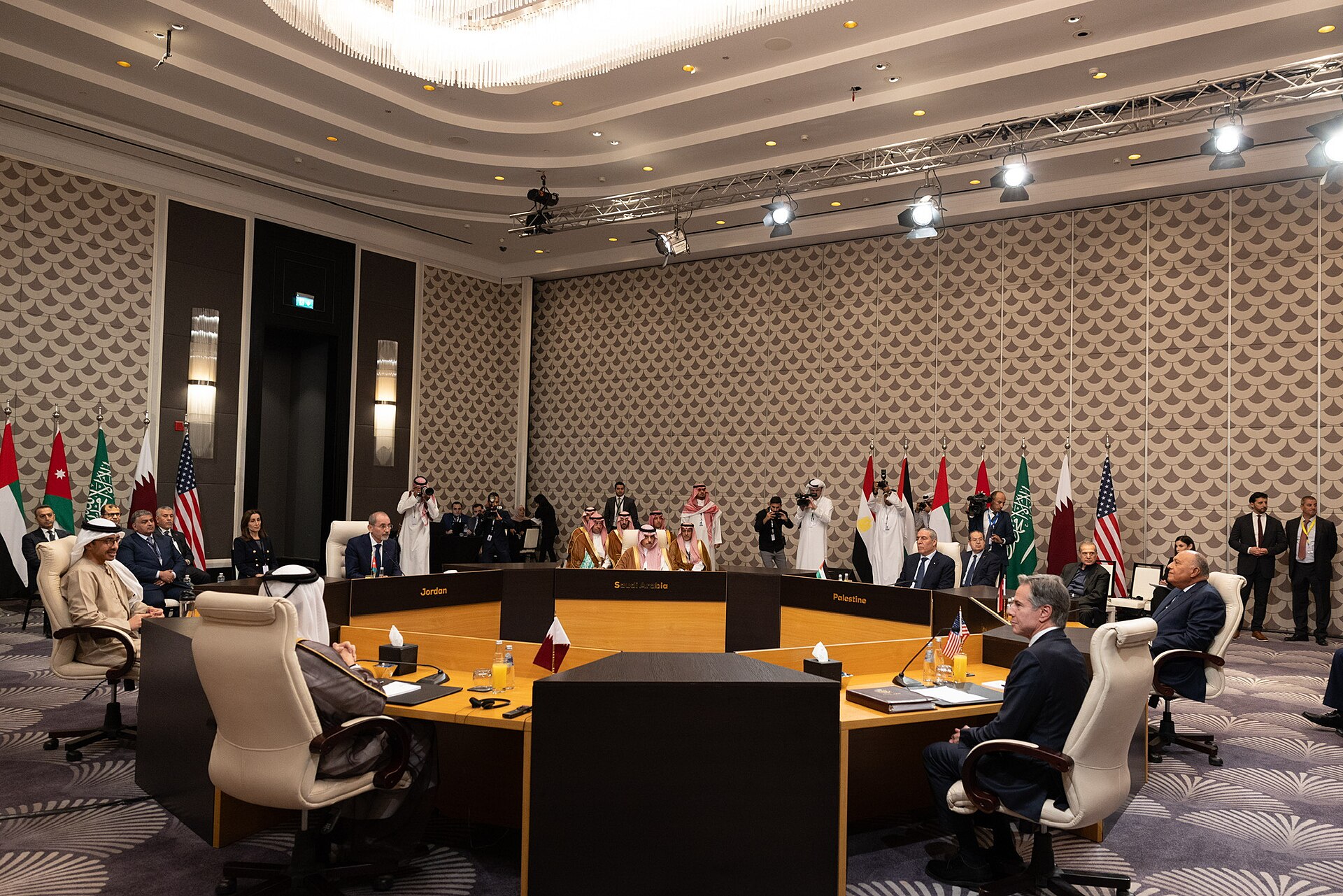
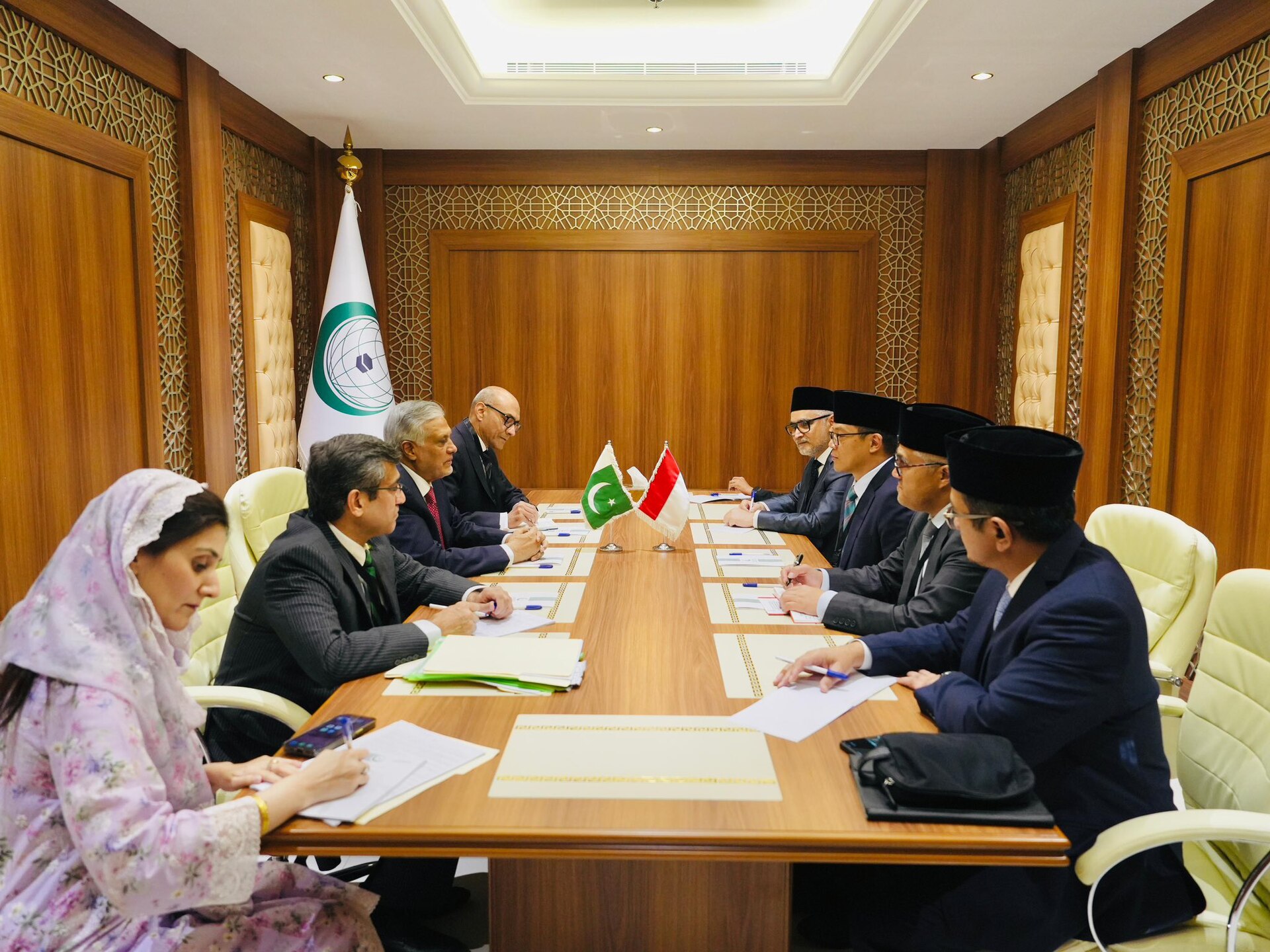
The Islamabad channel was never just about finding a venue for talks. It was Saudi Arabia’s attempt to position itself as the indispensable broker in a war where it is simultaneously a target, an alleged instigator, and a country whose $111-per-barrel budget breakeven price makes prolonged conflict existentially expensive. The quadrilateral foreign ministers’ meeting on March 29 — Pakistan, Saudi Arabia, Turkey, Egypt — was the public face of a strategy that Riyadh had been engineering since mid-March: build a coalition of Sunni-majority states with enough combined credibility in Tehran and Washington to force both sides into a room.
Pakistan was the linchpin for a specific reason. As Pakistani journalist Fahd Husain told the Christian Science Monitor on March 30: “Pakistan is the only country that has direct access to both the American leadership and the Iranian leadership… and a level of trust which no other country enjoys.” That trust, such as it was, came with an asterisk the size of the Arabian Peninsula. On September 17, 2025, Pakistan and Saudi Arabia signed a Strategic Mutual Defence Agreement with an Article 5-style clause stipulating that aggression against either nation would be considered aggression against both. Between 1,500 and 2,000 Pakistani troops are stationed in Saudi Arabia right now.
FM Dar personally reminded Iran’s foreign minister of this defence pact during shuttle diplomacy, a detail that tells you everything about the structural contradiction at the heart of the channel. Pakistan was asking Tehran to trust a mediator that is contractually obligated to treat an attack on Saudi Arabia as an attack on itself. Umer Karim of the King Faisal Center for Research framed the stakes in blunter terms: “Perhaps this is the last time the Saudis will test Pakistan, and if Pakistan doesn’t fulfil its commitments now, the relationship will be irreversibly damaged.”
Riyadh needed this specific channel because the alternatives had already failed or declined. Oman hosted the last viable indirect talks on February 6 — Abbas Araghchi on one side, Steve Witkoff and Jared Kushner on the other — and the second round agreed in principle never materialised. After US strikes began, Omani FM Badr al-Busaidi publicly criticised Washington for undermining “active and serious negotiations,” effectively burning Muscat’s utility as a neutral venue. The Pakistan channel was supposed to replace what Oman could no longer provide.
How Iran Killed the Talks Without Saying No
Iran’s diplomatic manoeuvre on April 3-4 was a masterclass in rejection without refusal. The Wall Street Journal reported on April 3 that Iran had “officially informed mediators that it will not meet US officials in Islamabad in the coming days” and that “Washington’s demands remain unacceptable.” Tehran also rejected a proposed 48-hour truce floated through the channel. The Islamabad track, barely a week old as a public framework, was finished.
Then Araghchi executed the second half of the play. On April 4, he publicly contradicted the WSJ framing: “We are deeply grateful to Pakistan for its efforts and have never refused to go to Islamabad.” Read the full sentence and the sleight of hand is obvious — he thanked the host while ignoring the purpose. In the same statement, he laid down a condition that no mediator could meet: not a ceasefire, not a truce, but “a conclusive and lasting END to the illegal war that is imposed on us.” Iran’s FM spokesperson Esmail Baghaei went further, characterising direct US talks as nonexistent — only “intermediary communications delivering unacceptable conditions.”
This is not a negotiating position; it is the absence of one. Araghchi has been explicit about the trust deficit since at least April 1, when he told Al Jazeera: “I receive messages from Witkoff directly, as before, and this does not mean that we are in negotiations… We do not have any faith that negotiations with the US will yield any results. The trust level is at zero.” A country that says trust is at zero and demands the permanent end of a war as the precondition for discussing the end of a war is not a country that is going to show up in Islamabad or anywhere else.
Iranian media offered a darker explanation for the refusal. NewsX reported that Tehran characterised the Islamabad proposal as potentially a “trap to kill Iranian officials” — a security concern grounded in the fact that Pakistan is formally allied with Saudi Arabia through the September 2025 defence pact. Whether this fear is genuine or performative, it poisons the venue permanently. You cannot host peace talks in a country that one side believes might assassinate its delegation.
I receive messages from Witkoff directly, as before, and this does not mean that we are in negotiations… We do not have any faith that negotiations with the US will yield any results. The trust level is at zero.
— Abbas Araghchi, Iranian Foreign Minister, Al Jazeera, April 1, 2026
Iran’s Five Conditions and the Structural Impossibility of a Deal
On March 25, PressTV published Iran’s five conditions for any settlement: a complete halt to US and Israeli attacks; concrete mechanisms preventing the reimposition of war; guaranteed payment of war reparations; an end to hostilities on all fronts including all resistance groups; and international recognition of Iran’s sovereign authority over the Strait of Hormuz. The US 15-point proposal that preceded these conditions was rejected by Tehran as a “ploy to heighten tensions,” according to Middle East Eye reporting from the same week.
The fifth condition is the one that makes everything else irrelevant. Trump’s stated precondition for any deal is that the Strait of Hormuz must be “open, free, and clear.” On April 2, GCC Secretary General Jasem Mohamed Albudaiwi told the UN Security Council that the Council should authorise “the use of all available and necessary means to protect navigation in the Strait of Hormuz.” Araghchi’s position, stated on April 1, is the precise inverse: “Only for the ships of those who are at war with us, this strait is closed.”
Iran is demanding sovereignty over the waterway as a condition for peace while the GCC is demanding international force authorisation to break that sovereignty, and Washington is demanding the strait be open as a precondition for even beginning talks. These three positions cannot coexist in the same sentence, let alone the same negotiating framework.
The Hormuz toll law moving through Iran’s parliament adds a legislative dimension that makes retreat harder for Tehran. War reparations — condition three — have no precedent in modern Middle Eastern conflict resolution and no mechanism for assessment or collection. The demand to end hostilities on all fronts including all resistance groups requires Iran to make commitments on behalf of Hezbollah, the Houthis, and Iraqi militias — entities it influences but does not command through a single chain of authority. Each condition alone would stall talks for months. Together, they constitute a rejection dressed as an opening bid.
The Saudi Credibility Gap: Mediator or Belligerent?
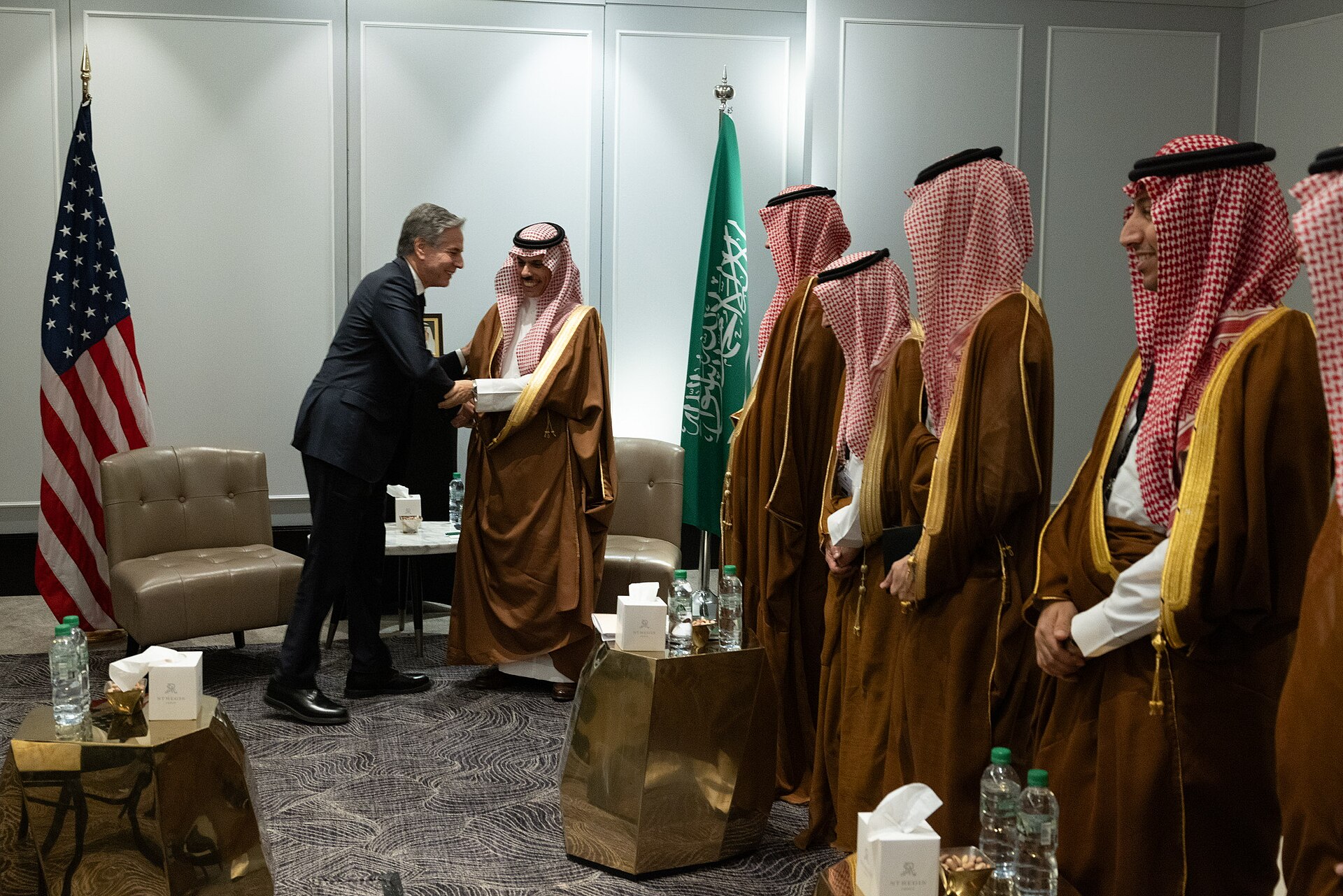
Saudi Arabia’s diplomatic problem is not just that the Pakistan channel collapsed. It is that Riyadh has spent the past six weeks simultaneously occupying positions that cannot be held by the same country. On March 19, FM Prince Faisal bin Farhan told Asharq Al-Awsat: “What little trust there was before has completely been shattered… if Iran doesn’t stop immediately, I think there will be almost nothing that can re-establish that trust.” Two days later, Saudi Arabia expelled five Iranian diplomats including the military attaché, giving them 24 hours to leave the country — described by the Jerusalem Post as a “diplomatic point of no return.”
One week after that expulsion, Riyadh endorsed Pakistan’s mediation and publicly backed Islamabad as the venue for talks with the country whose diplomats it had just thrown out. A senior Saudi foreign ministry official told the Christian Science Monitor on April 1 that “Saudi officials are also talking to Iran on a daily basis” and that “we have been encouraging a diplomatic solution even before the war.” Another Saudi insider quoted by the same outlet offered the harder line: “Saudi Arabia will not be held hostage by anyone; not Iran, not any other regional actor, now or in the future.”
The Washington Post reported that MBS had “multiple phone calls with Trump urging him to attack Iran” before the war started, and that Gulf allies are “privately urging Trump to keep prosecuting the war” until regime change. Saudi Arabia officially denied both claims. But the denial has to compete with the expulsion of Iranian diplomats, the defence pact with Pakistan, and the 36-hour decision window Riyadh gave itself before the April 6 deadline — none of which look like the behaviour of a country genuinely committed to diplomatic resolution.
Michael Ratney, former US Ambassador to Saudi Arabia, captured the bind in testimony to CSIS: Saudi Arabia will “have to live in the region and with its neighbors, long after President Trump has declared victory.” Saudi leaders, Ratney added, “have little confidence” the war will “decisively eliminate the Iranian threat.” Riyadh cannot simultaneously be the country that encouraged the war and the country that brokers the peace, and the collapse of the Pakistan channel removes the mechanism through which it might have squared that circle.
Why Are There No Alternative Channels Left?
The diplomatic wreckage extends well beyond Islamabad. Qatar, historically the primary bridge between Tehran and Washington — the channel that produced the JCPOA, that facilitated prisoner swaps, that hosted Hamas’s political bureau — explicitly declined a lead mediation role in this conflict. Haaretz reported on April 3 that Qatar told US officials it was “not keen on playing a central role in the mediation.” For Doha to walk away from the role it has cultivated for two decades tells you how toxic the current environment is. Turkey and Egypt were exploring Doha and Istanbul as alternative venues, according to Kurdistan 24, but neither has the bilateral trust with Tehran that the situation requires.
Oman is burnt. The February 6 talks in Muscat between Araghchi and the Witkoff-Kushner team were the last moment when diplomacy had genuine momentum, and the US strikes that followed destroyed Oman’s ability to guarantee outcomes. China and Pakistan jointly put forward a five-point proposal calling for cessation of hostilities and reopening the Strait of Hormuz — a plan that reached Riyadh but went nowhere in Washington. The Trump administration described its position on the Chinese proposal as “agnostic,” and former senior US diplomat Danny Russel dismissed Beijing’s efforts as “performative” — comparable to previous proposals “filled with platitudes but never acted on.”
Carnegie Endowment VP Marwan Muasher offered the structural diagnosis on April 1: the war has created “a fragmented diplomatic landscape, where no single actor appears to have both the credibility and the broad backing needed to bring the parties to the table.” That fragmentation is not an accident. It is the product of a conflict where every potential mediator is also a stakeholder — Pakistan through its defence pact, Qatar through its refusal, Oman through its public criticism of Washington, Turkey through its NATO obligations, China through its competition with Washington for Gulf influence. The 2023 China-brokered normalisation between Saudi Arabia and Iran is effectively dead. The expulsion of Iran’s military attaché in March killed whatever remained of that framework.
Saudi Arabia’s daily back-channel contacts with Tehran, confirmed by the Christian Science Monitor, are the only remaining thread. But back channels without a public framework to feed into are just phone calls. They cannot produce a ceasefire agreement, cannot guarantee implementation, and cannot give Riyadh the co-authorship of a settlement that the Pakistan channel was designed to deliver.
The Trump Deadline and What Happens After April 6
On April 4, Trump posted on Truth Social: “Time is running out — 48 hours before all Hell will reign down on them.” He threatened Iran’s power plants, oil facilities, and “possibly all desalination plants.” The deadline expires April 6 — tomorrow — and the collapse of the Pakistan channel means there is no diplomatic mechanism capable of producing the kind of concession that might satisfy Trump’s demands before the clock runs out. Gen. Ali Abdollahi Aliabadi of Iran’s central military command derided the ultimatum as a “helpless, nervous, unbalanced and stupid action,” which is not the language of a government preparing to make concessions.
For Saudi Arabia, the deadline creates a specific and immediate problem. If Trump escalates — strikes on power plants, expanded target lists, the kind of campaign he described — the Kingdom absorbs the retaliatory consequences through its geography. Riyadh has no channel through which to negotiate a pause, no framework to propose a ceasefire, and no partner in Tehran willing to pick up the phone for anything beyond the daily back-channel that cannot deliver outcomes.
Iranian President Masoud Pezeshkian told EU Council President Antonio Costa on March 31 that Iran has the “necessary will to end this conflict, provided that essential conditions are met, especially the guarantees required to prevent repetition of the aggression.” The gap between Pezeshkian’s framing — essential conditions, guarantees, prevention of repetition — and Trump’s framing — 48 hours, hell, desalination plants — is not a gap that diplomacy can bridge in the time remaining. It is not clear it is a gap diplomacy can bridge at all, but it certainly cannot be bridged without a venue, a mediator, and two parties willing to sit down, none of which currently exist.
The Eight-Minister Statement That Died in 72 Hours
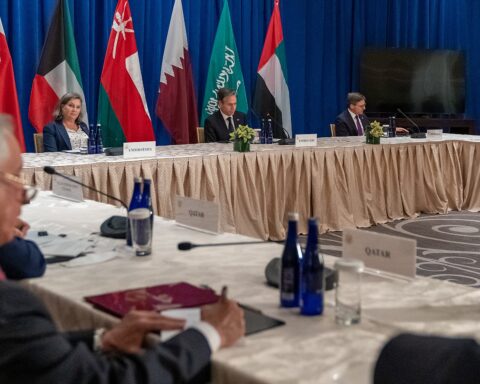
On April 2, foreign ministers from eight countries — Turkey, Egypt, Indonesia, Jordan, Pakistan, Qatar, Saudi Arabia, and the UAE — issued a joint statement that represented the broadest diplomatic coalition assembled since the war began. The same day, GCC Secretary General Albudaiwi briefed the UN Security Council, demanding a resolution authorising force to protect Hormuz navigation and insisting that GCC participation in Iran negotiations is “vital to enhancing regional security and stability.” The statement was supposed to demonstrate unified diplomatic weight — the combined pressure of the Islamic world’s largest economies and most capable militaries directed toward a negotiated settlement.
Within 72 hours, the framework behind that statement was in ruins. Iran rejected talks on April 3, and by April 4 Araghchi was publicly thanking Pakistan while privately maintaining conditions no mediator could satisfy. The eight-minister coalition had no fallback plan, no alternative venue, and no mechanism to compel Iranian participation. Qatar had already signalled its reluctance, and Pakistan’s structural conflict of interest was exposed.
The joint statement exists as a document but not as a diplomatic reality — a coalition of the willing with nothing to be willing about. The speed of the collapse reveals something about the coalition’s foundation: eight foreign ministers can issue a statement in a day, but building the bilateral trust required to bring Iran to a table takes months or years. Saudi Arabia tried to substitute breadth for depth — more countries, more signatures, more diplomatic mass — and Iran simply declined to be impressed.
The GCC’s UNSC demand for force authorisation may have accelerated the collapse by confirming Tehran’s suspicion that the coalition’s real purpose was coercion, not mediation. When you simultaneously ask the Security Council to authorise military force against a country and invite that country to sit down for peace talks through your allied mediator, the contradiction is visible from Tehran without a telescope.
| Diplomatic Channel | Status (April 5) | Reason for Collapse |
|---|---|---|
| Oman (Muscat indirect talks) | Dead | US strikes after Feb 6 talks; Oman publicly criticised Washington |
| Pakistan (Islamabad quadrilateral) | Dead | Iran refused April 3; Pakistan-Saudi defence pact destroyed neutrality |
| Qatar | Declined | Doha “not keen on playing a central role” |
| China-Pakistan five-point plan | Stalled | US “agnostic”; dismissed as “performative” |
| Saudi back-channel to Tehran | Active but limited | Daily contacts confirmed; no framework for outcomes |
| EU (Costa-Pezeshkian) | Marginal | Pezeshkian stated conditions; no US buy-in |
| Eight-minister coalition | Statement only | No venue, no Iranian participation, no enforcement |
What Does Saudi Arabia Lose If It Has No Role in the Endgame?
The Pakistan channel was not a humanitarian gesture. It was the mechanism through which Saudi Arabia intended to claim ownership of whatever settlement eventually emerges — to be the country that brokered the ceasefire, hosted the framework, and therefore earned a seat at the table where postwar security arrangements are designed. Without it, Riyadh faces a set of outcomes in which the war ends on terms negotiated by others, with Saudi interests represented only to the extent that Washington remembers to include them.
Max Becker-Hicks of the New Lines Institute wrote on April 1 that a postwar settlement without Gulf state security guarantees would “intensify Saudi Arabia’s diversification strategy” and create intelligence risks for US assets in the region. That is the polite version. The blunt version is that MBS has spent a decade positioning Saudi Arabia as the Middle East’s indispensable power — the Ukraine defence deal as a hedge against Washington, the PIF as a sovereign wealth instrument, the air defence acquisitions designed to reduce dependence on American systems. A war that ends with Riyadh on the sidelines of the settlement undoes the central narrative of the MBS era: that Saudi Arabia shapes events rather than absorbs them.
The financial exposure compounds the diplomatic failure. Saudi Arabia’s budget breakeven oil price sits at approximately $111 per barrel, and the oil weapon it cannot fire at Iran leaves Riyadh unable to use energy markets as either a weapon or a shield. Every week the war continues without a Saudi-brokered off-ramp is a week in which the Kingdom pays the costs of conflict — missile defence expenditure, infrastructure repair, economic disruption — without accumulating any of the diplomatic capital that a peace deal would provide. Pakistan was supposed to be the answer to that equation, converting wartime sacrifice into postwar standing. Now Riyadh has the sacrifice without the conversion mechanism.
The precedent problem runs deeper than this war. Saudi Arabia under MBS positioned itself as a global mediator — offering to host Ukraine peace talks, participating in Gaza negotiations, cultivating the image of a Kingdom that convenes rather than confronts. This is the first major conflict where Saudi Arabia is a party to the consequences rather than a neutral host, and the failure of its diplomatic strategy exposes the difference between hosting talks about other people’s wars and trying to broker a peace in your own. When Lavrov called Faisal, the agenda was not what Riyadh wanted to discuss — it was what Moscow wanted to extract. That dynamic defines the Kingdom’s position now: acted upon, not acting.
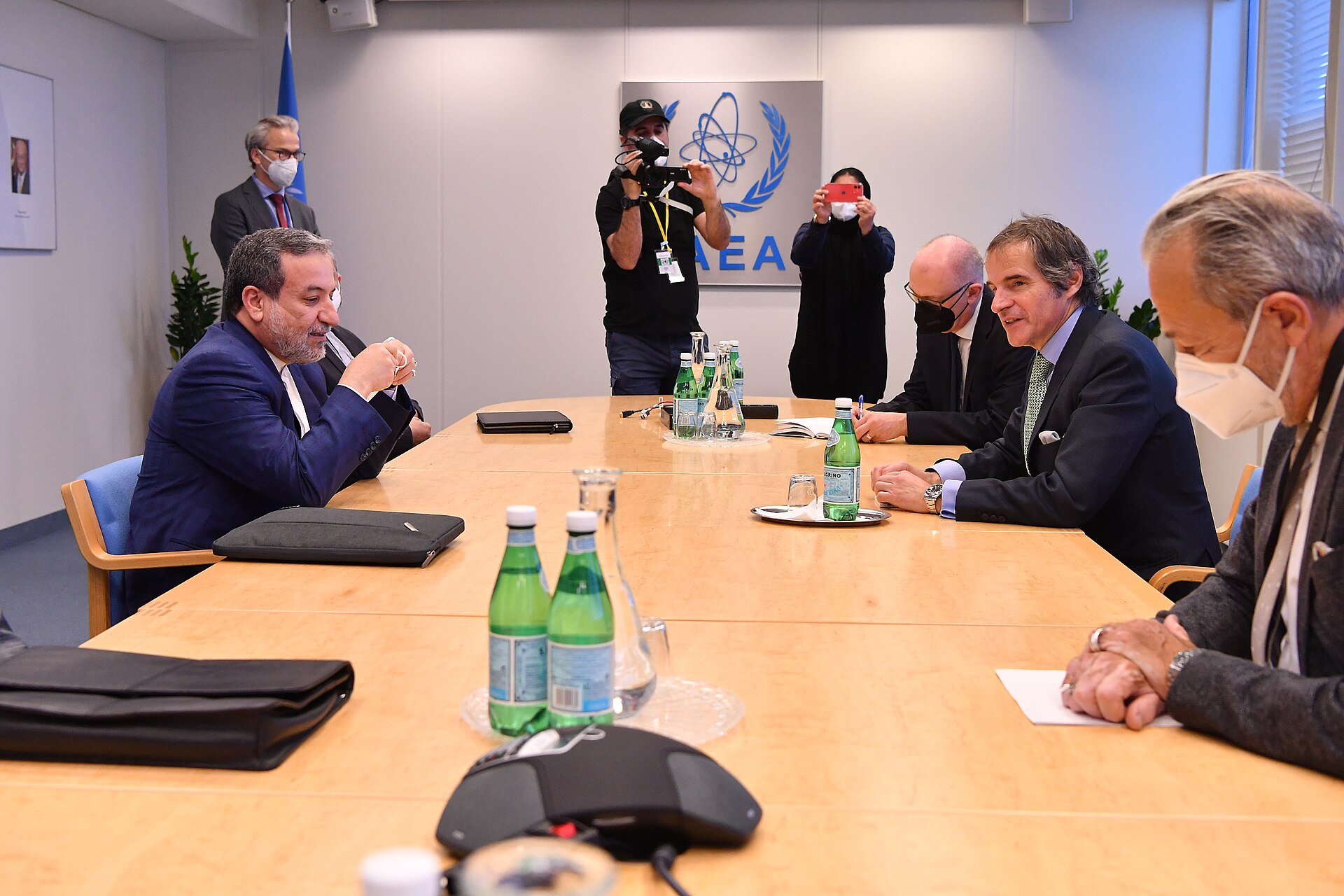
Pakistan’s 2015 precedent hangs over the entire relationship. When Saudi Arabia and the UAE launched their Yemen intervention, Pakistan’s parliament voted not to join — choosing domestic stability over alliance obligations despite intense Saudi pressure. The defence pact signed in September 2025 was supposed to ensure that would never happen again, but the collapse of the Islamabad mediation channel reveals a different kind of failure: not that Pakistan refused to fight, but that Pakistan’s alliance with Saudi Arabia made it impossible for Islamabad to serve as a neutral mediator.
The pact that was supposed to guarantee military solidarity destroyed diplomatic utility instead. The move may have been intended as reassurance but functioned as confirmation of everything Tehran suspected about Pakistan’s neutrality. The September 2025 agreement gave Riyadh a military ally and cost it the only mediator that both sides might have trusted.
Phones will ring, messages will pass, and unnamed officials will tell reporters that diplomatic efforts are ongoing. But the distance between a phone call and a ceasefire framework is measured in months of institutional construction, and Saudi Arabia has neither the months nor the institutions.
The eight-minister coalition produced a statement, the Pakistan channel produced a venue announcement, Iran produced a refusal, and Trump produced a 48-hour deadline that expires tomorrow. After April 6, the diplomatic environment that Riyadh spent six weeks trying to construct will be replaced by whatever environment emerges from the next round of escalation — an environment in which Saudi Arabia’s role will be determined not by its diplomacy but by its geography.
That diplomatic construction included a move that has gone largely unanalyzed: on April 2 — the same day Pakistan’s channel was collapsing — Riyadh held simultaneous calls with Moscow, Beijing, and Tokyo, a coordinated great-power outreach examined in Riyadh Called Moscow, Beijing, and Tokyo on the Same Day. That Was the Point.
Frequently Asked Questions
Could Turkey or Egypt replace Pakistan as the primary mediator?
Turkey and Egypt were exploring Doha and Istanbul as alternative venues as of April 3, according to Kurdistan 24, but neither country has the bilateral access to both Tehran and Washington that made Pakistan viable in the first place. Turkey’s NATO membership creates a structural issue similar to Pakistan’s Saudi defence pact — Iran views NATO-aligned states as parties to the conflict rather than neutral facilitators. Egypt’s relationship with Tehran has been limited since 1979, and Cairo’s participation in the eight-minister statement aligned it publicly with the GCC position. Any replacement mediator would need to rebuild from scratch the trust architecture that took Pakistan decades to develop, and would need to do so while missiles are still flying.
What would Iran’s war reparations demand actually require in practice?
Iran’s third condition for any settlement demands “guaranteed payment of war reparations,” but no modern Middle Eastern conflict has produced a reparations settlement, and no mechanism currently exists for assessing the scale of damage or compelling collection. The closest precedent — UN Compensation Commission claims from the 1991 Gulf War — took 30 years to process. Any reparations framework would require agreement on who owes what, a payments architecture immune to sanctions, and an international body willing to adjudicate against a US-backed coalition. Iran’s government understands this is not achievable in any negotiating window currently on offer, which is one reason the condition functions less as a demand and more as a structural reason to remain at war.
Has Pakistan’s defence pact with Saudi Arabia affected its other regional relationships?
The September 2025 Strategic Mutual Defence Agreement, with its Article 5-style clause treating aggression against either nation as aggression against both, placed Pakistan in a position where its military obligations and its mediator aspirations were in direct tension. Iran reportedly viewed the Islamabad venue with security concerns, characterising it as a potential “trap” given Pakistan’s treaty obligations. The pact also complicates Pakistan’s relationship with Iran along their shared 959-kilometre border in Balochistan, where cross-border security cooperation has historically required careful bilateral management. Islamabad’s calculation appears to be that the Saudi relationship — backed by substantial financial support and energy concessions — outweighs the diplomatic cost of reduced credibility in Tehran, though the mediation failure suggests that calculation may need revisiting.
What specific retaliatory risks does Saudi Arabia face if the Trump deadline triggers escalation?
Since February 28, over 500 ballistic missiles and 2,000 UAVs have struck GCC infrastructure, according to the New Lines Institute. Saudi Arabia’s eastern oil facilities, desalination plants supplying approximately 70 percent of the Kingdom’s drinking water, and NEOM construction sites along the Red Sea coast all fall within range of Iranian ballistic missiles and drone systems. Aramco’s Abqaiq processing facility — which handles roughly half of Saudi crude output — was already targeted in the 2019 attack that temporarily knocked out 5.7 million barrels per day of production. An escalation following the April 6 deadline would likely produce intensified targeting of energy infrastructure and potentially the first direct strikes on Riyadh, moving the war from the periphery to the capital in a way that no diplomatic channel currently exists to prevent or mitigate. The de-escalation that materialized instead — with Trump shelving his April 6 ultimatum after Iran acknowledged the US message via Pakistan — is documented in the third postponement of the Hormuz deadline. Why the Islamabad channel failed even before Iran’s formal refusal — including two aborted Vance flights and Saudi Arabia’s structural role as the hidden architect — is examined in the near-miss that reveals how close direct talks came.