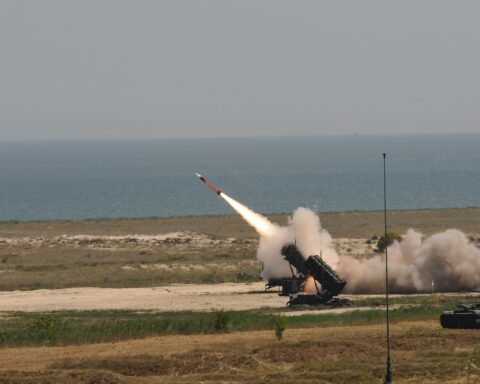
JEDDAH — A Ukrainian interceptor drone costs between $1,000 and $2,500. A Patriot PAC-3 MSE missile costs $13.5 million. On March 27, Saudi Arabia signed a ten-year defense cooperation agreement with Ukraine that is, at its core, a bet that the cheaper option can do enough of the expensive option’s job to free the Kingdom from a dependency that nearly left it defenseless five weeks into a shooting war.
The memorandum of understanding, signed by Khalid Al-Bayari and Lieutenant General Andriy Hnatov in the presence of Mohammed bin Salman and Volodymyr Zelenskyy, covers joint defense industry projects, co-production facilities on Saudi soil, and the deployment of Ukrainian specialists in-country. It is not a weapons contract. No purchase orders were placed. No delivery schedules were set.
What was signed is a structured framework — Zelenskyy called it a “foundation for future contracts, technological cooperation, and investment” — that gives both sides permission to build something neither could build alone. For Ukraine, that something is an export revenue stream to fund its own war. For Saudi Arabia, it is an air defense supply chain that does not run through the US Congress, does not depend on Lockheed Martin’s production line, and does not come with conditions about how or against whom the weapons may be used. The deal is a hedge, not a replacement. But the fact that Riyadh needs a hedge at all tells you everything about where MBS’s defense strategy is heading.
Table of Contents
- The Interceptor Math That Forced the Deal
- What Does Ukraine Actually Offer Saudi Arabia?
- The Barter: What Ukraine Gets in Return
- Why Does Saudi Arabia Want ITAR-Free Air Defense?
- An MOU, Not a Contract — And the Export Ban Problem
- The Shershen Philosophy: Kill the Lock-In
- Two Tracks Running: F-35s and Ukrainian Drones
- Can Ukrainian Co-Production Fix Saudi Arabia’s Localization Gap?
- The Cost-Per-Kill Table
- How Much Demand Is There Across the Gulf?
- Frequently Asked Questions
The Interceptor Math That Forced the Deal
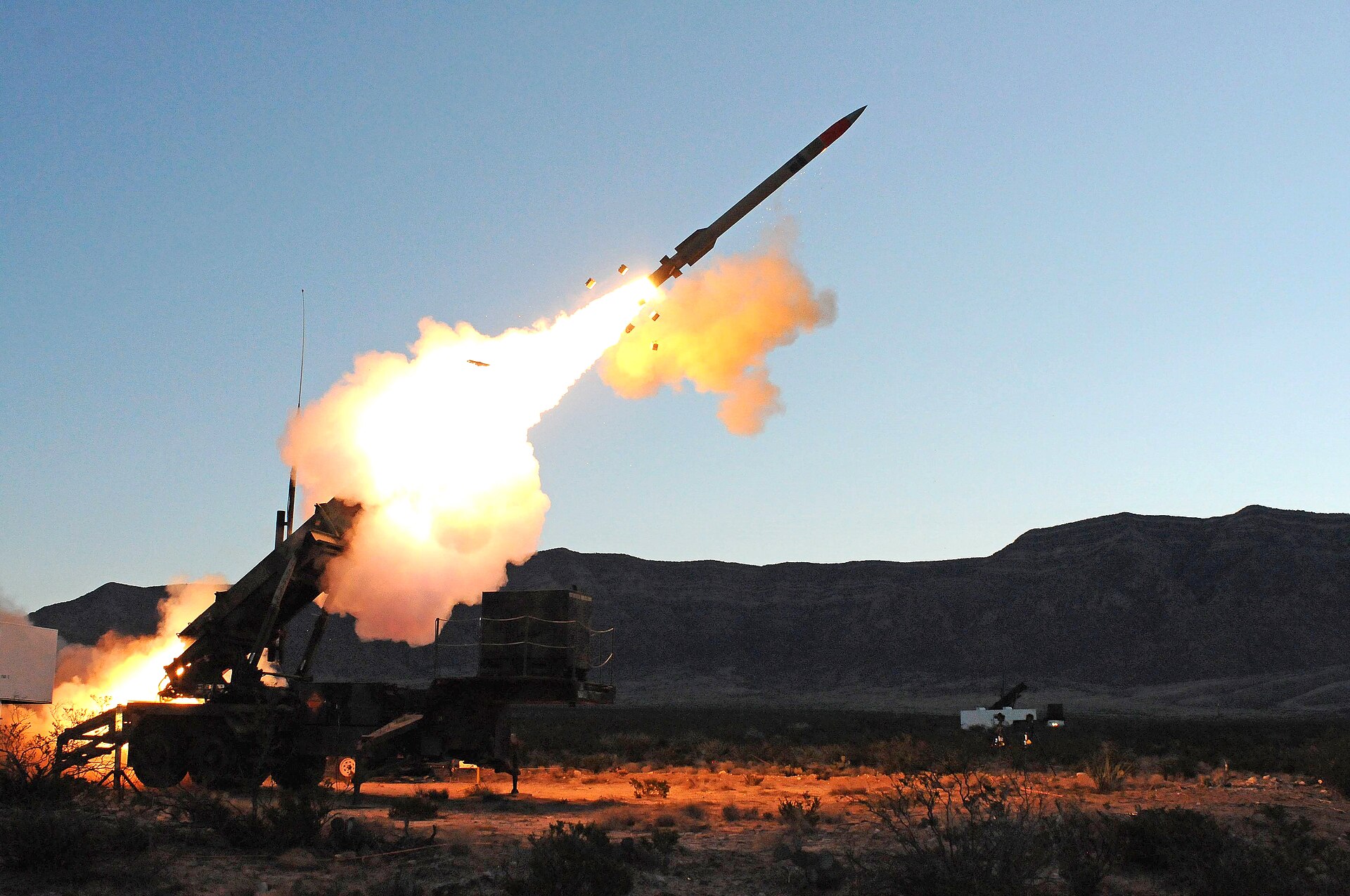
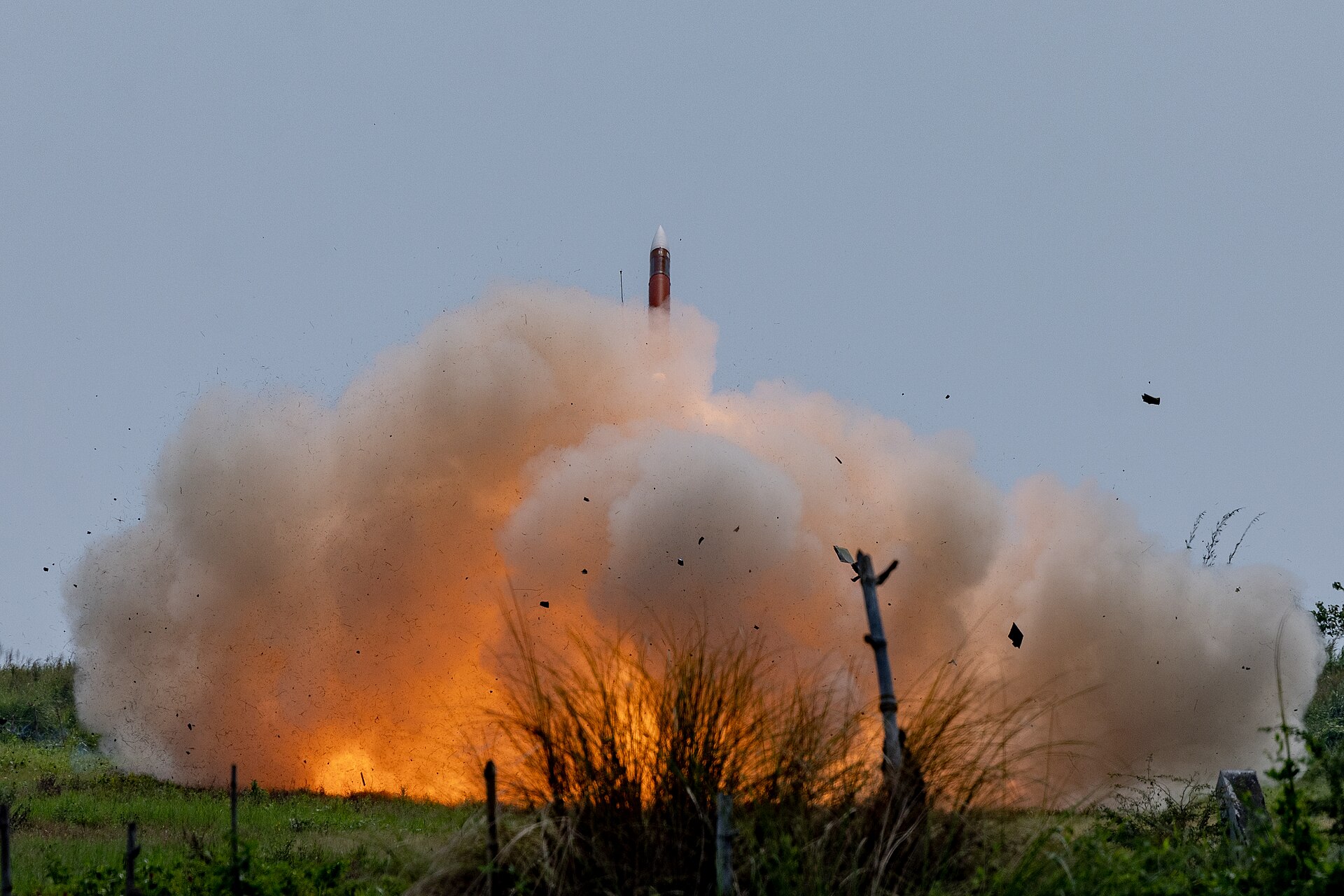
The GCC entered the Iran war on February 28, 2026, with approximately 2,800 Patriot PAC-3 interceptors spread across six countries. Within three days, Gulf states had fired more than 800 of them — exceeding Lockheed Martin’s entire 2025 annual production of roughly 650 units in 72 hours of combat. By the time Al-Bayari and Hnatov sat down in Jeddah four weeks later, the combined GCC stockpile had been drawn down to approximately 400 rounds. Bahrain had burned through 87 percent of its inventory. Even Qatar, the most conservative spender in the coalition, had used 40 percent.
These numbers expose a structural problem that no single arms sale can fix. The United States approved a $9 billion sale of 730 PAC-3 MSE interceptors to Saudi Arabia on January 30, 2026 — one month before the war began. Lockheed Martin produces around 650 interceptors per year at current capacity, with a target of 2,000 per year that the company itself says is not achievable until 2030. The approved Saudi sale, if it were the only order in the pipeline, would consume more than a full year of production.
It is not the only order in the pipeline. As RUSI Senior Research Fellow Ed Arnold noted, Ukraine itself currently ranks “at the bottom” of US allocation priorities for Patriot interceptors, behind Middle East operations and Taiwan requirements. Everyone is in the same queue, and the queue is years long.
The Middle East briefing 3,000+ readers start their day with.
One email. Every weekday morning. Free.
Iran understood this constraint before anyone in Riyadh was willing to say it publicly. Tehran’s strategy was never to overwhelm Saudi air defenses with precision; it was to exhaust them through volume. When each incoming threat costs $50,000 to build and $13.5 million to intercept, the attacker wins the exchange rate every time, even when every shot misses. The interceptor math does not require Saudi Arabia to lose a single engagement to lose the war — it only requires the Kingdom to run out of ammunition before Iran runs out of drones. That arithmetic is what brought Zelenskyy to Jeddah.
What Does Ukraine Actually Offer Saudi Arabia?
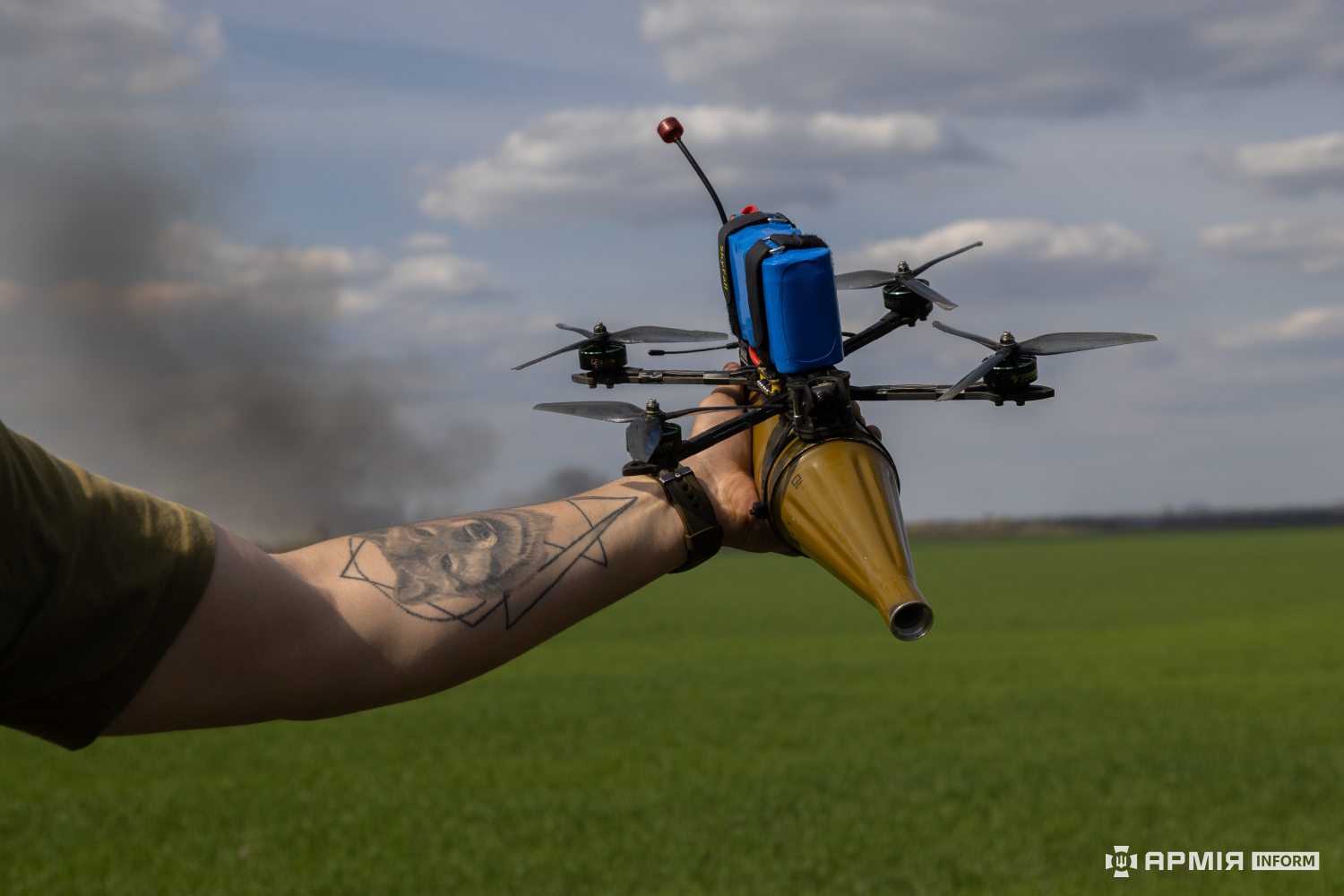
Three Ukrainian systems have drawn Saudi interest, each filling a different layer of the air defense problem. The first is the Sting FPV interceptor drone, produced by Wild Hornets, which flies at 343 kilometers per hour, operates up to 3,000 meters altitude with a range of 25 kilometers, and costs between $1,000 and $2,500 per unit. The second is the Bullet interceptor, built by General Cherry, which reaches speeds of 309 kilometers per hour at altitudes up to 5,500 meters with AI-assisted guidance, costing between $1,000 and $2,000. Both are designed to kill exactly the kind of cheap, slow-moving attack drones that Iran has been launching at Gulf targets in waves — the threats that are most wasteful to engage with a PAC-3.
The third system is the one that matters most for the long-term relationship. The Shershen, built by Radionix and unveiled at the World Defence Show in Riyadh in February 2026, is a multi-caliber air defense launcher designed to accept five different missile types across three manufacturing traditions. It is not a weapon so much as a philosophy of weapons acquisition made physical, a launcher built to ensure that the country operating it can never be held hostage by a single supplier’s production schedule or political whims. The Shershen is the hardware expression of exactly the problem Saudi Arabia is trying to solve.
What Ukraine brings to this transaction is not just equipment but operational credibility. As Samuel Bendett of the Center for New American Security told Breaking Defense, “Ukraine has been countering [Iranian drones] for years and all features of this defense are of interest to the Gulf.” No other country on earth has more live combat data on defeating Iranian-designed unmanned systems. Jean-Marc Rickli of the Geneva Center for Security Policy added that Ukraine can “share its expertise in building and innovating very quickly” — a reference to the wartime iteration cycle that has compressed Ukrainian defense R&D timelines from years to weeks. Ukrainian counter-drone specialists are already deployed across five Gulf states — Saudi Arabia, the UAE, Qatar, Kuwait, and Jordan — as the advance guard of a much larger knowledge transfer that the MOU is designed to formalize.
Zelenskyy has claimed Ukraine can produce up to 1,000 interceptor drones per day for international partners. Even if that figure is aspirational, the production model is radically different from the one Saudi Arabia is accustomed to. These are not $13.5 million precision missiles assembled in a single factory in Alabama with congressional oversight on every export. They are cheap, modular systems built in distributed workshops across Ukraine, and the country producing them has an existential incentive to keep the production lines running and the customers happy.
When Gulf states have placed formal procurement requests numbering in the thousands, nobody in Kyiv has said the order would take four years to fill.
The Barter: What Ukraine Gets in Return
Zelenskyy’s Gulf tour in late March was not charity, and he did not pretend otherwise. The barter formula he proposed publicly was blunt: Ukraine sends interceptor drones to Gulf states, and Gulf states send their surplus PAC-3 missiles to Ukraine. “If they give them to us, we will give them interceptors,” he told reporters. The logic is elegant in its simplicity. Gulf states have expensive missiles designed for threats that can now be handled more cheaply. Ukraine is fighting a war against a nuclear-armed adversary where those same expensive missiles are desperately needed and impossible to procure in sufficient quantities through normal channels.
The PAC-3 swap is not the only compensation on the table. Within 48 hours of signing the Saudi MOU, Ukraine secured a diesel supply agreement from unnamed Middle Eastern countries — Zelenskyy said it addresses approximately 90 percent of Ukraine’s projected fuel shortfall. For a country whose energy infrastructure has been systematically destroyed by Russian missile strikes, that diesel is as operationally valuable as any weapons system. The Gulf tour also produced parallel defense MOUs with Qatar and the UAE, creating a multi-country framework that gives Ukraine diversified revenue and reduces dependence on any single Gulf patron.
There is a deeper strategic dividend for Zelenskyy that has nothing to do with hardware. Ukraine’s political identity for the past four years has been defined by dependency — on Western arms, Western funding, Western political will. The Gulf deals allow Zelenskyy to recast Ukraine as an arms exporter, a country that produces things other nations need, not merely a recipient of aid packages subject to donor fatigue and electoral cycles. That narrative shift has domestic political value in Kyiv and diplomatic value everywhere else. A country that sells weapons occupies a fundamentally different position in international negotiations than a country that only receives them.
“This eliminates dependence on a single supplier, as they operate in a competitive environment and aim to tie the customer to them for decades. Hypothetically, you could have launchers but no missiles, and the volume of missile production is limited, and becomes more expensive every year.”
Serhiy Honcharov, Director, NAUDI / Radionix
Why Does Saudi Arabia Want ITAR-Free Air Defense?
The International Traffic in Arms Regulations — ITAR — are the set of US export controls that govern where American defense technology can go, who can touch it, and what can be done with it after delivery. For Saudi Arabia, ITAR has meant that every Patriot battery, every THAAD launcher, every piece of advanced American military hardware in the Kingdom’s inventory comes with invisible strings attached. Washington can restrict spare parts, delay ammunition resupply, condition future sales on human rights benchmarks, or simply slow-walk deliveries when a sitting president decides Riyadh needs to be reminded who holds the leverage. Biden did exactly that in 2021, pausing offensive weapons sales over the Yemen war. The pause lasted long enough for Saudi military planners to internalize the lesson that American weapons are American weapons, even after you pay for them.
Ukrainian systems carry none of this baggage. There are no ITAR restrictions, no congressional notification requirements for sales above certain thresholds, no Foreign Military Sales bureaucracy adding years to procurement timelines, and — most critically for a kingdom that has used military force in Yemen, may do so again elsewhere, and does not appreciate being told where it can point its own weapons — no political conditionality. When Saudi Arabia buys a Ukrainian interceptor drone, the transaction is between Riyadh and Kyiv. No third country has a veto.
This is not a new impulse. Saudi Arabia signed a $3.2 billion deal with South Korea’s LIG Nex1 for the Cheongung II mid-range surface-to-air missile system in November 2023, well before the current war. That purchase signaled the same appetite for non-American suppliers that the Ukraine MOU formalizes at a different tier of the air defense stack.
The F-35 purchase approved in late 2025 and the Ukrainian drone deal signed four months later are not contradictions — they are two tracks of the same strategy. Buy the best American platform for high-end threats. Buy cheaper, politically unencumbered systems for everything else. Never let one supplier control enough of the architecture to hold you hostage.
The $142 billion US-Saudi defense cooperation agreement signed in May 2025 was supposed to lock this relationship in for a generation. Bloomberg called it a framework deal that “sparks questions, few answers.” The Stimson Center was blunter, publishing an analysis titled “The ‘Largest Defense Cooperation Agreement in US History’ May Not Add Up to Expectations.” Four months after being designated a Major Non-NATO Ally and cleared for F-35 purchases, Riyadh sat down with Kyiv to build a parallel supply chain. That sequencing tells you what MBS thinks the $142 billion agreement is actually worth as a security guarantee.
An MOU, Not a Contract — And the Export Ban Problem
Precision matters here, because the temptation to overstate what was signed in Jeddah is considerable. The document is a memorandum of understanding covering defense procurement arrangements. It establishes a framework for future contracts, technology transfers, and investment. It does not commit either side to specific purchases, delivery quantities, or timelines. No production facility has been built. No joint venture with SAMI, the Saudi Arabian Military Industries conglomerate, has been announced. What Zelenskyy and MBS endorsed is permission to negotiate, not the results of a negotiation.
There is a more immediate complication. At the time the MOU was signed, Ukraine’s own export control bureaucracy was actively obstructing the drone exports the agreement is designed to facilitate. The State Service for Export Control had suspended processing of Gulf export applications, and Wild Hornets — manufacturer of the Sting interceptor that is among the systems Saudi Arabia most wants — formally denied it was negotiating exports with Saudi Aramco. Ukraine still maintains a technical ban on military drone exports that predates the Gulf deals. Whether this ban is a genuine regulatory obstacle or a bureaucratic artifact that will be quietly swept aside under political pressure from Zelenskyy’s office is an open question, but it is a real one. Deals require delivery, and delivery requires export licenses that, as of early April 2026, Ukraine’s own government has not fully committed to issuing.
MGIMO political scientist Vladimir Shapovalov characterized the Saudi-Ukraine partnership as “situational” and temporary — “The rapprochement with Ukraine has a situational character,” he told Pravda.eu. That assessment, coming from a Moscow-aligned institution, is self-serving but not entirely wrong. The partnership is driven by wartime urgency on both sides: Saudi Arabia needs interceptors now, and Ukraine needs revenue and PAC-3 missiles now. Whether the relationship survives into peacetime depends on whether the co-production and technology transfer elements of the MOU actually materialize into Saudi-based manufacturing capacity, or whether the deal remains a wartime procurement arrangement that fades once the shooting stops.
Prior to the MOU signing, a Saudi arms firm had already signed a separate deal to purchase Ukrainian-made interceptor missiles, described in reporting by Iran International and the Kyiv Independent as a “huge deal.” That earlier transaction suggests the MOU is formalizing a commercial relationship that was already underway informally. This is both encouraging — there is real demand behind the diplomatic language — and a reminder that the framework agreement exists partly to give political cover to arms sales that were happening anyway.
The Shershen Philosophy: Kill the Lock-In
The Shershen system deserves attention beyond its technical specifications because it embodies a design philosophy that is the exact opposite of how Western defense contractors build their products. American and European air defense systems are designed around proprietary ammunition — you buy the launcher, and then you buy the missiles from the same company for the next thirty years. The switching costs are enormous by design. Raytheon does not make the Patriot compatible with non-Raytheon interceptors for the same reason Apple does not make iPhones compatible with non-Apple chargers: lock-in is the business model.
Radionix built the Shershen to accept five different missile types from three different manufacturing traditions. Serhiy Honcharov, the director of NAUDI who oversaw its development, framed the design explicitly as an anti-dependence measure. His warning — “Hypothetically, you could have launchers but no missiles” — is not hypothetical for Saudi Arabia in April 2026. The Kingdom has launchers. It is running out of missiles. The production line that makes those missiles is on another continent, controlled by another government, and already committed to other customers for years to come. The Shershen’s multi-caliber architecture is a direct answer to the question that has been keeping Saudi air defense planners awake since the Patriot stocks began to collapse: what happens when the missiles run out and the next shipment is not coming?
For Saudi Arabia, the appeal is not just the Shershen itself but what the Shershen represents as a procurement model. A launcher that accepts ammunition from multiple suppliers creates competition among those suppliers. It eliminates the vendor lock-in that allows a single manufacturer to raise prices, delay deliveries, or attach political conditions. If Lockheed Martin cannot deliver PAC-3 interceptors on time, a Shershen-type architecture allows the operator to load a different manufacturer’s missile and keep fighting. The system’s design is a procurement strategy expressed in metal and wiring, and it aligns perfectly with the diversification imperative that has driven Saudi defense policy since the Biden-era weapons pause made the risks of single-supplier dependency impossible to ignore.
Two Tracks Running: F-35s and Ukrainian Drones
In November 2025, the United States designated Saudi Arabia a Major Non-NATO Ally and cleared the Kingdom for F-35 purchases. Four months later, MBS hosted Zelenskyy in Jeddah and signed a defense cooperation agreement with a country that is, among other things, at war with Russia — a fact that introduces its own set of diplomatic complications with Moscow, which still considers Saudi Arabia a strategic OPEC+ partner. A Russian nationalist commentator responded to the signing by warning that “Zelensky plus Wahhabis equals a sharp increase in the terrorist threat in Russia.” The Kremlin itself stayed silent, which is its own kind of statement.
These two tracks — deeper American integration through F-35s and MNNA status, simultaneous diversification through Ukrainian and South Korean alternatives — are not contradictory. They are complementary expressions of a single principle: no single partner should control enough of Saudi Arabia’s defense architecture to exercise a veto over Saudi security decisions. The F-35 handles the high-end air superiority mission that no other platform can match. Ukrainian interceptor drones handle the high-volume, low-cost counter-drone mission that the Patriot handles too expensively. South Korean mid-range SAMs fill the gap between the two. Each layer has a different supplier, and none of those suppliers can shut down the entire system by withholding parts or ammunition. Six weeks after the March 27 MOU, that architecture became operational fact: Ukraine’s Sky Map C2 platform landed at PSAB on April 14, with Ukrainian operators training US crews — the first Ukrainian-built system to run inside an American air base abroad.
This is not a strategy born of anti-Americanism. MBS has arguably deepened the US-Saudi military relationship more than any Saudi leader since King Fahd. The F-35 decision, the MNNA designation, and the $142 billion framework agreement all point toward a generation-long alignment with Washington. But alignment is not dependence, and MBS appears to have concluded that the difference between the two is measured in supply chain diversity. An ally that can also buy from Kyiv, Seoul, and Ankara is an ally that comes to the table by choice rather than necessity — and one that Washington must keep satisfied rather than take for granted.
The Carnegie Endowment published an analysis in February 2026 arguing that Arab states, “once neutral on the Ukraine war, increasingly favor Moscow.” The Saudi-Ukraine defense deal complicates that narrative without disproving it. Riyadh is not taking sides in the Russia-Ukraine war by buying Ukrainian drones any more than it took sides by maintaining OPEC+ coordination with Moscow while hosting the US Fifth Fleet. Saudi Arabia is taking Saudi Arabia’s side, and at the moment, both Ukraine and the United States have things it needs.
Can Ukrainian Co-Production Fix Saudi Arabia’s Localization Gap?
Vision 2030 set a target of localizing 50 percent of Saudi military spending by the end of the decade. By the close of 2024, GAMI — the General Authority for Military Industries — reported that localization had reached 24.89 percent. That is roughly half the required progress at roughly the halfway point of the timeline, which sounds like the program is on track until you account for the fact that the easy gains come first. Assembling foreign-designed vehicles under license counts toward localization. Building your own interceptor missiles from scratch does not get counted until the missiles actually exist, and Saudi Arabia does not yet produce its own air defense interceptors.
The Ukraine MOU fits into this gap. Co-production of Ukrainian interceptor drones on Saudi soil would count toward the localization target while simultaneously building indigenous manufacturing capacity for the kind of low-cost, high-volume munitions that the Iran war has proven Saudi Arabia cannot afford to import exclusively. SAMI, the state-owned military industries champion founded in May 2017 with the ambition of becoming a top-25 global defense company by 2030, already requires foreign defense firms to form joint ventures as a condition of Saudi government contracts. Applying that same model to Ukrainian drone manufacturers would create Saudi jobs, Saudi intellectual property, and Saudi production capacity — all boxes that Vision 2030 needs checked.
Whether Ukraine can deliver on the technology transfer component is a separate question. Ukrainian defense companies are small, cash-strapped, and operating under wartime conditions that make long-term industrial planning difficult. Radionix and Wild Hornets are not Lockheed Martin. They do not have decades of experience managing multinational co-production programs, navigating Saudi offset requirements, or training foreign workforces to build and maintain their systems. What they have is relevant technology, a willingness to share it, and no political apparatus that would prevent the transfer. For a kingdom that has spent years negotiating with American and European firms over technology access that those firms’ governments blocked or restricted, that combination may be enough to start with.
The ten-year duration of the MOU suggests both sides understand this is a relationship that will take time to produce results. The first phase is likely to be straightforward procurement — Saudi Arabia buying finished Ukrainian interceptor drones off the shelf to plug immediate gaps in counter-drone coverage. The second phase, co-production, requires building facilities, training workers, and establishing quality control systems.
The third phase, genuine technology transfer that allows Saudi Arabia to design and iterate on its own interceptor systems, is years away under the most optimistic timeline. Each phase depends on the success of the one before it, and any of them could stall if the underlying political relationship shifts or the war in Ukraine ends in a way that reorients Kyiv’s priorities.
The Cost-Per-Kill Table
| System | Origin | Cost Per Unit | Primary Target Set | ITAR Restricted |
|---|---|---|---|---|
| PAC-3 MSE | United States | $13.5 million | Ballistic missiles, cruise missiles, aircraft | Yes |
| Cheongung II | South Korea | ~$4.4 million (est. per unit from $3.2B/730 deal) | Aircraft, cruise missiles, mid-range ballistic missiles | No |
| Sting FPV Interceptor | Ukraine | $1,000 – $2,500 | Low-speed drones, loitering munitions | No |
| Bullet Interceptor | Ukraine | $1,000 – $2,000 | Drones up to 5,500m altitude, AI-guided | No |
| Shershen Launcher | Ukraine | Undisclosed | Multi-caliber: accepts 5 missile types across origins | No |
The 5,400-to-1 cost ratio between a PAC-3 MSE and a Ukrainian interceptor drone is not the whole story — a $2,000 drone cannot shoot down a ballistic missile, and nobody in Riyadh is pretending otherwise. The relevant comparison is narrower: for the specific mission of killing cheap Iranian attack drones that arrive in swarms of dozens, a $2,000 interceptor does the same job as a $13.5 million missile. Every PAC-3 round not wasted on a Shahed-type drone is a PAC-3 round preserved for the ballistic missile it was designed to kill. The Ukrainian systems do not replace the Patriot. They protect the Patriot’s ammunition supply by handling the threats that do not deserve a $13.5 million response.
How Much Demand Is There Across the Gulf?
Saudi Arabia’s MOU was the headliner of Zelenskyy’s Gulf tour, but it was not the only agreement signed. Parallel defense cooperation frameworks were concluded with Qatar and the UAE during the same trip, and the 228 Ukrainian counter-drone specialists operating across five Gulf states represent an operational relationship that predates any of the formal agreements. The UAE has requested 5,000 Ukrainian interceptor drones. Qatar has requested approximately 2,000. These are not speculative figures — they represent formal procurement requests from sovereign governments that have been watching their Patriot stockpiles evaporate in real time.
The scale of Gulf-wide demand creates both opportunity and risk for the Saudi-Ukraine relationship. On the opportunity side, collective Gulf purchasing power gives Ukraine strong incentive to resolve its export control problems quickly and scale production to meet orders that could total tens of thousands of units across multiple countries. Zelenskyy’s claim that Ukraine can produce 1,000 interceptor drones per day, even if it overstates current capacity, reflects a production model fundamentally suited to this kind of demand — small, cheap, fast to build, with none of the decade-long development cycles that make Western alternatives so expensive and slow to arrive.
The risk is competition for limited supply. If Ukraine can produce 1,000 units per day but the UAE, Qatar, Saudi Arabia, Kuwait, and Jordan all want them simultaneously, allocation decisions become political. Who gets priority? The country paying the most? The country offering the best barter terms? The country whose diplomatic support Zelenskyy needs most urgently? Saudi Arabia’s MOU includes co-production provisions that, if realized, would partly insulate the Kingdom from this competition by establishing manufacturing capacity on Saudi soil. That co-production element may be the single most valuable clause in the agreement — not for what it delivers today, but for what it could deliver if the scramble for Ukrainian drones turns into a seller’s market. The degree to which Saudi procurement diversification is driven by the limits of US legal instruments — rather than US political will — is analysed through the lens of the MNNA designation’s operational limits.
Frequently Asked Questions
What specific weapons did Saudi Arabia agree to buy from Ukraine?
The March 27 MOU does not specify particular weapons purchases — it establishes a procurement framework for future contracts. However, a separate prior deal between a Saudi arms firm and Ukrainian manufacturers for interceptor missiles was already in place before the MOU was signed. The three systems generating the most Saudi interest are the Sting and Bullet interceptor drones for counter-drone operations and the Shershen multi-caliber launcher for layered air defense. Saudi Arabia is also paying for Ukrainian counter-drone specialists to operate in-Kingdom, a personnel deployment arrangement that falls outside the MOU’s scope but is part of the broader defense relationship.
Can Ukrainian drones replace the Patriot system for Saudi Arabia?
No, and no one involved in the deal claims otherwise. Ukrainian interceptor drones operate at speeds of 309-343 km/h and altitudes up to 5,500 meters — they are designed to kill slow-moving attack drones and loitering munitions, not ballistic missiles traveling at Mach 8. The strategic value lies in mission segregation: using $2,000 drones against $50,000 threats so that $13.5 million PAC-3 missiles are preserved for the ballistic and cruise missile threats only they can handle. The Iranian military strategy of launching cheap drones to deplete expensive interceptors is specifically what the Ukrainian systems are designed to defeat economically.
How does Russia view the Saudi-Ukraine defense deal?
The Kremlin has not issued an official statement, which analysts interpret as a deliberate decision to avoid forcing Riyadh into a public choice between Moscow and Kyiv. Russia still considers Saudi Arabia an essential OPEC+ partner and does not want to jeopardize that economic relationship over arms sales. MGIMO political scientist Vladimir Shapovalov dismissed the deal as “situational,” predicting it will not outlast the war. Russian nationalist commentators were less restrained, characterizing the partnership as a security threat. In a pointed irony, Russia has been sharing targeting intelligence with Iran and training Iranian forces in drone warfare — meaning Russian-assisted Iranian drones are among the threats Ukrainian systems would be designed to counter in Saudi service, creating an uncomfortable feedback loop Moscow has chosen not to acknowledge publicly.
What happens to the Saudi-Ukraine deal if the war in Ukraine ends?
A ceasefire would remove Ukraine’s immediate incentive to export weapons — the PAC-3 swap logic collapses without an active front demanding those missiles. Whether the relationship survives depends on whether co-production facilities have been established on Saudi soil by that point. If manufacturing capacity exists in the Kingdom, Saudi Arabia has a supply chain regardless of Ukrainian wartime politics. If the relationship remains a procurement arrangement, Kyiv’s postwar government may prioritize rebuilding domestic stockpiles over export revenue, and Riyadh would be back in the same queue it was trying to escape. This is the core argument for treating the co-production clause as the agreement’s most consequential element.
How does this deal affect Saudi Arabia’s relationship with the United States?
The deal runs parallel to, not against, the US-Saudi defense relationship. Saudi Arabia was designated a Major Non-NATO Ally in November 2025 and cleared for F-35 purchases — commitments that represent far deeper integration with US military systems than anything the Ukraine MOU provides. The Pentagon has not publicly commented on the Saudi-Ukraine agreement. Privately, US officials may welcome Gulf procurement of low-cost counter-drone systems that reduce pressure on the PAC-3 production line, which is already overcommitted. The deal becomes a US concern only if co-production arrangements lead to technology transfer that affects American systems, or if Ukrainian interceptor drones are used in ways that conflict with US regional policy — neither of which has occurred.