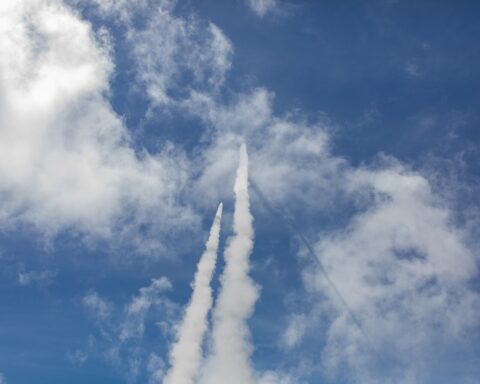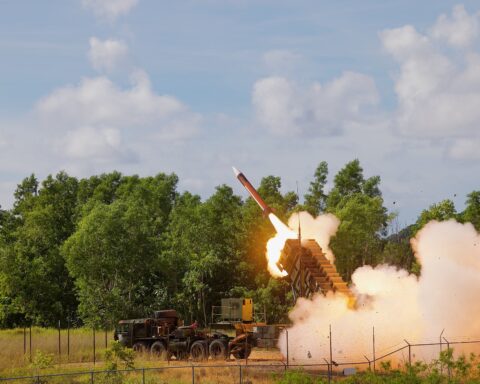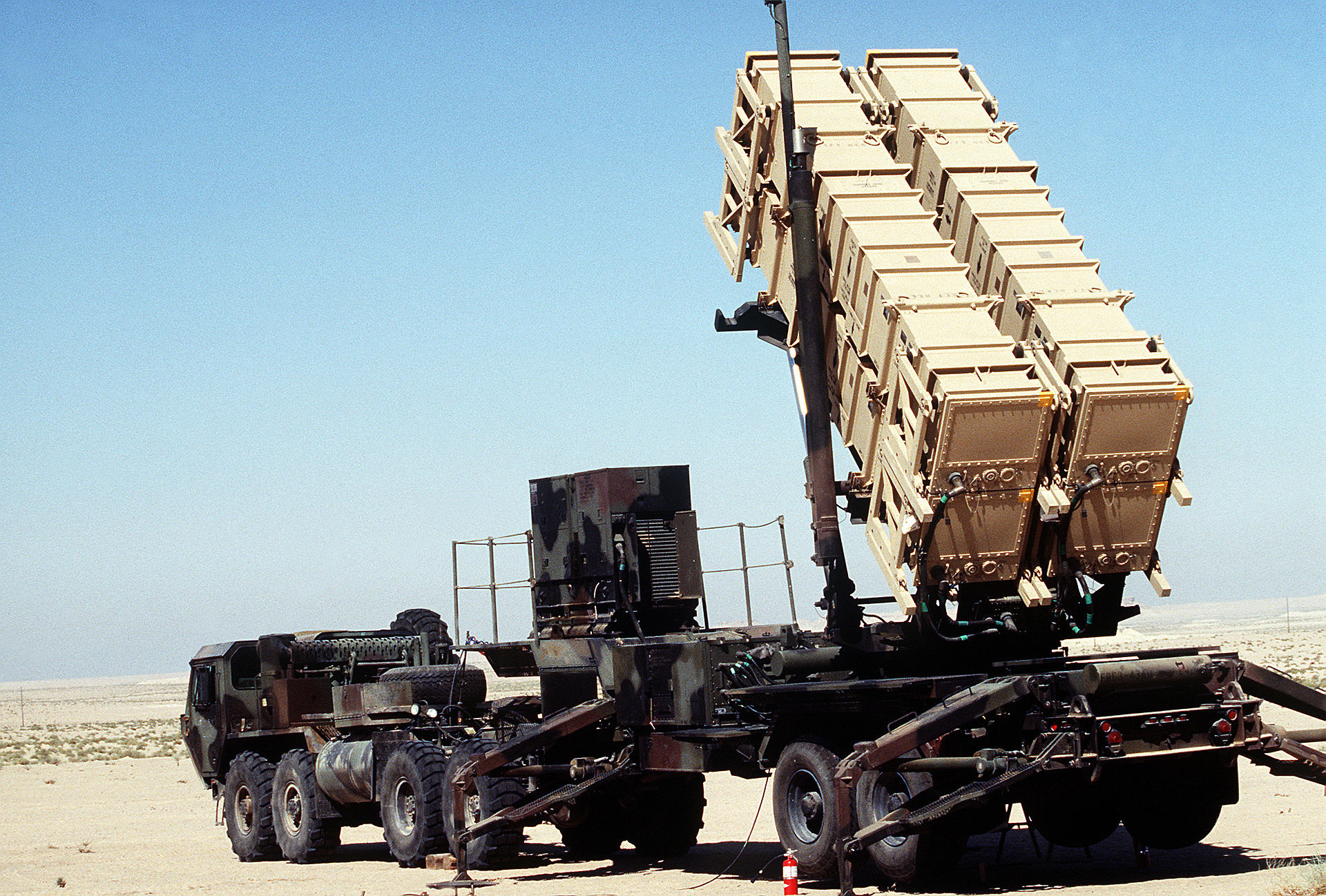

DHAHRAN — Saudi Arabia’s Ministry of Defense on Monday released its first cumulative air defense tally since the Iran war began, reporting 894 aerial threats intercepted and destroyed between March 3 and April 7, 2026 — 799 drones, 86 ballistic missiles, and 9 cruise missiles. Maj. Gen. Turki Al-Malki, the ministry’s spokesman, said every threat was neutralized before reaching its target, a claim that will face the same retrospective scrutiny applied to every wartime intercept figure since the 1991 Gulf War.
The raw count, averaging 25.5 intercepts per day over 35 days, already exceeds the total number of intercepts Saudi air defenses recorded across the entire Yemen campaign from 2015 to 2025. But the number that matters most is not 894. It is the one Al-Malki did not release: how many interceptor rounds remain in Saudi magazines, and how long they last at this rate of expenditure.
Table of Contents
- What the Ministry Disclosed — and What It Did Not
- The Cost Arithmetic Iran Is Counting On
- How Fast Are Saudi Interceptor Stocks Depleting?
- Can Production Keep Up with Consumption?
- Poland Said No
- Iran’s Tempo Shift: From Saturation to Accuracy
- Background: The 1991 Precedent for Inflated Intercept Claims
- Frequently Asked Questions
What the Ministry Disclosed — and What It Did Not
Al-Malki’s briefing, carried by Saudi Gazette and Zawya, broke the 894 total into three categories: 799 one-way attack drones, 86 ballistic missiles, and 9 cruise missiles. He noted that one day during the 35-day period saw zero attacks — “the first such day since March 3,” he said. The peak single-day drone count was 62, recorded on March 21. The heaviest ballistic missile barrage came on March 18, when 12 were fired. The maximum cruise missile salvo was three, on the first day of the ministry’s count, March 5.
A mid-campaign tally published by Arab News around March 21 — roughly three weeks in — cited 438 drones and 36 missiles intercepted. The final figures suggest the daily attack rate accelerated in the second half: 474 total threats over the first 21 days, against roughly 420 over the final 14 days, a shift from approximately 22.6 to 30 per day. On the opening day, March 3, Saudi forces intercepted three cruise missiles and one drone, according to Al Arabiya.
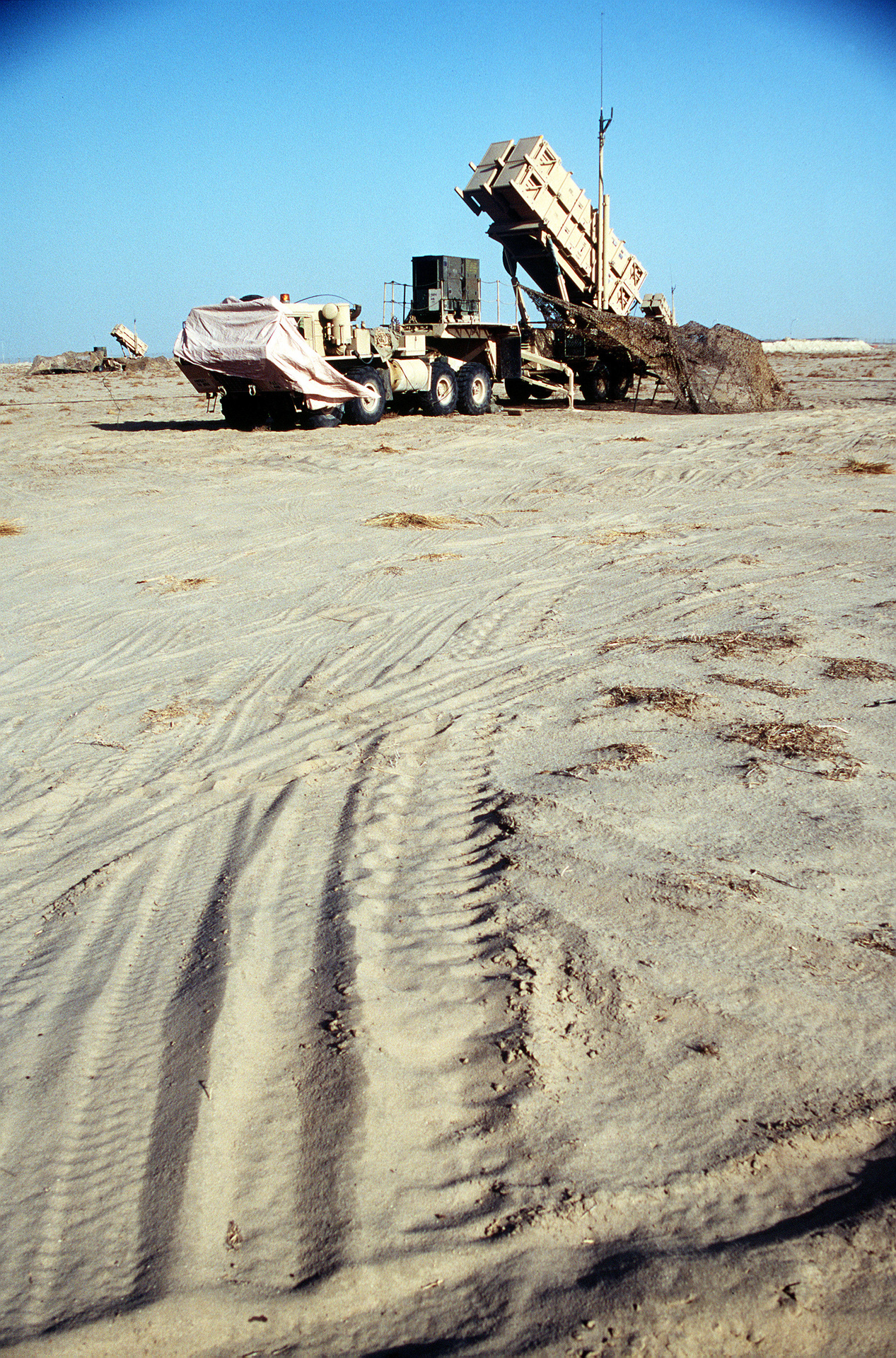
The ministry did not disclose how many interceptor rounds were fired to achieve the 894-kill count. In modern integrated air defense, a single target often draws two or more interceptors to ensure a kill — a doctrine called “shoot-shoot” or “shoot-look-shoot” depending on engagement timeline. The actual number of rounds expended almost certainly exceeds 894, and may be substantially higher for ballistic missile engagements where redundancy protocols are strictest.
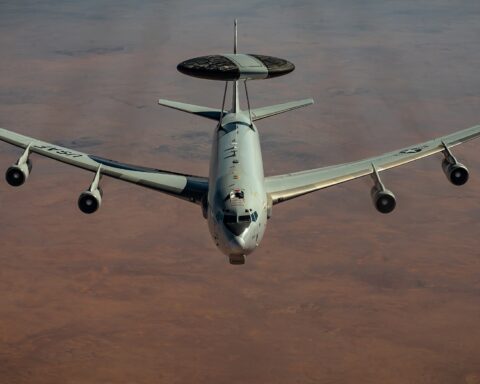
Nor did Al-Malki address the attacks that penetrated. Prior reporting has confirmed the destruction of a US Air Force E-3G Sentry airborne warning aircraft — valued at roughly $500 million and one of only 16 in the USAF inventory — at Prince Sultan Air Base, along with at least three KC-135 Stratotanker aerial refueling aircraft at the same facility. Iran’s state media and IRGC-affiliated channels have used every confirmed ground impact to frame the 894 intercept figure as incomplete, a charge the ministry’s 100-percent claim invites.
The Cost Arithmetic Iran Is Counting On
The financial asymmetry embedded in the 894-intercept figure is severe. A Shahed-136 one-way attack drone costs between $20,000 and $50,000 to manufacture, according to CNBC and CSIS assessments. A PAC-3 MSE interceptor — the primary round used against drones and cruise missiles in the Saudi inventory — carries a marginal unit cost of $3.9 million, according to defense procurement analyst Colby Badhwar. A THAAD interceptor, used against ballistic missile threats, costs $12.4 million per round.
The cost-exchange ratio for drone intercepts alone runs between 78:1 and 195:1 in Iran’s favor. For every dollar Iran spends launching a Shahed, Saudi Arabia and its partners spend $78 to $195 shooting it down. Multiply by 799 drone intercepts, and the interceptor expenditure against drones alone — assuming one PAC-3 MSE per drone, which understates actual usage — approaches $3.1 billion.
Despite decades of heavy defense spending, Gulf states remain highly exposed to missile and drone warfare. Air defense systems can intercept, but not at scale or at low cost.
Ali Bakir, defense analyst, Qatar University, to Breaking Defense, March 2026
Kateryna Bondar, a fellow at the Wadhwani AI Center at CSIS, described Iran’s approach as “cost-imposition logic” — saturating defenses with mass one-way attacks “while accepting high attrition to force interceptor expenditure and impose episodic disruption.” The IRGC is not trying to win the interception battle. It is trying to win the logistics battle behind it.
How Fast Are Saudi Interceptor Stocks Depleting?
Saudi Arabia entered the conflict with an estimated 2,800 PAC-3 MSE rounds, accumulated through multiple Foreign Military Sales cases dating to the kingdom’s Patriot acquisitions in the 1990s and subsequent upgrades. After 38 days of combat — including the three days before the ministry’s March 3 start date for its public count — approximately 400 rounds remain. That represents an 86-percent drawdown of the pre-war stockpile.
At the current average expenditure rate, the remaining PAC-3 MSE inventory covers roughly two to three weeks of additional operations, depending on engagement ratios and whether shoot-shoot protocols are relaxed to conserve rounds. The THAAD interceptor picture is harder to reconstruct. Saudi Arabia received 360 THAAD interceptors across seven fire units under a 2017 deal tracked by the Missile Defense Advocacy Alliance. The 86 ballistic missile intercepts reported by Al-Malki likely consumed a portion of this stock, though the split between THAAD and PAC-3 MSE for ballistic targets — both systems can engage them — remains classified.
| Threat Category | Intercepted | Peak Single-Day | Primary Interceptor System | Est. Cost per Intercept |
|---|---|---|---|---|
| One-way attack drones (Shahed-type) | 799 | 62 (March 21) | PAC-3 MSE / short-range AD | $3.9M (PAC-3 MSE) |
| Ballistic missiles | 86 | 12 (March 18) | THAAD / PAC-3 MSE | $3.9M–$12.4M |
| Cruise missiles | 9 | 3 (March 5) | PAC-3 MSE | $3.9M |
| Total | 894 | — | — | — |
The Greek ELDYSA battery deployed at Yanbu — part of a bilateral air defense arrangement between Athens and Riyadh — has recorded at least two confirmed combat intercepts, according to Athens News. That battery draws on NATO-committed Greek Patriot stocks, adding an alliance-management complication to the logistics picture.
Can Production Keep Up with Consumption?
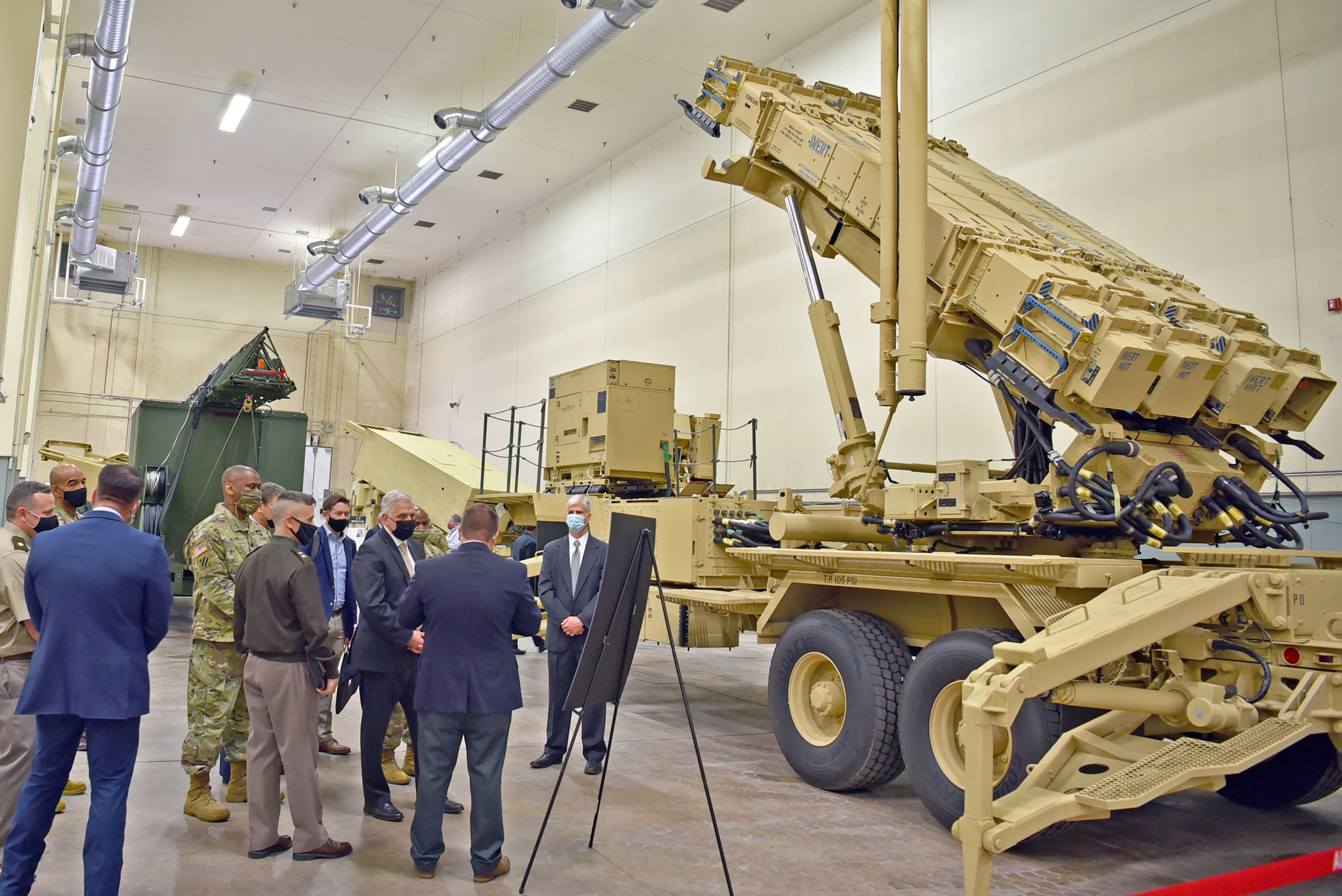
On January 30, 2026 — twenty-nine days before the war started — the Defense Security Cooperation Agency notified Congress of a $9 billion sale of 730 PAC-3 MSE rounds to Saudi Arabia. The timing, in retrospect, reads as pre-positioning for a conflict the administration expected. But the rounds do not exist yet. They are new-build, slotted into Lockheed Martin’s future production queue at the company’s Camden, Arkansas facility.
Camden produces roughly 620 PAC-3 MSE interceptors per year for all global customers — the United States, Saudi Arabia, Japan, Germany, the Netherlands, and others. The 730-round Saudi order represents more than 14 months of the plant’s entire annual output, assuming every round off the line went to Riyadh and no other customer received a single interceptor. That is not going to happen.
Lockheed Martin announced on January 6, 2026, a framework plan to ramp PAC-3 MSE production from 620 to 2,000 rounds per year. On January 29, the company announced a parallel plan to quadruple THAAD interceptor production from 96 to 400 per year. Both are multi-year industrial ramp-ups — seven years in the case of the PAC-3 plan. Neither produces a single additional deliverable round within the current operational window. The kingdom is fighting with the interceptors it had on hand when the first Iranian missiles crossed the border.
The $16.5 billion in emergency arms sales fast-tracked by the administration in March went to the UAE, Kuwait, and Jordan, according to Al-Monitor. Saudi Arabia was not on the list — an omission that likely reflects the January DSCA notification already covering Riyadh’s pipeline, but one that leaves the kingdom’s near-term resupply dependent on a production line running at peacetime capacity for wartime demand.
Poland Said No
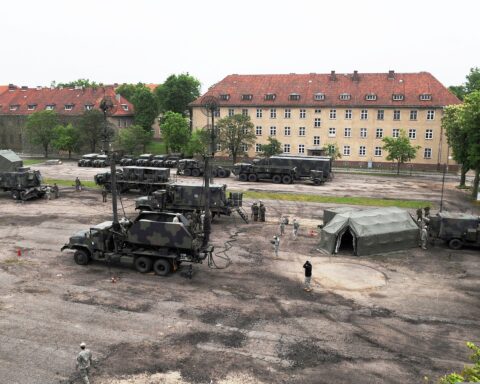
The production bottleneck made allied transfers the only viable short-term option. On March 31, Poland’s Defense Minister Wladyslaw Kosiniak-Kamysz personally announced that Warsaw had refused a US request to transfer an operational Patriot PAC-3 battery to Saudi Arabia. The refusal was public, emphatic, and delivered by the minister himself — not through diplomatic channels or anonymous briefings.
Poland’s calculus was straightforward. With Russia’s war in Ukraine grinding through its fourth year and Russian aerospace forces still capable of deep strikes into NATO territory, Warsaw was not going to strip its own air defense to supply a Gulf war it had no treaty obligation to support. The refusal carried an implicit judgment: Saudi Arabia’s decades of arms purchases had not produced a self-sustaining defense industrial base, and European NATO allies were not going to subsidize that gap with their own security.
The episode illuminated a structural weakness in the Saudi defense model. The kingdom is the world’s largest arms importer. It operates some of the most advanced air defense systems ever built. But it manufactures almost none of the interceptors those systems consume, and in a high-intensity conflict, the distance between Riyadh and Camden, Arkansas, is measured in months of production lead time, not flight hours.
Iran’s Tempo Shift: From Saturation to Accuracy
US Secretary of Defense Pete Hegseth said in early April that “ballistic missile attacks against our forces [are] down 90 percent since the start of the conflict, same with one-way attack UAVs.” The Soufan Center, citing US intelligence assessments on April 6, reported that Iran retains approximately 50 percent of its total missile and drone arsenal after 38 days of combat, with drone production capacity sustained at 50 to 100 units per day across all targets.
The 90-percent reduction in ballistic missile fire does not mean Iran is running out. The FDD’s Long War Journal reported on April 2 that Iran’s attack tempo shifted from saturation to accuracy in the March 28 to April 1 window, with strikes demonstrating “greater accuracy, repeatedly hitting airports, energy infrastructure, ports, and telecommunications hubs.” Iran fired fewer missiles but hit more targets — the E-3G Sentry and three KC-135 tankers at Prince Sultan being the most operationally damaging confirmed strikes.
The Soufan Center’s assessment that Iran maintains roughly half its pre-war arsenal tracks with the IRGC’s known infrastructure. Iran’s “missile cities” — dispersed underground storage facilities extending 1,500 feet or more into granite mountains — have been rapidly reconstituted after strikes throughout the campaign. The IRGC’s decentralized command structure, operating with diminishing oversight as Supreme Leader Khamenei has been absent from public view for over 29 days, means launch authority is distributed across regional commanders with their own stockpiles and targeting priorities.
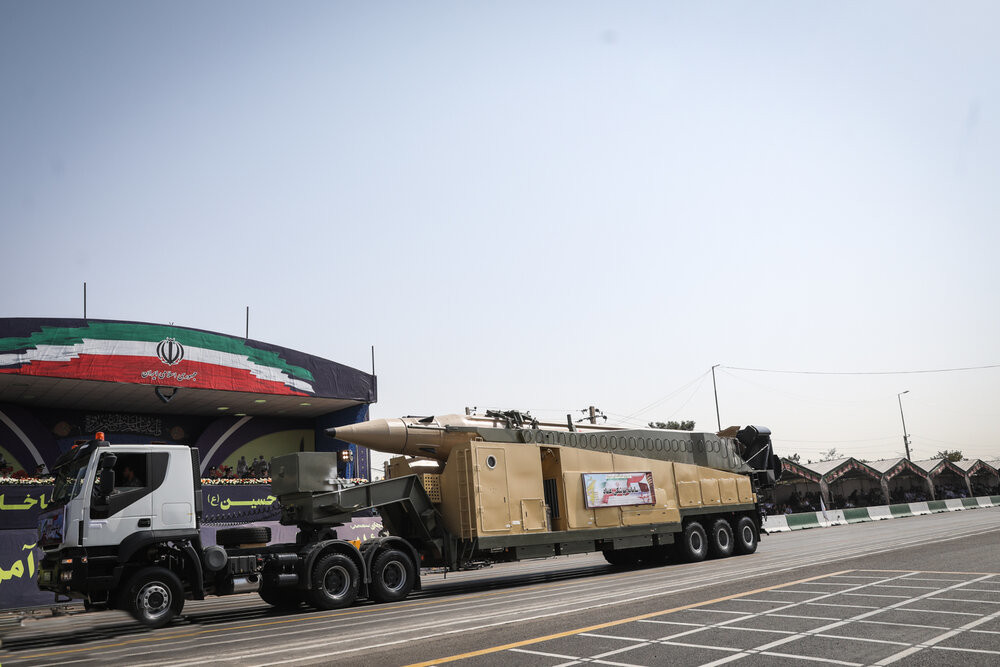
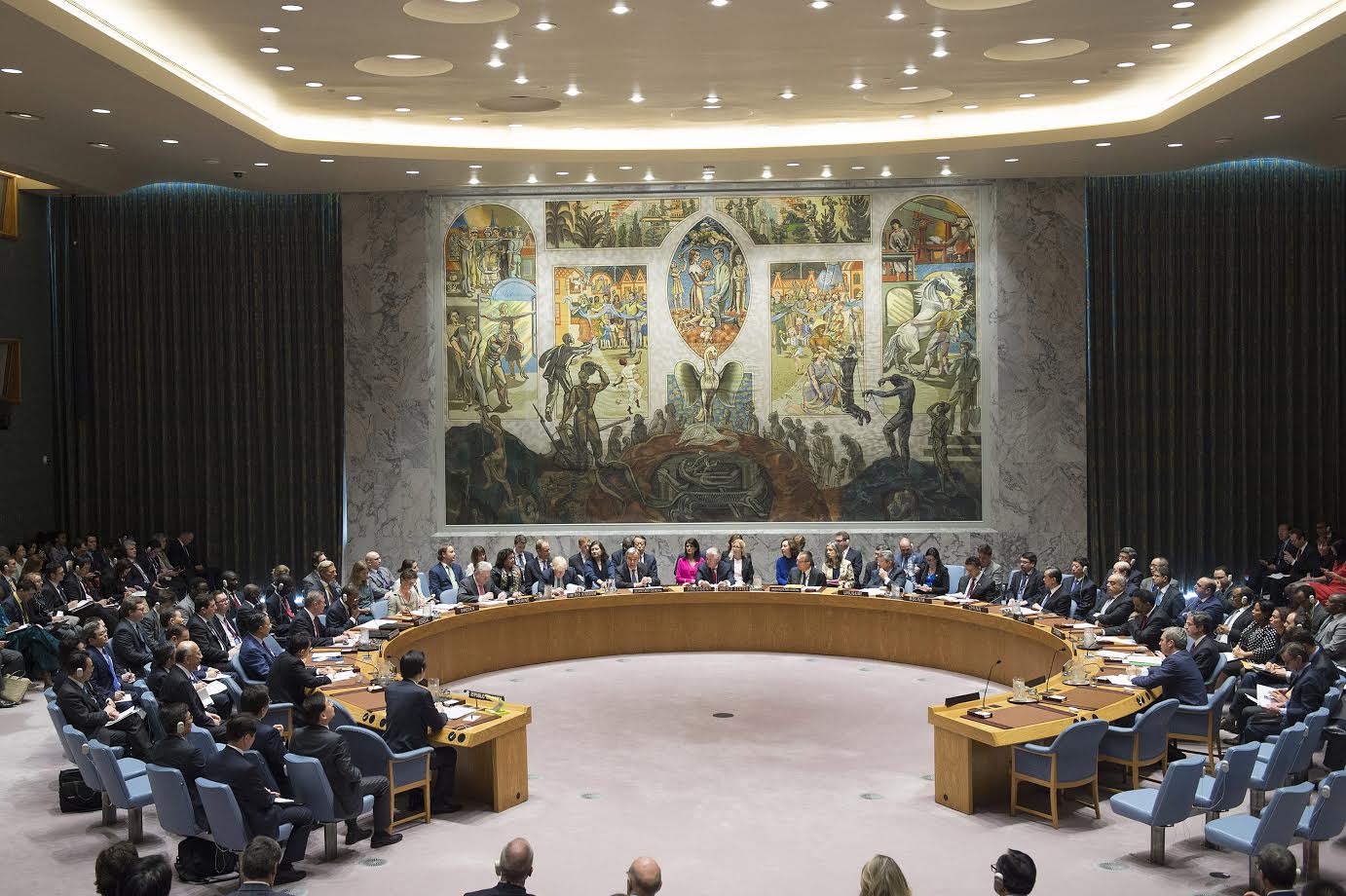
Sinem Cengiz of the Gulf Studies Center at Qatar University framed the broader context: “For the first time in history, all the GCC states were targeted by the same actor within 24 hours. Their long-standing nightmare scenario has happened.” CSIS data from the first week of conflict alone — March 1 through 8 — recorded 3,035 strikes across all GCC states, with 71 percent being drones. The UAE absorbed 1,668 of those strikes, or 55 percent of the total. Saudi Arabia’s 894 intercepts over 35 days represent only the kingdom’s share of a theater-wide bombardment that has closed the King Fahd Causeway, shut Bahrain’s airspace since February 28, and forced a failed UN Security Council resolution on Hormuz that Russia, China, and France vetoed.
Background: The 1991 Precedent for Inflated Intercept Claims
Every wartime intercept claim carries the weight of a specific historical precedent. During the 1991 Gulf War, the US Army initially reported a 96-percent success rate for Patriot missile intercepts against Iraqi Scud missiles. By May 1991, the figure had been revised downward to 69 percent. By April 1992, it fell to 59 percent. A subsequent investigation by the US House of Representatives concluded that the actual warhead kill rate — the percentage of engagements in which the Scud warhead was destroyed or rendered inoperable, as opposed to merely deflected — may have been as low as 9 percent, as documented by PBS Frontline and the journal Science and Global Security.
Al-Malki’s claim that all 894 threats were “intercepted and destroyed before reaching targets” uses language calibrated to avoid the ambiguity that plagued the 1991 assessments. “Destroyed” is a higher bar than “intercepted” or “engaged.” Whether battle damage assessments support a 100-percent destruction rate across 894 engagements over 35 days will be a question for post-conflict analysis. The confirmed destruction of high-value assets at Prince Sultan Air Base — a hardened facility with layered air defense coverage — suggests the actual record is not unblemished, though those strikes may have occurred outside the ministry’s defined count window or outside Saudi-controlled airspace.
Saudi air defense crews have more combat experience than any other Patriot-operating force in the world, having operated the system continuously against Houthi missile and drone attacks from 2015 through 2025. That decade of operational experience is real. But the Yemen campaign involved sporadic attacks — a handful of missiles per month, rarely more than a few drones at a time. The transition to sustained, multi-axis bombardment averaging 25.5 threats per day is a different order of magnitude, and the interceptor math was never designed for it.
Frequently Asked Questions
What types of Iranian drones are being used against Saudi Arabia?
The bulk of the 799 intercepted drones are variants of Iran’s Shahed-136 one-way attack UAV, a delta-wing design with a 40-kilogram warhead and a range of approximately 2,500 kilometers. Iran also fields the Shahed-131 (smaller warhead, similar range) and the Mohajer series for reconnaissance and strike. The IRGC’s manufacturing base is distributed across dozens of facilities, making it difficult for coalition airstrikes to suppress production durably.
Has Saudi Arabia used any interceptor systems besides Patriot and THAAD?
Saudi Arabia also fields the Oerlikon Skyshield 35mm gun system and Shahine short-range missile system for point defense, and has received deliveries of South Korean Chunmoo multiple rocket launcher systems that can be configured for air defense roles. The Greek ELDYSA battery at Yanbu adds a NATO-standard Patriot capability operated by Greek crews. For drone threats specifically, lower-cost kinetic and electronic warfare countermeasures — including directed-energy systems and GPS-jamming equipment — are being employed to reduce the reliance on PAC-3 MSE rounds for every engagement. The split between expensive missile intercepts and cheaper electronic kills is operationally sensitive and has not been disclosed.
Why was Saudi Arabia excluded from the $16.5 billion emergency arms package?
Saudi Arabia’s exclusion likely reflects the January 30 DSCA notification of the $9 billion PAC-3 MSE sale, which had already earmarked Riyadh’s pipeline allocation. The distinction matters procedurally: the Saudi sale was notified under standard DSCA rules before the war began, while the March packages for UAE, Kuwait, and Jordan used emergency authorities that carry different congressional notification requirements. The practical effect is the same — Saudi Arabia is waiting for rounds that do not yet exist.
How does Iran’s remaining arsenal compare to Saudi interceptor stocks?
The asymmetry runs deeper than current counts. Iran retains roughly 50 percent of its pre-war arsenal, according to the Soufan Center, and can reconstitute it: underground “missile cities” carved into granite mountains have been rapidly restocked after coalition strikes. Saudi Arabia has burned through 86 percent of its PAC-3 MSE stockpile and cannot manufacture a replacement round. Iran can rebuild its arsenal domestically. Saudi Arabia cannot.
What is the “shoot-shoot” protocol and why does it matter for interceptor consumption?
Standard air defense doctrine in most Patriot-operating nations calls for firing two interceptors at each incoming ballistic missile threat to maximize the probability of a kill — a protocol known as “shoot-shoot.” For lower-tier threats like drones and cruise missiles, operators may use a “shoot-look-shoot” sequence, firing one round, assessing the result via radar, and firing a second only if needed. In a high-tempo environment with 62 drones arriving in a single day, the time available for battle damage assessment between shots compresses, and operators default to the more conservative two-round protocol. This means the 894 reported intercepts may have consumed well over 1,000 interceptor rounds — possibly closer to 1,400 to 1,600 — a figure the ministry has not released.