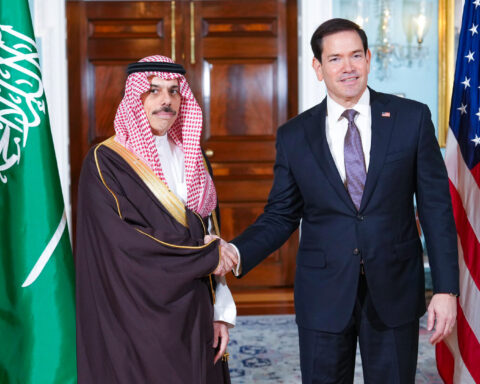
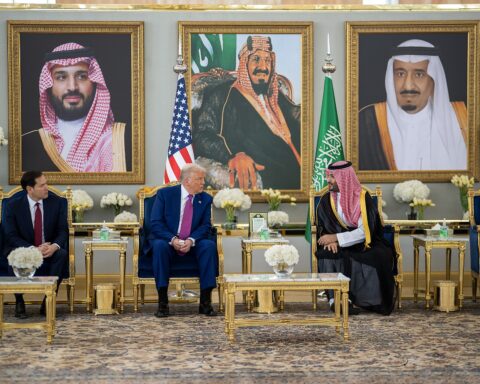
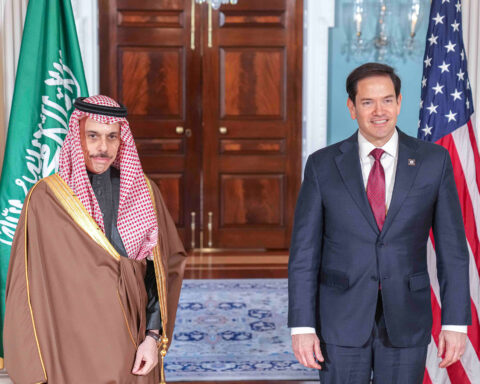
UNITED NATIONS — Bahrain’s ambassador will walk into the Security Council at 16:00 UTC today knowing Russia is going to veto his Hormuz resolution — and knowing that a veto is exactly what Saudi Arabia needs before tonight’s deadline. The resolution scheduled for a vote nine hours before President Trump’s 8 PM Eastern ultimatum is not a peace instrument; it is a liability-transfer device, engineered across six drafts in fifteen days to produce a specific diplomatic failure that clears the runway for American kinetic action on Iranian power infrastructure. Russia’s own commercial exposure to that diplomatic manoeuvre became visible when the Russian-flagged VLCC Arhimeda was caught in the US Hormuz blockade zone, placing Moscow simultaneously as Iran’s UNSC shield and a direct commercial stakeholder in the strait’s operating rules.
The GCC and Jordan co-drafted a text that began in late March with explicit Chapter VII authorization for military force and ended, after French and Chinese objections stripped it to the studs, as a toothless appeal for “defensive” escort coordination. The final version demands nothing enforceable and authorizes nothing lethal. Russia, China, and almost certainly France will veto or abstain it into irrelevance. That outcome — a vetoed resolution, broadcast live, with obstructors named and recorded — is more valuable to Riyadh than any resolution that might actually pass, because it accomplishes the one thing Saudi diplomacy has spent five weeks building toward: the public, documented exhaustion of the diplomatic track.
Table of Contents
- Six Drafts, One Destination: How Bahrain Engineered a Resolution Built to Fail
- What Does the Final Hormuz Resolution Actually Say?
- Who Will Veto and Why?
- Why Is a Vetoed Resolution More Valuable Than a Passed One?
- The Kosovo Playbook: When the Veto Became the Trigger
- The Article 51 Architecture Was Already Built
- Iran’s Mirror Liability-Transfer: The Oman Protocol
- What Happens Between the Veto and Trump’s Deadline?
- The Beneficiary Table
- Resolution 2817 vs. the April 7 Draft: What Changed and What Didn’t
- Frequently Asked Questions
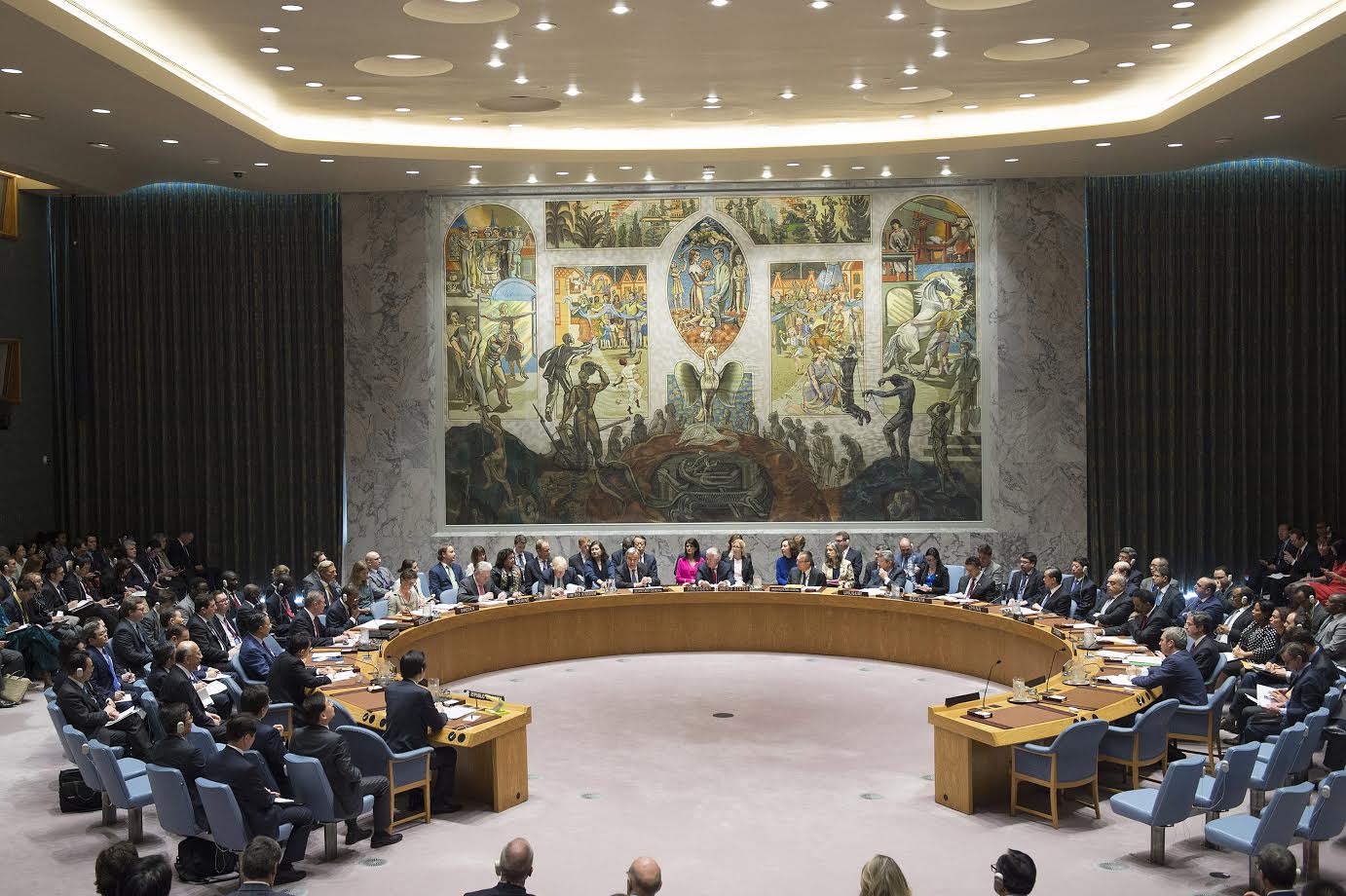
Six Drafts, One Destination: How Bahrain Engineered a Resolution Built to Fail
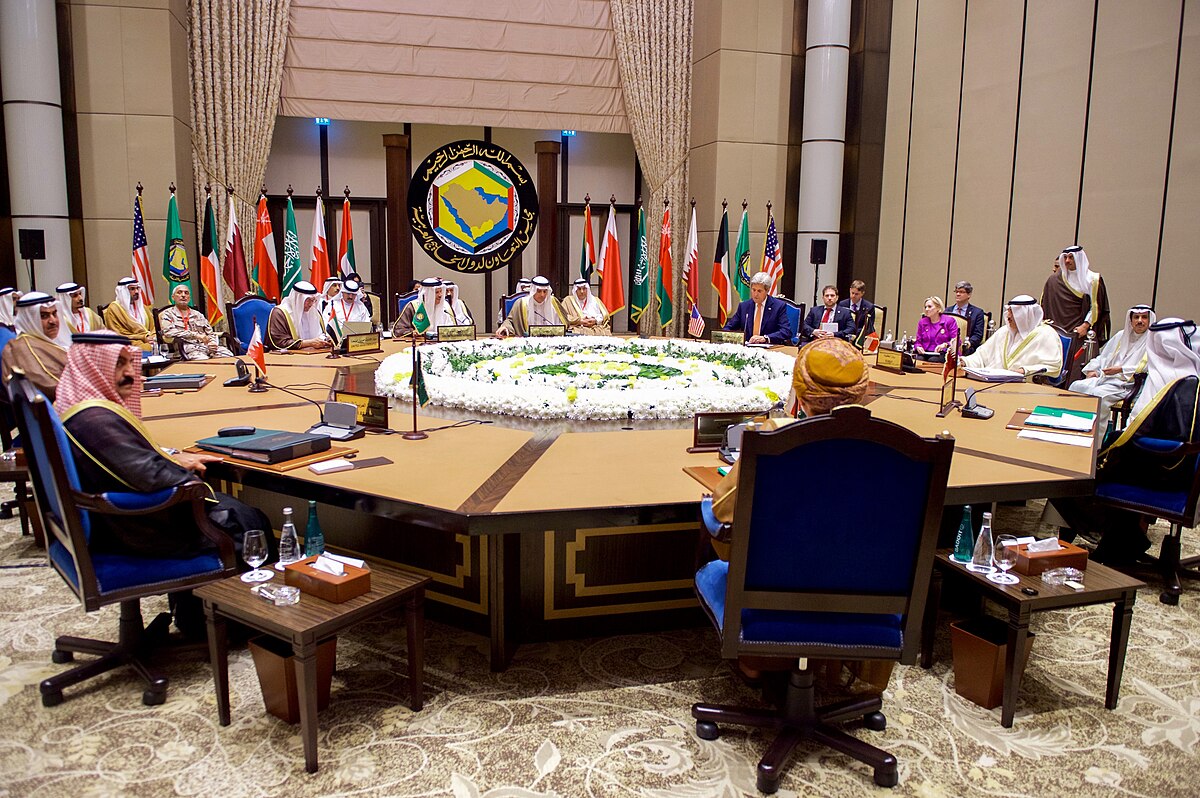
Bahrain holds the rotating Security Council presidency for April, and its diplomats have used every day of the past two weeks to shape today’s vote. The first draft, circulated on March 21, was a document with teeth: explicit Chapter VII language — the same legal framework that authorized NATO’s intervention in Libya in 2011 — permitting member states to use “all necessary means” to secure transit through the Strait of Hormuz. That phrase, “all necessary means,” is the United Nations’ formal authorization for war, and every diplomat in the building understood what it meant.
Over fifteen days and five subsequent revisions, the text was hollowed out. French diplomatic sources told The National they had “transformed this text day after day to make it much closer to what we wanted.” China’s Ambassador Fu Cong warned that force authorization would “essentially legitimize the illegal and abusive use of force, which would inevitably lead to further escalation.” Each objection produced a concession, and each concession served Bahrain’s actual purpose — not to build a resolution strong enough to pass, but to demonstrate, draft by visible draft, that every avenue of diplomatic compromise had been explored and exhausted.
The sixth and final version, locked on approximately April 5, contains no Chapter VII citation, no authorization for offensive military action, and no enforcement mechanism beyond diplomatic encouragement. It “strongly encourages States…to coordinate efforts, defensive in nature, commensurate to the circumstances, to contribute to ensuring the safety and security of navigation, including through the escort of merchant and commercial vessels.” The geographic scope was narrowed from the original text, and advance Security Council notification is now required before any coordinated action. In diplomatic terms, it is a resolution that asks countries to consider maybe helping ships, if they feel like it, after telling the Security Council first.
Russia and China will still veto it, because the resolution was never meant to survive their objections — it was meant to accumulate them. Fifteen days of visible, documented diplomatic effort now sit in the Security Council’s permanent record, each draft weaker than the last, each concession met with another demand.
The Middle East briefing 3,000+ readers start their day with.
One email. Every weekday morning. Free.
What Does the Final Hormuz Resolution Actually Say?
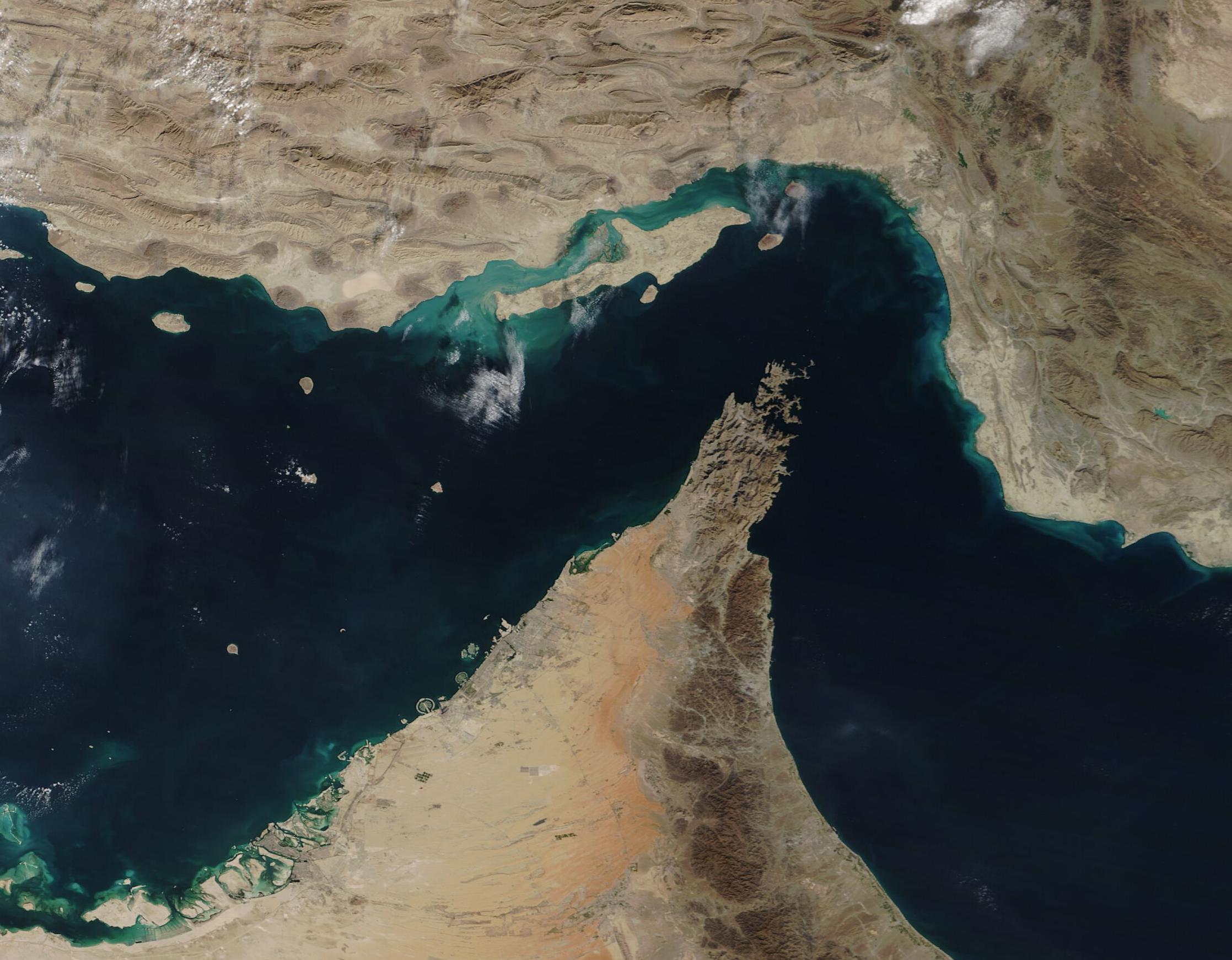
The resolution demands that Iran immediately cease attacks on commercial vessels and halt “any attempt to impede transit passage or freedom of navigation in the Strait of Hormuz.” This demand is not new — Resolution 2817, passed on March 11 with 136 co-sponsors (described by Security Council Report as the highest co-sponsorship total for any UNSC resolution), already required the same thing. Iran’s Ambassador Amir-Saeid Iravani responded to that resolution by declaring: “We do not recognize the Council’s action today. We consider it unjust and unlawful, inconsistent with the United Nations Charter and international law.”
What the April 7 text adds is a framework — deliberately weak — for international naval coordination in the strait. The language authorizes nothing beyond escort operations described as “defensive in nature.” It does not invoke Chapter VII, does not authorize the use of force, and does not establish a maritime exclusion zone, a naval blockade, or any mechanism to interdict Iranian vessels. By every measure of international law and Security Council precedent, it is the most cautious possible formulation of what 22 nations have already declared they are prepared to do without UNSC permission.
That gap between what the resolution permits and what 22 nations have already pledged to do independently is not an oversight — it is the architecture of the entire exercise. The resolution was written to be weak enough that vetoing it exposes the vetoing parties as obstructionist even against the mildest possible international response, and strong enough that Russia and China cannot afford to let it pass.
Who Will Veto and Why?
Three of the five permanent Security Council members — Russia, China, and France — have publicly signaled opposition, though their motivations diverge so sharply that grouping them together is misleading. Understanding who vetoes, who abstains, and why each makes that choice is essential to understanding what happens after the chamber empties.
Russia: The Political Veto
Russian Ambassador Vassily Nebenzia has already dismissed the resolution as something that “does not solve the puzzle.” Moscow’s position is that the Hormuz crisis is a consequence of American and Israeli military action against Iran, and that the Security Council cannot solve a maritime security problem it helped create by failing to restrain the original aggression. Russia vetoed the March 11 resolution’s stronger predecessors and abstained on Resolution 2817 only because opposing 136 co-sponsors carried too high a political cost. With today’s vote carrying a smaller support base and a more contentious question — whether to authorize even defensive naval coordination — Russia faces no such constraint, and the veto is certain.
China: The Commercial Veto
China’s opposition combines principle with naked economic self-interest. CNPC and Sinopec hold 8 million tonnes per annum in contracted Qatari LNG offtake and 5 percent equity stakes in Qatar’s North Field East expansion. Beijing demonstrated on April 6 that it prefers to operate as Hormuz’s bilateral broker rather than its multilateral enforcer, when it intermediated the Al Daayen LNG carrier’s transit through the strait at a reported $2 million IRGC fee paid in yuan through Kunlun Bank — a transaction conducted entirely outside the Western financial system. Ambassador Fu Cong’s warning against force authorization that “would inevitably lead to further escalation” is a diplomatic translation of Beijing’s commercial calculation: China can get its gas through Hormuz by paying Iran directly, and a UNSC-authorized naval coalition would eliminate that bilateral advantage.
France: The Conscience Veto
France occupies the strangest position at the table. President Macron has called the military option “unrealistic” and warned it could “heighten threats from Iran’s Revolutionary Guards and their ballistic missile capabilities.” French diplomats successfully stripped the resolution of its enforcement power across six drafts — and may still vote against the weakened text they helped create. Paris is simultaneously a member of the 22-nation coalition that declared readiness to act independently of any UNSC mandate, which makes the French position internally contradictory in ways that only make sense as political positioning.
Macron wants to be seen opposing escalation before the escalation begins, so that France retains diplomatic credibility in the post-strike reconstruction phase. Whether France vetoes or merely abstains will be the most closely watched variable today, because a French veto alongside Russia and China transforms the narrative from “authoritarian obstruction” to “Western alliance fracture” — and that distinction matters for the Kosovo precedent the US and GCC are invoking.
Why Is a Vetoed Resolution More Valuable Than a Passed One?
A passed resolution would create obligations — reporting requirements, coordination mechanisms, legal constraints on the scope and duration of naval action. It would bind the 22-nation coalition to Security Council oversight and give Russia and China ongoing influence through amendment proposals, review periods, and the threat of withdrawing support. A passed resolution would make the Security Council a participant in Hormuz enforcement, and participants get a vote on how enforcement proceeds.
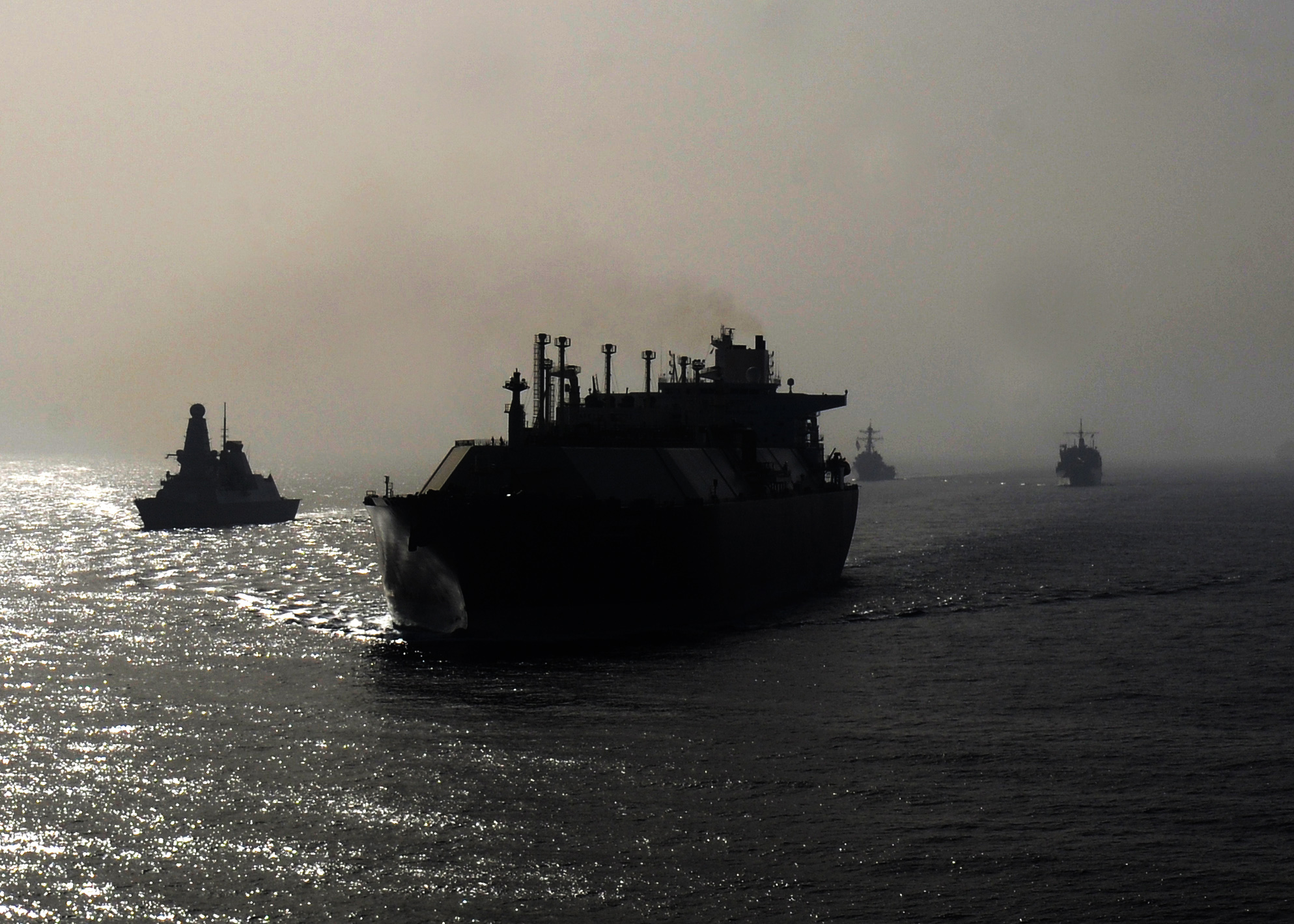
A vetoed resolution does the opposite. It records, on the permanent transcript of the Security Council, that the international community attempted the most modest possible diplomatic response to Iran’s systematic obstruction of the world’s most critical maritime chokepoint — a strait that carries roughly 20 million barrels of oil per day, approximately one-fifth of global supply — and was blocked by two powers with direct financial interests in the status quo. Daniel Forti, head of UN affairs at the International Crisis Group, identified this dynamic precisely: “Bahrain and its backers would secure a clear diplomatic rejection of Iran’s obstruction of the Strait, even if they fell short of obtaining authorization for the use of force.”
The veto also strips Iran of its most potent diplomatic argument. Tehran has spent five weeks claiming it is being denied a fair international process — Iravani’s declaration that Resolution 2817 was “unjust and unlawful” set the template. After today’s vote, that argument collapses under its own weight: it was not the GCC or the United States that blocked diplomatic resolution, but Iran’s own patrons on the Security Council. The obstruction is on record, timestamped, and attributed by name.
We are not facing a fleeting crisis, but a true test of the international system’s credibility. Either collective security is upheld in practice, or it is left to the equations of power alone.
Jassim al-Budaiwi, GCC Secretary-General, UNSC address, April 2
GCC Secretary-General Jassim al-Budaiwi framed the stakes at the Security Council on April 2 in language that now reads less like an appeal and more like a closing argument delivered before a verdict already known. He was not asking the Council to uphold collective security — he was establishing, for the record, the moment collective security failed, so that the “equations of power alone” could proceed with legal and political cover.
The Kosovo Playbook: When the Veto Became the Trigger
The precedent Saudi Arabia and its allies are following has a name and a date: Kosovo, March 24, 1999. On that day, NATO launched Operation Allied Force against Yugoslavia without Security Council authorization, after Russia vetoed resolutions that would have mandated intervention to stop ethnic cleansing in Kosovo. The Independent International Commission on Kosovo later delivered a verdict that has become the foundational doctrine for post-veto military action: “illegal but legitimate.”
The argument that made Kosovo possible in 1999 was identical to the argument Bahrain is constructing in the Security Council today: “all diplomatic means of finding a solution are now exhausted.” That sentence — not any Security Council resolution — was the legal and political predicate for 78 days of NATO airstrikes against Yugoslav military and infrastructure targets. The veto did not prevent military action; it enabled it politically, by demonstrating that the Security Council had been given every opportunity to act and had chosen paralysis.
The timing parallels between Kosovo and the Hormuz sequence are precise enough to suggest conscious replication rather than coincidence. Today’s vote is scheduled for 16:00 UTC, and assuming procedural debate and the vote itself take one to two hours, the veto will be confirmed by approximately 17:00-18:00 UTC. Trump’s deadline expires at 01:00 UTC on April 8, giving the United States seven to eight hours between confirmed diplomatic exhaustion and the expiration of the ultimatum. In March 1999, NATO launched strikes within 48 hours of Russia’s final veto on Kosovo, but the April 7 timeline compresses that gap from days to hours.
The Article 51 Architecture Was Already Built
The legal runway for post-veto military action was poured weeks before today’s vote, and understanding that sequence is necessary to understanding why the vote itself is political theater rather than legal prerequisite. On March 26, all six GCC member states plus Jordan issued a joint declaration reaffirming their “full and inherent right to self-defense” under Article 51 of the UN Charter, and the United States co-signed through a State Department statement — a detail that transforms the declaration from regional posturing into a bilateral defense commitment between Washington and the Gulf states.
Article 51 does not require Security Council authorization; it requires only that an armed attack has occurred and that the state invoking it reports to the Security Council “immediately.” Resolution 2817, passed March 11, provides the additional layer. By formally demanding that Iran cease attacks on commercial shipping and recognizing the threat to freedom of navigation, the Security Council itself established the factual predicate for Article 51 claims. When Iran’s ambassador rejected Resolution 2817 as “unjust and unlawful,” he inadvertently strengthened the Article 51 case: the Security Council acted, Iran refused to comply, and the threat persisted.
The 22-nation coalition — which includes the UK, Germany, France, Italy, Japan, Australia, South Korea, and Canada — cited Article 51 collective self-defense as the explicit legal basis for its March 19 readiness statement. Today’s vote is the final brick, not as the legal authorization (that was already built) but as the political demonstration that every multilateral mechanism available has been attempted, offered, negotiated, diluted, and blocked by the nations most invested in Iran’s continued control of Hormuz transit.
Forti identified this dimension when he noted that “it is hard to see [China and Russia] supporting a resolution that treats stability in the strait exclusively as a security issue, instead of one that also grapples with the need for a durable political end to the hostilities.” His framing concedes the analytical point. China and Russia will not separate Hormuz from the broader war, which means Hormuz cannot be resolved diplomatically until the war ends, which means the Security Council’s diplomatic track is structurally closed for as long as the conflict continues.
Iran’s Mirror Liability-Transfer: The Oman Protocol
Iran has been running its own version of the same play, though with weaker cards. Deputy Foreign Minister Kazem Gharibabadi announced that Iran and Oman are “drafting a protocol for Iran and Oman to supervise transit in the Strait of Hormuz” — a bilateral permit system that would require ships to obtain Iranian-Omani authorization before transiting the strait. EU foreign policy chief Kaja Kallas rejected the protocol as illegal under international law, and the substance of that rejection is less interesting than its strategic function: Iran is building the same kind of paper trail Saudi Arabia is building, just from the opposite direction.
If the GCC and the United States reject the Oman-Iran protocol, Tehran can claim it offered a diplomatic solution that was refused. If the Security Council vetoes the Hormuz resolution, Riyadh can claim the diplomatic track was exhausted. Both sides are constructing post-hoc legal narratives for actions already decided upon, but the asymmetry between those narratives is vast. Saudi Arabia has 22 nations, Article 51 invocation, Resolution 2817, and the world’s largest military behind its version. Iran has Oman and a protocol that no major maritime power recognizes as consistent with UNCLOS.
The Oman track also reveals a fracture within the Gulf itself that today’s unified GCC vote at the Security Council will paper over but not resolve. Oman’s willingness to co-author a bilateral transit protocol with Iran — a protocol that implicitly grants Tehran sovereign authority over a strait it has no legal right to control — places Muscat in direct opposition to the position that Bahrain FM Abdullatif bin Rashid Al Zayani is presenting today when he calls Iranian conduct “an unlawful and unjustified attempt to control international navigation in the Strait of Hormuz.” The Oman protocol treats that same control as a legitimate starting point for negotiation, and that contradiction will outlast whatever happens tonight.
What Happens Between the Veto and Trump’s Deadline?
The nine-hour window between today’s scheduled vote and Trump’s 8 PM Eastern deadline (01:00 UTC April 8) is not empty space — it is a choreographed sequence designed to establish a legal and political record in real time. Once the veto is confirmed, probably between 17:00 and 18:00 UTC, three things will happen in rapid succession that follow the Kosovo template almost exactly.
First, the US Ambassador to the UN will deliver a statement establishing that all diplomatic avenues have been exhausted, using language calibrated to echo the formulations NATO employed before the 1999 intervention. Second, the 22-nation coalition will release a joint statement invoking Article 51 collective self-defense and the March 26 GCC-Jordan declaration, establishing the legal basis for action outside UNSC authorization. Third, Iran’s inability to accept any ceasefire framework — documented across five weeks of failed negotiations, dual mediator tracks, and the structural paralysis created by the IRGC’s operational autonomy and Khamenei’s 29-day public absence — will be cited as evidence that no negotiated resolution is available within the timeline the crisis demands.
Trump’s own rhetoric has already telegraphed the target set. His Truth Social post on Easter morning — “Power Plant Day and Bridge Day” — specified Iranian civilian infrastructure, and the bridge targeting aligns with the Khuzestan battlefield isolation strategy visible since the B1 bridge strike in Karaj on April 2. Gulf Research Center chairman Abdulaziz Sager’s insistence that “what has happened cannot be forgotten” — that any ceasefire must address Iran’s military capabilities — provides the Gulf framing for strikes that degrade civilian infrastructure as a means of forcing Tehran to negotiate on terms Washington and Riyadh can accept.
| Time (UTC) | Time (ET) | Event |
|---|---|---|
| 16:00 | 11:00 AM | UNSC vote on GCC-drafted Hormuz resolution begins |
| 17:00-18:00 | 12:00-1:00 PM | Veto confirmed (Russia, China certain; France TBD) |
| 18:00-19:00 | 1:00-2:00 PM | Post-vote statements: US, 22-nation coalition, GCC |
| 19:00-00:00 | 2:00-7:00 PM | Final bilateral contact window — last diplomatic signals |
| 01:00 (Apr 8) | 8:00 PM | Trump deadline expires |
The Beneficiary Table
The veto produces different outcomes for every actor at the table, and mapping those outcomes reveals why Saudi Arabia co-drafted a resolution it never expected to survive the afternoon. Every delegation in the chamber benefits from the vote happening — they simply benefit in different and sometimes contradictory ways.
| Actor | Outcome of Veto | Strategic Benefit |
|---|---|---|
| Saudi Arabia / GCC | Diplomatic track publicly exhausted on record | Legal and political cover for Article 51 action; liability for escalation shifts to Russia and China |
| United States | Kosovo-style “all means exhausted” predicate established | Domestic and international justification for kinetic action before 01:00 UTC |
| Russia | Blocks Western-led maritime coalition at UNSC | Maintains position as Iran’s Security Council patron; prices veto as geopolitical capital with Tehran |
| China | Preserves bilateral Hormuz brokerage role | Protects $2M-per-transit commercial model; maintains CNPC/Sinopec LNG access without coalition constraints |
| Iran | Resolution defeated — can claim UNSC rejected GCC position | Propaganda value real but limited; loses “fair process denied” argument because own patrons vetoed |
| France | Votes against escalation before escalation begins | Preserves post-conflict reconstruction credibility with all parties |
The distribution of benefits explains why the vote will happen at all, despite everyone in the chamber knowing the outcome before it begins. Each actor gains something from the performance, and the performance requires all actors to play their assigned roles — which is also why none of them will break from script. Saudi Arabia must lose at the Security Council to win everywhere else, and that is the only calculation that matters tonight.
Resolution 2817 vs. the April 7 Draft: What Changed and What Didn’t
| Element | Resolution 2817 (March 11) | April 7 Draft (Final Text) |
|---|---|---|
| Chapter VII citation | No | No |
| Use-of-force authorization | No | No |
| Demands Iran cease attacks | Yes | Yes (reiterates 2817) |
| Naval coordination language | None | “Strongly encourages” defensive escort coordination |
| Geographic scope | Strait of Hormuz broadly | Narrowed; advance UNSC notification required |
| Co-sponsors | 136 (record for any UNSC resolution) | GCC + Jordan (deliberately smaller base) |
| Expected vote outcome | Passed 13-0; China and Russia abstaining | Vetoed by Russia, China; France TBD |
| Iran’s response | “Unjust and unlawful” — rejected | Pre-rejected via Oman bilateral protocol |
The progression from Resolution 2817 to the April 7 draft tells a story that both sides want told, though for opposite reasons. The GCC wants the record to show escalating requests met with escalating obstruction — the international community asked politely (2817), then asked again with the most modest possible operational framework (April 7), and was blocked both times by the same two permanent members. Russia and China want the record to show the GCC relentlessly pushing for military authorization despite repeated opposition, proving that the resolution process was always a pretext rather than a genuine diplomatic effort.
Both narratives are accurate descriptions of the same events. Both will be deployed in the hours after the vote to justify actions already planned. The difference is that Riyadh’s narrative has a deadline attached to it — 01:00 UTC on April 8 — and Moscow’s does not.
The Libya Shadow
One factor animating both the Russian and Chinese vetoes today is the institutional memory of Libya in 2011. Resolution 1973 authorized “all necessary means” to protect Libyan civilians — the identical language Bahrain’s first Hormuz draft contained on March 21. It passed 10-0 with five abstentions, including Russia and China, who chose not to veto because the political cost of opposing civilian protection was too high. NATO then interpreted the mandate expansively enough to facilitate regime change in Tripoli, and both Moscow and Beijing have described this as a betrayal that fundamentally altered their approach to Security Council authorizations.
Fifteen years later, that resentment drives their Hormuz position with an almost mechanical predictability: any resolution that could conceivably authorize force, no matter how weak the language, will be vetoed because Russia and China will not repeat what they consider the 2011 mistake. Bahrain’s drafters knew this when they began the six-draft dilution process, which was never an attempt to find language Russia and China could accept — it was a demonstration, conducted publicly across fifteen days of documented negotiation, that no such language exists.
Frequently Asked Questions
Can the April 7 Hormuz resolution still pass if France abstains instead of vetoing?
No, because Russia and China have both signaled they will exercise their veto power, and a single P5 veto is sufficient to kill any substantive Security Council resolution regardless of other members’ votes. The more consequential question about France’s vote is political rather than procedural: if Paris abstains while Moscow and Beijing veto, the narrative becomes one of authoritarian obstruction of international maritime order. If France joins the vetoes, it shifts to Western alliance fracture — a framing that weakens the 22-nation coalition’s collective credibility and complicates NATO’s ability to invoke the Kosovo precedent cleanly. French diplomats spent six drafts weakening the text precisely to create conditions where abstention, not veto, becomes politically viable for Paris, while still preserving France’s seat in the coalition that acts after the vote fails.
Does the United States legally need a UNSC resolution to take military action in the Strait of Hormuz?
No, and Washington has already constructed the alternative legal architecture. Article 51 of the UN Charter preserves every member state’s “inherent right of individual or collective self-defense” regardless of Security Council action or inaction, and the March 26 GCC-Jordan-US joint declaration explicitly invoked that right. Under US domestic law, the War Powers Resolution requires the president to notify Congress within 48 hours of committing forces to hostilities but does not require advance congressional authorization for the initial use of force. The Trump administration has publicly stated it considers existing authorizations — including the 2001 AUMF, which some administration lawyers argue covers Iranian-linked threats — sufficient for action in the Gulf, though that legal theory remains contested by constitutional scholars and several members of the Senate Foreign Relations Committee.
What is the Oman-Iran bilateral transit protocol, and does it have any legal standing?
Iranian Deputy Foreign Minister Kazem Gharibabadi announced in early April that Iran and Oman are drafting a joint protocol to “supervise transit in the Strait of Hormuz” — effectively a permit system requiring ships to obtain authorization from Tehran and Muscat before passing through. EU foreign policy chief Kaja Kallas rejected the proposal as incompatible with UNCLOS, which guarantees transit passage through international straits without prior authorization from bordering states. The protocol has no legal standing under international maritime law, but it serves Iran’s broader strategy of establishing de facto sovereign control over Hormuz by reframing unilateral obstruction as bilateral governance, while simultaneously giving Iran a paper trail showing it offered a diplomatic alternative that Washington rejected. Japan and South Korea, both heavily dependent on Hormuz transit for energy imports, have specifically cited UNCLOS transit passage rights in rejecting the Oman-Iran protocol framework.
Has a vetoed UNSC resolution ever directly preceded military action?
The most direct precedent is Kosovo in 1999, where Russia vetoed Security Council resolutions that would have authorized intervention to stop Serbian ethnic cleansing, and NATO launched Operation Allied Force on March 24, 1999, without Security Council authorization. The Independent International Commission on Kosovo later judged the intervention “illegal but legitimate” — a formulation that has become the standard framework for evaluating post-veto military action and that US and UK officials have already referenced in private briefings about the Hormuz situation. A less direct but instructive precedent is the 2003 Iraq invasion, where the US and UK failed to secure a second resolution authorizing force (the first, Resolution 1441, demanded compliance but did not explicitly authorize military action) and proceeded without one — though the legal and political aftermath of that decision, including the Chilcot inquiry’s devastating assessment of the UK’s legal basis, serves as a cautionary example of what happens when the “exhausted diplomacy” argument is constructed poorly.
Why did Resolution 2817 attract 136 co-sponsors while today’s vote has far fewer?
Resolution 2817 was deliberately designed to maximize co-sponsorship by demanding nothing actionable — it condemned Iran’s obstruction and demanded compliance, with no enforcement mechanism and no authorization for any form of military or naval response. The political cost of opposing a purely declaratory resolution that 136 nations had signed onto forced China and Russia to abstain rather than veto. Today’s resolution asks for something marginally more — defensive naval coordination — and thereby gives China and Russia the political cover to upgrade from abstention to veto without appearing to oppose the entire international community. The shrinking co-sponsor base is not a failure of Bahraini diplomacy but a feature of its design: Bahrain needed enough support to demonstrate broad international concern (the 22-nation coalition provides this) and few enough formal co-sponsors to reduce the political cost of vetoing, ensuring Russia and China would actually use their veto power rather than abstaining again. Abstention would have let the resolution pass, which was the outcome Riyadh wanted least. The UNSC’s inability to impose Chapter VII authority is mirrored at the IMO level: neither body possesses enforcement tools adequate to the selective-toll franchise Iran has engineered, leaving 20,000 seafarers in a juridical void analyzed in 3,200 Ships and 20,000 Seafarers Trapped in Gulf Waters: The Legal Void Iran Engineered at Hormuz.
Update, April 7: The vote proceeded as forecast. Russia and China vetoed the resolution 11–2, with Colombia and Pakistan abstaining. The outcome and its immediate legal consequences for Saudi Arabia’s self-defense architecture are analyzed in Russia and China Veto the Hormuz Resolution 11-2 — Saudi Arabia’s Article 51 Architecture Is Now the Only Framework Left.
Saudi Arabia’s co-sponsorship of this resolution — across six drafts and fifteen days — forms part of a broader multilateral paper trail that FM Prince Faisal assembled before the Islamabad talks collapsed, including a call to UN Secretary-General Guterres and support for the Arnault envoy appointment. That record is documented in Saudi Arabia Built Its UN Exit Ramp Before Islamabad Collapsed.
That legal architecture has since been extended: on April 14, Iran filed a formal UN compensation demand against Saudi Arabia, the UAE, Bahrain, Qatar, and Jordan on co-belligerency grounds — the first use of UN machinery by Tehran to publicly name GCC states as war participants. The demand’s legal basis and the diplomatic damage it is designed to inflict are examined in Iran Demands Compensation From Five Arab States at the UN. It Cannot Collect — But That’s Not the Point.