
RIYADH — Saudi Arabia’s decision to open King Fahd Air Base in Taif to American offensive strike operations has done what thirty-eight Iranian missiles and 435 drones could not: it has formally ended the fiction of Saudi neutrality in the Iran war, making the Kingdom a co-belligerent under international humanitarian law and placing every barrel of oil, every desalination plant, and every military installation on the legal target list that MBS spent three years trying to keep it off. The reversal, first reported by Middle East Eye on March 21 and confirmed by the Wall Street Journal on March 24, contradicts the Saudi Foreign Ministry’s own February 28 statement that “the Kingdom had confirmed that it would not allow its airspace and territory to be used to target Iran” — a pledge that lasted exactly twenty-four days before the crown prince overturned it.
Table of Contents
- What Happened at Taif
- Why Did Saudi Arabia Reverse Its Neutrality Pledge?
- What Makes a State a Co-Belligerent Under International Law?
- The Gulf War Precedent and Why It Does Not Apply
- How Has Iran Responded to the Taif Decision?
- The MBS Calculus: Deterrence Without a Treaty
- The Oil Exposure Arithmetic
- What Does MBS Think He Gets?
- Frequently Asked Questions
What Happened at Taif
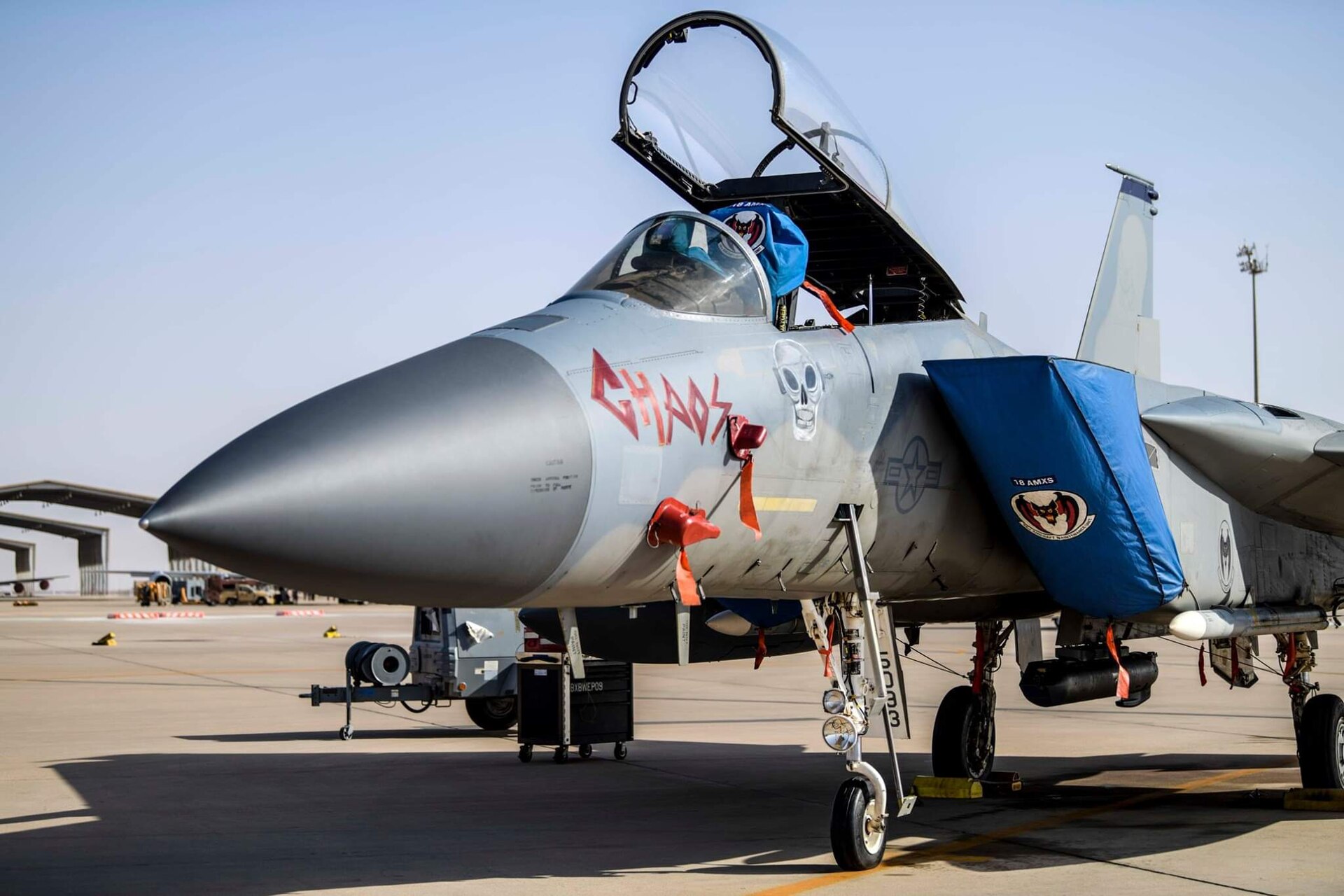
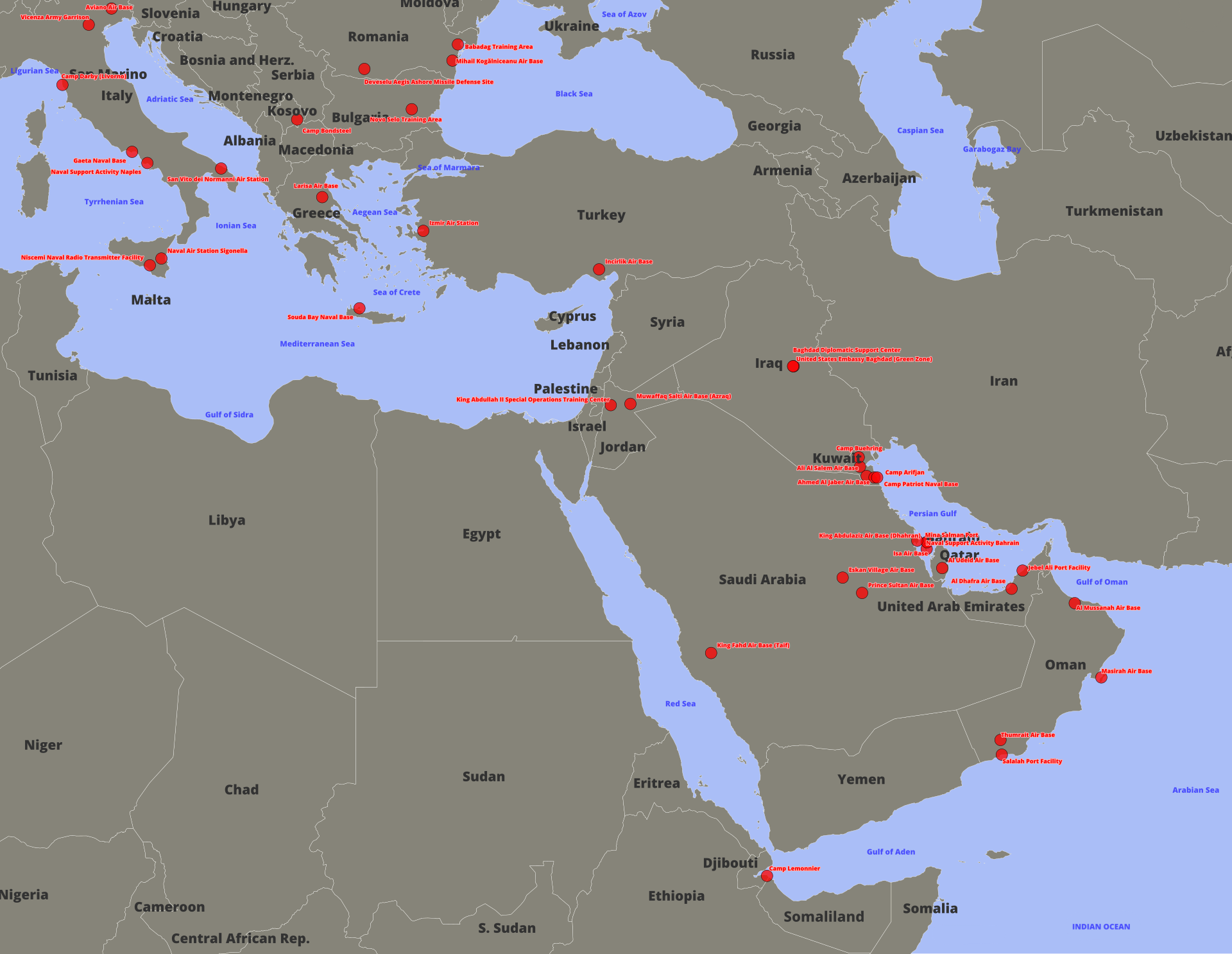
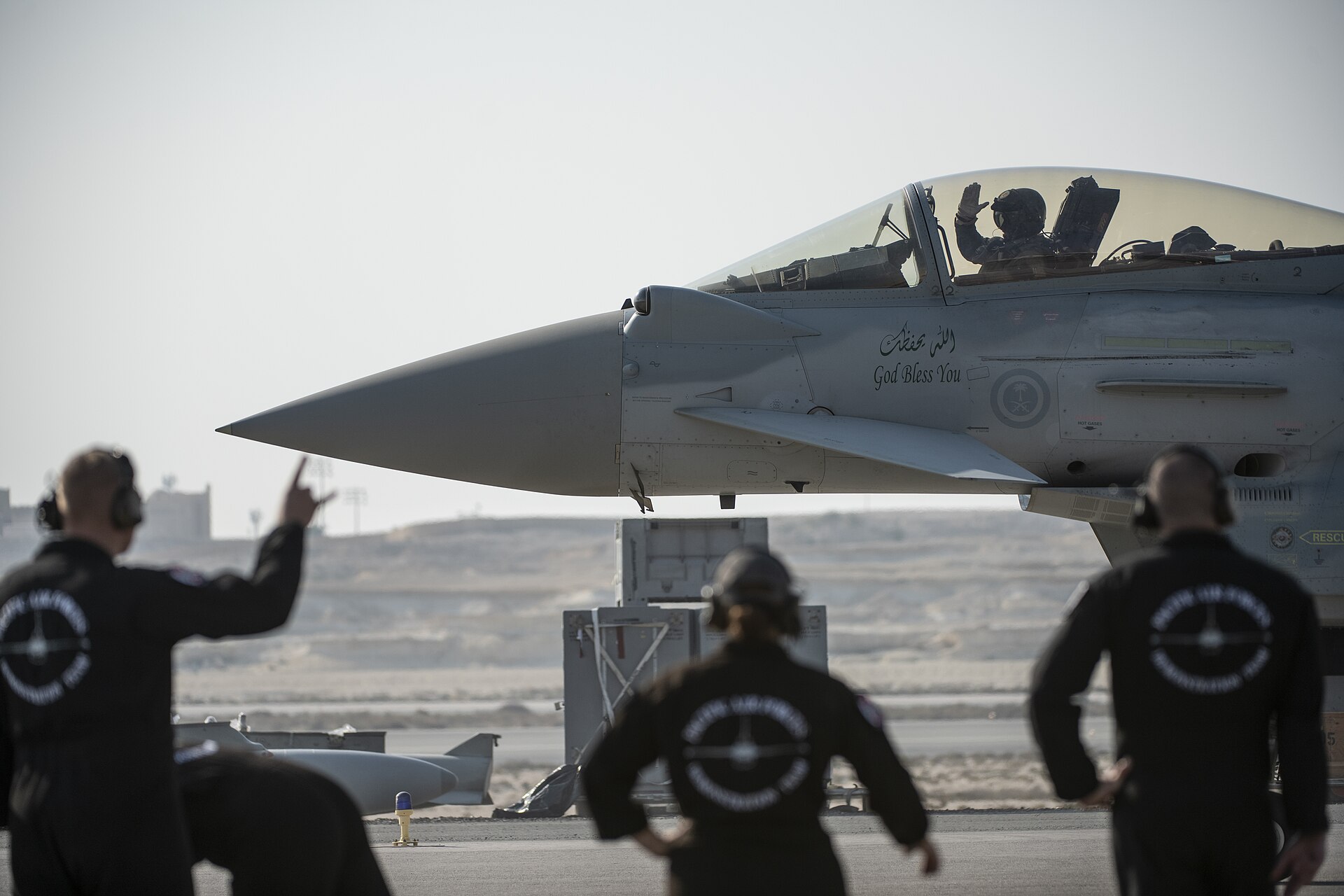
On or around March 21, 2026, Saudi Arabia granted the United States operational access to King Fahd Air Base, a major Royal Saudi Air Force installation in Taif, Mecca Province, situated at 1,477 metres elevation in the Hejaz foothills roughly 150 kilometres southeast of Jeddah. Multiple US and Western officials confirmed the arrangement to Middle East Eye; the Wall Street Journal and Bloomberg followed on March 24, describing it as “an apparent reversal after saying its bases couldn’t be used to attack its longtime rival.” The base hosts three RSAF wings — the 2 Wing flying Eurofighter Typhoons, the 10 Wing operating F-15C/D and advanced F-15SA variants, and the 9 Wing providing rotary support — and its runway and hardened shelters are rated for heavy military transport and fast-jet operations.
King Fahd Air Base sits approximately 1,400 kilometres from the nearest Iranian launch positions — beyond the effective combat radius of Iran’s Shahed-series one-way attack drones, which max out at roughly 1,000 to 1,200 kilometres depending on variant and payload. Prince Sultan Air Base near Riyadh, by contrast, is substantially closer to Iranian territory — and the consequences of that proximity became catastrophically clear on March 27, when Iranian ballistic missiles and drones struck PSAB, destroying at least one E-3G Sentry AWACS (serial 81-0005) and heavily damaging at least three KC-135 Stratotanker refuelling aircraft, wounding twenty-nine or more American service members in the first confirmed combat loss of a US AWACS.
The Taif decision was not announced publicly. No press conference, no Royal Court communiqué, no coordinated messaging with Washington. It leaked through the Wall Street Journal and Middle East Eye, sourced to unnamed US and Western officials — the kind of disclosure pattern that suggests either a deliberate signal to Tehran dressed up as a leak, or a genuine breach of operational security by officials who understood the significance of what Riyadh had just done. Either way, by March 24 the information was in the public domain and Iran’s strategic calculus adjusted accordingly.
Why Did Saudi Arabia Reverse Its Neutrality Pledge?
Iran struck Saudi oil infrastructure, military bases, and civilian areas despite the February 28 neutrality pledge — delivering thirty-eight missiles and hundreds of drones by late March. The March 27 PSAB strike destroyed irreplaceable US platforms. Washington needed an alternative hub beyond drone range. Riyadh concluded the costs of non-belligerency now exceeded the costs of co-belligerency, and offered Taif.
The Saudi Foreign Ministry’s February 28 statement — that “the Kingdom had confirmed that it would not allow its airspace and territory to be used to target Iran” — was issued on the same day the US-Israeli strikes on Iran began. It was, in principle, a declaration of non-belligerency, designed to keep Saudi Arabia out of an Iranian retaliatory target set while still allowing Washington to operate its existing defensive assets from Saudi bases. The problem was that Iran did not respect it. Within seventy-two hours of the war’s opening, Iranian missiles and drones began striking Saudi territory, beginning a campaign that by late March had delivered approximately thirty-eight missiles and 435 drones against targets across the Kingdom, with a single-day peak of nearly 100 drones on March 17.
The most consequential of these strikes hit Saudi Arabia’s economic infrastructure. On March 2, Iranian drones struck the Ras Tanura refinery, forcing Saudi Aramco to halt operations for approximately a week. The Tasnim News Agency, aligned with the IRGC, subsequently published a threat list naming Saudi Arabia’s SAMREF refinery and Jubail petrochemical complex as imminent targets. From Riyadh’s perspective, the neutrality declaration had purchased exactly nothing: Iran was hitting Saudi oil infrastructure, Saudi military bases, and Saudi civilian areas regardless of the Kingdom’s stated posture.
The Kingdom and its partners possess significant capabilities, and the patience we have shown is not unlimited. It could be a day, two days, or a week — I will not say.
Prince Faisal bin Farhan, Saudi Foreign Minister, March 19, 2026
The Wall Street Journal, Bloomberg, and Middle East Eye sourcing reconstructs the reversal logic as follows: Saudi neutrality was supposed to provide protection; it did not. Iran’s strikes degraded US operational capacity at PSAB, the existing hub for American air operations, destroying irreplaceable surveillance and refuelling platforms. Washington needed an alternative basing arrangement beyond Iranian drone range. Riyadh, having absorbed weeks of punishment for a neutrality that Iran plainly did not recognize, concluded that the costs of formal non-belligerency now exceeded the costs of co-belligerency — and offered Taif. Dr. Ausaf Sayeed, a former Indian ambassador to Saudi Arabia, described the trajectory precisely to StratNews Global: “Saudi Arabia’s role has followed a clear, if reluctant, arc, from declared neutrality to logistical co-participation.” By opening Taif, he added, “Riyadh has crossed from passive host to active enabler.”
What Makes a State a Co-Belligerent Under International Law?
The Chatham House/ICRC framework requires four cumulative criteria: a pre-existing armed conflict; actions related to the conduct of hostilities; military operations supporting one party; and an official state decision to do so. Hosting offensive strike platforms that sortie against an adversary’s territory satisfies all four and crosses the legal threshold from non-belligerency to co-party status.
The legal framework for determining when a state crosses from non-belligerency to co-party status in an armed conflict was comprehensively analysed in a March 2024 Chatham House research paper by Alexander Wentker, Miles Jackson, and Lawrence Hill-Cawthorne. The ICRC’s support-based approach, which Chatham House examines in detail, establishes four cumulative criteria: first, a pre-existing armed conflict where the state intervenes; second, actions related to the conduct of hostilities undertaken by the intervening state; third, military operations carried out in support of one party to the conflict; and fourth, an official decision to support that party. Saudi Arabia’s Taif decision satisfies all four. The US-Iran war constitutes the pre-existing conflict; hosting offensive strike platforms that sortie against Iranian targets constitutes conduct related to hostilities; the operations are carried out in support of the US-Israeli coalition; and the decision was taken at the level of the Saudi state.
Chatham House draws an explicit distinction between different forms of territorial access. Permitting overflights or refuelling stopovers for transport aircraft does not, in its analysis, cross the co-party threshold — those are forms of indirect support that allow a beneficiary to build capabilities without having a direct impact on the opposing party’s military operations. But basing offensive strike platforms that fly combat sorties against an adversary’s territory is a qualitatively different act. It has, in Chatham House’s language, “a direct impact on the opposing party’s ability to carry out its military operations.” That is the line Riyadh crossed at Taif.
Co-party status carries a direct legal consequence. Under international humanitarian law, Saudi territory, military installations, and supporting infrastructure — including the logistical and communications networks that enable Taif’s operations — become lawful military objectives. Whatever arguable protection Saudi Arabia’s declared neutrality might have provided under the law of neutrality evaporates once co-party status attaches. As Chatham House notes, “the law of neutrality has nothing to say on when the line to co-party status is crossed — co-party status and neutrality are separate legal questions.” A state cannot simultaneously claim neutral protection and host offensive combat operations. Saudi Arabia does not become a co-party because Iran says so; it becomes one because of its own acts.
The Gulf War Precedent and Why It Does Not Apply
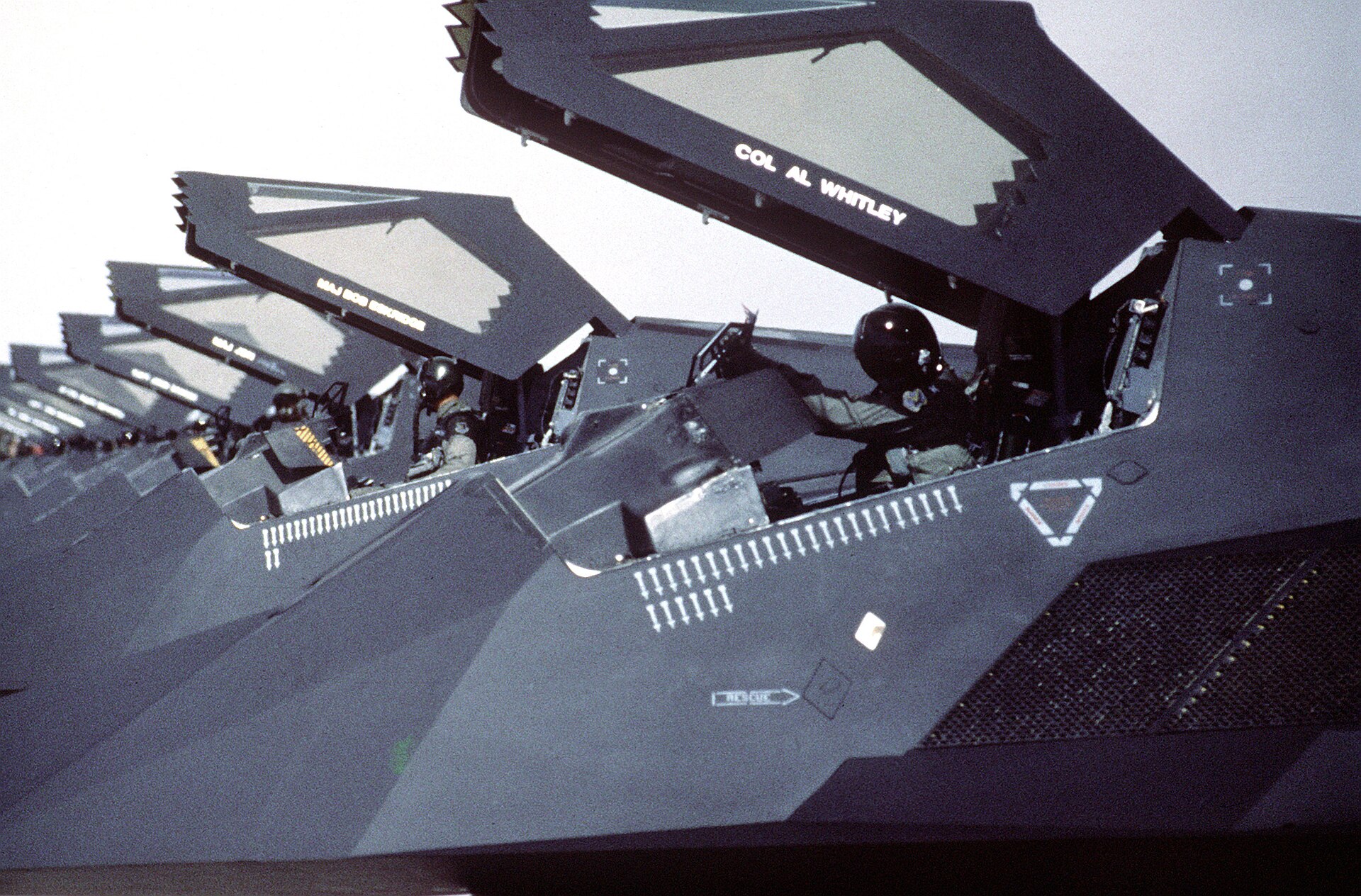
Supporters of the Taif decision have pointed to the 1990-1991 Gulf War as precedent: King Fahd Air Base hosted US Air Force U-2 and TR-1 reconnaissance aircraft during Operation Desert Shield and Desert Storm, with the 1704th Reconnaissance Squadron (Provisional) accumulating 284 sorties and 2,726.2 flight hours. EF-111A Ravens also operated from the base. The facility proved its value as a rear-echelon platform — its distance from the Iraqi theatre made it suitable for high-altitude intelligence collection while keeping sensitive assets beyond the reach of Iraqi Scud missiles.
But the 1991 analogy obscures more than it illuminates. In that conflict, Saudi Arabia was itself an invaded party — Iraq had seized Kuwait and directly threatened Saudi territory, and Riyadh formally requested US military assistance under a bilateral arrangement that predated the conflict. Saudi Arabia was a principal party from the outset, not a neutral state sliding into co-belligerency through incremental escalation. The UN Security Council had authorized the use of force under Resolution 678. The legal and political architecture was fundamentally different from the current situation, in which Saudi Arabia was not at war with Iran when the US-Israeli strikes began on February 28, had maintained diplomatic relations with Tehran restored through the 2023 China-brokered détente, and had publicly committed to keeping its territory out of offensive operations.
The Gulf War also offers a warning that the historical-precedent argument tends to elide. In 1991, Iraq launched Scud missiles at Saudi Arabia in direct retaliation for its role as a coalition host — targeting Riyadh and Dhahran, killing twenty-eight American soldiers in a single strike on a barracks in Khobar. Iran’s retaliatory capacity in 2026 is orders of magnitude greater than Iraq’s in 1991. The IRGC has already demonstrated its ability to strike PSAB with ballistic missiles and destroy irreplaceable American platforms. The question is not whether Taif re-creates the Gulf War basing model but whether Saudi Arabia can absorb the Iranian response that the Gulf War parallel implicitly concedes will come.
How Has Iran Responded to the Taif Decision?
Iran declared on February 28 that any country hosting US operations against it would be a legitimate target. The March 21-24 Taif disclosure did not change that posture — it gave Iran legal justification to intensify it. The IRGC struck PSAB on March 27 and later published a counter-target list naming the King Fahd Causeway among eight Gulf and Jordanian bridges.
Iran’s formal position, stated on February 28 — the day the war began — was unambiguous: “any country that would allow its territory to be used for attacks against Iran would be considered a legitimate target.” The IRGC declared “all US assets throughout the region are considered legitimate targets for Iran’s army.” The Taif disclosure on March 21-24 did not change Iran’s declared posture; it provided Iran with the legal and rhetorical justification to act on it with greater intensity. The IRGC Aerospace Force framed its March 27 strike on PSAB as a direct response to the use of Saudi territory for US operations, stating: “This operation will continue relentlessly until the enemy is decisively defeated.”
According to Critical Threats, the American Enterprise Institute’s conflict tracker, Iran consciously limited its strikes on Saudi Arabia in the days immediately surrounding the Taif disclosure. On March 23, Iran launched forty-seven drones at Saudi targets; on March 24 — the day the Wall Street Journal confirmed the Taif arrangement — it launched just one. Two unspecified sources told Israeli media on March 22 that Iran had decided to limit strikes on Saudi Arabia “due to concerns that continued strikes could trigger a direct Saudi military response.” The calibration was deliberate: Tehran was trying to keep Riyadh below the threshold of full military entry, even as the Taif decision was rendering that restraint moot.
| Date | Drones Targeting Saudi Arabia | Context |
|---|---|---|
| March 22 | Multiple (unspecified) | Israeli media reports Iran limiting Saudi strikes |
| March 23 | 47 | Pre-disclosure peak |
| March 24 | 1 | WSJ confirms King Fahd base access |
| March 27 | Ballistic missiles + drones | PSAB struck; AWACS and KC-135s destroyed |
The IRGC’s published counter-target list, disseminated through Fars News Agency in early April after US-Israeli strikes destroyed the B1 bridge in Karaj, named eight Gulf and Jordanian bridges as potential retaliatory targets — including the King Fahd Causeway linking Saudi Arabia to Bahrain. The list was calibrated for psychological impact: every bridge named is a piece of civilian infrastructure whose destruction would sever economic and transport links across the Gulf. That the list appeared after the Taif decision, and after the Karaj bridge strike, suggests it is part of Iran’s escalatory signalling architecture rather than a bluff. The IRGC has already struck Ras Tanura, already destroyed American aircraft at PSAB, already hit Saudi Arabia, Kuwait, and the UAE in a single strike window. The counter-target list is not a threat; it is a menu.
The MBS Calculus: Deterrence Without a Treaty
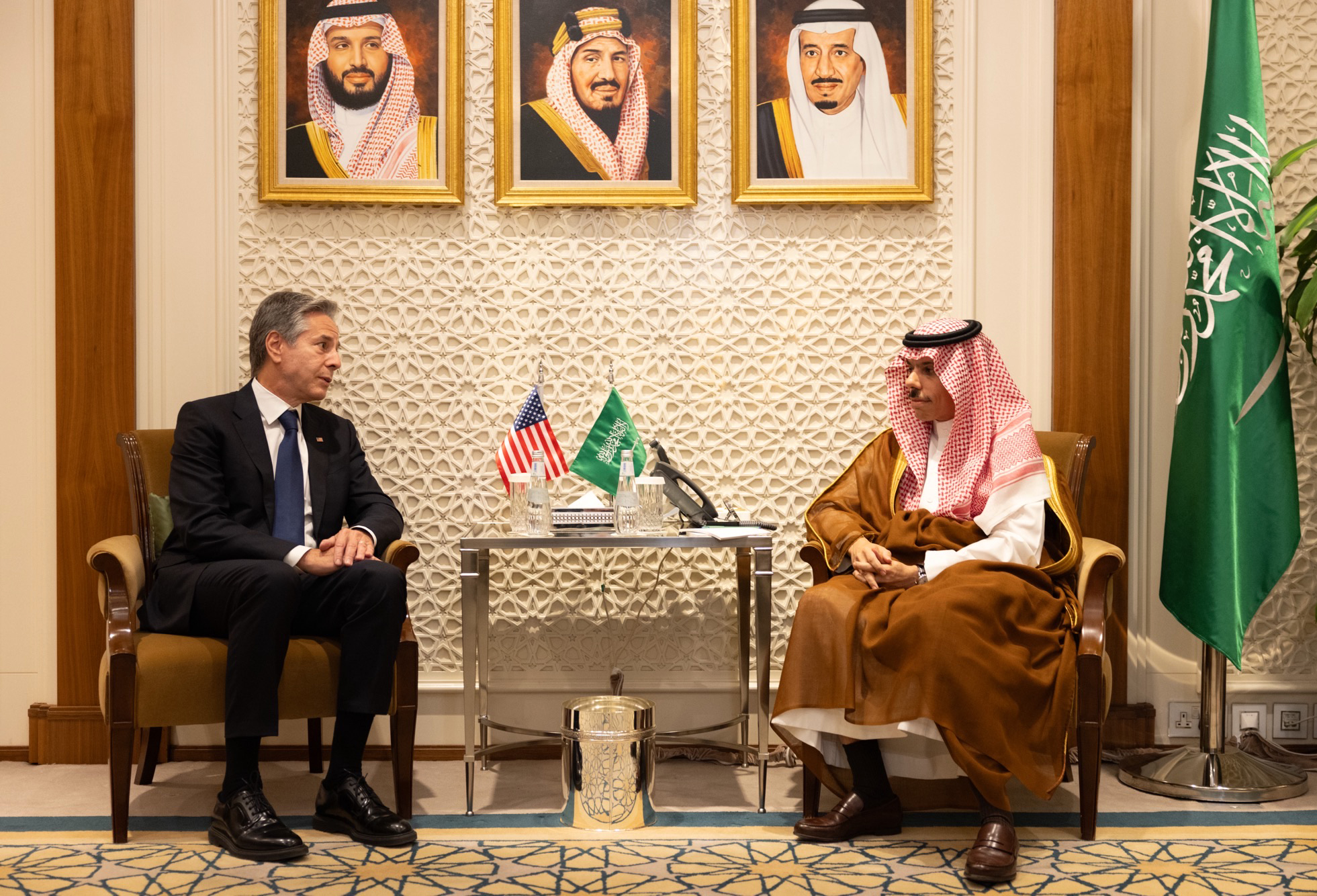
The most striking feature of the Taif decision is what Saudi Arabia did not obtain in exchange for it. MBS has made the Kingdom a co-belligerent in a war against a neighbour with demonstrated capacity to strike Saudi oil infrastructure, military installations, and civilian targets — and he has done so without securing a mutual defence treaty, without an Article 5-equivalent guarantee, and without even a published text of the Strategic Defence Agreement signed alongside the November 2025 MNNA designation. As the Stimson Center noted in its assessment of that designation, Major Non-NATO Ally status “does not provide any special or enforceable security guarantees, nor is it a binding treaty.” Saudi Arabia is absorbing the risks of co-belligerency while holding a designation that entitles it to priority arms purchases and joint R&D — benefits that are commercial, not strategic.
The $142 billion defence cooperation agreement signed on May 13, 2025, which the White House described as “the largest military cooperation agreement in US history,” creates a different kind of leverage — and it runs in Washington’s direction. The agreement covers air and space forces, missile defence, maritime security, land forces, and information systems. A February 2026 DSCA notification confirmed a Saudi request for $3.0 billion in F-15 sustainment foreign military sales. When a state is in the middle of a $142 billion procurement relationship and simultaneously requesting billions in sustainment for the platforms it is flying in combat, the seller has structural leverage over the buyer’s strategic decisions. The suggestion that MBS freely chose to open Taif, rather than responding to pressure from an arms supplier on whom the RSAF’s operational readiness depends, requires ignoring the commercial architecture entirely.
Bernard Haykel, professor of Near Eastern Studies at Princeton, offered a framing that captures the emotional logic, if not the strategic calculation, behind the decision. Saudi Arabia and the UAE, he told Middle East Eye, “were neutral before the war, but as they have been attacked, they have come to the realization that they cannot live with the hardline Iranian regime next door, which can extort the region by closing the Strait of Hormuz.” Dr. Muddassir Quamar of the Centre for West Asian Studies at JNU Delhi offered a complementary assessment to StratNews Global, noting that Saudi Arabia “does view Iran as an expansionist power with regional hegemonic ambitions” and that the Kingdom had shown “extraordinary restraint by not directly joining the war” — restraint that the Taif decision effectively ended.
The Oil Exposure Arithmetic
The financial risk MBS has accepted with the Taif decision is quantifiable. Saudi Arabia’s war-time export rate has already fallen from 7.3 million barrels per day to approximately 3.33 million bpd — driven by Hormuz disruption, Iranian strikes on infrastructure including Ras Tanura, and the operational demands of rerouting exports through the East-West Pipeline to Yanbu. The Yanbu bypass does not eliminate vulnerability — it shifts the chokepoint from Hormuz to the Red Sea, where Bab el-Mandeb remains a secondary exposure.
| Metric | Pre-War | War-Time (April 2026) | Change |
|---|---|---|---|
| Total exports | 7.3M bpd | ~3.33M bpd | -54% |
| Ras Tanura capacity | 550,000 bpd | Intermittent (struck March 2) | Degraded |
| Hormuz-dependent flow | ~80% of exports | Near zero | Severed |
| Yanbu bypass utilisation | Minimal | ~80-85% of exports | Primary route |
| Brent crude (approx.) | $78-82/bbl | ~$109/bbl | +35% |
The elevated Brent price — roughly $109 per barrel in early April — partially compensates for the volume loss in revenue terms, but the fiscal arithmetic is precarious. Saudi Arabia’s break-even oil price for its 2026 budget was calculated on the assumption of stable production near quota levels. At 3.33 million bpd and $109 Brent, the Kingdom is generating substantially less revenue than its fiscal plan requires, even before accounting for the direct costs of war damage, increased defence spending, and the collapse of non-oil economic activity that has pushed the PMI below 50. Co-belligerency does not improve these numbers. It worsens them, because every additional Iranian strike on Saudi energy infrastructure now carries the legal and political imprimatur of legitimate military targeting under IHL.
The IRGC has already demonstrated both the will and the capability to hit Saudi oil facilities. Former CIA Director Bill Burns, in an assessment reported by Business Standard in April 2026, stated that Tehran “is going to look to maintain the leverage that they have rediscovered by disrupting traffic” through Hormuz, seeking “long-term deterrence and security guarantees” and “some direct material benefits” such as passage fees in any post-war settlement. The Saudi decision to become a co-belligerent does not reduce Iranian incentives to target Saudi oil infrastructure; it amplifies them, because degrading the economic capacity of a co-party is a recognized military objective under the same Chatham House framework that defines the co-party threshold Riyadh has crossed.
What Does MBS Think He Gets?
MBS appears to view Taif as the price of admission to the post-war order: co-belligerency buys a seat at the negotiating table, shapes Hormuz’s reopening terms, and locks in the Kingdom as Washington’s indispensable Gulf partner — provided the war ends on terms Washington controls and Washington delivers a security architecture worth the cost.
The JINSA assessment published on the same day the Wall Street Journal confirmed the Taif arrangement — March 24 — provides the clearest window into the strategic bet MBS is placing. JINSA reported that “Crown Prince Mohammed bin Salman is close to a decision to join the war against Iran, with one source saying it is ‘only a matter of time.'” The Wall Street Journal’s own sources described MBS as “eager to re-establish deterrence against Iran” and “close to a decision to join the attacks.” The framing across multiple outlets is consistent: MBS views the war as an opportunity to permanently degrade Iran’s capacity for regional coercion — what Dr. Ausaf Sayeed characterised as “calculating that a defanged, post-war Iran would remove the kingdom’s most dangerous regional rival.”
MBS appears to be betting that the United States will finish the job — that the 20,000 American troops in theatre, the 13,000-plus sorties already flown, and the 12,300-plus Iranian targets already struck according to CENTCOM figures will produce an outcome in which Iran’s retaliatory capacity is substantially diminished. In that scenario, Saudi co-belligerency purchases a seat at the post-war negotiating table, shapes the terms of Hormuz’s reopening, and cements the Kingdom’s position as Washington’s indispensable Gulf partner. The private urgings MBS reportedly made to Trump — to press ahead with the war, and in the most aggressive version, to pursue regime change — are consistent with this logic: the crown prince wants the war won, not managed.
But the bet depends on conditions MBS does not control. The war must end favourably, which requires sustained American political will through what is now Day 37 of a conflict with no visible endgame. The ceasefire frameworks currently circulating — the Islamabad Accord’s 15-20 day MOU, the Witkoff 45-day phased approach — keep collapsing against the IRGC authorization ceiling that prevents any Iranian negotiator from accepting terms. Iran must not escalate against Saudi infrastructure in ways that produce a domestic political crisis in Riyadh — a condition the IRGC has shown limited interest in respecting. And Washington must deliver a security architecture that makes co-belligerency worth the cost — a mutual defence guarantee, a nuclear umbrella, something with more contractual force than an MNNA designation and an arms-sale catalogue.
The Stimson Center’s assessment that Saudi Arabia’s nuclear hedging “will not depend on Iran or the war’s outcome” suggests that at least some analysts believe MBS himself does not fully trust the American security commitment he has wagered the Kingdom’s neutrality to obtain. Prince Faisal bin Farhan’s March 19 warning — that Iran’s trust with the Arab world “has completely been shattered” and that “Saudi Arabia reserves the right to take military action if deemed necessary” — reads differently after the Taif decision. It was not a warning but the public preparation of political ground for a choice already made, or about to be made, in which the foreign minister’s role was to ensure the decision could be framed as reactive rather than aggressive, defensive rather than opportunistic.
The co-guarantor role Saudi Arabia was offered in ceasefire negotiations is now structurally compromised: a co-belligerent cannot serve as a neutral guarantor, and any Iranian negotiator who agreed to Saudi mediation after Taif would be accepting the good offices of a party actively hosting the aircraft bombing their country.
Frequently Asked Questions
Has Saudi Arabia formally declared war on Iran?
No — Saudi Arabia has not issued a formal declaration of war and has not launched offensive strikes against Iran using its own forces. Under international humanitarian law, however, co-belligerency does not require a formal declaration; the Chatham House framework, based on ICRC criteria, establishes that a state becomes a co-party through its acts, specifically by hosting offensive strike platforms that sortie against an adversary. The distinction between declared war and operational co-belligerency is legally meaningful for Saudi domestic politics but irrelevant under IHL for determining whether Saudi military installations are lawful targets.
Could Saudi Arabia lose its MNNA status over the Taif decision?
The question is backwards. The MNNA designation, granted in November 2025, was part of the political architecture that made the Taif decision possible, not a status endangered by it. MNNA provides priority access to surplus US defence equipment, eligibility for cooperative R&D with the Pentagon, and the ability to host US-owned military stockpiles outside US facilities — the last of which is directly relevant to Taif’s expanded role. The risk to Saudi Arabia is not losing MNNA status but discovering that MNNA status is the ceiling of what Washington is prepared to offer, even after Riyadh accepted co-belligerent risk. Congressional resistance to a binding mutual defence treaty with Saudi Arabia predates the war and has not diminished since February 28.
Is Taif actually beyond Iranian strike range?
Beyond Shahed drone range, yes — at 1,400 kilometres from the nearest Iranian launch positions, King Fahd Air Base exceeds the operational radius of Iran’s one-way attack drones. But Iran’s ballistic missile arsenal includes the Emad, Sejjil, and Khorramshahr variants with ranges of 1,700 to 2,000 kilometres, all of which can reach Taif. The base’s elevation at 1,477 metres and its position behind the Hejaz mountain range complicate low-altitude drone approaches, but ballistic trajectories are unaffected by terrain. The March 27 PSAB strike demonstrated that Iran can penetrate Saudi and US air defences with ballistic missiles; the failure to secure additional Patriot batteries from Poland means interceptor coverage remains stretched thin. Taif is safer than PSAB against drones, but against ballistic missiles the margin is narrower than the distance alone suggests.
What would it take for Saudi Arabia to return to neutral status?
Under the Chatham House framework, co-party status attaches based on a state’s acts, not its declarations. Saudi Arabia would need to revoke US access to King Fahd Air Base, cease hosting any offensive strike operations from its territory, and demonstrably end its operational support for coalition combat sorties — not merely announce a policy change, but implement one verifiable through the absence of continued operations. Even then, the legal position is debated: some scholars argue that co-party status, once established, persists for the duration of the conflict regardless of subsequent changes in behaviour, because the supporting state’s earlier actions already contributed to the conduct of hostilities. The practical obstacle is simpler: having accepted co-belligerent risk and absorbed the Iranian targeting that follows from it, the incentive structure for MBS now points toward deeper engagement, not withdrawal. Retreat would deliver the costs of co-belligerency without the potential benefits of a favourable post-war settlement.