
Ramadan transforms Saudi Arabia’s food scene into something extraordinary. From sunset until the early hours, cities come alive with lavish iftar spreads, late-night suhoor gatherings, charity tents feeding thousands, and Ramadan night markets overflowing with traditional sweets and street food. Whether you are a Muslim visitor timing your trip around the holy month or a non-Muslim tourist curious about what to expect, this guide covers everything you need to know about eating in Saudi Arabia during Ramadan — including where to find the best meals, what dishes to try, and how to navigate the rules. For broader trip planning, see our complete Saudi Arabia travel guide.
Best Time to Visit: February–March (Ramadan 2026 runs 18 February to 19 March)
Getting There: Fly into Riyadh (RUH), Jeddah (JED), or Dammam (DMM) — see our flights guide
Visa Required: Yes — tourist e-visa available for 63 nationalities
Budget: SAR 40–600 per person per meal (USD 11–160), depending on venue
Must-See: Luxury hotel Ramadan tents in Riyadh, waterfront iftars in Jeddah, charity iftar tents
Avoid: Eating or drinking in public during daylight hours — it is illegal and enforced
How Ramadan Changes Dining in Saudi Arabia
During Ramadan, Muslims fast from dawn (Fajr prayer, around 5:00 AM) until sunset (Maghrib prayer, around 6:00 PM). This reshapes daily life across the Kingdom. Restaurants close during daylight hours. Working hours shorten. The entire rhythm of the day shifts — mornings are quiet, and the real energy begins at sunset when the fast breaks with iftar.
After iftar prayers and the evening meal, Saudi cities buzz with activity well past midnight. Families head out for shopping, socialising, and a second meal called suhoor, eaten before dawn. Many restaurants and cafés stay open until 3:00 or 4:00 AM. For food lovers, Ramadan is arguably the most exciting month to visit — the variety, quality, and sheer abundance of food available between sunset and dawn is unmatched at any other time of year.
Important for non-Muslim visitors: Eating, drinking, and smoking in public during daylight hours is prohibited by law during Ramadan. Violations can result in fines or deportation. You may eat privately in your hotel room, and some hotels maintain discreet daytime dining for guests. For a deeper look at navigating Saudi Arabia as a non-Muslim visitor, see our non-Muslim travel guide. For more on travelling during Ramadan, read our dedicated guide.
Iftar: Breaking the Fast at Sunset
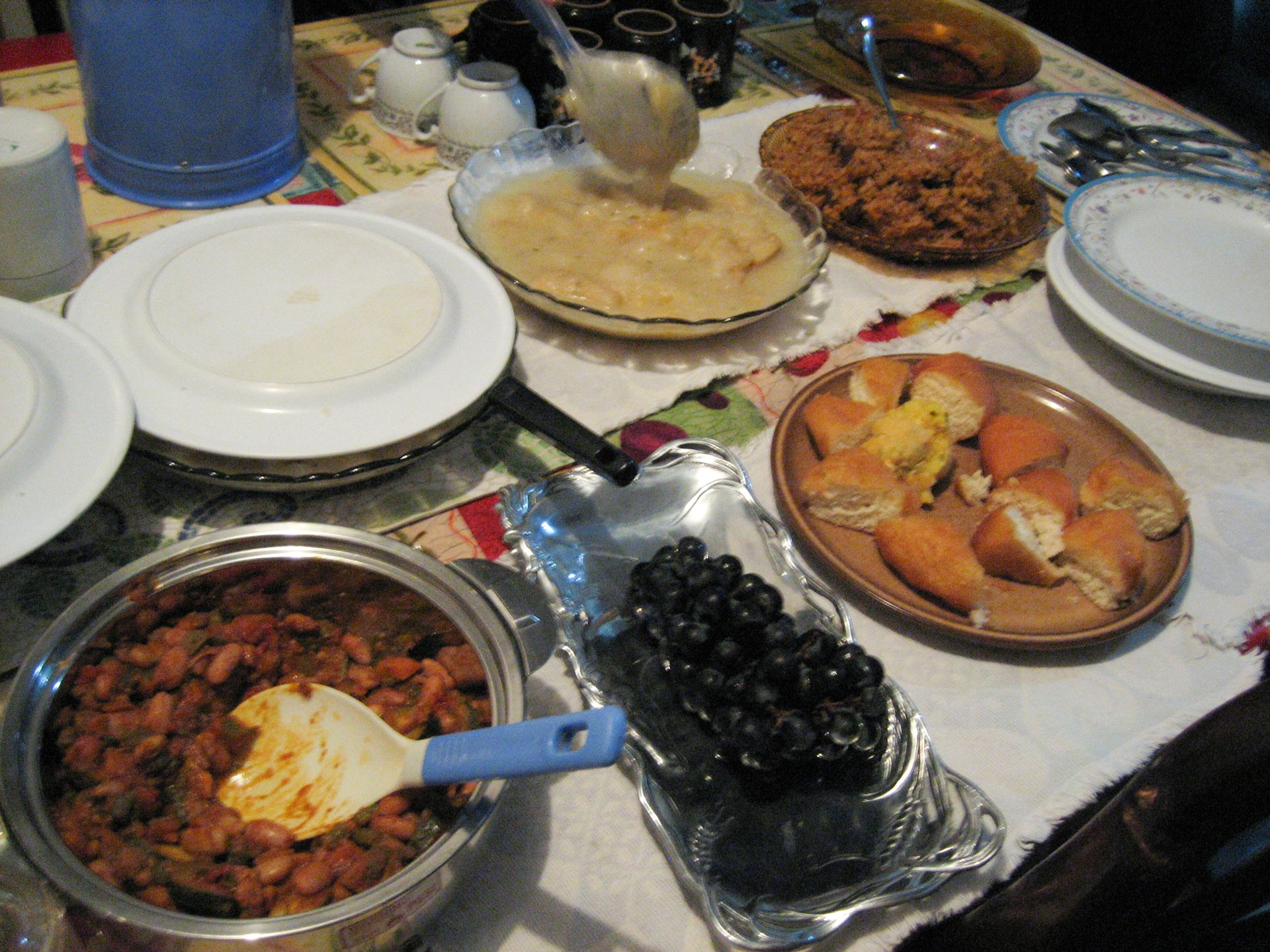
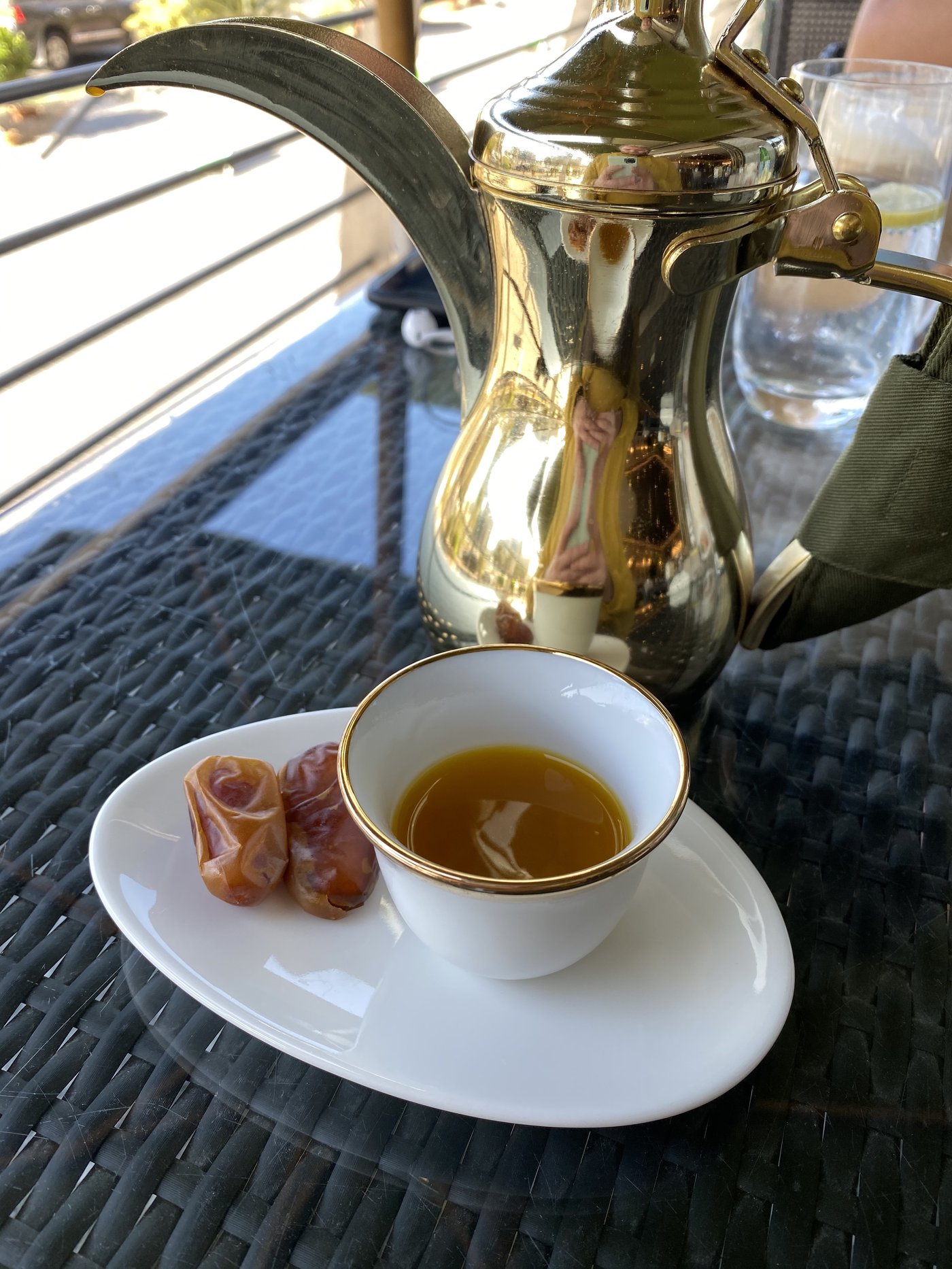
Iftar is the meal that breaks the day’s fast, timed to the Maghrib call to prayer at sunset. It is both a spiritual moment and a culinary event. Across Saudi Arabia, the tradition begins simply — an odd number of dates and a sip of water or Arabic coffee (gahwa) — before progressing to a full multi-course meal.
What to Expect at a Traditional Saudi Iftar
A typical Saudi iftar unfolds in stages:
- Dates and water or Zamzam water — following the Sunnah of the Prophet Muhammad, the fast is broken with dates. In many Saudi homes and restaurants, Zamzam water is served alongside.
- Arabic coffee (gahwa) and light starters — cardamom-spiced coffee, along with sambusa (fried pastry parcels filled with spiced meat or cheese), soups (especially lentil soup and harees), and salads.
- Main course — hearty dishes like kabsa (spiced rice with lamb or chicken), jareesh (cracked wheat porridge), matazeez (torn bread stew), or lamb ouzi. In Jeddah, Hijazi specialities like foul (smoky fava beans) and saleeg (creamy rice with chicken) dominate.
- Desserts — luqaimat (fried dough balls drizzled in date syrup), kunafa (cheese pastry soaked in syrup), qatayef (stuffed pancakes), and fresh fruit.
- Ramadan drinks — Vimto (a berry cordial that is wildly popular during Ramadan in Saudi Arabia), jallab (date and grape molasses drink), and qamar al-din (apricot juice).
Where to Eat Iftar in Riyadh
Riyadh’s Ramadan dining scene ranges from opulent hotel tents to neighbourhood restaurants and free community iftars. If you are visiting Riyadh during Ramadan, here are the standout options for 2026:
Luxury hotel Ramadan tents are the headline experience. The Four Seasons Hotel Riyadh (Hikayat Ramadan) is one of the city’s most anticipated annual events, featuring seven culinary islands with live cooking stations, lamb ouzi, jareesh, international dishes, and a dessert section with cheese kunafa and Italian gelato. Expect to pay around SAR 592 per person. The Ritz-Carlton Riyadh (Al Thuraya) offers a palace-like setting with a lavish iftar buffet at SAR 425 per adult (SAR 500 VIP). The Fairmont Riyadh takes a Bedouin bazaar approach with spiced camel kabsa and shawarma stations.
Mid-range and themed iftars offer excellent value. Chotto Matte serves a Japanese-Peruvian Nikkei iftar at SAR 170 per person, including wagyu sliders and date pudding. attaché serves slow-cooked lamb shank with Saudi coffee cheesecake for SAR 125. A.O.K Kitchen (Zallal) offers a family buffet at SAR 149 with a dedicated kids’ corner.
Neighbourhood restaurants across Riyadh serve traditional Najdi iftar dishes — jareesh, margoog, aseedah, and tawa — at far lower prices. Head to the streets around Al Bathaa or the older districts for authentic, no-frills iftar meals that locals eat every night.
Where to Eat Iftar in Jeddah
Jeddah’s Ramadan food scene reflects its Hijazi heritage and cosmopolitan port-city culture. Waterfront settings add a dimension that Riyadh cannot match.
Maritime at The Jeddah EDITION is widely considered one of the best iftar experiences in the Kingdom — a waterfront setting with live cooking stations, evening entertainment, and Red Sea views, priced at SAR 450 per person. Shangri-La Jeddah offers two venues: Niyyali for Lebanese-inspired cuisine and Waterfront Kitchen for an expansive buffet with coastal views.
Heritage dining is where Jeddah excels. Al Mirkaz, part of the Leylaty Group, blends traditional Hijazi hospitality with refined presentation. Yaza, a Michelin Service Award winner, serves a Saudi fusion buffet at SAR 235. For budget-conscious travellers, LaFamiglia Bistro offers iftar at SAR 119 and suhoor at SAR 99.
For the most atmospheric experience, walk through the UNESCO-listed Al-Balad historic district after iftar. The coral-stone buildings and carved wooden balconies are lit with Ramadan lanterns, and market stalls sell traditional Hijazi food — foul, shouraik bread, and balila — late into the night. See our Jeddah Islamic heritage sites guide for more on this district.
Where to Eat Iftar in the Eastern Province
The Dammam and Al Khobar area offers more affordable iftar options. The Dammam Palace Hotel runs a hotel buffet at just SAR 79 per person — one of the best-value hotel iftars in the country. Hilton Garden Inn and DoubleTree Financial District both offer mid-range buffets, often with early-bird discounts on deal platforms like Cobone.
Eastern Province cuisine has its own Ramadan identity. Look for saloona (meat and vegetable stew), which is the traditional iftar starter here, and luqaimat — deep-fried dough balls dipped in date syrup — which in this region are served as a main dish, not just a dessert.
Where to Eat Iftar in AlUla
For a truly unique Ramadan experience, AlUla offers desert dining against the backdrop of ancient Nabataean tombs. The Chedi Hegra (Prima Classe) serves a curated multi-course iftar set among the sandstone formations of the UNESCO-listed Hegra site. The menu blends regional Saudi ingredients with international technique, served under lanterns with the desert silence as your soundtrack. It is one of the most memorable iftar settings anywhere in the world.
Suhoor: The Late-Night Meal Before Dawn
Suhoor (also spelled sahoor or sahur) is the pre-dawn meal eaten before the Fajr prayer, typically between midnight and 4:30 AM. While iftar is a feast, suhoor tends to be lighter — soups, eggs, bread, cheese, fresh fruit, and porridge-like dishes designed to sustain energy through the next day’s fast.
But suhoor in Saudi Arabia has evolved far beyond simple sustenance. It has become a social event — the late-night equivalent of a dinner out. After iftar and Taraweeh prayers, families and friends gather at restaurants, hotel lounges, and open-air cafés for hours of conversation over food and tea, often staying until 2:00 or 3:00 AM.
Best Suhoor Spots in Riyadh
- Four Seasons Ramadan Tent — the same lavish venue offers a dedicated suhoor experience from SAR 190, with a more relaxed atmosphere than iftar.
- Fork & Pipe at JW Marriott — open 9:00 PM to 3:00 AM with à la carte options, a favourite late-night spot.
- Flamingo Room — red fabric tent ambience with an interactive Saudi coffee service, SAR 250 per person.
- Asian Hub — pan-Asian cuisine, open until 3:00 AM, SAR 105 per person.
Best Suhoor Spots in Jeddah
- The Roof — one of the most atmospheric open-air suhoor venues in the Kingdom, with a curated menu under the night sky.
- Maritime at The Jeddah EDITION — continues into suhoor service at SAR 250, with a more relaxed pace than the iftar sitting.
- Kaia at Shangri-La Jeddah — elevated suhoor with Red Sea views, accompanied by live oud performances.
- Etoile Doumer — a budget-friendly suhoor buffet at SAR 85 per person.
Booking tip: Popular iftar and suhoor venues — especially hotel Ramadan tents — fill up fast. Book at least several days in advance, and up to a week ahead for weekends and the final ten nights of Ramadan (the most spiritually significant period, when demand peaks).
Traditional Saudi Ramadan Dishes You Must Try
Ramadan is the best time to taste Saudi Arabia’s regional cuisine. Many dishes are prepared exclusively during the holy month, passed down through generations. Whether you are eating at a five-star hotel or a neighbourhood restaurant, these are the dishes to seek out.
Starters and Soups
| Dish | Description | Region |
|---|---|---|
| Sambusa | Deep-fried pastry triangles filled with spiced minced meat, cheese, or vegetables. The Saudi version is crispier and thinner than Indian samosas. | All regions |
| Harees | Slow-cooked cracked wheat and lamb, simmered for hours until it becomes a creamy porridge. Lightly seasoned with cardamom and cinnamon. | All regions |
| Shorba Adas | Red lentil soup with cumin and lemon — the most common Ramadan soup in Saudi Arabia, served at nearly every iftar. | All regions |
| Foul | Slow-cooked fava beans with olive oil, lemon, garlic, and chilli. The Hijazi version has a distinctive smoky flavour unique to the western region. | Hijaz (Jeddah, Mecca, Medina) |
| Saloona | Meat and vegetable stew with tomatoes, courgettes, and aubergines, typically the first dish served at Eastern Province iftars. | Eastern Province |
Main Courses
| Dish | Description | Region |
|---|---|---|
| Jareesh | Crushed wheat cooked with meat and butter until thick and porridge-like, garnished with cinnamon and clarified butter. The quintessential Ramadan main course. | Central (Najd) |
| Kabsa | Saudi Arabia’s national dish — spiced rice with slow-cooked lamb or chicken, dried limes, and a tomato-based sauce. Served year-round but always at Ramadan iftars. | All regions |
| Matazeez | Torn pieces of dough cooked in a rich vegetable and meat stew. A hearty Najdi comfort food particularly popular during Ramadan. | Central (Najd) |
| Margoog | Similar to matazeez — thin dough sheets layered with vegetables, meat, and broth, then slow-cooked. | Central (Najd) |
| Saleeg | Creamy rice cooked in milk with chicken — a Hijazi comfort dish sometimes called “Saudi risotto.” | Hijaz |
| Haneeth | Slow-roasted lamb infused with spices, cooked for hours until tender. Common at street food stalls during Ramadan nights. | Southern regions |
Desserts and Sweets
| Dish | Description | Region |
|---|---|---|
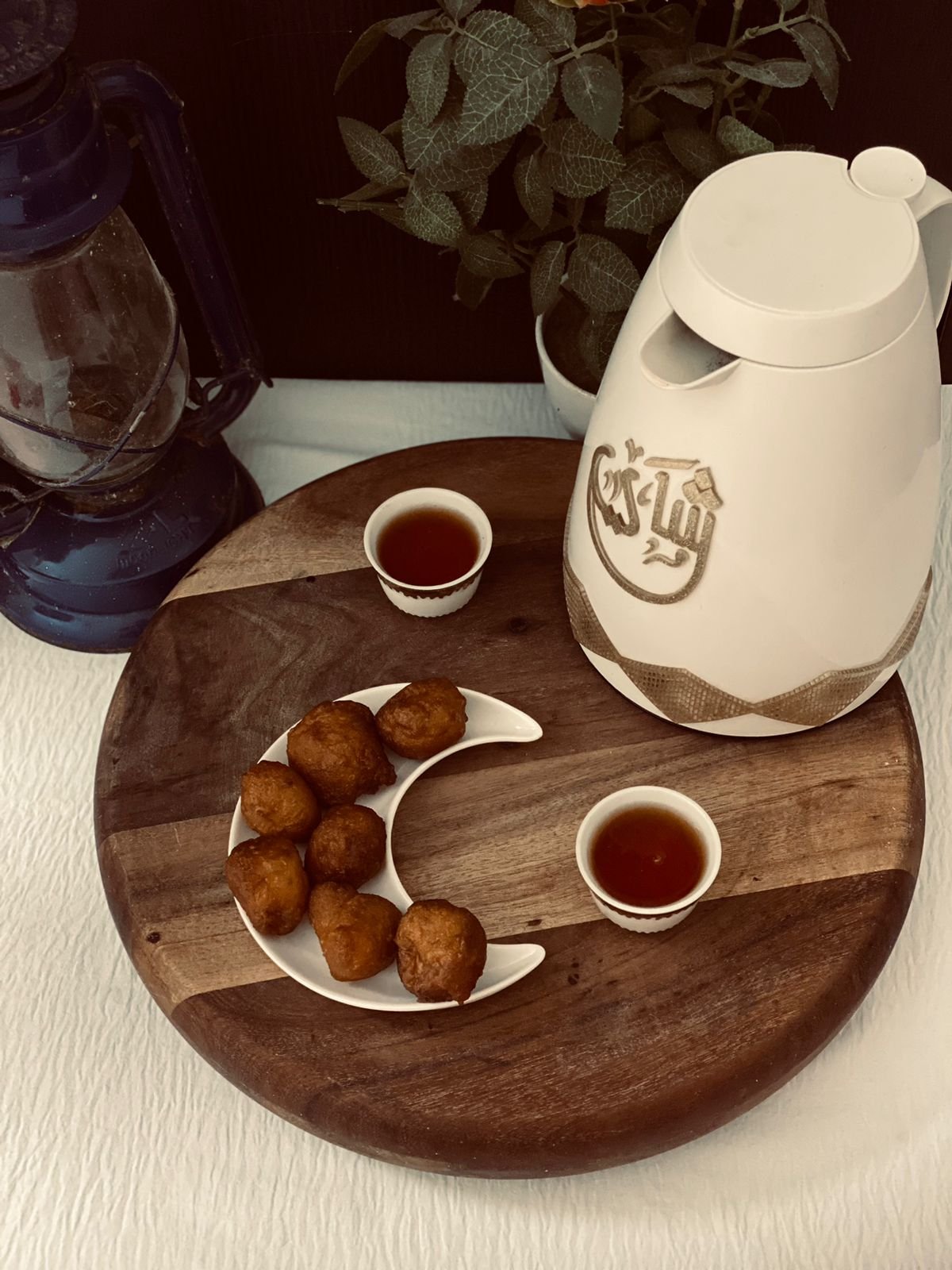
| Luqaimat | Small, round dough balls deep-fried until golden, then drizzled with date syrup or honey. Addictively sweet and crispy. In the Eastern Province, these are served as a main iftar item. | All regions (especially Eastern Province) |
| Kunafa | Shredded filo pastry layered with sweet cheese, baked until golden, and soaked in sugar syrup. Often served warm. | All regions |
| Qatayef | Stuffed pancakes filled with cream or crushed nuts, then fried or baked. Exclusively a Ramadan dessert — you will not find them at other times of year. | All regions |
| Hnini | A traditional Najdi dessert made from dates, brown bread, and butter, seasoned with cardamom and saffron. | Central (Najd) |
Ramadan Drinks
Several beverages appear exclusively during Ramadan:
- Vimto — a berry cordial mixed with water and ice that has become synonymous with Saudi Ramadan. Nearly every family serves it at iftar.
- Jallab — a sweet drink made from dates, grape molasses, and rose water, topped with pine nuts.
- Qamar al-Din — thick apricot juice, often served chilled. A Ramadan staple across the Arab world.
- Saudi champagne (non-alcoholic) — a sparkling mix of apple juice, sparkling water, and mint, served at upscale iftars.
Regional Ramadan Food Traditions
Saudi Arabia’s vast geography means that Ramadan food traditions vary significantly from region to region. Each area has its own signature dishes, reflecting local ingredients, climate, and cultural heritage.
Najd (Central Region — Riyadh, Qassim)
The heartland of Saudi Arabia favours hearty, wheat-based dishes. Iftars centre on jareesh, matazeez, margoog, and aseedah (a dense wheat porridge served with ghee and honey). Camel meat (hashi) is a prized iftar ingredient in the central region, often slow-cooked. In Qassim, tawa — a griddle bread made from whole wheat flour, black seeds, and sugar — is a beloved iftar specialty. Dessert is often hnini, the date-and-bread confection unique to Najd.
Hijaz (Western Region — Jeddah, Mecca, Medina)
The Hijaz has the most diverse Ramadan table, shaped by centuries of pilgrims passing through from every corner of the Muslim world. Foul with its distinctive smokiness, shouraik bread, balila (chickpea porridge), and duggah (a Medina-style spice-and-nut condiment) are the opening act. Main courses lean towards saleeg and seafood — Jeddah’s coastal location means grilled fish and shrimp often appear alongside rice dishes. Desserts include cheese kunafa and jubniya (sweet cheese pastry fried and dipped in syrup). If you are visiting Mecca or Medina during Ramadan, you will experience these traditions at their most authentic, especially around the Masjid al-Haram and Masjid al-Nabawi.
Eastern Province (Dammam, Al Khobar, Al Ahsa)
The Eastern Province shares culinary DNA with the Gulf states across the water. Saloona opens most iftars, followed by rice dishes with a Gulf influence — biryani, machboos, and grilled seafood. Luqaimat dominate the sweets table and are treated more seriously here than anywhere else in the country, often eaten as a full meal course rather than a light dessert. For more on this region, read our Dammam and Al Khobar travel guide.
Asir and the Southern Highlands
The cool mountain climate of Abha and the Asir region produces its own Ramadan traditions. Aseedah (wheat porridge) and haneeth (slow-roasted lamb) are the stars. Honey from the region — some of the most prized in the Arabian Peninsula — features prominently in desserts. The southern highlands also grow their own coffee beans, and Taif roses add a floral note to some regional Ramadan sweets.
Charity Iftar Tents and Community Meals
One of the most powerful Ramadan traditions in Saudi Arabia is the communal iftar. Across the country, charities, mosques, businesses, and wealthy individuals set up large iftar tents in public spaces, offering free meals to anyone who is fasting — workers, travellers, and the less fortunate.
These tents are an integral part of Saudi Ramadan culture. You will see them near mosques, in car parks, and along major roads. Meals are typically simple but generous — rice, stew, dates, water, and yoghurt — and many operate buffet-style to serve large crowds efficiently. For visitors, joining a communal iftar is one of the most authentic cultural experiences you can have in Saudi Arabia. You do not need to be Muslim to attend — all are welcome.
Etiquette tip: If you join a charity iftar, eat modestly, thank your hosts, and do not waste food. Many tents welcome volunteers — if you want to help distribute meals, simply ask. It is considered one of the most rewarding acts of Ramadan. For more on mosque and community etiquette, see our mosque etiquette guide.
Ramadan Night Markets and Street Food
After iftar, Saudi cities come alive with Ramadan night markets — open-air bazaars and street food stalls that operate from sunset until 1:00 or 2:00 AM. These markets are where Ramadan is at its most vibrant — lanterns strung overhead, the scent of cardamom and grilled meat in the air, families strolling between vendors selling everything from fresh kunafa to handmade incense.
Where to Find the Best Ramadan Night Markets
- Al-Balad, Jeddah — the UNESCO-listed historic district transforms during Ramadan. Narrow alleys between coral-stone buildings fill with market stalls selling Hijazi street food, traditional sweets, and Ramadan decorations. This is the most atmospheric night market in the country.
- Riyadh Boulevard and Al Bathaa — Riyadh’s night markets range from the modern (Boulevard Riyadh City) to the traditional (the markets around Al Bathaa and Dira Square). Street food stalls serve fresh sambusa, shawarma, grilled corn, and luqaimat.
- Qatif Souq, Eastern Province — a traditional market with particularly good luqaimat and Gulf-style street food.
- Medina’s Old Souq — the markets near the Prophet’s Mosque bustle with Ramadan activity, selling dates, Zamzam water, prayer beads, and traditional Hijazi foods.
Many charity stalls at Ramadan markets distribute free water, dates, and snacks to passersby. Some vendors donate a portion of their profits to charitable causes — the spirit of giving is woven into every aspect of Ramadan commerce in Saudi Arabia.
Ramadan Food Budget: What to Expect to Pay
Eating during Ramadan in Saudi Arabia can fit any budget. Here is a realistic breakdown:
| Experience | Price Range (SAR) | Price Range (USD) |
|---|---|---|
| Street food / night market meal | SAR 15–40 | $4–11 |
| Neighbourhood restaurant iftar | SAR 40–80 | $11–21 |
| Charity iftar tent | Free | Free |
| Mid-range hotel/restaurant iftar | SAR 100–250 | $27–67 |
| Luxury hotel Ramadan tent (iftar) | SAR 350–600 | $93–160 |
| Luxury hotel suhoor | SAR 85–250 | $23–67 |
| Budget hotel suhoor (Eastern Province) | SAR 39–79 | $10–21 |
For a detailed breakdown of travel costs across the country, see our Saudi Arabia cost guide.
Money-saving tip: Deal platforms like Cobone and Groupon regularly offer early-bird Ramadan buffet discounts of 30–50%. Check these before booking hotel iftars. Also, many restaurants run “buy one, get one free” promotions in the opening days of Ramadan — Brasa De Brazil in Jeddah, for example, offered unlimited Brazilian churrasco with this deal in 2026.
Rules for Non-Muslims: What You Can and Cannot Do
If you are visiting Saudi Arabia during Ramadan as a non-Muslim, here are the key rules to understand:
What Is Prohibited
- Eating, drinking, or smoking in public during daylight hours — this is a legal requirement, not just a courtesy. The Ministry of Interior has warned that violations can lead to fines, imprisonment, or deportation for expatriates and visitors.
- Playing loud music in public — during daylight hours, keep the volume respectful.
What Is Allowed
- Eating in your hotel room — hotels understand that non-Muslim guests need to eat during the day. Many provide room service or maintain a discreet dining area for non-fasting guests.
- Ordering food delivery — food delivery apps operate during Ramadan, and you can order to your accommodation.
- Eating at iftar and suhoor — you are welcome at restaurants after sunset. Joining a communal iftar is encouraged.
- Shopping and exploring at night — Ramadan nights are the busiest time for shopping, entertainment, and dining out.
For more on the dress code and general rules, our dedicated guides cover these topics in detail.
Practical Tips for Eating During Ramadan
Timing Your Meals
- Iftar time in 2026: Approximately 5:50–6:15 PM depending on the city and date within Ramadan. Check local prayer time apps (Athan, Muslim Pro) for exact times.
- Suhoor window: Most suhoor venues open from 9:00 or 10:00 PM and serve until approximately 4:30 AM (before Fajr).
- Restaurant opening hours: Most restaurants close between approximately 10:00 AM and 30 minutes before Maghrib (sunset). They reopen for iftar and stay open much later than usual — often until 2:00–4:00 AM.
Booking Advice
- Book luxury iftars in advance — hotel Ramadan tents and high-end restaurants fill up, especially on weekends (Thursday and Friday evenings) and during the last ten nights of Ramadan.
- Arrive early for popular iftars — seating is often first-come, first-served at mid-range restaurants. Arriving 15–20 minutes before Maghrib ensures you are seated when the fast breaks.
- Late Ramadan is busiest — the final ten nights (Laylat al-Qadr period) see the highest demand for dining. Book everything in advance.
What to Bring
- Cash for street food — while most restaurants accept cards, market stalls and small vendors may be cash-only. See our currency guide for ATM and exchange tips.
- Patience — traffic is heavy around iftar time as everyone rushes home or to restaurants. Roads clear dramatically at the exact moment of Maghrib, then fill again an hour later.
- A good appetite — portions during Ramadan are generous. Come hungry.
Best Cities for Ramadan Food Experiences
If food is your primary motivation for visiting Saudi Arabia during Ramadan, here is how the major cities compare:
| City | Best For | Signature Dish | Budget Level |
|---|---|---|---|
| Riyadh | Luxury hotel Ramadan tents, Najdi cuisine | Jareesh, kabsa | $$–$$$$ |
| Jeddah | Heritage dining, Hijazi cuisine, night markets | Foul, saleeg, kunafa | $$–$$$$ |
| Mecca / Medina | Spiritual iftar experience, charity meals | Foul, dates, Zamzam water | $–$$ |
| Dammam / Al Khobar | Budget-friendly hotel iftars, Gulf cuisine | Saloona, luqaimat | $–$$ |
| AlUla | Unique desert dining, heritage setting | Multi-course curated iftar | $$$$ |
| Abha / Asir | Mountain cuisine, local honey, cool weather | Aseedah, haneeth | $–$$ |
Ramadan 2026 Dates and Fasting Hours
Ramadan 2026 (1447 AH) in Saudi Arabia runs from Wednesday 18 February to Wednesday 19 March, with Eid al-Fitr expected on Thursday 20 March. Fasting hours range from approximately 12 to 13 hours, depending on the date and city:
- Riyadh: Fajr (start of fast) around 5:06 AM, Maghrib (iftar) around 5:50–6:15 PM
- Jeddah: Slightly later sunset due to western position — iftar around 6:05–6:20 PM
- Dammam: Earliest sunset in the country — iftar from around 5:40 PM
For a complete overview of Ramadan events, timings, and activities beyond dining, see our dedicated Ramadan 2026 Saudi Arabia guide.
Explore More Saudi Arabia Travel Guides
- Saudi Arabia Travel Guide 2026 — The complete guide to visiting the Kingdom
- Saudi Arabia Food and Dining Guide — What to eat and where across the country, year-round
- Travelling Saudi Arabia During Ramadan — Practical advice for visiting during the holy month
- Ramadan 2026 Saudi Arabia — Dates, experiences, and travel tips for Ramadan
- Non-Muslim Travel in Saudi Arabia — What is allowed, what to expect
- Saudi Arabia Visa Guide — Every visa type explained