
Hajj 2026 falls in late May — earlier than in recent years — and roughly two million Muslims are expected to converge on Makkah for the annual pilgrimage that every able-bodied Muslim must perform at least once. This is the definitive planning resource for the 1447 AH season, covering confirmed dates, real costs from multiple countries, a day-by-day ritual walkthrough, health requirements published by Saudi authorities, and the hard lessons of 2024’s heat disaster that killed more than 1,300 pilgrims. Whether you are booking your first Hajj or returning after years away, this guide — part of our comprehensive Saudi Arabia travel guide — gives you everything you need to prepare properly and perform Hajj with confidence.
- Hajj 2026 Dates and Islamic Calendar
- What Is Hajj?
- Spiritual Preparation
- The Five Days of Hajj — Ritual Walkthrough
- Islamic Sites to Visit
- How to Register
- Costs: What You Will Actually Pay
- Visa and Entry Requirements
- Health Requirements
- Safety After 2024: What Saudi Arabia Changed
- What to Pack
- Where to Stay
- Getting to Makkah
- Technology and Apps
- Practical Tips
- Women’s Guide to Hajj
- After Hajj — Madinah and Beyond
- Zamzam Water
- Key Mistakes to Avoid
- Common Hajj Terminology
- Frequently Asked Questions
- Umrah Guide — The lesser pilgrimage explained
- Makkah Guide for Muslims
- Madinah Travel Guide
- Masjid al-Haram Guide
Hajj Dates: 24–29 May 2026 (8th–13th Dhul Hijjah, 1447 AH) — subject to moon sighting
Day of Arafah: Expected Monday 25 May or Tuesday 26 May 2026
Eid al-Adha: Expected Tuesday 26 May or Wednesday 27 May 2026
Registration: Open now via Nusuk (hajj.nusuk.sa) and authorised national operators
Cost Range: $7,000–$20,000+ depending on country, package tier and proximity to the Haram
Visa Required: Hajj visa — issued through Nusuk or your country’s Hajj authority
Must-Know: Meningitis ACWY vaccination is mandatory; book at least 3 months in advance
Avoid: Unregulated agents — only book through Nusuk or officially licensed operators
Hajj 2026 Dates and Islamic Calendar
Hajj takes place during the month of Dhul Hijjah, the twelfth and final month of the Islamic (Hijri) lunar calendar. Because the lunar year is approximately 11 days shorter than the Gregorian year, Hajj shifts earlier each year. In 2026 (1447 AH), the key dates are:
| Day | Hijri Date | Expected Gregorian Date | Ritual |
|---|---|---|---|
| Day 1 | 8th Dhul Hijjah | Sunday 24 May 2026 | Pilgrims enter Ihram and travel to Mina |
| Day 2 | 9th Dhul Hijjah | Monday 25 May 2026 | Day of Arafah — standing at the Plain of Arafat |
| Night | 9th–10th Dhul Hijjah | Monday–Tuesday night | Night at Muzdalifah — pebble collection |
| Day 3 | 10th Dhul Hijjah | Tuesday 26 May 2026 | Eid al-Adha — stoning of Jamarat, sacrifice, Tawaf al-Ifadah |
| Day 4 | 11th Dhul Hijjah | Wednesday 27 May 2026 | Days of Tashreeq — stoning continues |
| Day 5 | 12th Dhul Hijjah | Thursday 28 May 2026 | Final stoning — pilgrims may depart Mina |
| Day 6 | 13th Dhul Hijjah | Friday 29 May 2026 | Optional extension — Tawaf al-Wida (farewell) |
Important: All dates are estimates based on astronomical calculations. The Saudi Supreme Court confirms exact dates after the crescent moon sighting of Dhul Hijjah, which may shift everything by one day. Plan flexible travel around 22–31 May 2026 to be safe.
What Is Hajj?
Hajj is the fifth pillar of Islam — an annual pilgrimage to Makkah that every Muslim who is physically and financially able must undertake at least once in their lifetime. It commemorates the trials of Prophet Ibrahim (Abraham), his wife Hajar, and their son Ismail, and its rituals trace the steps they took millennia ago. The pilgrimage draws Muslims from every nation, ethnicity and social class, all dressed in the same simple garments, standing equal before God.
Hajj is distinct from Umrah, the “lesser pilgrimage,” which can be performed at any time of year and involves only Tawaf (circling the Kaaba) and Sa’i (walking between Safa and Marwah). For a complete walkthrough of the Umrah rituals, see our Umrah guide. If you are performing Umrah for the first time — whether as a standalone trip or before your Hajj — our Umrah first-timer guide covers everything you need to know. Hajj is a fixed, multi-day obligation tied to specific dates in Dhul Hijjah and includes additional rituals at Mina, Arafat and Muzdalifah.
Spiritual Preparation for Hajj
Hajj is not a holiday — it is a journey of the soul. The physical preparations (vaccinations, packing, booking) are important, but scholars are unanimous that spiritual preparation is equally essential. Pilgrims who arrive spiritually prepared find the experience transformative; those who treat it as logistics alone often return feeling they missed the point.
Settle Your Affairs
- Pay all debts or make firm written arrangements for repayment before you leave. The Prophet Muhammad ﷺ said that martyrdom forgives all sins except debt — Hajj is no different in this regard.
- Write an Islamic will (wasiyyah). Scholars consider this obligatory before a journey of this magnitude. Specify how your affairs should be handled and ensure dependents are provided for.
- Return trusts and obligations. If you hold anything belonging to others — money, property, information — return it before departure.
- Pre-arrange recurring obligations (bills, rent, mortgage payments) so your family is not burdened during your absence.
Seek Forgiveness
- Reconcile with people. The rights of other humans (huquq al-ibad) are not automatically forgiven through Hajj alone. If you have wronged someone, seek their forgiveness directly before you leave.
- Make sincere repentance (tawbah). Turn to Allah with genuine intention to change, not merely to perform a ritual.
- Reconcile with family members with whom there is unresolved conflict.
Learn the Rites and Du’as
- Study the fiqh of Hajj. Ignorance of a rite can invalidate it. Learn the conditions, pillars, and sequence of rituals before you travel. Many mosques and Islamic centres offer Hajj preparation courses in the months before the season.
- Memorise key supplications. The Talbiyah, du’as for Tawaf, Sa’i, Arafat, and the Jamarat should be learned with their meanings so you engage spiritually rather than reading from a card.
- Collect du’a requests from family and loved ones. The Day of Arafah is considered one of the most powerful opportunities for supplication in Islam.
Increase Worship Before Departure
In the weeks before Hajj, increase voluntary prayers (especially Tahajjud — the night prayer), fasting, Quran recitation, and remembrance of Allah (dhikr). This builds the spiritual momentum that will sustain you through the physical hardships of the pilgrimage. For guidance on mosque etiquette in Saudi Arabia, including prayer customs and behaviour in the Haramain, see our dedicated guide.
The Five Days of Hajj — A Complete Ritual Walkthrough
Understanding the rituals before you arrive is not optional — it is essential. Millions of pilgrims move through the same sites on the same days, and knowing what comes next reduces stress, prevents errors, and allows you to focus on the spiritual purpose of each act. If you are visiting Makkah for the first time, study this section carefully. Our complete Masjid al-Haram guide covers the Grand Mosque in detail, including the Mataf, the Mas’a, and practical navigation tips.
Before Day 1: Entering Ihram
Before crossing the designated boundary points (Miqat), every pilgrim must enter the state of Ihram — a sacred state of ritual purity. For men, this means wearing two unstitched white cloths: the izar (lower garment) wrapped around the waist and the rida (upper garment) draped over the shoulders. Women wear their normal modest clothing but do not cover their faces or hands. All pilgrims make the intention (niyyah) for Hajj and begin reciting the Talbiyah:
“Labbayk Allahumma labbayk, labbayka la sharika laka labbayk. Innal-hamda wan-ni’mata laka wal-mulk, la sharika lak.”
(Here I am, O Allah, here I am. Here I am, You have no partner, here I am. Indeed, all praise, grace and sovereignty belong to You. You have no partner.)
While in Ihram, pilgrims must not use scented products, cut hair or nails, engage in sexual relations, hunt, argue, or — for men — cover their heads. These restrictions are part of the spiritual discipline of the pilgrimage.
Day 1 (8th Dhul Hijjah) — Mina
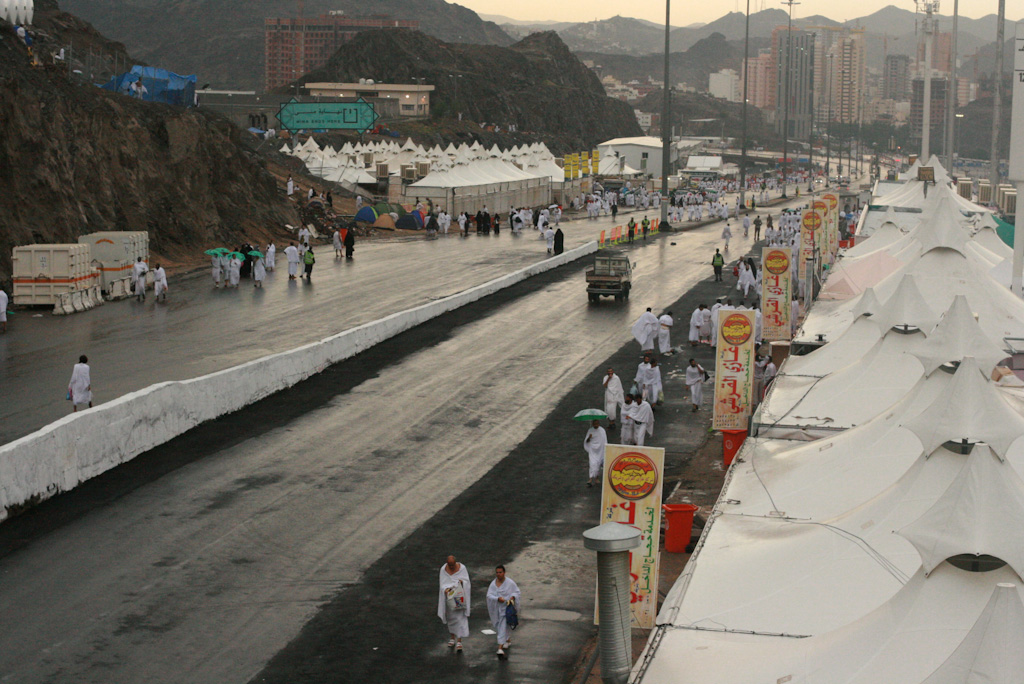
On the first day, pilgrims travel from Makkah to the tent city of Mina, located approximately 8 km east of the Grand Mosque. Mina is one of the largest temporary settlements on Earth — over 100,000 air-conditioned tents sprawl across the valley, colour-coded by country and group. Pilgrims spend the day and night in prayer, Quran recitation and preparation for the defining moment of Hajj the following day.
Day 2 (9th Dhul Hijjah) — The Day of Arafah
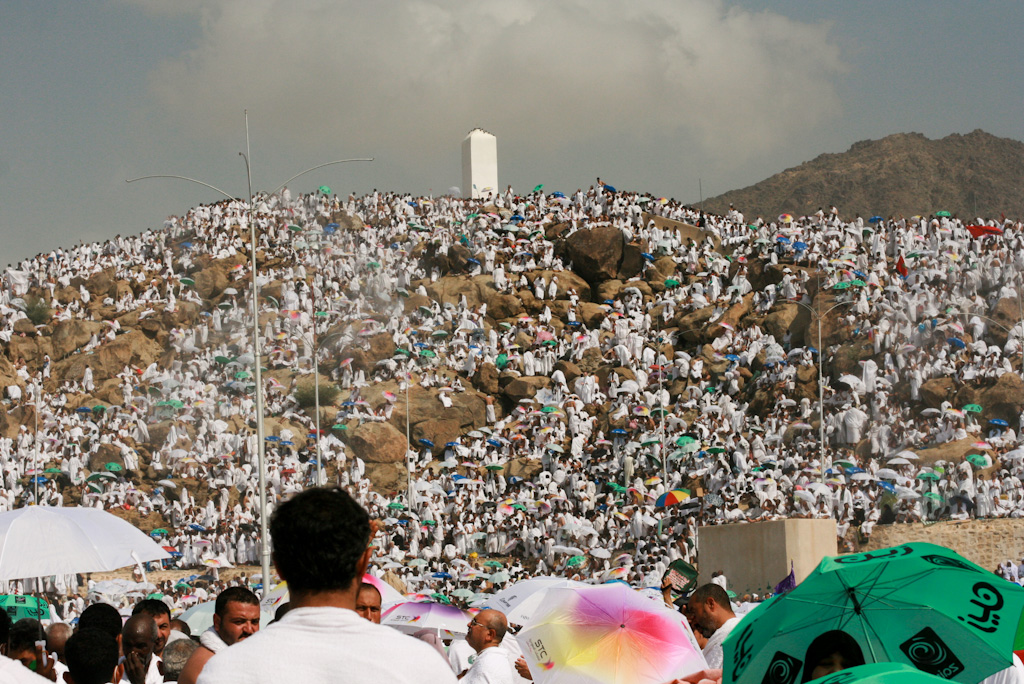
This is the most important day of Hajj. The Prophet Muhammad ﷺ said: “Hajj is Arafah.” After the Fajr prayer in Mina, pilgrims travel approximately 14 km southeast to the Plain of Arafat, a vast open expanse at the foot of Jabal al-Rahmah (the Mount of Mercy). From shortly after noon until sunset, every pilgrim must be present within the boundaries of Arafat — this standing (Wuquf) is the single non-negotiable act of Hajj. Missing Arafat means your Hajj is invalid.
The hours at Arafat are spent in intense supplication (du’a), repentance, Quran recitation and tears. Dhuhr and Asr prayers are combined and shortened at Masjid Nimrah, following the Prophetic Sunnah. It is believed that God draws closest to the earth on this afternoon and forgives those who ask sincerely. For many pilgrims, this is the most spiritually profound experience of their lives.
Night of Day 2 — Muzdalifah
After sunset, the entire congregation departs Arafat for Muzdalifah, an open plain between Arafat and Mina. This journey — once a gruelling walk — is now managed by buses and the Mashair Railway, though traffic can still take hours. At Muzdalifah, pilgrims pray Maghrib and Isha (combined and shortened), spend at least part of the night under the open sky, and collect 49 small pebbles (each roughly chickpea-sized) for the stoning rituals over the coming days. Elderly and infirm pilgrims may leave Muzdalifah after midnight.
Day 3 (10th Dhul Hijjah) — Eid al-Adha
The busiest day. Pilgrims return to Mina before dawn and perform four acts, ideally in this order:
- Rami al-Jamarat — throwing seven pebbles at the largest pillar (Jamarat al-Aqabah), symbolising Ibrahim’s rejection of the devil’s temptation. The modern Jamarat Bridge is a multi-storey structure designed to reduce the crushing incidents that killed hundreds in past years.
- Qurbani (sacrifice) — an animal sacrifice (sheep, goat, cow or camel) commemorating Ibrahim’s willingness to sacrifice his son. Most pilgrims purchase a voucher through official Saudi channels and the sacrifice is performed on their behalf, with the meat distributed to the poor.
- Halq or Taqsir — men shave their heads completely (halq) or trim the hair short (taqsir); women cut a fingertip-length from their hair. This marks partial exit from Ihram — all restrictions except sexual relations are lifted.
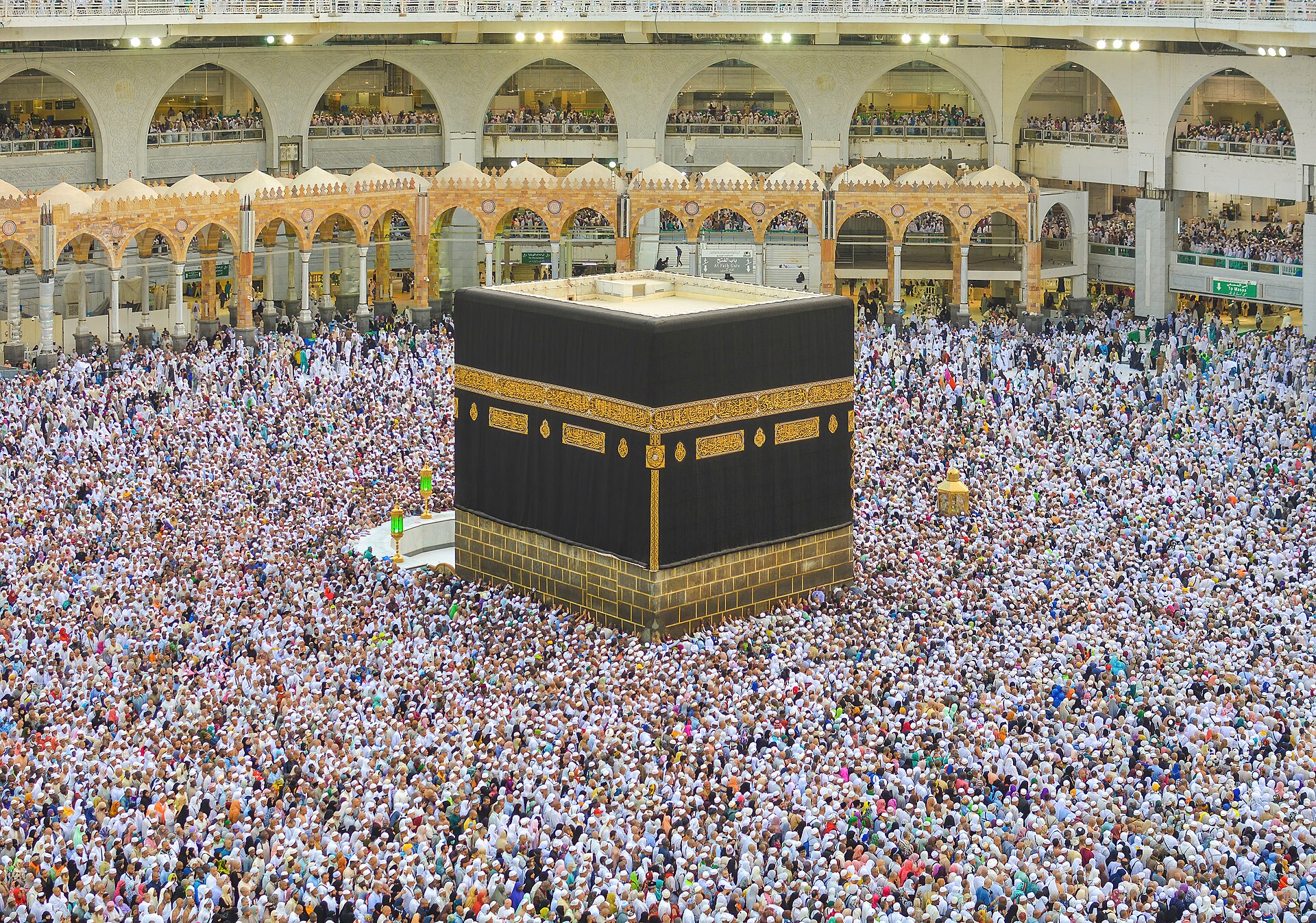
- Tawaf al-Ifadah — pilgrims travel to the Grand Mosque in Makkah and perform seven circuits around the Kaaba, followed by Sa’i (seven walks between the hills of Safa and Marwah). This is a pillar of Hajj and must be completed before leaving Makkah.
After Tawaf al-Ifadah, the pilgrim exits the state of Ihram completely and may return to Mina for the remaining days.
Days 4–5 (11th–12th Dhul Hijjah) — Days of Tashreeq
Pilgrims remain in Mina and perform the stoning ritual each day, throwing seven pebbles at each of the three pillars (small, medium, large — in that order), for a total of 21 pebbles per day. The stoning must be done after midday. On the 12th, pilgrims who are in a hurry may leave Mina before sunset — this is called nafr al-awal (early departure). Those who stay for the 13th perform a final round of stoning before departing.
Farewell Tawaf (Tawaf al-Wida)
Before leaving Makkah, every pilgrim must perform a final Tawaf al-Wida — seven farewell circuits around the Kaaba. This should be the last act in Makkah. Menstruating women are exempted from this Tawaf.
Islamic Sites to Visit During and Around Hajj
Beyond the mandatory ritual sites, Makkah and its surroundings are home to places of profound historical and spiritual significance. While visiting these sites is not a Hajj requirement, many pilgrims take the opportunity to connect with the history of the Prophet Muhammad ﷺ and the early Muslim community. For a broader overview of sacred locations across the Kingdom, see our guide to Islamic sites in Saudi Arabia and our ziyarat guide.
Jabal al-Nour and the Cave of Hira
Jabal al-Nour (the Mountain of Light) rises approximately 270 metres above the city, roughly 4 km north-east of Masjid al-Haram. Near its summit is Ghar Hira — the cave where the Prophet Muhammad ﷺ received the first revelation of the Quran from the Angel Jibreel in approximately 610 CE. The first five verses of Surah Al-Alaq were revealed here. The climb takes 45–90 minutes depending on fitness, and approximately 5,000 pilgrims make the ascent daily during Hajj season. The trail is steep and uneven — wear sturdy shoes and carry water.
Jabal Thawr
Located south of Makkah, Jabal Thawr rises approximately 750 metres and contains Ghar Thawr — the cave where the Prophet Muhammad ﷺ and Abu Bakr (may Allah be pleased with him) hid for three days during their migration (Hijrah) to Madinah in 622 CE. This event is referenced in the Quran (Surah at-Tawbah 9:40). The climb is significantly more difficult than Jabal al-Nour and is not recommended for elderly or less mobile pilgrims.
Masjid al-Khayf — Mina
Located at the base of Al-Dhiba’a Mountain in the south of Mina, near the smallest stoning pillar, Masjid al-Khayf is where — according to Islamic tradition — approximately 70 prophets prayed, including Musa (Moses) and Muhammad ﷺ. The Prophet delivered a sermon here during his Farewell Pilgrimage. Pilgrims staying in Mina typically pray in this mosque during the Hajj days. The mosque was extensively renovated and expanded by the Saudi government.
Masjid Nimrah — Arafat
Masjid Nimrah sits at the western edge of the Plain of Arafat, at Wadi Uranah. It marks the site where the Prophet Muhammad ﷺ camped before delivering his Farewell Sermon. After expansion, it now accommodates approximately 350,000 worshippers and stretches over 110,000 square metres. Pilgrims perform the combined Dhuhr and Asr prayers here on the Day of Arafah. Important: the western portion of the mosque lies outside the technical boundary of Arafat — pilgrims must ensure they stand within the Arafat boundary for their Wuquf to be valid.
How to Register for Hajj 2026
Saudi Arabia has digitalised Hajj registration through the Nusuk platform, operated by the Ministry of Hajj and Umrah. The registration pathway depends on where you live. If you are considering performing Umrah before or after your Hajj, see our Umrah visa guide for the latest on combined permits.
International Pilgrims (Outside Saudi Arabia)
Pilgrims from countries with established Hajj management systems — such as Indonesia, Pakistan, India, Bangladesh, Egypt, Nigeria, Turkey and Malaysia — must register through their national Hajj authority or ministry. These countries have fixed quotas (approximately 1 pilgrim per 1,000 Muslim population) and their own selection processes, which may involve lotteries, waiting lists or priority systems.
Pilgrims from countries without dedicated Hajj authorities (including most Western nations, East Asian countries and smaller Muslim-minority nations) register directly through the Nusuk Hajj platform at hajj.nusuk.sa. The process:
- Create an account at hajj.nusuk.sa — verify your email address
- Upload documents — digital passport copy (valid until at least November 2026), recent passport-style photo
- Wait for verification — typically 48–72 hours for “Verified” status
- Select a package — browse available packages by category (economy, standard, premium)
- Complete payment — secure online payment through the platform
- Receive your Hajj permit — digital permit linked to your mobile device
Tip: Your Hajj permit is digital and linked to your phone. Ensure you have an active Saudi SIM card or international roaming enabled on arrival. See our Saudi Arabia SIM card guide for options.
Domestic Pilgrims (Saudi Citizens and Residents)
Saudi citizens, Iqama (residency permit) holders and GCC nationals residing in the Kingdom register through the domestic section of the Nusuk platform. Domestic packages are generally more affordable and bookings opened in early 2026.
Hajj Quotas
Following the post-COVID restoration, Saudi Arabia has returned to the standard quota system of approximately one pilgrim per 1,000 Muslim citizens per country. The total capacity is roughly 2 million pilgrims per year — around 1.8 million international and 200,000 domestic. Demand far exceeds supply in many countries, so early registration and flexibility on package tier are essential.
Hajj 2026 Costs: What You Will Actually Pay
Hajj costs vary dramatically depending on your country of departure, package tier and how close your hotel is to the Haram. For a comparison with the costs of performing Umrah, see our dedicated breakdown. Here is a realistic Hajj cost breakdown by region:
| Country / Region | Economy / Budget | Standard | Premium / Luxury |
|---|---|---|---|
| United States | $11,000–$13,000 | $13,000–$16,000 | $17,000–$22,000+ |
| United Kingdom | £4,500–£5,700 | £5,500–£9,500 | £9,500–£12,000+ |
| Europe (avg.) | €8,000–€10,000 | €10,000–€13,000 | €13,000–€18,000+ |
| India / Pakistan | $5,000–$7,000 | $7,000–$9,000 | $10,000–$15,000+ |
| Southeast Asia | $5,500–$7,500 | $7,500–$10,000 | $11,000–$16,000+ |
| Saudi Arabia (domestic) | SAR 5,000–8,000 | SAR 8,000–15,000 | SAR 15,000–30,000+ |
What Is Included in a Typical Package?
- Hajj visa — processed through the operator or Nusuk
- Return flights (international packages only)
- Accommodation in Makkah (before/after Hajj) and tented accommodation in Mina
- Accommodation in Madinah (most packages include 3–5 nights)
- Ground transportation between Makkah, Mina, Arafat, Muzdalifah
- Meals (varies by package — some are full board, others half board)
- Qurbani (sacrifice) — usually included or available as an add-on
- Religious guidance — scholars or experienced guides accompany groups
What Is NOT Included
- Personal expenses and shopping
- Vaccinations and medical clearance
- Travel insurance (essential — buy it separately)
- Tips for guides and drivers
- Extra food and drinks beyond package meals
- Laundry services
Budget tip: Carry SAR 1,500–3,000 ($400–$800) in cash or on a debit card for personal expenses during the Hajj period. Check our Saudi Arabia currency guide for exchange rate advice.
Nusuk Package Categories Explained
The Nusuk platform offers distinct package categories for 2026. All payments are now processed exclusively through the Nusuk Masar platform, and only licensed Saudi operators may provide Hajj services. Understanding the differences helps you choose the right balance of comfort and cost:
All-Inclusive Packages
The most popular option. Everything is covered: visa, flights, accommodation in both Makkah and Madinah, catering, inter-city transport, Mashair (holy sites) transport, and group guidance. Hotels range from 3-star to 5-star depending on the tier you select. Minimum duration is typically 14 days for shifting packages and 10 days for non-shifting.
Shifting Packages
Accommodation during the actual Hajj days (8th–13th Dhul Hijjah) is located near the Mashair sites — Mina, Arafat and Muzdalifah. A second, separate accommodation near the Haram is provided for days before and after Hajj. You “shift” between two locations. This reduces travel time during the busiest ritual days.
Non-Shifting Packages
A single accommodation throughout your stay in Makkah. You return to the same hotel before and after performing rituals at the Mashair sites. More convenient for pilgrims who prefer not to move between properties.
Mashair-Only Packages
The shortest and most affordable option, covering just the core Hajj days (minimum 6 days). Includes Mashair transport, Mina tent accommodation, and basic services but no extended hotel stays in Makkah or Madinah. Suited to domestic pilgrims or those arranging their own city accommodation.
Hotel Tiers
| Tier | Hotel Class | Typical Distance to Haram | Who It Suits |
|---|---|---|---|
| Economy | 3-star / residential buildings | 1.5–3 km | Budget-conscious pilgrims, younger travellers |
| Standard | 4-star hotels | 500 m–1.5 km | Families, most first-time pilgrims |
| Premium | 5-star hotels | Within 500 m | Elderly pilgrims, those with mobility concerns |
| VIP / Platinum | Luxury 5-star, Haram-view | Adjacent or overlooking | Those seeking maximum comfort and proximity |
For detailed hotel recommendations in both holy cities, see our Saudi Arabia hotels guide.
Hajj Visa and Entry Requirements
Hajj requires a specific Hajj visa — the standard Saudi tourist e-visa does not permit entry to the Hajj zones during the pilgrimage period. For Umrah-specific visa requirements, see our Umrah visa guide. Here is what you need for Hajj:
Hajj Visa Basics
- Eligibility: Muslim applicants only. Non-Muslims are not permitted to enter Makkah or the Hajj zones.
- Age: Must be 18 years or older to perform Hajj independently. Minors may accompany a parent or guardian.
- Passport: Valid for at least 6 months beyond your travel dates (valid until at least November 2026).
- Issuance: The Hajj visa is issued electronically through the Nusuk platform once you have booked and paid for a package. In countries with Hajj authorities, the visa is processed through the national operator.
- Cost: Typically included in the Hajj package price.
- Once-in-five-years rule: Saudi Arabia generally restricts international pilgrims to performing Hajj once every five years. If you performed Hajj in 2022 or later, you may be ineligible for 2026 — check with your national authority.
Mahram Requirement
Saudi Arabia has relaxed the Mahram requirement in recent years. Women aged 45 and over may now perform Hajj without a male guardian (Mahram), provided they travel in an organised group. Women under 45 may still need a Mahram — policies vary by country and are updated annually. Check the Nusuk platform for the latest rules.
Health Requirements and Vaccinations
Hajj is one of the largest mass gatherings on Earth. Saudi authorities enforce strict health requirements to prevent outbreaks. Start your medical preparations at least 3 months before departure.
Mandatory Vaccinations
| Vaccine | Requirement | Timing | Validity |
|---|---|---|---|
| Meningitis ACWY | Mandatory for all pilgrims | At least 10 days before arrival | 5 years (conjugate) / 3 years (polysaccharide) |
| COVID-19 | Highly recommended; proof of vaccination may be required | Per your national guidelines | Check current booster requirements |
| Polio | Mandatory for pilgrims from endemic countries (Pakistan, Afghanistan, Nigeria, Chad) | At least 4 weeks before travel | Recorded in Yellow Card |
| Yellow Fever | Mandatory for travellers from endemic zones (parts of Africa, South America) | At least 10 days before arrival | Lifetime (single dose) |
Recommended Vaccinations
- Influenza (seasonal flu) — strongly recommended due to respiratory illness risk in crowded conditions
- Hepatitis A and B
- Typhoid — especially for pilgrims from regions where it is common
- Pneumococcal vaccine — recommended for elderly pilgrims and those with chronic conditions
Medical Fitness
Hajj is physically demanding. You will walk 5–15 km per day, often in temperatures exceeding 40°C, in massive crowds. Saudi health authorities have tightened fitness criteria — pilgrims with the following conditions may be disqualified:
- Major organ failure (advanced kidney, liver or heart failure)
- Advanced cirrhosis
- Severe respiratory conditions requiring continuous oxygen
- Any condition that prevents independent mobility in crowds
Heat warning: In 2024, over 1,300 pilgrims died during Hajj, mostly from heat-related illness. Many were unregistered pilgrims without access to cooling facilities. Temperatures in Makkah in late May regularly exceed 45°C. Hydrate aggressively, use cooling towels, rest in shade whenever possible, and never skip your tent allocation in Mina.
What to Carry in Your Medical Kit
- Prescription medications in original packaging (with a doctor’s letter in English/Arabic)
- Paracetamol and ibuprofen
- Oral rehydration salts (ORS) — essential for the heat
- Antidiarrhoeal medication
- Blister plasters and antiseptic cream
- Hand sanitiser and face masks (crowds carry respiratory illnesses)
- Sunscreen (SPF 50+) — use unscented versions while in Ihram
Safety After 2024: What Saudi Arabia Changed
The 2024 Hajj season was a watershed. More than 1,300 pilgrims died between 14–19 June 2024, primarily from heat-related illness, with temperatures exceeding 50°C and humidity reaching 75%. The upper limit of human heat tolerance was breached for a cumulative 43 hours across six Hajj days. Approximately 83% of those who died were unregistered pilgrims who walked long distances in extreme heat without access to air-conditioned facilities, official water stations, or food.
Saudi Arabia responded with sweeping changes that remain in effect for 2026:
Crackdown on Unregistered Pilgrims
- Fines for performing Hajj without a permit exceed SAR 20,000 (~$5,300); fines for transporting unauthorised pilgrims reach SAR 100,000 (~$27,000).
- Violators face deportation and a 10-year entry ban.
- During Hajj 2025, Saudi authorities blocked nearly 270,000 people without permits from entering Makkah and arrested over 1,200 people for transporting unauthorised pilgrims.
- More than 400 fake Hajj offices were shut down.
- AI-powered surveillance drones are deployed to detect and intercept unauthorised pilgrims attempting to enter the Hajj zones on foot.
Heat Mitigation Infrastructure
- Additional cooling stations and misting systems installed along the Mina–Arafat corridor.
- Key ground areas coated with heat-reflective pavement to reduce surface temperatures.
- Expanded tree planting around ritual sites for natural shade.
- Thousands of additional paramedics deployed; field hospitals expanded across all Hajj zones.
- Volunteers stationed at regular intervals to distribute water and operate misting sprays.
The message is clear: do not attempt Hajj without an official permit. The risks — heatstroke, dehydration, and no access to medical care — are potentially fatal, and enforcement is now aggressive.
What to Pack for Hajj
Packing smart is critical. You will carry your belongings between sites, and storage space in Mina tents is extremely limited. Every item must earn its place. For a detailed packing checklist specifically for Umrah (which shares many essentials with Hajj), see our Umrah packing list.
Ihram Essentials (Men)
- 2–3 sets of Ihram cloth — thicker cotton or terry cloth is preferable to thin cotton, which becomes transparent when wet with sweat. Can double as towels.
- Safety pins or Ihram clips — to secure the upper garment on the shoulder
- Flat, open sandals — ankles and top of feet must remain uncovered in Ihram. Break them in at least two weeks before departure.
- Ihram belt — a waist belt to hold essentials while in Ihram
Clothing (Women)
- Long, loose abayas or modest clothing in neutral, light colours
- Hijabs — multiple, as laundry may not be convenient
- Comfortable, fully covering shoes suitable for long walks
- No face covering (niqab) or gloves while in Ihram — the face and hands must remain uncovered
For more on what is and isn’t appropriate to wear, see our Saudi Arabia dress code guide.
Documents and Security
- Passport with Hajj visa
- Vaccination certificates (International Certificate of Vaccination — “Yellow Card”)
- Printed copies of all booking confirmations
- A neck pouch or waist belt for documents, cash and phone — wear it at all times. Theft is rare but losing documents in crowds is not.
- Passport-sized photos (4–6 copies) — some Hajj authorities request them
Other Essentials
- Lightweight, compact backpack or drawstring bag for daily use
- Unscented toiletries — mandatory while in Ihram (unscented soap, shampoo, deodorant)
- Wet wipes and tissue packets — essential in Mina and at the Mashair sites
- Collapsible water bottle — refilling stations are available throughout the Hajj zones
- Portable phone charger (10,000+ mAh)
- Sleeping bag liner or lightweight blanket — for Muzdalifah night
- Prayer mat — foldable, compact
- Small Quran or Quran app on phone
- Nail clippers (for use only outside Ihram)
- Umbrella — critical for sun protection during Arafah
Where to Stay During Hajj
Your Hajj package determines your accommodation. Here is what to expect at each stage:
Makkah (Before and After Hajj)
Most packages include 3–7 nights in Makkah before the Hajj days begin and 1–2 nights after. Hotels range from budget residential buildings several kilometres from the Haram to luxury towers like the Swissotel Makkah, Raffles Makkah Palace, and the Jabal Omar complex directly adjacent to the Grand Mosque. Proximity to the Haram is the single biggest factor in price.
Hotels within 500 metres of the Haram can cost 3–5 times more than those 2 km away. For elderly pilgrims or those with mobility issues, paying more for proximity is worth every riyal — the walk from distant hotels to the Haram for each prayer is exhausting, especially in Hajj-season heat.
Mina (During Hajj Days)
All pilgrims stay in white fire-resistant tents in the valley of Mina. These tents are air-conditioned and assigned by group/country. Sleeping is on thin mattresses on the floor, packed shoulder-to-shoulder. Toilet facilities are shared. Premium packages may include more spacious tent allocations, better food and private facilities, but Mina is inherently communal — this is by design.
Arafat
Day camps are provided at Arafat. Some are open-air with shade canopies; VIP packages may include enclosed, air-conditioned units. You will not sleep here — the stay is from approximately noon to sunset.
Muzdalifah
There is no formal accommodation at Muzdalifah. You sleep on the ground under the open sky. Bring a sleeping bag liner or lightweight blanket and a small prayer mat. The night is short — you arrive after sunset and leave before dawn.
Madinah (Optional but Common)
Most Hajj packages include 3–5 nights in Madinah, either before or after the Hajj days. This is not part of the Hajj rituals but is highly recommended. Pilgrims visit the Prophet’s Mosque (Al-Masjid an-Nabawi), pray in the Rawdah, and visit historical sites including Uhud, Quba Mosque and Masjid Qiblatain. Madinah is calmer, less crowded and more manageable than Makkah during Hajj season. For a complete walkthrough, see our Prophet’s Mosque guide.
Getting to Makkah
Most international pilgrims fly into one of two airports:
Jeddah — King Abdulaziz International Airport (JED)
The primary gateway. During Hajj season, a dedicated Hajj Terminal handles the massive influx of pilgrims — it is one of the largest airport terminals in the world by area, with a distinctive tent-like roof. From Jeddah, Makkah is approximately 80 km (1–1.5 hours by bus). Most packages include airport-to-hotel transfers. See our Saudi Arabia airport guide for terminal details.
Madinah — Prince Mohammad Bin Abdulaziz Airport (MED)
If your package visits Madinah first, you may fly into Madinah and later travel to Makkah by bus (approximately 4–5 hours) or by the Haramain High-Speed Railway, which connects Madinah, Jeddah and Makkah in around 2.5 hours. Check our flights to Saudi Arabia guide for airline options and booking tips.
Haramain High-Speed Railway
This 450 km rail line is a game-changer for pilgrims. Trains run between Madinah, King Abdullah Economic City, Jeddah, the Jeddah airport, and Makkah. During the 2025 Hajj season, the railway operated over 4,700 trips and offered more than 2 million seats — a significant increase in capacity. Tickets can be booked online through the Saudi Railway Company (hhr.sa). The train is air-conditioned, comfortable and avoids the notorious Makkah–Madinah highway traffic. Pricing starts from approximately SAR 150 (economy) for the Makkah–Madinah route, and discounts of up to 50% have been offered during previous Hajj seasons. Book early — trains sell out weeks in advance during the Hajj period.
Mashair Railway — Getting Between the Holy Sites
The Al-Mashaer Al-Mugaddassah Metro is a dedicated 18 km rail line that operates exclusively during Hajj, transporting pilgrims between Mina, Arafat and Muzdalifah. The system has 9 stations, 17 trains, and can move approximately 72,000 passengers per hour in each direction — covering the Mina-to-Arafat route in about 20 minutes. During the 2024 Hajj, the Mashair Railway transported approximately 1.87 million passengers across more than 2,150 trips. Access is by permit through your official Hajj group operator — individual tickets are not available. If your package includes Mashair Railway transport, it significantly reduces the time and physical toll of moving between ritual sites.
Technology and Apps for Hajj 2026
Saudi Arabia has invested heavily in digital infrastructure to make Hajj safer and more navigable. The technology ecosystem for 2026 includes:
Nusuk App
The official Ministry of Hajj and Umrah app, with over 51 million registered users and more than 130 digital services. Key features include:
- Digital Hajj permit — your permit is linked to the app and verified electronically at checkpoints
- Package booking — browse and pay for Hajj packages from licensed operators
- Rawdah booking — reserve a visit to the Rawdah in the Prophet’s Mosque in Madinah
- Real-time crowd density — see how crowded the Tawaf area and other zones are before heading there
- Nusuk AI — a digital assistant that answers pilgrim questions via voice and text in multiple languages
- Offline mode — the app works without consuming mobile data through agreements with Saudi telecoms (stc, Mobily, Zain), which is critical in congested areas where networks are overloaded
AI-Powered Crowd Management
The Baseer platform, developed by the Ministry of Interior and the Saudi Data and AI Authority, uses computer vision and machine learning to track the movements of over one million worshippers per day inside the Grand Mosque. Digital boards at mosque entrances display real-time capacity using green (space available) and red (at capacity) indicators. High-resolution satellite imagery monitors both human and vehicular movement across the Hajj zones in real time.
Mataf Expansion
The Mataf expansion at the Grand Mosque was completed ahead of Ramadan 2025, increasing the Tawaf area capacity to approximately 107,000 pilgrims per hour. The Grand Mosque’s cooling system — the largest in the world for a mosque — operates at a total capacity of 155,000 refrigeration tons, maintaining indoor temperatures between 22°C and 24°C and filtering approximately 95% of airborne impurities.
Essential Apps to Download
- Nusuk (iOS/Android) — your primary Hajj management app
- Tawakkalna — Saudi Arabia’s official digital services app, used for health and identity verification
- SAR (Saudi Railway) — for Haramain High-Speed Railway bookings
- A Quran app with audio recitation and translation
- Google Translate — download the Arabic language pack for offline use
- WhatsApp — the primary communication tool for Hajj groups
Practical Tips for First-Time Pilgrims
Physical Preparation
Start preparing your body at least 2–3 months before Hajj. Walk 5–10 km daily in the heat if possible. Practice walking in your Ihram sandals. Build stamina for standing and walking for extended periods. Hajj is not a vacation — it is physically one of the most demanding experiences most people will ever undertake. If this is also your first time performing Umrah, the physical demands of Tawaf and Sa’i will give you a preview of what Hajj requires.
Crowd Management
- Stay with your group. Agree on a meeting point in case of separation.
- Avoid peak times for Tawaf — the hours immediately after Fajr and before Dhuhr are the busiest.
- The upper floors of the Masjid al-Haram and the rooftop are less crowded for Tawaf.
- During the stoning ritual, the upper levels of the Jamarat Bridge are significantly less crowded than the ground level.
- Move with the crowd, never against it. Do not stop suddenly in dense flows.
Staying Connected
Mobile coverage in the Hajj zones has improved dramatically but network congestion is inevitable when two million people use their phones simultaneously. Get a local Saudi SIM card or eSIM before entering the Hajj zones — your digital Hajj permit, maps and group communication all depend on it. The Nusuk app’s offline mode helps conserve data in congested areas.
Food and Hydration
Package meals are typically served at set times. Carry snacks (dates, nuts, energy bars) for between meals. Drink water constantly — far more than you think you need. Free Zamzam water is available throughout the Haram and at dispensing stations in the Hajj zones. For a broader look at dining, see our Saudi Arabia food guide.
Money
ATMs are available in Makkah and at some locations in the Hajj zones, but queues are long and machines run out of cash. Carry sufficient Saudi Riyals before entering the Hajj period. Most shops in Makkah accept card payments and Apple Pay / mada Pay.
Women’s Guide to Hajj
Women perform the same rituals as men with a few specific differences:
- Ihram clothing: Women wear their normal modest clothing. There is no specific colour requirement. The face and hands must remain uncovered while in Ihram.
- Talbiyah: Women recite the Talbiyah in a lower voice.
- Tawaf: Women are not required to jog during the first three circuits (Raml) — this applies to men only.
- Hair cutting: Women cut a fingertip-length from the end of their hair (not a full shave).
- Menstruation: Women who are menstruating can perform all Hajj rituals except Tawaf. Tawaf al-Ifadah can be delayed until menstruation ends. Tawaf al-Wida (farewell) is waived entirely for menstruating women.
- Mahram: Women under 45 may need a male guardian (Mahram). Women 45 and over may travel in an organised group without a Mahram — check your country’s specific rules on Nusuk.
For general guidance on dress, behaviour and customs, our mosque etiquette guide covers what to expect inside Saudi Arabia’s mosques.
After Hajj — Visiting Madinah and Beyond
Most pilgrims visit Madinah as part of their Hajj trip. While not a Hajj requirement, visiting the Prophet’s Mosque and praying in the Rawdah is one of the most cherished experiences in a Muslim’s life. The Prophet Muhammad ﷺ said: “One prayer in my Mosque is better than a thousand prayers in any other mosque, except al-Masjid al-Haram.”
Key sites in Madinah include:
- Al-Masjid an-Nabawi — the Prophet’s Mosque, with the Green Dome marking the Prophet’s tomb. Our Prophet’s Mosque guide covers visiting hours, Rawdah booking, and prayer etiquette.
- The Rawdah — the area between the Prophet’s pulpit and his tomb, described as “a garden from the gardens of Paradise”
- Jannat al-Baqi — the ancient cemetery where many of the Prophet’s companions are buried
- Mount Uhud — site of the famous Battle of Uhud, with the graves of the martyrs
- Quba Mosque — the first mosque built in Islam
For a comprehensive overview of sacred places to visit during and after Hajj, see our Islamic sites in Saudi Arabia guide and our ziyarat guide for recommended pilgrimage visits.
If time allows, consider extending your trip to explore more of Saudi Arabia. The Kingdom is transforming rapidly under Vision 2030, and pilgrims who venture beyond the holy cities often discover a country that defies expectations. Many pilgrims combine Hajj with a visit to the broader Makkah area. See our complete Saudi Arabia travel guide for ideas.
Zamzam Water
Zamzam water — drawn from the well beneath the Masjid al-Haram — holds deep spiritual significance for Muslims. The Prophet Muhammad ﷺ said: “The water of Zamzam is for whatever purpose it is drunk for.” Here is what pilgrims need to know:
During Hajj
- Zamzam water is freely available throughout Masjid al-Haram via coolers and dispensers in prayer areas, corridors, and around the Mataf.
- The Grand Mosque distributes approximately 2 million litres per day during pilgrimage season.
- Sealed 5-litre bottles are available from the King Abdullah Zamzam Distribution Center in the Kudai area of Makkah.
- Many hotels near the Haram provide Zamzam dispensers or bottled Zamzam for guests.
- Containers of Zamzam are sometimes distributed to pilgrims on buses and at departure airports.
Taking Zamzam Home
- Saudi authorities restrict Zamzam exports to officially sealed containers from licensed sources. Unlabelled or non-official containers may not be accepted by airlines.
- Zamzam water cannot be carried in cabin baggage due to international liquid restrictions. It must travel as checked luggage.
- Most Gulf and Middle Eastern carriers allow one sealed 5-litre bottle per passenger as additional checked baggage (not counted against your weight allowance) when departing from Jeddah or Madinah.
- Policies vary by airline — verify with your specific carrier before travel. Some airlines outside the Gulf region do not offer the free Zamzam allowance.
Key Mistakes to Avoid
- Performing Hajj without registration. Unregistered pilgrims cannot access cooling facilities, medical care or tented accommodation. In 2024, many of the 1,300+ deaths were among unregistered pilgrims. Do not attempt Hajj without a valid permit.
- Ignoring heat preparation. Late May in Makkah means daytime temperatures of 43–48°C. Acclimatise, hydrate, carry an umbrella, and rest in shade. Heat stroke kills faster than you expect.
- Over-packing. You will carry your bag between sites. One medium backpack is ideal. Leave valuables at your hotel.
- Skipping travel insurance. Medical evacuations, trip cancellations and lost luggage are real risks. Get comprehensive travel insurance that explicitly covers Hajj.
- Rushing rituals. Hajj is not a race. Take your time, especially during Tawaf and Sa’i. The upper floors are less crowded.
- Not learning the rituals beforehand. Attend a Hajj preparation course or seminar before departure. Many mosques and Islamic centres offer these in the months before Hajj.
- Booking through unlicensed agents. Hajj scams are real and devastating. Only use operators approved by your national Hajj authority or the Nusuk platform.
Hajj for People with Disabilities and Elderly Pilgrims
Saudi Arabia has made significant accessibility improvements in recent years:
- Wheelchair Tawaf: The ground floor of the Mataf (Tawaf area) has designated wheelchair lanes. Wheelchair pushers can be hired through your Hajj operator.
- Electric carts: Available in the Masjid al-Haram and between the Mashair sites for elderly and disabled pilgrims.
- Proxy stoning: Elderly or disabled pilgrims who cannot reach the Jamarat may appoint someone to throw pebbles on their behalf.
- Muzdalifah exemption: Elderly and infirm pilgrims may leave Muzdalifah after midnight rather than staying until dawn.
- Premium packages: VIP and premium tiers often include private transport, closer accommodation and dedicated support staff — worth the extra cost for pilgrims with limited mobility.
Common Hajj Terminology
Hajj comes with its own vocabulary. Understanding these terms before you arrive prevents confusion during the pilgrimage:
| Term | Meaning |
|---|---|
| Ihram | The sacred state of ritual purity a pilgrim enters before Hajj; also refers to the white garments worn by men |
| Miqat | The designated boundary points where pilgrims must enter Ihram before proceeding to Makkah |
| Talbiyah | The prayer recited continuously from entering Ihram: “Labbayk Allahumma labbayk…” |
| Tawaf | Circling the Kaaba seven times counter-clockwise |
| Sa’i | Walking seven times between the hills of Safa and Marwah |
| Wuquf | Standing at the Plain of Arafat on the 9th of Dhul Hijjah — the central act of Hajj |
| Rami | The stoning of the Jamarat (pillars) at Mina |
| Qurbani | The animal sacrifice performed on Eid al-Adha (10th Dhul Hijjah) |
| Halq | Shaving the head completely (men) after the sacrifice |
| Taqsir | Trimming the hair instead of shaving (option for men; required method for women) |
| Mataf | The circular area around the Kaaba where Tawaf is performed |
| Mas’a | The enclosed walkway between Safa and Marwah where Sa’i is performed |
| Mashair | Collective term for the holy sites of Mina, Arafat and Muzdalifah |
| Nafr | Departure from Mina; “nafr al-awal” (early departure on the 12th) vs “nafr al-thani” (departure on the 13th) |
| Tashreeq | The three days following Eid al-Adha (11th–13th Dhul Hijjah), spent in Mina |
| Tawaf al-Ifadah | The obligatory Tawaf performed after leaving Arafat — a pillar of Hajj |
| Tawaf al-Wida | The farewell Tawaf performed before leaving Makkah |
| Mahram | A male relative who may serve as a woman’s guardian during Hajj |
| Niyyah | The intention made in the heart before performing any act of worship |
Timeline: When to Start Planning
| Timeframe | Action |
|---|---|
| 12+ months before | Research packages, save funds, check passport validity |
| 6–9 months before | Register on Nusuk or through national Hajj authority |
| 3–6 months before | Book package, schedule vaccinations, begin physical training |
| 2–3 months before | Get meningitis ACWY vaccine, complete medical check-up |
| 1–2 months before | Attend Hajj preparation course, finalise packing, arrange finances |
| 1–2 weeks before | Confirm all bookings, download Nusuk app, set up Saudi eSIM |
| Day of departure | Carry all documents, vaccination certificates, cash and essentials in hand luggage |
Frequently Asked Questions
Can I perform Hajj on a tourist visa?
No. During the Hajj period, only holders of a valid Hajj visa or permit can enter the Hajj zones around Makkah. Tourist visa holders found in the restricted areas during Hajj face fines and deportation.
How long does Hajj take?
The core rituals span 5–6 days (8th–13th Dhul Hijjah). Most packages are 14–21 days total, including time in Makkah before Hajj, the Hajj days, and a visit to Madinah afterwards.
Is Hajj safe?
Saudi Arabia invests billions in Hajj infrastructure and security. The Jamarat Bridge redesign has eliminated the stampede risk that killed hundreds in past years. Medical facilities are stationed throughout the Hajj zones. The primary risk is heat-related illness — which is manageable with proper preparation. For a broader safety overview, see our guide on whether Saudi Arabia is safe to visit.
Can I perform Hajj every year?
Domestic pilgrims (Saudi citizens and residents) may perform Hajj annually. International pilgrims are generally restricted to once every five years due to the quota system, though enforcement varies by country.
What if I get separated from my group?
Save your group leader’s phone number, your hotel address and your tent number in Mina. The Nusuk app includes GPS tracking and group communication features. In an emergency, go to any police or civil defence post — they are stationed throughout the Hajj zones.
Can I combine Hajj with Umrah?
Yes. Many pilgrims perform Umrah before Hajj (known as Hajj al-Tamattu) — this is the most common method for international pilgrims. You perform Umrah, exit Ihram, then re-enter Ihram for Hajj on the 8th of Dhul Hijjah. This requires an additional sacrifice. See our complete Umrah guide and Umrah costs breakdown for details.
What is the difference between Hajj al-Tamattu, Hajj al-Qiran and Hajj al-Ifrad?
Hajj al-Tamattu’ involves performing Umrah first, then Hajj (most common for international pilgrims; requires a sacrifice). Hajj al-Qiran combines Umrah and Hajj in a single Ihram without exiting between them (requires a sacrifice). Hajj al-Ifrad is Hajj alone, without Umrah, and does not require an additional sacrifice. Your Hajj group leader can advise on which method suits your circumstances.
Do I need travel insurance for Hajj?
Yes — strongly recommended. Standard health insurance policies often do not cover overseas medical treatment, and the physical demands of Hajj increase the risk of heat-related illness, injury in crowds, and other medical emergencies. Get a policy that explicitly covers pilgrimage travel to Saudi Arabia, including medical evacuation, trip cancellation and lost luggage. Some Hajj operators include basic insurance in their packages, but the coverage limits are typically low. See our Saudi Arabia travel insurance guide for recommended providers.
Can I bring my children on Hajj?
Children can perform Hajj, and the Prophet Muhammad ﷺ permitted it. However, the Hajj performed by a child does not fulfil the adult obligation — they will still need to perform Hajj again after reaching puberty if they are able. Practically, Hajj with young children is extremely challenging due to the heat, crowds, long walks and limited facilities at Mina and Muzdalifah. If you do bring children, a premium package with closer accommodation and private transport is highly advisable.
What happens if I miss a ritual?
The consequences depend on which ritual is missed. Missing the standing at Arafat invalidates the entire Hajj — there is no substitute. Missing a Wajib (obligatory but not pillar) act, such as spending the night at Muzdalifah or stoning the Jamarat on a specific day, requires a penalty sacrifice (dam) but does not invalidate Hajj. Missing a Sunnah act carries no penalty. Consult your group’s scholar immediately if you believe you have missed a ritual — they can advise on the correct remedy.
Complete Guide to Hajj: All Pages
Hajj Essentials
- Hajj 2026 Guide — This page: dates, registration, costs and the complete ritual walkthrough
- Hajj Season Travel Guide — Planning your trip around the Hajj period
- Umrah Visa Guide — Visa requirements for Umrah, including combined Hajj-Umrah permits
- Mosque Etiquette in Saudi Arabia — Prayer customs and behaviour in the Haramain and beyond
Umrah Guides
- Umrah Guide — Complete guide to performing the lesser pilgrimage
- Umrah for First-Timers — Step-by-step for your first Umrah experience
- Umrah Packing List — Everything you need to bring
- Umrah Costs — Realistic budget breakdown by country
The Holy Cities
- Makkah Guide for Muslims — Visiting the holiest city in Islam
- Masjid al-Haram Guide — Navigating the Grand Mosque: Mataf, Mas’a, floors and tips
- Madinah Travel Guide — The Prophet’s City: mosques, history and practical information
- Masjid an-Nabawi Guide — The Prophet’s Mosque: Rawdah, visiting hours and prayer guide
- Prophet’s Mosque Guide — Detailed visitor guide to the second-holiest mosque in Islam
Islamic Heritage and Pilgrimage Sites
- Islamic Sites in Saudi Arabia — Sacred and historical locations across the Kingdom
- Ziyarat Guide — Recommended pilgrimage visits beyond the Haramain
Planning and Practicalities
- Saudi Arabia Visa Guide — Every visa type explained, including Hajj and Umrah visas
- Saudi Arabia Hotels Guide — Where to stay across the Kingdom, from budget to luxury
- Flights to Saudi Arabia — Airlines, routes, prices and booking tips
- Saudi Arabia Travel Guide 2026 — The complete guide to visiting the Kingdom