
Prince Mohammad Bin Abdulaziz International Airport (IATA: MED) is the gateway to Madinah, Islam’s second-holiest city and home to the Prophet’s Mosque. Whether you are arriving for Hajj, Umrah, or a broader Madinah itinerary, this guide covers everything you need to know: terminal layout, immigration, transport to Masjid al-Nabawi, SIM cards, Zamzam water rules, and the practical details that make the difference between a smooth arrival and hours of unnecessary stress. Madinah Airport is the fourth-busiest in Saudi Arabia, handling nearly 11 million passengers in 2024, with traffic overwhelmingly driven by pilgrims visiting al-Masjid an-Nabawi.
IATA / ICAO: MED / OEMA
Location: 20 km northwest of Madinah city centre
Terminal: Single integrated terminal (domestic and international) plus seasonal Hajj Terminal
Annual Capacity: 8 million passengers (Phase I); expansion to 17 million by 2028
Airlines: 38+ carriers, including Saudia, Flynas, Emirates, Turkish Airlines, EgyptAir
Getting to the Prophet’s Mosque: 20-30 minutes by taxi (SAR 50-100 / USD 13-27)
Visa Required: Yes — tourist e-visa, Umrah visa, or Hajj visa
Budget: USD 30-80 per day (mid-range accommodation and meals)
Must-Know: Download the Nusuk app before arrival; buy a SIM card at the airport; arrive with SAR cash
Avoid: Exchanging large amounts of currency at the airport — rates are unfavourable compared to city money changers
Airport Overview and History
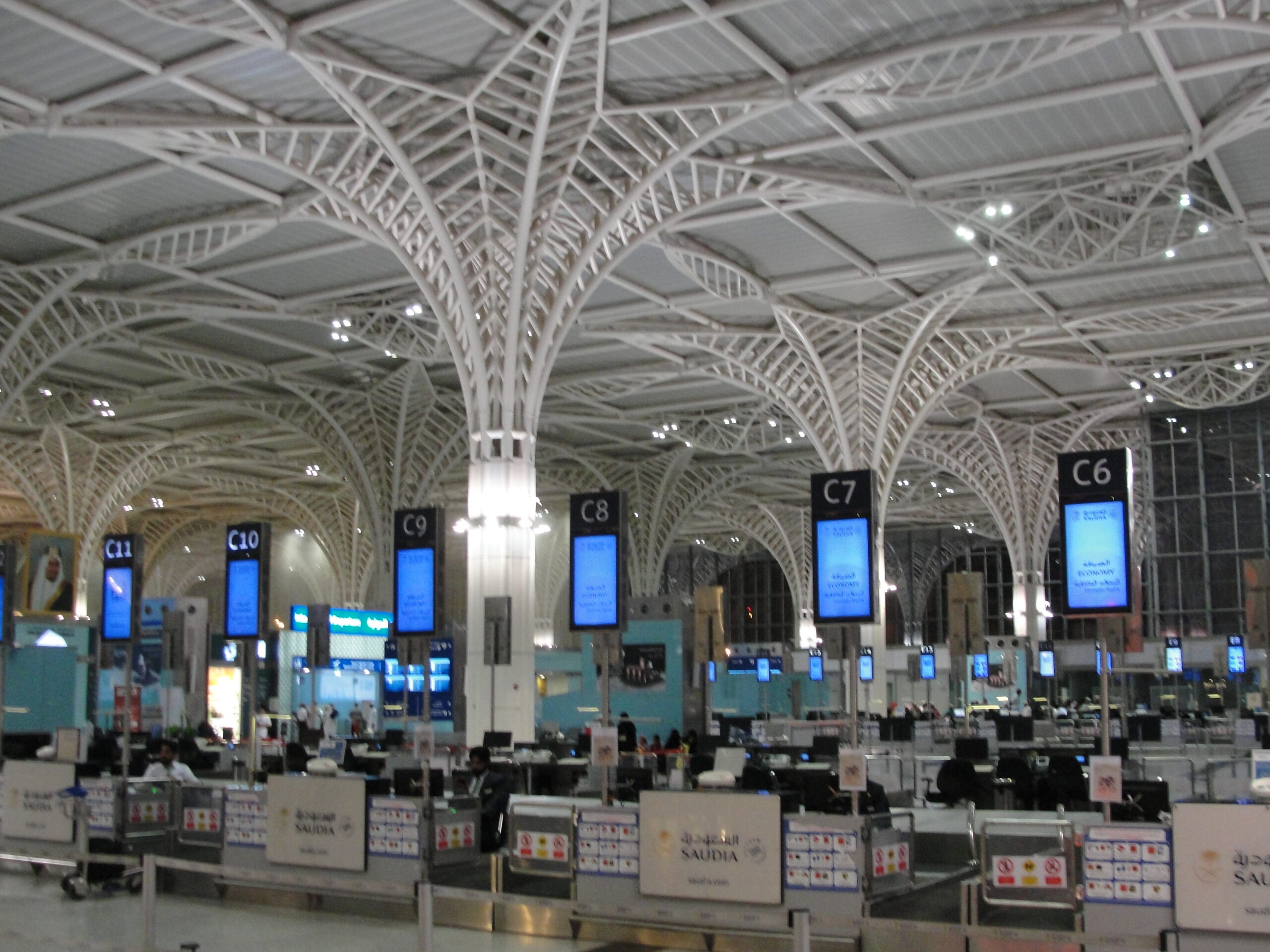
Prince Mohammad Bin Abdulaziz International Airport opened in 1974 and has undergone multiple transformations since. The most significant was the construction of a new terminal, completed in 2015, which merged previously separate domestic and international operations into a single, modern building spanning 156,940 square metres. The terminal’s architecture draws heavily from Hejazi tradition, with soaring steel columns shaped like palm trees supporting a canopy of geometric Islamic patterns. The effect is striking — even travel-weary pilgrims arriving after long-haul flights tend to pause and look up.
The airport is operated by Tibah Airports Development Company, a consortium of Turkey’s TAV Airports and Saudi Arabia’s Al-Rajhi Holding Group, who hold the concession until May 2041. Under Tibah’s management, the airport has expanded its retail offerings, improved wayfinding signage in multiple languages, and introduced dedicated Hajj and Umrah processing facilities.
Phase II Expansion
A SAR 1.2 billion (USD 320 million) Phase II expansion is currently underway, targeting completion by the end of 2027. The project includes a new domestic terminal (T2), renovation and expansion of the existing international terminal (T1), and new parking infrastructure. When complete, annual capacity will reach 17 million passengers — more than double the current throughput. The expansion is designed to absorb surging demand driven by Saudi Arabia’s Vision 2030 tourism targets and the Kingdom’s goal of hosting 30 million Umrah visitors per year.
Terminal Layout
Madinah Airport operates from a single integrated terminal for regular domestic and international flights. The terminal is divided into clearly marked zones:
- Ground Floor: Arrivals hall, immigration, baggage claim, customs, ground transportation, SIM card vendors, currency exchange, and the arrivals meeting area
- First Floor: Check-in counters (zones A through D), departures, security screening, and the domestic departure lounge
- Airside: International departure gates, duty-free shopping, restaurants, prayer rooms, and the Primeclass Lounge
- Primeclass Lounge (International): Located airside near Gate 112 on the ground floor. Open 24 hours. Accessible via Priority Pass, Mastercard airport lounge programs, American Express Platinum, or pay-at-door. Offers hot and cold food, beverages, WiFi, and quiet seating.
- Wellcome Lounge (Domestic): Located on the first floor of the domestic departure area. Open 24 hours. Available through prepaid lounge passes or membership programs.
- Where to buy: Sealed 5-litre bottles are available from authorised vendors at the exterior sidewalk in front of the Hajj Terminal gate. The price is SAR 12.50 (approximately USD 3.30) per bottle.
- Limit: One bottle per passenger per departure.
- Packaging: The bottle must be factory-sealed. If you are bringing your own Zamzam water, ensure it is in a properly sealed container.
- Checked baggage: Zamzam water bottles must not be placed inside checked luggage. Carry them separately — airlines have specific handling procedures.
- Airline policies: Saudia (Saudi Arabian Airlines) allows one 5-litre bottle free of charge for all passengers. Other airlines generally permit Zamzam water but policies vary — check with your carrier before departure.
- Download the Nusuk app. This is mandatory for Umrah visitors and essential for booking mosque visits, obtaining permits, and managing your pilgrimage itinerary. Download and register before you board your flight.
- Ihram is not for the airport. If you are arriving in Madinah before proceeding to Mecca for Umrah, you do not need to wear ihram on arrival. You enter the state of ihram at the Miqat (Dhul Hulayfah / Abyar Ali, located 9 km south of Madinah) when you travel from Madinah toward Mecca. Many first-time pilgrims confuse this point.
- Obtain a visa in advance. Tourist e-visas, Umrah visas, and Hajj visas must all be arranged before arrival. Visa-on-arrival is available for citizens of some countries on a tourist e-visa, but not for dedicated pilgrimage visas.
- Print your documents. Carry printed copies of your visa, hotel booking, return ticket, and travel insurance. While digital copies are usually accepted, printed backups prevent delays at immigration.
- Pack a travel wallet. Keep your passport, visa, boarding pass, and a small amount of Saudi Riyal cash in an easily accessible wallet or pouch. You will need these documents multiple times during arrival processing.
- Fill out your disembarkation card on the plane — do not wait until you reach the immigration queue.
- Buy a SIM card immediately after immigration. The STC, Mobily, and Zain booths are right there. You will need mobile data for ride-hailing apps, hotel navigation, and the Nusuk app.
- Exchange only a small amount of currency at the airport. ATMs with fair exchange rates are available, but money changers in the city offer better rates. SAR 200-300 is enough for the taxi and first meal.
- Mark your luggage distinctively. During pilgrimage seasons, hundreds of identical black suitcases circulate on the carousels. A coloured ribbon, distinctive tag, or sticker makes identification fast.
- Do not accept unofficial transport offers. Licensed taxis and ride-hailing apps are your safest options. Unofficial drivers who approach you in the arrivals hall may overcharge significantly.
- Hajj 2026 Guide — Dates, registration, costs and everything you need for the pilgrimage
- Madinah Travel Guide — The Prophet’s City: what to see, where to stay, and how to get around
- The Prophet’s Mosque Visitor Guide — Etiquette, prayer times, and Ziyarat at Masjid al-Nabawi
- Umrah Guide 2026 — Rituals, costs, best times, and step-by-step instructions
- Jeddah Airport Guide — Terminals, Hajj Terminal, and transfers at King Abdulaziz International
- Saudi Arabia Airport Guide — Every terminal, transfer, and tip across the Kingdom
- Saudi Arabia Visa Guide — Every visa type explained, including Hajj, Umrah, and tourist e-visa
Wayfinding is straightforward. Signage is in Arabic and English throughout, with additional directional markers in Urdu, Turkish, Bahasa Indonesia, and French during peak pilgrimage seasons. The terminal is smaller and less congested than King Abdulaziz International Airport in Jeddah, and most travellers find it significantly easier to navigate.
Hajj Terminal
During the annual Hajj season, a separate Hajj Terminal activates to absorb the enormous surge in pilgrim traffic. This facility includes six Hajj Pavilions with dedicated immigration desks, baggage handling, and group processing areas designed to move large tour groups efficiently. If you are arriving on a Hajj charter flight, you will be directed to this terminal automatically — your tour operator will have pre-coordinated all processing. The Hajj Terminal experience is typically faster than the main terminal during peak season, as dedicated staff and streamlined procedures are in place.
Arriving at Madinah Airport: Step by Step
Here is exactly what happens from wheels-down to walking out of the terminal.
1. Disembarkation Card
Cabin crew on international flights will distribute disembarkation cards during the descent. Fill this out on the plane — it saves time. The card requires your passport details, flight number, hotel address in Saudi Arabia, and purpose of visit. If crew do not distribute cards, request one. Some airlines now use electronic arrival cards processed through the Saudi government’s platform, but paper cards remain common on charter flights.
2. Immigration and Passport Control
Follow the signs to the immigration hall on the ground floor. Queues during Umrah and Hajj season can be substantial — expect 30 to 90 minutes during peak arrival windows (typically late evening). Biometric screening (fingerprints and facial recognition) is standard for all international arrivals. Have your passport, visa (printed or electronic), and completed disembarkation card ready.
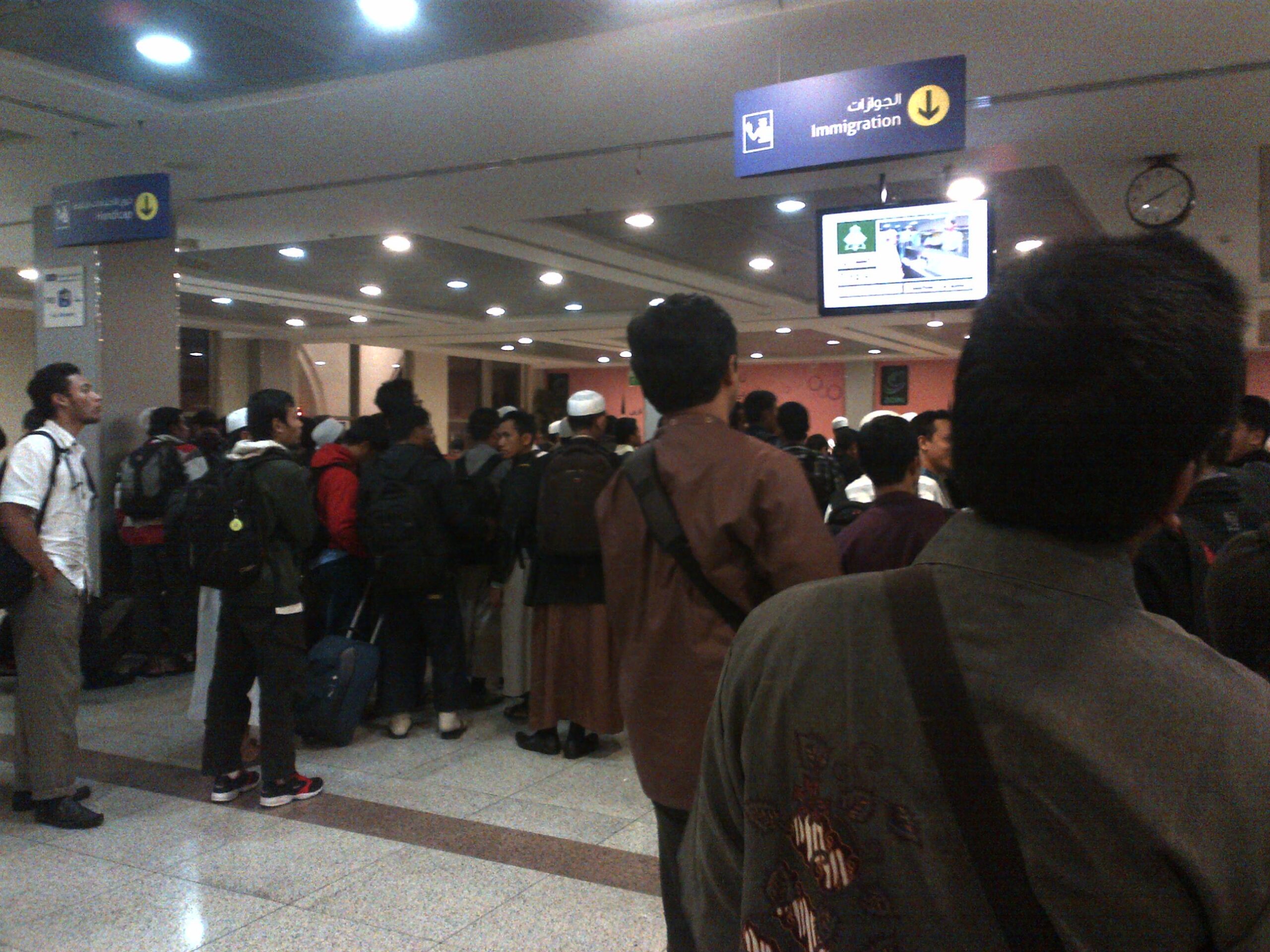
Tip: The immigration process is the most consequential step after arrival. Even minor documentation issues — an expired visa, a misspelled name, a missing hotel booking reference — can result in delays or, in rare cases, entry refusal. Carry both digital and printed copies of your visa, hotel confirmation, and return ticket. If arriving for Umrah, ensure your Nusuk app registration is complete before landing.
3. Baggage Claim
After clearing immigration, proceed to the baggage hall. Flight information screens indicate which carousel serves your flight. Luggage carts are available free of charge. During peak seasons, the baggage area becomes crowded — identify your bags by distinctive markers (coloured tape, unique tags) rather than relying on generic black suitcase recognition.
4. Customs
Saudi customs screening follows baggage collection. Most travellers pass through the green (nothing to declare) channel without incident. Prohibited items include alcohol, pork products, narcotics, and weapons. Religious texts and materials are permitted for personal use. If you are carrying medications, bring a prescription and keep them in original packaging.
5. Arrivals Hall
Beyond customs, you enter the arrivals hall where hotel representatives, tour operators, SIM card vendors, currency exchange counters, and ground transportation desks are located. This is where you will arrange your transfer to the city. If your Umrah package includes airport transfers, look for your tour operator’s sign here.
Getting from the Airport to the Prophet’s Mosque
Madinah Airport sits approximately 20 kilometres (12.4 miles) northwest of the city centre. Under normal traffic conditions, the journey to Masjid al-Nabawi takes 20 to 30 minutes by car. Here are your options, from fastest to cheapest.
Taxi
Standard metered taxis operate from the arrivals level. The fare to the Prophet’s Mosque area typically ranges from SAR 50 to SAR 100 (USD 13-27), depending on your exact hotel location and traffic conditions. Licensed taxis are white with a green stripe. Agree on the fare before departure if the driver does not use a meter, or insist on the meter.
Ride-Hailing Apps: Uber and Careem
Uber and Careem both operate at Madinah Airport. Average fares run SAR 40-80 (USD 11-21), often slightly cheaper than airport taxis. Request your ride from the designated pickup zone outside the arrivals hall. Be aware that during peak hours — especially during Ramadan and Hajj — surge pricing and driver cancellations are common. Pre-booking is not available on Uber in Saudi Arabia, but you can schedule rides on Careem.
SAPTCO Shuttle Bus
The Saudi Public Transport Company (SAPTCO) operates a shuttle bus between the airport and the Prophet’s Mosque area. The fare is approximately SAR 15-25 per person, making it by far the cheapest option. Journey time is around 28-35 minutes with intermediate stops. During Ramadan, Madinah Bus runs a 24/7 route between the airport and Masjid al-Nabawi. Outside Ramadan, services operate from approximately 6:00 AM to 10:00 PM.
Budget tip: The SAPTCO shuttle is excellent value, but it runs on a fixed schedule (roughly every 30 minutes) and can fill up during peak arrivals. If you arrive late at night outside Ramadan, a taxi or ride-hailing app is your only practical option. For more on public transport across Saudi Arabia, see our dedicated guide.
Private Transfer
Pre-booked private transfers are available through companies like Transfeero and local operators. Prices start from SAR 150-200 (USD 40-53) for a sedan. The advantage is a driver waiting in the arrivals hall with your name sign and real-time flight monitoring for delayed arrivals. If you are travelling with a large group or heavy luggage, a private minivan transfer is worth the premium.
Car Rental
Avis, Hertz, Budget, SIXT, and Alamo all have desks at Madinah Airport. Daily rates average USD 35-55 depending on vehicle class and season. A rental car is unnecessary for Madinah itself — the city is compact and most hotels are within walking distance of the Prophet’s Mosque — but useful if you plan to drive to Mecca or explore the wider Hejaz region. Non-Saudi residents must carry an international driving permit.
Haramain High-Speed Railway
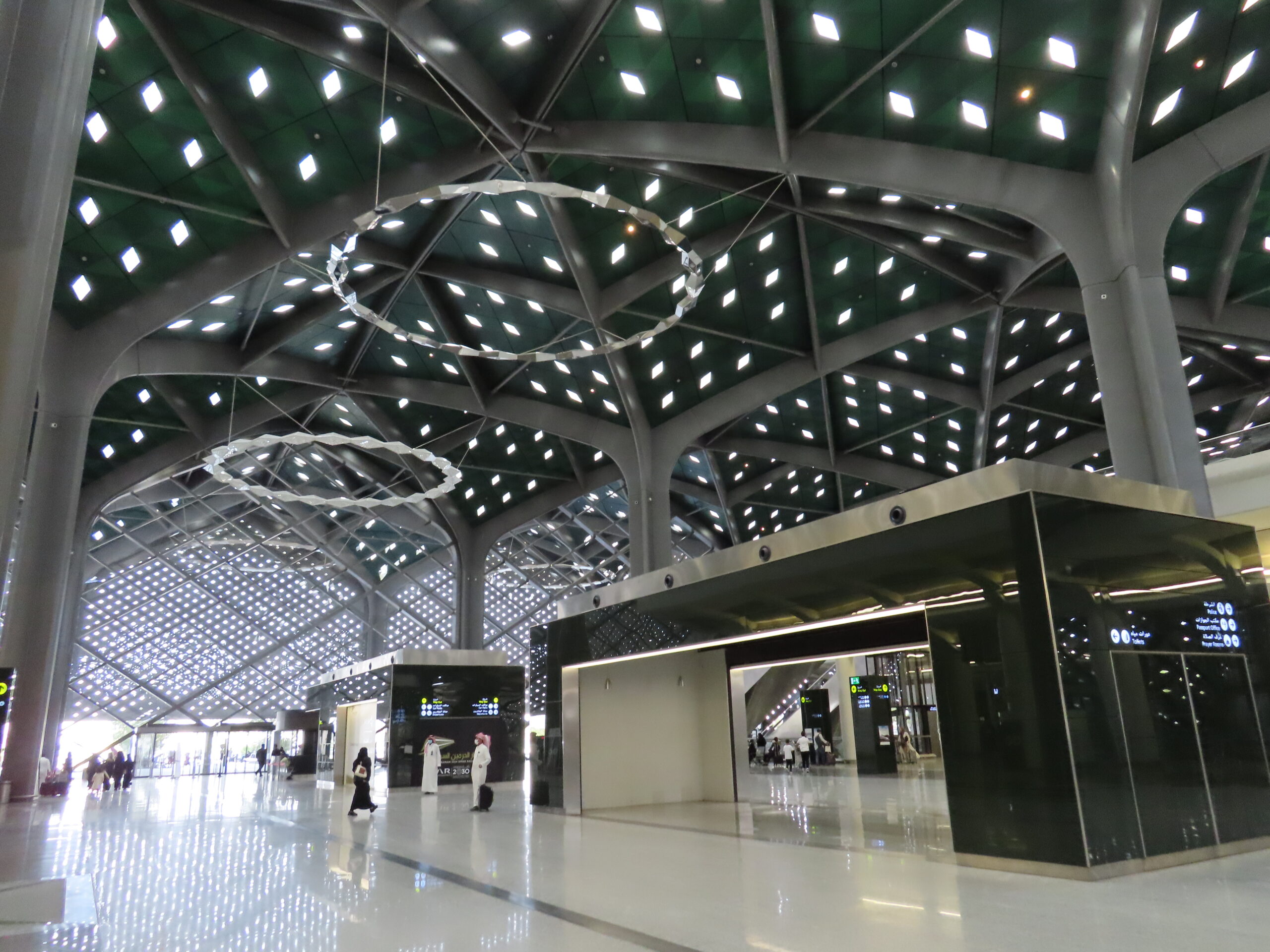
The Haramain High-Speed Railway connects Madinah to Mecca via Jeddah, covering the 450-kilometre distance in approximately 2.5 hours at speeds up to 300 km/h. The Madinah station is located in the Al Hadra district, roughly 10 minutes from Masjid al-Nabawi — but it is not at the airport. There is no direct rail link between Madinah Airport and the Haramain station (unlike Jeddah, where the railway has an airport branch).
To reach the Haramain station from the airport, take a taxi or ride-hailing car (approximately SAR 50-70, 15-20 minutes). Tickets for the train itself should be booked in advance through the official Saudi Railway (SAR) portal or the HHR app — economy class fares from Madinah to Mecca start at approximately SAR 150 (USD 40).
Essential Airport Services
SIM Cards and Connectivity
Booths for Saudi Arabia’s three major mobile operators — STC, Mobily, and Zain — are located just after immigration in the arrivals hall. STC is generally recommended for the best network coverage across Saudi Arabia, including inside the Prophet’s Mosque. A prepaid tourist SIM with 20 GB of data costs approximately SAR 85-100 (USD 23-27). You will need your passport to purchase. For a deeper comparison, see our Saudi Arabia phone and SIM card guide.
If your phone supports eSIM, you can activate a Saudi data plan before departure. Airalo offers Saudi eSIMs starting at approximately USD 5 for 1 GB (7 days) up to USD 35 for unlimited data (10 days). This is the fastest way to get connected — your phone will have data the moment you step off the aircraft.
Free WiFi is available throughout the terminal, but it is unreliable during peak periods and insecure. Do not rely on airport WiFi for essential communications.
Currency Exchange and ATMs
Currency exchange counters operate in both the arrivals and departures areas. Rates are functional but unfavourable compared to city-centre money changers near the Prophet’s Mosque. Exchange just enough for immediate needs (taxi fare, a meal) at the airport — typically SAR 200-300 — and change the remainder at one of the many money exchangers along the pedestrian streets surrounding Masjid al-Nabawi.
International ATMs from Saudi National Bank (SNB), Al Rajhi Bank, and Riyad Bank are available in the arrivals hall. These accept Visa, Mastercard, and most international debit cards. When withdrawing, always choose to be charged in Saudi Riyal (SAR), not your home currency — this avoids the Dynamic Currency Conversion fee, which typically adds 3-5% to the exchange rate. For detailed banking information, see our ATMs and banking in Saudi Arabia guide.
Prayer Rooms
Dedicated prayer rooms are available throughout the terminal, with separate areas for men and women. The main prayer area on the ground floor features carpeted floors and is large enough to accommodate dozens of worshippers simultaneously. Ablution (wudu) facilities are adjacent. During peak seasons, prayer spaces can become crowded around salah times — arrive early if you need to pray before continuing your journey.
Airport Lounges
Two lounges serve Madinah Airport passengers:
Duty-Free Shopping
Duty-free shops are located in both domestic and international departure areas. The selection includes perfumes and fragrances (particularly oud and Arabian attars), chocolates, fashion accessories, eyewear, and souvenirs. Prices are comparable to airport duty-free elsewhere in the Gulf. The airport also has a dedicated Zamzam water collection point (see below).
Food and Dining
The terminal has dozens of food outlets, many open 24 hours. Options range from international fast-food chains to Arabic coffee shops and family-style restaurants. All food served at the airport is halal. Expect to pay SAR 30-60 for a meal. Several cafes are located airside if you need to eat after clearing security. For an overview of what to eat in the Kingdom, see our Saudi Arabia food guide.
Zamzam Water: Collection Rules
Every international departing passenger is permitted to carry one 5-litre bottle of Zamzam water at no extra charge, in addition to their checked baggage allowance. Here are the rules:
Important: If you want to take more than 5 litres, you will need to check with your airline for additional luggage allowance and pay any excess baggage fees. Some pilgrims buy Zamzam water in the city and ship it home through courier services near the Prophet’s Mosque — a more practical option for large quantities.
Airlines and Destinations
As of early 2026, 38 airlines operate flights to and from Madinah, connecting the city to 97 airports worldwide. The route network is heavily weighted toward Muslim-majority countries and cities with large Muslim diaspora populations.
Major Airlines Serving Madinah
| Airline | Key Routes | Notes |
|---|---|---|
| Saudia | Riyadh, Jeddah, Dammam, Cairo, Istanbul, Kuala Lumpur, Jakarta | Flag carrier; highest frequency on domestic routes |
| Flynas | Riyadh, Jeddah, Cairo, Istanbul, Islamabad | Low-cost; opened Madinah base March 2026 with routes to Jazan, Qassim, Arar |
| Flyadeal | Riyadh, Jeddah, Dammam, Abha | Saudia subsidiary; budget domestic option |
| Emirates | Dubai | Daily service; connects Madinah to global network via DXB |
| Turkish Airlines | Istanbul | Multiple daily flights; strong connection hub for European travellers |
| EgyptAir | Cairo | High frequency; popular with Egyptian pilgrims |
| Air Algerie | Algiers | One of the busiest routes; Algeria sends large pilgrim groups |
| IndiGo | Delhi, Mumbai, Hyderabad | Indian low-cost carrier; high demand from Indian Muslim community |
| Pakistan International Airlines | Islamabad, Lahore, Karachi | Direct Hajj and Umrah service |
| Garuda Indonesia | Jakarta | Seasonal and charter; Indonesia sends the world’s largest Hajj contingent |
| Wizz Air | London Gatwick | Budget European access; useful for UK-based pilgrims |
Domestic Connections
Nine domestic routes operate from Madinah, with Riyadh the busiest (approximately 112 departures per week, accounting for 22% of all weekly flights). The Riyadh route is served by Saudia, Flynas, and Flyadeal, with fares starting from SAR 200-350 (USD 53-93) one way. For information on flights to Saudi Arabia from international origins, see our booking guide.
Practical Tips for Pilgrims
Before You Fly
At the Airport
Spending Time in Madinah
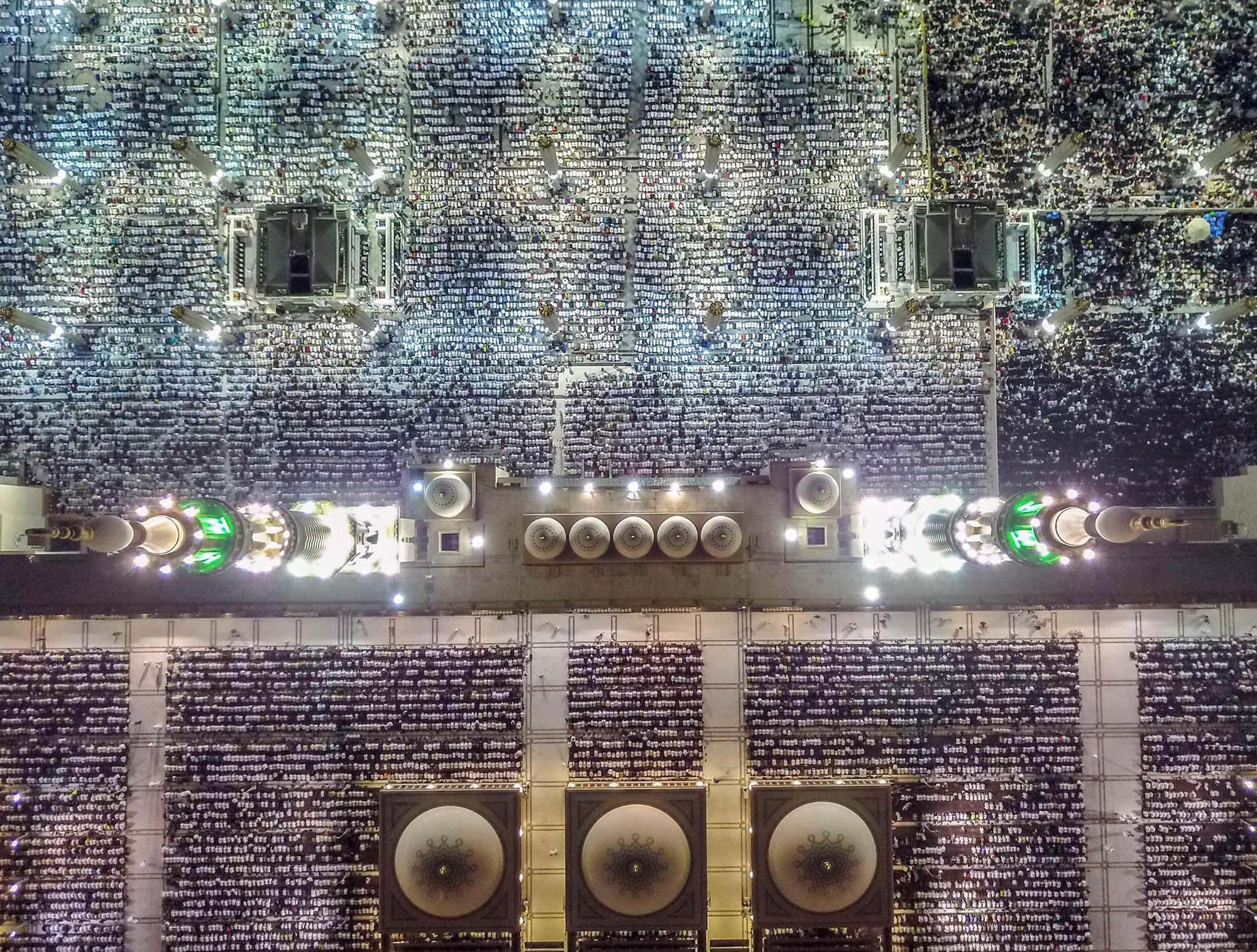
Most pilgrims spend two to three days in Madinah before or after completing Umrah or Hajj in Mecca. This is ample time to pray at the Prophet’s Mosque, visit Masjid Quba (the first mosque in Islam), explore the Quba and Uhud historical sites, and walk through the old Madinah markets. For a complete itinerary, see our Madinah travel guide.
Common mistake: Many first-time visitors underestimate how much time they will want to spend in Madinah. The city has a distinctly peaceful atmosphere compared to the intensity of Mecca, and the experience of praying in the Prophet’s Mosque — particularly during Fajr and Isha — is one that most Muslims want to repeat multiple times. Plan at least two full days.
Departing from Madinah Airport
Check-In and Security
Check-in counters are on the first floor, organised into zones A through D by airline. Saudia, Flynas, and Flyadeal operate self-service kiosks as well as staffed counters. For international flights, arrive at least 3 hours before departure — security screening and emigration processing take longer during peak seasons. Domestic passengers should allow 2 hours.
Zamzam Water Packaging
If you are carrying Zamzam water, purchase your sealed 5-litre bottle before entering the terminal. There is a dedicated Zamzam water collection area on the exterior sidewalk near the Hajj Terminal entrance. Staff will assist with packaging and compliance with airline regulations.
Duty-Free and Departures
After clearing security and emigration, the international departures area offers duty-free shopping, dining, and the Primeclass Lounge. Boarding gates are clearly numbered and displayed on overhead screens. The terminal is compact enough that walking from security to the most distant gate takes no more than 10-15 minutes.
Airport Contact Information
| Detail | Information |
|---|---|
| Airport Name | Prince Mohammad Bin Abdulaziz International Airport |
| IATA Code | MED |
| ICAO Code | OEMA |
| Operator | Tibah Airports Development Company (TAV / Al-Rajhi) |
| Official Website | tibahairports.com / madinahairport.com |
| Location | 20 km northwest of Madinah city centre |
| Coordinates | 24.5534°N, 39.7051°E |
| Elevation | 636 metres (2,087 feet) AMSL |