
Saudi Arabia is one of the most visually dramatic countries on Earth, and it has only recently opened its doors to international visitors. For photographers, the timing is extraordinary: UNESCO World Heritage tombs carved into sandstone monoliths, volcanic craters ringed with white sodium crystals, cliff edges that plunge into a prehistoric seabed, and heritage villages built entirely from local stone. Most of these locations see a fraction of the visitor traffic of comparable sites elsewhere in the Middle East, which means clean compositions and unhurried shooting. This guide is part of our wider Saudi Arabia travel guide and covers the best photography locations across the Kingdom, essential gear and timing advice, legal rules you must follow, and practical tips for getting the most from every golden hour.
Best Time to Visit: November to February (cooler temperatures, lower sun angles, longer golden hours)
Getting There: International airports at Riyadh (RUH), Jeddah (JED), and AlUla (ULH); domestic flights connect all major regions
Visa Required: Yes — tourist e-visa available online for 60+ nationalities
Budget: $80–$200/day (accommodation, transport, site entry fees)
Must-See: Hegra (Mada’in Salih), Edge of the World, Al-Balad Jeddah
Avoid: Summer months (June–August) — ground temperatures above 50°C can damage gear and make outdoor shoots dangerous
Why Saudi Arabia Is a Photographer’s Destination
Until 2019, Saudi Arabia did not issue tourist visas. The Kingdom’s landscapes — from the Hejaz mountains to the Empty Quarter — were effectively invisible to the international photography community. That isolation preserved sites in ways that heavy tourism erodes elsewhere: there are no souvenir stalls at the base of Qasr al-Farid, no crowd barriers obscuring the rawasheen of historic Jeddah, and no helicopter tours buzzing the Edge of the World. For landscape, architectural, and cultural photographers, Saudi Arabia in 2026 offers a window that is unlikely to last. The Kingdom’s Vision 2030 tourism push is accelerating development, and the locations described in this guide will look different within a decade.
The country spans roughly 2.15 million square kilometres — four times the size of France — across terrain that includes Red Sea coral reefs, sandstone canyons, basalt lava fields, terraced mountain villages, and some of the tallest sand dunes on the planet. A two-week itinerary barely scratches the surface. What follows is a curated selection of the strongest photography locations, organised by region, with specific shooting advice for each.
AlUla and Hegra: Sandstone and Nabatean Tombs
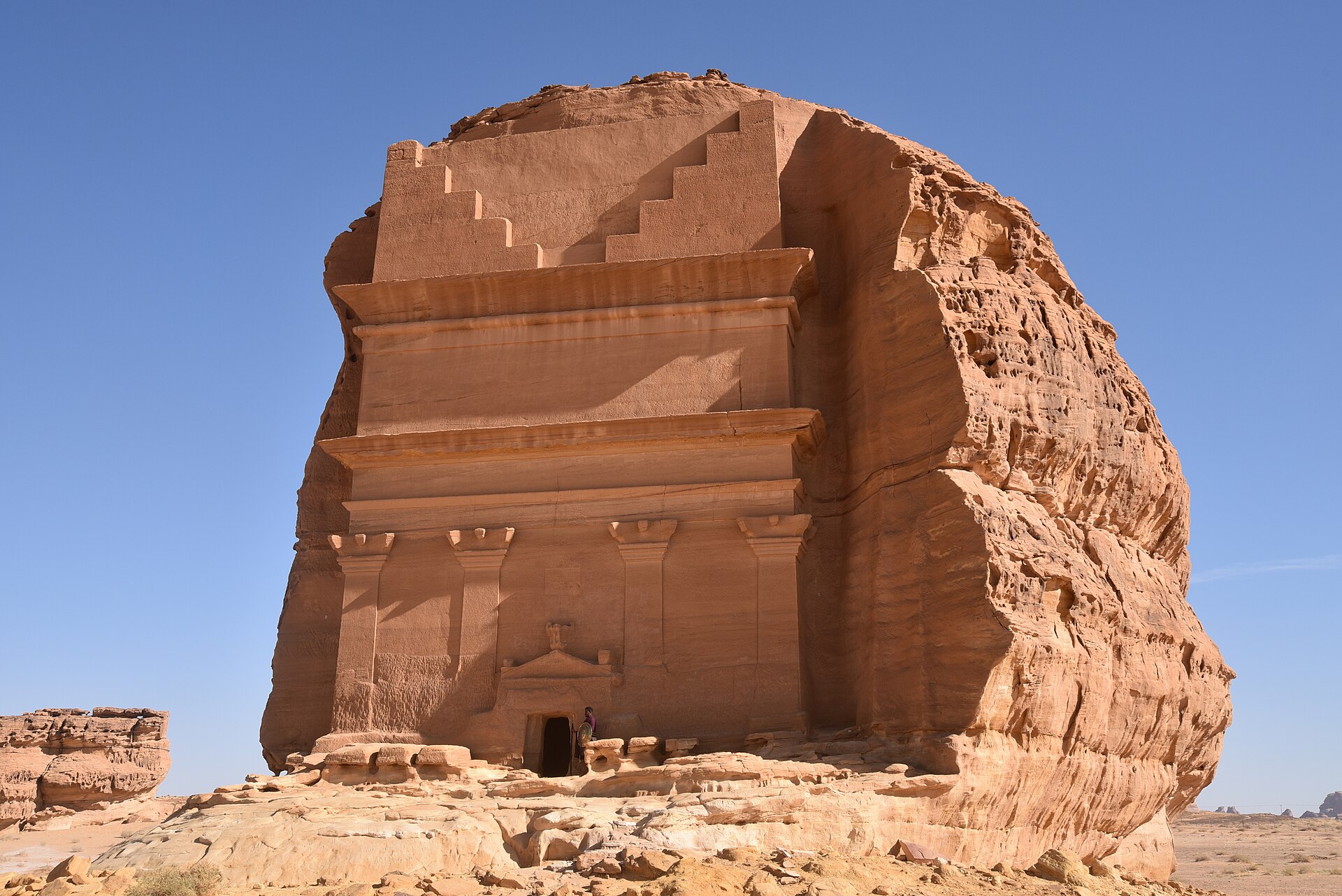
AlUla is the single most important photography destination in Saudi Arabia. The valley sits in a natural corridor of sandstone formations that have been shaped by wind erosion over millions of years, producing towering pillars, arches, and mushroom rocks in shades of amber, ochre, and burnt sienna. Within this landscape sits Hegra (Mada’in Salih), a UNESCO World Heritage Site and the southern capital of the Nabatean civilisation that also built Petra in Jordan. Hegra contains more than 110 monumental tombs carved directly into sandstone outcrops, the largest and most famous being Qasr al-Farid — a single tomb cut into an isolated boulder, left unfinished by its makers around the 1st century AD.
Shooting Tips for Hegra
- Golden hour is everything. The tombs glow deep amber at sunset as the low sun rakes across the carved facades. Shadows thrown by the surrounding rock formations add three-dimensional depth. Arrive at least 45 minutes before sunset to scout compositions.
- Book the latest helicopter tour available. Earlier flights put the sun too high — you lose the long shadows that give Hegra its sculptural quality from the air. The last flight of the day captures Elephant Rock’s arch as a bright feature punching through shadow.
- Wide and telephoto. A 16–35mm captures the scale of Qasr al-Farid against the sky. A 70–200mm isolates carved details — the eagle motifs, the Nabatean inscriptions, the erosion patterns on unfinished surfaces.
- Tripod permitted. Hegra’s visitor management allows tripods. Use one for bracket exposures to handle the extreme dynamic range between sunlit sandstone and deep tomb interiors.
- Sunrise is superior to sunset here. The east-facing escarpment catches the first light directly. Arrive before dawn, position yourself on the cliff edge (carefully), and shoot the light as it floods across the plain below.
- Panoramic lens essential. The scale of the view demands ultra-wide. A 14mm or wider captures the sweeping horizontal expanse. Vertical panoramas from cliff edge to sky work well too.
- Astrophotography. With no light pollution for 50+ kilometres in any direction, the Edge of the World is one of the best dark-sky locations accessible from a major city. Plan around the new moon for Milky Way shots across the escarpment.
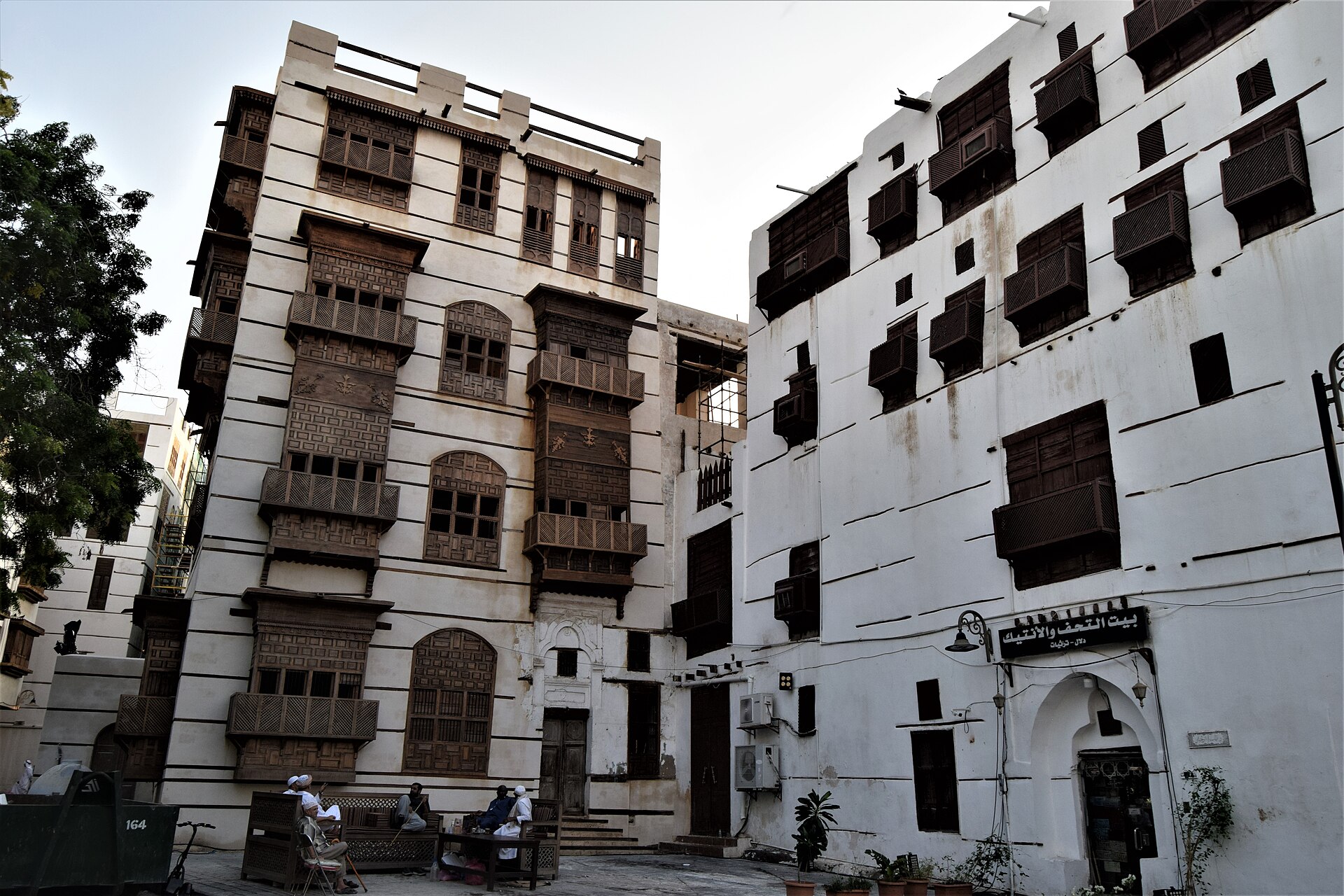
- Morning light. Many of Al-Balad’s alleys run roughly north–south. Morning light penetrates the narrow gaps and creates dramatic shafts between buildings. Arrive by 07:00 for the best interplay of light and shadow.
- Details matter. A 50mm or 85mm prime lens isolates individual rawasheen, painted doors, and weathered coral textures. The district rewards close observation more than sweeping wide shots.
- Night photography. Al-Balad has been partially restored with ambient lighting. The warm-toned lights against the pale coral stone create a different mood entirely. Use a fast prime (f/1.4–f/2) to shoot handheld.
- Respect residents. Al-Balad is a living neighbourhood. Some alleys lead to private homes. Do not photograph people without asking, and avoid pointing cameras through windows or doorways.
- Overcast days work here. Unlike desert locations, Rijal Almaa photographs well under soft, diffused light. The stone textures and subtle colour variations in the buildings are flattened by harsh midday sun but come alive under cloud cover.
- Interior murals. The Asir region is known for a tradition of geometric wall painting, inscribed by UNESCO as Intangible Cultural Heritage. Some buildings in Rijal Almaa contain these murals. Ask permission before photographing interiors.
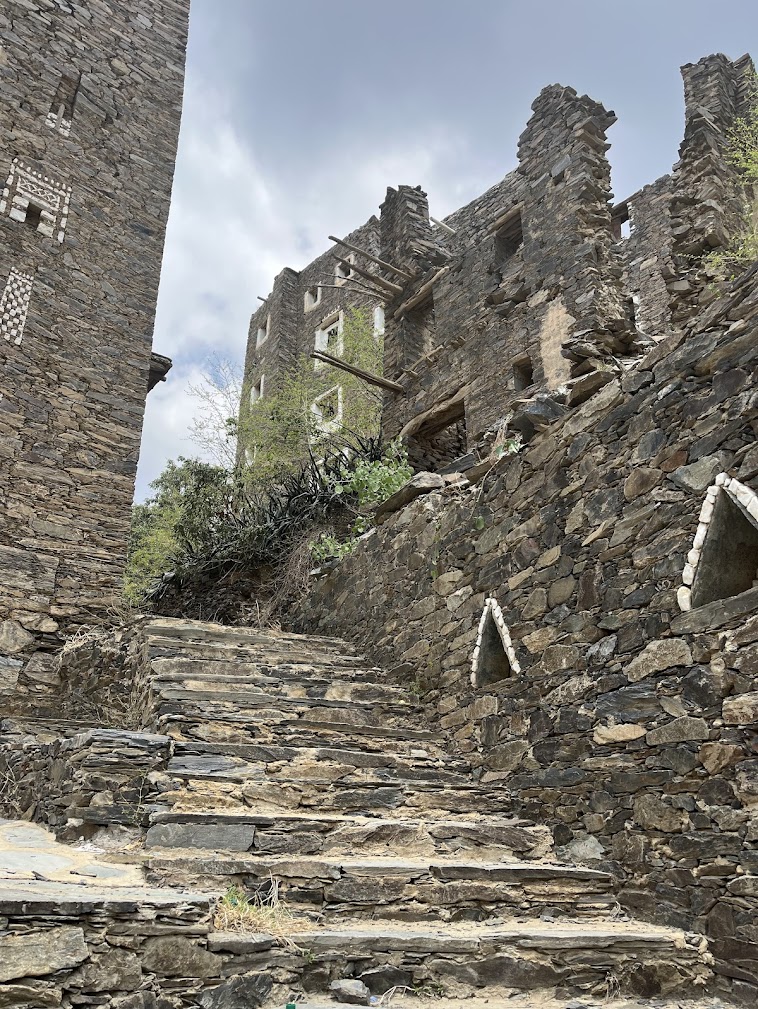
- Vertical compositions. The village is built upward. Tilt-shift lenses or perspective correction in post-processing help keep verticals true when shooting the towers from below.
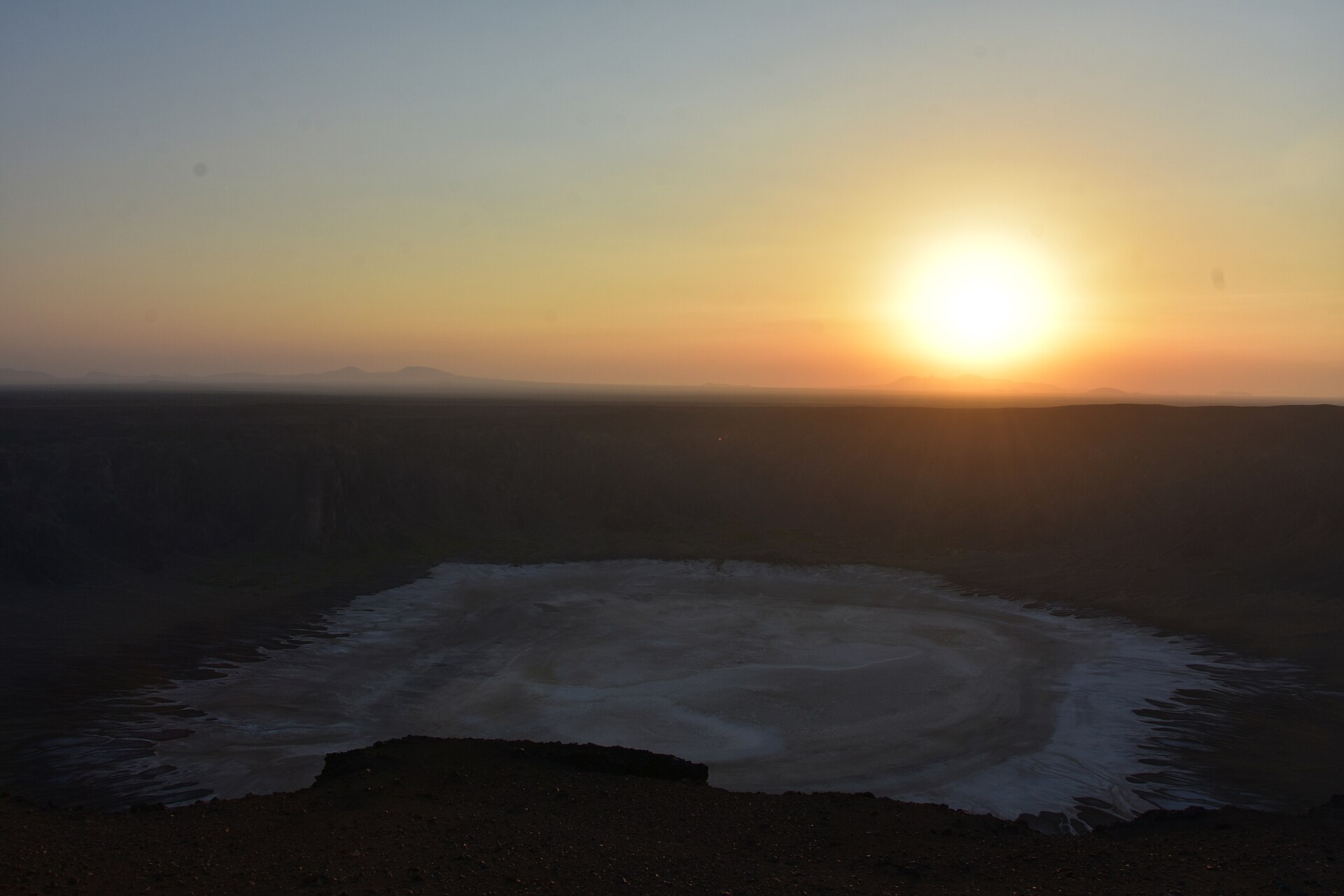
- Sunrise is the shot. Arrive before dawn and position on the eastern rim. As the sun rises behind you, it illuminates the white crystal floor while the crater walls remain in deep shadow — the contrast is extraordinary.
- Descend for perspective. A hiking trail leads down to the crater floor (allow 2–3 hours round trip). From below, looking up at the rim against the sky creates a sense of standing inside another planet entirely.
- Neutral density filter. The white crystal floor can blow out highlights severely. A graduated ND filter or careful bracket exposures preserve detail in both the bright floor and darker rim.
- Side-lighting is critical. Flat overhead light erases the dune ridgelines that give the Empty Quarter its graphic quality. Shoot only during the first and last 90 minutes of daylight.
- Protect your gear. Fine sand penetrates everything. Use weather-sealed bodies and lenses, keep a blower handy, and store equipment in sealed bags when not shooting. Change lenses inside a vehicle or tent, never in open wind.
- Scale elements. The dunes are so large that photographs without a reference point look flat. Include a person, a vehicle, or camel tracks to convey the true scale.
- Housing required. Serious underwater photography demands a proper camera housing. Rental options are limited in Saudi Arabia — bring your own or arrange through a liveaboard operator.
- Best season: December to May. Calmer seas, better visibility, and higher concentrations of pelagic species.
- Coastal golden hour. The Red Sea coast faces west, making it ideal for sunset photography. The combination of clear water, coral shallows, and warm light creates painterly conditions.
- Public tourist attractions, landscapes, and cityscapes
- Your own travel companions (with their consent)
- Markets, restaurants, and public events (general atmosphere shots)
- Archaeological and heritage sites (unless posted signs say otherwise)
- People without consent — especially women, families, and children. This is both illegal and culturally offensive. Always ask before pointing a camera at anyone.
- Government buildings, military installations, and palaces — strictly prohibited. Signs are posted, but use common sense: if it looks official, don’t shoot it.
- Airports, seaports, and border areas
- Inside mosques during prayer times — and non-Muslims cannot enter the Grand Mosque in Makkah or the Prophet’s Mosque in Medina at any time
- Use weather-sealed camera bodies and lenses wherever possible
- Carry a rocket blower — not compressed air cans, which can propel moisture onto sensors
- Change lenses inside vehicles or tents, never in open desert wind
- Store backup gear in airtight dry bags or Pelican cases
- Never leave equipment in a parked car — interior temperatures can exceed 70°C in summer
- Bring lens cloths and sensor swabs; cleaning services are available in Riyadh and Jeddah but may not be found elsewhere
- Dress modestly, especially in heritage sites and smaller towns. Both men and women should cover shoulders and knees.
- Friday midday is prayer time. Streets empty and businesses close. This can be a good time for architectural photography of empty streets, but be respectful of people heading to prayer.
- If someone asks you to stop photographing, comply immediately. Do not argue or attempt to take covert shots.
- In the Asir region, the tradition of geometric wall painting is a living cultural practice. Photograph murals with the occupant’s permission, and credit the tradition in your published work.
- Days 1–2: Riyadh. Arrive, acclimatise. Sunset at Edge of the World (Day 1). Dir’iyah and Kingdom Centre at dusk (Day 2).
- Days 3–4: AlUla. Fly Riyadh–AlUla. Hegra sunrise and sunset shoots. Elephant Rock at sunset. Dadan in late afternoon.
- Days 5–6: Jeddah. Fly AlUla–Jeddah. Al-Balad morning light sessions. Corniche sunset. Night photography in the historic district.
- Day 7: Departure. Morning market shots in Al-Balad if time permits.
- Sandstorms occur primarily March–May in central Saudi Arabia. They reduce visibility to near zero and can last hours. Monitor weather forecasts and have a backup indoor shoot planned.
- Humidity on the Red Sea coast and in Asir can cause lens fogging when moving between air conditioning and outdoor heat. Allow 10–15 minutes for gear to acclimatise before shooting.
- Rain is rare but can be intense in Asir (particularly August–October) and Riyadh (November–March). Flash flooding is a genuine risk in wadis — never set up a tripod in a dry riverbed during or after rain.
- Saudi Arabia Travel Guide 2026 — The complete guide to visiting the Kingdom
- Photography Rules in Saudi Arabia — What you can and cannot photograph, plus permit details
- AlUla Travel Guide — Hegra, Elephant Rock, Dadan, and the desert canyon
- Abha and Asir Travel Guide — Mountain villages, cloud forests, and highland culture
- Solo Female Travel in Saudi Arabia — Honest advice on safety, dress codes, and logistics
- Saudi Arabia Visa Guide — Every visa type explained, including the tourist e-visa
Elephant Rock (Jabal al-Fil)
Fifteen minutes by car from central AlUla, Elephant Rock is a natural arch formation that resembles an elephant dipping its trunk toward the ground. The rock is open daily from 16:00 to midnight (extended to 00:40 on Thursdays and Fridays). The classic photograph is taken from the car park facing the back side of the arch: position yourself so the setting sun drops through the gap between “trunk” and “body” for a sunburst effect. Read our full AlUla travel guide for detailed access information, accommodation, and itinerary planning.
Dadan and the Lihyanite Tombs
Less visited than Hegra, the ancient capital of Dadan features rock-cut tombs from the Lihyanite civilisation (6th–4th century BC) and the Dadanite kingdom before them. The tombs are carved into a sheer cliff face and are best photographed in late afternoon when the cliff receives direct side-lighting.
Riyadh Region: Desert Escarpments and Urban Contrasts
Edge of the World (Jebel Fihrayn)
The Edge of the World is a section of the Tuwaiq Escarpment roughly 90 kilometres northwest of Riyadh. The escarpment runs approximately 800 kilometres through central Saudi Arabia, but at Jebel Fihrayn it drops away so abruptly that you stand on a cliff edge overlooking a flat desert plain that stretches unbroken to the horizon — an ancient seabed. There is no railing, no infrastructure, and very little between you and an uninterrupted 300-metre vertical drop.
Access note: The final approach to the Edge of the World requires a 4WD vehicle across unpaved desert terrain. The drive from Riyadh takes 1.5–2 hours. There are no facilities at the site — bring water, sun protection, and a fully charged phone with GPS. Several tour operators in Riyadh offer guided trips. Check our Riyadh travel guide for recommended operators.
Riyadh Cityscape
For urban photography, Riyadh offers stark contrasts: the Kingdom Centre Tower’s Sky Bridge (302 metres) provides panoramic views across the sprawling capital. The Diplomatic Quarter’s Wadi Hanifah has been restored as a green corridor with interesting architectural bridges. The mud-brick ruins of Dir’iyah, the original Saudi capital and a UNESCO World Heritage Site, sit on the outskirts of the city and photograph beautifully in late afternoon light.
Jeddah: Historic Coral Stone and Red Sea Light
Al-Balad Historic District
Jeddah’s Al-Balad is a UNESCO World Heritage Site (inscribed 2014) and one of the most photogenic urban environments in the Middle East. The district’s coral-stone tower houses, some dating to the late 19th century, feature rawasheen — projecting wooden lattice windows that filter light into the narrow streets below. The rawasheen are assembled from imported hardwoods with intricate joinery, sometimes incorporating small panes of coloured glass that cast jewel-toned light patterns in the mornings.
For full neighbourhood guides and restaurant recommendations, see our Jeddah travel guide.
Jeddah Corniche and Waterfront
The Jeddah Corniche runs for over 30 kilometres along the Red Sea coast. At sunset, the combination of warm light, calm water, and the city skyline creates strong silhouette opportunities. The unfinished Jeddah Tower (originally Kingdom Tower) is visible from many points and adds a distinctive element to the skyline.
The Asir Highlands: Mountains, Mist, and Heritage Villages
The Asir region in southwestern Saudi Arabia is the wettest part of the Arabian Peninsula, with juniper-forested mountains rising above 3,000 metres. The landscape bears no resemblance to the desert stereotypes: think terraced agriculture, cloud forests, and stone villages clinging to cliff faces. For photographers accustomed to the Gulf’s flat horizons, Asir is a revelation. Read our Abha and Asir travel guide for practical planning.
Rijal Almaa Heritage Village
Forty-five kilometres from Abha, Rijal Almaa is a heritage village of approximately 60 multi-storey buildings constructed entirely from stone, clay, and wood in a style closely related to Yemeni architecture across the border. The village has been nominated for UNESCO World Heritage status. The buildings rise in tiers against a mountainside, with narrow stone staircases connecting levels.
Habala Hanging Village
Roughly 60 kilometres from Abha, Habala is a village perched on a cliff face that was historically accessible only by rope. Today a cable car transports visitors from the car park down to the village, which clings to the rock with terraced mud-and-stone houses and narrow walkways. The ride itself offers aerial photography opportunities of the escarpment.
Soudah Peak and Wadi Lajab
Soudah, at 3,015 metres, is the highest point accessible by road in Saudi Arabia. The views from the summit span layered mountain ridges that recede into haze — a natural subject for telephoto compression shots. Wadi Lajab, a deep canyon with seasonal waterfalls and lush vegetation, offers a completely different mood: dark rock walls, dappled light, and flowing water.
Volcanic Landscapes: Al Wahbah Crater and Harrat Lava Fields
Saudi Arabia sits on the edge of the Arabian Shield, one of the most volcanically active regions in the Middle East. The western highlands contain multiple harrat (basalt lava fields), and within them are formations that look otherworldly.
Al Wahbah Crater
Located about 250 kilometres from Taif on the western edge of the Harrat Kishb basalt plateau, Al Wahbah is a maar crater — formed by a massive underground steam explosion when molten basalt met subterranean water. The crater is 2 kilometres in diameter and 250 metres deep. Its floor is covered with a white sheet of sodium phosphate crystals that contrast strikingly against the dark volcanic rim and the green vegetation that somehow thrives on the crater’s edges.
Harrat Rahat and Harrat Khaybar
The harrat lava fields north and south of Medina contain black basalt flows, cinder cones, and geological formations that date from eruptions as recent as 1256 AD (Harrat Rahat). These are austere, monochromatic landscapes best shot in dramatic light — either at golden hour or under storm clouds.
The Desert Interior: Empty Quarter and Red Sands
Rub’ al Khali (Empty Quarter)
The largest contiguous sand desert on Earth extends across Saudi Arabia’s southern border. The dunes reach heights of over 250 metres and shift through colours from pale gold to deep terracotta depending on the light. Access requires a guided 4WD expedition from Sharurah or through tour operators based in Riyadh. This is expedition-level photography: remote, logistically demanding, and rewarding beyond measure.
Red Sands (Dahna Desert)
Just 90 minutes east of Riyadh, the Dahna Desert offers accessible dune photography without the logistics of the Empty Quarter. The sand here has a distinctive reddish tint from iron oxide. Sunset turns the dunes a vivid crimson that photographs dramatically, especially with a telephoto lens to compress the layered dune ridges.
Red Sea Coast: Underwater and Coastal Photography
Saudi Arabia’s Red Sea coastline stretches over 1,800 kilometres and includes some of the world’s most pristine coral reef systems. The Farasan Islands, an archipelago of nearly 200 coral islands off the coast of Jizan, offer visibility exceeding 30 metres and encounters with whale sharks, manta rays, and reef sharks. The islands were designated a UNESCO Biosphere Reserve in 2021. For detailed dive site information, see our Saudi Arabia diving and snorkelling guide.
Tabuk and the Northwest: Canyons and Desert Architecture
The Tabuk region in Saudi Arabia’s northwest contains some of the most visually striking landscapes in the Kingdom, including Al Disah Valley (Wadi Tayyib al-Ism) — a narrow canyon with towering sandstone walls, palm groves, and clear springs. The valley is one of the least-visited major photography locations in the Middle East. See our Tabuk travel guide for access and accommodation details.
The Tabuk region also includes the archaeological site of Tayma, one of the oldest continuously inhabited settlements in the Arabian Peninsula, and the developing NEOM project along the Gulf of Aqaba coast.
Camera Gear Recommendations
Saudi Arabia’s photography opportunities span landscapes, architecture, street, wildlife, and underwater work. No single kit covers everything, but here is a practical starting point:
| Category | Recommended | Why |
|---|---|---|
| Camera body | Full-frame mirrorless (weather-sealed) | Dynamic range for desert highlights/shadows; weather sealing for sand and dust |
| Wide-angle | 14–24mm f/2.8 | Escarpments, crater rims, architectural interiors, astrophotography |
| Standard zoom | 24–70mm f/2.8 | Versatile walk-around for heritage villages, street, and general travel |
| Telephoto | 70–200mm f/2.8 | Dune ridgelines, tomb details, mountain compression shots |
| Fast prime | 35mm or 50mm f/1.4 | Low-light work in Al-Balad alleys, night markets, interiors |
| Tripod | Carbon fibre, travel-weight | Essential for sunrise/sunset bracket exposures, astrophotography, long exposures |
| Filters | Circular polariser + graduated ND | Polariser cuts haze and deepens blue skies; grad ND handles bright desert highlights |
| Protection | Sealed camera bags, lens pouches, rocket blower | Sand is the primary threat to gear in Saudi Arabia |
Gear tip: Carry silica gel packets in your camera bag. The Red Sea coast and Asir highlands are humid, and condensation on cold lens elements is a real issue when moving from air-conditioned vehicles to outdoor heat.
Timing and Light: When to Shoot
Saudi Arabia sits between latitudes 16°N and 32°N. In winter (November–February), the sun tracks lower in the sky, producing longer golden hours and more directional light — ideal for landscape and architectural photography. Sunset in winter falls around 17:15–17:45, with sunrise around 06:15–06:45. Twilight lasts approximately 26–28 minutes.
In summer, the sun is almost directly overhead at midday, crushing shadows and creating harsh, flat light between 10:00 and 16:00. The heat also limits how long you can work outdoors safely. Winter is the clear choice for a photography trip.
| Region | Best Months | Key Light Conditions |
|---|---|---|
| AlUla / Hegra | October–March | Low-angle light rakes across tomb facades; 20–25°C daytime |
| Riyadh / Edge of the World | November–February | Clear skies, best dark-sky conditions for astro; 18–24°C |
| Jeddah / Al-Balad | November–February | Reduced humidity; morning light penetrates narrow alleys |
| Asir Highlands | March–May, September–November | Misty mornings, green landscapes; 15–25°C |
| Empty Quarter | December–February | Bearable daytime heat; spectacular dawn/dusk colour |
| Red Sea Coast | December–May | Calm seas, best underwater visibility; golden hour sunsets |
Photography Rules and Legal Requirements
Saudi Arabia has specific laws governing photography that every visiting photographer must understand. Ignorance is not a defence, and penalties can include fines, gear confiscation, and deportation. For a comprehensive breakdown, see our dedicated photography rules guide.
What You Can Photograph
What You Cannot Photograph
Drone Photography
Drones are heavily regulated in Saudi Arabia and effectively prohibited for tourists. All drones weighing 250 grams or more must be registered with GACA (General Authority of Civil Aviation), and registration requires a Saudi national ID — which tourists do not have. Commercial drone photography requires a separate GACA licence and pre-approved flight plans for each location. Flying an unregistered drone can result in confiscation and legal penalties. If drone footage is essential to your project, engage a licensed Saudi operator.
Commercial Photography Permits
If you are shooting for commercial purposes — brand campaigns, editorial assignments, influencer promotional content, fashion shoots — you need a permit. This applies to any work involving professional lighting rigs, large camera setups, or paid crew. Personal travel photography with a DSLR or mirrorless camera does not require a permit.
Practical Tips for Photographers in Saudi Arabia
Protecting Gear from Sand and Heat
Cultural Sensitivity
Getting Around
A rental car is essential for most photography locations. Many of the best spots — Edge of the World, Al Wahbah Crater, desert dunes — require a 4WD vehicle and navigation by GPS. Domestic flights connect Riyadh, Jeddah, AlUla, Abha, and Tabuk. The Haramain High-Speed Railway links Jeddah to Mecca and Medina. For road rules and driving tips, see our Saudi driving guide.
Connectivity and File Backup
Saudi Arabia has excellent 5G coverage in cities and reliable 4G across most highways. An eSIM with a local data plan is the easiest way to stay connected. Cloud backup of images is feasible from urban areas but unreliable in remote desert locations — carry portable hard drives or high-capacity SD cards as primary backup.
Suggested Photography Itineraries
One Week: The Essential Circuit
Two Weeks: The Extended Tour
Add Asir (3 days: Rijal Almaa, Habala, Soudah), Al Wahbah Crater (day trip from Taif), and either the Empty Quarter (2–3 days guided expedition) or the Red Sea coast (2 days diving/coastal work from Jeddah or Yanbu). This itinerary covers the full range of Saudi Arabia’s photographic diversity.
Weather and Climate Considerations
Check the Saudi Arabia weather guide for region-by-region breakdowns. Key points for photographers: