
Saudi Arabia is one of the most surprising travel destinations on Earth. A country that was effectively closed to tourists until 2019 has transformed into a nation building mega-resorts, restoring ancient archaeological sites, and welcoming visitors from 66 countries with a straightforward e-visa. If you are planning your first trip, this guide covers everything you need to know — from visa logistics and dress codes to budgeting, transport, and the cultural customs that will make your visit smoother and more rewarding. For a broader overview of every region and destination, see our complete Saudi Arabia Travel Guide 2026.
Best Time to Visit: October to March (winter), with temperatures between 20-32°C
Getting There: Direct flights to Riyadh (RUH) or Jeddah (JED) from most major international hubs
Visa Required: Yes — tourist e-visa for 66 nationalities, or visa on arrival
Budget: $80-150/day mid-range; $50-80/day budget
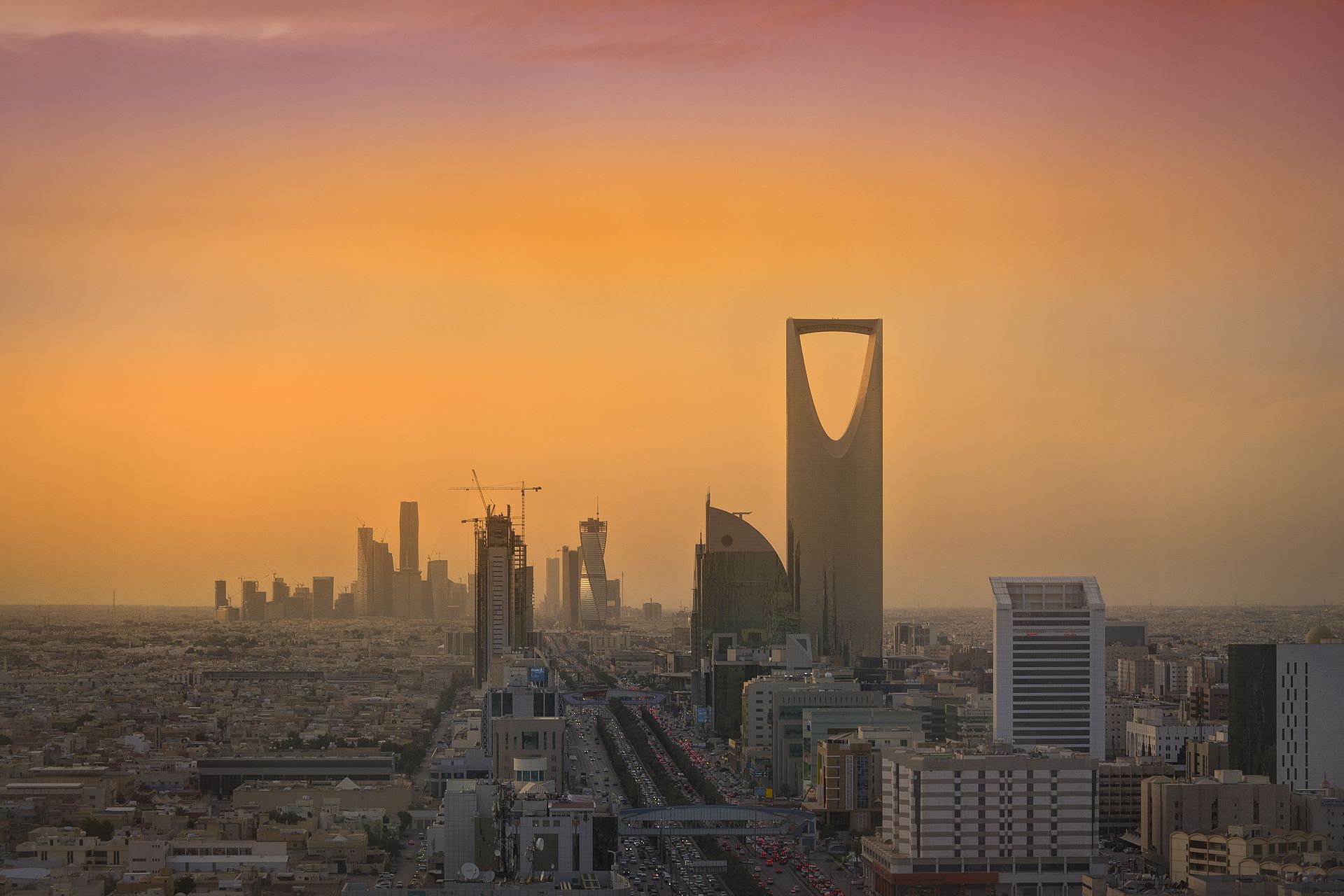
Must-See: Riyadh’s KAFD skyline, Hegra (AlUla), Jeddah’s Al-Balad historic quarter
Avoid: Visiting June-August without a plan for extreme heat (45°C+)
Do I Need a Visa?
Almost certainly yes, but the process is fast. Citizens of 66 countries — including the United States, United Kingdom, EU member states, Australia, Canada, China, Japan, and South Korea — can apply for a tourist e-visa through the official Visit Saudi portal. The entire application takes about ten minutes online, and most approvals arrive within 24 hours. The cost is approximately 535 SAR (around $142 USD), which includes mandatory medical insurance for your stay.
The e-visa is a multiple-entry visa valid for one year, allowing stays of up to 90 days per visit and 180 days total over the validity period. You can also obtain a visa on arrival at Saudi airports if you hold a valid US, UK, or Schengen visa. For a full breakdown of every visa type, eligibility list, and the application process, read our Saudi Arabia Visa Guide.
Tip: Your passport must be valid for at least six months from your date of entry. Carry a printed or digital copy of your e-visa confirmation — airport staff will check it before you board your flight.
What About Entry Requirements?
Beyond the visa, you will need to complete an immunisation information form before arrival. No specific vaccinations are mandatory for standard tourist travel, though routine vaccines should be up to date. If you are arriving during Hajj or Umrah season, additional health requirements apply. For detailed health guidance, see our Health and Vaccinations page.
When to Visit Saudi Arabia
Saudi Arabia covers a landmass roughly the size of Western Europe, so weather varies by region. The general rule: October to March is peak season, when temperatures in Riyadh and the central desert hover between 15-30°C. Along the Red Sea coast in Jeddah, the climate is milder year-round but uncomfortably humid in summer.
Season-by-Season Breakdown
| Season | Months | Temperature Range | Best For |
|---|---|---|---|
| Winter (Peak) | November-February | 12-25°C | Desert camping, Riyadh Season events, AlUla festivals |
| Spring | March-April | 22-35°C | Wildflowers, hiking in Asir, lower hotel prices |
| Summer | May-September | 38-50°C | Mountain escapes (Abha, Taif), indoor attractions, low-season deals |
| Autumn | October | 28-38°C | Shoulder season, good balance of price and weather |
If summer is your only option, head for the southern highlands — Abha and the Asir region sit above 2,000 metres and stay 15-20°C cooler than the lowlands. The summer escape guide covers the best mountain retreats in detail.
What to Expect: Culture Shock and Common Misconceptions
First-time visitors often arrive with outdated impressions. Saudi Arabia in 2026 is markedly different from even five years ago. Here is what actually awaits you.
It Is Extremely Safe
Saudi Arabia consistently ranks among the safest countries in the Middle East on the Numbeo Safety Index. Violent crime against tourists is exceptionally rare, and petty crime rates are low by global standards. Solo female travellers report feeling safe, though the usual precautions apply. For current advisories and a detailed safety assessment, read Is Saudi Arabia Safe for Tourists?
Alcohol Is Completely Illegal
There are no exceptions — no hotel bars, no duty-free allowances, no grey areas. Penalties are severe. Do not attempt to bring alcohol into the country. Saudi Arabia enforces a zero-tolerance policy. For the full picture, see our Alcohol in Saudi Arabia explainer.
It Is Not as Restrictive as You Think
Cinemas, concerts, mixed-gender dining, and women driving are now normal. Riyadh Season — the capital’s annual entertainment festival — attracts tens of millions of visitors with international artists, sporting events, and themed entertainment zones. The country has changed profoundly under Vision 2030 reforms, and tourists encounter far fewer restrictions than many expect.
English Is Widely Understood
In Riyadh, Jeddah, and the Eastern Province, English is spoken widely in hotels, restaurants, malls, and tourist sites. Signage is bilingual (Arabic and English). In smaller towns and rural areas, Arabic dominates — but a few basic Arabic phrases go a long way and are always appreciated.
What to Wear: The Dress Code
Saudi Arabia no longer requires foreign women to wear an abaya in public, and head coverings are not legally required for non-Muslim women. That said, the country remains conservative, and dressing modestly is both respectful and practical.
For Women
- Cover shoulders, arms to the elbow, and knees — loose-fitting clothes in breathable fabrics work best
- Avoid strapless tops, very short skirts, and see-through materials
- Carry a lightweight scarf — you will need it for mosque visits and some heritage sites
- At beaches and resort pools, standard swimwear is fine within the resort area
- Long trousers are expected — shorts are acceptable only at pools and beaches
- T-shirts and short-sleeved shirts are fine; sleeveless vests are not
- Many restaurants and malls will refuse entry to men wearing shorts, even knee-length ones
- Alcohol: Completely illegal. No possession, no consumption, no exceptions.
- Drugs: Zero tolerance. Penalties include long prison sentences and, for trafficking, the death penalty.
- Photography: Never photograph military installations, government buildings, or energy facilities. Photographing people — especially women — without explicit consent can result in arrest. See our photography rules guide.
- Public displays of affection: Avoid kissing, hugging, or holding hands in public, even between married couples.
- Swearing and rude gestures: Public decency laws cover language and gestures. The middle finger or other crude gestures can result in fines or deportation.
- Littering: Fines start at 500 SAR ($133).
- Playing loud music: In public spaces and residential areas, this can attract police attention.
- Sunscreen and a hat — UV exposure is intense, even in winter
- A portable charger — you will use your phone constantly for navigation, translation, and ride-hailing
- Comfortable walking shoes — historic sites involve uneven ground, sand, and stairs
- A lightweight scarf or shawl — useful for mosque visits, cooler desert evenings, and sun protection
- A power adapter — Saudi Arabia uses Type G (British three-pin) sockets, though some hotels have universal outlets. See the power plugs guide
- Uber / Careem — ride-hailing
- Google Maps — navigation and restaurant discovery (works well in Saudi Arabia)
- Tawakkalna — the government services app, occasionally required
- HungerStation / Jahez — food delivery
- Visit Saudi — the official tourism app with guides and events
- Kabsa — the national dish: spiced rice with slow-cooked lamb or chicken, topped with nuts and raisins
- Mandi — tender meat smoked in an underground pit oven, served over fragrant rice
- Jareesh — crushed wheat porridge cooked with yoghurt and meat, common in the Najd (central) region
- Mutabbaq — stuffed and folded pan-fried bread, popular as a street snack in Jeddah
- Saudi coffee (qahwa) — light, cardamom-spiced coffee served in small cups with dates. Accepting it is a cultural courtesy.
- Underestimating distances: Riyadh to Jeddah is 950 km — you cannot day-trip between cities. Fly or plan overnight stays.
- Visiting only Riyadh: The capital is impressive, but AlUla, the Red Sea coast, and the Asir highlands are where Saudi Arabia’s natural beauty shines.
- Forgetting Friday schedules: Friday is the holy day. Many businesses close for Friday prayers (roughly 11:30 AM – 1:30 PM). Shopping malls and restaurants adjust hours.
- Not booking AlUla in advance: Heritage site access at Hegra, Dadan, and Jabal Ikmah requires pre-booked tickets through the official Experience AlUla website. Walk-ups are often turned away.
- Ignoring the heat: Even in October and March, midday sun can be punishing. Schedule outdoor activities for early morning or late afternoon.
- Relying on cash only: Saudi Arabia is one of the most cashless societies in the Middle East. Card payments are accepted almost everywhere.
- Saudi Arabia Travel Guide 2026 — The complete guide to visiting the Kingdom
- Saudi Arabia Visa Guide — Every visa type explained
- Saudi Arabia Customs and Etiquette — Cultural norms and social rules for visitors
- Saudi Arabia Packing List — What to bring for every season
- Is Saudi Arabia Safe? — Honest safety assessment for tourists
- Saudi Arabia Weather by Region — Climate data to plan your trip timing
For Men
For a full rundown including what to pack for each city and season, see the women’s dress code and men’s dress code guides.
Where to Go: A First-Timer’s Itinerary
With 10-14 days, you can comfortably cover Saudi Arabia’s greatest hits. Here is how most first-timers structure their trip.
Riyadh (3-4 Days)
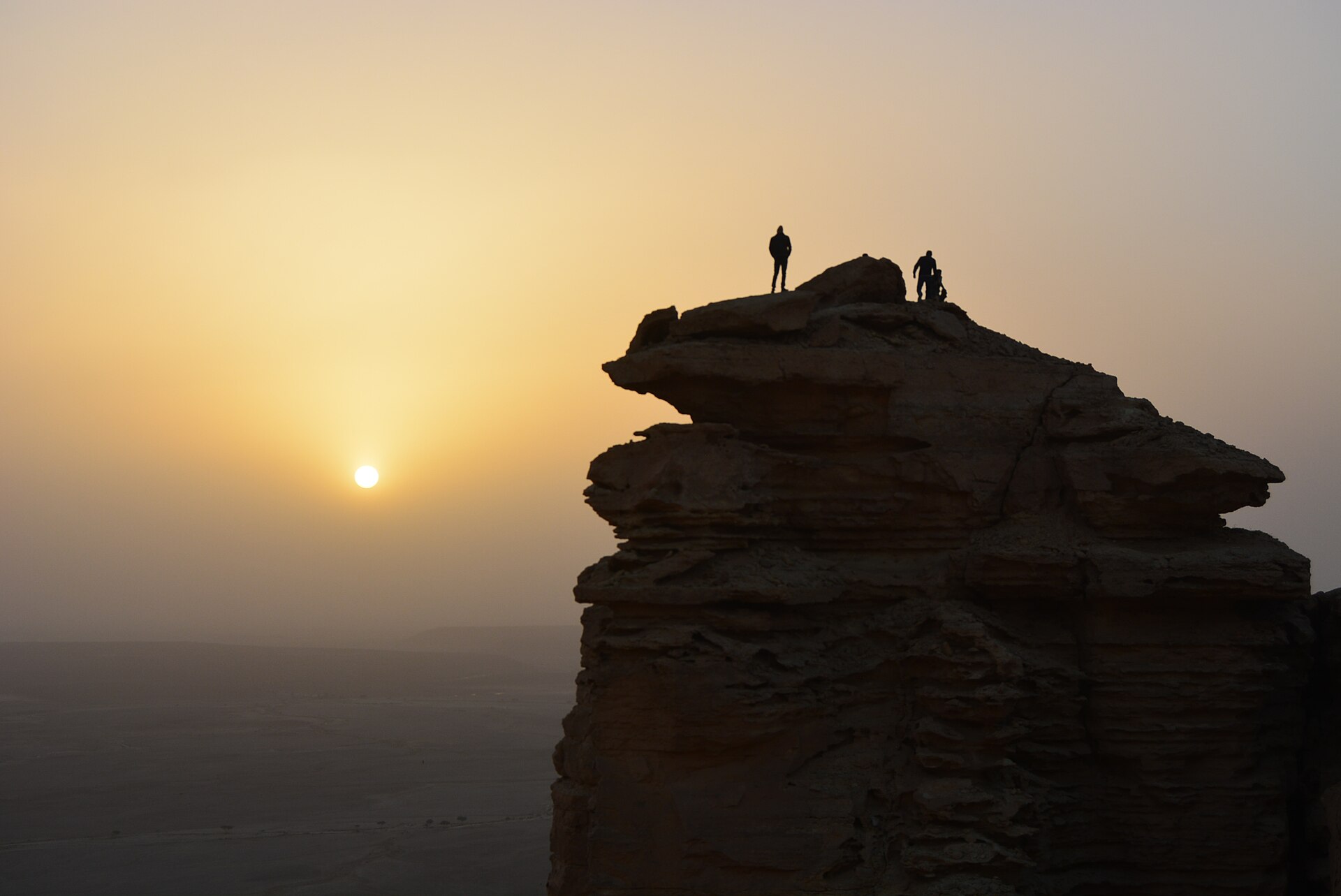
The capital is where you land and where modern Saudi Arabia hits you hardest. The King Abdullah Financial District (KAFD) skyline is jaw-dropping, and the Kingdom Tower Sky Bridge offers panoramic views from 99 floors up. The best day trips from Riyadh include the Edge of the World (Jebel Fihrayn) — a 300-metre cliff edge overlooking an ancient seabed — and the Unesco-listed Diriyah, the birthplace of the Saudi state. Riyadh’s brand-new metro system, which opened in phases throughout 2025, spans 176 km across six driverless lines and 85 stations, making city transport easier than ever.
AlUla (2-3 Days)
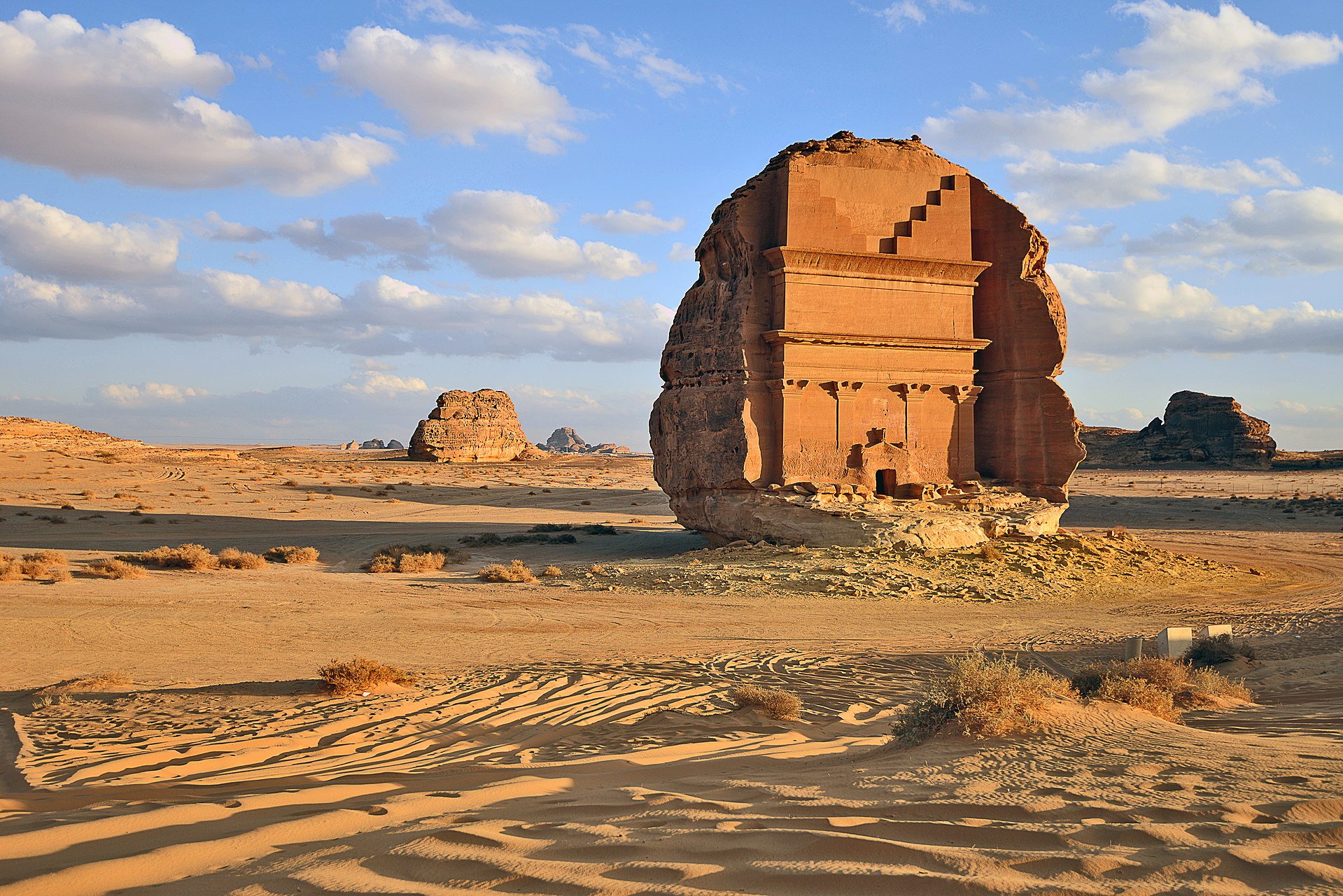
This is the showpiece. Hegra (Madain Saleh) is Saudi Arabia’s first UNESCO World Heritage Site — a Nabataean city with over 100 monumental tombs carved into sandstone, the southern counterpart to Petra in Jordan. Beyond Hegra, the AlUla valley holds Elephant Rock, the ancient Dadan civilisation ruins, and a landscape that belongs on another planet. Read the full AlUla Travel Guide for booking heritage site access, which requires advance tickets.
Jeddah (2-3 Days)
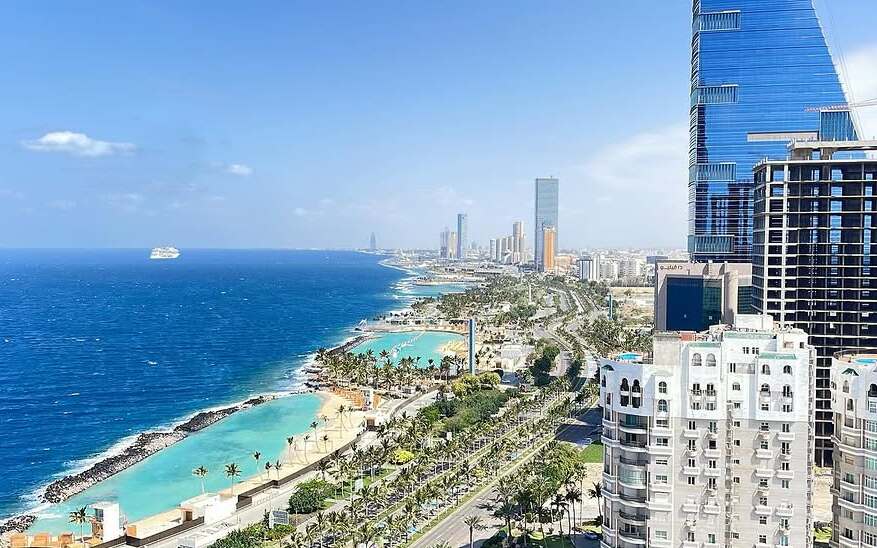
Al-Balad, Jeddah’s UNESCO-listed historic district, is a maze of coral-stone merchant houses with carved wooden mashrabiyya screens — some over 500 years old. The city’s Corniche stretches 30 km along the Red Sea, lined with public art and sculpture. Jeddah is also the gateway to the Red Sea coast’s diving and snorkelling sites. See the Jeddah Travel Guide for neighbourhood breakdowns and food recommendations.
The Red Sea Coast (2-3 Days)
If you have time, extend south from Jeddah for world-class diving and snorkelling. The Saudi Red Sea is far less visited than Egypt’s coast but equally spectacular — pristine coral reefs, whale shark encounters, and visibility that regularly exceeds 30 metres.
The Southern Highlands (2-3 Days)
The Asir mountains around Abha offer a completely different Saudi Arabia — green terraces, cool mist, and traditional stone villages. The Abha Cable Car carries you across the Asir valley, and the region’s hiking trails are among the best in the Arabian Peninsula.
Getting Around Saudi Arabia
Saudi Arabia is vast — the distance from Riyadh to AlUla is roughly 900 km. Planning your transport is essential.
Domestic Flights
This is the fastest and often cheapest way to cover long distances. Saudia (the national carrier), flynas, and flyadeal operate frequent domestic routes. A one-way flight from Riyadh to Jeddah can cost as little as 200-350 SAR ($53-93) if booked a few weeks in advance. Book through the airlines’ apps or websites. See our domestic flights guide for route tips and baggage rules.
Trains
The Haramain High-Speed Railway connects Jeddah, Mecca, and Medina at speeds up to 300 km/h — the journey from Jeddah to Medina takes about two hours. Our Haramain train guide covers schedules and booking. Riyadh’s new metro is excellent for getting around the capital.
Ride-Hailing Apps
Uber and Careem (now owned by Uber) are the go-to apps for city transport. Both are licensed, accept international credit cards, and work in every major Saudi city. Fares are reasonable — a 20-minute ride in Riyadh typically costs 15-30 SAR ($4-8). Read our Uber and Careem guide for tips.
Renting a Car
For maximum flexibility, especially if you plan to visit AlUla or the southern highlands, renting a car is the best option. International driving licences are accepted. Roads between cities are modern, well-maintained, and clearly signposted in English. Be aware that speed cameras are aggressive and fines are steep — our speed camera guide covers what to watch for. Detailed driving rules are in our driving rules guide.
Money, Payments, and Budgeting
The currency is the Saudi Riyal (SAR), pegged to the US dollar at a fixed rate of 3.75 SAR = $1 USD. Credit and debit cards (Visa and Mastercard) are accepted almost everywhere — from malls and restaurants to petrol stations and street food stalls. Apple Pay and Google Pay also work widely.
Daily Budget Estimates
| Budget Level | Daily Cost (per person) | What It Gets You |
|---|---|---|
| Budget | $50-80 / 190-300 SAR | Hostel or budget hotel, local restaurants, public transport |
| Mid-Range | $100-180 / 375-675 SAR | 3-4 star hotel, mix of local and international dining, ride-hailing |
| Comfort | $200-400 / 750-1,500 SAR | 5-star hotel, guided tours, fine dining, car rental |
Meals at local restaurants cost 20-40 SAR ($5-11) for a generous plate of kabsa or mandi. International chain restaurants charge 40-80 SAR. Coffee culture is thriving — specialty coffee shops charge 18-30 SAR per cup. For more on currency and exchange, see the Saudi Riyal guide.
Tip: ATMs are everywhere and dispense SAR. Most international cards work without issues, though it is worth notifying your bank before you travel. Read our ATMs and banking guide for details.
Staying Connected: SIM Cards and Wi-Fi
Saudi Arabia has three major mobile providers — STC, Zain, and Mobily — all with kiosks at Riyadh and Jeddah airports. A tourist SIM card with 15-70 GB of data costs 70-150 SAR ($19-40) and can be activated before you leave the terminal. You will need your passport and visa for registration, which is required by law.
If your phone supports eSIM, you can skip the queue entirely. International eSIM providers like Airalo and Holafly offer Saudi Arabia data plans starting from around $5-10 for a week. The country has extensive 5G coverage in major cities. For full comparisons, see our eSIM guide and SIM card guide.
Laws and Rules That Catch Tourists Off Guard
Saudi Arabia has strict laws that differ significantly from Western norms. Breaking them, even unintentionally, can result in fines or arrest. Here are the ones first-timers most often stumble on:
For the complete cultural etiquette guide — including hospitality customs, greeting protocols, and dining etiquette — read our Saudi Arabia Customs and Etiquette page.
Practical Tips from Frequent Visitors
Pack These
Our full Saudi Arabia packing list covers everything for every season and destination.
Download These Apps Before You Fly
Our essential apps guide has the complete list with setup instructions.
Tipping Customs
Tipping is not mandatory in Saudi Arabia, but it is appreciated. Rounding up a restaurant bill or leaving 10-15% for good service is standard practice among locals. Hotel porters appreciate 5-10 SAR per bag. Ride-hailing apps include a digital tip option.
Food: What to Eat First
Saudi cuisine does not get the international recognition it deserves. These are the dishes every first-timer should seek out:
For guided culinary experiences, see our Saudi Arabia food tours guide.
Common First-Timer Mistakes
Is Saudi Arabia Expensive?
Saudi Arabia sits in the mid-range for global travel destinations — comparable to southern Europe. Accommodation is the largest expense: budget hotels start around 150-250 SAR ($40-67) per night, while international five-star brands charge 600-1,500 SAR ($160-400). Food is very affordable if you eat where locals eat. Transport costs are modest thanks to cheap domestic flights and ride-hailing. The biggest variable is your choice of accommodation and whether you book guided experiences at premium sites like AlUla.