
The $35,000 Drone That Is Bankrupting Missile Defense
Iran has discovered the most devastating weapon in its arsenal is not a nuclear warhead or a ballistic missile. It is a $35,000 drone that forces its enemies to spend $500,000 to $15 million every time they shoot one down. At 2,500 drones per day across five theatres of war, this cost asymmetry is draining allied interceptor stockpiles at a rate that no factory on earth can replenish. It may be the most consequential military innovation since the improvised explosive device transformed ground warfare in Iraq.
The numbers are stark. Since Iran began its retaliatory strikes on February 28, the combined air defense networks of the United States, Saudi Arabia, the UAE, Qatar, Bahrain, and Israel have been forced to engage thousands of Shahed-series loitering munitions launched from Iranian territory. Each drone costs Tehran roughly $20,000 to $50,000 to produce. Each interceptor missile fired in response costs anywhere from $500,000 for a short-range system to $15 million for a single THAAD round. When Iran launches $87.5 million worth of drones in a single day, the defensive bill can climb into the billions. This is not a war of firepower. It is a war of accounting — one the Pentagon is now attempting to rebalance by flooding the Gulf with 10,000 AI-powered Merops interceptor drones costing $15,000 apiece—and Iran is winning the ledger.
Why Does Iran’s Drone Strategy Change Modern Warfare?
Iran’s mass-employment of Shahed drones represents the industrialization of cost-imposition warfare. Rather than attempting to overwhelm enemy defenses with expensive precision-guided ballistic missiles, Tehran is flooding the battlespace with cheap, expendable loitering munitions designed to exhaust finite interceptor stockpiles. The strategy forces defenders into an impossible arithmetic: every $35,000 drone that is engaged with a $4 million Patriot PAC-3 round represents a 114-to-1 cost disadvantage for the defender. Over thousands of engagements, that ratio becomes existential. The Shahed is only one element of a much larger threat — for an overview of Iran’s full missile and drone arsenal deployed against the Kingdom, the scale of Tehran’s offensive capability becomes even more alarming.
This approach builds on a pattern visible across recent conflicts. In Iraq from 2003 to 2011, insurgents used improvised explosive devices costing less than $100 to destroy mine-resistant vehicles worth over $1 million each. In the Red Sea throughout 2024 and 2025, Houthi forces used Iranian-supplied drones and missiles to force US Navy destroyers to burn through multi-million-dollar interceptors defending commercial shipping lanes. In Ukraine, $500 first-person-view drones have destroyed main battle tanks worth a hundred times their cost. Iran has taken that pattern and applied it at nation-state scale, across five simultaneous fronts, with an estimated stockpile of 80,000 combat-ready Shahed airframes and the production capacity to build 400 more per day.
How Much Does It Cost to Shoot Down a Single Iranian Drone?
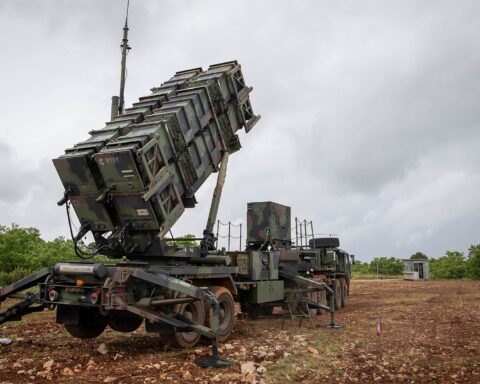
The cost of intercepting a single Shahed drone depends on which defense system engages it, and no defender gets to choose the cheapest option when incoming threats arrive in mixed salvos of drones and ballistic missiles. A Patriot PAC-2 Guided Enhanced Missile round costs approximately $1 million. The newer PAC-3 Missile Segment Enhancement interceptor costs between $4 million and $12 million per unit, with international buyers like Saudi Arabia paying toward the higher end of that range. A THAAD interceptor costs $12 million to $15 million. Even the relatively affordable RIM-162 Evolved SeaSparrow missile used by naval platforms costs roughly $2 million per round.
The Middle East briefing 3,000+ readers start their day with.
One email. Every weekday morning. Free.
The table below illustrates the financial mismatch that defines this conflict:
| Weapon System | Unit Cost | Cost Ratio vs. $35K Shahed | Role |
|---|---|---|---|
| Iranian Shahed-136 drone | $20,000–$50,000 | 1x (attacker) | Loitering munition / kamikaze drone |
| Patriot PAC-2 GEM | ~$1,000,000 | 29x | Medium-range air defense |
| RIM-162 ESSM | ~$2,000,000 | 57x | Naval point defense |
| Patriot PAC-3 MSE | $4,000,000–$12,000,000 | 114x–343x | Advanced air and missile defense |
| THAAD interceptor | $12,000,000–$15,000,000 | 343x–429x | Terminal high-altitude ballistic missile defense |
| Iron Beam (laser) | ~$3–$10 | 0.0003x | Directed-energy short-range defense |
The final row is instructive. Israel’s Iron Beam laser system, which achieved its first operational deployment in late December 2025 and saw its first reported combat use in early March 2026 against a Hezbollah drone, can engage targets at a cost of roughly $3 to $10 per shot. That represents a cost ratio that inverts the entire equation—making defense thousands of times cheaper than attack rather than hundreds of times more expensive. But laser systems remain limited in number, range, and the speed at which they can cycle between targets. They are not yet a solution at scale.
How Fast Are Interceptor Stockpiles Being Depleted?
The consumption rate of advanced interceptor missiles in the current conflict has alarmed defense planners in Washington, Riyadh, and Abu Dhabi. During the June 2025 exchange between Iran and Israel, the United States fired approximately 150 THAAD interceptors in 12 days to defend Israeli territory. That represented roughly 25 percent of the entire US THAAD inventory of around 650 missiles—a stockpile accumulated since 2010—at a cost of approximately $2.25 billion in less than two weeks.
Production cannot keep pace with consumption. According to the 2026 Department of Defense budget, the United States is expected to receive just 12 new THAAD interceptors this fiscal year. Last year, production delivered 11. At that rate, replacing the 150 rounds expended in June 2025 alone would take more than 12 years. A backlog of 360 interceptors ordered by Saudi Arabia further constrains the production pipeline.
Stacie Pettyjohn, director of the defense program at the Center for a New American Security, warned that sustained large-scale attacks could exhaust defensive missiles in days. A January 2026 Heritage Foundation assessment reached the same conclusion, finding that high-end interceptors including SM-3, SM-6, PAC-3 MSE, and THAAD would likely be exhausted within days of sustained combat operations against Iran. The current conflict, now entering its fourth day, is testing that assessment in real time.
RTX (formerly Raytheon) signed five multi-year framework agreements with the Department of Defense in early February 2026 to ramp up production, with plans to double to quadruple output of key munitions including Tomahawks, AMRAAMs, and SM-6 missiles. Lockheed Martin is targeting 650 PAC-3 MSE interceptors annually by 2027. But these are future production targets. The interceptors being fired today cannot be replaced for months or years, and every round expended against a $35,000 drone is one that will not be available when the next ballistic missile arrives.
What Do Interception Rates Actually Tell Us?
Official interception rates across the Gulf states have been impressive on paper. The UAE has reported a combined 95 percent interception rate since February 28, with its air force and air defense systems engaging 165 ballistic missiles, 541 drones, and 8 cruise missiles. Of those, 161 ballistic missiles were destroyed and 645 drones were intercepted. Qatar has reported intercepting 63 of 65 incoming missiles and 11 of 12 drones, a 96 percent rate. Saudi Arabia has claimed full interception of all threats targeting its territory, though independent verification remains unavailable.
Kelly Grieco, a senior fellow at the Stimson Center, assessed the UAE’s 92 percent overall interception rate as extraordinary—but cautioned that the financial toll of sustaining such a defense raises the prospect that tactical victory masks a costly strategic drain.
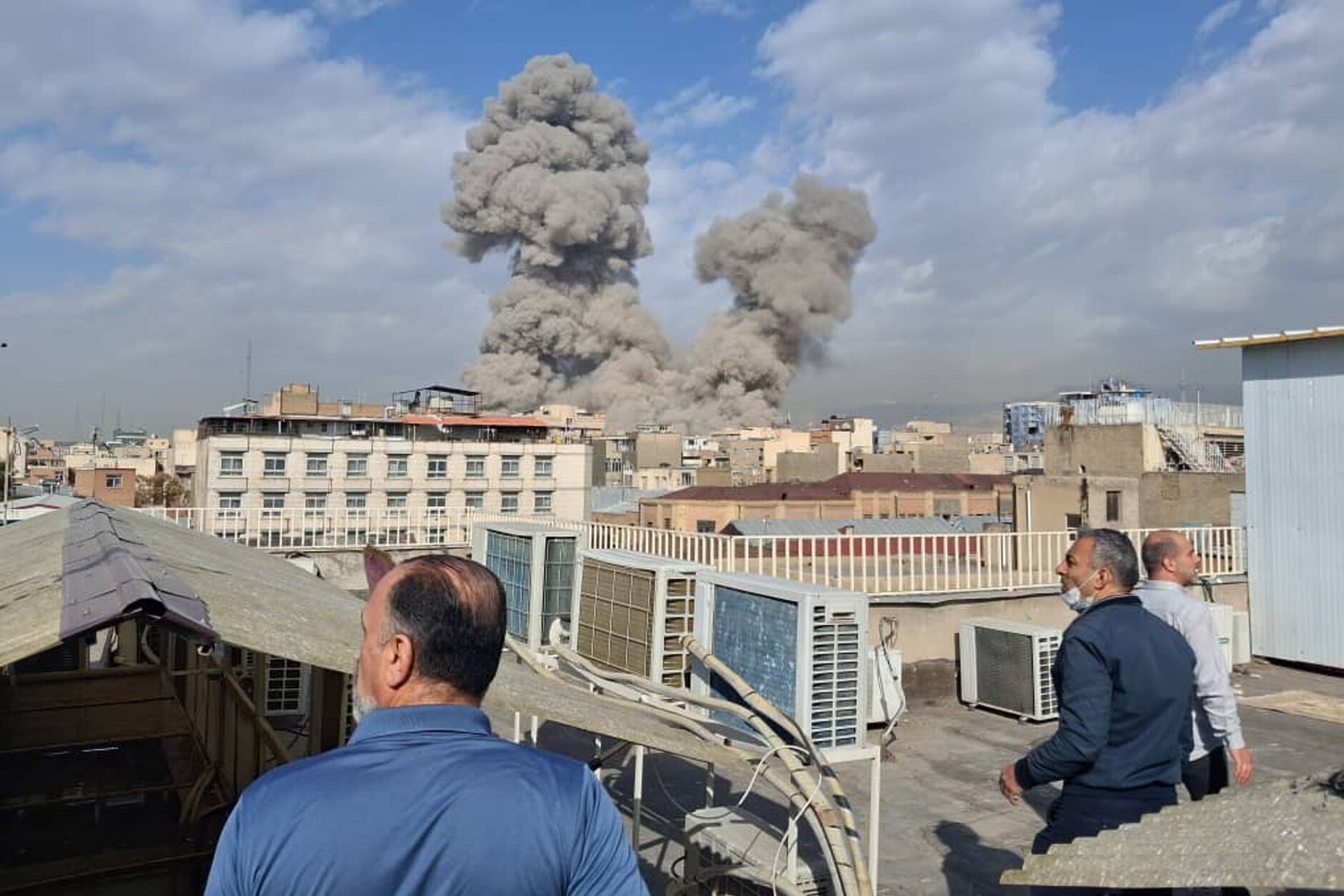
The 5 to 8 percent of threats that penetrate defenses still cause damage. The Ras Tanura refinery—Saudi Arabia’s largest, processing 550,000 barrels per day—was temporarily shut down on March 2 after a drone strike forced a halt to loading operations. Debris from intercepted drones ignited a fire that emergency crews contained, but the refinery went offline. A single Shahed drone, whether it hits its target directly or merely forces an emergency shutdown through debris impact, can take hundreds of thousands of barrels of daily oil production offline. Multiply that across dozens of critical infrastructure sites in Saudi Arabia, the UAE, and Qatar, and a 92 percent interception rate starts to look dangerously insufficient.
Why Is Saudi Arabia Uniquely Vulnerable to This Strategy?
Saudi Arabia faces a concentration of vulnerabilities that Iran’s drone strategy is specifically designed to exploit. The Kingdom operates one of the most expensive air defense architectures on earth, built around Patriot PAC-2 and PAC-3 batteries that are among the costliest interception systems available. Saudi defense spending already exceeds $75 billion annually—the highest per capita military expenditure in the world—and a significant share of that budget flows to missile defense procurement.
In January 2026, the United States approved a $9 billion Foreign Military Sale to provide Saudi Arabia with up to 730 PAC-3 MSE interceptors, launcher conversion kits, and associated support. That purchase, at roughly $12 million per interceptor for the international price, underscores both the scale of Saudi demand and the staggering unit economics of defending against mass drone attacks. At current engagement rates, those 730 missiles could be expended in a matter of weeks. A comprehensive assessment of whether Saudi Arabia’s $80 billion air defense shield is actually working against Iran reveals the full scale of the challenge facing the Kingdom’s defensive architecture.
The Kingdom’s critical infrastructure presents an attacker with a target-rich environment. Saudi Aramco’s oil processing and export facilities, including the Abqaiq processing plant and the Ras Tanura refinery complex, are concentrated along the Persian Gulf coast—directly within range of Iranian Shaheds launched from the western Iranian plateau. The September 2019 Abqaiq-Khurais attack demonstrated that Iranian drones could penetrate Saudi air defenses and temporarily knock out half the Kingdom’s oil production. That attack used approximately 18 drones flying low-altitude approach routes that exploited gaps in radar coverage.
Today, Iran is launching not 18 but hundreds of drones per day at Saudi targets. The defensive challenge has scaled by orders of magnitude, while the fundamental vulnerability—high-value infrastructure concentrated in known locations near the coast—remains unchanged. Crown Prince Mohammed bin Salman’s Vision 2030 economic diversification program has added new categories of critical infrastructure, including NEOM, the Red Sea tourism corridor, and entertainment megaprojects, all of which present additional targets that must be defended.
What Is Iran’s Actual Drone Capacity?
Estimates of Iran’s Shahed drone stockpile vary, but converge on a figure that gives military planners serious concern. Israeli intelligence assessments from January 2026 placed Iran’s operational inventory at approximately 80,000 combat-ready Shahed airframes, with a production tempo of roughly 400 units per day assisted by Russian technical support. If accurate, that annualized output exceeds 146,000 units—a production scale that rivals the output of mid-tier aerospace manufacturing operations, achieved despite comprehensive Western sanctions.
Iran’s production lines are deliberately dispersed across multiple facilities to reduce vulnerability to strikes. Components are sourced through smuggling networks that circumvent sanctions on critical accelerometers, gyroscopes, and satellite navigation receivers. The supply chain is fragile but functional, and the finished product does not need to be sophisticated. A Shahed-136 carries a modest warhead on a simple airframe with basic GPS guidance. It does not need to evade advanced air defenses—it needs only to be one of hundreds launched simultaneously, ensuring that some percentage overwhelms or exhausts the defense.
At a sustained launch rate of 2,500 drones per day, an 80,000-unit stockpile provides 32 days of continuous operations before exhaustion, assuming no additional production. President Trump’s public statement that operations against Iran would last four to five weeks aligns almost precisely with that endurance window. But Iran is manufacturing throughout the conflict, and even a reduced production rate of 200 units per day adds 6,000 to 7,000 drones to the inventory each month. The stockpile is a wasting asset, but it wastes slowly enough to sustain operations for the duration that matters.
How Does This Compare to Previous Cost-Imposition Conflicts?
The drone cost asymmetry fits a pattern that has recurred across two decades of conflict, each iteration larger in scale than the last.
In Iraq, the improvised explosive device campaign from 2003 to 2011 forced the US military to spend over $45 billion on mine-resistant ambush-protected vehicles, counter-IED technologies, and route clearance operations—all to defeat weapons that often cost less than $100 to construct. The cost ratio was staggering, but the IED threat was geographically contained to ground routes in a single theatre.
The Houthi campaign in the Red Sea, which escalated through 2024 and 2025, extended the model to maritime warfare. Iranian-supplied proxy forces launched cheap drones and anti-ship missiles at commercial vessels, forcing the US Navy to respond with interceptors costing $2 million or more per round. A single Arleigh Burke-class destroyer carries a finite magazine of roughly 90 vertical launch cells. Once empty, the ship must leave station to reload—a process that takes days.
Ukraine provided the proof of concept for mass drone employment against armored forces, with $500 first-person-view drones routinely destroying tanks and artillery systems worth orders of magnitude more.
Iran has synthesized all three precedents into something new: strategic cost-imposition warfare using massed drones across multiple simultaneous theatres, targeting not ground forces or individual ships but the entire integrated air and missile defense architecture of a coalition of nations. The scale is unprecedented. The financial logic is devastating.
Can the Defense Industry Solve the Stockpile Crisis?
Defense contractors are mobilizing, but the timeline does not match the urgency. RTX’s February 2026 framework agreements with the Pentagon aim to double to quadruple annual production of key missile systems, with plans to increase Tomahawk output to over 1,000 per year, AMRAAM production to at least 1,900, and SM-6 output to more than 500. The company announced $500 million in additional facility investments for 2026. Lockheed Martin is pushing toward 650 PAC-3 MSE interceptors annually by 2027.
These numbers are significant in peacetime procurement terms. They are inadequate for a conflict in which a single day’s drone barrage can consume hundreds of interceptors. Defense industry stocks have surged on the news—Northrop Grumman climbed 4.9 percent, RTX gained over 4 percent, and Lockheed Martin rose more than 3 percent in trading on March 2—reflecting investor confidence that the interceptor shortfall guarantees years of sustained high-margin orders. Wall Street sees the stockpile crisis as a buying opportunity. Pentagon planners see it as a strategic vulnerability.
The deeper problem is that advanced interceptors require specialized components, skilled labor, and lengthy testing cycles. Even with wartime urgency and unlimited funding, meaningful production surge would take 18 to 24 months to materialize. The interceptors that will determine the outcome of the current conflict have already been built. There are no more coming in time.
What Happens When the Interceptors Run Out?
The strategic endgame of Iran’s drone campaign is not the destruction of any single target. It is the depletion of the integrated air and missile defense network that protects every high-value asset in the Gulf region. Once interceptor stocks fall below a critical threshold, commanders face an impossible triage: which targets merit protection and which must be left exposed?
Saudi Aramco’s oil processing facilities, which handle roughly 10 million barrels per day of production capacity, cannot all be defended simultaneously if interceptor stocks are rationed. Desalination plants that provide drinking water to millions of Saudi citizens represent another category of critical infrastructure that cannot be left undefended. Cities, military bases, ports, and economic megaprojects all compete for a shrinking pool of defensive coverage. Iran does not need to destroy all of them. It needs only to create the perception that they are undefendable—and that perception is already taking shape.
The broader strategic consequences extend beyond the Gulf. Asia Times reported that China is closely watching as US missile stocks drain over Iran, calculating the implications for a potential Taiwan contingency. Every THAAD and SM-3 interceptor expended in the Middle East is one that cannot be forward-deployed to the Western Pacific — a cascading interceptor shortage that now stretches from Riyadh to Taipei. Iran’s drone campaign may be imposing costs not only on Gulf state air defenses but on American deterrence posture in the Indo-Pacific—a second-order effect that Tehran may well have intended.
Is Directed Energy the Answer for Saudi Arabia?
The economics of directed-energy weapons represent one potential solution to the cost asymmetry that defines this conflict, but Ukraine’s $2,100 interceptor drones have emerged as an immediately deployable alternative that has already proven its effectiveness against the same Shahed drones now targeting the Gulf. Israel’s Iron Beam laser system, which costs between $3 and $10 per shot in electricity, demonstrated the potential when it achieved its first operational deployment in late 2025 and reportedly engaged a Hezbollah drone in early March 2026. At those economics, a laser system could engage tens of thousands of targets for the cost of a single Patriot missile.
The US military is pursuing similar capabilities. The Army’s DE-SHORAD (Directed Energy Short-Range Air Defense) system has been fielded to air defense units, and a competition for an Enduring High Energy Laser production program is planned for the second quarter of fiscal 2026. The Navy’s HELIOS system has been installed on the USS Preble. A radio-frequency directed-energy weapon demonstrated by the Air Force Research Laboratory achieved interceptions at a reported cost of 13 cents per shot.
For Saudi Arabia, accelerating investment in directed-energy systems may be the single most important defense procurement decision of the next decade. The Kingdom’s existing reliance on the most expensive interceptor systems in the world makes it uniquely vulnerable to cost-imposition warfare. A layered defense architecture that uses lasers for mass drone engagement while reserving kinetic interceptors for ballistic missile threats would fundamentally alter the economics in Riyadh’s favor. But fielding such a system at the scale required to defend Saudi Arabia’s vast territory and dispersed critical infrastructure is a multi-year undertaking. The current conflict is measured in weeks.
What Does This Mean for the Future of Warfare?
Iran has demonstrated that a nation with a modest defense budget can impose catastrophic financial costs on wealthier adversaries by mass-producing cheap offensive weapons that are expensive to defeat. This is not a temporary tactical innovation. It is a structural shift in the economics of conflict that will reshape defense procurement, military doctrine, and strategic calculus for decades.
The implications extend far beyond the Persian Gulf. Any nation capable of manufacturing simple loitering munitions at scale can now threaten the air defense architectures of advanced militaries at a fraction of the cost of traditional offensive systems. The era in which technological superiority guaranteed defensive dominance is ending. What replaces it will be determined by which nations can most rapidly field directed-energy defenses and adapt doctrine to a threat environment where the attacker’s ammunition is functionally unlimited and the defender’s is not. Saudi Arabia’s response has been to accelerate its domestic defense industry transformation, investing billions in drone manufacturing partnerships and low-cost counter-drone systems.
For Saudi Arabia, the lesson is immediate and existential. The Kingdom sits atop the world’s most valuable concentration of energy infrastructure, defended by the world’s most expensive missile systems, facing an adversary that has figured out how to make every interception a net strategic loss. The $9 billion PAC-3 MSE purchase approved in January 2026 buys time. It does not buy a solution. The solution is a fundamental rethinking of how Saudi Arabia defends itself—one that begins with the recognition that a $35,000 drone has rendered the traditional interceptor-based defense model economically unsustainable.
This cost asymmetry is just one dimension of a broader question about Saudi Arabia’s overall military readiness for conventional warfare against Iran — a question that encompasses ground forces, naval capability, and the systemic gap between defense spending and combat effectiveness.
Frequently Asked Questions
How many Shahed drones can Iran launch per day?
Israeli intelligence estimates from January 2026 assessed Iran’s production capacity at approximately 400 Shahed-class drones per day, with Russian technical assistance. Current operational launch rates across all theatres have reached approximately 2,500 per day, drawing from a pre-conflict stockpile estimated at 80,000 units. That stockpile, combined with ongoing production, provides roughly 32 to 40 days of sustained operations at current launch rates.
Why can’t air defense systems simply switch to cheaper interceptors for drones?
Iran deliberately mixes cheap Shahed drones with expensive ballistic missiles in the same salvos. Defenders cannot distinguish between a $35,000 drone and a ballistic missile carrying a much larger warhead until the threat is classified by radar, and classification takes time that may not be available. The safe default is to engage every incoming object with a capable interceptor, which means expensive missiles get fired at cheap targets. Some nations are experimenting with gun-based and electronic warfare solutions for the drone tier, but these remain limited in capability and deployment.
How long would it take to replenish depleted interceptor stockpiles?
At current production rates, replacing 150 THAAD interceptors would take over 12 years. The US received just 12 new THAAD rounds in the 2026 fiscal year. Even with RTX’s planned production surge and Lockheed Martin’s target of 650 PAC-3 MSE units per year by 2027, full replenishment of the stockpiles being consumed in this conflict would take years. The defense industrial base was built for peacetime procurement cycles, not wartime consumption rates.
Could Saudi Arabia’s oil infrastructure survive a sustained drone campaign?
The September 2019 Abqaiq-Khurais attack demonstrated that even a small number of drones could temporarily disable major oil processing capacity. The March 2, 2026 strike on the Ras Tanura refinery, which halted operations at a 550,000 barrel-per-day facility, reinforced that vulnerability. While Saudi interception rates have been high, the sheer volume of daily drone launches means that even a small percentage of successful penetrations can cause significant disruption to energy output. Sustained operations over weeks would test the redundancy of Saudi Arabia’s oil infrastructure to its limits.
When will directed-energy weapons be available at scale for drone defense?
Israel’s Iron Beam became the first operationally deployed laser defense system in late 2025, but only a limited number of units exist. The US Army plans to hold a competition for its Enduring High Energy Laser program in fiscal 2026, with production and deployment to follow. Fielding laser systems at the scale needed to defend Saudi Arabia’s territory and infrastructure is realistically a three-to-five-year timeline. In the interim, Gulf states will remain dependent on kinetic interceptors that cost orders of magnitude more than the drones they are designed to destroy.