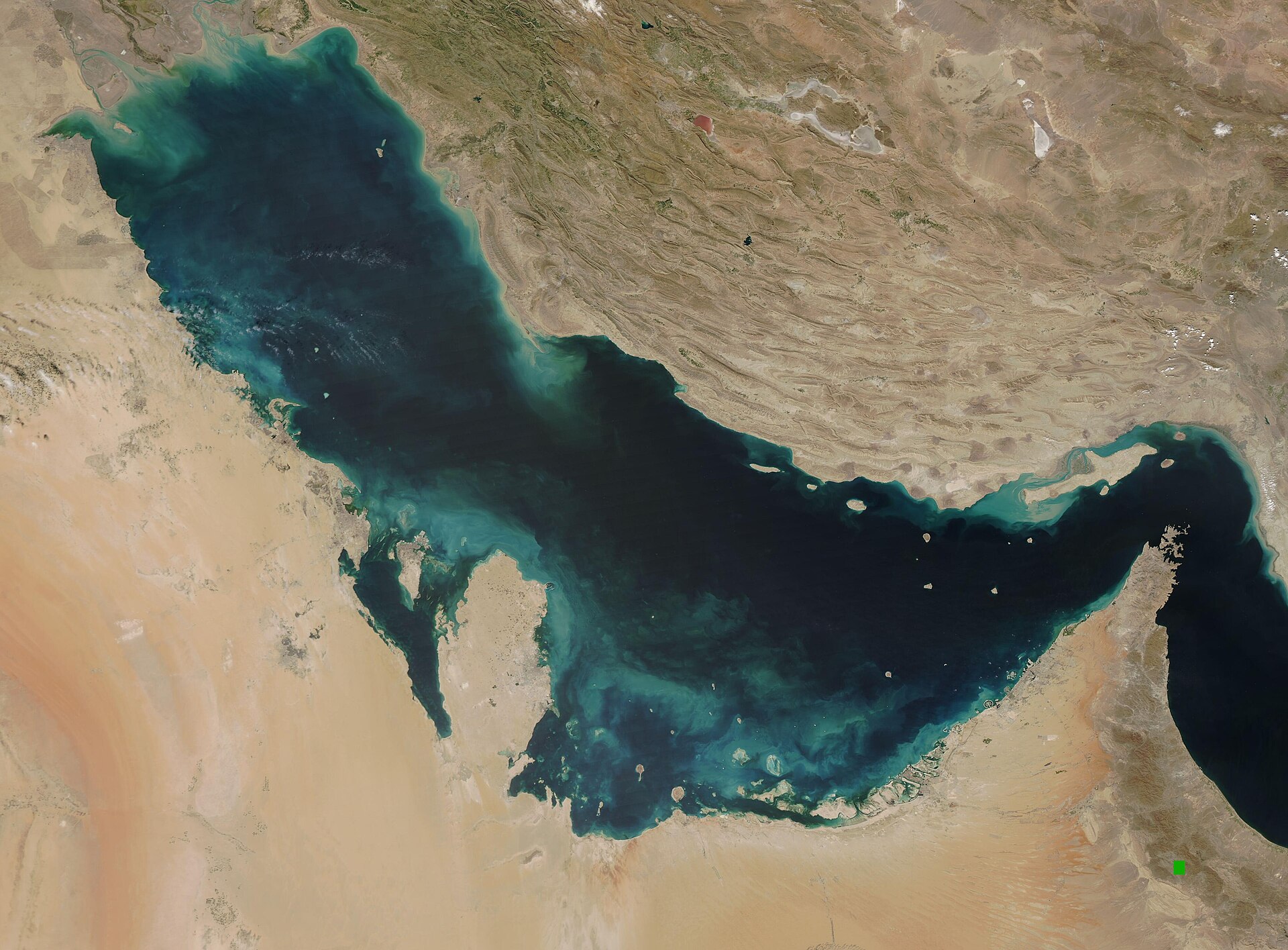

RIYADH — Pakistan has deployed approximately 8,000 combat troops, 16 JF-17 Block III fighters, two drone squadrons, and a Chinese-built HQ-9 air-defense battery to King Abdulaziz Air Base in Saudi Arabia’s Eastern Province, Reuters and Bloomberg reported on Sunday — the first confirmed activation of a mutual defense pact signed in secret eight months ago. The force places Pakistani-operated combat aircraft and Chinese surface-to-air missiles within range of Iranian positions across the Gulf, while Pakistan simultaneously serves as Tehran’s only ceasefire mediating channel and its protecting power in Washington.
That dual role acquired new weight on May 21, when Pakistan simultaneously carried the latest US peace draft to Tehran while its HQ-9 batteries at King Abdulaziz Air Base remained on operational alert. The full architecture of Islamabad’s contradictory obligations is examined in Pakistan Carries the Peace Letter and the Missiles.
The deployment is not advisory. It is expeditionary — financed by Riyadh, operated by Islamabad, and aimed at Tehran. Its public confirmation ends a secrecy regime that began when Army Chief General Asim Munir signed the Strategic Mutual Defence Agreement at Al-Yamamah Palace on September 17, 2025, a document never presented to Pakistan’s parliament and disclosed only through leaked text published by Dropsite News.
Table of Contents
What Pakistan Put on the Ground
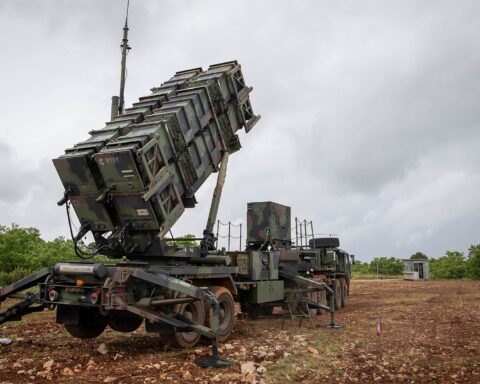
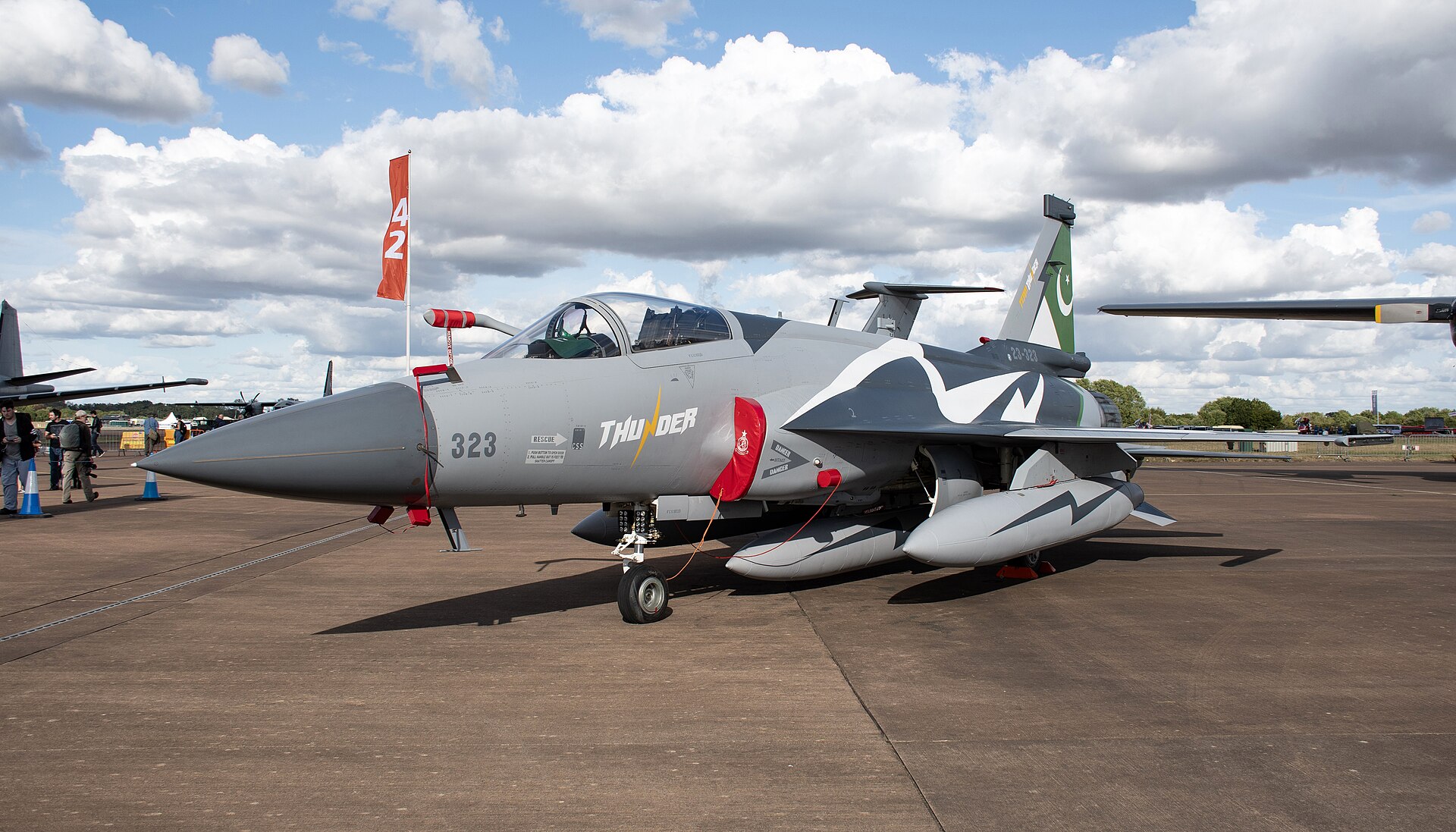
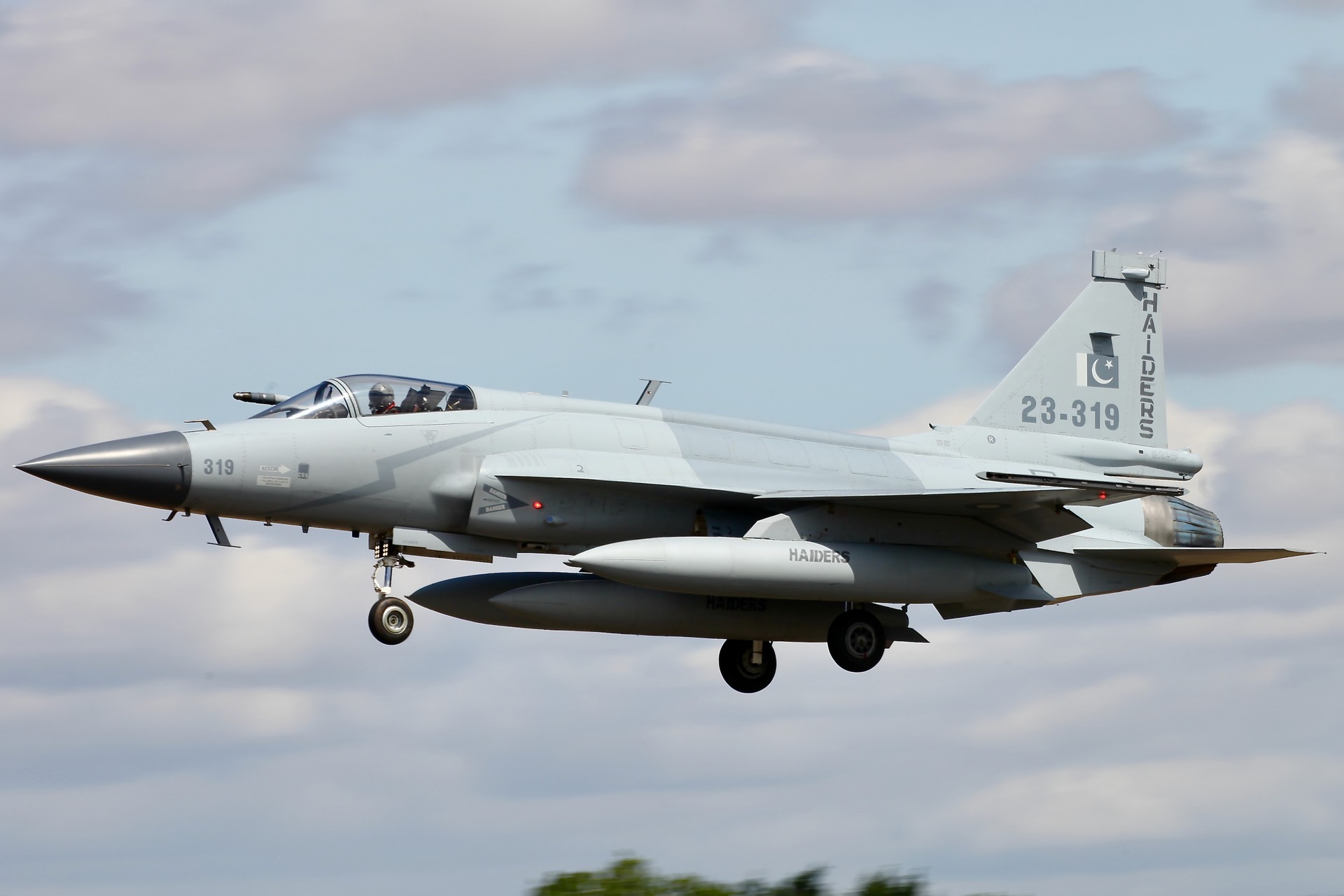
The Reuters report described an expeditionary force: 8,000 combat troops, 16 JF-17 Block III multirole fighters, two drone squadrons, and a Chinese-built HQ-9 air-defense battery at King Abdulaziz Air Base. All equipment is operated by Pakistani personnel and financed by Saudi Arabia. A Pakistani government official told Reuters the forces are “not there to attack anyone.”
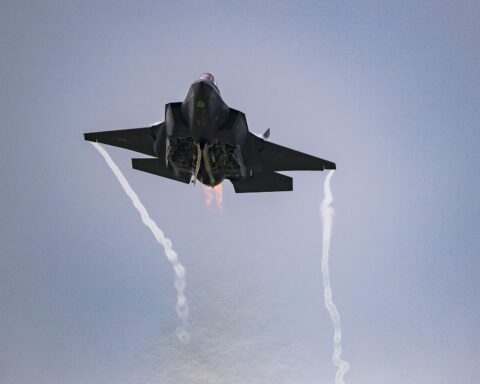
The JF-17 Block III carries a KLJ-7A AESA radar and PL-15E beyond-visual-range missiles with an engagement envelope exceeding 145 kilometers and a combat radius of approximately 1,200 kilometers. From King Abdulaziz Air Base, that radius covers every major Iranian military installation along the Gulf coast. The HQ-9 battery, which saw its first combat during the 2025 India-Pakistan conflict, can engage aircraft at 125 kilometers and intercept ballistic missiles at speeds up to Mach 4 at altitudes up to 27 kilometers.
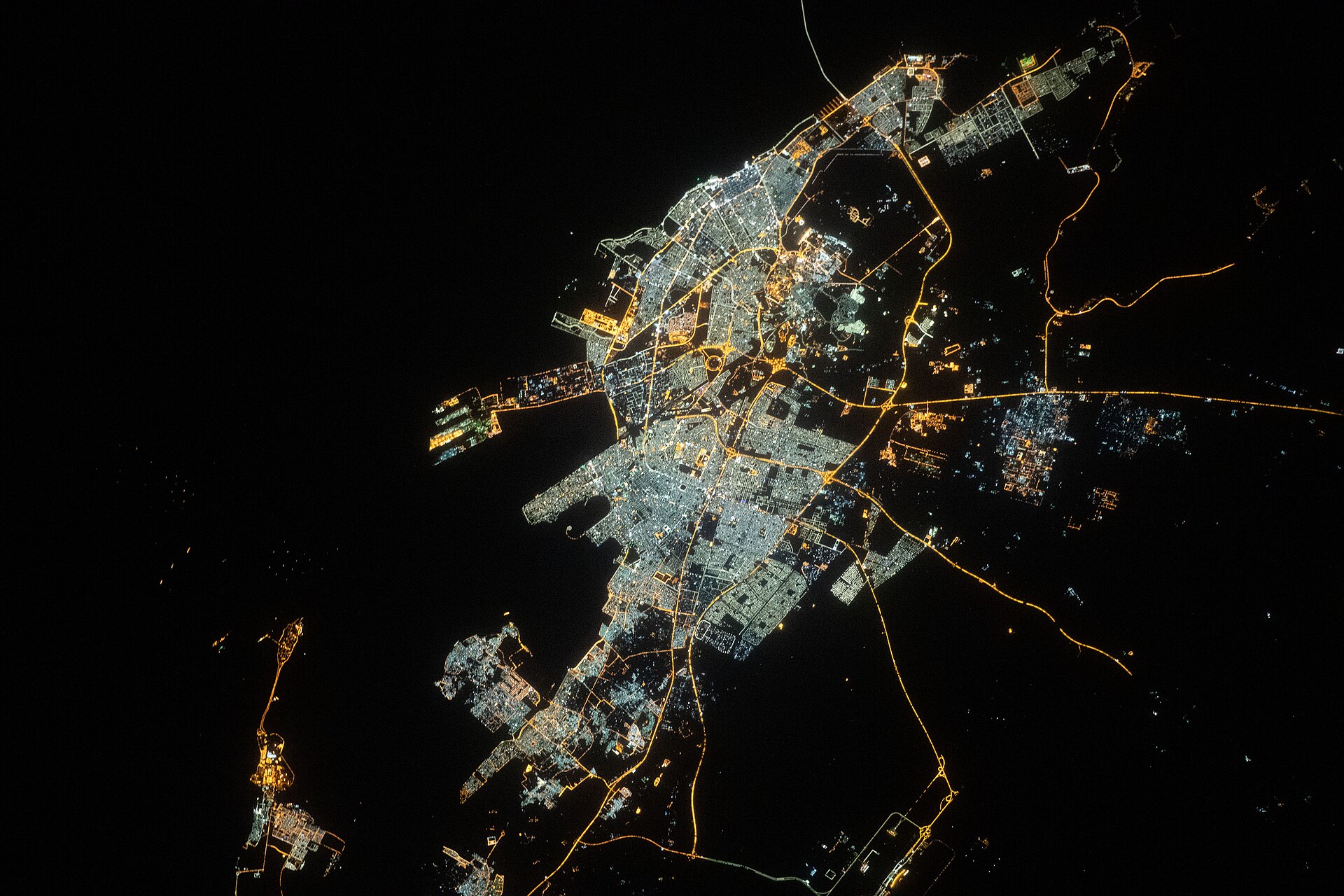
The deployment fills a gap that $142 billion in American weapons sales did not. Saudi Arabia’s own air defenses have been degraded since February — PAC-3 interceptor stocks stand at roughly 400 rounds, approximately 14 percent of pre-war inventory, according to assessments compiled for HOS reporting on Saudi Arabia’s Hajj-season defense posture. The HQ-9 adds a layer Riyadh could not source from Washington on this timeline, and its Chinese origin means the system arrived outside US export-control and congressional-notification requirements entirely.
The Middle East briefing 3,000+ readers start their day with.
One email. Every weekday morning. Free.
The Treaty That Was Never Tabled
The Strategic Mutual Defence Agreement was signed by General Munir and Saudi defense officials on September 17, 2025. Its leaked text, published by Dropsite News, contains a direct obligation: Pakistan “is obligated to send its forces to Saudi Arabia upon a request of the first party, to support the armed forces of the first party in dealing with any threat that affects its security, safety, sovereignty, territorial integrity and interests.” A collective-security clause goes further, stating that “any aggression against either country shall be considered an aggression against both.”
The text was never presented to Pakistan’s parliament. The Belfer Center for Science and International Affairs at Harvard assessed the SMDA as “primarily a political signal of solidarity and strategic cooperation, rather than an unconditional war guarantee,” in an analysis published before the deployment was confirmed. The 8,000 troops, 16 combat aircraft, and integrated air-defense battery now at King Abdulaziz Air Base make that characterization difficult to sustain.
Munir’s fingerprints are on every layer of this arrangement. He negotiated the SMDA in September 2025, then flew to Riyadh in early March 2026 to discuss operational activation — before the Islamabad ceasefire talks convened and before Iran accepted Pakistan as the primary mediating channel. Pakistan’s 27th Constitutional Amendment transferred effective control of foreign policy and defense to the army chief rather than the elected government, concentrating both portfolios in a single officer. The man who built the expeditionary deployment to Saudi Arabia is the same one Tehran calls when it wants to reach Washington.
Can Pakistan Mediate a War It Joined?
On May 10, Iran transmitted its response to the latest US ceasefire proposal through Pakistan, as IRNA and Al Jazeera reported. Eight days later, Reuters confirmed that Pakistani JF-17s loaded with beyond-visual-range missiles were operational on Saudi soil. The sequence is the contradiction made physical — the mediator’s aircraft can engage the belligerent’s fighters at 145 kilometers from the adversary’s airspace.
You can’t have deterrence without some constructive ambiguity.
— Joshua White, Brookings Institution
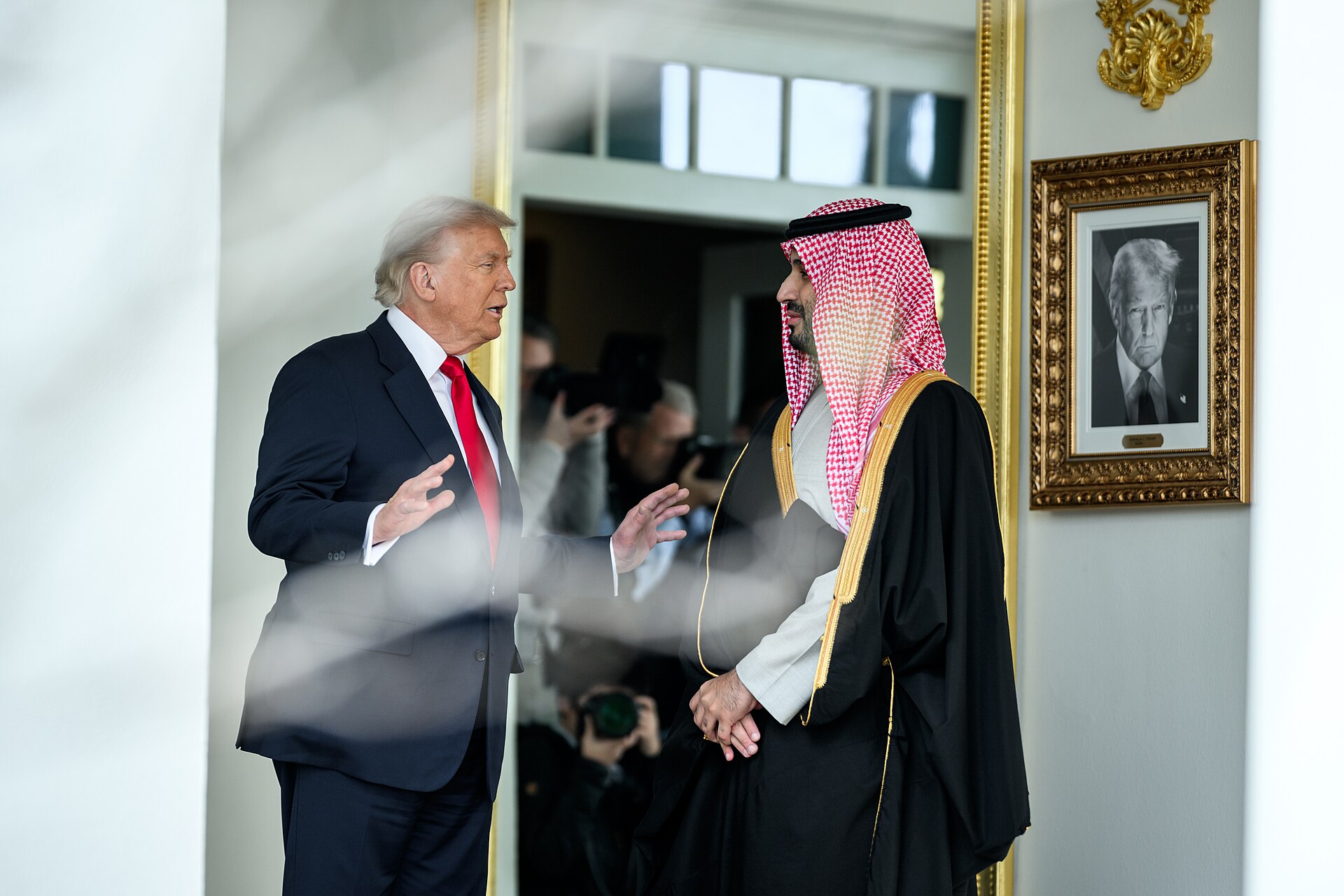
The May 18 confirmation destroyed whatever ambiguity remained. Michael Kugelman, South Asia senior fellow at the Wilson Center, called the arrangement “a bit of a risky gambit” in an April interview with Al Jazeera. The gambit is that Pakistan can maintain deterrence credibility with Riyadh while preserving mediator credibility with Tehran — two roles that require opposite signals sent from the same capital. The public liability MBS accepted on May 18 — named by Trump on Truth Social as one of three leaders who personally asked him to stand down a scheduled Iran strike — adds a third signal Pakistan must now reconcile: its treaty partner is not only hosting Pakistani forces but has publicly attached his name to the diplomatic restraint that delayed the very operation those forces exist to defend against.
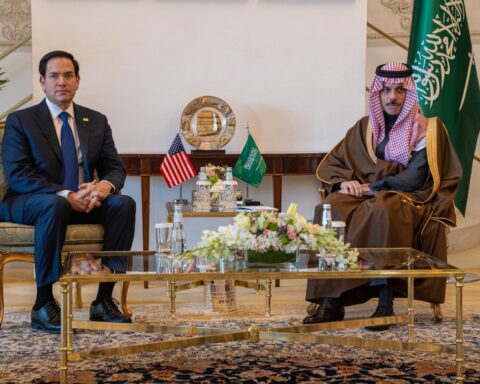
Pakistan’s Deputy Prime Minister and Foreign Minister Ishaq Dar attempted to manage the tension at an OIC meeting in Riyadh in April, reminding Iranian counterparts of Pakistan’s defense obligations to Saudi Arabia while assuring them Saudi soil would not be used to attack Iran. That assurance now coexists with 16 combat-loaded JF-17 Block IIIs on a runway in the Eastern Province. Iran’s Foreign Minister Abbas Araghchi himself thanked Munir and Prime Minister Sharif in April “for their tireless efforts to end the war in the region” — gratitude delivered to the same officer whose troops were completing their deployment while he brokered those talks.
Why Has Iran Not Burned the Channel?
As of May 18, Iran has not issued a formal government statement on the SMDA deployment. Iranian state media — IRNA, Tasnim, Fars News — which routinely publish denunciations of perceived threats within hours, have not run frontal coverage of Pakistan’s dual role. The silence is not passive; it is a cost-benefit calculation conducted in real time, with Tehran weighing the diplomatic damage of tolerating a combat deployment against the operational cost of losing its only functioning channel to Washington.
Pakistan has served as Iran’s protecting power in the United States since 1992 — a role no other country has combined with a simultaneous combat deployment alongside the protected state’s active adversary. Iran continues to use the channel precisely because it cannot afford to break it — Interior Minister Mohsin Naqvi arrived in Tehran on May 17 for a two-day visit with President Pezeshkian while the Reuters confirmation was hours from publication.
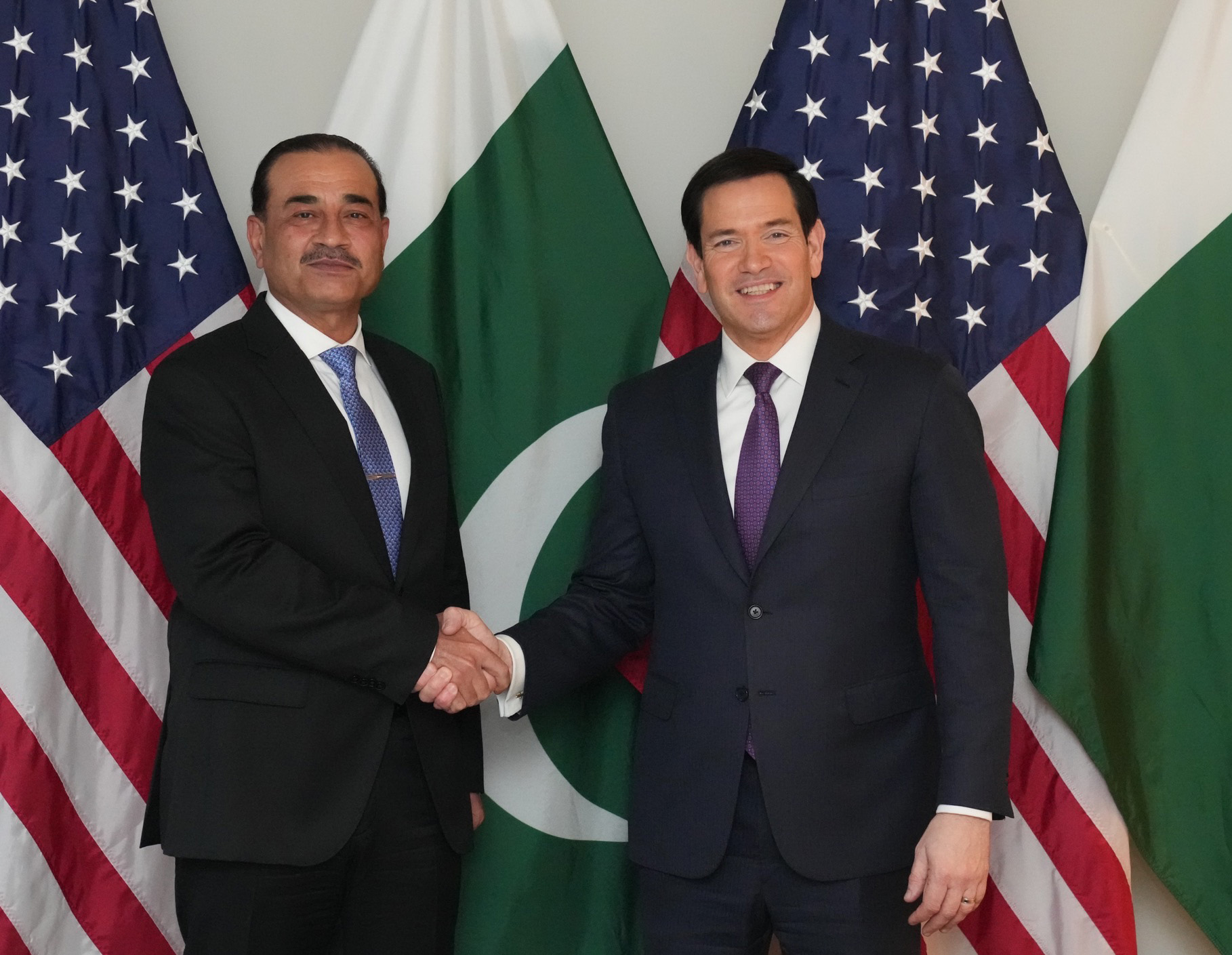
Iran’s Foreign Minister told reporters the mediation is “on a very difficult course.” The Iranian counter-proposal — end the war on all fronts, lift oil sanctions and the naval blockade, unfreeze assets, defer the nuclear question — was transmitted through Pakistan as recently as May 10, according to IRNA and Al Jazeera. Every element of that proposal now passes through a country whose combat aircraft sit on Saudi tarmac. The channel survives because both sides need it more than they need consistency — but the forces inside Iran that have already killed one ceasefire now hold fresh ammunition to kill the next.
The $5 Billion Bind
Saudi Arabia and Qatar together provided $5 billion in financial support to Pakistan in April 2026, covering $4.8 billion in external debt obligations that Islamabad could not otherwise meet, Bloomberg reported on April 15. The Saudi loans carry a 4 percent annual interest rate, and the package underwrites Pakistan’s external debt service through June 2026. Without it, Pakistan faced a sovereign default timeline measured in weeks.
Pakistan is also in advanced discussions to convert approximately $2 billion in outstanding Saudi loans into a JF-17 procurement deal potentially worth $4 billion, according to Army Recognition. The 16 aircraft at King Abdulaziz Air Base are simultaneously a combat commitment and a live sales demonstration — the buyer watching its prospective fleet perform under operational conditions in its own theater, financed by its own treasury.
The financial architecture means Pakistan’s ceasefire diplomacy, its defense obligations, and its fiscal survival all run through Riyadh. The $5 billion arrived the same month Pakistan brokered ceasefire terms between the security architecture MBS is building and the country that architecture is designed to contain. Munir’s March trip to the Saudi capital was the operational planning session for a deployment that the same financial lifeline made impossible to refuse.
What Does the PETSA Bloc Signal?
The International Institute for Strategic Studies published an assessment in May 2026 documenting the emergence of what it calls the PETSA quadrilateral — Pakistan, Egypt, Turkey, and Saudi Arabia — conducting overlapping military exercises including “Thunder 2” (Egypt-Pakistan special forces) and “Spears of Victory” (a Saudi-led air exercise with Turkish and Pakistani participation). The SMDA deployment is the first component of this emerging architecture to go operational, transforming joint exercises into a standing forward presence on Saudi soil.
The quadrilateral represents something without precedent in Gulf security: a non-Western collective defense framework built around Saudi Arabia but equipped and staffed by Muslim-majority nations with their own great-power entanglements. Pakistan’s HQ-9 is Chinese-built. Turkey maintains a parallel defense-industrial relationship with Moscow. Egypt receives $1.3 billion annually in American military aid. The bloc’s internal tensions mirror the region’s, which may be precisely why Riyadh finds it more practical than waiting for a security guarantee that Washington has never been willing to make unconditional.
For Tehran, the PETSA architecture confirms what the SMDA already implied: the Gulf’s security alignment is being formalized around a framework that includes Iran’s own ceasefire mediator as a founding military member. Iran’s restoration of 91 percent of its Hormuz missile sites during the ceasefire suggests Tehran is drawing the same conclusion — and preparing for a Gulf in which the diplomatic and military maps no longer correspond.
The day after the deployment was confirmed, the Saudi Cabinet issued the institutional endorsement of the security architecture it represents: Saudi Arabia’s May 19 Cabinet security declaration invoked “all measures deemed necessary” — unilaterally, chaired by King Salman, without GCC co-signatories — on the same day Trump confirmed the Iran strike pause. The Pakistan deployment is the operational expression of exactly that deterrence language.
Background
Pakistan-Saudi military cooperation traces back to the 1960s; a formal security protocol signed in 1982 established the framework for large-scale deployments that persisted through the Gulf War era, when approximately 13,000 troops and 6,000 advisers were posted in the Kingdom. Both the 1982 protocol and the 2025 SMDA were classified at signing — the pattern of secrecy is structural, not incidental.
The SMDA’s leaked text revealed obligations that go substantially beyond previous arrangements, including the collective-security clause treating an attack on either country as an attack on both. General Munir’s authority under the 27th Constitutional Amendment means the deployment was authorized through military channels without requiring parliamentary debate — the same procedure that shielded the 1982 protocol from public scrutiny for four decades, and the same authority Pakistan’s mediating role now rests on.
Frequently Asked Questions
Has Pakistan deployed combat forces to Saudi Arabia before?
Previous deployments were advisory and training-focused rather than expeditionary. The 1960s North Yemen deployment, the 1982 protocol-era force of up to 15,000 troops, and the Gulf War-era contingent of 13,000 troops plus 6,000 advisers all operated in support roles without independent air-combat capability. The May 2026 deployment is the first to include multirole combat aircraft with beyond-visual-range engagement capability and an integrated air-defense battery — the first Pakistani deployment with the capacity to independently engage a specific adversary’s forces from Saudi soil.
What makes the HQ-9 deployment diplomatically sensitive?
The HQ-9/P is a Chinese-designed system built by CPMIEC and manufactured under license in Pakistan. Its deployment to Saudi Arabia places Chinese military technology in an active Gulf theater without Beijing’s direct involvement — a distinction that allows China to maintain its position as a Hormuz intermediary while its hardware defends Saudi airspace. Beijing brokered Qatar’s Al Daayen LNG transit through the Strait in April, even as Chinese-designed missiles were being positioned to shoot down Iranian aircraft from the opposite shore. The system also arrived outside US ITAR export-control restrictions, giving Riyadh an air-defense capability that required no congressional notification.
Can Pakistan legally deploy forces abroad without parliamentary approval?
Pakistan’s 27th Constitutional Amendment concentrated foreign-policy and defense decision-making authority in the army chief’s office rather than in parliament or the elected cabinet. The SMDA was never tabled for legislative review, and the deployment was authorized through military-to-military channels. Islamabad’s opposition parties have not mounted a formal legal challenge, in part because the amendment itself limits the civilian-oversight mechanisms that would provide standing for such a challenge — the same structural dynamic that shielded the classified 1982 protocol from parliamentary scrutiny for decades.
What is Pakistan’s protecting power role for Iran?
Since March 1992, when Algeria withdrew, Pakistan has managed Iran’s diplomatic interests in the United States — consular services for Iranian nationals, informal communication, and representation of Iranian government interests in Washington. The arrangement predates the current war by 34 years and has survived multiple crises in Pakistan-Iran relations. The same government now flying combat jets from Saudi Arabia handles Iran’s diplomatic representation in the capital of the country currently blockading Iranian ports — a layering of contradictions without precedent in modern diplomatic practice.
Has Iran formally responded to the deployment?
No official Iranian government statement has addressed the SMDA deployment as of May 18, 2026. The absence of a response from outlets like Tasnim and Fars — which published denunciations of Pakistan within hours during the 2025 bilateral border tensions — suggests a deliberate decision to absorb the disclosure rather than escalate. Tehran’s calculation appears to be that publicly condemning Pakistan’s military role would collapse the mediating channel without producing a corresponding gain, particularly with the Iranian counter-proposal still formally in play and Interior Minister Naqvi physically present in Tehran on the day of the Reuters report.