
WASHINGTON — President Donald Trump declared the war against Iran “very complete” in a CBS News interview broadcast Sunday, telling the network that Iran’s military has been effectively destroyed and that his administration is considering seizing control of the Strait of Hormuz. The statements triggered the single largest intraday oil price swing since the war began on February 28, with West Texas Intermediate crude plunging from a wartime high near $120 per barrel to $85 in less than 24 hours.
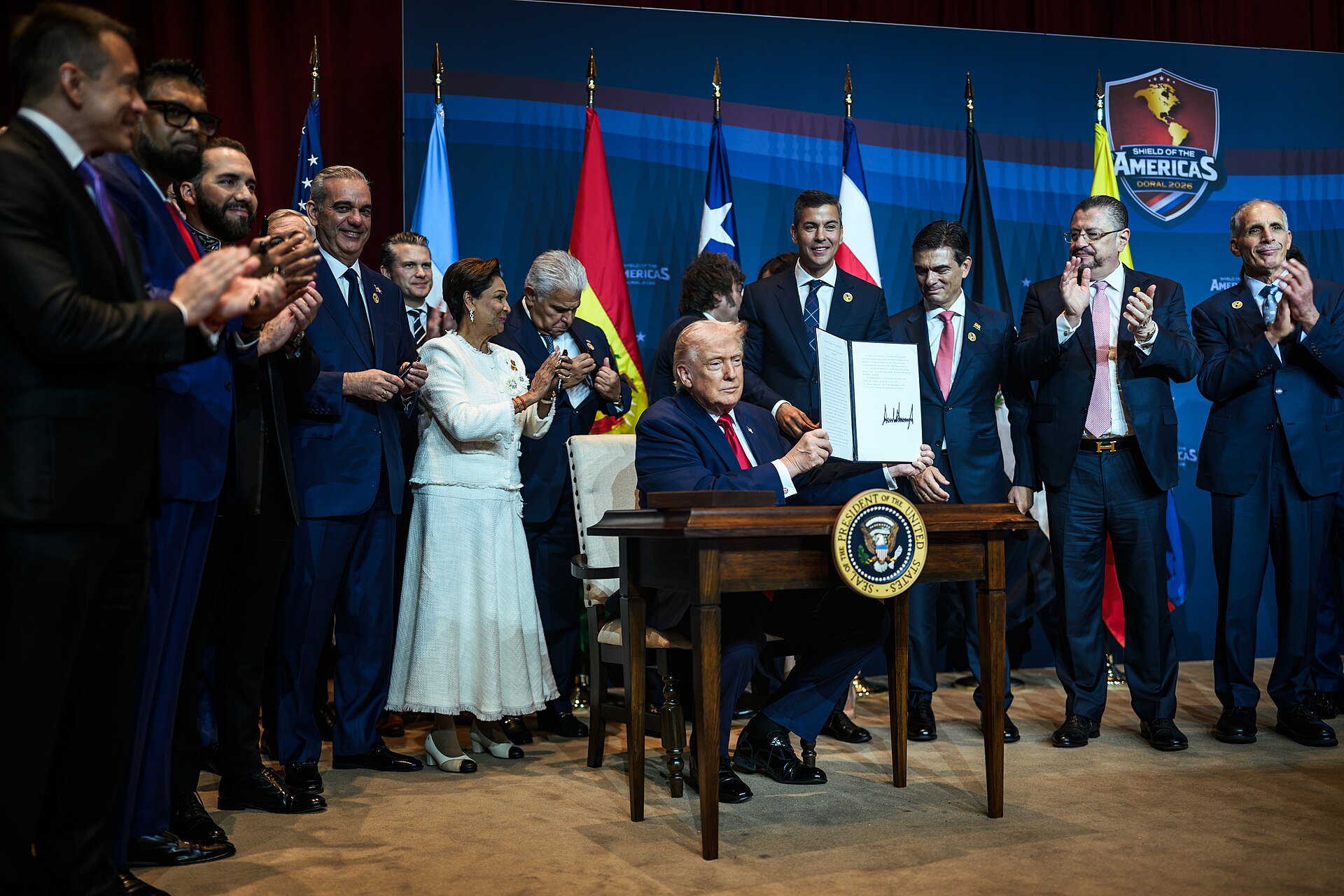
Trump’s remarks, delivered from his Doral resort in Florida during a press conference that ran over 45 minutes, represented the most explicit signal yet that Washington believes the military campaign against Iran is approaching its concluding phase. But the gap between the president’s declarations and the reality on the ground in the Persian Gulf remained vast on Monday, as Iranian drones continued to strike Saudi oil infrastructure and the Islamic Revolutionary Guard Corps reiterated that “not one drop of oil” would be permitted to leave the region through the Strait of Hormuz.
Table of Contents
- What Did Trump Say About the Iran War?
- How Did Oil Markets React to Trump’s Hormuz Statement?
- The IRGC Responds With Defiance
- Can the US Navy Actually Reopen the Strait of Hormuz?
- Saudi Arabia’s Red Sea Lifeline Reaches Capacity
- What Does the Oil Price Crash Mean for Saudi Arabia?
- Gulf States Caught Between Washington’s Promises and Tehran’s Threats
- Frequently Asked Questions
What Did Trump Say About the Iran War?
In a CBS News interview with Weijia Jiang that aired on Sunday evening, Trump described the US-Israeli campaign against Iran in sweeping terms. “I think the war is very complete, pretty much. They have no navy, no communications, they’ve got no Air Force,” the president said. He added that the campaign was “very far” ahead of his initial estimate that the conflict would last four to five weeks.
Trump’s assessment reflected the enormous scale of the aerial bombardment campaign that the United States and Israel have conducted since February 28, when Operation Epic Fury launched with coordinated strikes on Iranian military installations, nuclear facilities, and command centres. According to the Sunday Guardian, more than 3,000 individual strikes have been carried out across Iran in the 10 days since the operation began.
On the Strait of Hormuz, Trump was characteristically direct. “We could do a lot” about the waterway, he said, before issuing a blunt threat to Tehran. “They’ve shot everything they have to shoot, and they better not try anything cute or it’s going to be the end of that country. If they do anything bad, that would be the end of Iran and you’d never hear the name again.”
When asked whether he had a message for Mojtaba Khamenei, the newly appointed supreme leader who assumed power after his father Ayatollah Ali Khamenei was killed in the initial strikes, Trump was dismissive. “I have no message for him. None, whatsoever,” the president said, adding that he had “someone else in mind” to lead the country.
The Middle East briefing 3,000+ readers start their day with.
One email. Every weekday morning. Free.
The president also hinted at a possible end to hostilities, telling reporters at his subsequent press conference that “we’ll see what happens” in the coming days, and that the conflict “could be over soon.” The White House later clarified that no ceasefire negotiations were underway, but that the administration remained “open to diplomatic off-ramps” should Iran’s leadership choose to pursue them.
How Did Oil Markets React to Trump’s Hormuz Statement?
The oil market’s reaction to Trump’s statements was immediate and violent. WTI crude, which had surged to $119.48 per barrel overnight on Saturday as Gulf Arab nations cut production because ships could not transit the Strait of Hormuz, fell 6.19 percent to $85.27 per barrel in extended Monday trading. Brent crude dropped 4.6 percent to $88.43 per barrel, according to CNBC.
By Tuesday morning, the decline accelerated. Oil plunged a further 10 percent after Trump warned that Tehran would be hit “twenty times harder” if it attempted to maintain its blockade of the Strait of Hormuz, CNBC reported. The combined drop represented a swing of approximately $35 per barrel in less than 36 hours, making it the most dramatic crude oil price movement since the global financial crisis of 2008.
The sell-off reflected a market that had priced in the worst-case scenario of a prolonged Hormuz closure and was now rapidly recalculating. “The market was trading on pure fear,” Jarrod Agen, director of the Trump administration’s National Council for Energy Dominance, told Axios. Agen blamed the earlier price spike on speculative positioning rather than fundamentals, arguing that actual supply disruptions had been smaller than markets feared.
Andy Lipow, president of Lipow Oil Associates, cautioned that the market’s reaction might be premature. “We will have to wait and see how Iran responds to the President’s comments and whether or not Iran will attack any oil infrastructure in the coming hours,” Lipow told CNBC. Neil Atkinson, a veteran energy analyst, was similarly guarded, warning that “it’s hard to see anything but continued upward pressure on prices” so long as the strait remains effectively closed.
The price spike had already sent shockwaves through the global economy before the reversal. As House of Saud reported, the war’s broader economic impact had erased more than $6 trillion from global markets, with analysts warning of a potential stagflationary shock not seen since the 1970s oil crises.
| Date | Event | WTI ($/bbl) | Brent ($/bbl) | Daily Change |
|---|---|---|---|---|
| Feb 28 | Operation Epic Fury begins | $72 | $76 | +10% |
| Mar 1 | Iran retaliates, Hormuz warnings issued | $85 | $89 | +18% |
| Mar 3 | IRGC declares Hormuz closed | $100 | $104 | +17% |
| Mar 6 | Trump announces $20B reinsurance program | $105 | $108 | +5% |
| Mar 8 | Gulf states cut production, $120 spike | $119 | $118 | +13% |
| Mar 9 | Trump declares war “very complete” | $85 | $88 | -29% |
| Mar 10 | Trump threatens Iran “twenty times harder” | ~$78 | ~$82 | -10% |
The IRGC Responds With Defiance
Iran’s Islamic Revolutionary Guard Corps rejected Trump’s characterisation of the war in forceful terms. IRGC Navy official Mohammad Akbarzadeh told Iranian state media that “currently, the Strait of Hormuz is under the complete control of the Islamic Republic’s Navy,” according to Al Jazeera.
Brigadier General Ebrahim Jabbari, an adviser to the IRGC commander, went further. “Any ship attempting to pass through the Strait of Hormuz will burn,” Jabbari warned in a televised statement. “Not one drop of oil will be allowed to leave the region.” The statement appeared calibrated to counter Trump’s suggestion that the waterway was already open, with Jabbari adding that Iran had struck more than 10 oil tankers since the start of hostilities.
The IRGC’s defiance came hours after Iran’s military launched what it described as its first wave of attacks under the command of Mojtaba Khamenei, the 56-year-old son of the late Ayatollah who was named supreme leader on Saturday. Monday’s attacks included 17 ballistic missiles and six drones targeting Qatar, according to Doha’s Ministry of Defence, along with strikes on Bahrain that injured 32 people, including children, on the island of Sitra.
The disconnect between Trump’s declaration that the war was “very complete” and Iran’s continued ability to launch multi-directional attacks across the Gulf underscored what analysts described as the central paradox of the conflict. The United States and Israel have devastated Iran’s conventional military infrastructure, its nuclear programme, and much of its air force and navy. But Iran’s capacity for asymmetric warfare, including its arsenal of ballistic missiles, cruise missiles, and one-way attack drones, has proven far more resilient than the initial strikes intended.
As previously reported, Iran’s mines and missiles had effectively closed the world’s most important shipping lane within hours of the first retaliatory strikes, triggering what analysts have called the Second Tanker War. An estimated 3,200 ships, representing roughly four percent of global tonnage, remained idle in the Gulf on Monday, according to maritime data tracked by Windward AI.
Can the US Navy Actually Reopen the Strait of Hormuz?
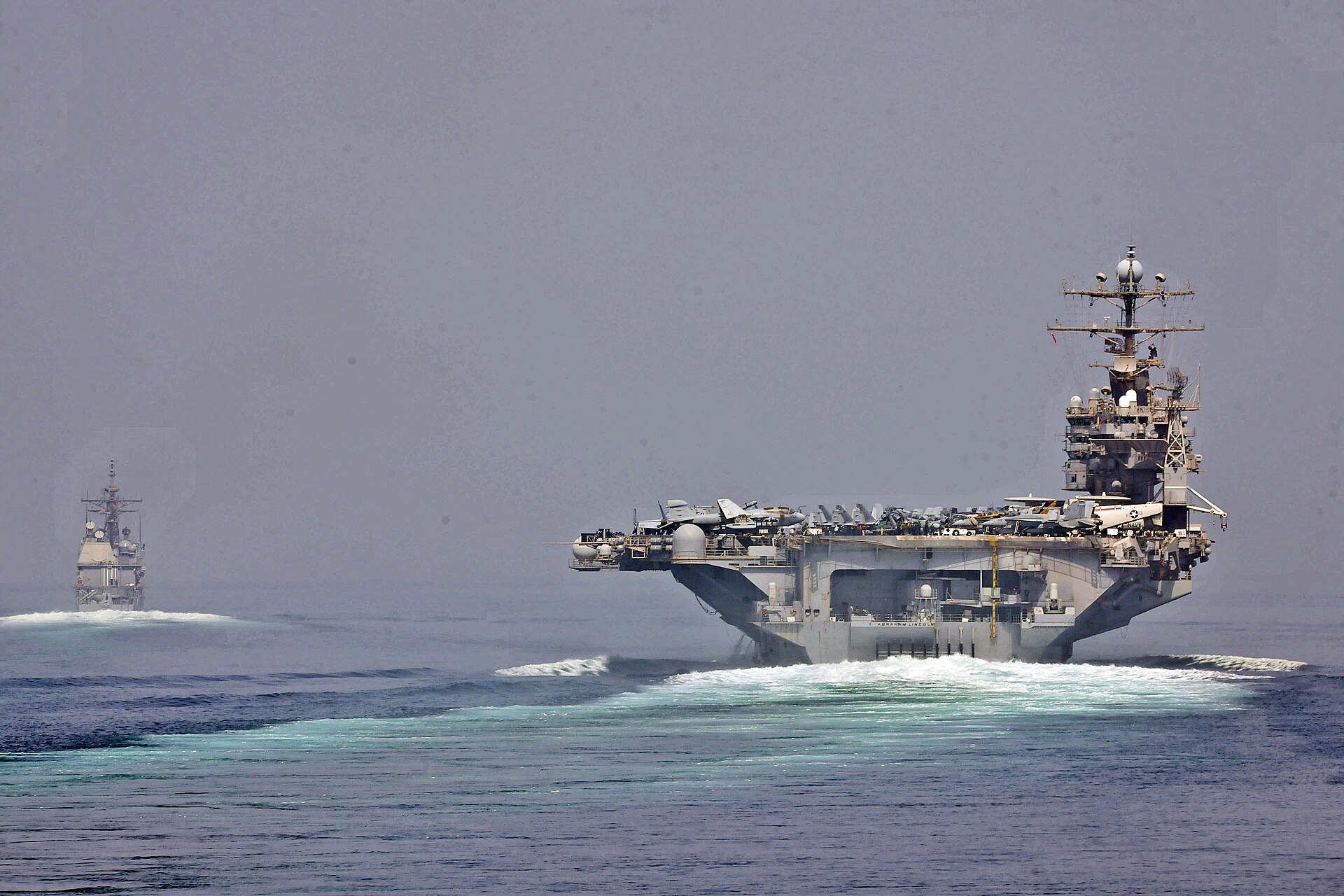
Trump’s suggestion that the United States was considering “taking over” the Strait of Hormuz raised immediate questions about feasibility. The president had previously ordered US Navy escorts for oil tankers through the waterway, posting on Truth Social that escorts would begin “as soon as possible.” But defence analysts and former military officials questioned whether even the US Navy’s three carrier strike groups currently deployed to the region could guarantee safe passage through a waterway that Iran has spent decades preparing to close.
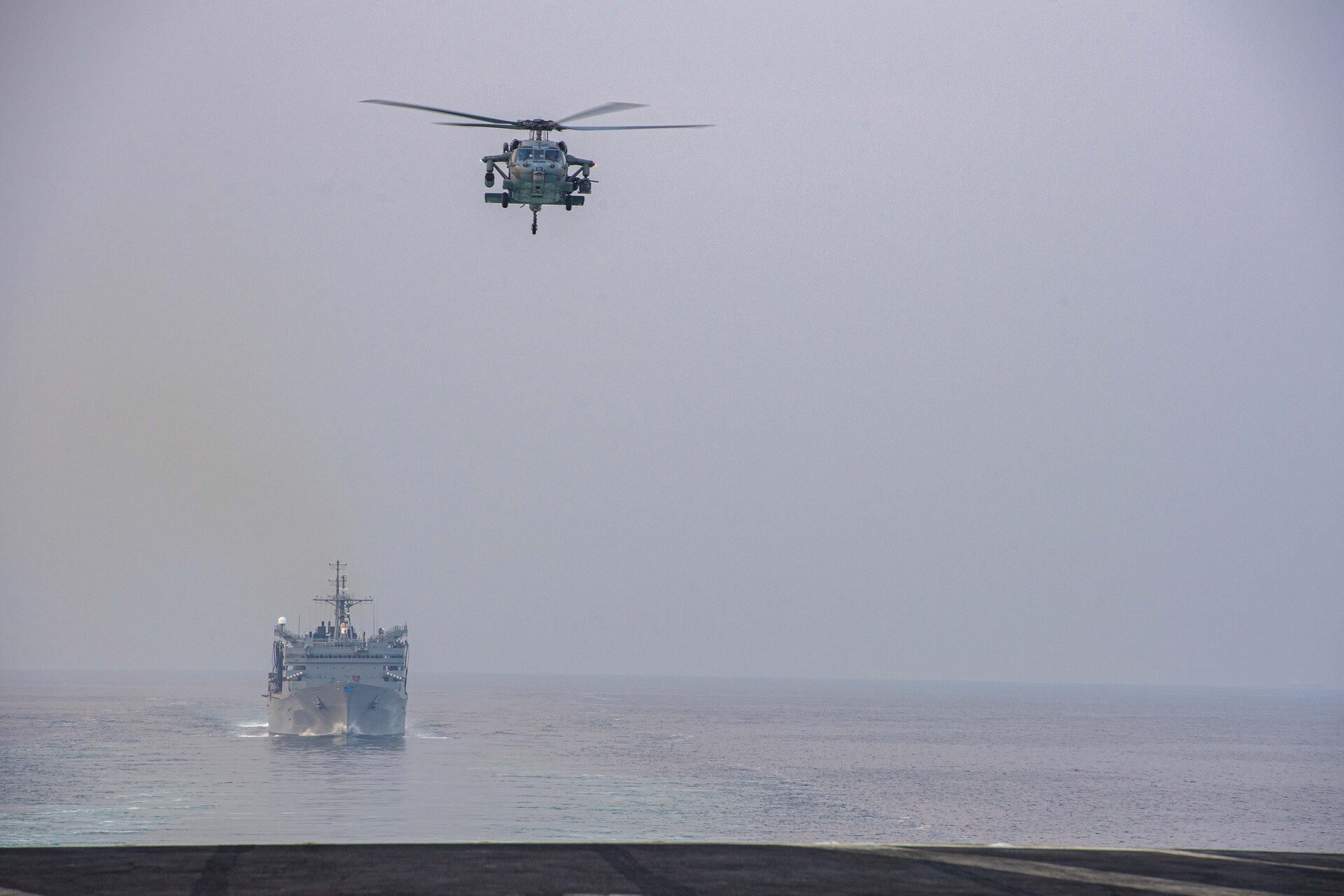
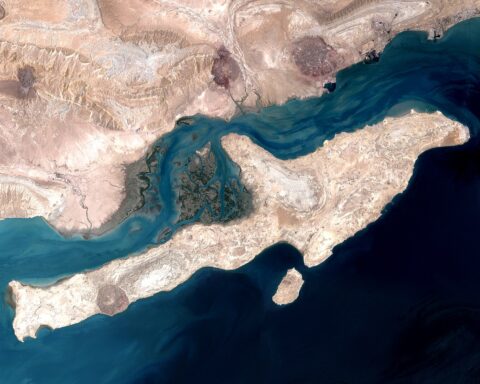
The Strait of Hormuz is 21 miles wide at its narrowest point, with navigable shipping lanes just two miles wide in each direction. Iran’s coastline runs along the strait’s northern edge, and the IRGC has positioned anti-ship missiles, rocket launchers, and fast attack craft in fortified positions along the Iranian shore and on islands within the strait.
CNN’s analysis of Trump’s plan identified several structural challenges. The IRGC had seeded mines in the shipping lanes during the first 48 hours of the conflict, according to US Central Command statements. Clearing those mines while under fire from shore-based positions would require weeks, not days. Additionally, escorting individual tankers through the 35-mile transit would tie up warships needed for other missions, including defending Gulf allies from continued Iranian missile and drone attacks.
The Globe and Mail described Trump’s Hormuz pledge as “implausible” given the scale of Iran’s coastal fortifications, drawing parallels with the failed Tanker War escort operations of the 1980s that saw multiple vessels struck by Iranian mines despite US Navy protection. The International Crisis Group warned that any attempt to forcibly reopen the strait risked triggering direct naval clashes between US and IRGC forces, a scenario Washington had sought to avoid even while conducting extensive air strikes on Iranian territory.
The Trump administration’s actual strategy appeared more modest than the president’s rhetoric suggested. The $20 billion government-backed reinsurance programme announced on March 6 was designed to encourage private shipping companies to resume transit by covering war-risk losses that private insurers had refused to underwrite. Major insurers, including Lloyd’s of London syndicates, had withdrawn war-risk coverage for Persian Gulf voyages within days of the war’s outbreak, according to CNBC.
Saudi Arabia’s Red Sea Lifeline Reaches Capacity
With the Strait of Hormuz effectively closed, Saudi Arabia has rerouted oil exports through its East-West pipeline to the Red Sea port of Yanbu, a contingency that Aramco had prepared for but never tested at scale. As previously reported in House of Saud’s analysis of Aramco’s Red Sea lifeline, the pipeline has a nominal capacity of five million barrels per day, temporarily expandable to seven million barrels per day by converting some natural gas liquids lines to carry crude.
Bloomberg reported that five supertankers had loaded oil at Yanbu during the first week of March, tripling the port’s average throughput compared with February. Al Arabiya confirmed that Saudi Arabia was diverting “millions of oil barrels” to the Red Sea to maintain global supplies, with Crown Prince Mohammed bin Salman personally directing the redirection effort through the Royal Court.
But the Yanbu workaround faced hard physical limits. The National reported that Yanbu’s terminal infrastructure was designed to handle approximately three million barrels per day of exports, well below the pipeline’s theoretical capacity. Tanker-loading berths, storage tanks, and port logistics created bottlenecks that no amount of pipeline flow could overcome.
| Route | Normal Capacity (mbd) | Current Flow (mbd) | Status |
|---|---|---|---|
| Ras Tanura (Gulf) | 6.0 | 0 | Blocked by Hormuz closure |
| Ju’aymah (Gulf) | 3.0 | 0 | Blocked by Hormuz closure |
| East-West Pipeline to Yanbu (Red Sea) | 5.0-7.0 | ~3.0 | Operating at terminal capacity |
| Total export capacity | ~9.0 | ~3.0 | 67% reduction from normal |
The arithmetic was stark. Before the war, Saudi Arabia exported roughly seven million barrels per day, with the vast majority transiting the Strait of Hormuz through the eastern terminals at Ras Tanura and Ju’aymah. With those facilities cut off, the Kingdom could export at most three million barrels per day through Yanbu, representing a 57 percent reduction in export capacity. The shortfall explained why Saudi Arabia had begun cutting oil production rather than filling storage facilities that were approaching their 60-million-barrel ceiling.
What Does the Oil Price Crash Mean for Saudi Arabia?
The oil price swing presented Riyadh with a paradox. Higher prices had been filling Saudi coffers even as export volumes plummeted, with the net effect roughly neutral for government revenue in the war’s first week. The Kingdom’s fiscal break-even oil price for 2026 was estimated at approximately $81 per barrel by the International Monetary Fund, meaning that oil at $120 per barrel generated substantial surplus revenue even at reduced export volumes.
If oil settled near the $78-$85 range where it traded on Monday and Tuesday, the calculus shifted. At three million barrels per day of exports and $80 per barrel, Saudi Arabia’s daily oil revenue would fall to $240 million, compared with the pre-war figure of roughly $560 million per day at seven million barrels per day and $80 per barrel. The 57 percent drop in volume would no longer be cushioned by elevated prices.
Saudi officials had not publicly commented on the oil price swing as of Monday evening. But analysts noted that Riyadh’s interests were complicated. Crown Prince Mohammed bin Salman had publicly opposed the most aggressive elements of the US-Israeli campaign from the start, and the Kingdom’s backchannel to Tehran was the most active diplomatic track in the conflict. A swift end to the war and the reopening of the Strait of Hormuz would restore Saudi export volumes even if prices fell, a trade-off that Riyadh would likely welcome.
They’ve shot everything they have to shoot, and they better not try anything cute or it’s going to be the end of that country. If they do anything bad, that would be the end of Iran and you’d never hear the name again.
President Donald Trump, CBS News interview, March 9, 2026
The broader risk for Saudi Arabia was reputational. Investors in Vision 2030 megaprojects, foreign direct investment pledged at multiple rounds of investment conferences, and international companies establishing regional headquarters in Riyadh were all watching the oil market volatility as a proxy for regional stability. Each $35 swing reinforced the perception that the Gulf remained a high-risk business environment, a narrative that threatened Saudi Arabia’s long-term economic diversification more than any single drone strike.
That pattern of statement-driven volatility would repeat when Energy Secretary Chris Wright’s retracted claim about Hormuz tanker escorts triggered another violent oil price crash of 17 percent, demonstrating that Washington’s own communications about the strait had become as destabilizing to Saudi revenue as Iran’s military actions.
Gulf States Caught Between Washington’s Promises and Tehran’s Threats
For the smaller Gulf Cooperation Council states, Trump’s statements offered both hope and anxiety. The prospect of a swift end to the war was welcome after 10 days during which the UAE had absorbed over 1,400 missiles and drones targeting infrastructure and civilian sites, Qatar had intercepted 17 ballistic missiles in a single day, and Bahrain had suffered multiple strikes on residential areas.
But Gulf officials privately expressed concern that Trump’s characterisation of the war as “very complete” did not match the security reality in their capitals. The IRGC’s ability to launch coordinated strikes across multiple GCC states on Monday, under the command of a new supreme leader, suggested that Iran’s asymmetric capabilities remained largely intact even as its conventional forces were being systematically destroyed.
The GCC Ministerial Council, which held its 50th extraordinary session to address the Iranian attacks, issued a statement expressing “rejection and condemnation in the strongest terms of these heinous Iranian attacks targeting GCC countries,” according to the GCC Secretariat. The statement called for international solidarity but stopped short of endorsing any specific military response, reflecting the Gulf states’ reluctance to be drawn into direct combat operations against Iran.
The US Embassy in Riyadh updated its security alert on Monday, informing American citizens that the government was “ready to help Americans leave the Middle East” and coordinating flights out of the region. The growing exodus of foreign workers and diplomatic personnel represented a parallel crisis for Gulf economies that depend on expatriate labour. Saudi Arabia alone hosts approximately 13 million foreign workers, while the UAE’s expatriate population exceeds nine million.
The Trump-MBS alliance faced its most consequential test. Trump’s rhetoric suggested the war was winding down, but Iran’s continued attacks indicated otherwise. If the president’s optimism proved premature and the Hormuz blockade continued, the Gulf states would face mounting economic damage and civilian casualties with diminishing confidence that Washington could deliver on its security guarantees.
Frequently Asked Questions
What did Trump say about the Iran war being “very complete”?
President Trump told CBS News on March 9 that the war against Iran was “very complete, pretty much,” claiming Iran had lost its navy, air force, and communications capabilities after more than 3,000 US-Israeli strikes over 10 days. He said the campaign was ahead of his initial four-to-five-week timeline and suggested the conflict could end soon.
Why did oil prices crash after Trump’s Hormuz statement?
Oil prices fell from near $120 per barrel to approximately $85 after Trump suggested the US was considering “taking over” the Strait of Hormuz and warned Iran of devastating consequences if it maintained the blockade. The market interpreted the statements as a signal that the conflict might end sooner than expected, rapidly unwinding the war premium that had driven crude up 50 percent since February 28.
Is the Strait of Hormuz currently open to shipping?
The Strait of Hormuz remains effectively closed to commercial shipping as of March 10, 2026. The IRGC claims “complete control” of the waterway and has warned that any ship attempting to pass “will burn.” Approximately 3,200 ships, representing four percent of global tonnage, remain idle in the Gulf. Trump has ordered naval escorts for tankers but no commercial vessels had transited the strait under escort by Monday evening.
How is Saudi Arabia exporting oil without the Strait of Hormuz?
Saudi Arabia is using its East-West pipeline to divert oil to the Red Sea port of Yanbu, bypassing the Hormuz chokepoint. The pipeline has a nominal capacity of five to seven million barrels per day, but Yanbu’s terminal infrastructure can handle only about three million barrels per day of exports. This represents a 57 percent reduction from Saudi Arabia’s normal export capacity of approximately seven million barrels per day.
What is the IRGC’s response to Trump’s threat to seize the Strait of Hormuz?
Iran’s Islamic Revolutionary Guard Corps rejected Trump’s characterisation of the war and his threats regarding the strait. IRGC Navy official Mohammad Akbarzadeh said the strait remained under Iran’s “complete control,” while Brigadier General Ebrahim Jabbari warned that “any ship attempting to pass through the Strait of Hormuz will burn” and pledged that “not one drop of oil will be allowed to leave the region.”