Table of Contents
- Two Missiles, One Tanker, and the Navy That Came Running
- What Was Andromeda Star Carrying and Who Owns It?
- INS Kochi and the Rosneft Supply Chain
- The Hengli Precedent: Twenty-Four Hours Earlier
- A Ghost Fleet Vessel That Keeps Coming Back
- Does Bab el-Mandeb Now Carry Saudi Arabia’s War?
- The Toll That Doesn’t Exist Yet
- Frequently Asked Questions
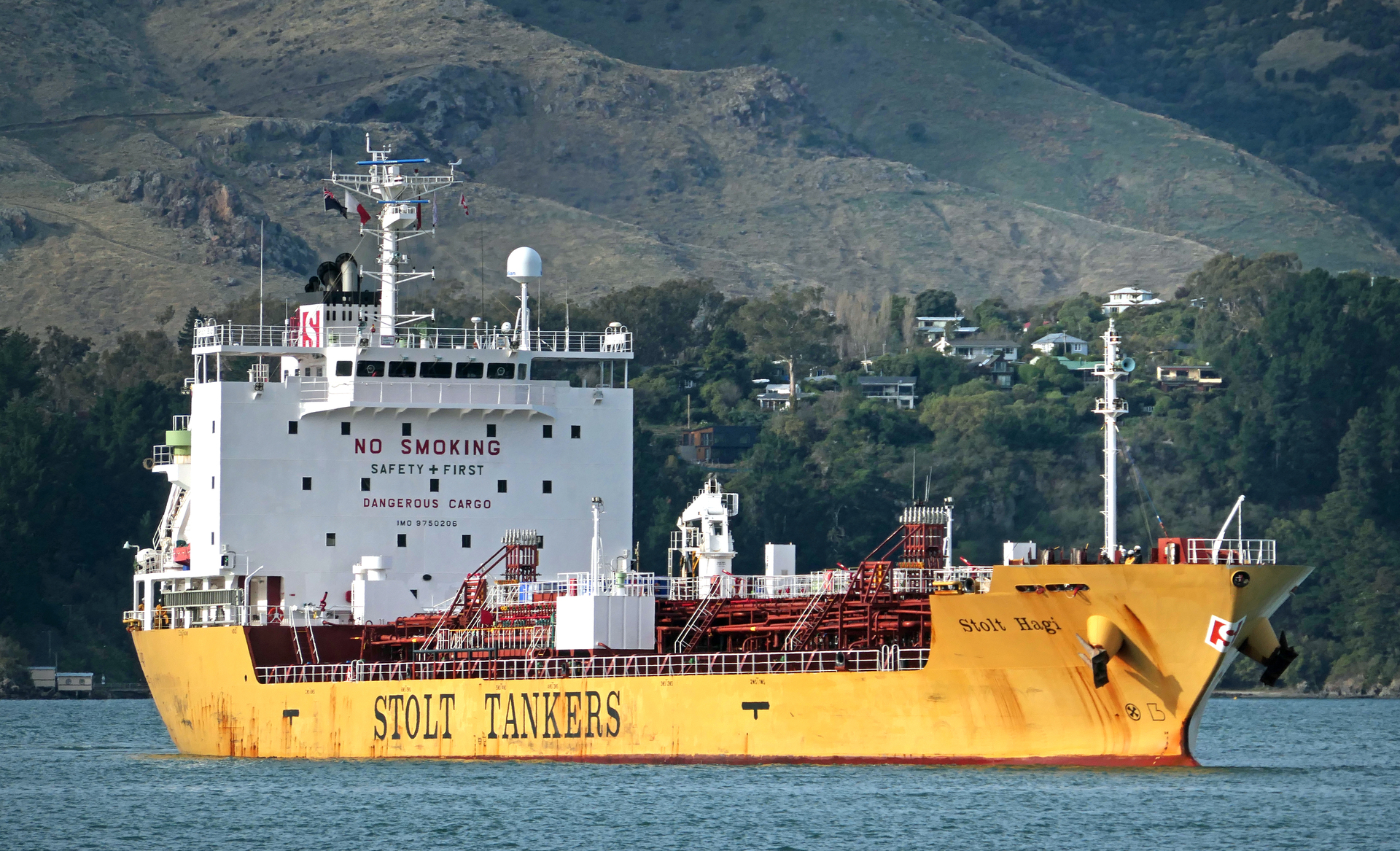
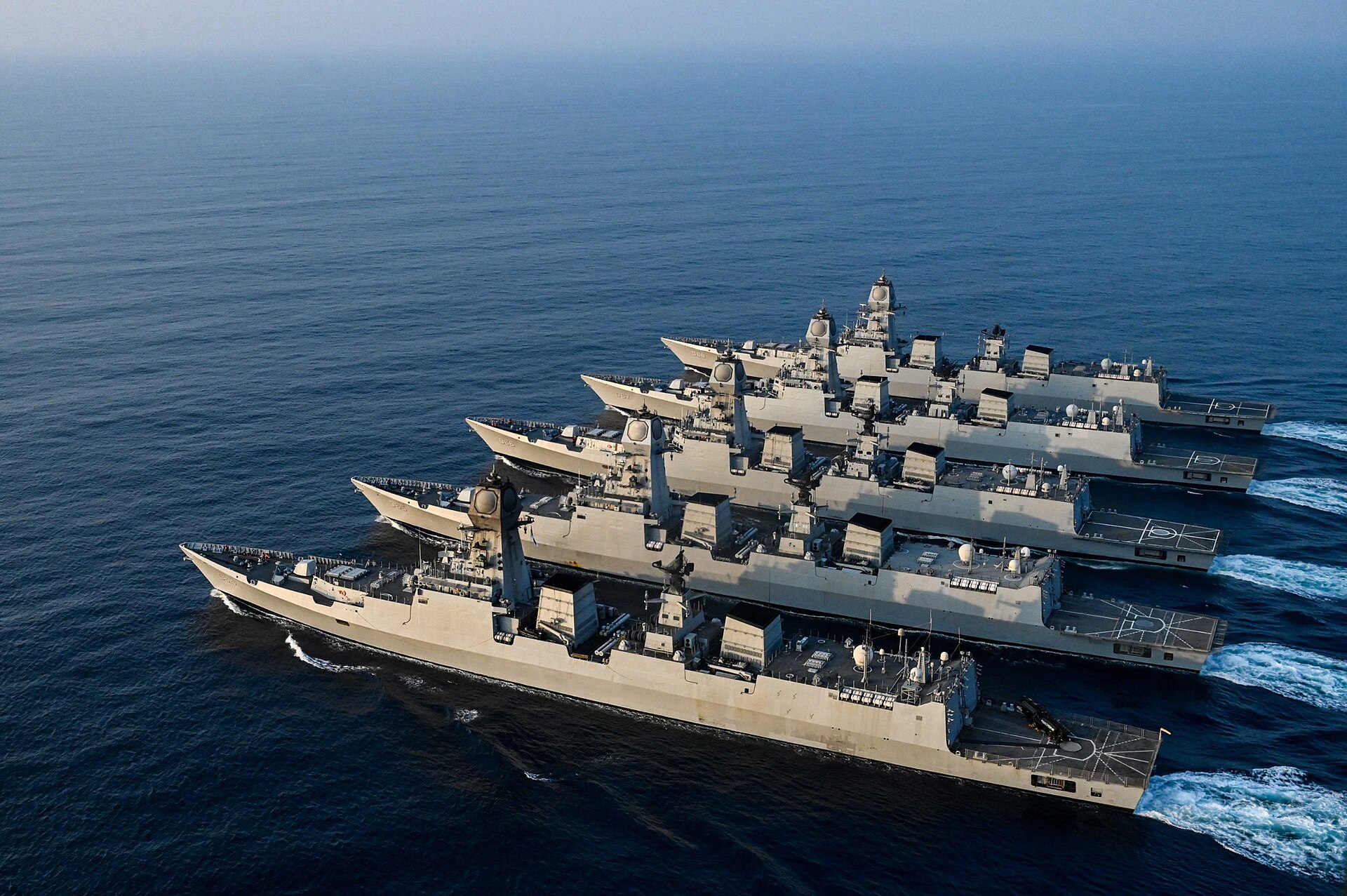
ADEN — Two anti-ship ballistic missiles struck the crude tanker MV Andromeda Star fifteen nautical miles southwest of Mokha at 5:49 p.m. Sana’a time on April 26, punching into a 115,600-deadweight-ton Aframax loaded with Russian Urals crude from Primorsk and bound for the Nayara Energy refinery at Vadinar, India — a facility 49.13 percent owned by Rosneft. The Indian Navy destroyer INS Kochi, a 7,400-tonne Kolkata-class guided-missile warship and the most capable surface combatant India has ever built domestically, scrambled a helicopter and an explosive ordnance disposal team to the scene. It confirmed all 30 crew — 22 of them Indian nationals — were safe, and escorted the vessel as it continued its voyage south toward the Gulf of Aden.
A third Houthi ASBM launched in the same salvo narrowly missed MV MAISHA, an Antigua and Barbuda-flagged vessel operated out of Liberia, according to U.S. Central Command. CENTCOM confirmed “minor damage” to the Andromeda Star and no injuries aboard either ship, describing the missiles as fired from “Houthi-controlled areas of Yemen.” Houthi military spokesman Yahya Sarea claimed the strike within hours, calling the Andromeda Star a “British oil ship” and declaring it had been “hit directly” by “a number of appropriate naval missiles,” per Arab News and the Times of Israel.
Two Missiles, One Tanker, and the Navy That Came Running
The Indian Navy’s official statement, issued between April 26 and 29 and carried by DevDiscourse and the Tribune India, framed INS Kochi’s response as a routine safeguarding mission: “A mission deployed Indian Naval destroyer INS Kochi responded to a maritime security incident involving the attack on Panama-flagged crude oil tanker MV Andromeda Star on April 26,” the statement read. “The swift action of the Indian Navy ship reiterates the commitment and resolve of the Indian Navy in safeguarding the seafarers plying through the region.” The language was careful — “maritime security incident,” not “Houthi attack” — and named no belligerent, no cargo origin, no consignee.
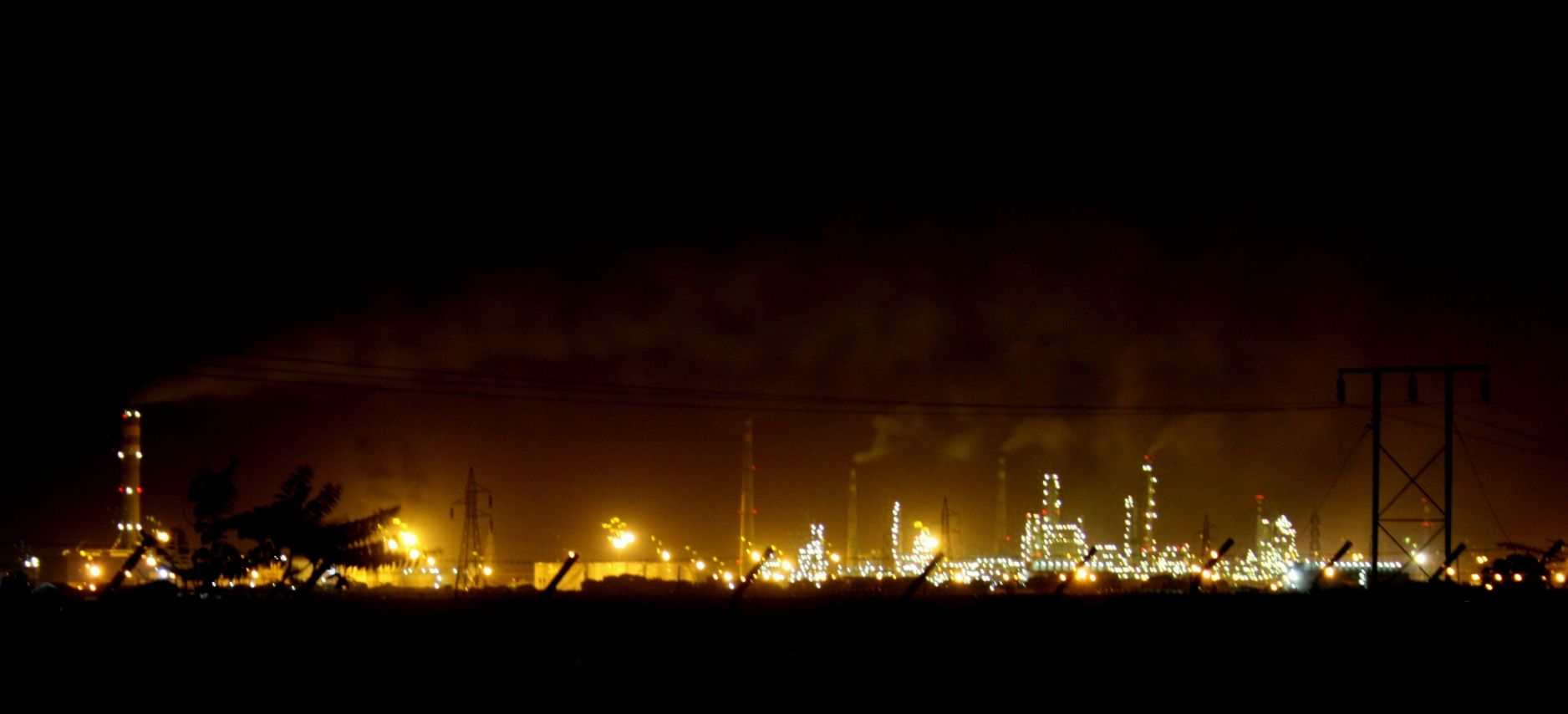
What the statement did not mention is what makes it interesting. The vessel was carrying Russian crude oil, loaded at Primorsk on the Baltic Sea, routed through the Turkish Straits and the Suez Canal, and headed for Vadinar on India’s Gujarat coast — the port that feeds Nayara Energy’s 400,000-barrel-per-day refinery, India’s second-largest single-site facility by capacity and one of the most complex in Asia at a Nelson complexity index of 11.8, according to Rosneft’s own corporate disclosures. Nayara’s controlling shareholder is Rosneft PJSC, which acquired the stake in 2017 for $12.9 billion, and Rosneft’s CEO Igor Sechin has sat on the U.S. Treasury’s Specially Designated Nationals list for years. The European Union sanctioned Nayara itself in July 2025.
So when INS Kochi — commissioned September 30, 2015, equipped with BrahMos supersonic cruise missiles and Barak-8 long-range surface-to-air missiles, the pride of India’s indigenous warship program — launched its helicopter toward the Andromeda Star, it was not simply rescuing Indian seafarers from a damaged tanker. It was physically protecting a supply chain that terminates at a Rosneft-majority-owned refinery under EU sanctions, carrying crude from a Russian port, at a moment when Washington is tightening the enforcement net around every Asian refinery that touches sanctioned oil.
What Was Andromeda Star Carrying and Who Owns It?
The Andromeda Star, IMO number 9402471, was UK-owned by Union Maritime Ltd. until November 23, 2023, when it was sold to Algae Marine Inc., a Seychelles-registered entity whose beneficial ownership remains undisclosed, according to the Maritime Executive and gCaptain. Ukraine’s GUR military intelligence sanctions database lists the vessel as part of Russia’s “ghost fleet” — the flotilla of aging tankers with obscure ownership chains that has carried Russian crude beyond the reach of the G7 price cap since 2022. Sarea’s characterization of the ship as “British” appears to derive from the vessel’s former ownership, not its current Panamanian flag or Seychelles operation, which tells you something about how the Houthis screen their targets: by political identity and ownership history, using AIS transponder data cross-referenced against maritime databases, a methodology documented by ACLED and RUSI since 2024.
The Middle East briefing 3,000+ readers start their day with.
One email. Every weekday morning. Free.
Reuters, via gCaptain, confirmed the cargo as Russian crude loaded at Primorsk and bound for Vadinar. The route is one of the most heavily trafficked shadow-fleet corridors in the world — Baltic port to Indian refinery, with the Urals discount absorbing the elevated insurance premiums that have become the cost of doing business in the southern Red Sea. The Washington Institute for Near East Policy documented in 2024 that Russia-linked shadow fleet tankers continued transiting the Red Sea even after Houthi attacks escalated precisely because the commercial margin made the risk arithmetically worthwhile. The Andromeda Star’s continued voyage after sustaining two ASBM hits — CENTCOM confirmed it kept moving — suggests the same calculation held on April 26.
Nayara Energy’s Vadinar refinery, for its part, has been offline since April 9-10, shut down for approximately 35 days of maintenance with a restart expected in mid-May, according to Republic World and Business Standard. European contractors refused to service the facility given the Rosneft ownership and EU sanctions exposure, Business Standard reported in April 2026. The shutdown removed roughly eight percent of India’s total refining capacity. The Andromeda Star’s cargo was presumably timed for the restart window — a delivery into a refinery that cannot currently process it, from a supply chain that multiple governments consider sanctionable, protected by a navy that insists it is merely safeguarding seafarers.
INS Kochi and the Rosneft Supply Chain
India’s position in the Iran-U.S. war has deteriorated with extraordinary speed over the past seven days. On April 19, the IRGC fired on Indian-flagged vessels Sanmar Herald and Jag Arnav in the Strait of Hormuz, prompting New Delhi to summon Iran’s ambassador — a rare diplomatic escalation for a country that has maintained formal neutrality throughout the conflict, as HOS documented on April 25. On the same day, OFAC’s General License U expired without renewal, stripping Indian refiners of the last legal cover for purchasing Iranian crude. On April 22, Iran’s IRGC seized the India-bound bulk carrier Epaminodas — 6,690 deadweight tons, carrying grain — along with the 11,660-TEU container ship MSC Francesca in the Gulf of Oman, according to NBC News and IranWire.
Four days later, INS Kochi was escorting a Rosneft supply chain vessel through the Red Sea. India’s crude oil buffer sits at roughly 30 days of consumption, compared to China’s 3-4 months of strategic petroleum reserve cover, CNBC reported on April 23. Indian imports of Russian crude averaged 1.18 million barrels per day in early 2026, with Nayara at peak capacity processing 420,000 bpd — more than a third of that flow running through a single Rosneft-majority-owned facility. Reliance Industries, India’s largest private refiner, halted Russian crude purchases entirely in April, Outlook Business reported, leaving Nayara as the primary conduit for Russian barrels into the Indian market.
The operational logic of INS Kochi’s deployment is straightforward: 22 Indian nationals were aboard a damaged vessel in a war zone, and the Indian Navy has both the mandate and the capability to extract them. The strategic optics are less comfortable. India dispatched its most advanced domestically built warship to protect a cargo that originated in a Russian port, is owned by an opaque Seychelles shell company on Ukraine’s sanctions list, and was headed for a refinery majority-owned by a company whose CEO is personally sanctioned by the United States. The Indian Navy’s statement did not mention any of these facts, and there is no indication that New Delhi considered them operationally relevant — which may be the most revealing detail of all.
The Hengli Precedent: Twenty-Four Hours Earlier
On April 25 — one day before the Andromeda Star was hit — the U.S. Treasury’s Office of Foreign Assets Control sanctioned Hengli Petrochemical (Dalian), China’s second-largest integrated refinery, under the enforcement campaign Washington has branded “Operation Economic Fury,” according to Treasury’s own press release, CNBC, and Al Jazeera. Hengli was the first major Chinese downstream buyer sanctioned for purchasing crude from Iran’s sanctioned supply chain, and the designation was explicitly designed to signal that OFAC’s enforcement perimeter now extends beyond traders and shippers to the refineries themselves — the end-users, the entities that turn sanctioned crude into gasoline and petrochemicals and profit, as HOS reported when the sanctions were announced.
The timing creates a sequence that no Indian official has publicly acknowledged. April 25: Washington sanctions a Chinese refinery for buying sanctioned crude. April 26: an Indian Navy destroyer rescues crew from a vessel carrying Russian crude to a Rosneft-owned, EU-sanctioned Indian refinery. The Hengli designation established the principle that OFAC will pursue Asian refineries that process sanctioned oil; the INS Kochi deployment demonstrated that India’s military will physically protect the supply chain feeding one such refinery. These two facts coexist in the same 48-hour window, and no amount of careful language about “maritime security incidents” and “safeguarding seafarers” resolves the contradiction.
India’s exposure is structural, not incidental. OFAC’s General License 134B, renewed on April 18 according to Business Standard, authorizes delivery of Russian crude loaded before April 17 until May 16 — a narrow window that covers the Andromeda Star’s cargo if it was loaded before the cutoff. But GL 134B does not immunize the consignee against EU sanctions on Nayara, nor does it address the OFAC SDN designation on Rosneft and Sechin. The legal architecture around the Andromeda Star’s cargo is a nested series of conditional permissions and absolute prohibitions that no single license resolves, and the Hengli precedent suggests Washington’s patience for the distinction between technically permissible and strategically provocative is running short.
A Ghost Fleet Vessel That Keeps Coming Back
The Andromeda Star was struck on the same Primorsk-to-Vadinar route on April 26, 2024 — exactly two years to the day — by the same attacker, according to the Washington Institute and the Maritime Executive. INS Kochi responded to that attack as well. The vessel returned to the identical corridor, carrying the identical cargo, for the identical consignee, and was hit again by the identical weapon system in what amounts to the most precisely repeating pattern in the 30-month history of Houthi Red Sea operations. The commercial logic that made the first transit profitable — the Urals discount, the insurance arbitrage, the Nayara refinery margin — evidently survived the first strike intact.
The ghost fleet operates on a principle that Western sanctions architects have struggled to counter: if the vessel is already sanctionable, the incremental risk of transiting a Houthi engagement zone is marginal. The Andromeda Star’s Seychelles registration, undisclosed beneficial ownership, and presence on Ukraine’s GUR sanctions database mean it is already excluded from mainstream maritime insurance markets, already barred from most Western ports, already invisible to the compliance infrastructure that governs legitimate tanker trades. A Houthi ASBM strike adds physical risk but does not meaningfully increase regulatory risk, because regulatory risk is already at maximum. The vessel continued its voyage after sustaining two missile hits on April 26, just as it continued after the 2024 strike, because the economic model that underpins the ghost fleet prices in exactly this kind of damage.
Does Bab el-Mandeb Now Carry Saudi Arabia’s War?
The double blockade that locked down both sides of Hormuz by late April — the U.S. controlling the Arabian Sea entry since April 13, the IRGC controlling the Gulf of Oman exit since early March — has forced the majority of Saudi crude exports through Yanbu on the Red Sea coast, routed via the East-West Pipeline that survived IRGC strikes in early April with reduced but functional capacity. Saudi Yanbu crude exports reached approximately 4.0-4.3 million barrels per day in March 2026, according to MercoPress and OilPrice.com, representing roughly 70-75 percent of the kingdom’s seaborne crude shipments.
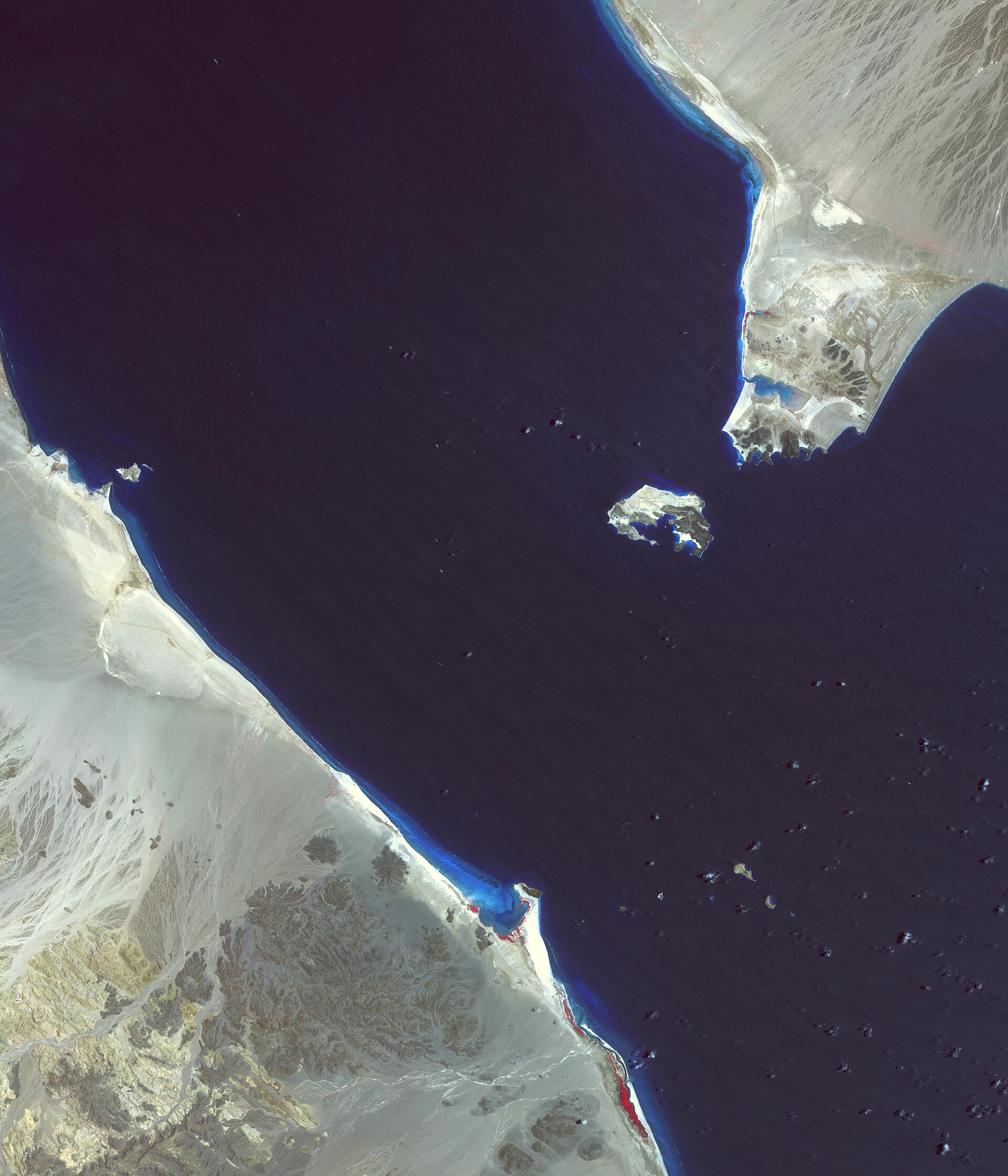
Every barrel that leaves Yanbu transits southward through the Red Sea and passes within range of Houthi anti-ship ballistic missiles before reaching the Gulf of Aden and the open Indian Ocean. The Andromeda Star was hit 15 nautical miles southwest of Mokha — squarely in the corridor that Saudi crude tankers must navigate daily. The Houthi ASBM cadence in April 2026 has been accelerating: April 9 (Maersk Yorktown), April 24 (Maersk Yorktown again plus MSC Veracruz), April 26 (Andromeda Star plus MAISHA near-miss), according to the Wilson Center’s attack timeline and Wikipedia’s comprehensive Houthi attack database — three multi-vessel attack windows in 17 days, each involving two or more targets.
Saudi Arabia’s Syria reconstruction bet and its pipeline bypass strategy both depend on the assumption that Bab el-Mandeb remains navigable even as Hormuz stays closed. The Houthi ASBM capability — Tankil missiles derived from Iran’s Raad-500 with approximately 500-kilometer range, and Muhit converted SA-2 variants with 180-kilometer range and 150-kilogram warheads, as documented by the Alma Research Center and RUSI — directly challenges that assumption. A senior Iranian source told Reuters on April 7 that “if the situation gets out of control, Iran’s allies will also close the Bab el-Mandeb Strait,” and Iranian state media consistently frames Houthi Red Sea operations as part of the broader “axis of resistance” campaign, making explicit a coordination that the Houthis themselves have never denied.
The Toll That Doesn’t Exist Yet
Maritime intelligence firm Ambrey reported, via Lloyd’s List and Yemen Monitor on April 24, that Houthi leadership had discussed “mechanisms for imposing fees on vessels passing through the Red Sea” at “high leadership levels,” indicating what Ambrey described as “a Houthi ambition that goes beyond merely disrupting navigation to exercising actual, organized control over strategic waterways.” HOS examined the emerging toll architecture in detail on April 26, and the Andromeda Star strike sits at the boundary between the current regime of indiscriminate targeting and the aspirational toll system that would theoretically exempt paying vessels.
The fact that the Andromeda Star was struck suggests the toll mechanism remains aspirational rather than operational — a vessel carrying Russian crude to an Indian refinery would, under most conceivable Houthi fee structures, qualify for exemption or reduced targeting, given the Houthis’ stated focus on vessels linked to the U.S., UK, and Israel. Sarea’s insistence on calling the ship “British” may reflect an attempt to retroactively justify a strike on a vessel whose actual ownership and cargo would not fit the declared targeting criteria, or it may simply reflect the lag between Houthi intelligence databases and the vessel’s November 2023 ownership transfer. Either way, the strike demonstrates that whatever toll architecture the Houthis are building has not yet replaced the existing pattern of firing at targets of opportunity in the southern Red Sea.
The Indian Navy will keep deploying warships to the Red Sea corridor: Indian nationals crew a disproportionate share of the global merchant fleet, and New Delhi cannot afford to be seen abandoning them in a war zone. Nayara cannot stop receiving Russian crude while both sides of Hormuz remain blocked and every alternative supply route carries its own disruption premium. The Andromeda Star — or another ghost fleet Aframax with an equally opaque ownership chain — will almost certainly run the Primorsk-to-Vadinar corridor again, because the same arithmetic that brought it back two years after the 2024 strike still holds. What changed on April 26 is that Washington sanctioned Hengli Petrochemical the day before, and an Indian destroyer was doing exactly what OFAC’s new enforcement doctrine says Asian governments should stop enabling.
Frequently Asked Questions
What happens to the Andromeda Star’s cargo if Nayara’s Vadinar restart is delayed past May 16?
General License 134B authorizes delivery of Russian crude loaded before April 17 only until May 16. If the Vadinar refinery restart slips past that date, the Andromeda Star’s cargo would lose its OFAC cover for discharge at a Rosneft-majority-owned facility. The vessel would face the choice of floating storage — which accrues at roughly $40,000-50,000 per day for an Aframax — or diversion to a non-sanctioned buyer, likely at a discount to the already-discounted Urals price.
Has India’s government publicly acknowledged any sanctions exposure from the Nayara-Rosneft ownership chain?
New Delhi has not acknowledged sanctions exposure directly. India’s official posture treats Nayara as a domestic energy asset and GL 134B as sufficient legal cover for current cargoes. The Ministry of Petroleum has consistently described Russian crude purchases as a “sovereign commercial decision.” No parliamentary statement or ministry press release has addressed the EU’s July 2025 designation of Nayara itself, nor the OFAC SDN status of Rosneft CEO Igor Sechin.
What is the full scope of Operation Economic Fury — how many designations and how much in frozen assets?
As of the Hengli designation on April 25, Operation Economic Fury had produced more than 200 individual and entity designations targeting Iran’s oil export chain — traders, shippers, flag registries, and now refinery end-users across China, the UAE, Hong Kong, and Oman. Treasury has not published a consolidated frozen-assets figure, but OFAC enforcement actions in the campaign have blocked or disrupted an estimated $2-4 billion in pending transactions, according to the Foundation for Defense of Democracies.
What happened to the Indian-crewed vessels Sanmar Herald and Jag Arnav after the IRGC fired on them in Hormuz?
Both vessels were released by the IRGC after brief detention in the Strait of Hormuz on April 19-20. India summoned Iran’s ambassador in New Delhi — an unusual step given India’s formal neutrality — and demanded consular access for crew members. Neither ship sustained serious structural damage. The incidents prompted the Indian Navy to surge additional patrol assets to the northern Arabian Sea, a deployment posture that was already active when INS Kochi responded to the Andromeda Star strike one week later.