RIYADH — Donald Trump posted an AI-generated image of himself carrying an assault rifle at 4 AM on April 29, captioned “NO MORE MR. NICE GUY,” alongside a warning that Iran had “better get smart soon” — hours after Iran’s UN mission formally asserted its legal right to take “necessary and proportionate measures” over the Strait of Hormuz. Brent crude surged 3.4% to $114.70 a barrel on its eighth consecutive day of gains, according to CNBC, and US gasoline hit $4.23 a gallon, the highest since July 2022, according to AAA.
The twin escalations landed less than 24 hours after the GCC’s first in-person leaders summit since the war began, held in Jeddah on April 28, where Gulf heads of state explicitly called for Hormuz to reopen and a “permanent, long-term arrangement” to end the conflict. Saudi Arabia hosted that summit, receives Iran’s diplomatic back-channel traffic, and depends on the Yanbu bypass pipeline to move whatever oil Hormuz cannot — but has no seat at the table where Washington and Tehran are deciding whether to talk or fight.
Table of Contents
The Gun Post and the Cancelled Flight
Trump’s Truth Social post, published shortly after 4 AM Eastern Time, showed an AI-generated image of the president in a black suit and aviator sunglasses, holding an assault rifle against a backdrop of explosions and destroyed structures, with the American flag and a banner reading “NO MORE MR. NICE GUY!” The accompanying text read: “Iran can’t get their act together. They don’t know how to sign a nonnuclear deal. They better get smart soon! President DJT.”
The post came after Trump ordered US envoys Steve Witkoff and Jared Kushner not to fly to Islamabad for a second round of peace talks. “Nope, you’re not making an 18-hour flight to go there,” Trump told Fox News, according to Euronews. Iranian state media insisted direct talks had never been agreed to begin with — Araghchi had already completed his Islamabad visit before the cancellation announcement and traveled onward to Oman and then Moscow, where Russian President Vladimir Putin praised the Iranian people as “bravely and heroically fighting for their sovereignty.”
This is not the first time Trump has used threatening imagery on Truth Social during the war. Earlier posts included “A whole civilisation will die tonight” on April 7 and the “Power Plant Day and Bridge Day” post on April 5 that preceded US strikes on Iranian infrastructure. Fortune reported on April 21 that Trump’s own officials had privately warned his Truth Social posts about Iran risked “killing peace talks” — a pattern the April 29 post fits precisely. Each prior post moved oil markets and drew Iranian counter-responses, and this one was no different: Brent jumped from $111.16 before the post to $114.70 by midday, according to CNBC and CNN.
Iran’s Hormuz Sovereignty Claim
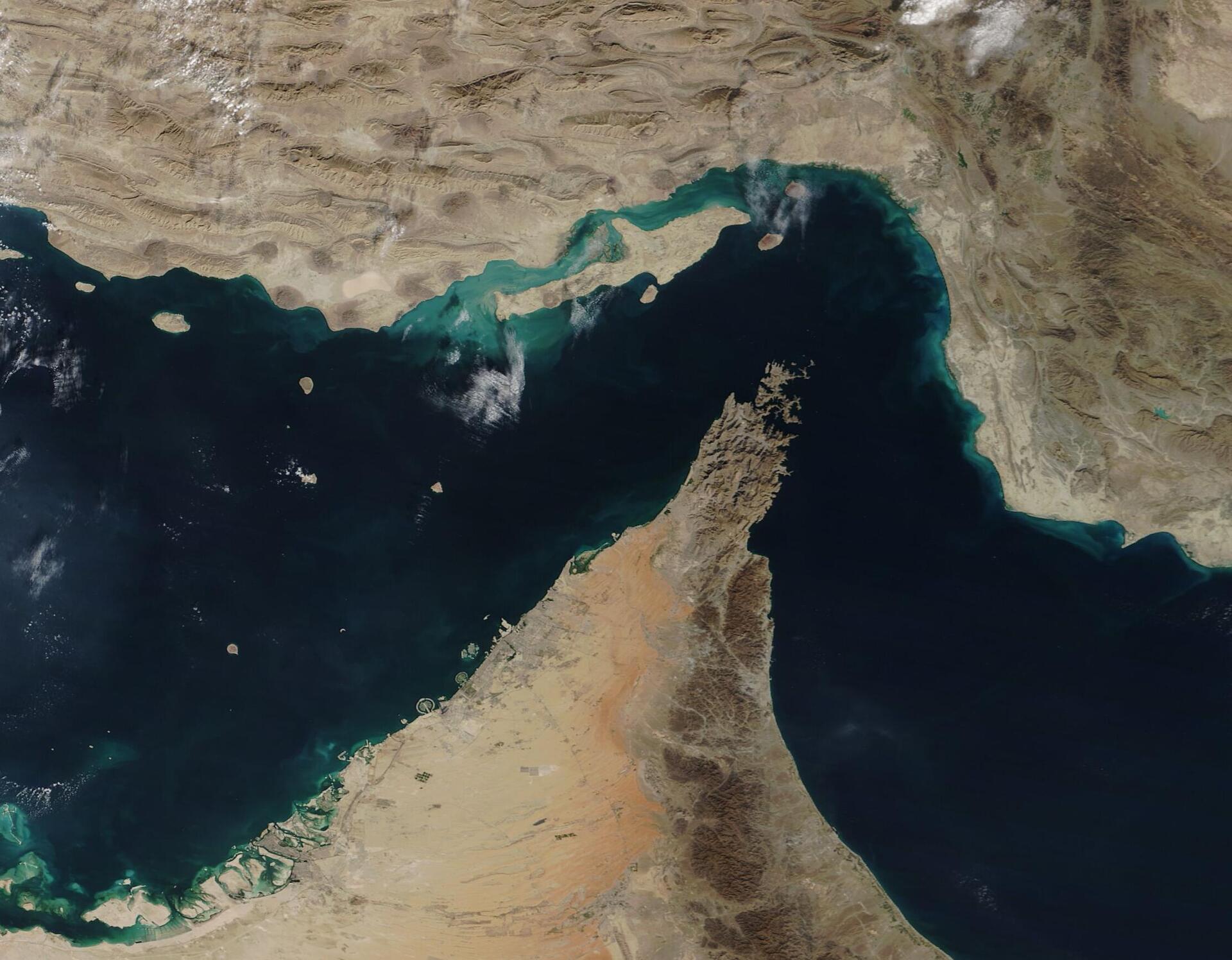
Iran’s UN mission published a formal statement on X on April 28 that went further than any previous Iranian position on Hormuz during the war. “As the main coastal state within whose territorial sea the Strait of Hormuz lies, Iran has the legitimate and legal right to take necessary and proportionate measures to address emerging security threats, ensure safe navigation and prevent the misuse of the Strait of Hormuz for hostile or military purposes,” the statement read, as reported by The National. The mission simultaneously declared that Iran is “not a party” to the 1982 UN Convention on the Law of the Sea and is therefore not bound by its transit passage provisions — a direct challenge to the legal framework the United States invokes every time it sends a destroyer through the strait.
The Middle East briefing 3,000+ readers start their day with.
One email. Every weekday morning. Free.
The statement also shifted blame entirely to Washington: “Any disruption to maritime transport in the Gulf and the strait lies with the US, whose unlawful actions endanger international navigation.” Iran framed the US naval blockade — in effect since April 13 and applied to Iranian ports and toll-collecting vessels — as the cause of the crisis, not the double blockade that has reduced Hormuz transits to 3.6% of pre-war levels. The mission insisted that “lasting stability… can only be achieved through a durable and permanent cessation of aggression against Iran… supplemented by credible guarantees of non-recurrence.”
Israel’s UN Ambassador Danny Danon called the assertion “piracy,” stating: “Commercial vessels are being threatened. Navigation is being obstructed. Safe passage is no longer guaranteed.” Rob Geist Pinfold of King’s College London told Al Jazeera that both sides were engaged in “intense competition,” with each signaling resilience while the US hesitates to release its coercive leverage. The Iranian rial, meanwhile, hit a record low of approximately 1.8 million to the dollar around April 29, according to Euronews — a reminder that rhetorical escalation and economic collapse are running on parallel tracks in Tehran.
Why Saudi Arabia Has the Most to Lose
Saudi Arabia occupies the structural trap at the center of both escalation chains. The kingdom’s March oil production fell to 7.25 million barrels per day, according to the IEA, down from 10.4 million bpd in February — a 30% collapse that the IEA called “the largest disruption on record.” The East-West Pipeline to Yanbu has a nominal capacity of 7 million bpd, but wartime loading constraints at the Red Sea terminal cap effective throughput at roughly 3 to 4.5 million bpd — well below the 7 to 7.5 million bpd that moved through Hormuz before the war.
The fiscal arithmetic is equally exposed. Brent at $114.70 sits above Saudi Arabia’s PIF-inclusive fiscal break-even of $108 to $111 a barrel, as estimated by Bloomberg Economics — but only just, and only if it holds. Goldman Sachs has projected a war-adjusted 2026 Saudi fiscal deficit of 6.6% of GDP, double the official 3.3% forecast, based on the production collapse rather than the price. Every barrel Saudi Arabia cannot move through Hormuz or load at Yanbu is revenue that does not arrive regardless of what Brent does.
The UAE’s announcement on April 28 that it is leaving OPEC and OPEC+ effective May 1, ending 58 years of membership, compounds the pressure. Jorge Leon, head of geopolitical analysis at Rystad Energy, told Al Jazeera: “Losing a member with 4.8 million barrels per day of capacity takes a real tool from the group’s hands… Saudi Arabia is now left doing more heavy lifting on price stability.” The kingdom now carries OPEC’s production discipline burden largely alone, at a moment when its own output has been involuntarily slashed by a war it did not start and cannot stop.
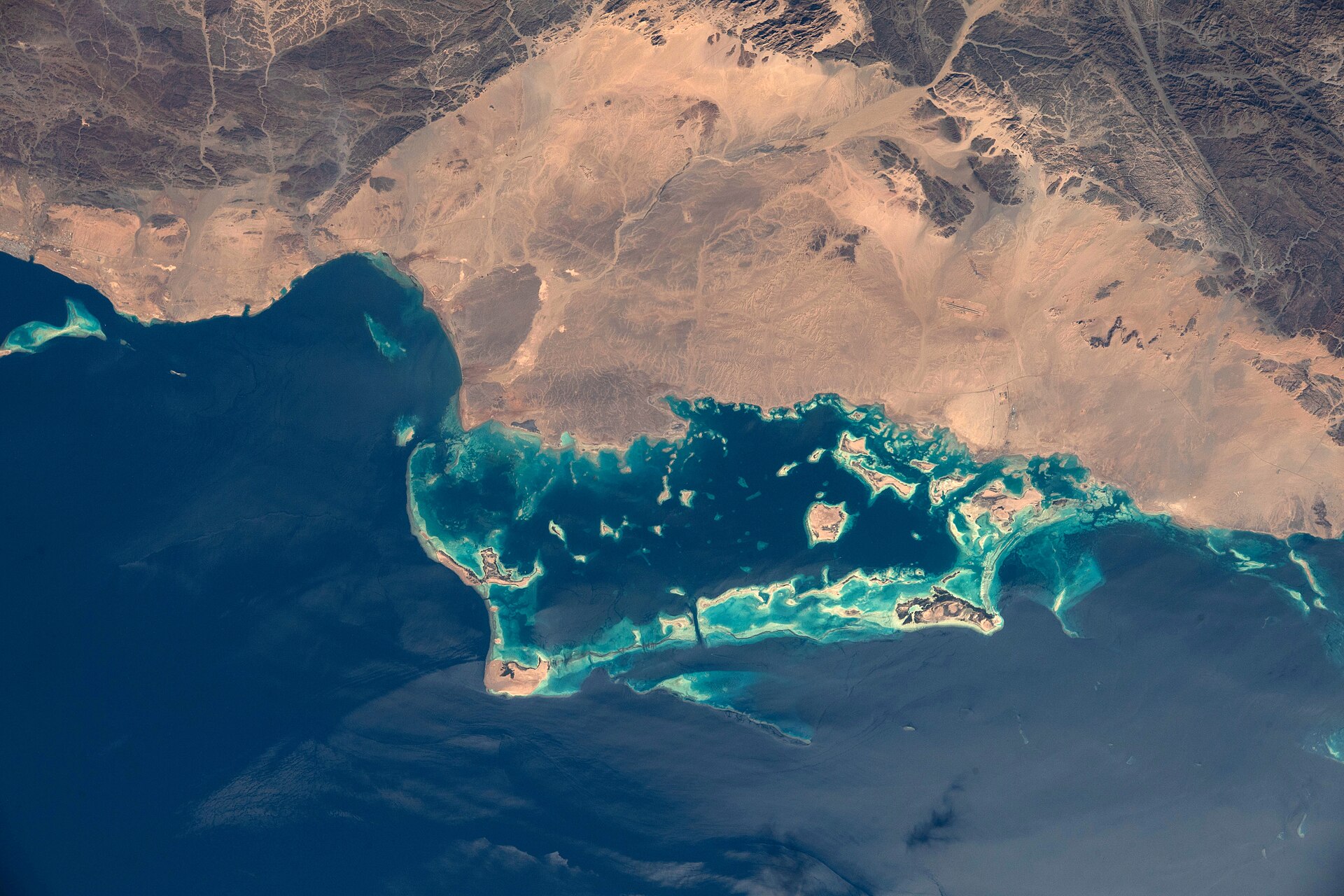
Saudi FM Prince Faisal bin Farhan called Araghchi on April 26 as part of a four-capital Sunday diplomacy blitz, according to Al-Arabiya — Araghchi briefed him on Iran’s two-stage proposal before it became public. Saudi Arabia is receiving Iran’s diplomatic traffic, but when Trump posts a gun image at 4 AM and Iran responds with a sovereignty declaration at the UN, the kingdom’s back-channel access counts for nothing. It has no vote in either escalation chain.
One Tanker Through the Needle
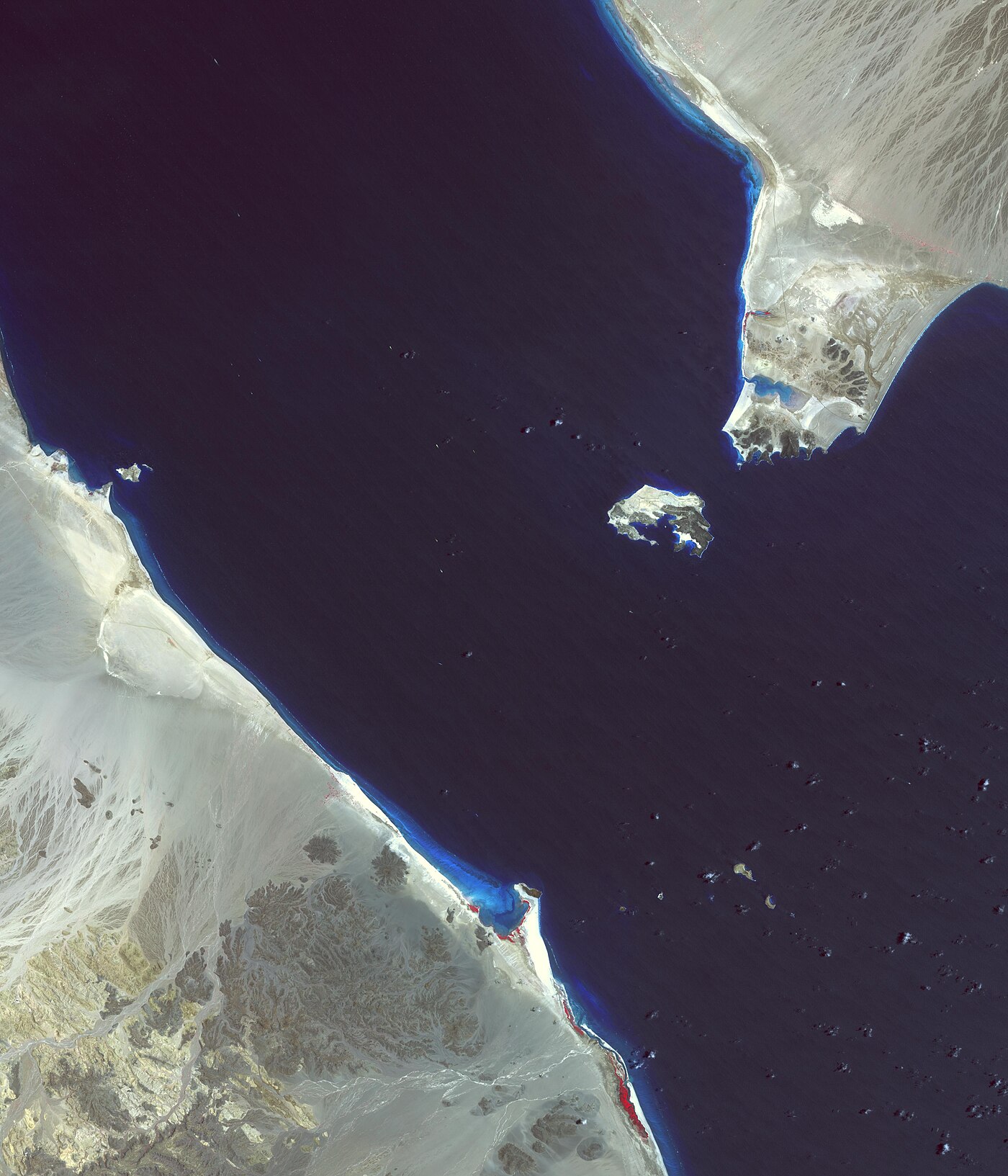
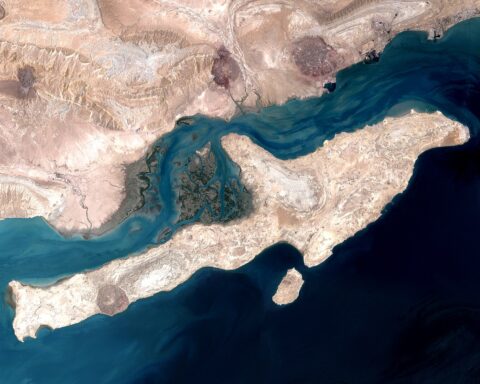
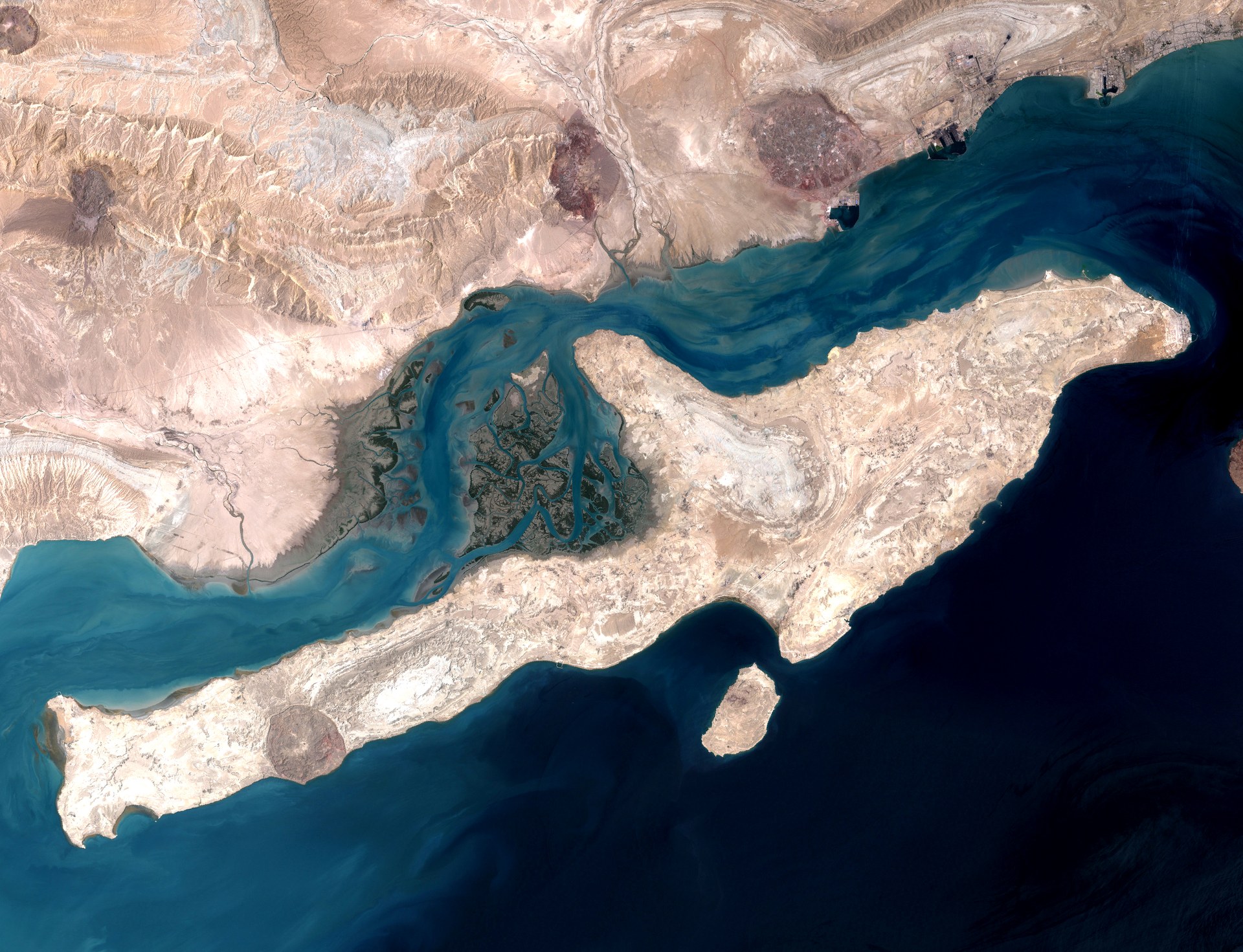
Against this backdrop of rhetorical fire, a single tanker did something no laden crude supertanker had managed since the war began. The Japanese-owned VLCC Idemitsu Maru transited Hormuz on April 28-29 via the Tehran-approved northern route near Qeshm and Larak islands, carrying 2 million barrels of Saudi crude loaded from the Juaymah terminal in early March, Bloomberg and the Japan Times reported. The transit demonstrated that Hormuz is not categorically sealed — it is selectively open under an IRGC authorization system that Tehran controls as a sovereignty mechanism.
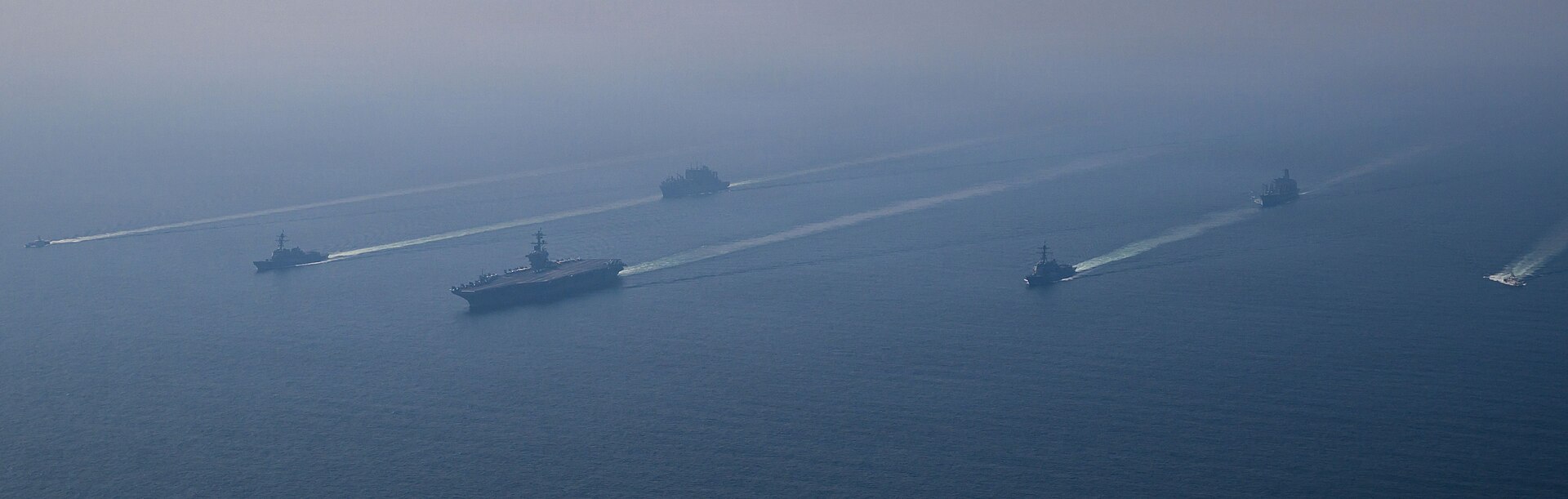
The Idemitsu Maru’s passage is a data point, not a trend. Three US carriers — the USS George H.W. Bush, USS Gerald R. Ford, and USS Abraham Lincoln — are operating simultaneously in the Middle East, the first three-carrier deployment since Operation Iraqi Freedom in 2003, with over 200 aircraft and 15,000 sailors, according to CENTCOM and Breaking Defense. IRGC Navy Deputy for Political Affairs Mohammad Akbarzadeh, speaking in the port city of Minab on April 28, made clear what happens if the military escalation that Trump’s post implied were to materialize: “In the event of any [fresh] military action by the United States against Iran, the IRGC Navy will deploy its new capabilities… employ its new cards, including in the field of smart targeting, and will set the massive vessels of the criminal regime ablaze,” PressTV reported.
Akbarzadeh chose Minab for a reason — it is the city where schoolchildren were killed in the February 28 opening strikes, framing the IRGC’s threat not as abstract deterrence but as rooted in specific, documented grievance. The IRGC Navy retains approximately 60% of its naval capability, according to The National.
Did the GCC Summit Matter?
The Jeddah summit on April 28 was meant to project Gulf unity and demand diplomatic resolution. Qatar’s Emir Sheikh Tamim bin Hamad Al Thani said the meeting embodied “the unified Gulf stance” toward the war and the need to intensify coordination, as reported by Al Jazeera. A Qatar Foreign Ministry spokesperson was more pointed: “We do not want to see a frozen conflict that ends up being thawed every time there is a political reason.” The same spokesperson explicitly stated that “the GCC states did not push America toward further military escalation with Iran, nor did they attempt to pressure it to achieve this goal.”
Trump’s gun post, arriving hours after those statements, functioned as an immediate and public rebuke. The GCC leaders had called for a permanent arrangement and Hormuz’s reopening; Trump responded with an AI-generated assault rifle and a demand that Iran “get smart soon.” UAE Minister of State Anwar Gargash had already assessed that the GCC’s position was “the weakest in history” regarding political and military coordination, according to Gulf News — an assessment the April 29 sequence validated in real time. The summit’s communiqué called for permanent peace; within 12 hours, both Washington and Tehran had escalated past it.
Iran’s own diplomatic track was moving simultaneously. Tehran’s proposal would reopen Hormuz and end the war in exchange for lifting the US naval blockade, but deferred nuclear discussions until after the conflict concludes. US Secretary of State Marco Rubio described the proposal as “better than what we thought” but expressed concerns about Tehran’s intentions, Al Jazeera reported. The White House rejected it because it “removes a key piece of American leverage in the talks.” The core deadlock — Washington demanding nuclear concessions as a precondition, Tehran insisting the war must end first — remains structurally unchanged despite two months of mediation.
The Two-Chokepoint Threat Returns
Iran’s Deputy Head of the National Security Committee, Alaaeddin Boroujerdi, made explicit on April 29 what Saudi defense planners have feared since the war began. “Iran’s Yemeni allies are waiting to block [Bab el-Mandeb] and deliver another blow to America,” he told CBS News. “The importance of Bab el-Mandeb may be no less than that of the Strait of Hormuz.” The statement reactivates Iran’s two-chokepoint doctrine: if the US does not lift its blockade at Hormuz, Iran can activate Houthi proxy closure of the Red Sea route that Saudi Yanbu exports — the kingdom’s only functioning bypass — depend upon.
Deutsche Bank analysts warned that “concerns about a more prolonged stagflationary shock have risen,” according to CNN’s live blog. Oil prices are up 42% since the war began on February 28, per CNN, and US Treasury Secretary Scott Bessent argued that the “maximum pressure campaign” had accelerated Iran’s inflation and depleted its oil storage capacity, forcing production cuts. But Iran’s authorization ceiling problem — where President Pezeshkian has publicly accused IRGC commanders Vahidi and Abdollahi of wrecking ceasefire negotiations, while holding zero constitutional authority over the IRGC under Article 110 — means that even if Tehran’s civilian government wanted to accept a deal, the military chain of command that controls Hormuz operates under different instructions.
The ceasefire announced on April 8 remains nominally in place but has, as CBS News reported, “lost momentum.” No formal expiry date has been set since Trump extended it on April 21. Iran holds approximately 440.9 kilograms of highly enriched uranium at 60% purity — the last verified figure, from the IAEA in June 2025, before Iran terminated inspector access on February 28, 2026. The US is demanding a 20-year enrichment moratorium. Iran is demanding the blockade end first. And both sides spent April 29 posting threats instead of proposals.
Background
The Iran war began on February 28, 2026, and has now entered its 61st day. The US imposed a naval blockade on Iranian ports on April 13. Iran’s IRGC controls Hormuz transit through a selective authorization system via the northern Qeshm-Larak channel, effectively creating a double blockade where vessels need both US and Iranian approval to pass. Saudi Arabia’s East-West Pipeline to Yanbu provides a partial bypass but cannot fully replace Hormuz throughput. Pakistan has served as the primary mediation venue, with Islamabad hosting two rounds of indirect US-Iran talks before the April 29 cancellation.
Iran’s 14-point counter-proposal, submitted May 2 via Pakistani mediators, attached a 30-day deadline to US blockade removal — an IRGC-driven ultimatum that expires June 1–2, the first days after Hajj dispersal removes the kinetic deterrent. The structural reasons Iran’s 30-day deadline cannot be met by either side are analysed in full.
FAQ
Has Trump used threatening social media imagery against Iran before during this war?
Yes. On April 5, Trump posted “Power Plant Day and Bridge Day” on Truth Social, which preceded US strikes on Iranian infrastructure including bridges in Khuzestan province. On April 7, he posted “A whole civilisation will die tonight.” Both posts produced immediate IRGC counter-responses and oil price spikes. The pattern suggests Truth Social has functioned as a de facto escalation channel — each post moving markets and drawing formal Iranian reactions before diplomatic channels can respond.
Is the Strait of Hormuz actually closed?
Not categorically. The IRGC operates a selective authorization system through a narrow northern channel between Qeshm and Larak islands, inside Iranian territorial waters. The Idemitsu Maru’s April 28-29 transit — carrying 2 million barrels of Saudi crude loaded from Juaymah in early March — was the first laden VLCC to exit the strait since the war began. However, only 45 transits total have occurred since the April 8 ceasefire, versus roughly 1,250 that would have occurred under pre-war traffic patterns. The IRGC also seized two container vessels — the MSC Francesca and the Epaminodas — on April 22, demonstrating that authorization can be revoked at any time.
What is Iran’s two-stage proposal?
Iran’s proposal separates the war from the nuclear file: Hormuz reopens and hostilities end in exchange for lifting the US naval blockade, with enrichment negotiations deferred until the shooting stops. The sequencing is deliberate — Iran wants sanctions relief and security guarantees before placing its nuclear program on the table. The US insists on the reverse order, demanding a 20-year enrichment moratorium as a precondition, because once the war ends Washington loses its primary source of coercive pressure. Secretary of State Marco Rubio called the proposal “better than what we thought” but the White House rejected it anyway.
What is Iran threatening to do to Saudi Arabia’s Yanbu bypass?
Iran’s Deputy Head of the National Security Committee, Alaaeddin Boroujerdi, stated on April 29 that “Iran’s Yemeni allies are waiting to block Bab el-Mandeb.” Closing Bab el-Mandeb would sever Saudi Arabia’s Red Sea export route — the only functioning bypass for oil that cannot move through Hormuz. Yanbu already runs below capacity due to wartime loading constraints; losing the Red Sea outlet entirely would leave Saudi Arabia with no viable crude export corridor. The Houthi capability to interdict Red Sea shipping has been demonstrated since late 2023.
What are the three US aircraft carriers doing in the region?
The USS George H.W. Bush, USS Gerald R. Ford, and USS Abraham Lincoln are operating simultaneously in the Middle East — the first three-carrier deployment since the 2003 invasion of Iraq. The deployment involves more than 200 aircraft and 15,000 sailors, according to CENTCOM and Breaking Defense. The concentration of naval firepower is the largest US force posture in the region in over two decades, though it has not prevented the IRGC from maintaining its selective Hormuz control system or issuing “last warning” radio calls to transiting US destroyers.