LONDON — IMO Secretary-General Arsenio Dominguez briefed the United Nations Security Council on Sunday on what he called an unprecedented maritime humanitarian crisis in the Strait of Hormuz: 20,000 seafarers trapped aboard approximately 1,600 vessels, 29 verified attacks since the Iran conflict opened on February 28, and 10 seafarers dead.
The briefing — the first time in the IMO’s 78-year history that its chief has addressed the Security Council on an active conflict zone — comes three weeks after Russia and China vetoed a Bahrain-led resolution demanding freedom of navigation through the strait. Dominguez is pressing a different approach: a humanitarian framework anchored not in contested political language but in the International Convention for the Safety of Life at Sea, the 1974 treaty that all five permanent Security Council members — and Iran — have ratified.
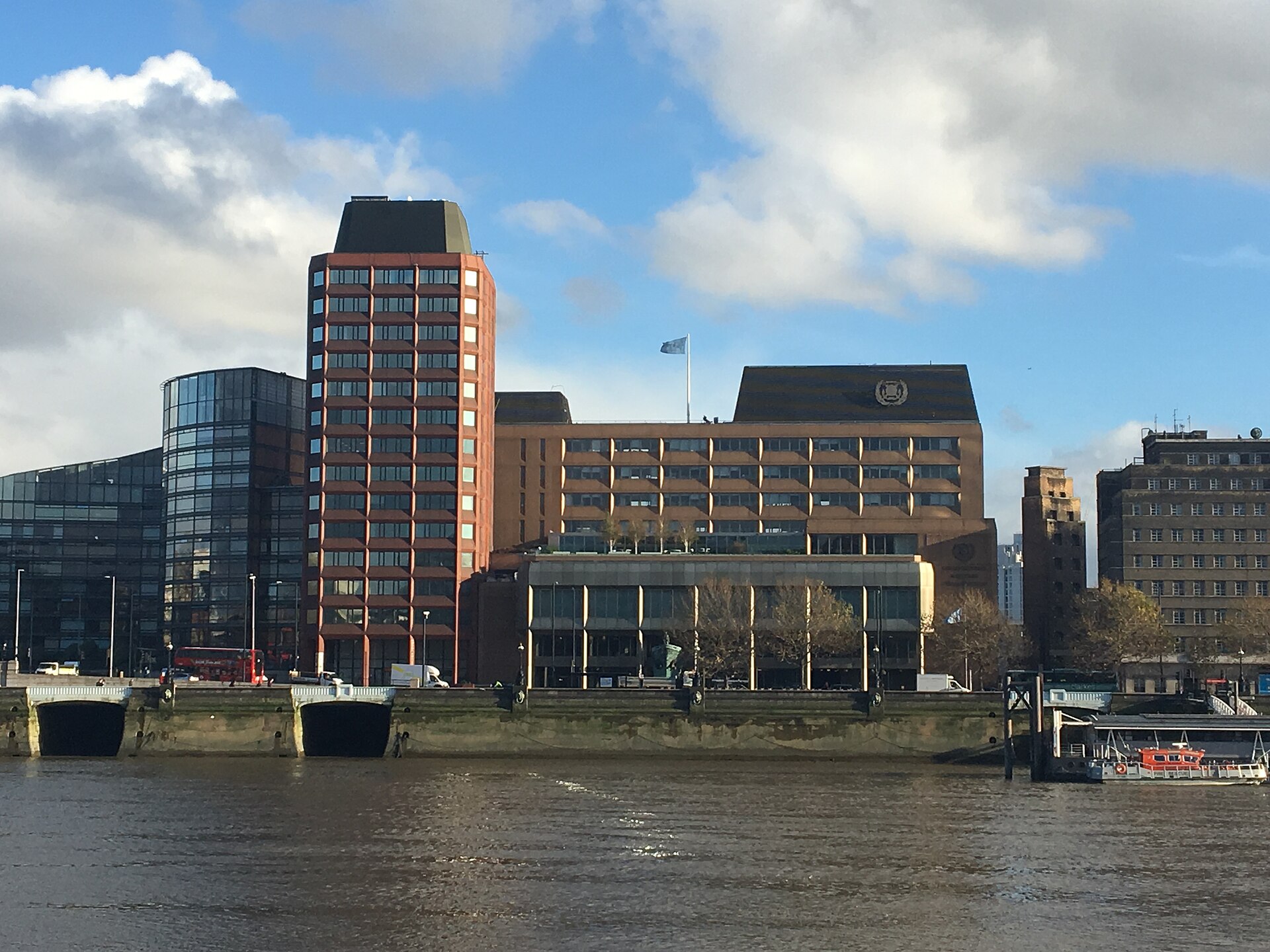
Table of Contents
- The Briefing: What Dominguez Told the Council
- The Dead and the Trapped
- Can SOLAS Cover Ships That Are Not Sinking?
- Why Did Russia and China Veto the Last Resolution — and Would They Veto This One?
- Iran’s Position: Sovereignty, Tolls, and Seizures
- The Red Sea Precedent
- Beyond the Strait: Yemen, Sudan, and the Supply Chain
- Background
- FAQ
The Briefing: What Dominguez Told the Council
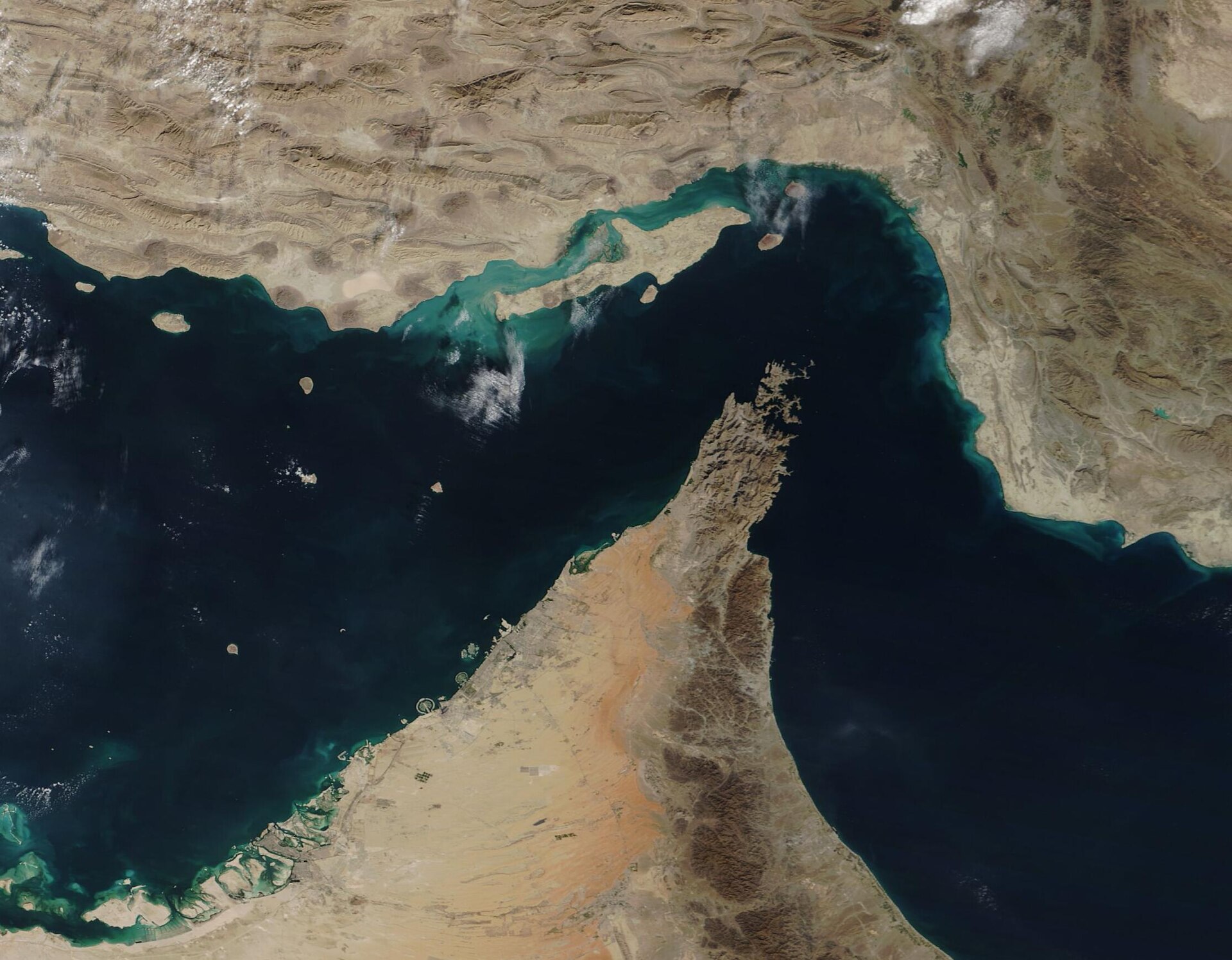
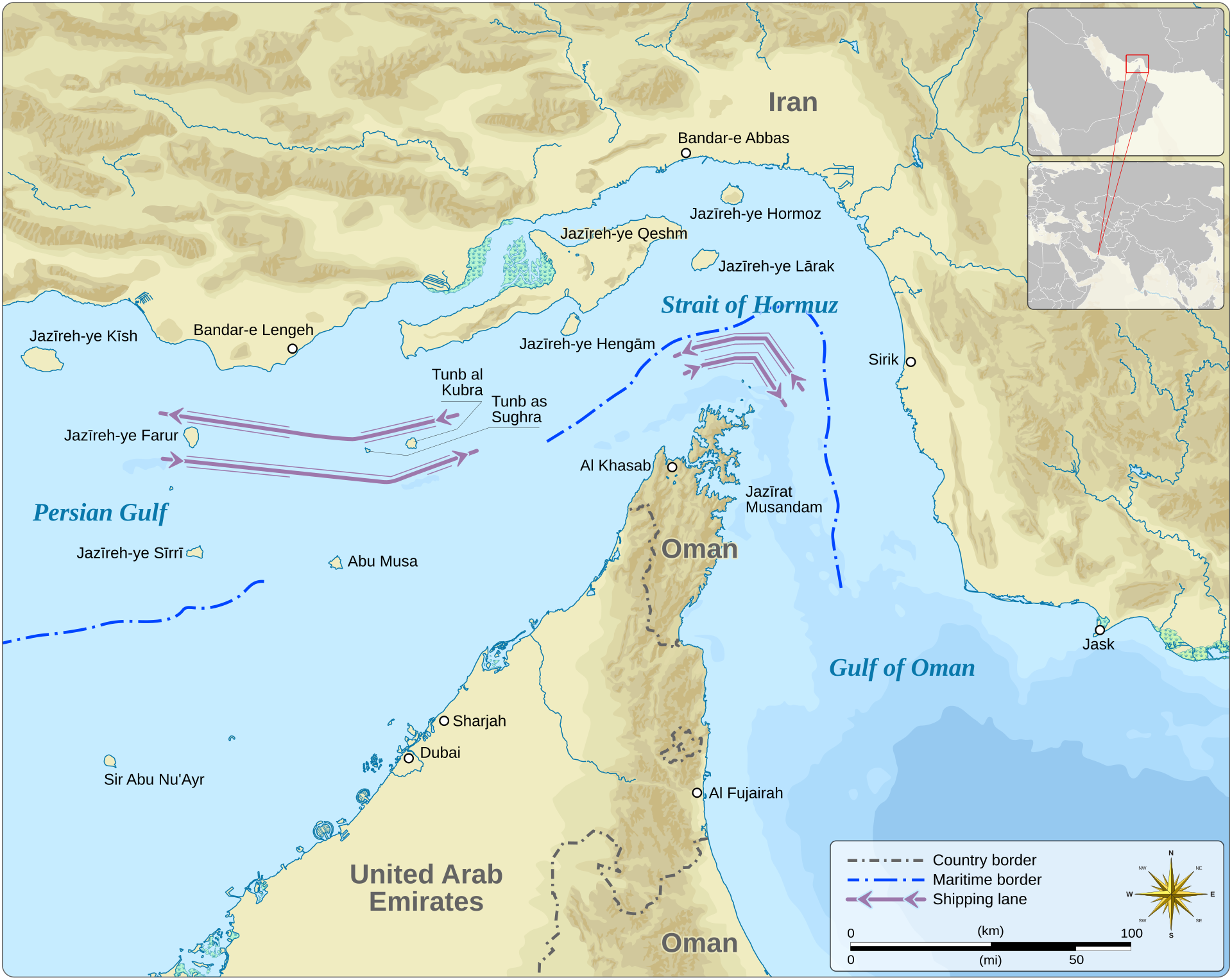
Dominguez appeared before the 15-member body to present the IMO’s assessment of conditions in and around the Strait of Hormuz, now entering its ninth week as an active conflict zone. Monthly transits through the strait have fallen from approximately 3,000 before the war to fewer than 200 by early April — a 93 percent collapse. Since the April 8 ceasefire, only 45 vessels have transited, representing 3.6 percent of the pre-war baseline. More than 150 ships remain anchored outside the strait’s approaches.
The House of Saud Daily Briefing
Saudi Arabia's news in 3 minutes, every morning. Free. See today's issue
“The situation is not improving,” Dominguez told the council. “I reiterate: there is no safe transit anywhere in the Strait of Hormuz.”
The IMO chief laid out the preconditions for any evacuation operation to proceed: “All parties involved in the conflict would need to agree to refrain from attacks on maritime assets during the operation,” he told Xinhua on April 25, framing the request in terms that apply to both Iran’s IRGC naval forces and the US blockade declared on April 13.
So far, the International Transport Workers’ Federation has repatriated 450 seafarers — roughly 2 percent of those stranded. Dominguez warned that supplies aboard the trapped vessels would “start running short” as the crisis enters its ninth week.
“Fragmented responses are no longer sufficient to resolve this crisis,” Dominguez said. “What is urgently required is diplomatic engagement, practical and neutral solutions, and coordinated international action.”
The Dead and the Trapped
The 10 confirmed deaths span six separate verified attacks in the first two weeks of the conflict:
On March 1 alone, three vessels were struck. One seafarer was killed aboard the MKD Vyom. On the Skylight, one was killed and one remains missing. The Stena Imperative took one dead and two seriously injured. Five days later, on March 6, the Mussafah 2 suffered the single deadliest incident: four killed and three severely injured. On March 11, the Mayuree Naree lost three crew members and the Safesea Vishnu one.
The attacks have continued beyond the casualty count. On April 22, IRGC forces seized two container ships — the Panama-flagged MSC Francesca (11,312 TEU) and the Liberia-flagged, Greek-owned Epaminodas (6,690 TEU) — firing on both vessels. Fifteen Filipino seafarers aboard the two ships were later confirmed safe by the Philippine Department of Migrant Workers.
Four days earlier, on April 18, IRGC naval forces fired on the India-flagged VLCC Sanmar Herald — carrying 1.848 million barrels of crude — despite the vessel having received prior clearance, according to NBC News and the Tribune India. That incident came on the same day the IRGC reversed Foreign Minister Araghchi’s declaration that Hormuz was “completely open.”
The nationality breakdown of the 20,000 trapped seafarers reflects global maritime labor patterns. According to Middle East Insider, approximately 35 percent are Filipino, 22 percent Indian, 12 percent Indonesian, 8 percent from Myanmar, and 6 percent Bangladeshi. The remainder come from more than 40 countries — including Chinese, Ukrainian, Russian, and Turkish nationals. The Philippine Department of Foreign Affairs reported 4,862 Filipino seafarers stranded on 463 vessels as of April 11, according to DFA Secretary Maria Theresa Lazaro.
John Canias, the ITF’s Maritime Operations Coordinator, described the psychological toll: “Civilian seafarers have already lost their lives, and tens of thousands more trapped near the Strait of Hormuz are spending every waking moment consumed by anxiety about how — or whether — they will make it home.”
An anonymous seafarer told ABC News: “There is no safe place here.” Another: “Not knowing if we are going to get out of this situation alive is our main concern. We feel trapped — like we’re in a prison.”
Maritime analyst Sal Mercogliano reported that at least one vessel “called the local port authority requested permission to dock as they had run out of water — and they were denied.”
Can SOLAS Cover Ships That Are Not Sinking?
The diplomatic logic behind Dominguez’s briefing rests on SOLAS — the International Convention for the Safety of Life at Sea, which governs 167 contracting states representing approximately 99 percent of the world’s merchant tonnage. Every P5 member is a contracting party. So is Iran.
This gives SOLAS a structural advantage over UNCLOS, the United Nations Convention on the Law of the Sea, which the United States has never ratified. Any resolution framed around UNCLOS freedom-of-navigation provisions would require Washington to invoke a treaty it has spent decades refusing to join. SOLAS presents no such contradiction.
But the framework has a gap that honest analysis cannot ignore.
SOLAS was designed to address vessels in distress — ships sinking, burning, or otherwise facing imminent danger to life. The 1,600 vessels trapped near Hormuz are, for the most part, not in distress in the SOLAS legal sense. Their engines run. Their hulls are intact. Most still have food and fuel, though Dominguez has warned that both are diminishing. They are trapped by the threat of attack, not by mechanical failure or natural disaster.
Mark P. Nevitt, a former US Navy JAG Commander now at Emory University, has argued that “proportionality calculations between belligerents do not account for harm to neutral economies or 20,000 seafarers whose safety is collateral.”
The diplomatic argument, however, does not require SOLAS to cover the situation perfectly. It requires SOLAS to provide a framework that is harder to veto than the political resolution Russia and China killed on April 7. A narrowly framed humanitarian resolution — demanding safe passage for trapped civilian vessels, anchored in a treaty all parties have ratified — forces any potential veto onto specifically humanitarian grounds. That is a different political calculation than vetoing a resolution that addresses “root causes” of the broader conflict.
Whether the gap between SOLAS’s legal scope and the actual conditions at Hormuz is narrow enough for this diplomatic maneuver to work is the question the Security Council now faces.
Why Did Russia and China Veto the Last Resolution — and Would They Veto This One?
The Bahrain-led draft resolution voted on April 7 drew 11 votes in favor, two vetoes from Russia and China, and two abstentions from Colombia and Pakistan.
Russia’s Ambassador Vassily Nebenzia explained his veto by arguing that the resolution “presented Iranian actions as the sole source of regional tensions while illegal attacks by the United States and Israel were ‘not mentioned at all.'” China’s Ambassador Fu Cong said the draft “failed to capture the root causes and the full picture of the conflict in a comprehensive and balanced manner.”
Both framings — “balance” and “root causes” — are standard diplomatic language for vetoing resolutions that blame one party. The question is whether those framings survive contact with a resolution that does not assign blame at all but instead demands safe passage for 20,000 trapped civilians under a treaty framework that both Russia and China have ratified.
The nationality data complicates any veto. Chinese nationals are among the 20,000 stranded. Russia’s exposure is different but real: the Houthis — operating with Iranian coordination — recently struck a tanker carrying Russian crude in the Red Sea, demonstrating that Moscow’s assumed immunity from Iranian-aligned forces is not absolute.
Bahrain’s Foreign Minister Abdullatif bin Rashid Al Zayani warned after the April 7 vote: “Failing to adopt this resolution sends the wrong signal…that the threat to international waterways can pass without any decisive action.”
US Ambassador Mike Waltz framed the stakes in broader terms: “The Strait of Hormuz is too vital to the world to be used as hostage, to be choked, to be weaponized by any one State.”
The timing of today’s briefing carries its own signal. Iran’s Foreign Minister Araghchi met Russian President Putin in Moscow on the same day Dominguez addressed the Security Council — a scheduling coincidence that suggests Tehran is working to ensure that whatever emerges from the briefing does not catch its P5 allies off guard.
Iran’s Position: Sovereignty, Tolls, and Seizures
Iran’s posture toward the strait has been defined by contradiction at the highest levels.
Foreign Minister Araghchi declared on April 17 that Hormuz was “completely open.” Within hours, the IRGC joint command reversed the statement through Tasnim News Agency, asserting that the strait had “returned to previous state, strict management and control.” Parliament Speaker Mohammad Bagher Ghalibaf — himself a former IRGC Aerospace Force commander (1997–2000) — publicly validated the military override with operational rather than diplomatic language. President Pezeshkian later publicly accused SNSC Secretary Ali Akbar Ahmadian (Vahidi’s successor) and Khatam al-Anbiya commander Abdollahi of wrecking the ceasefire mandate, revealing an authorization ceiling that the elected government cannot breach.
On the ground — or rather, on the water — the IRGC has moved to formalize its control. Iran’s parliament is advancing a 12-article Hormuz sovereignty law. The IRGC has begun collecting transit tolls estimated at $2 million per VLCC passage. Ghalibaf formally linked Hormuz reopening to the removal of the US naval blockade on April 22 — the same day IRGC forces seized the MSC Francesca and Epaminodas.
Tasnim reported that both seized vessels “had ignored warnings issued by Iran’s forces,” accusing them of “disrupting order and security” and “lacking necessary permits.” The IRGC also alleged that MSC has Israeli financial connections.
Iran’s Ambassador to the UN, Amir Saeid Iravani, said of the vetoed April 7 resolution that it sought to “punish the victim for defending its sovereignty.”
Any SOLAS-anchored resolution would need to reckon with the fact that the entity controlling Hormuz access — the IRGC Navy, operating without a named commander since Admiral Tangsiri was killed on March 30 — does not answer to the officials who would negotiate at the UN.
The Red Sea Precedent
The closest template for what Dominguez is attempting already exists. In January 2024, the Security Council passed Resolution 2722 demanding that Houthi forces cease attacks on commercial shipping in the Red Sea. The resolution passed without a veto. It contained no Chapter VII authorization of force and was framed around humanitarian and safety-of-navigation concerns rather than political demands.
Four subsequent resolutions — 2739, 2768, 2787, and 2812 — extended the framework without triggering vetoes. All were framed around seafarer safety and documentation requirements, not military authorization.
The Hormuz situation, however, differs in at least two respects that limit the precedent’s applicability.
First, the Houthis are a non-state actor operating outside the UN system. Iran is a UN member state with a permanent mission, treaty obligations, and — through Russia and China — veto-wielding allies on the council. The diplomatic dynamics of pressuring a state versus a militia are structurally different.
Second, a humanitarian corridor through Hormuz would directly threaten Iran’s emerging revenue stream. The IRGC’s toll system — now backstopped by parliamentary legislation — generates an estimated $2 million per laden VLCC transit. A resolution demanding free passage for trapped vessels would effectively require Iran to surrender toll revenue that its legislature has moved to codify as permanent. The Black Sea Grain Initiative worked in part because all parties — including Russia — derived economic benefit from continued transit. At Hormuz, the economics cut the other way.
Beyond the Strait: Yemen, Sudan, and the Supply Chain
The Hormuz shutdown has consequences well beyond the 20,000 trapped seafarers.
David Miliband, president of the International Rescue Committee, warned on April 14: “When vital shipping routes like the Strait of Hormuz are disrupted, the impact is not abstract — it is measured in empty shelves, shuttered clinics, and lives at risk.”
The IRC reported that 90 percent of Yemen’s food supply relies on maritime imports now disrupted by the combined effect of Hormuz restrictions and ongoing Houthi attacks in the Red Sea and Gulf of Aden. In Sudan, $130,000 in pharmaceutical supplies remain stuck in Dubai, unable to reach a country already in the grip of civil war and famine.
Joshua Hutchinson of maritime risk agency Ambrey told ABC News that vessel operators feel “extremely vulnerable” due to a “disconnect between diplomatic and military actions” — a gap visible in the contradiction between ceasefire declarations and continued IRGC seizures.
Stephen Cotton, ITF General Secretary, called for action beyond statements: “The world has recognised the grave danger facing seafarers near the Strait of Hormuz — now governments must act.”
The Philippines, which supplies the largest single national contingent of trapped seafarers, has been among the most vocal. At the ASEAN Foreign Ministers’ meeting on April 13, the Philippine representative called for “safe, unimpeded and continuous” transit and urged compliance with SOLAS obligations — an early signal of the treaty framework that Dominguez is now pressing at the Security Council level.
The US congressional war-powers clock adds another layer of pressure. With the May 1 deadline approaching for congressional authorization of the US naval blockade, any Security Council action — or inaction — feeds directly into domestic American debate over the legal basis for continued military operations in the strait.
Background
The current crisis dates to February 28, 2026, when the IRGC began restricting Hormuz transit following the outbreak of hostilities between Iran and the United States. The strait, roughly 21 nautical miles wide at its narrowest point, carries approximately 20 percent of the world’s traded oil and a substantial share of global LNG shipments.
The IMO convened its 36th Extraordinary Council session on March 18–19, attended by more than 120 member states. The session condemned attacks on commercial vessels and directed the Secretary-General to develop a provisional safe maritime framework. Dominguez used the session to press the council beyond declarations: “Statements are not enough. Vessels can be insured, cargo can be insured; but a human life cannot be replaced.”
On March 27, UN Secretary-General António Guterres established a joint task force comprising the IMO, UNCTAD, and the International Chamber of Commerce to develop technical mechanisms for humanitarian maritime corridors.
UNSC Resolution 2817, adopted on March 11, addressed the crisis but carried no Chapter VII enforcement provisions. The subsequent Bahrain-led resolution on April 7 sought stronger language but was vetoed by Russia and China.
The dual blockade now in effect — the US controlling the Arabian Sea approach from April 13, the IRGC controlling the Gulf of Oman exit since early March — means that vessels require approval from both belligerents to transit.
FAQ
What is SOLAS and why does it matter for this crisis?
The International Convention for the Safety of Life at Sea (SOLAS) is the most widely ratified maritime safety treaty in the world. First adopted in 1914 after the Titanic disaster and updated repeatedly — most recently in its 1974 consolidated form — it establishes minimum safety standards for ship construction, equipment, and operation. Its relevance to the Hormuz crisis is diplomatic rather than strictly legal: because all five permanent Security Council members — including the United States, which has not ratified UNCLOS — are SOLAS parties, it provides a treaty framework that no P5 member can claim to stand outside. Iran is also a contracting party.
How does the IMO’s proposed humanitarian corridor differ from the Black Sea Grain Initiative?
The Black Sea Grain Initiative (BSGI), brokered by the UN and Turkey in July 2022, succeeded in part because all parties derived economic benefit — Russia secured exemptions for its own agricultural exports, Ukraine maintained export revenue, and Turkey collected transit and inspection fees. At Hormuz, the incentive structure is inverted. Iran’s IRGC toll regime generates an estimated $2 million per laden VLCC transit, and Iran’s parliament is legislating this as a permanent revenue mechanism. A humanitarian corridor requiring free passage would force Iran to forfeit that income stream. The BSGI also had a defined geographic corridor through the Black Sea with joint inspection at Istanbul; any Hormuz corridor would need to navigate the dual-blockade reality in which both the US Navy and the IRGC claim authority over different segments of the transit route.
What happens to the trapped seafarers if no resolution passes?
Without coordinated international action, the 20,000 seafarers face a deteriorating situation. Dominguez has warned that food and water supplies aboard stranded vessels are diminishing. Flag states and crewing agencies bear primary responsibility for their nationals under international maritime law, but individual repatriation efforts require cooperation from regional port authorities, several of which have denied docking requests from vessels in need of resupply. Crew-change operations, which typically require port access and air transport connections, have been severely disrupted by the closure of Bahrain’s airspace since February 28 and restrictions at regional ports.
Has the IMO ever briefed the Security Council before?
No. The IMO — a specialized UN agency headquartered in London — has operated since 1948 primarily through its own council and assembly structures. Its engagement with the Security Council has historically been limited to written communications and technical advisories. Dominguez’s April 27 briefing represents the first time an IMO Secretary-General has directly addressed the Security Council on an active conflict affecting commercial shipping. The precedent reflects both the scale of the Hormuz crisis — the largest disruption to global maritime commerce since World War II, according to the International Energy Agency — and the failure of existing diplomatic channels to resolve it.
What are the San Remo Manual requirements for a lawful naval blockade, and does Iran’s system meet them?
The San Remo Manual on International Law Applicable to Armed Conflicts at Sea (1994) establishes three requirements for a lawful blockade: it must be declared formally, applied impartially to all vessels, and enforced completely. Iran’s current system at Hormuz fails all three. There has been no formal declaration of blockade under international law. The toll-and-permit regime is applied selectively — some vessels receive clearance while others are denied or fired upon despite holding prior authorization (as with the Sanmar Herald on April 18). And the system is not complete, as some vessels have transited while others are blocked. The IRGC’s approach more closely resembles a selective-access regime than a blockade in the legal sense, which places it outside the protections that the law of armed conflict affords to lawful belligerent actions.
The UNSC convened a wider emergency session on April 28 at which UN Secretary-General Guterres formally declared Hormuz closure a global food emergency risk and Saudi Arabia publicly accused Iran before 80+ member states, escalating the institutional pressure that the vetoed resolution had failed to generate.
The House of Saud Daily Briefing
Saudi Arabia's news in 3 minutes, every morning. Free. See today's issue