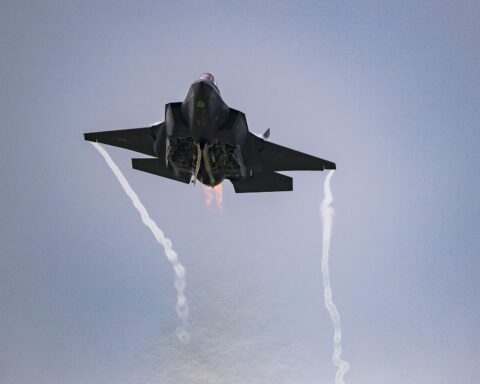
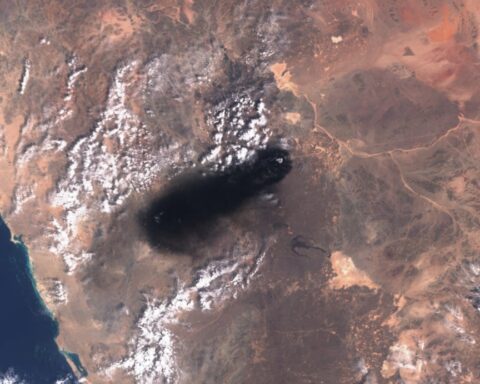
JEDDAH — Saudi Arabia and China have signed a $5 billion agreement to build a Wing Loong-3 unmanned combat aerial vehicle assembly line in Jeddah, according to multiple defense industry reports published this week, in what analysts describe as the most significant Chinese defense-industrial investment in the Middle East to date. The deal between China’s Aviation Industry Corporation of China and Saudi Arabia’s General Authority for Military Industries would produce approximately 48 advanced long-range combat drones per year on Saudi soil, marking a decisive shift in Riyadh’s wartime procurement strategy as Iranian missiles and drones continue to strike Saudi territory.
The agreement, reported by Defence Security Asia, Clash Report, and confirmed by multiple regional outlets, comes as Saudi Arabia races to diversify its defense supply chain beyond traditional Western partners. With Washington unable to deliver critical systems fast enough to meet wartime demand, Riyadh has simultaneously signed deals with Ukraine for interceptor drones, South Korea for air defense batteries, and now China for indigenous drone manufacturing capacity.
Table of Contents
- What Does the $5 Billion China-Saudi Drone Deal Include?
- Wing Loong-3 Specifications and Combat Capabilities
- Why Did Saudi Arabia Turn to China for Military Drones?
- How Does the Jeddah Factory Advance Vision 2030 Defense Goals?
- A Decade of Chinese Arms Sales to the Gulf
- What Does This Mean for Washington?
- How Does This Compare to Other Saudi Wartime Deals?
- Regional Implications and GCC Drone Strategy
- Frequently Asked Questions
What Does the $5 Billion China-Saudi Drone Deal Include?
The agreement establishes a full UAV assembly line in Jeddah capable of producing 48 Wing Loong-3 combat drones annually, according to Defence Security Asia. The parties to the deal are AVIC’s Chengdu Aircraft Industry Group on the Chinese side and Saudi Arabia’s General Authority for Military Industries, the regulatory body established in 2017 to oversee the Kingdom’s defense-industrial transformation.
The $5 billion figure covers not only the production facility itself but a comprehensive package of technology transfer, workforce training, and supply chain infrastructure. The agreement includes a modular transfer plan that will gradually integrate flight control systems and avionics assembly into the Saudi production line, according to the reporting. A regional logistics hub in Riyadh will stock more than 2,000 spare parts with 48-hour response times across GCC member states.
| Component | Details |
|---|---|
| Total value | $5 billion |
| Chinese party | AVIC / Chengdu Aircraft Industry Group |
| Saudi party | General Authority for Military Industries (GAMI) |
| Production site | Jeddah, Saudi Arabia |
| Annual output | 48 Wing Loong-3 UCAVs |
| Technology transfer | Phased: airframe assembly, then avionics, then flight control |
| Logistics hub | Riyadh, 2,000+ spare parts, 48-hour GCC response |
| Training | Comprehensive Saudi personnel pipeline |
Neither Beijing nor Riyadh had officially confirmed the agreement as of March 11, 2026, though widespread reporting across defense media and social platforms, combined with the absence of official denials, suggests both governments consider the deal politically sensitive given its timing during an active U.S.-led military campaign against Iran.

Wing Loong-3 Specifications and Combat Capabilities
The Wing Loong-3 represents a generational leap from earlier variants in the family. First unveiled by AVIC at Airshow China 2022 in Zhuhai, the platform is classified as a Medium-Altitude Long-Endurance unmanned combat aerial vehicle with intercontinental range, making it the first model in the Wing Loong series capable of self-defense through air-to-air combat.
The Middle East briefing 3,000+ readers start their day with.
One email. Every weekday morning. Free.
The drone measures 12.2 meters in length with a wingspan of 24 meters and a maximum takeoff weight of 6,200 kilograms, according to AVIC specifications. It can fly at altitudes up to 10,000 meters with an endurance exceeding 40 hours and a maximum range of 10,000 kilometers, giving it intercontinental reach that far surpasses its predecessors.
| Parameter | Value |
|---|---|
| Length | 12.2 meters |
| Wingspan | 24 meters |
| Maximum takeoff weight | 6,200 kg |
| Range | 10,000 km |
| Endurance | 40+ hours |
| Service ceiling | 10,000 meters |
| Cruise speed | 260–400 km/h |
| External hardpoints | 9 (2,000 kg capacity) |
| Internal bay | 300 kg |
| Maximum weapons load | 16 missiles or bombs per sortie |
The platform carries a total payload capacity of 2,300 kilograms across nine external hardpoints and an internal weapons bay. Compatible armaments include PL-10E fourth-generation air-to-air missiles, BA-7 and HJ-10 anti-tank missiles, AG-300 missiles, and precision-guided bombs. At the 2022 Zhuhai airshow, the display model carried anti-radiation missiles, cluster bombs, loitering munitions, sonobuoy pods, and reconnaissance equipment, according to the South China Morning Post.
AVIC claims the Wing Loong-3 incorporates an intelligent target recognition system capable of locking onto targets within 0.3 seconds and delivers 40 percent improved anti-jamming performance compared to earlier variants. Environmental adaptations include multi-stage dust protection and cooling systems rated for temperatures reaching 50 degrees Celsius — a specification clearly designed for Gulf operating conditions.
Why Did Saudi Arabia Turn to China for Military Drones?
The roots of this deal reach back more than a decade to Washington’s refusal to sell armed drones to Gulf states. The United States restricted exports of its MQ-9 Reaper and similar platforms under the Missile Technology Control Regime, creating a vacuum that Beijing filled with increasing enthusiasm from 2014 onward.
Saudi Arabia first purchased Chinese CH-4 drones in 2014 and acquired at least 15 Wing Loong II platforms beginning in 2016, with an expressed interest in procuring up to 285 more, according to Defense News. A 2017 order for Wing Loong II UAVs represented China’s largest single arms export at the time and established Beijing as a serious competitor to Western defense contractors in the Gulf market.
Between 2016 and 2020, China increased its arms transfers to Saudi Arabia by nearly 400 percent compared to the previous five-year period, according to the Stockholm International Peace Research Institute. In 2022, Chinese and Saudi firms created a joint venture with China Electronics Technology Group focused on UAV and counter-drone systems, Defense News reported.
The current war has accelerated this trajectory. As the Strait of Hormuz crisis disrupts global trade and Iranian drone swarms continue to test Saudi defenses, Riyadh faces an urgent need for combat-proven, rapidly deliverable systems. The Wing Loong family has been operationally deployed in conflicts in Libya, Yemen, and North Africa, giving it a track record that few Western export drones can match in actual combat environments.

How Does the Jeddah Factory Advance Vision 2030 Defense Goals?
The deal directly serves Saudi Arabia’s stated goal under Vision 2030 of localizing more than 50 percent of defense expenditure by the end of the decade. GAMI reported in late 2024 that the localization rate had reached 24.89 percent, up from just 4 percent in 2018, according to Arab News. The number of authorized defense-industrial facilities in the Kingdom grew from five in 2019 to 296 by the third quarter of 2024.
A Wing Loong-3 production line in Jeddah would represent one of the most technologically advanced defense-manufacturing facilities in the Middle East. Unlike straightforward arms purchases, the agreement’s phased technology transfer structure means Saudi engineers and technicians will progressively gain the capability to assemble, maintain, and potentially modify the platforms independently.
GAMI has signed more than 53 industrial cooperation programs worth approximately 35 billion riyals ($9.3 billion) with local and international companies as part of this localization drive. The Chinese deal would rank among the largest of these programs by value and represents a qualitative shift from licensing agreements to actual manufacturing capacity on Saudi soil.
The strategic logic extends beyond economics. Saudi Arabia’s dependence on Western arms supply chains has become an acute vulnerability during the Iran war, as delivery timelines for U.S. and European systems stretch into years rather than months. Domestic production capacity for combat drones — one of the defining weapons of modern warfare — would give Riyadh a degree of defense autonomy it has never possessed.
A Decade of Chinese Arms Sales to the Gulf
The Wing Loong-3 factory deal sits atop a growing foundation of Sino-Saudi defense cooperation that has expanded significantly despite Washington’s discomfort. The relationship began in earnest during the 1980s when China sold CSS-2 East Wind intermediate-range ballistic missiles to Saudi Arabia — a transaction that caused a diplomatic crisis with Washington and established the pattern of Riyadh turning to Beijing when American arms export restrictions proved too onerous.
| Year | Development | Significance |
|---|---|---|
| 1987 | CSS-2 ballistic missile sale | First major Chinese arms deal with Saudi Arabia |
| 2014 | CH-4 drone procurement | First Chinese UAV acquisition by Saudi Arabia |
| 2016 | Wing Loong I purchase | First Wing Loong family acquisition |
| 2017 | Wing Loong II order | China’s largest single arms export at the time |
| 2022 | CETC joint venture | UAV and counter-drone systems partnership |
| 2024 | WL-10B acquisition | Continued fleet expansion |
| 2026 | $5 billion Wing Loong-3 factory | First Chinese combat drone assembly line in the Middle East |
The relationship intensified as Washington tightened export controls on armed drone technology. While the Trump administration loosened some restrictions in 2020 through the Arms Transfer Policy update, deliveries remained slow and subject to Congressional oversight that could delay transfers by months or even years. China, by contrast, offered combat-proven platforms with fewer political strings attached, faster delivery timelines, and competitive pricing that undercut Western equivalents by significant margins. The MQ-9 Reaper, for comparison, costs approximately $32 million per unit — the Wing Loong II sells for a fraction of that figure.
For Beijing, the deal serves dual purposes. It embeds Chinese aerospace manufacturing within Saudi strategic infrastructure, creating a long-term dependency on Chinese spare parts, software updates, and technical support. It also establishes a precedent for similar production partnerships across the Gulf — the Riyadh logistics hub is explicitly designed with GCC-wide response capability.

What Does This Mean for Washington?
The deal arrives at an awkward moment for the U.S.-Saudi defense relationship. American forces are actively engaged in combat operations against Iran from Saudi-hosted bases, including Prince Sultan Air Base, which has come under repeated Iranian missile attack since March 1. Yet Riyadh’s decision to sign a $5 billion defense-industrial agreement with Beijing during the conflict signals that the Kingdom views defense diversification as a strategic necessity, not a diplomatic affront.
The Pentagon has long warned Gulf allies against acquiring Chinese military hardware, citing interoperability concerns with NATO-standard systems and the risk of Chinese intelligence collection through embedded electronics. These objections carried weight in peacetime. They carry less in wartime, when delivery speed and production capacity matter more than alliance politics.
Senator Lindsey Graham, who has already threatened to block the proposed U.S.-Saudi defense pact over Riyadh’s refusal to directly strike Iran, is likely to use the Chinese deal as additional evidence that Saudi Arabia is an unreliable partner. Analysts at the Center for Strategic and International Studies have noted, however, that Washington’s own export restrictions created the conditions for Chinese defense market penetration in the Gulf.
The deal also sits alongside Saudi Arabia’s simultaneous engagement with Ukraine, which has sent three air defense teams to Gulf states and is negotiating its own weapons contracts with Riyadh. The pattern suggests that Crown Prince Mohammed bin Salman is pursuing a deliberate multi-vendor strategy — American systems for strategic deterrence, Korean platforms for air defense, Ukrainian expertise for counter-drone operations, and Chinese production capacity for indigenous manufacturing.
How Does This Compare to Other Saudi Wartime Deals?
The Wing Loong-3 factory is the largest single defense-industrial investment announced during the Iran war, but it sits within a broader pattern of accelerated procurement. In the 11 days since Iranian strikes began hitting Saudi territory on March 1, Riyadh has moved with extraordinary speed to plug gaps in its defense capabilities.
| Deal | Partner | Systems | Status |
|---|---|---|---|
| Wing Loong-3 factory | China (AVIC) | 48 UCAVs/year, assembly line, tech transfer | Signed (unconfirmed officially) |
| Interceptor drones | Ukraine | FPV drones, Zerov-8 VTOL interceptors | Contract signed, “huge deal” under negotiation |
| Air defense teams | Ukraine | Counter-drone expertise, training | Deployed to Saudi Arabia |
| Cheongung air defense | South Korea | Medium-range SAM batteries | Procurement accelerated |
| Patriot resupply | United States | PAC-3 interceptors, maintenance | Ongoing, delivery delays |
The contrast in speed is revealing. Ukrainian FPV interceptor drones costing approximately $5,000 each can be manufactured and shipped within weeks. Chinese drone assembly in Jeddah, once operational, would produce platforms on Saudi soil without any export bureaucracy or Congressional notifications. American Patriot PAC-3 interceptors, by comparison, have faced delivery timelines measured in months to years, complicated by Congressional oversight requirements and production bottlenecks at Lockheed Martin’s facilities. Riyadh’s frustration with Western delivery schedules has been a recurring theme in Gulf security discussions for more than a decade, but the current war has transformed that frustration from a diplomatic irritant into a potential national security crisis.
Ukrainian President Volodymyr Zelenskyy has offered Gulf states domestically developed drone interceptors in exchange for PAC-3 missiles, addressing Ukraine’s critical shortage of those systems, according to the Defense Post. The triangular dynamic — Saudi Arabia acquiring Chinese offensive drones, Ukrainian defensive systems, and American strategic platforms simultaneously — reflects a new era of non-aligned defense procurement driven by wartime urgency rather than alliance loyalty, and it is not a wartime improvisation but the structural transformation of Saudi Arabia’s defense procurement — an arms race in supply chains that will reshape Gulf security architecture long after the last missile lands.
Regional Implications and GCC Drone Strategy
The Jeddah production line would not serve Saudi Arabia alone. The Riyadh-based logistics hub, with its GCC-wide 48-hour response commitment, signals that the Wing Loong-3 is being positioned as a regional platform. The United Arab Emirates, which already operates Chinese Wing Loong drones and used them extensively during the Libyan civil war, would be a natural customer. Bahrain, Kuwait, and Qatar — all currently under Iranian fire — would have access to Saudi-assembled combat drones without the political complications of direct Chinese procurement.
The deal also alters the regional drone balance. Iran has relied on relatively inexpensive Shahed-series drones as a strategic equalizer, launching swarms against Saudi energy infrastructure and military bases since March 1. Saudi defenses have intercepted dozens of ballistic missiles and drone swarms targeting Prince Sultan Air Base, the Shaybah oil field, and Ras Tanura, but the cost asymmetry — $4 million Patriot interceptors against $35,000 drones — remains unsustainable. A Saudi-produced Wing Loong-3, with its 40-hour endurance, intercontinental range, and air-to-air combat capability through PL-10E missiles, would give Riyadh an offensive drone capability it currently lacks, potentially allowing the Kingdom to conduct long-range surveillance and strike missions across the Persian Gulf and into the Arabian Sea.
Turkey, which has established itself as a major drone exporter with the Bayraktar TB2 and Akinci platforms, faces new competition from the Saudi-Chinese partnership. Ankara has sought to sell armed drones to Gulf states but has been hampered by its own complex relationships with Iran and Russia. The Jeddah factory effectively positions Saudi Arabia as a potential drone manufacturing hub for the Arab world, a role Turkey had been cultivating through sales to Libya, Ukraine, and multiple African nations.
For China, the deal consolidates a strategic footprint in the Gulf that now encompasses energy investments through the Belt and Road Initiative, digital infrastructure through Huawei’s 5G networks, and now defense-industrial production. Beijing has maintained careful neutrality during the Iran war, dispatching a peace envoy to Riyadh while avoiding direct criticism of Washington’s military operations. The drone factory, reportedly signed during active hostilities, suggests Chinese companies are willing to accept the political friction that defense deals inevitably generate with the United States. It also creates a long-term relationship: Saudi Arabia would depend on Chinese technical expertise, software updates, and component supply for decades after the factory becomes operational.
The timing carries additional significance. Saudi Arabia’s combined oil output cuts of 2 million to 2.5 million barrels per day, forced by the Hormuz closure, have reduced the Kingdom’s daily petroleum revenue by an estimated $180 million or more. Committing $5 billion to a Chinese drone factory while oil income falls signals that Riyadh views defense-industrial independence as a non-negotiable investment regardless of short-term fiscal pressure.
Frequently Asked Questions
What is the Wing Loong-3 drone?
The Wing Loong-3 is a Medium-Altitude Long-Endurance unmanned combat aerial vehicle developed by China’s AVIC Chengdu Aircraft Industry Group. It has a 24-meter wingspan, a range of 10,000 kilometers, endurance exceeding 40 hours, and can carry up to 16 missiles or bombs across nine external hardpoints and an internal weapons bay. It is the first Wing Loong variant capable of air-to-air self-defense.
Has Saudi Arabia officially confirmed the $5 billion deal?
As of March 11, 2026, neither Riyadh nor Beijing has issued an official government confirmation of the agreement. The deal has been reported by Defence Security Asia, Clash Report, Zee News, the Zambian Observer, and multiple regional defense outlets. No official denial has been issued by either government, and GAMI has not publicly commented on the reports. Analysts note the political sensitivity of announcing a Chinese defense deal during an active U.S.-led military campaign against Iran, particularly when American personnel are stationed at Saudi bases being struck by Iranian missiles.
Where will the drones be built?
The assembly line will be located in Jeddah, Saudi Arabia, with a separate logistics hub in Riyadh designed to serve GCC member states. The facility targets production of 48 Wing Loong-3 drones per year with phased technology transfer enabling Saudi engineers to progressively assume assembly of flight control and avionics systems.
How does this affect the U.S.-Saudi defense relationship?
The deal adds to mounting friction in the bilateral relationship. American officials have warned against Gulf states acquiring Chinese military hardware over interoperability and intelligence risks. However, Washington’s own export restrictions on armed drones created the opening for Chinese market penetration, and wartime delivery delays have reinforced Saudi Arabia’s rationale for defense diversification.
Can the Wing Loong-3 shoot down other drones?
The Wing Loong-3 is the first model in its family equipped with fourth-generation air-to-air missiles, specifically the PL-10E. This gives it a self-defense and interception capability that earlier Wing Loong variants lacked, potentially allowing it to engage Iranian Shahed-series drones or other aerial threats in contested airspace over the Persian Gulf.