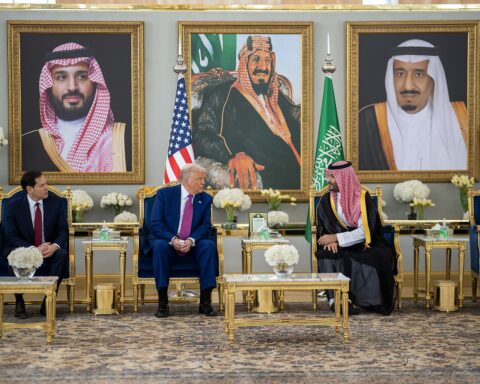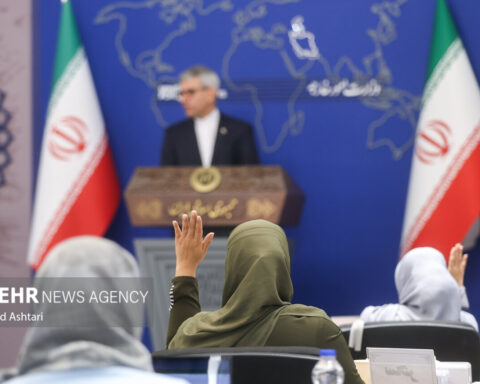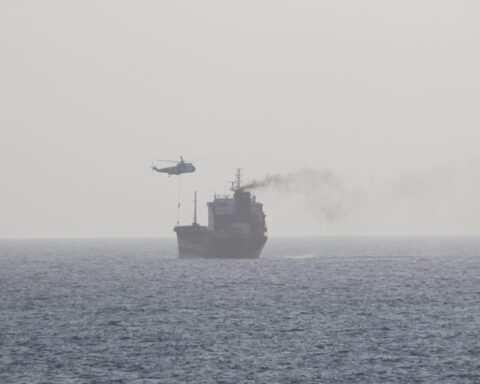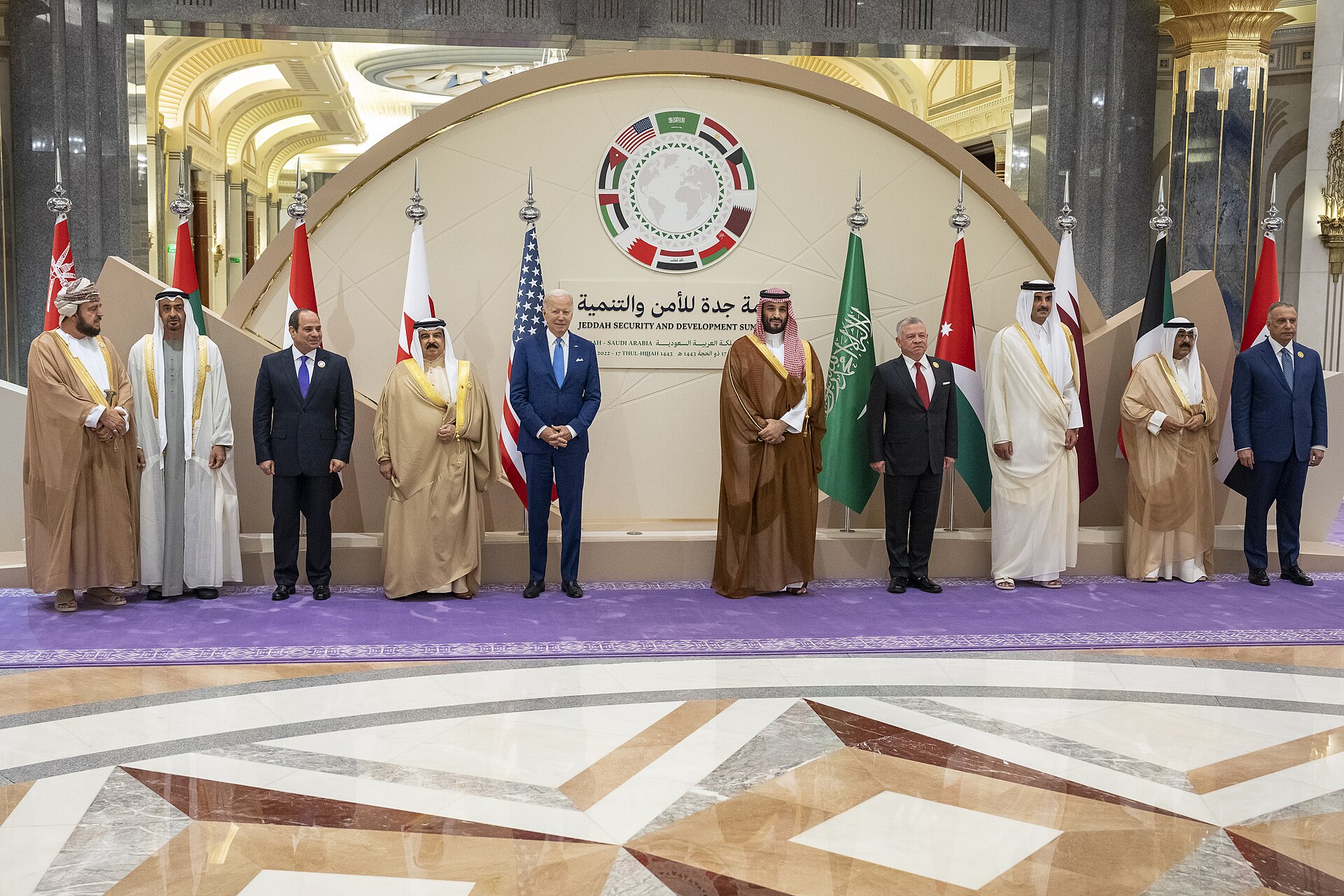

RIYADH — The Gulf Cooperation Council was designed for exactly this moment — a direct military threat from Iran against all six member states simultaneously — and it has responded with six contradictory strategies that expose the fiction at the heart of the forty-three-year-old alliance. Two weeks into the most devastating conflict the Persian Gulf has experienced since 1991, Saudi Arabia refuses to fire a single offensive shot, the UAE has recalled ambassadors from both Tehran and Tel Aviv, Bahrain has declared force majeure on its energy exports, Kuwait has sealed its airspace entirely, Qatar has shuttered the world’s largest LNG facility, and Oman has rejected Washington’s peace initiative while maintaining its backchannel to the very government bombing its ports. The six flags that stood together at the Jeddah Security and Development Summit now fly over six different wars.
The divergence matters far beyond diplomatic signalling. Combined GCC defence spending exceeded $114.5 billion in 2023, according to the Stockholm International Peace Research Institute, yet the alliance’s joint military arm — the Peninsula Shield Force — has not fired a weapon in this conflict. Each state has instead relied on bilateral arrangements with the United States, ad hoc coordination with neighbours, and individual calculations about which threats to prioritise. The result is not a coalition but a collection of besieged capitals making separate deals with the same superpower for the same interceptor missiles, while the adversary they were supposed to confront collectively picks them off one at a time. The dependency extends to food: Saudi Arabia’s Logistics Corridors Initiative has made the Kingdom the food supply hub for the entire GCC during wartime.
Table of Contents
- What Has the Iran War Done to GCC Unity?
- Saudi Arabia’s Calculated Non-Belligerence
- Why Did the UAE Recall Two Ambassadors in the Same Week?
- Bahrain Under Sustained Fire — The Smallest State Bears the Heaviest Burden
- How Did Kuwait Go From Open Airspace to Total Lockdown in Seventy-Two Hours?
- Qatar’s LNG Shutdown Changed the War’s Economics More Than Any Missile
- Why Did Oman Refuse Trump’s Peace Council?
- The Gulf Solidarity Index — Measuring Six Different Wars
- Is the Peninsula Shield Force Fit for This War?
- The Contrarian Case — Why Breaking Apart May Save the Alliance
- What Kind of GCC Emerges From This War?
- Frequently Asked Questions
What Has the Iran War Done to GCC Unity?
The Iran war has shattered the consensus model that governed Gulf cooperation for four decades and replaced it with a patchwork of bilateral survival strategies — a dynamic underscored when GCC foreign ministers turned to Britain for RAF fighter jet deployments alongside American forces. Each member state has responded to Iranian missile and drone strikes according to its own threat calculus, economic exposure, and relationship with Washington — not according to any collective defence agreement.
When Iran launched retaliatory strikes against all six GCC states on 28 February 2026, following the US-Israeli assassination of Supreme Leader Ali Khamenei, the theoretical framework of collective Gulf security faced its first genuine test. The GCC’s founding charter, signed in Abu Dhabi in 1981, committed members to “coordination, integration and inter-connection” in defence matters. The Joint Defence Agreement of 2000 went further, establishing that an attack on one member constitutes an attack on all. On paper, the alliance was ready.
In practice, six governments made six different decisions in the first seventy-two hours. Saudi Arabia — the GCC’s largest military power, spending $78 billion on defence in 2025 alone, according to the Saudi Ministry of Finance — chose strategic restraint, refusing to launch offensive operations despite intercepting more than 200 Iranian projectiles in the first two weeks. The UAE closed its embassy in Tehran and recalled its ambassador to Israel, positioning itself as a victim of both sides. Bahrain, hosting the US Fifth Fleet and absorbing proportionally the heaviest strikes, declared force majeure on energy exports through its state oil company Bapco. Kuwait shuttered its commercial airspace entirely after a drone struck Terminal 1 of Kuwait International Airport, injuring nine workers. Qatar shut down the Ras Laffan LNG complex — responsible for 20 percent of global liquefied natural gas supply — for the first time in its three-decade operating history. And Oman, the GCC member that had been mediating US-Iran nuclear talks until the bombs fell, refused to join President Trump’s proposed “Peace Council” in what Muscat’s Foreign Ministry framed as a principled rejection of the war itself.
The 50th Extraordinary Meeting of the GCC Ministerial Council, convened on 1 March 2026, produced a joint statement condemning “Iranian aggression against the GCC” — but the unified language masked profound disagreements about what to do next. The statement contained no mutual defence clause activation, no deployment order for the Peninsula Shield Force, and no commitment to offensive military action. It was, in the assessment of the Gulf International Forum, “the strongest language and the weakest action the GCC has ever produced simultaneously.”
The Middle East briefing 3,000+ readers start their day with.
One email. Every weekday morning. Free.
Saudi Arabia’s Calculated Non-Belligerence
Saudi Arabia’s decision to absorb Iranian strikes without retaliating offensively represents the most consequential strategic choice any GCC state has made during the conflict — and the one that has drawn the sharpest criticism from both Washington and Riyadh’s own Gulf allies.
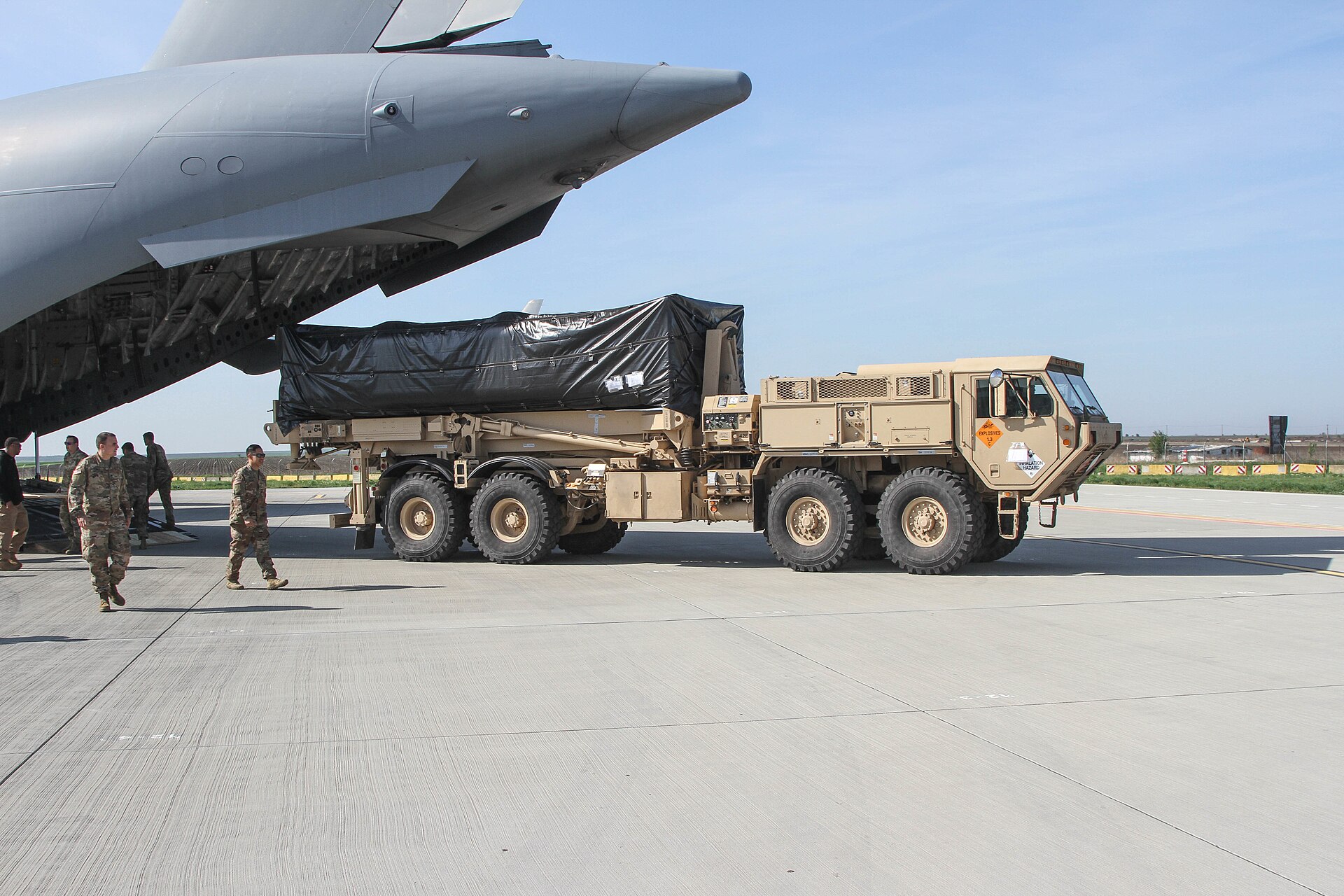
Crown Prince Mohammed bin Salman’s government has framed its posture as principled restraint. The Saudi Foreign Ministry declared on 2 March that Iran’s attacks were “based on flimsy pretexts that have no basis in reality” and reserved the Kingdom’s right to respond with military force. But fourteen days later, that right remains unexercised. Saudi air defences have intercepted more than 200 drones and missiles, including 51 in a single day on 13 March and three ballistic missiles targeting Prince Sultan Air Base, according to the Saudi Defence Ministry. The interception rate has been among the highest of any GCC state, reflecting the Kingdom’s $80 billion investment in layered air defence systems that include American Patriot batteries, THAAD systems, and French-built ASTER platforms.
The restraint is strategic rather than passive. Saudi Arabia has maintained active diplomatic channels with Tehran throughout the conflict. Bloomberg reported on 6 March that Saudi officials had “deployed their backchannel to Iran with increased urgency to ease tensions,” with Foreign Minister Prince Faisal bin Farhan holding calls with his Iranian, American, Russian, and Chinese counterparts. Riyadh’s calculation, according to Carnegie Endowment analysis, is that entering the war as a combatant would achieve nothing that American firepower has not already accomplished while exposing Saudi infrastructure — including Aramco’s $2 trillion asset base — to escalatory Iranian retaliation.
The posture has, however, infuriated elements of Washington’s political establishment. Senator Lindsey Graham threatened on 10 March to block the proposed US-Saudi defence pact over what he called Riyadh’s “refusal to do its share of the fighting.” The criticism misreads Saudi calculations. MBS is not refusing to fight because he lacks capability. He is refusing because, with Iran’s nuclear programme destroyed, its conventional military degraded by American strikes, and its supreme leader dead, the strategic outcome Riyadh wanted is being delivered without Saudi Arabia spending a single offensive munition or accepting the domestic political costs of formally joining what many in the Arab world view as an American-Israeli war.
Why Did the UAE Recall Two Ambassadors in the Same Week?
The United Arab Emirates recalled its ambassador from Tehran on 1 March and recalled its ambassador from Tel Aviv within the same week, a diplomatic double move that captured the impossible position the war has created for Abu Dhabi. The UAE is simultaneously a victim of Iranian aggression, a signatory to the Abraham Accords with Israel, a host of American military assets, and an economy whose $500 billion GDP depends on the perception of stability that the war has obliterated.
Iranian strikes killed at least three people in the UAE and injured 58 in the opening days of the conflict, according to the UAE Ministry of Foreign Affairs. The strikes targeted both military installations and civilian infrastructure, forcing the closure of Dubai International Airport for 36 hours and triggering the evacuation of Abu Dhabi’s Saadiyat Island cultural district. The UAE Defence Ministry confirmed that its air defences intercepted the “vast majority” of incoming projectiles but acknowledged that the cost of interception operations had reached between $1.31 billion and $2.61 billion by 10 March, according to estimates compiled by the Middle East Council on Global Affairs.
The financial damage extends far beyond military expenditure. Abu Dhabi and Dubai face divergent pressures that mirror the broader GCC fracture. Abu Dhabi, with its sovereign wealth fund and oil reserves, can absorb military costs. Dubai, whose economy depends on trade, tourism, and financial services, is haemorrhaging business. CNN reported on 10 March that the war had triggered an exodus of multinational corporations from the Emirates, with several major banks relocating regional operations. The UAE’s ambassador to the UN in Geneva called on 9 March for “immediate de-escalation and a return to negotiations,” a position that put Abu Dhabi at odds with Washington’s stated objective of destroying Iran’s military capability before any ceasefire.
The dual ambassador recall reveals a strategic reality that the Abraham Accords obscured: the UAE’s security architecture was built for a world in which American deterrence prevented the very scenario now unfolding. With that deterrence having manifestly failed to prevent Iranian retaliation against US allies, Abu Dhabi is recalculating every relationship simultaneously.
Bahrain Under Sustained Fire — The Smallest State Bears the Heaviest Burden
Bahrain has absorbed disproportionate punishment relative to its size, geography, and defensive capacity, confirming what security analysts warned for decades: the island kingdom’s proximity to Iran and its hosting of the US Fifth Fleet make it the GCC’s most exposed member in any direct confrontation with Tehran.
Iranian drone strikes have targeted Bahrain’s energy infrastructure, water systems, and civilian areas since the war began. A strike on a fuel depot in the Muharraq governorate, close to Bahrain International Airport, triggered a major fire that disrupted aviation operations for days. A separate attack on a desalination plant on 8 March, confirmed by Al Jazeera, threatened the island’s freshwater supply — a vulnerability unique among GCC states, which unlike their continental neighbours cannot fall back on groundwater reserves or alternative pipeline routes. By 11 March, two people had been killed and more than 50 injured across the kingdom, according to Bahrain’s Interior Ministry.
Bahrain’s state-owned energy company Bapco declared force majeure on group operations on 9 March, the most dramatic economic consequence of Iranian strikes on any single GCC member. Bapco operates the kingdom’s only refinery and manages the Abu Safa oil field shared with Saudi Arabia — a joint operation that generates roughly 70 percent of Bahrain’s government revenue, according to the IMF’s 2025 Article IV consultation. The force majeure effectively suspended energy exports from an economy that lacks the fiscal reserves to absorb prolonged disruption.
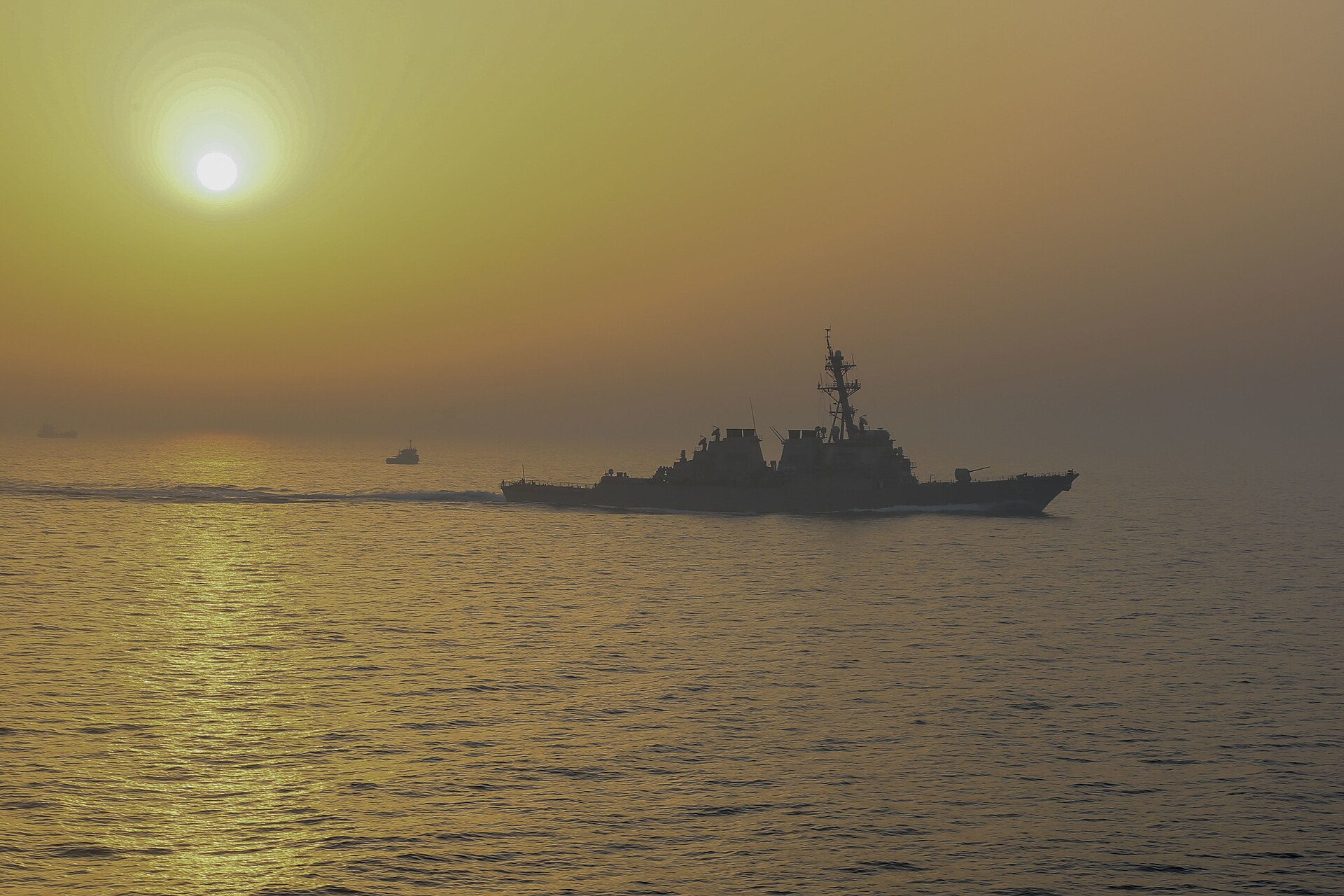
Despite bearing the heaviest proportional burden, Bahrain has been the most hawkish GCC voice calling for collective military action against Iran. King Hamad bin Isa Al Khalifa’s government maintains the closest alignment with Washington among Gulf states, and the presence of the US Fifth Fleet headquarters in Manama makes Bahrain a de facto American military asset — and therefore an obvious Iranian target. The kingdom’s predicament illustrates the fundamental asymmetry of GCC membership: the smallest state hosts the most provocative foreign military presence and possesses the least capacity to defend itself, yet collective defence mechanisms that should compensate for this imbalance have not been activated.
How Did Kuwait Go From Open Airspace to Total Lockdown in Seventy-Two Hours?
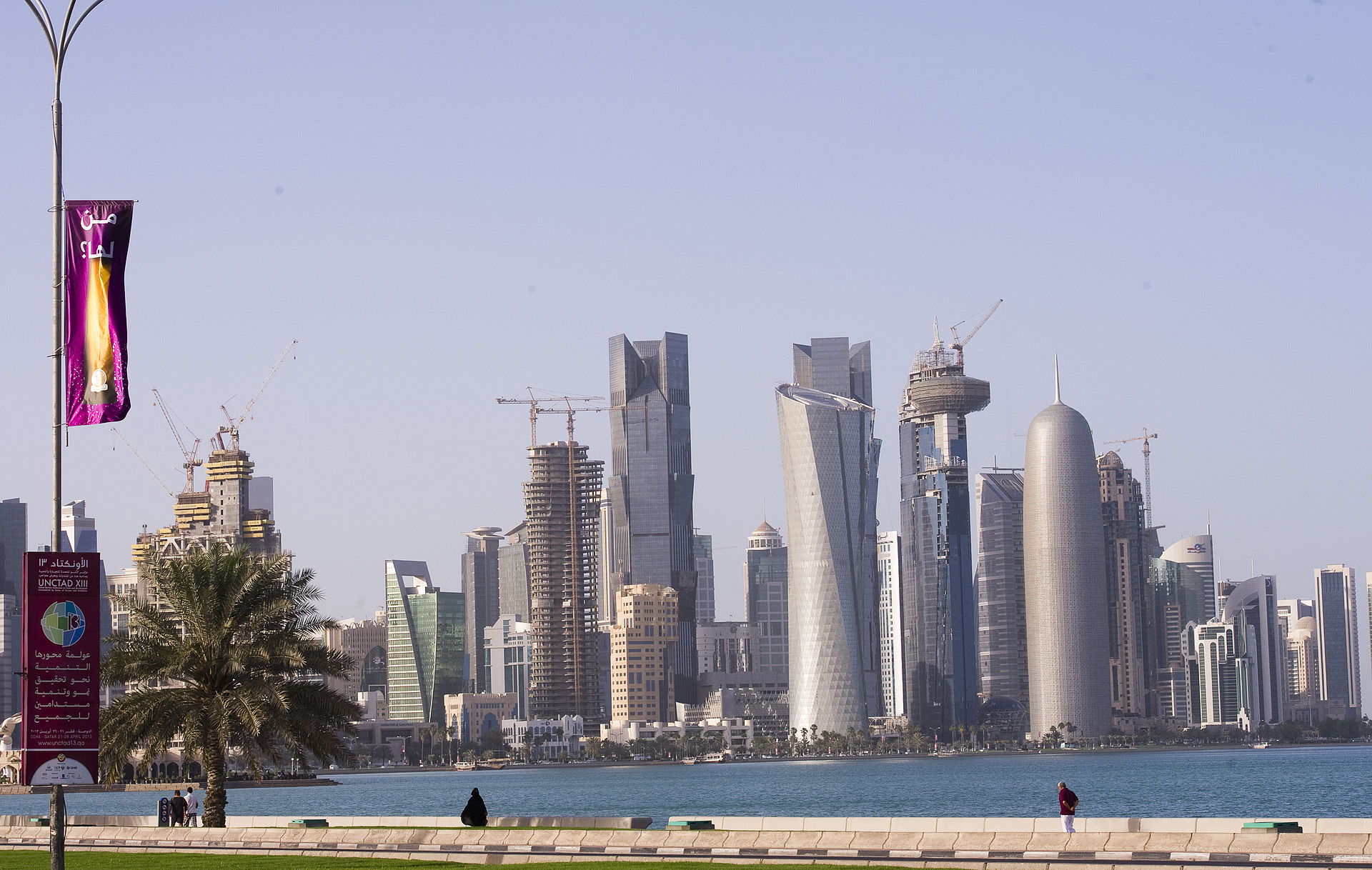
Kuwait’s decision to close all commercial airspace on 28 February 2026 was the fastest and most absolute defensive response of any GCC state, reflecting both the country’s acute vulnerability and its institutional memory of the 1990 Iraqi invasion that destroyed the myth of Gulf invulnerability for a generation.
The trigger was immediate and physical. An Iranian drone targeting Kuwait International Airport’s Terminal 1 was partially intercepted, but falling debris caused material damage to the passenger terminal and injured nine airport workers, according to Kuwait’s Directorate General of Civil Aviation. The DGCA ordered the closure of all commercial airspace within hours — a decision that remains in effect as of 14 March with no confirmed reopening date. Kuwait’s parliament, one of the most independent in the Gulf, has amplified public anger at the strikes, with several opposition MPs calling for Kuwait to formally sever relations with Iran.
Kuwait simultaneously reduced oil production, contributing to the broader Gulf supply disruption that has removed an estimated 10 million barrels per day from global markets by 12 March — the largest supply disruption in the history of the petroleum industry, according to the International Energy Agency. Kuwait’s oil production, normally around 2.7 million barrels per day, has been curtailed by logistical disruption and the closure of export terminals rather than by strategic choice, distinguishing Kuwait’s situation from Saudi Arabia’s more deliberate production management.
The Kuwait experience illustrates the GCC’s infrastructure vulnerability problem. The country’s single international airport, single major oil export terminal at Mina Al-Ahmadi, and concentrated population along the coastal strip make it structurally susceptible to even low-intensity drone warfare. Kuwait’s defence spending of $7.8 billion in 2025 — modest by Gulf standards — reflects the political reality that Kuwait’s parliament has historically resisted large military budgets, preferring to rely on the American security umbrella that covers Ali Al Salem Air Base. That umbrella is now demonstrably porous.
Qatar’s LNG Shutdown Changed the War’s Economics More Than Any Missile
When QatarEnergy shut down the Ras Laffan Industrial City on 2 March — the first closure in the facility’s thirty-year operational history — the economic shockwave exceeded the impact of any single military strike in the entire conflict. Qatar supplies 20 percent of global liquefied natural gas, and the shutdown triggered immediate price spikes of 50 percent in UK natural gas futures and 39 percent in benchmark Asian LNG prices, according to Bloomberg.
The shutdown was forced by targeted Iranian drone strikes. Qatar’s Defence Ministry confirmed that two drones launched from Iran targeted a water tank at a power plant in Mesaieed and an energy facility at Ras Laffan belonging to QatarEnergy. The physical damage was limited — no personnel were killed — but the security implications were catastrophic for operations. Ras Laffan processes gas from the North Field, the world’s largest natural gas reservoir, through a complex of liquefaction trains that require uninterrupted operation to function safely. QatarEnergy declared force majeure on gas exports, with Reuters sources indicating that a return to normal production volumes could take at least a month.
Qatar’s strategic position in the war differs fundamentally from its GCC partners’. Doha had maintained productive diplomatic relations with Tehran, and Qatar and Iran share the North Field/South Pars gas reservoir — making them geological partners in the world’s most valuable energy asset. Iran’s decision to strike Qatari infrastructure was therefore a strategic choice to punish a state that hosts Al Udeid Air Base, the largest American military facility in the Middle East, regardless of the diplomatic relationship. The message to Doha was unambiguous: hosting American forces makes Qatar a target, and no amount of diplomatic engagement with Tehran provides immunity.
Qatar partially reopened its airspace on 6 March, according to Al Jazeera, but LNG operations remain curtailed. The Foundation for Defense of Democracies noted that Qatar’s shutdown had opened the door for American LNG exporters, with US natural gas exports rising to fill part of the gap. Bloomberg reported on 12 March that the Iran war had “boosted the US natural gas export sector” — an ironic outcome in which the conflict that Washington started has commercially benefited American energy companies at the expense of a Gulf ally.
Why Did Oman Refuse Trump’s Peace Council?
Oman’s refusal to join President Trump’s proposed “Peace Council” on 13 March was the most diplomatically explosive decision any GCC state has made during the conflict — a direct rejection of Washington’s post-war framework by a traditional American partner that suggests the GCC’s fracture runs deeper than military strategy into fundamental questions about regional alignment.
Oman’s Foreign Ministry stated that the Sultanate “reaffirms solidarity with the countries of the Gulf Cooperation Council, Jordan, Iraq and Lebanon” but “will not normalize relations with Israel and will not join the Peace Council.” The statement framed the refusal not as opposition to peace but as opposition to the American-Israeli framework for achieving it. Sultan Haitham bin Tariq’s government has consistently maintained that Oman’s role is mediation, not alliance, and that peace cannot be imposed by the same parties that started the war.
The decision carries significant risk. Oman’s economy is the most fragile in the GCC, with GDP of approximately $105 billion and foreign reserves that the IMF has flagged as “adequate but declining.” The Sultanate depends on American military cooperation for training, equipment, and intelligence sharing. Rejecting Washington’s peace architecture could jeopardise these relationships at precisely the moment Oman needs them most — Iranian drones have killed two people in the Sultanate and struck the Duqm port complex, according to Al Jazeera, damaging infrastructure that Oman has been developing as an alternative to Hormuz-dependent shipping routes.
EADaily, citing diplomatic sources, reported that Oman’s stance had effectively “demonstrated support for Tehran” at the most critical moment of the conflict. Kuwait may follow, with anti-Israeli sentiment strong in both parliament and the general population. If additional GCC states refuse the Peace Council, the American post-war framework could collapse before the war even ends — an outcome that would validate Iranian claims that the conflict has failed to achieve its political objectives regardless of the military damage inflicted on Tehran.
The Gulf Solidarity Index — Measuring Six Different Wars
Mapping the GCC’s divergent responses requires a structured comparison across four dimensions: military posture, diplomatic alignment, economic exposure, and domestic political pressure. The following framework scores each state’s position on a five-point scale from full alignment with the collective GCC position to full deviation, revealing the depth and nature of the alliance’s fracture.
| Dimension | Saudi Arabia | UAE | Bahrain | Kuwait | Qatar | Oman |
|---|---|---|---|---|---|---|
| Military posture | Defensive only | Defensive only | Hawkish rhetoric, defensive action | Full lockdown | Defensive only | Non-belligerent |
| Diplomatic alignment with US | Partial — backchannel to Iran | Partial — recalled Israel ambassador | Full alignment | Partial — parliament divided | Partial — hosts US base but LNG ties to Iran | Rejected Peace Council |
| Defence spending 2025 ($bn) | 78.0 | 20.7 | 1.4 | 7.8 | 9.0 | 6.5 |
| Economic impact severity | Moderate — production managed | Severe — capital flight, tourism collapse | Critical — force majeure on energy | Severe — airspace/exports shut | Critical — 20% global LNG offline | Moderate — Duqm damage limited |
| Offensive action taken | None | None | None | None | None | None |
| Solidarity score (1-5) | 3 | 2 | 4 | 3 | 2 | 1 |
The scoring reveals three distinct clusters within the GCC’s wartime posture. Bahrain occupies the most aligned position, with the strongest pro-American rhetoric and the clearest call for collective military action — though even Bahrain has not launched offensive operations. Saudi Arabia and Kuwait occupy a middle ground of defensive engagement with selective diplomatic deviation. The UAE and Qatar share a pragmatic posture of defensive military action combined with diplomatic hedging and acute concern about economic damage. Oman stands alone in its explicit rejection of the American-led framework.
Perhaps the most striking data point in the Gulf Solidarity Index is the final row: not a single GCC state has launched an offensive military operation against Iran. The alliance that was founded to counter Iranian expansionism, that signed a mutual defence pact modelled on NATO’s Article 5, and that collectively spends $114.5 billion annually on its militaries has responded to simultaneous attacks on all six members with a perfect record of defensive restraint. The GCC’s collective security architecture is functioning as a collection of individual shields rather than a unified sword.
Is the Peninsula Shield Force Fit for This War?
The Peninsula Shield Force, the GCC’s joint military formation headquartered at King Khalid Military City in northeastern Saudi Arabia, was established in 1982 during the Iran-Iraq War specifically to provide collective defence against external aggression. Its peacetime strength of approximately 10,000 troops and theoretical wartime capacity of 100,000 represent the institutional embodiment of Gulf solidarity. Fourteen days into the most significant Iranian military action against GCC states in the alliance’s history, the Peninsula Shield Force has not been deployed.
The non-deployment is not a failure of political will alone. Breaking Defense reported on 1 March that the force faces persistent interoperability challenges that predate the current crisis. GCC member states operate different weapon systems, communication protocols, and command structures. Saudi Arabia’s military uses American equipment and doctrine. The UAE has diversified toward French, Russian, and South Korean platforms. Qatar operates French Rafale fighters alongside American F-15s. Bahrain, Kuwait, and Oman each maintain distinct procurement relationships and training pipelines. The result, according to analysis by the Atlantic Council, is that “the alliance Iran never meant to build” exists on paper but lacks the integrated command-and-control architecture necessary for coordinated operations.
Improvised coordination has partially compensated for institutional gaps. Saudi and Emirati air defence networks now share threat data in real time, according to Gulf International Forum reporting. Kuwaiti and Bahraini patrol schedules are coordinated from a single operations room. Qatari surveillance assets feed into the Saudi military’s targeting chain. These arrangements, built under fire since 28 February, represent genuine military cooperation — but they operate outside the Peninsula Shield Force framework, through bilateral channels and American-mediated data links rather than through GCC institutional structures.
The question for the post-war period is whether these improvised mechanisms will be formalised into a genuine collective defence architecture or whether the Peninsula Shield Force will revert to its pre-war status as a symbolic formation. The GCC’s founding assumption — that collective security could be achieved through consensus — has been tested and found wanting. What has emerged instead is a hub-and-spoke model in which the United States provides the integrating function that the GCC was supposed to provide itself.
The Contrarian Case — Why Breaking Apart May Save the Alliance
The conventional assessment of GCC disunity treats the alliance’s fragmented war response as evidence of failure. The six states could not agree on a collective strategy, could not deploy their joint military force, and could not present a unified diplomatic front. By any traditional measure of alliance cohesion, the GCC has performed poorly.
The contrarian reading is that the fracture may prove more productive than four decades of artificial consensus. The GCC’s pre-war unity was always superficial — a consensus maintained by avoiding difficult decisions rather than making them. The blockade of Qatar from 2017 to 2021 demonstrated that intra-GCC tensions could escalate to the point of diplomatic rupture even in peacetime. The current divergence, paradoxically, is more honest than the pre-war consensus because it forces each state to articulate what it actually wants, what it is willing to pay, and what risks it will accept.
Consider the post-war implications. Saudi Arabia’s restraint has preserved its diplomatic relationships with both Iran and the United States, maintaining optionality that an offensive posture would have eliminated. The UAE’s dual ambassador recall signals that Abu Dhabi will not be automatically aligned with either Washington or Tel Aviv in future conflicts — a message that increases the UAE’s diplomatic leverage. Oman’s Peace Council refusal establishes Muscat as an independent actor capable of saying no to Washington, which paradoxically enhances its value as a mediator. Even Bahrain’s hawkish stance, while costly in the short term, strengthens its case for enhanced American security guarantees in any post-war settlement.
The model that may emerge is less NATO and more ASEAN — a regional forum in which member states maintain sovereign foreign policies, cooperate on shared interests, and accept that unanimity is neither achievable nor necessary. The GCC was never going to function as a genuine military alliance because its members’ threat perceptions, economic structures, and political systems diverge too fundamentally. Acknowledging that divergence, rather than papering over it with joint communiqués, may create the foundation for a more durable — if less ambitious — regional architecture. The ceasefire everyone wants but nobody can deliver will eventually arrive. The question is whether the GCC that emerges from the rubble will be rebuilt on the fiction of unity or the foundation of acknowledged difference.
What Kind of GCC Emerges From This War?
The Gulf Cooperation Council that existed on 27 February 2026 — a consensus-driven organisation that managed disputes through quiet diplomacy and avoided binding collective security commitments — is gone. The organisation that replaces it will be shaped by three structural forces that the war has accelerated rather than created.
The first is the rebalancing of the US-Gulf security relationship. Every GCC state relied on American military protection, and every GCC state discovered that this protection was conditional, incomplete, and came with political obligations that conflicted with national interests. Saudi Arabia discovered that American interceptor supplies are finite and subject to Congressional politics. The UAE discovered that the Abraham Accords provided no security benefit when Iranian missiles arrived. Qatar discovered that hosting Al Udeid made it a target rather than a beneficiary of American power. The post-war GCC will diversify security partnerships — Saudi Arabia has already signed deals with South Korea for air defence systems and with China for combat drones — reducing dependence on any single guarantor.
The second force is economic differentiation. The war has exposed radically different fiscal vulnerabilities. Saudi Arabia, with $400 billion in central bank reserves and the PIF’s $930 billion portfolio, can absorb years of conflict costs. Bahrain and Oman cannot absorb months. Qatar’s LNG wealth is concentrated in a single asset — Ras Laffan — that one Iranian drone can shut down. The UAE’s diversified economy is resilient in aggregate but geographically concentrated in two cities that became targets. Post-war economic cooperation will need to account for these disparities rather than pretending they do not exist.
The third force is the end of the Iran question as a unifying threat. If the war achieves its military objectives — destroying Iran’s nuclear programme, degrading its conventional forces, and destabilising the regime — the strategic rationale for the GCC’s founding diminishes. An alliance built to counter Iran must find a new purpose in a region where Iran’s power has been broken. Some members — particularly Oman and Qatar — may argue that the GCC should pivot toward reconstruction and regional integration. Others — particularly Saudi Arabia and the UAE — may see an opportunity to reshape the Middle East’s security architecture in their own image. The GCC’s history of managing disagreement through avoidance will not survive a debate this fundamental.
| Country | Civilian casualties | Infrastructure targets hit | Estimated interception cost ($bn) | Key economic disruption | Force majeure declared |
|---|---|---|---|---|---|
| Saudi Arabia | 2 killed, dozens injured | Prince Sultan Air Base, Ras Tanura, diplomatic quarter | 3.5-5.0 | Oil production cut to managed levels | No |
| UAE | 3 killed, 58+ injured | Dubai airport, Abu Dhabi Saadiyat, military sites | 1.3-2.6 | Capital flight, tourism collapse, airport closures | No |
| Bahrain | 2 killed, 50+ injured | Fuel depot, desalination plant, airport area | 0.3-0.5 | Bapco force majeure, energy exports suspended | Yes |
| Kuwait | 9 injured | Airport Terminal 1, oil infrastructure | 0.8-1.5 | Airspace closed, oil exports curtailed | No (de facto shutdown) |
| Qatar | 0 killed | Ras Laffan LNG, Mesaieed power plant | 0.6-0.9 | 20% global LNG supply offline | Yes |
| Oman | 2 killed | Duqm port complex, infrastructure | 0.2-0.4 | Port development disrupted | No |
The aggregate picture is sobering. Across six GCC states, at least nine people have been killed, over 200 injured, and the combined cost of interception operations alone is estimated at $6.7 billion to $10.9 billion — a figure that excludes infrastructure repair, lost economic output, and long-term rebuilding costs. The Middle East Council on Global Affairs estimates that total economic impact across the GCC could exceed $200 billion when factoring in lost oil and gas revenue, collapsed tourism, suspended construction projects, and the repricing of sovereign risk that has already widened credit default swap spreads across the region. For Gulf countries already expecting widening fiscal deficits before the war, according to IMF projections, the combination of infrastructure damage, collapsing investor confidence, and emergency military spending creates genuine fiscal distress for the smaller members. The toll on Gulf states has grown severe enough that even Hamas broke with Iran to demand an end to strikes on neighbouring countries on 14 March.
The war has demonstrated that the GCC’s collective security question can no longer be deferred. Whether the answer is a genuine mutual defence pact with binding commitments and integrated forces, or a looser forum of sovereign states that cooperate tactically while pursuing independent strategies, the fiction of unity-without-commitment has been exposed. The next GCC summit — whenever it occurs — will be the most consequential in the organisation’s history. The six flags still fly. They no longer fly in the same direction.
Frequently Asked Questions
Has the GCC activated its mutual defence agreement during the Iran war?
The GCC’s Joint Defence Agreement of 2000, which states that an attack on one member constitutes an attack on all, has not been formally activated during the 2026 Iran conflict. The 50th Extraordinary Meeting of the GCC Ministerial Council on 1 March produced a joint condemnation of Iranian aggression but stopped short of invoking the mutual defence clause or ordering deployment of the Peninsula Shield Force. Individual member states have pursued bilateral defence arrangements with the United States rather than collective GCC action.
Why has Oman refused to join Trump’s Peace Council?
Oman’s Foreign Ministry announced on 13 March that the Sultanate would not join President Trump’s proposed “Peace Council” and would not normalise relations with Israel. Sultan Haitham bin Tariq’s government maintains that peace cannot be imposed by the parties that started the conflict and that Oman’s traditional role as a neutral mediator — including its facilitation of US-Iran nuclear talks — requires independence from both sides. The decision risks straining Oman’s relationship with Washington but preserves Muscat’s diplomatic leverage with Tehran.
How much has the Iran war cost GCC states in air defence alone?
Combined interception costs across six GCC states are estimated at $6.7 billion to $10.9 billion in the first two weeks of the conflict, according to estimates compiled by the Middle East Council on Global Affairs. Saudi Arabia’s costs are the highest at an estimated $3.5 billion to $5.0 billion, reflecting the volume of projectiles targeting the Kingdom. Each Patriot interceptor missile costs approximately $4 million, while the Iranian drones they destroy cost as little as $35,000 — an asymmetry that Iran has exploited deliberately.
Which GCC state has suffered the most economic damage from the Iran war?
Bahrain and Qatar have experienced the most severe economic disruptions relative to their economies. Bahrain’s state oil company Bapco declared force majeure, effectively suspending energy exports that generate roughly 70 percent of government revenue. Qatar’s shutdown of the Ras Laffan LNG complex took 20 percent of global liquefied natural gas supply offline, triggering price spikes of up to 50 percent in European gas futures. In absolute terms, however, the UAE faces the largest aggregate economic impact due to its exposure through tourism, financial services, and trade — sectors that have contracted sharply since the conflict began.
Could the GCC fracture lead to the dissolution of the alliance?
Dissolution is unlikely but not impossible. The GCC provides economic integration benefits — including a customs union, labour mobility frameworks, and infrastructure coordination — that exist independently of the security dimension. More probable is a restructuring in which the GCC maintains its economic functions while security cooperation migrates to bilateral arrangements with external partners, particularly the United States, South Korea, France, and China. The precedent of the 2017-2021 Qatar blockade demonstrates that the GCC can absorb severe internal disputes without formal dissolution, though the current crisis is more fundamental because it challenges the alliance’s core security purpose.
What is the Peninsula Shield Force and why hasn’t it been deployed?
The Peninsula Shield Force is the GCC’s joint military formation, established in 1982 and headquartered at King Khalid Military City in Saudi Arabia. It maintains a peacetime strength of approximately 10,000 troops with a theoretical wartime capacity of 100,000. The force has not been deployed in the 2026 Iran conflict due to a combination of factors: persistent interoperability challenges between member states’ military systems, the absence of a unified command-and-control structure for coordinated operations, and political disagreement among GCC leaders about whether offensive action against Iran is desirable — though that debate has shifted dramatically, with Gulf states now collectively pressing Washington to neutralize Iran for good. The force was last deployed operationally during the 2011 Bahrain protests, when it supported the Bahraini government — an internal security role fundamentally different from the external defence mission it was designed for.