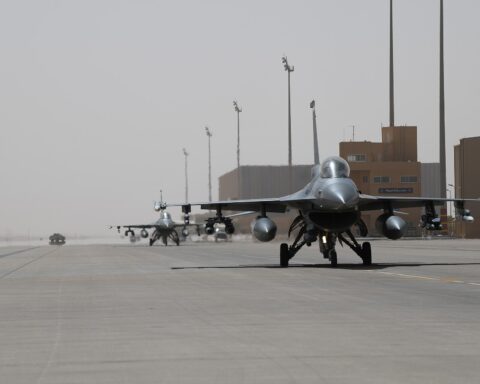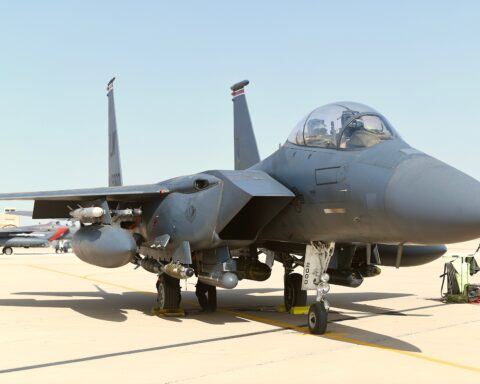

WASHINGTON — The United States has deployed A-10 Thunderbolt II ground-attack aircraft and AH-64 Apache helicopters to hunt Iranian fast-attack boats in the Strait of Hormuz, the Pentagon confirmed on March 19, marking a significant escalation in the campaign to reopen the world’s most important oil chokepoint. Air Force Gen. Dan Caine, the chairman of the Joint Chiefs of Staff, told reporters that more than 120 Iranian vessels and 44 mine-laying craft have been destroyed since Operation Epic Fury began on February 28, with A-10 Warthogs playing a central role in the maritime interdiction campaign.
The deployment represents a striking reversal for an aircraft the Air Force has spent a decade trying to retire. Congress blocked the service’s latest retirement plan in the fiscal year 2026 National Defense Authorization Act, mandating a minimum inventory of 103 A-10s through September 2026. Without that legislative intervention, the aircraft would not have been available for the role it is now performing in the Persian Gulf, according to Defense One.
For Saudi Arabia, the operation carries direct consequences. The Strait of Hormuz has been effectively closed to allied shipping since the war began, forcing Riyadh to reroute oil exports through the East-West Pipeline to Yanbu on the Red Sea. Reopening the strait, or at minimum neutralizing the Iranian naval threat within it, is a prerequisite for restoring the Kingdom’s full export capacity and stabilizing global oil markets that have pushed Brent crude above $120 per barrel.
Table of Contents
- What Are A-10 Warthogs Doing in the Strait of Hormuz?
- More Than 120 Iranian Vessels Destroyed in Three Weeks
- Why Is the A-10 the Ideal Weapon Against Iranian Fast-Attack Boats?
- Apache Helicopters Join the Fight as Drone Hunters
- Iran’s Swarm Doctrine and the 1,500-Boat Fleet
- How Congress Saved the A-10 From Retirement Months Before the War
- What Does the Hormuz Campaign Mean for Saudi Oil Exports?
- The Cost Exchange That Favours the Gun Over the Missile
- Frequently Asked Questions
What Are A-10 Warthogs Doing in the Strait of Hormuz?
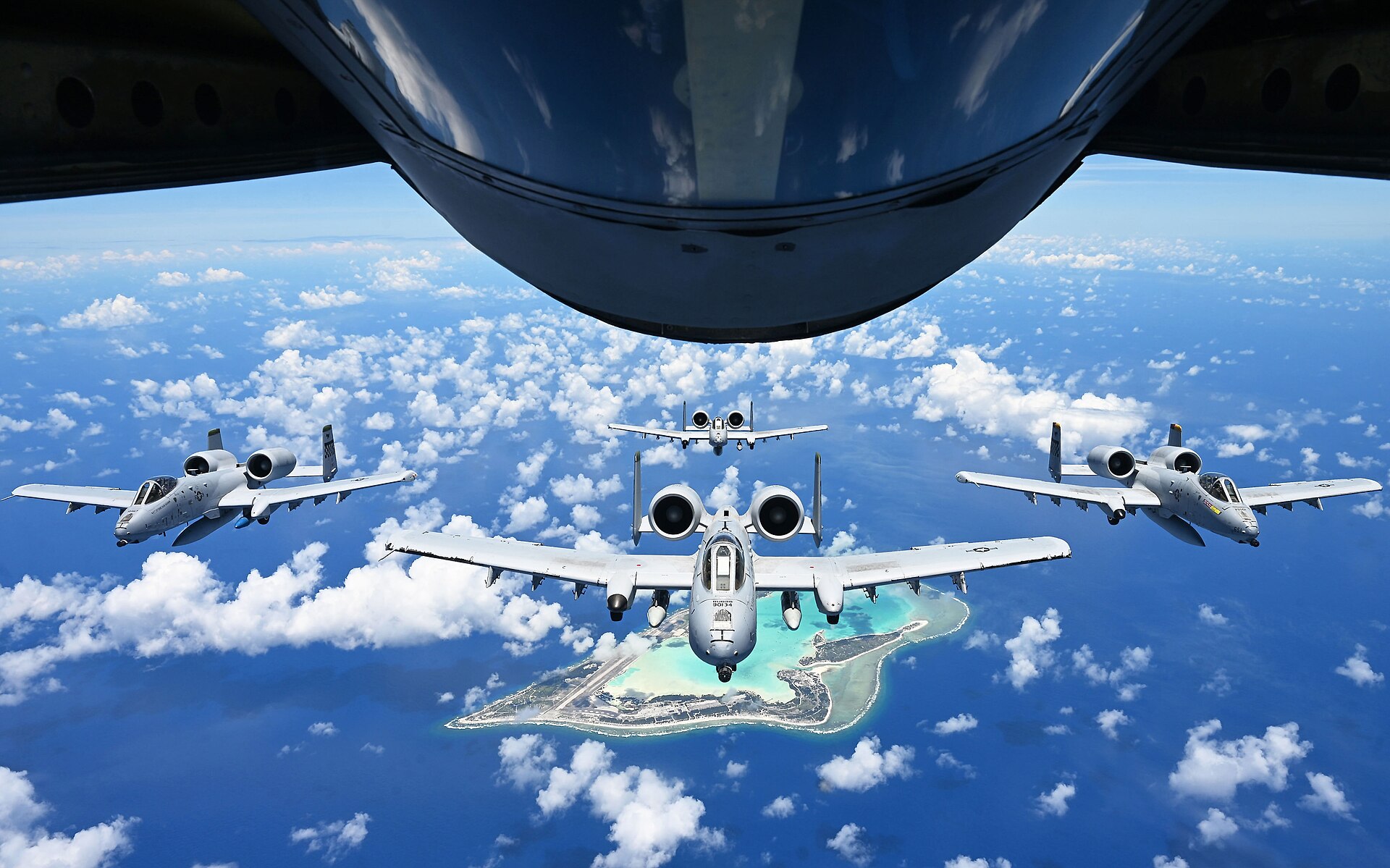
A-10 Thunderbolt II attack aircraft are conducting combat operations over the Strait of Hormuz as part of Operation Epic Fury, targeting Iranian Revolutionary Guard Corps Navy fast-attack boats, mine-laying vessels, and one-way attack drones that have disrupted global shipping since late February. U.S. Central Command confirmed the deployment on March 19, releasing the first official imagery of A-10C aircraft receiving aerial refuelling while supporting operations over the Persian Gulf, according to Stars and Stripes.
The Warthogs are flying low-altitude patrols over the strait’s narrow shipping lanes, hunting Iranian speedboats that have been used to lay mines, harass commercial vessels, and launch hit-and-run attacks against allied warships. Gen. Caine described the A-10’s role during a press briefing at the Pentagon, stating that the aircraft is “now engaged across the southern flank, hunting and killing fast-attack boats in the Strait of Hormuz,” according to 19FortyFive.
The deployment began in the earliest hours of the conflict. Army Recognition reported that during the first 48 hours of Operation Epic Fury, the U.S. Air Force employed A-10 Thunderbolt II jets against Iranian targets, integrating the dedicated close air support aircraft into the initial strike wave. The aircraft have since transitioned from overland strikes to maritime interdiction, a mission for which the slow, heavily armoured jet is unexpectedly well-suited.
The Middle East briefing 3,000+ readers start their day with.
One email. Every weekday morning. Free.
Flight Global reported that A-10s and AH-64E Apache helicopters are now conducting joint operations over the waterway, with the aircraft hunting both surface vessels and the low-flying Shahed-type drones that Iran has fired at Gulf state infrastructure and military bases.
More Than 120 Iranian Vessels Destroyed in Three Weeks
The scale of the maritime campaign has been significant. Gen. Caine told reporters that U.S. forces have destroyed more than 120 Iranian vessels and 44 mine-laying craft since Operation Epic Fury began, according to 19FortyFive. On a single day, March 10, U.S. forces eliminated 16 minelayers near the Strait of Hormuz, according to ABC News, which also reported that the Pentagon was targeting mine-laying vessels specifically to prevent Iran from seeding the shipping lanes with additional ordnance.
The mine threat has been a central concern for the U.S. Navy. Iran is believed to have deployed thousands of naval mines in and around the strait since the war began, creating a hazard that will take months to clear even after hostilities end. The A-10’s ability to spot and destroy the small boats used to lay these mines before they can deploy their payloads has made the aircraft a critical component of the demining effort. CENTCOM subsequently announced that it had destroyed an underground coastal facility storing anti-ship cruise missiles and mobile launchers, further degrading Iran’s ability to threaten Hormuz shipping.
| Category | Assets | Count | Source |
|---|---|---|---|
| Iranian vessels destroyed | Fast-attack boats, patrol craft, armed speedboats | 120+ | Gen. Dan Caine, Joint Chiefs |
| Mine-laying vessels destroyed | IRGC Navy minelayers | 44 | Gen. Dan Caine, Joint Chiefs |
| Minelayers destroyed (single day) | Near Strait of Hormuz | 16 | ABC News, March 10 |
| Primary aircraft used | A-10C Thunderbolt II, AH-64E Apache | — | CENTCOM |
| Operation name | Operation Epic Fury (maritime component) | — | Pentagon |
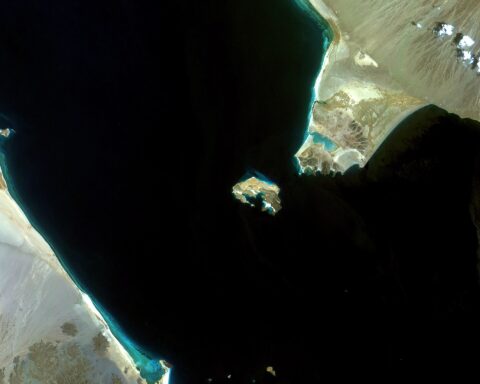
Radio Free Europe/Radio Liberty reported that while much of Iran’s conventional navy has been destroyed in the opening weeks of the war, the asymmetric threat from the IRGC Navy’s remaining fast-attack craft, submersibles, and shore-based anti-ship missiles remains substantial. The Strait of Hormuz is just 21 nautical miles wide at its narrowest point, and Iran’s southern coastline provides numerous hiding places for small boats among the inlets, coves, and islands that dot the waterway.
Why Is the A-10 the Ideal Weapon Against Iranian Fast-Attack Boats?
The A-10 Thunderbolt II was designed in the 1970s to destroy Soviet tanks on the plains of Central Europe. Its primary weapon, the GAU-8/A Avenger, is a seven-barrel 30mm rotary cannon capable of firing 3,900 rounds per minute of depleted uranium ammunition originally intended to punch through armoured vehicle hulls. Against the fibreglass and aluminium hulls of Iranian fast-attack boats, the weapon is devastating.
Beyond the cannon, the A-10 carries AGM-65 Maverick air-to-surface missiles with infrared or electro-optical guidance, capable of locking onto individual vessels from several kilometres away, according to Air Force Times. The aircraft also mounts APKWS laser-guided rockets, which convert unguided 2.75-inch rockets into precision munitions suitable for engaging small, fast-moving targets at close range.
The Warthog’s operational characteristics make it particularly suited to the Hormuz mission. Its maximum speed of approximately 420 miles per hour and ability to loiter at low altitude for extended periods allow it to patrol the strait’s shipping lanes continuously, something that faster, more fuel-hungry fifth-generation fighters like the F-35 cannot do efficiently. The A-10’s twin turbofan engines are mounted high on the rear fuselage, reducing its infrared signature against the warm waters of the Persian Gulf and protecting the engines from ground fire and sea spray.
The aircraft was also built to survive. Its titanium “bathtub” cockpit armour can withstand hits from 23mm rounds, and its redundant flight systems allow the aircraft to continue flying with significant battle damage, according to The War Zone. In an environment where Iranian forces are firing shoulder-launched missiles and heavy machine guns from shore positions and small boats, the A-10’s survivability provides a margin of safety that lighter aircraft lack.
Apache Helicopters Join the Fight as Drone Hunters
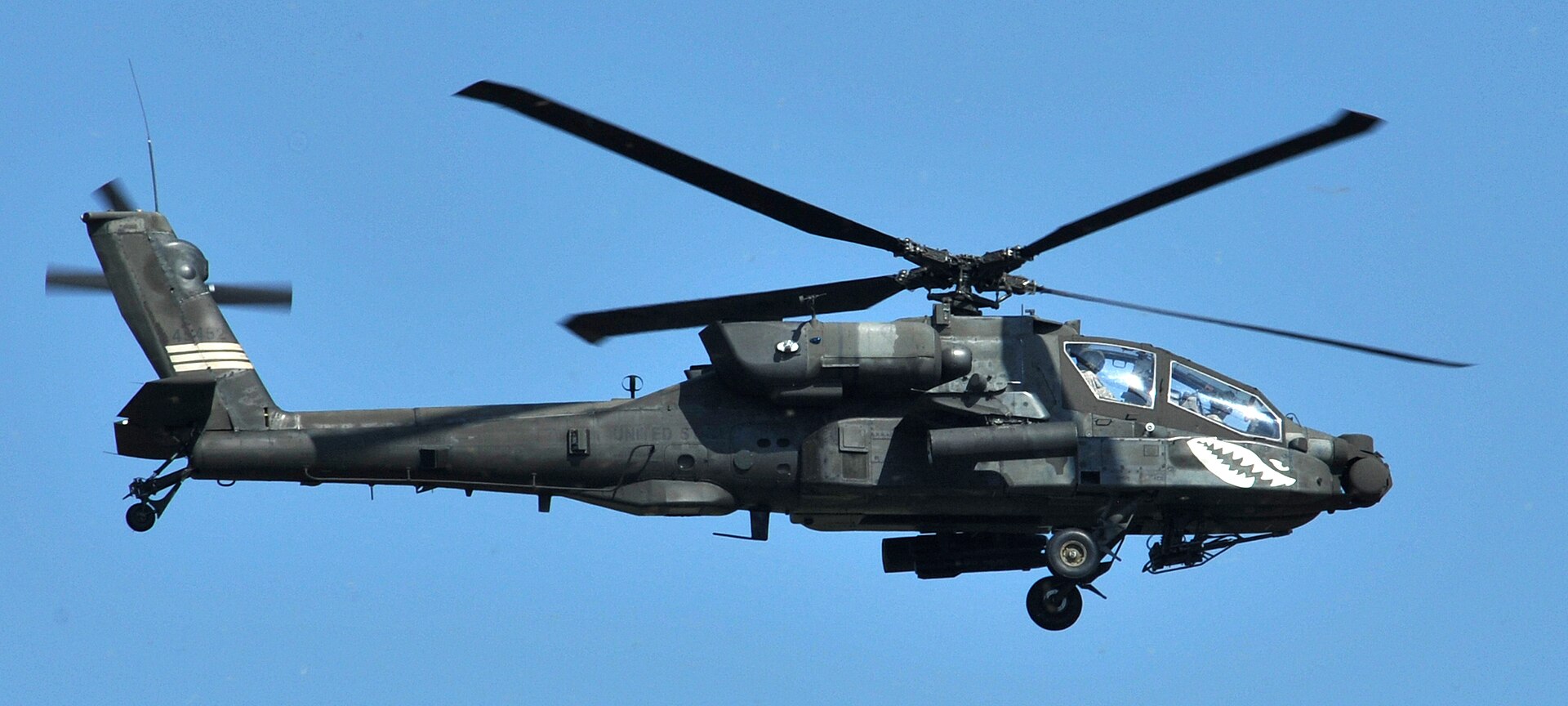
The AH-64E Apache Guardian helicopter is performing a dual role in the Hormuz campaign, hunting Iranian fast-attack boats alongside the A-10s and shooting down the Shahed-type one-way attack drones that Iran has launched at Gulf state cities and energy infrastructure in increasing numbers. The helicopter’s chin-mounted M230 30mm chain gun has proven effective against both targets, according to The Aviationist.
The United Arab Emirates released video footage on March 8 showing Emirati AH-64 Apaches destroying eight Iranian Shahed drones over the Persian Gulf using their 30mm cannons, according to Army Recognition. The footage, captured from the helicopter’s electro-optical targeting system, showed the drones being engaged at relatively close range, with the cannon rounds visibly shredding the small propeller-driven aircraft.
Task and Purpose reported that U.S. Apache pilots described the drone-killing mission as technically demanding. The Shahed drones fly at relatively low altitudes and slow speeds, making them difficult to detect on radar but vulnerable to visual engagement from helicopters operating at similar altitudes. The Apache’s Longbow radar and Target Acquisition Designation Sight provide the crew with the ability to detect and track multiple targets simultaneously.
The National reported that British Army Apache, Royal Navy Merlin, and Wildcat helicopters have also been engaged in the drone-destruction mission across the Gulf, forming part of the multinational coalition defending Gulf airspace. As of March 9, the UAE Ministry of Defence reported intercepting 1,342 drones out of 1,422 detected and destroying 221 out of 238 ballistic missiles since the war began, according to Army Recognition.
The cost exchange ratio is a critical factor in the decision to use helicopter cannons against drones. A single Shahed-136 drone costs Iran an estimated $20,000 to $50,000 to produce, while an interceptor missile from a Patriot or THAAD battery can cost between $2 million and $12 million per shot. Engaging drones with a 30mm cannon round costing a few hundred dollars offers what defence analysts describe as a far more sustainable exchange rate for the defender, as the drone war has highlighted.
Iran’s Swarm Doctrine and the 1,500-Boat Fleet
The IRGC Navy operates the largest fleet of fast-attack craft in the world, with more than 1,500 small boats designed to overwhelm superior naval forces through distributed lethality, speed, and numerical advantage, according to the Strauss Center at the University of Texas. Jane’s Defence recognises the IRGC Navy as the most prominent practitioner of small boat swarm tactics, combining speed, mass, coordinated manoeuvre, low radar signatures, and concealment to complicate the operations of larger conventional navies.
The fleet includes vessels capable of speeds between 50 and 70 knots, significantly faster than most warships. Iran’s newest addition, the Heydar-110 missile boat, reportedly achieves speeds of up to 110 knots, making it one of the fastest military vessels in the world, according to Defence Security Asia. These boats carry a range of weapons, including Chinese-designed C-802 anti-ship missiles, rocket launchers, heavy machine guns, and in some cases torpedoes.
The swarm doctrine calls for large numbers of fast-attack craft to attack from multiple directions simultaneously, overwhelming the defensive systems of larger vessels. Gulf News reported that by deploying boats from multiple hidden positions along Iran’s southern coastline, the IRGC can exploit gaps in defensive coverage and saturate a target’s ability to track and engage incoming threats. The doctrine was developed specifically to counter the U.S. Navy’s technological advantages in the confined waters of the Persian Gulf.
| IRGC Capability | Specification | U.S. Counter-Measure | Platform |
|---|---|---|---|
| Fast-attack craft fleet | 1,500+ vessels | GAU-8 Avenger cannon (3,900 rpm) | A-10 Thunderbolt II |
| Maximum boat speed | 50-110 knots | AGM-65 Maverick (infrared guided) | A-10 Thunderbolt II |
| Anti-ship missiles (C-802) | 120 km range | Ship-based Phalanx CIWS | Surface combatants |
| Shahed one-way attack drones | $20,000-$50,000 each | M230 chain gun (30mm) | AH-64 Apache |
| Naval mine stockpile | Thousands deployed | Mine countermeasure vessels | MCM squadrons |
| Shore-based missile batteries | Along southern coast | Tomahawk cruise missiles | Destroyers, submarines |
However, the swarm doctrine depends on having boats to swarm with. The destruction of more than 120 vessels in three weeks, according to Gen. Caine, represents a significant degradation of the IRGC Navy’s fast-attack capability. Radio Free Europe/Radio Liberty reported that Iran’s conventional navy has been largely destroyed, though the IRGC’s asymmetric capabilities, particularly submersibles and shore-based anti-ship missiles, remain largely intact.
How Congress Saved the A-10 From Retirement Months Before the War
The A-10’s presence in the Iran war is the direct result of a congressional intervention that overrode Air Force leadership’s wishes. The service had planned to retire its remaining fleet of approximately 162 Warthogs as part of a broader effort to redirect funding toward next-generation platforms, including the F-35 Lightning II and the B-21 Raider strategic bomber. Congress blocked the retirement in the fiscal year 2026 National Defense Authorization Act, mandating a minimum inventory of 103 A-10s through September 2026, according to Aero News Journal.
Defense One reported that without that legislative mandate, the A-10 would not have been available for the Hormuz mission. The article quoted congressional aides who described the aircraft’s combat performance as “a wake-up call” for Air Force planners who had argued that the Warthog’s close air support role could be filled by the F-35 or armed drones.
Armed Forces Press reported that the deployment has occurred “to the chagrin of USAF leadership,” which had long argued that the A-10 was a Cold War relic unsuited to modern combat. The aircraft’s performance against Iranian fast-attack craft has complicated the Air Force’s argument. Asia Times described the situation as a “rebirth” for the Warthog, noting that the aircraft is performing a mission that no other platform in the U.S. inventory can replicate as effectively or cheaply.
The debate over the A-10’s future is likely to intensify when Congress considers the fiscal year 2027 defence budget later this year. Supporters in both the House and Senate Armed Services Committees have cited the Hormuz operations as evidence that retiring the aircraft would leave a critical gap in U.S. maritime strike capabilities. The A-10’s low operating cost, approximately $6,000 per flight hour compared to more than $30,000 for the F-35, makes it an attractive option for missions requiring sustained low-altitude patrols, as the broader debate over military capabilities continues.
What Does the Hormuz Campaign Mean for Saudi Oil Exports?
Saudi Arabia has a direct stake in the outcome of the A-10 and Apache campaign in the Strait of Hormuz. Before the war, approximately 17 million barrels of oil per day transited the strait, representing roughly 20 per cent of global oil consumption, according to the U.S. Energy Information Administration. The closure has forced Saudi Arabia to reroute exports through the East-West Crude Oil Pipeline to the Red Sea port of Yanbu, which has a maximum capacity of approximately 5 million barrels per day, well below the Kingdom’s normal export volume.
Bloomberg reported on March 18 that Saudi Arabia has revived approximately half its oil exports via the Hormuz bypass, an achievement that Saudi officials have described as a success for contingency planning that began years before the conflict. CNBC reported that the East-West Pipeline and the UAE’s Habshan-Fujairah Pipeline are the only two significant alternatives to the Strait of Hormuz for Gulf oil exports, and both are operating at or near maximum capacity.
The Dallas Federal Reserve published an analysis stating that the Hormuz closure represents a supply shortfall of approximately 20 per cent, making it three to five times larger than any previous disruption in oil market history. Brent crude has surged above $120 per barrel since the war began, and the U.S. national average gas price reached $3.92 per gallon as of March 20, according to CBS News.
Every Iranian vessel destroyed in the Strait of Hormuz brings the eventual reopening of the waterway marginally closer. Defence analysts caution, however, that the mine threat will persist long after Iran’s surface fleet is neutralised. The thousands of naval mines believed to have been deployed in the strait will require months of painstaking clearance operations before commercial shipping can resume safely, even after a ceasefire, as the energy crisis deepens.
The Cost Exchange That Favours the Gun Over the Missile
The decision to deploy A-10s and Apaches with their cannons against Iranian boats and drones reflects a broader lesson emerging from the Iran war about the economics of modern conflict. Lloyd’s of London CEO told Insurance Journal on March 19 that maritime war risk premiums have surged to approximately 5 per cent of a ship’s value, roughly five times the level seen at the start of hostilities. Hapag-Lloyd, the German shipping giant, implemented a war risk surcharge of up to $3,500 per container as of March 2, according to Seatrade Maritime.
The cost asymmetry between Iran’s weapons and the conventional interceptors used against them has been a recurring theme of the conflict. A single Patriot missile costs approximately $4 million. A THAAD interceptor costs approximately $12 million. An A-10 firing its 30mm cannon against a fast-attack boat expends ammunition worth a few thousand dollars. An Apache helicopter shooting down a Shahed drone with its chain gun uses rounds costing a few hundred dollars per burst.
| Threat | Threat Cost | Interceptor Method | Interceptor Cost | Cost Ratio |
|---|---|---|---|---|
| Shahed-136 drone | $20,000-$50,000 | Patriot PAC-3 missile | ~$4,000,000 | 80-200:1 |
| Shahed-136 drone | $20,000-$50,000 | Apache 30mm chain gun | ~$500 | 0.01-0.025:1 |
| Fast-attack boat | $100,000-$500,000 | AGM-65 Maverick missile | ~$160,000 | 0.3-1.6:1 |
| Fast-attack boat | $100,000-$500,000 | A-10 GAU-8 cannon burst | ~$5,000 | 0.01-0.05:1 |
| Naval mine | $1,000-$10,000 | Mine countermeasure sweep | ~$50,000-$100,000 | 5-100:1 |
Kennedys Law reported that the Iran war has triggered a reshaped marine insurance risk landscape, with leading P&I clubs including Gard, Skuld, NorthStandard, and the London P&I Club all cancelling existing war risk coverage for the Persian Gulf and Strait of Hormuz. New policies are being issued at substantially higher premiums, and Lloyd’s List reported that U.S., UK, and Israeli-flagged ships are being charged three times more than vessels from other nations.
The financial pressure created by the closure is one reason why the Trump administration has simultaneously discussed “winding down” the war while deploying thousands more Marines to the region. Reopening the Strait of Hormuz to commercial traffic would immediately relieve pressure on oil prices and global supply chains, but doing so safely requires eliminating the Iranian fast-attack boat threat, clearing the mines, and establishing a sustained naval escort capability, a process that could take weeks or months even under optimistic scenarios.
Frequently Asked Questions
How many Iranian boats have A-10 Warthogs destroyed in the Strait of Hormuz?
Air Force Gen. Dan Caine, the chairman of the Joint Chiefs of Staff, confirmed that U.S. forces have destroyed more than 120 Iranian vessels and 44 mine-laying craft since Operation Epic Fury began on February 28, 2026, according to 19FortyFive. A-10 Warthogs and AH-64 Apache helicopters are the primary platforms conducting these maritime interdiction operations in the strait.
Why is the A-10 Warthog being used against boats instead of tanks?
The A-10’s GAU-8/A Avenger 30mm cannon, AGM-65 Maverick missiles, and APKWS laser-guided rockets are effective against small, fast-moving surface vessels. The aircraft’s low speed, long loiter time, heavy armour, and low operating cost make it better suited to sustained Hormuz patrols than faster fifth-generation fighters like the F-35, which cost five times more per flight hour.
Was the A-10 supposed to be retired before the Iran war?
The U.S. Air Force had planned to retire its remaining fleet of approximately 162 A-10s. Congress blocked the retirement in the fiscal year 2026 National Defense Authorization Act, mandating a minimum inventory of 103 aircraft through September 2026. Defense One reported that without this intervention, the A-10 would not have been available for the Hormuz campaign.
How are Apache helicopters being used against Iranian drones?
Both U.S. and UAE AH-64 Apache helicopters are shooting down Iranian Shahed-type one-way attack drones using their chin-mounted M230 30mm chain guns. The UAE released footage on March 8 showing eight drones destroyed in this manner, according to Army Recognition. Using cannon rounds costing a few hundred dollars per burst is far more cost-effective than interceptor missiles costing millions.
When will the Strait of Hormuz reopen to commercial shipping?
Defence analysts say that even after Iran’s surface fleet is neutralised, the thousands of naval mines deployed in the strait will require months of clearance operations before commercial shipping can resume safely. Saudi Arabia has partially offset the closure by routing oil through the East-West Pipeline to Yanbu, restoring approximately half its export capacity, according to Bloomberg.