RIYADH — The ceasefire Mohammed bin Salman spent fifty-two days building — which persuaded Donald Trump to cancel strikes on May 19, which is supposed to protect 860,000 foreign pilgrims inside Saudi borders six days before the Day of Arafah — can be destroyed in a single afternoon by a government Saudi Arabia has no treaty with, no back channel to, and no military deterrent against. Israeli military sources told the Times of Israel this month that “the window to attack Iran may soon slam shut, requiring Israel to move fast if the negotiations do not pan out,” while separate US intelligence assessments indicate Israel is actively preparing an independent strike on Iranian nuclear facilities — not as part of a coordinated American campaign, but as a unilateral Israeli decision taken during the very diplomatic window MBS spent his political capital to keep open. The Saudi crown prince placed a call to Trump on May 18 that helped avert American strikes within hours of launch, but there is no equivalent call he can make to Benjamin Netanyahu, because the April 8 ceasefire is a US-Iran bilateral instrument that Israel never signed and has explicitly refused to be bound by.
On May 21, Pakistan — the country that brokered that bilateral arrangement — also carried the US’s new letter-of-intent peace draft to Tehran, while simultaneously maintaining 8,000 troops and Chinese HQ-9 missiles on Saudi soil. The contradictions Pakistan is managing are examined in Pakistan Carries the Peace Letter and the Missiles.
Table of Contents
- The Ceasefire’s Missing Signature
- How Does Israel Reach Iran Without Saudi Airspace?
- What Happens to Hajj Security If Netanyahu Strikes?
- The PAC-3 Arithmetic
- Why Can’t MBS Publicly Oppose the Strike?
- The Problem of Saudi Arabia’s Own Strikes
- What Does Iran Target After an Israeli Strike?
- Fifty-Two Days of Diplomacy, One Afternoon of Demolition
- Frequently Asked Questions
The Ceasefire’s Missing Signature
The April 8 ceasefire between the United States and Iran was, from the moment it was announced, built on an omission that everyone noticed and nobody fixed: Israel was not a party to it. Netanyahu said publicly that the ceasefire was “not the end” of the military campaign, that it was “a stop on the way to achieving all of our objectives — either by agreement, or by resuming the fighting,” and that it “could end at any moment” — language that does not describe a government bound by a diplomatic framework but one watching from outside it, calibrating its moment. The ceasefire required Iran to reopen the Strait of Hormuz, and by April 9 no ships were moving through the strait, with Tehran accusing Israel and the United States of violating the agreement through ongoing operations in Lebanon — a charge that Netanyahu reinforced by declaring explicitly that the ceasefire “does not include Lebanon.”
What this means for Saudi Arabia is not abstract. MBS built the ceasefire into the centrepiece of a broader posture: that Gulf states, by threatening to restrict American basing rights and overflight access, extracted a de-escalation window from Washington, and that this window should be used for nuclear negotiations rather than further strikes. CNN reported that Gulf states warned they would become “more restrictive on when US forces can use military bases in their countries or fly over their airspace” if Trump ordered additional attacks — a threat that worked, because Trump stood down on May 19. But the pressure that stopped Trump — base access, airspace denial, the political cost of alienating Gulf partners during a presidential term already defined by Middle East gambles — does not apply to Netanyahu, who has no bases in Saudi Arabia, no overflight agreements Riyadh can revoke, no bilateral treaty whose provisions MBS can invoke, and no operational dependency on Saudi cooperation of any kind.
The ceasefire was designed to constrain the wrong actor. MBS built a wall around the American threat — call by call, concession by concession — and the Israeli threat walked around it without breaking stride.
How Does Israel Reach Iran Without Saudi Airspace?
Israel reaches Iran through international waters over the Red Sea, on a proven corridor that requires no Saudi airspace, no Saudi notification, and no Saudi authorization — a route demonstrated in May when an Israeli F-15I launched an air-launched ballistic missile on a suborbital trajectory toward Iranian territory from international waters aligned with the latitude of Yanbu. Al Jazeera’s military analysis described this as the flight that “changed the geometry of war,” and the geometry it changed was the one that used to give Saudi Arabia a seat at the table: the assumption that any Israeli strike on Iran required, at minimum, Saudi acquiescence.
The Middle East briefing 3,000+ readers start their day with.
One email. Every weekday morning. Free.
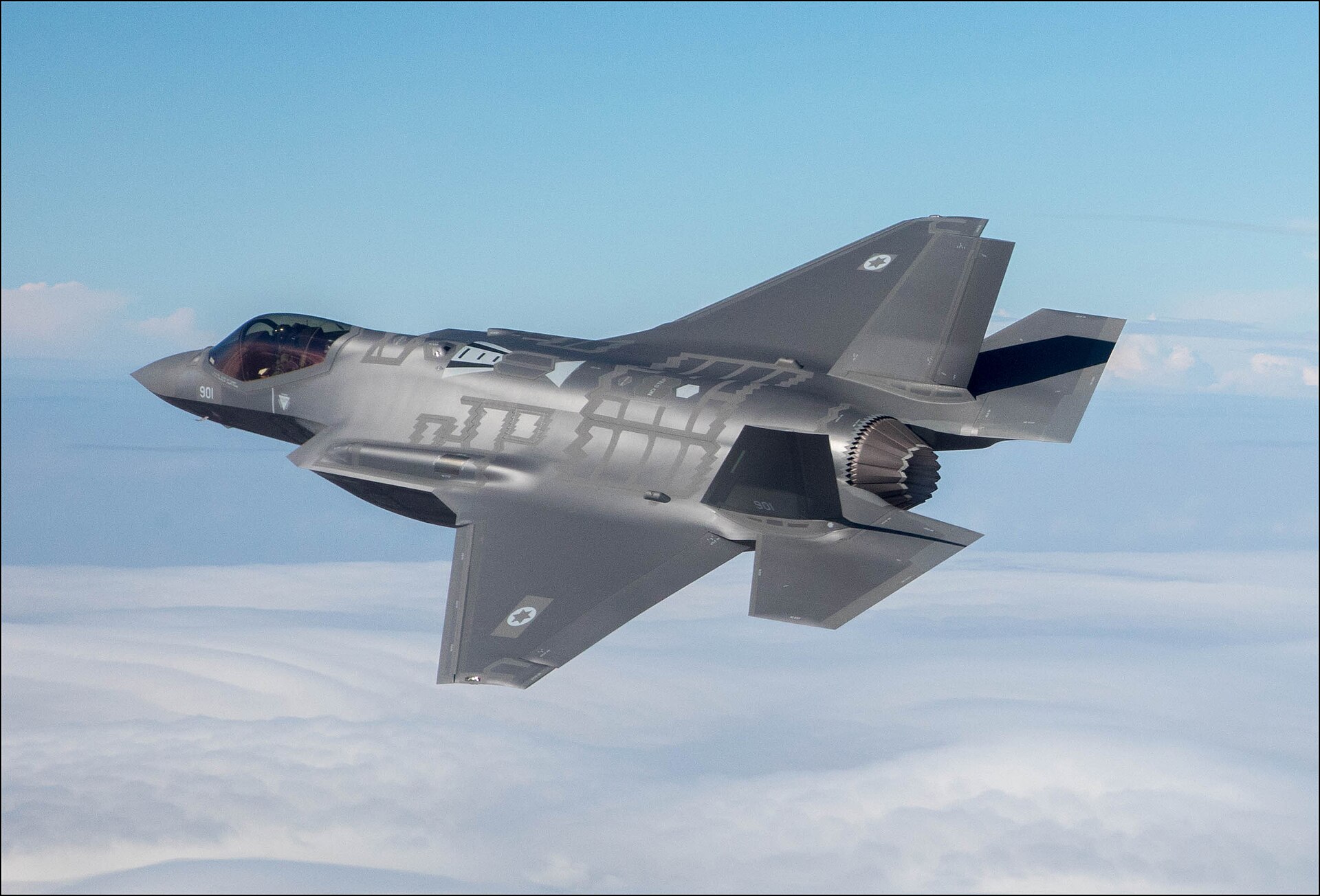
During Operation Roaring Lion — the Israeli campaign against Iran that ran from February 28 through the April ceasefire — Israeli aircraft flew approximately 1,500 sorties against Iranian targets, requiring 550 aerial refuelings in the first six days alone. Those 550 refuelings were a vulnerability: each one required a tanker aircraft in a predictable orbit, each orbit was a point of dependency on American aerial refueling assets, and each dependency gave Washington a lever it could pull. On May 14, six days before Trump’s aborted strike, Israel signed a $34 million contract with Elbit Systems subsidiary Cyclone to develop external fuel tanks for the F-35I “Adir” stealth fighter, targeting a cruise-flight range exceeding 2,200 kilometres — sufficient for a round trip from Israeli airfields to Tehran and back without a single aerial refueling.
| Metric | Feb–Apr 2026 (Op. Roaring Lion) | Projected Unilateral |
|---|---|---|
| Aerial refuelings (first 6 days) | 550 | 0 (with Cyclone fuel tanks) |
| F-35I cruise range | ~1,100 km (standard config.) | 2,200+ km (extended) |
| Primary strike route | Multiple corridors | Red Sea international waters |
| Saudi airspace required | Avoided but operationally adjacent | Not required |
| US tanker dependency | High | Eliminated |
| Fuel-tank contract | — | $34M (signed May 14, 2026) |
The contract is not a future capability investment filed away in some procurement queue; it is a dependency-elimination programme initiated during active ceasefire negotiations, which tells you what the Israeli defence establishment thinks those negotiations are worth. Natanz — Iran’s primary enrichment facility — sits approximately 1,480 kilometres from Tel Aviv, well within the extended range that the Cyclone programme is designed to deliver. Fordow, buried under more than eighty metres of granite, remains beyond Israeli conventional munitions and would require the US-only GBU-57 Massive Ordnance Penetrator, which means a unilateral Israeli strike targets Natanz, Isfahan-area facilities, and above-ground centrifuge infrastructure — devastating to Iran’s declared programme, insufficient to destroy its deepest facility, and guaranteed to provoke retaliation against every state Iran considers complicit.
What Happens to Hajj Security If Netanyahu Strikes?
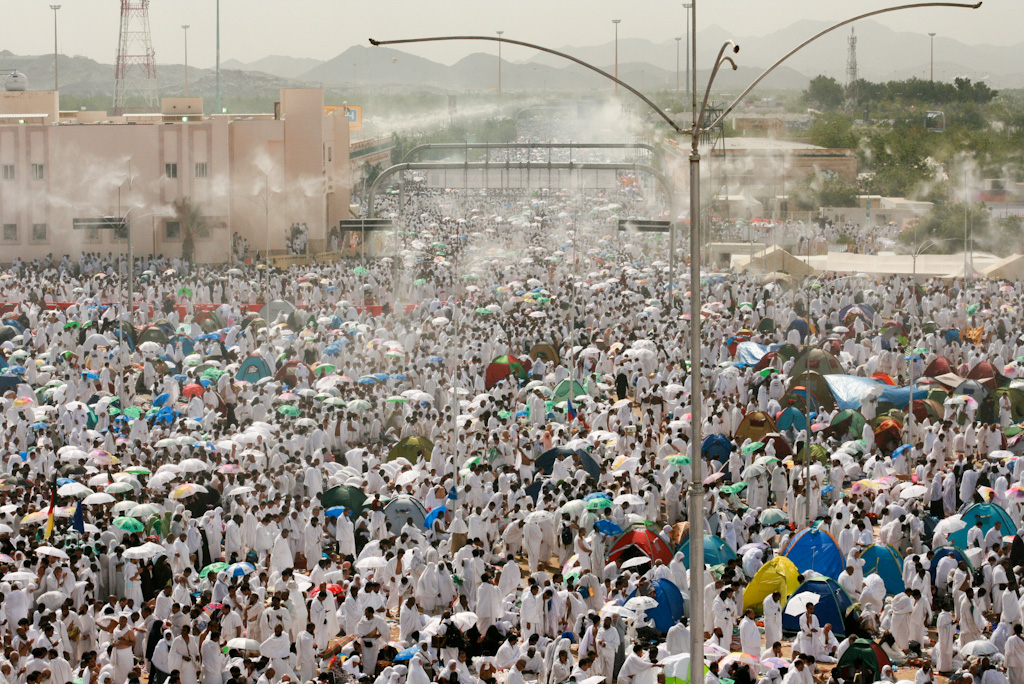
An Israeli strike inverts the deterrence logic protecting 860,000 pilgrims inside Saudi Arabia, because Iran’s restraint during Hajj depends on presenting itself as the victim of American aggression — a framing that collapses the moment Israel, not the United States, strikes first. Iran is no longer retaliating against a country that shelters the enemy; it is retaliating against the broader regional order that allowed the enemy to act, which in Tehran’s doctrinal vocabulary is not a distinction at all. Iran has approximately 30,000 nationals among the pilgrims, a number that has been widely discussed as a deterrent against escalation (Tehran will not risk killing its own citizens), but the logic inverts under an Israeli-first-strike scenario: the domestic political cost of appearing passive after an attack on Iranian soil vastly exceeds, for a regime whose survival depends on projecting strength, the cost of endangering pilgrims whose deaths can be blamed on the aggressor rather than the respondent.
The Day of Arafah — when the largest concentration of pilgrims gathers on a single plain outside Mecca, standing in white ihram under open sky — falls on May 26, six days from now. The Hajj airlift that brought these pilgrims into the Kingdom has already closed, leaving no rapid evacuation mechanism and no way to disperse a population that is, by the design of the ritual itself, concentrated in the most targetable formation possible. Iran struck Saudi oil infrastructure during the February-to-April campaign despite Riyadh’s formal posture of non-participation — nearly 70 per cent of the threats Saudi Arabia intercepted were headed for the Eastern Province — which means the threshold for targeting Saudi territory on complicity grounds has already been crossed once, by a country that would cross it again with considerably less hesitation after an Israeli strike on its nuclear programme.
The PAC-3 Arithmetic
What makes the Hajj timing not merely unfortunate but operationally devastating is the state of Saudi Arabia’s air and missile defence inventory. Approximately 400 PAC-3 MSE interceptor rounds remain in the Kingdom — roughly 14 per cent of pre-war stock — and no new American delivery is scheduled for at least eighteen months. Those rounds are all that stand between inbound Iranian ballistic missiles and every piece of critical infrastructure in the Eastern Province, the Hajj sites in the Hejaz, and the capital itself — and they are being asked to do a job that the full pre-war inventory, seven times larger, struggled with in February and March.
| Metric | Pre-War (Feb 2026) | Current (May 20, 2026) |
|---|---|---|
| PAC-3 MSE rounds | ~2,850 (est.) | ~400 |
| Inventory remaining | 100% | ~14% |
| Next scheduled US delivery | Routine pipeline | 18+ months |
| Primary threat axis | Multiple | Eastern Province (~70% of intercepts) |
| Foreign pilgrims in-country | 0 (pre-Hajj) | 860,000+ |
| Days to Day of Arafah | N/A | 6 |
“For Saudi Arabia, the Iran war is as unsettling as it is unprecedented, with Saudi leadership simultaneously trying to protect its economic and societal transformation, navigate its relationship with an unpredictable US president, and manage living a drone’s flight away from its principal antagonist.”Center for Strategic and International Studies, 2026
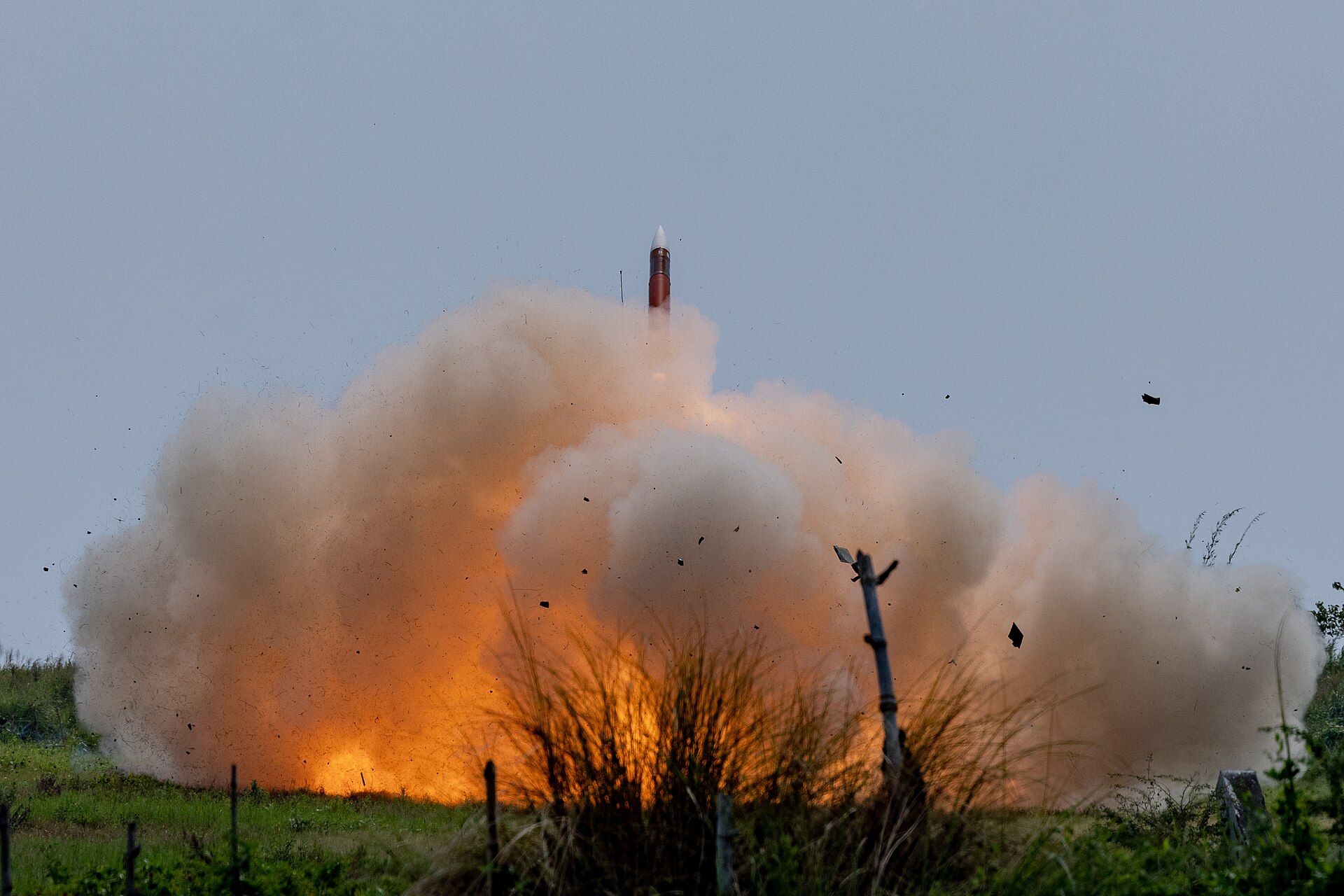
If Iran retaliates against an Israeli strike — not against Israel, which sits behind Iron Dome, David’s Sling, and Arrow-3 at 1,200-kilometre range, but against the Gulf states it has already demonstrated willingness to hit at 300-kilometre range — Saudi Arabia intercepts inbound threats with a missile inventory that would sustain roughly two to three days of intensive engagement at the rates observed during the spring campaign. Every PAC-3 round fired at an Iranian Emad-class or Sejjil-class ballistic missile is one fewer round available to defend pilgrims at Arafah, and the system’s intercept rate — estimated at between 70 and 85 per cent against those variants — means that for every four or five rounds fired, at least one warhead gets through.
MBS traded the pressure that stopped Trump — restricting US access to Prince Sultan Air Base, denying American overflight rights — for influence over American decision-making, and the trade bought him a diplomatic window at the cost of the American defensive presence that absorbed most of Iran’s opening salvos in February. An Israeli strike triggers the retaliation cycle without the shield that blunted it the first time, in the week when Saudi Arabia has more civilians to protect and fewer interceptors to protect them with than at any point since the war began. When PSAB access was restored on May 7, the second Trump-MBS phone call that brokered the restoration produced no public readout — the only bilateral exchange in May 2026 that did not.
Why Can’t MBS Publicly Oppose the Strike?
Because Netanyahu has explicitly tied Saudi-Israeli normalisation to Saudi Arabia not “aligning with anti-Israel forces,” any public Saudi criticism of an Israeli strike becomes grounds for killing the normalisation pathway — the one MBS has spent years pursuing, the one Washington considers central to its Middle East framework, and the one whose collapse would leave the Kingdom without the security guarantee it was supposed to deliver. The diplomatic trap is bilateral: objecting to the strike fractures Riyadh’s relationship with both Jerusalem and Washington simultaneously, while staying silent exposes MBS to domestic and pan-Islamic accusations of complicity in an attack on a Muslim country during Hajj. The same 96-hour Hajj silence applied when Trump publicly demanded the Abraham Accords as a condition of the Iran deal — a normalisation ultimatum Saudi Arabia could not answer while two million pilgrims were on the plain of Arafah. Why Saudi Arabia could not respond to Trump’s ‘mandatory’ normalisation demand during Arafah.
Saudi Arabia has navigated this kind of trap before, and the precedent is not encouraging. When Israel struck an air-defence facility in Isfahan in October 2024, Riyadh issued a statement calling it “a violation of Iran’s sovereignty” and appealing for restraint from “all parties” — condemning the principle while declining to name Israel as the violator, the diplomatic equivalent of reporting a stabbing without describing who held the knife. That formula — sovereignty plus de-escalation, naming the act but not the actor — worked when the strike was a single facility and the consequences were contained, but it cannot survive a full Israeli counterproliferation campaign against Natanz and Isfahan followed by Iranian missiles hitting Saudi oil infrastructure. The audience for Saudi statements at that point is not diplomats parsing language in Geneva but Iranian state television asking why the Custodian of the Two Holy Mosques said nothing while a foreign air force attacked a Muslim nation.
The Jerusalem Post documented that Arab states “condemn Israel’s Iran strikes while quietly backing it” — a pattern that holds precisely as long as the strikes remain limited enough to be absorbed without visible consequence. What Israeli military sources are describing is not limited, and the diplomatic formulae that have served Riyadh for two decades were never stress-tested against this scale of consequence.
The Problem of Saudi Arabia’s Own Strikes
There is a further complication that Riyadh cannot acknowledge publicly without detonating its own diplomatic posture: Saudi Arabia has already conducted offensive military operations against Iranian positions during the very conflict it claims not to be participating in. Reuters reported that the Kingdom conducted secret strikes against Iranian-backed Iraqi militias near the Iraq-Saudi border around the time of the April 7 ceasefire, and separately reported secret Saudi strikes against Iranian targets in late March 2026. The government publicly calling for restraint, publicly denying its territory or airspace for use in attacks on Iran, and publicly positioning itself as the civilian-protecting neutral party had been hitting Iranian-linked targets for weeks before it adopted that posture.
This does not give MBS any purchase over Netanyahu; it eliminates what little he had. If Saudi Arabia’s non-participation posture is a diplomatic position rather than an operational reality — and Reuters’ reporting suggests precisely that — then any Saudi objection to an Israeli strike carries the weight of a government telling another government not to do what it has itself already done in secret. Netanyahu and the Israeli intelligence community are aware of these operations, and any Saudi attempt to publicly oppose an Israeli strike could be answered with a single intelligence leak confirming what Reuters already published, collapsing the Kingdom’s entire ceasefire-diplomacy posture — the one built on the premise that Saudi Arabia is a restraining force rather than a belligerent.
Hussain Abdul-Hussain of the Foundation for Defense of Democracies described the broader Saudi posture as “a tired tactic, perfected by Nasser and Sisi in Egypt, Erdogan in Turkey, and Khamenei in Iran: beat your chest at external enemies to mask domestic weakness, but only enemies you know will not come after you, like Israel.” The characterisation is polemical, but the underlying observation — that Riyadh’s public hostility is calibrated to audiences it can manage rather than adversaries it can deter — identifies the weakness that a unilateral Israeli strike would crack open, because this time the adversary in question is not Israel but Iran, and Iran has already demonstrated that it comes after Saudi Arabia regardless of what Saudi Arabia does or says.
What Does Iran Target After an Israeli Strike?
Iran’s retaliatory options after a unilateral Israeli strike run through Saudi Arabia regardless of Saudi involvement, because Iranian military doctrine since February has treated Gulf state oil infrastructure — particularly Saudi Arabia’s Eastern Province — as American forward economic positions rather than sovereign national assets deserving protection from retaliation. Iran struck the Shaybah oil field and the Samref refinery during the February-April campaign despite Riyadh’s formal non-participation, and the IRGC declared its intent to destroy “American political centres” in the region, including the US embassy in Riyadh — treating Saudi Arabia not as a sovereign government with an independent foreign policy but as an American node in a network that Tehran considers a single integrated enemy.
Mahdi Mohammadi, Iran’s national security adviser, made the doctrinal framework explicit when he declared that “without fully restraining America’s rabid dog in Lebanon, there will be no ceasefire or negotiations, and the missiles are ready to launch.” The framing matters: Israel is the dog, America is the handler, and Iranian retaliation for Israeli action is doctrinally directed at the handler and everything the handler touches. An Israeli unilateral strike — one conducted without American coordination, possibly over American objections — contradicts this framework entirely, and the contradiction creates a targeting problem that resolves, as Iranian targeting problems consistently have since February, by hitting the Gulf.
Iran faces three options if Israeli munitions hit Natanz: attack Israel directly (difficult at 1,200-kilometre range with degraded missile stocks and Israeli multi-layered air defence), target American bases as if the US were responsible regardless of the facts (doctrinally incoherent but operationally rehearsed), or strike Saudi Arabia and Gulf states as enablers of the broader order that permitted the strike — the path that requires the least doctrinal revision, given that Iran already struck Saudi infrastructure once on precisely those grounds, already accused Gulf states of complicity, and already demonstrated that Riyadh’s formal non-participation posture provides no operational protection whatsoever. The restoration of 91 per cent of Iran’s Hormuz missile sites during the ceasefire means those retaliatory capabilities are substantially rebuilt, pointed at the same targets they hit in March, and awaiting a trigger that Netanyahu’s air force could provide on forty-eight hours’ notice.
Fifty-Two Days of Diplomacy, One Afternoon of Demolition
The scale of what MBS has assembled since April 8 deserves a sober accounting before considering how quickly it can be undone. He brokered a ceasefire framework that, whatever its structural flaws, reduced Iranian missile launches against Gulf targets to zero for forty-two consecutive days. He persuaded Trump — within hours of a planned strike on May 19 — to stand down, using a combination of base-access threats, overflight denial, and personal calls that CNN described as decisive in the president’s reversal. He kept a coalition of Gulf leaders aligned on a message of restraint that cut across rivalries which had defined regional politics for a decade, and he advanced a nuclear diplomacy track with Washington that was supposed to deliver the Kingdom its own civilian enrichment pathway as a reward for alignment.
He did all of this while running a Q1 2026 budget deficit of $34 billion — a national record — with Vision 2030 assessed by multiple analysts as financially unsustainable under wartime conditions, with his country’s most important revenue-generating infrastructure having already been struck once by the adversary he is simultaneously trying to deter, and with Iran’s de facto customs authority on Hormuz still operating unchallenged, allowing only 45 tanker transits since April 8 — roughly 3.6 per cent of the pre-war baseline. The fiscal pressure compounds beyond the wartime deficit: even when Saudi production recovers, the EIA’s $79 Brent forecast for 2027 means the ceasefire dividend arrives at the worst possible moment for Vision 2030’s financial architecture.
None of it constrains Netanyahu. The F-35I fuel-tank programme closing the refueling gap, the proven Red Sea corridor that requires no Saudi cooperation, the explicit public reservation of the right to resume military operations, the normalisation ultimatum that punishes Saudi Arabia for objecting — each originates outside the framework MBS controls and terminates inside the consequences he bears. The fifty-two days of phone calls, the coalition management, the base-access threat, the overflight denial, the record budget deficit absorbed to keep the diplomatic window open — all of it becomes debris the moment Israeli munitions hit Natanz, because the US-Iran negotiation framework that justifies those sacrifices dies with the facilities it was negotiating over.
Six days from now, on the plain of Arafah, 860,000 pilgrims will stand in white ihram under open sky — the largest undefended congregation on earth, guarded by fewer than 400 interceptor rounds that nobody is going to resupply. MBS built the ceasefire, blocked the American strike, denied the airspace, restricted the bases, and is now waiting for a decision from a government that does not owe him a phone call.
Frequently Asked Questions
Has Israel struck Iranian targets during the current ceasefire period?
No full-scale Israeli strike has occurred since the April 8 ceasefire, but Israel has maintained combat operations in Lebanon — which Netanyahu explicitly excluded from the ceasefire’s scope — and Israeli F-15I flights over the Red Sea with air-launched ballistic missiles have continued on trajectories consistent with pre-ceasefire operations. The precedent from October 2024, when Israel struck Isfahan’s air-defence facility during a period of active international pressure for de-escalation, is instructive: that strike drew a UN Security Council presidential statement but no binding resolution, no sanctions, and no meaningful diplomatic consequences, establishing a cost-free precedent that Israeli planners have absorbed as an operational lesson about what happens — or, rather, does not happen — when you strike during a diplomatic window.
Could Saudi Arabia intercept Israeli aircraft approaching its airspace?
Saudi Arabia operates F-15SA and Typhoon fighters with full air-to-air engagement capability, but the scenario is practically inconceivable for two interlocking reasons. Israel’s proven Red Sea corridor runs through international waters and airspace, requiring no Saudi overflight and presenting no legal basis for interception — and even if an Israeli aircraft were to enter Saudi sovereign airspace, shooting it down would constitute an act of war against a country Saudi Arabia is simultaneously pursuing normalisation with, while defending against a strike that much of the Saudi national-security establishment privately considers strategically beneficial to Riyadh’s long-term interests, since a degraded Iranian nuclear programme reduces the Kingdom’s principal regional threat.
What would happen to oil markets if Israel strikes Iran’s nuclear facilities?
Markets are already pricing in severe and sustained disruption at $109–112 per barrel under ceasefire conditions. An Israeli strike triggering Iranian retaliation and a full Hormuz closure would remove the remaining trickle of Gulf crude reaching Asian markets via the strait, with downstream effects on strategic petroleum reserves in China, Japan, and South Korea that are already at historically low levels after months of pre-ceasefire drawdown. Saudi Arabia’s position is paradoxical: sharply higher prices would help close the Kingdom’s record $34 billion Q1 deficit, but the infrastructure that produces and exports that oil — concentrated in the Eastern Province, where 70 per cent of Iranian threats were directed — is itself the most likely retaliatory target, meaning the revenue benefit would be destroyed by the very escalation that created it.
Does the Abraham Accords framework give Saudi Arabia any mechanism to influence Israeli military decisions?
Saudi Arabia is not a signatory to the Abraham Accords, which were concluded in 2020 by the UAE, Bahrain, Morocco, and Sudan, and the Saudi-Israeli normalisation track has been conducted as a separate process with Washington as the intermediary — producing no signed agreements, no formal diplomatic recognition, and no military-to-military communication channel. The contrast with the UAE is instructive: Abu Dhabi, which normalised relations in 2020, does have a direct diplomatic channel to Jerusalem but has shown no willingness to use it to constrain Israeli military operations against Iran, suggesting that even completed normalisation would not deliver the kind of influence this crisis demands. The absence of formal channels means any Saudi communication to Netanyahu’s government must route through Washington — the same Washington that may itself be unable to stop the strike.
What is the Persian Gulf Security Authority that Iran established at Hormuz?
Iran established the Persian Gulf Security Authority as a de facto customs and inspection regime at the Strait of Hormuz during the February-April campaign, operating not as a conventional military blockade but as an administrative checkpoint that gives Tehran sovereign enforcement authority over maritime transit — a distinction that matters because blockades can be challenged under the law of the sea while administrative authorities, once established, require diplomatic negotiation to dismantle. No existing framework — including the April 8 ceasefire — addresses PGSA dismantlement, meaning even a post-strike diplomatic recovery that somehow reassembled the ceasefire would leave Iran with permanent institutional control over the world’s most important oil chokepoint. The 45 transits that have occurred since April 8 have all passed through PGSA inspection protocols, quietly normalising an Iranian authority over Hormuz that did not exist before the war began. Two days later, Saudi Arabia formally endorsed the non-strike outcome: Saudi Arabia’s shift from military threats to diplomatic praise in 62 days illustrated how far the Kingdom’s public posture had travelled since MBS’s ceasefire push.
That public endorsement carried an unintended consequence: Trump’s CBS interview on May 21 named MBS explicitly as the person who persuaded him not to strike, eliminating the deniability that Saudi Arabia had carefully maintained. How Trump’s naming of Saudi Arabia collapsed Saudi strategic ambiguity — and drew an explicit IRGC out-of-region threat within hours — is the direct downstream cost of the impossible position this article describes.