
MUSCAT — India and Pakistan have independently deployed warships to the Gulf of Oman to escort their nationally flagged oil and gas tankers through waters made perilous by the Iran war, becoming the first nations to mount their own naval escort operations while the United States military remains focused on offensive strikes against Tehran. Pakistan launched Operation Muhafiz-ul-Bahr on 9 March, dispatching the Chinese-built frigate PNS Shah Jahan to guard vessels on the Karachi-Gulf route. India followed days later under the revived Operation Sankalp, sending at least six Visakhapatnam-class destroyers and support ships to the northern Gulf of Oman, where they have already shepherded two LPG carriers carrying 92,700 metric tonnes of fuel past the most dangerous stretch of water on the planet.
The twin operations mark the first time since the 1980s Tanker War that rival Asian powers have conducted parallel escort missions in the same body of water. They also expose a critical gap: three weeks into a conflict that has shut down roughly 20 percent of global oil transit, the world’s largest navy has yet to escort a single commercial vessel through the Strait of Hormuz. For Saudi Arabia, the region’s largest oil exporter and India’s second-largest crude supplier after Russia, the improvised escorts are a reminder that its economic lifeline now depends as much on New Delhi’s fleet as on Washington’s.
Table of Contents
- Pakistan’s Operation Muhafiz-ul-Bahr
- India Revives Operation Sankalp With Largest Gulf Deployment in Decades
- What Vessels Are Being Escorted Through the Gulf of Oman?
- Why Is the US Navy Not Escorting Tankers Yet?
- What Do the Escorts Mean for Saudi Oil Exports?
- The 1980s Tanker War Parallel
- Insurance Crisis Keeps Most Shipping at Anchor
- How Many Ships Remain Stranded in the Persian Gulf?
- Frequently Asked Questions
Pakistan’s Operation Muhafiz-ul-Bahr
The Pakistan Navy launched Operation Muhafiz-ul-Bahr — meaning “Guardian of the Sea” — on 9 March 2026, nine days after the United States and Israel began Operation Epic Fury against Iran. The operation’s stated objective is to safeguard Pakistan’s sea lines of communication, particularly the shipping routes linking Karachi with the Persian Gulf and Red Sea that carry the bulk of the country’s energy imports and container trade.
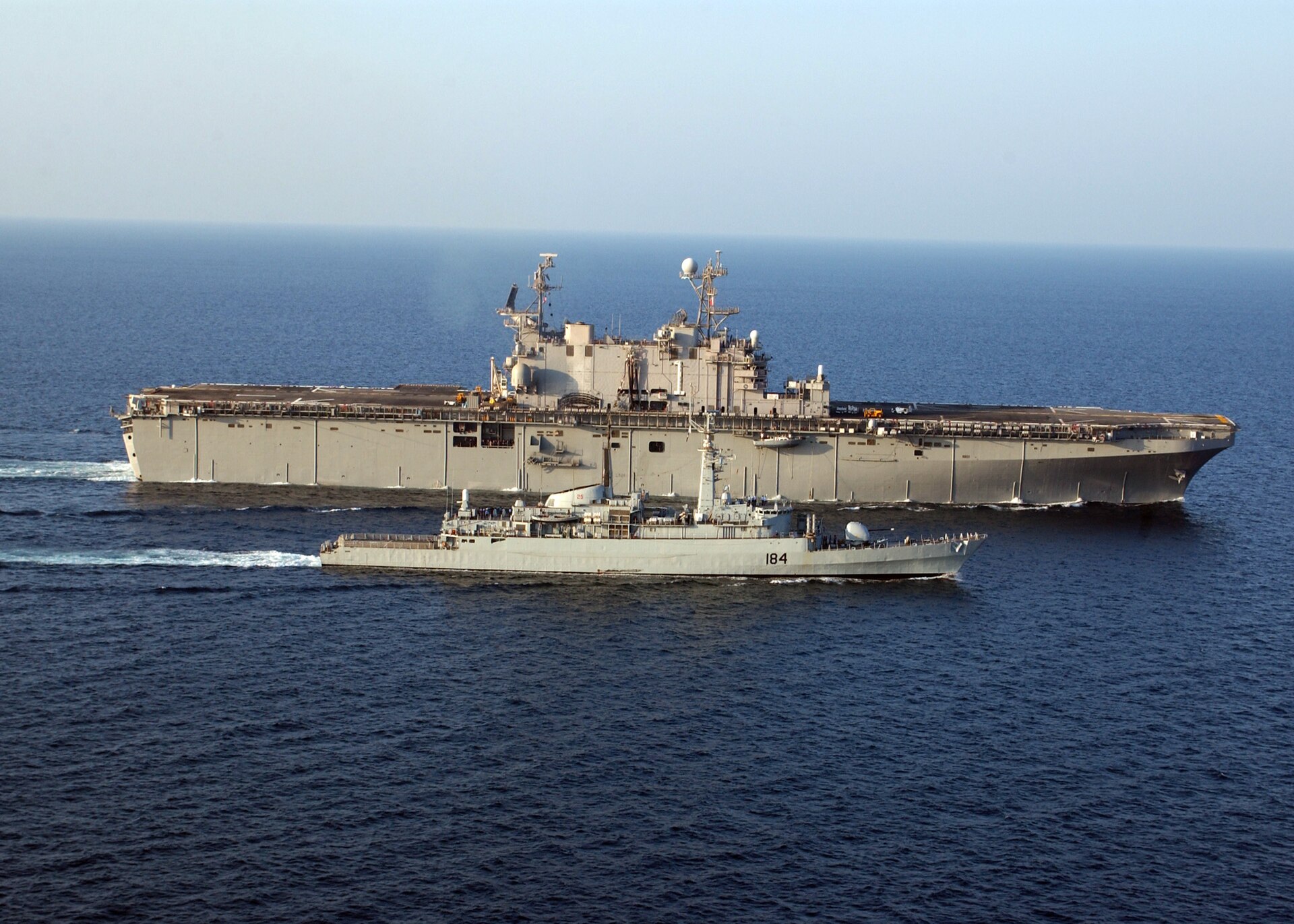
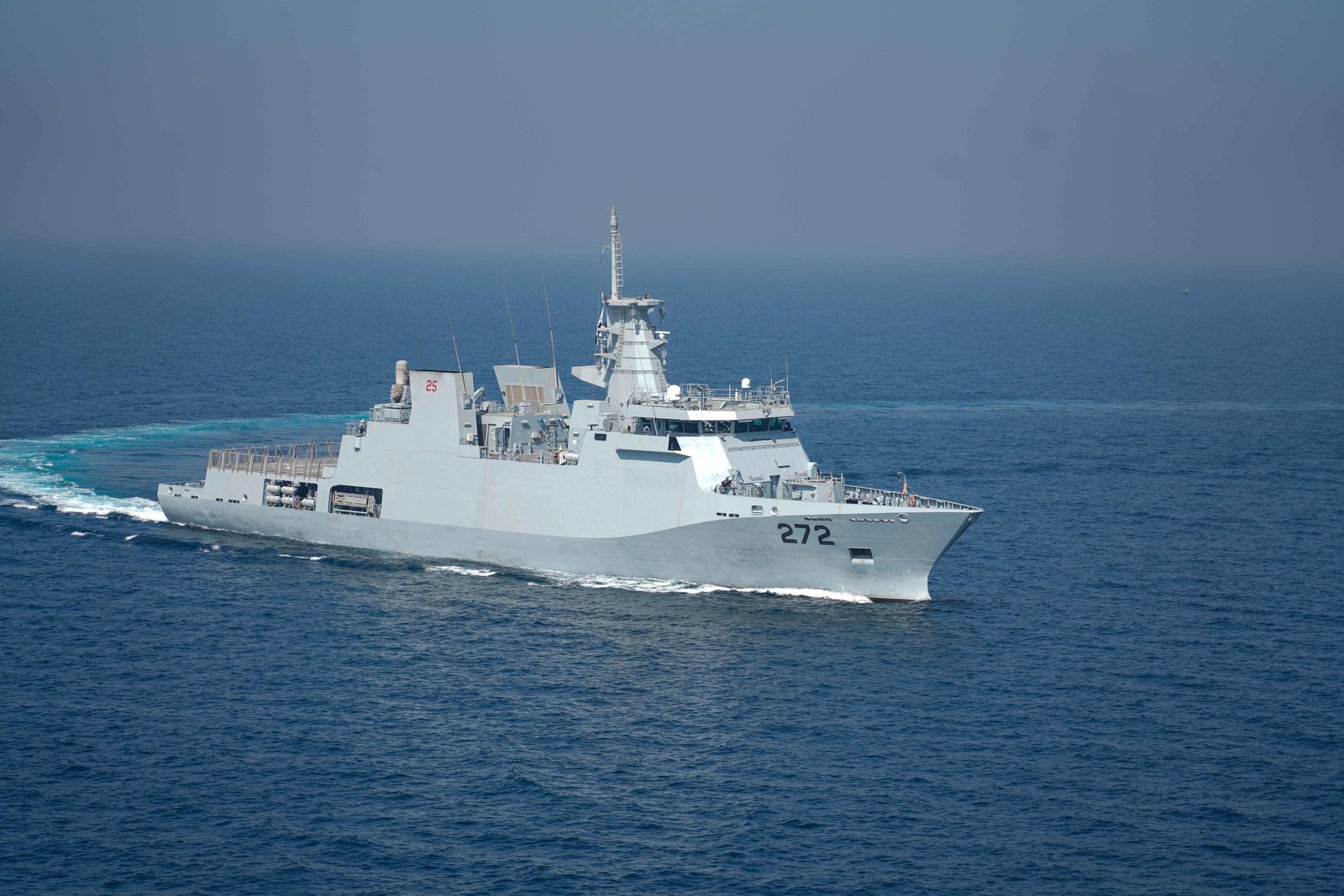
Among the warships deployed is PNS Shah Jahan (F264), one of four Type 054A/P frigates built in China and delivered to the Pakistan Navy between 2022 and 2024. The 4,200-tonne vessel is equipped with HQ-16 medium-range air defence missiles, C-802 anti-ship cruise missiles, and a towed sonar array — making it one of Islamabad’s most capable surface combatants. According to the Pakistan Navy, multiple warships were escorting merchant vessels on the operation’s first day, with one cargo ship arriving safely in Karachi port within hours of the announcement.
Pakistani officials have been careful to frame the operation as defensive and nationally scoped. Arab News Pakistan reported that the Navy is escorting ships “on the country’s own trade routes, not” providing a broader coalition service. The distinction matters: Pakistan has a defence pact with Saudi Arabia and has already deployed air defence systems and troops to the Kingdom, but extending naval escorts to Saudi-flagged tankers or international shipping would risk drawing Islamabad into direct confrontation with Iran — a neighbour with which it shares a 959-kilometre border.
The operation nonetheless represents a significant operational commitment. Pakistan imports approximately 85 percent of its crude oil, much of it from Saudi Arabia and the UAE. With the Strait of Hormuz effectively closed to unescorted traffic, every barrel that reaches Karachi now passes through waters where Iranian drones, missiles, and fast-attack boats have been active since late February.
The Middle East briefing 3,000+ readers start their day with.
One email. Every weekday morning. Free.
India Revives Operation Sankalp With Largest Gulf Deployment in Decades
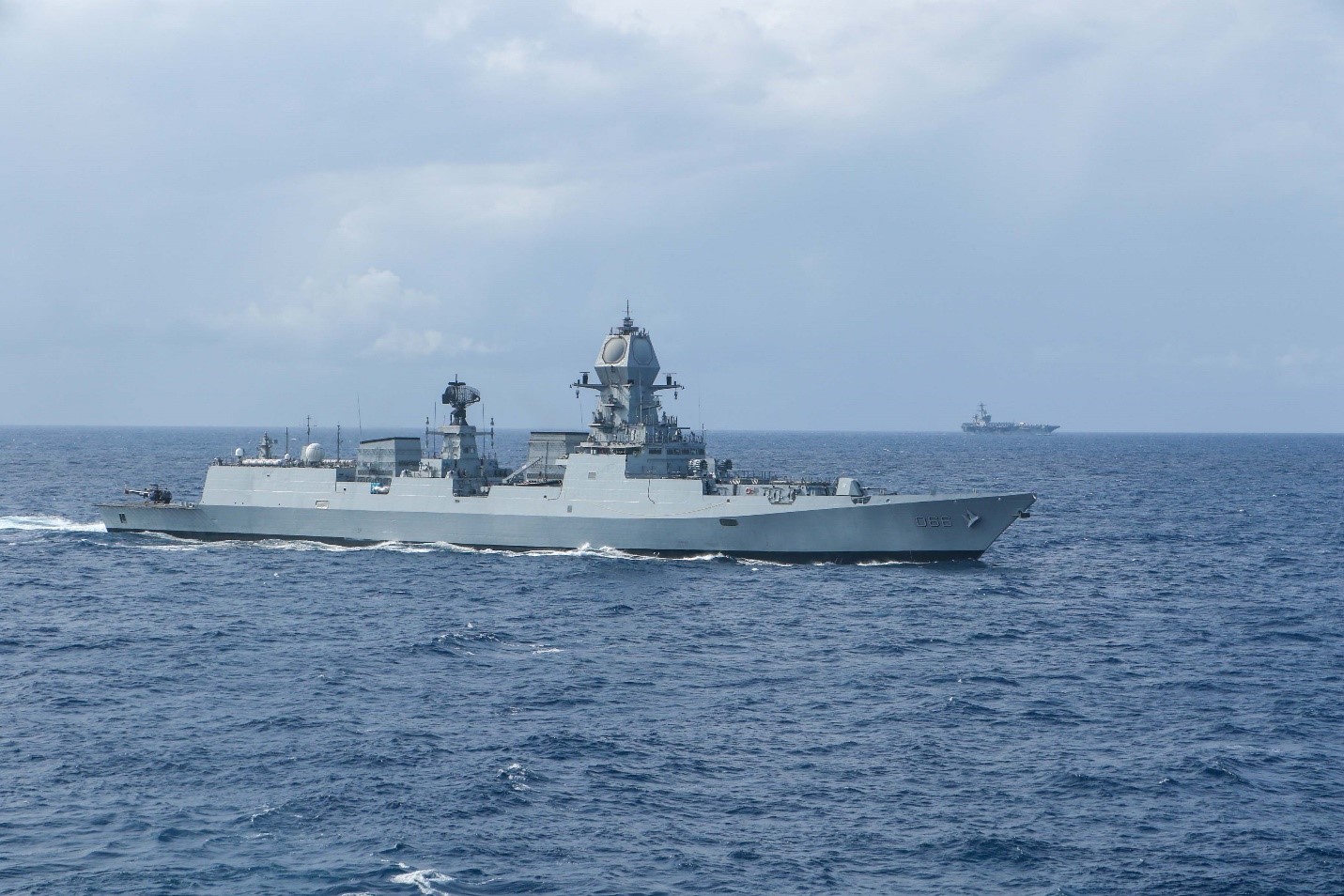
India’s response has been larger in scale and broader in ambition. The Indian Navy reactivated Operation Sankalp — originally launched in 2019 during the Gulf of Oman tanker attacks — and has deployed over half a dozen warships, including Visakhapatnam-class stealth guided-missile destroyers, to the northern Gulf of Oman. Bloomberg reported on 18 March that the deployment had been escalated to include logistics support vessels, bringing the total Indian naval presence east of the Strait to six or seven warships.
The Indian vessels are positioned east of the Strait of Hormuz and will not enter the waterway itself, according to multiple reports citing Indian defence officials. Their operational concept is to meet tankers that have passed through the Strait — either with Iranian tolerance or during windows when IRGC naval patrols are absent — and escort them southward through the Gulf of Oman into the safer waters of the northern Arabian Sea. Two Indian LPG carriers, SCI Shivalik and SCI Nanda Devi, completed the first escorted transit on approximately 14 March, carrying 92,700 metric tonnes of liquefied petroleum gas from Qatar’s Ras Laffan Industrial City to India’s Mundra and Kandla ports.
The crude oil tanker Jag Laadki was subsequently tracked under Indian Navy escort outside the Gulf of Oman. By 19 March, The Week reported that additional warships were heading to the conflict zone to increase the Navy’s capacity to escort vessels crossing the Strait.
India’s stakes in keeping Gulf energy flowing are existential. The country consumes roughly 5.5 million barrels of crude oil per day and imports 90 percent of it. Nearly 50 percent of India’s crude oil and 80 percent of its LNG imports transit through the Strait of Hormuz, according to India Briefing. Gulf suppliers — led by Iraq, Saudi Arabia, the UAE, and Kuwait — accounted for approximately 47 percent of India’s crude imports in the months before the war, with deliveries averaging 2.6 million barrels per day between December 2025 and February 2026.
India’s military deployment has been accompanied by a parallel diplomatic track, with Iranian President Pezeshkian calling Modi twice in ten days to propose BRICS-led mediation of the Gulf conflict.
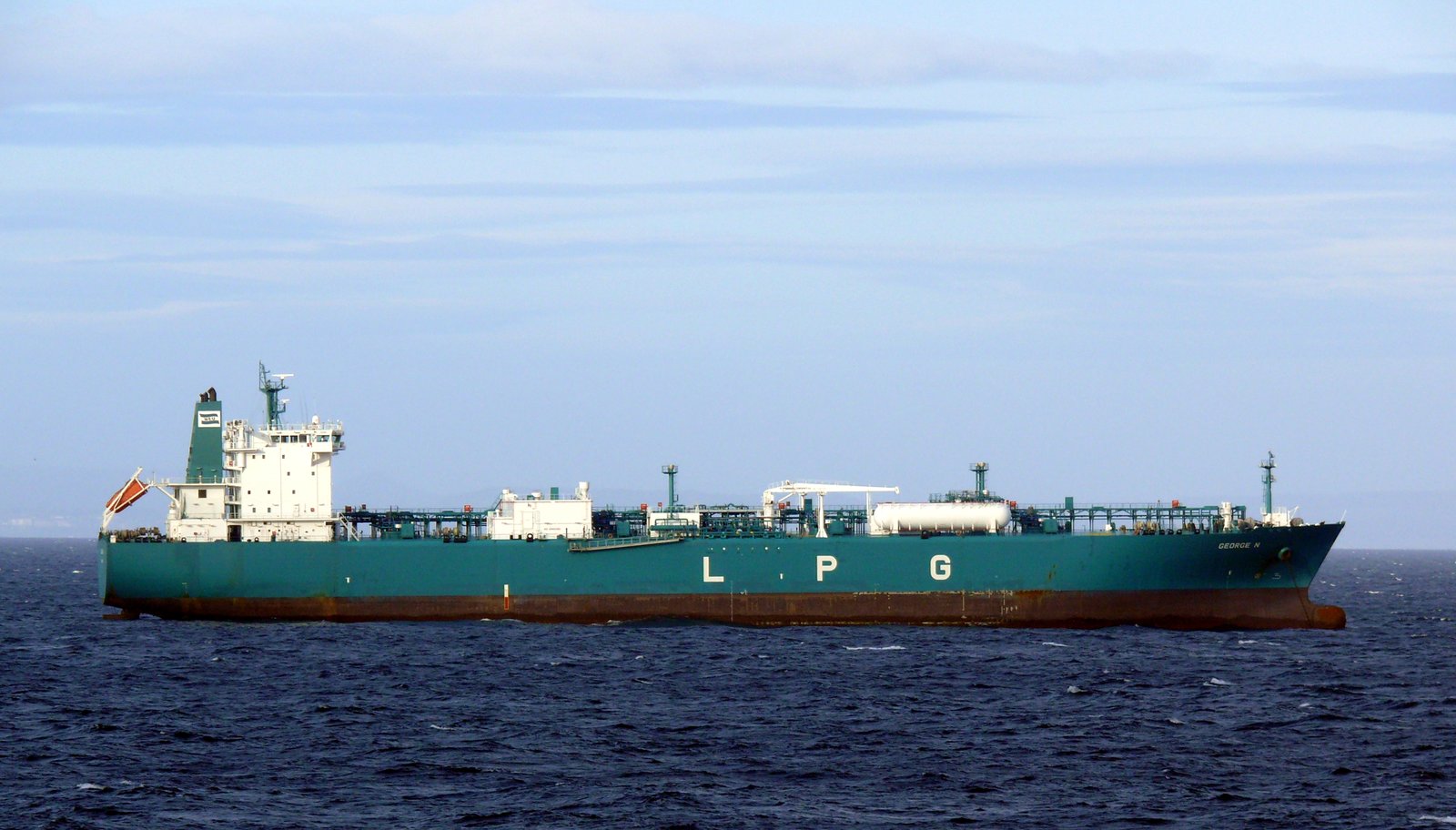
Russia’s emergence as India’s largest crude supplier — accounting for 31.5 percent of imports in April-December 2025 — provides a partial buffer against the Hormuz shutdown. Russian crude reaches India via routes that bypass the Strait entirely, transiting the Suez Canal or sailing around the Cape of Good Hope. But Russia cannot replace Gulf LPG or LNG, which Indian households depend on for cooking fuel, and redirecting crude flows takes weeks that India’s rapidly depleting strategic petroleum reserve does not afford.
What Vessels Are Being Escorted Through the Gulf of Oman?
Both India and Pakistan are escorting only their own nationally flagged vessels. Neither country has offered escort services to international shipping or third-party tankers, a significant limitation that distinguishes these operations from the broader coalition escorts that the United States provided during the 1980s Tanker War.
India’s escorts have focused on LPG carriers and crude oil tankers — the categories most critical to its domestic energy supply. The first successful escorted passage involved the LPG carriers SCI Shivalik and SCI Nanda Devi, both operated by the Shipping Corporation of India. The crude tanker Jag Laadki followed. Indian defence officials told Bloomberg that the Navy was prioritising vessels carrying fuel types for which no alternative supply route exists, particularly LPG from Qatar.
Pakistan’s escorts have covered merchant vessels on the Karachi-Gulf route, including both energy cargoes and general containerised trade. The Pakistan Navy has not publicly identified the specific vessels it has escorted beyond confirming multiple successful transits in the operation’s first week.
The nationally limited scope of both operations means the vast majority of commercial shipping remains unescorted. Saudi Arabia’s Aramco tankers, Kuwaiti oil carriers, Emirati container ships, and the fleets of dozens of other nations have no access to naval protection. For those vessels, the choice remains between risking the Strait without cover or waiting at anchor — compounded by the collapse of maritime insurance coverage that has left even willing shipowners unable to secure liability policies — a decision that the collapse of maritime war risk insurance has made increasingly untenable.
Why Is the US Navy Not Escorting Tankers Yet?
The absence of American escorts is the most consequential gap in the current maritime security landscape. President Trump announced on 3 March that the US Navy would escort tankers through the Strait “as soon as possible,” but three weeks later, no convoy mission has been launched. US Energy Secretary Chris Wright confirmed on 12 March that the military is “not ready” to accompany oil ships through Hormuz, telling reporters that all military assets are currently focused on “destroying Iran’s offensive capabilities and the manufacturing industry that supplies their offensive capabilities.”
The War Zone reported that the Navy is unlikely to be in a position to begin escort operations before the end of March at the earliest. The delay reflects both operational reality — the US Fifth Fleet’s destroyers, cruisers, and carrier strike groups are engaged in active combat operations — and logistical constraints. Escort duty requires dedicated minesweepers, patrol craft, and helicopter assets configured for convoy protection, most of which are currently deployed in offensive roles or positioned for self-defence against Iranian anti-ship missile threats.
The result is a strategic vacuum that India and Pakistan have partially filled, but only for their own vessels. The broader failure to organise a multinational escort coalition has left the approximately 20 percent of global oil that normally transits the Strait — roughly 17-21 million barrels per day — effectively hostage to Iran’s IRGC naval forces.
Trump’s 48-hour ultimatum on 21 March, threatening to destroy Iran’s power grid if Hormuz is not reopened, may be an implicit acknowledgment that military escorts are not coming fast enough. The threat of infrastructural annihilation is a substitute for the convoy protection that the United States cannot yet provide.
What Do the Escorts Mean for Saudi Oil Exports?
Saudi Arabia has responded to the Hormuz closure by routing a record volume of crude through its East-West pipeline to the Red Sea port of Yanbu, reaching 5.9 million barrels per day on 9 March — more than triple the 1.7 million barrel daily average in 2025. The pipeline is expected to reach its full capacity of 7 million barrels per day, according to Reuters, but that still leaves a significant portion of Saudi exports dependent on Gulf waters.
India is Saudi Arabia’s second-largest crude customer after China. In the fiscal year ending March 2025, Saudi crude deliveries to India averaged approximately 800,000 barrels per day, according to Indian customs data. The Hormuz shutdown has disrupted this flow entirely: Saudi tankers departing Ras Tanura, Juaymah, and other Eastern Province terminals cannot reach Indian ports without passing through the Strait, and no Saudi-flagged vessel has made the transit in weeks.
The Indian Navy’s escorts do not cover Saudi tankers, but they establish a precedent that Saudi Arabia’s allies are willing to use naval force to protect energy shipments. Pakistan’s involvement in the emerging Turkey-Saudi-Egypt-Pakistan security architecture raises the question of whether Islamabad might extend its escort operations to Saudi vessels if asked — a step that would test the practical limits of the defence pact that Riyadh and Islamabad signed earlier this year.
For the moment, Saudi Arabia is relying on the Yanbu bypass, the promise of eventual US escorts, and the hope that Trump’s ultimatum forces Iran to reopen the Strait. None of these options fully replaces the daily throughput that Hormuz once carried.
The 1980s Tanker War Parallel
CNN drew explicit parallels on 22 March between the current escort operations and the 1980-88 Tanker War, when Iraqi and Iranian forces attacked hundreds of commercial vessels in the Persian Gulf. During that conflict, the United States launched Operation Earnest Will in 1987, re-flagging Kuwaiti tankers under the American flag and escorting them with Navy warships. The operation involved up to 30 US warships at its peak and resulted in several direct engagements with Iranian forces, including the destruction of two Iranian oil platforms in Operation Praying Mantis.
The differences between 1987 and 2026 are as instructive as the similarities. During Earnest Will, the United States provided escorts to third-party vessels — specifically Kuwaiti tankers that Washington agreed to re-flag. The current Indian and Pakistani operations are exclusively national, protecting only their own merchant fleets. No equivalent re-flagging arrangement has been proposed, and no nation has offered to escort Saudi, Emirati, or Kuwaiti tankers.
The Tanker War also occurred when Iran’s conventional military was weakened by eight years of war with Iraq. In 2026, despite three weeks of intensive US and Israeli strikes, Iran’s IRGC Navy retains the capacity to deploy fast-attack boats, anti-ship cruise missiles, naval mines, and drone swarms across the Strait. Major energy consumers like Japan and South Korea have avoided military involvement entirely, and European nations with soldiers already in the Gulf have not committed to escort duties.
Insurance Crisis Keeps Most Shipping at Anchor
Even with naval escorts available, most shipping companies cannot transit the Strait because they have lost their war risk insurance coverage. On 1 March, major maritime insurers including Gard, Skuld, NorthStandard, the London P&I Club, and the American Club issued cancellation notices for war risk coverage in the Persian Gulf, effective 5 March. Al Jazeera reported that the cancellations left vessels in the region without the insurance required by port authorities, cargo owners, and charterers to operate.
The cost of coverage for vessels that can still obtain it has surged to approximately 5 percent of a ship’s value, according to the Insurance Journal — roughly five times the rate seen in the earliest days of the conflict and orders of magnitude above the fractions of a percentage point charged during peacetime. Insuring a standard oil tanker worth $100 million now costs approximately $5 million per voyage.
The United States announced a $20 billion reinsurance programme to help restart Gulf shipping, but the Insurance Journal reported on 16 March that the plan is “unlikely to restart Gulf shipping without liability cover” — meaning the programme covers hull damage but not the third-party liability insurance that shipping companies need before a port will accept their vessel.
The insurance void compounds the escort gap. India’s warships can physically protect a tanker from drone or missile attack, but they cannot provide the financial guarantee that ports, cargo insurers, and classification societies require. Until both problems are solved simultaneously, the Strait will remain functionally closed to the vast majority of commercial traffic.
| Nation | Operation Name | Start Date | Ships Deployed | Vessels Escorted | Scope |
|---|---|---|---|---|---|
| Pakistan | Muhafiz-ul-Bahr | 9 March | PNS Shah Jahan (F264) + others | National-flag only | Karachi-Gulf SLOCs |
| India | Sankalp (revived) | ~12 March | 6-7 warships inc. Visakhapatnam-class destroyers | National-flag only | Gulf of Oman to Arabian Sea |
| United States | Not yet launched | TBD (late March earliest) | N/A — assets in combat | None | N/A |
| Japan | None | N/A | None deployed | None | N/A |
| South Korea | None | N/A | None deployed | None | N/A |
| Europe | None dedicated | N/A | Vessels in-theatre but no escort role | None | N/A |
How Many Ships Remain Stranded in the Persian Gulf?
Despite the Indian and Pakistani escort operations, the overwhelming majority of commercial vessels in the region remain at anchor. USNI News reported on 17 March that tanker traffic through the Strait of Hormuz had dropped to “single digits” — a catastrophic decline from the approximately 60-80 vessels per day that transited the waterway before the war.
An estimated 3,000 ships and 20,000 seafarers remain trapped in the Persian Gulf, according to previous reporting on the supply disruption. For India alone, 22 nationally flagged vessels — including six LPG carriers, one LNG tanker, and four crude oil tankers — remain in Gulf waters unable to exit through the Strait, carrying a combined crew of 611 seafarers. Insurance Business reported that the stranded crews face heightened physical threat from ongoing Iranian drone and missile attacks, as well as considerable psychological strain from indefinite confinement aboard anchored vessels.
The Insurance Journal estimated that over 150 additional ships had anchored outside the Strait to avoid entering the Gulf entirely, preferring to wait rather than risk transit without insurance or escorts. The Panama Canal, operating at its maximum capacity of 36-38 vessels daily, has absorbed some rerouted traffic, but the canal cannot handle the supertankers and very large crude carriers that dominate Gulf oil trade.
The human cost is mounting. The International Transport Workers’ Federation has called for urgent action to relieve crews stranded in conflict waters, noting that many have exceeded their maximum contract periods aboard ship and lack access to medical care, shore leave, or crew changes.
Frequently Asked Questions
What is Operation Muhafiz-ul-Bahr?
Operation Muhafiz-ul-Bahr is a Pakistan Navy maritime security operation launched on 9 March 2026 to escort Pakistani merchant vessels and protect the country’s sea lines of communication amid the disruption to the Strait of Hormuz caused by the Iran war. The operation deploys warships including the Chinese-built Type 054A/P frigate PNS Shah Jahan along the Karachi-Gulf route.
What is Operation Sankalp?
Operation Sankalp is an Indian Navy maritime security mission originally launched in 2019 during the Gulf of Oman tanker attacks. India reactivated the operation in March 2026, deploying over half a dozen warships, including Visakhapatnam-class stealth destroyers, to the Gulf of Oman to escort Indian-flagged fuel tankers through waters disrupted by the Iran war.
Is the US Navy escorting oil tankers through the Strait of Hormuz?
As of 22 March 2026, the United States has not launched any tanker escort operation through the Strait of Hormuz. US Energy Secretary Chris Wright said the military is “not ready” because all assets are focused on combat operations against Iran. The War Zone reported that escort operations could begin by the end of March at the earliest.
How many Indian ships are stranded in the Persian Gulf?
Twenty-two India-flagged vessels remain stranded in the Persian Gulf, according to Bloomberg. The stranded fleet includes six LPG carriers, one LNG tanker, and four crude oil tankers, carrying a combined crew of 611 seafarers. The Indian Navy has successfully escorted a small number of these vessels out through the Gulf of Oman.
How does the Hormuz closure affect Saudi oil exports to India?
Saudi Arabia is India’s second-largest crude oil supplier. With the Strait of Hormuz effectively closed to unescorted traffic, Saudi tankers departing Eastern Province terminals cannot reach Indian ports. Saudi Arabia has rerouted record volumes through the Red Sea port of Yanbu via its East-West pipeline, but this route adds transit time and cost. India’s total Gulf crude imports averaged 2.6 million barrels per day before the war.